
Birthplace of the Overwater Bungalow: Raiatea’s Story
If you are searching for the birthplace of the overwater bungalow, look to Raiatea in French Polynesia. The first hotel overwater bungalows opened there in 1967, created by three American expats who wanted to solve a practical problem: their hotel had a beautiful lagoon but no sandy beach.
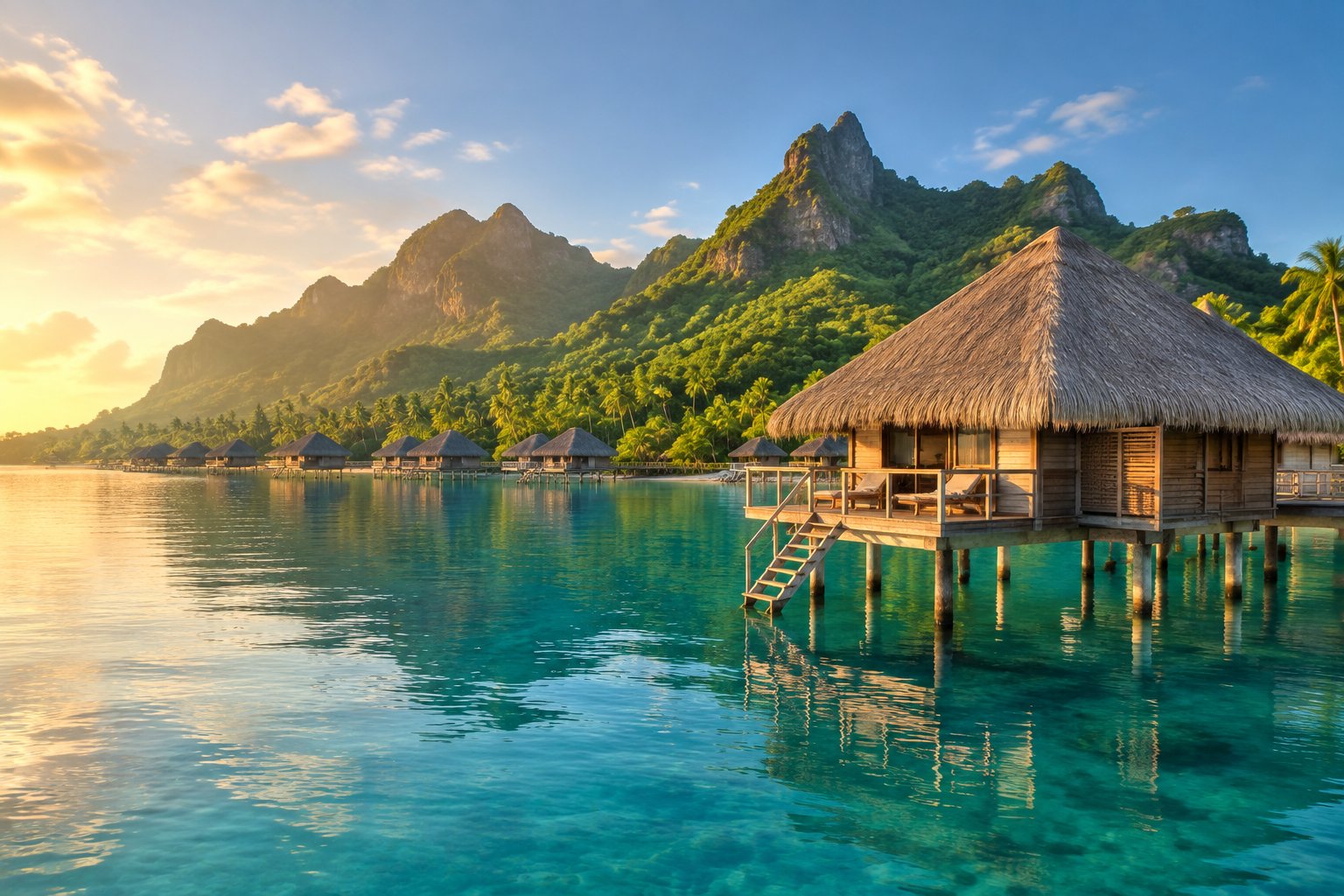
That small idea changed island travel. Built above a reef in the Society Islands, the first rooms gave guests direct access to the South Pacific Ocean, views of tropical fish, and a private setting that felt close to nature.
Over time, the design spread from Raiatea to Moorea, Bora Bora, the Maldives, and other tropical destinations. Raiatea’s story gives you more than a luxury travel image. It shows how local building ideas, limited beachfront, and bold hospitality came together to create the modern overwater bungalow.
As you explore French Polynesia, you can connect that history with today’s lagoon resorts and choose an experience shaped by the original concept.
Where Were the First Hotel Overwater Bungalows Built?
The first hotel overwater bungalows were built at Bali Hai Raiatea in 1967, on the island of Raiatea in French Polynesia. Three rooms stood on stilts above the lagoon and formed the starting point for the overwater resort style.

The project grew from a simple hospitality challenge. The Bali Hai hotel had access to clear water and a surrounding reef, yet the Raiatea property lacked the wide sandy beach visitors expected from a tropical resort.
Building over the lagoon created more guest rooms while giving travelers a memorable way to enter the water.
Why Raiatea, Not Bora Bora, Holds the Claim
Raiatea holds the historical claim because the first purpose-built hotel rooms above a lagoon opened there. Bora Bora later became the most famous setting for overwater bungalows, with views of Mount Otemanu and a larger luxury resort market, though its fame came after the original Raiatea experiment.
Raiatea belongs to the Society Islands, the same island group that includes Bora Bora, Moorea, and Tahiti. Its reef-protected lagoon offered calm water for stilt construction and easy access for swimming and snorkeling.
The location also gave the Bali Hai team a clear reason to try something new. A water bungalow could extend the hotel toward the reef and turn the lagoon into part of the guest experience.
The 1967 Bali Hai Raiatea Milestone
In 1967, Bali Hai Raiatea opened three thatched rooms above the water. Their design used wooden supports, local-style roofing, and direct lagoon access.
The rooms were modest by today’s standards, yet they introduced the core features that define overwater bungalows: a private room above shallow water, a terrace facing the lagoon, and a close view of marine life.
The idea attracted attention quickly. The Bali Hai team repeated the design at its Moorea property, where more rooms helped prove that the concept could work as a resort model.
Later developers refined the structure with stronger materials, larger floor plans, and higher-end amenities.
The Bali Hai Boys and the Idea That Changed Island Travel
The Bali Hai Boys, Hugh Kelley, Muk McCallum, and Jay Carlisle, created the first overwater bungalow after moving from California to French Polynesia. Their hospitality venture began with a love of island life, a failed vanilla-farming plan, and a willingness to solve problems creatively.
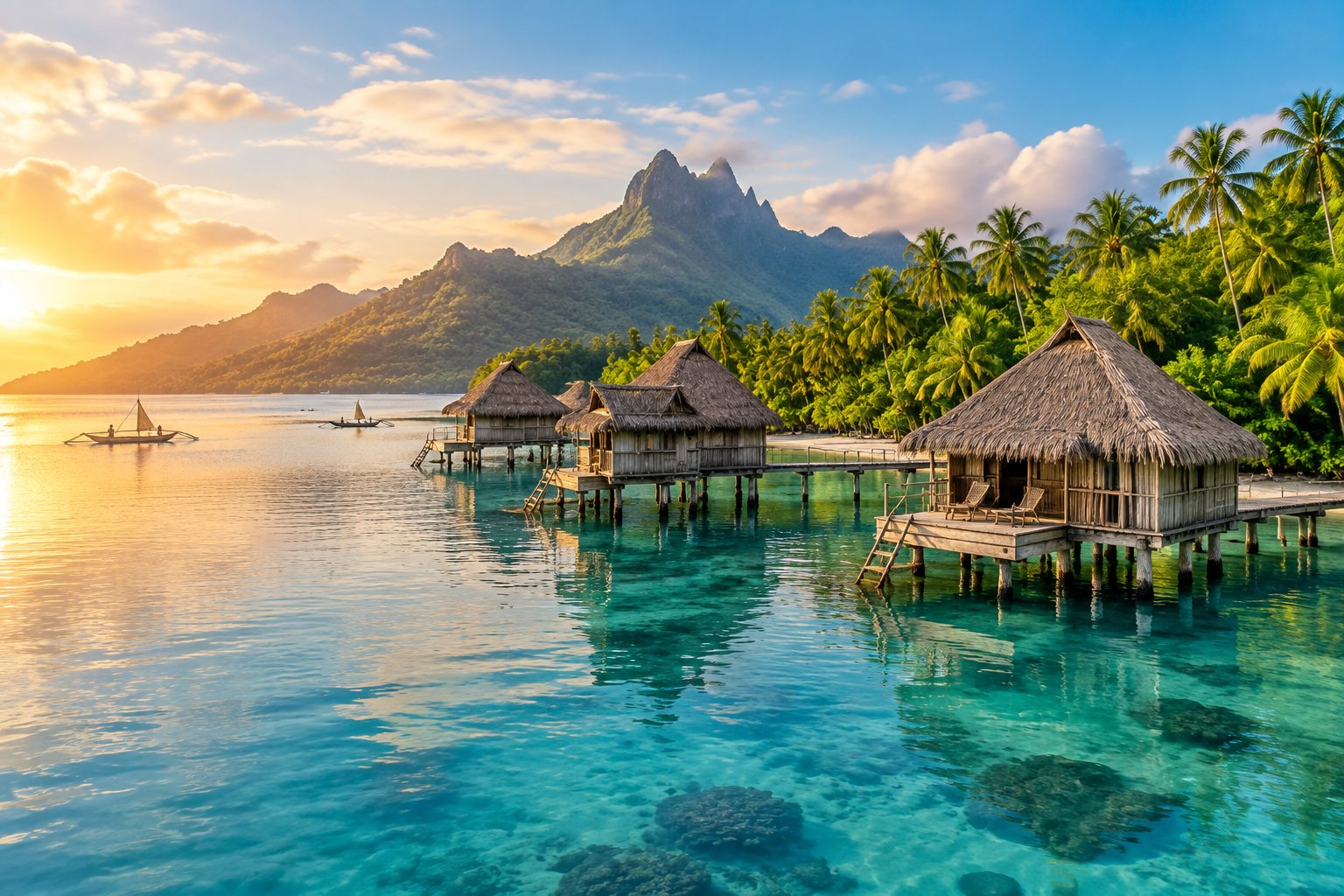
Their work helped turn small island hotels into a new kind of travel experience. The group combined business skills with hands-on work, then used publicity and design to attract visitors from the United States.
Hugh Kelley, Muk McCallum, and Jay Carlisle
Hugh Kelley was a Los Angeles lawyer and an avid sailor. Jay Carlisle worked as a stockbroker, while Donald “Muk” McCallum had experience in sales and business.
Their friendship and shared interest in Tahiti led them to leave established careers in California. Kelley helped drive the move south after visiting Tahiti in 1959.
The three friends pooled their resources and began looking for a new life in the islands. Their partnership later earned them the nickname Bali Hai Boys.
Each man brought a different skill to the project. Kelley focused on ideas and construction, Carlisle handled financial decisions, and McCallum brought business experience and a strong sense of hospitality.
From California and Vanilla Farming to Hospitality
The friends first planned to farm vanilla on Moorea. The land did not suit the crop, and falling vanilla prices made the plan harder to sustain.
They adapted by growing produce for their hotel and shifting their attention to tourism. In 1962, they took over a small, run-down property on Moorea and renamed it Hotel Bali Hai.
The name referred to the fictional island made famous by South Pacific. The men repaired the hotel, welcomed guests, prepared meals, and led activities on the water.
Their early hospitality work built a close connection with visitors. Guests experienced the lagoon through canoe trips, fishing, and reef excursions.
Those activities helped the Bali Hai properties stand out as Tahiti’s tourism industry began to grow.
How Life Magazine Helped Put Tahiti on the Map
A 1962 feature in Life Magazine gave the Bali Hai Boys and Tahiti broad attention in the United States. The story presented island life as remote, beautiful, and full of adventure, which encouraged more travelers to consider French Polynesia.
New air service to Papeete also made the islands easier to reach. The combination of improved access and national publicity created demand for more rooms.
The Bali Hai team soon needed additional space. Raiatea offered a property with lagoon access, though its shoreline lacked a broad beach.
That challenge led to the stilted rooms that made the group famous.
How Traditional Island Structures Inspired the Design
The original overwater bungalow adapted the look and function of Polynesian homes and fishermen’s cabins to create stable guest rooms above a protected lagoon. The design used local visual cues while adding features suited to hotel guests.
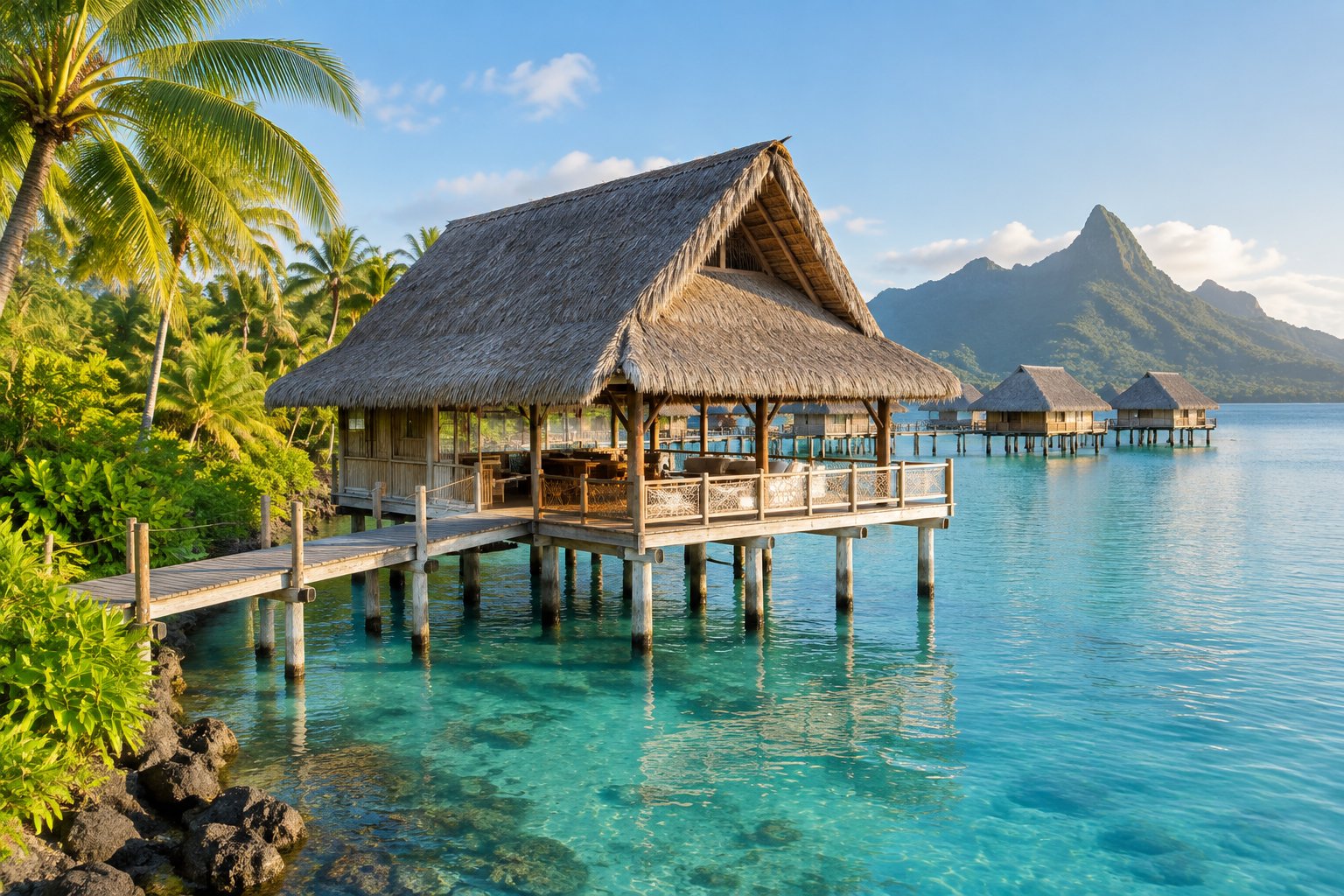
The Bali Hai Boys drew on structures already familiar in island life. They also had to work with the reef, the shoreline, and the need for safe access.
Their solution created a new category of accommodation without losing its Polynesian setting.
Polynesian Homes and Fishermen’s Cabins
Traditional Polynesian homes influenced the bungalow’s simple shape, open feel, and use of natural materials. Fishermen’s cabins offered a closer practical model: small shelters placed above the water so people could work near the reef while staying shaded and dry.
The first guest rooms followed that basic visual language. They used timber supports, wood walls, and roofs covered with pandanus leaves.
Their proportions were compact, which made construction easier and kept the rooms close to the water. These structures were created for tourism, yet their appearance connected them to the surrounding island culture.
That connection became a lasting part of the overwater style.
Why Bungalows on Stilts Solved Raiatea’s Beach Problem
Raiatea’s property had a reef and lagoon but limited sandy beachfront. Bungalows on stilts allowed the hotel to add rooms over calm water and give guests an immediate path into the lagoon.
The design also protected the rooms from regular wave action by placing them in the sheltered lagoon. Wooden walkways connected the rooms to land, while private platforms gave guests space to sit, swim, or enjoy the view.
This layout turned a geographic limitation into a defining feature. Guests came to the water through their rooms, creating an experience that a land-based hotel could not provide.
The Original Materials and Lagoon Setting
The early bungalows used wood, coconut palm supports, and pandanus thatch. The materials suited the tropical setting and gave the rooms a handmade appearance associated with barefoot luxury.
The surrounding reef provided clear, shallow water beneath the floors. That setting made it possible to watch fish, enter the lagoon for a swim, and enjoy the natural movement of the water from a private deck.
Modern resorts use engineered materials and updated construction methods, yet many retain the original combination of thatched forms, timber details, and lagoon views.
What Made the Original Bungalows So Memorable?
The original bungalows stood out because they combined direct lagoon access with a glass floor that let guests watch marine life from inside the room. Their appeal came from close contact with the water, not from elaborate resort features.
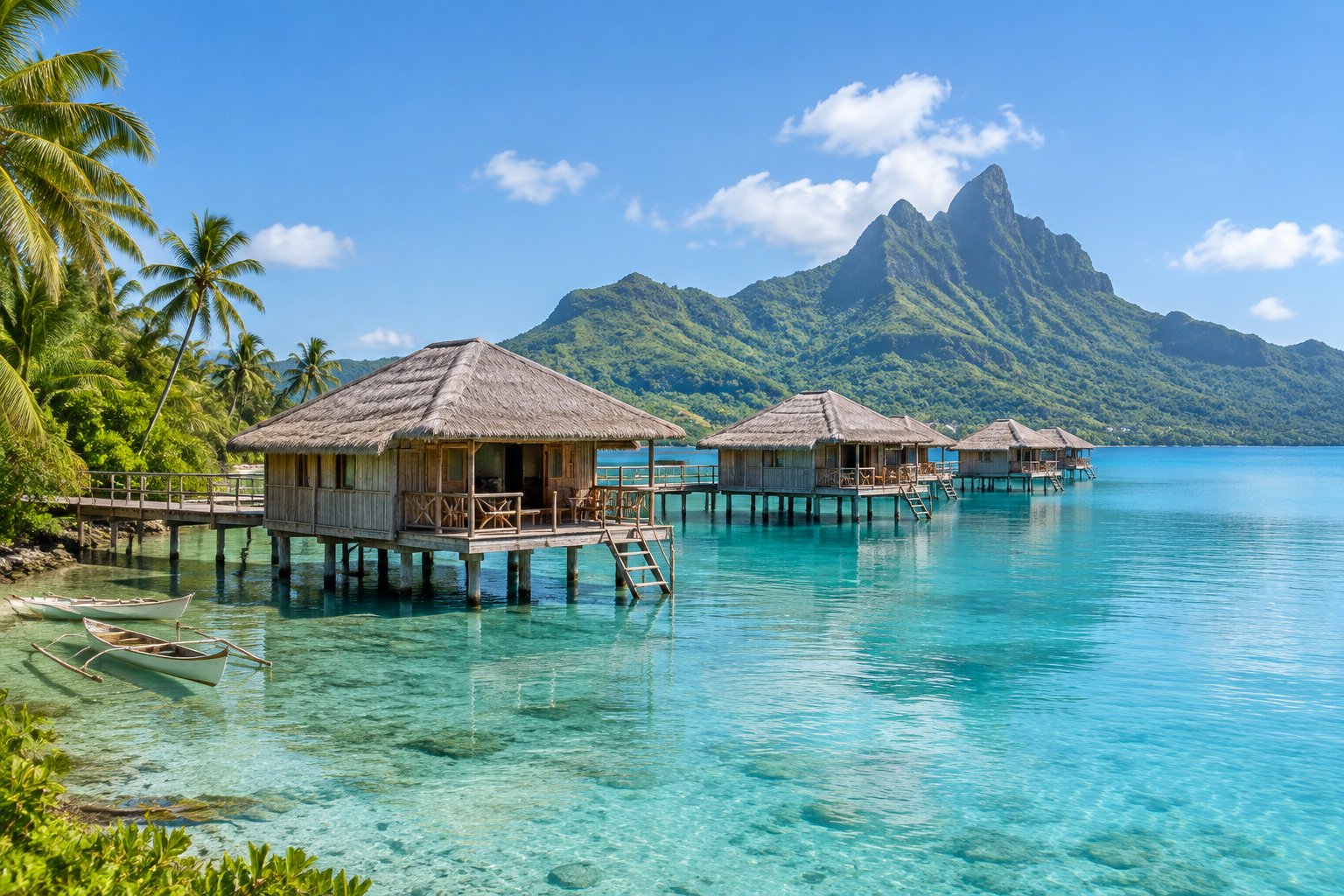
The rooms were small and basic compared with today’s overwater villas. Their design focused on the setting, giving visitors a private platform above the reef and a new way to experience island life.
Tahitian Television and the First Glass Floor
The first bungalows included a transparent floor panel that looked into the lagoon below. Muk McCallum gave the feature the playful name “Tahitian Television,” since guests could watch fish move beneath their room.
The glass floor turned the water into part of the interior. Guests could stay dry while viewing the reef, and nighttime lighting made marine life easier to see below the bungalow.
Modern glass floors and viewing panels continue that idea. Many newer rooms use larger sections of glass, though the purpose remains the same: bringing the lagoon into the guest room.
Direct Lagoon Access, Snorkeling, and Tropical Fish
Each bungalow gave guests a close route to the water. A private deck made it easy to swim, snorkel, or sit above the lagoon without walking across a crowded beach.
The reef setting added movement and color throughout the day. Tropical fish passed below the rooms, while clear water made snorkeling accessible from the resort itself.
That direct connection helped define the overwater experience. You could move from your bed to the lagoon within moments, then return to a private deck for shade and rest.
From Simple Rooms to Private-Pool Overwater Villas
Modern resorts have expanded the original room into spacious overwater villas. Today’s designs may include separate living areas, glass floors, outdoor showers, and a private pool.
Some overwater villas also feature infinity pools that face the lagoon. Others add spa tubs, butler service, larger terraces, and indoor-outdoor layouts.
The core idea remains recognizable. Your room sits above the water, your deck opens toward the lagoon, and the reef becomes part of the view.
How Raiatea’s Invention Became a Global Luxury Resort Icon
Raiatea’s stilted guest rooms became a global luxury resort model after the Bali Hai team repeated the design on Moorea and other developers expanded it across tropical destinations. The style moved from a practical hotel solution to a major part of luxury tourism.
The Society Islands provided the first stage of that growth. Moorea and Bora Bora offered strong resort settings, while Tahiti improved access through its airport and international connections.
Taha’a later adopted the style as part of its high-end island accommodation.
The Expansion to Moorea and Bora Bora
After the Raiatea rooms gained attention, the Bali Hai team built more overwater bungalows at its Moorea property. Moorea sat closer to Papeete, making it easier for visitors to reach and helping the design attract wider interest.
Bora Bora became the best-known French Polynesian destination for overwater stays. Its calm lagoon, reef, and mountain scenery gave resorts a dramatic setting for long walkways and private villas.
Tahiti and Taha’a also developed overwater accommodations. Properties such as Manava Beach Resort connected the modern resort experience with the site’s early Bali Hai history on Moorea.
Why the Maldives Became a Major Overwater Destination
The Maldives became a leading overwater destination because its geography offers many shallow lagoons, sandbars, and reef-protected atolls. Those conditions support long rows of villas extending from small resort islands.
Maldives resorts also built a strong luxury market around seclusion. Private decks, clear water, and direct access to the reef fit the romantic appeal of honeymoon accommodation and remote island escapes.
You can compare French Polynesia and the Maldives by considering scenery, culture, travel time, and resort design. French Polynesia connects you to the original Raiatea story, while the Maldives offers a large range of modern overwater resorts.
Choosing Between Overwater and Land-Based Resorts
An overwater stay suits you if direct lagoon access, privacy, and water views rank high on your list. A land-based resort gives you easier access to gardens, beaches, shared facilities, and a wider range of room locations.
Overwater rooms also command a premium in many destinations. You can find more affordable options by choosing a shorter stay in an overwater room and spending the rest of your trip in a beach or garden room.
For a honeymoon, compare the view, water conditions, transfer time, dining options, and included activities before booking. Those details shape the experience as much as the room’s position above the lagoon.
The Legacy of the Original Raiatea Concept Today
Raiatea remains the birthplace of the overwater bungalow, even though the island no longer offers the original Bali Hai resort experience. Its design lives on across French Polynesia and in luxury resorts around the world.
The story also gives you a reason to look beyond the most famous destinations. Raiatea, Rangiroa, and other islands show how different lagoon settings support different forms of overwater accommodation.
Why the Birthplace No Longer Has Its Original Resort Experience
The original Bali Hai resort on Raiatea is closed, so you cannot book the first hotel bungalows as a functioning resort today. Some original structures have remained standing, which preserves a visible link to the 1967 project.
You can still experience the wider Raiatea setting through its lagoon, reef, mountain scenery, and local communities. The island offers a quieter atmosphere than the major resort centers, with opportunities to explore Polynesian history and nature.
For the active resort version of the concept, Moorea, Bora Bora, and Taha’a provide more current choices within French Polynesia.
Overwater Stays Beyond the Society Islands
The overwater design spread from the Society Islands to the Maldives, Southeast Asia, the Caribbean, and other tropical regions. Rangiroa added another French Polynesian option in the Tuamotu archipelago, where an atoll lagoon creates a different setting from Raiatea’s volcanic island landscape.
Each destination changes the experience. Bora Bora pairs bungalows with mountain views, the Maldives emphasizes atoll seclusion, and Rangiroa highlights open ocean, coral reefs, and diving.
The shared design remains easy to recognize: a private room above water, a walkway over the lagoon, and direct contact with the marine environment.
Balancing Lagoon Luxury With Reef Care
Overwater development needs careful planning because supports, walkways, boats, and wastewater systems interact with the reef. Responsible resorts manage construction zones, protect coral, and limit harm to shallow lagoon habitats.
You can support reef care by following snorkeling rules, avoiding contact with coral, using reef-safe products when appropriate, and choosing properties that explain their environmental practices. Keep food, plastic, and other waste away from the water.
The original Raiatea concept placed guests close to the lagoon. That closeness gives you a special experience and a clear responsibility to leave the reef healthy for the next visitor.