
Botanical Garden Wedding Venues: Costs, Seasons, and Top Picks
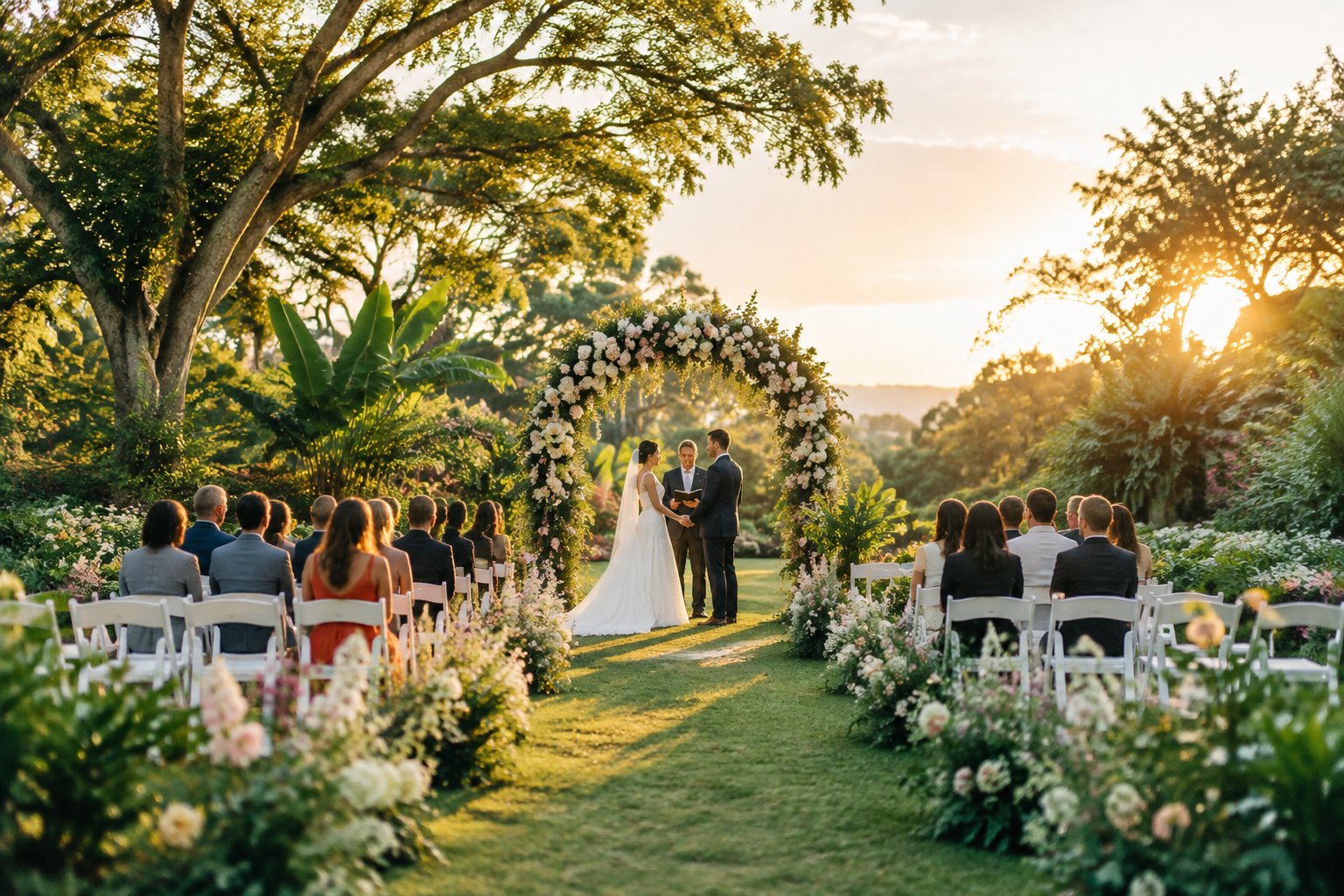
A botanical garden wedding venue gives you built-in scenery, flexible ceremony locations, and memorable photo settings. For couples who want a nature-filled celebration with professional event support, botanical garden wedding venues are a strong choice because many offer outdoor lawns, conservatories, pavilions, and experienced venue teams in one place.
Costs often range from a few thousand dollars for a small ceremony rental to well above $50,000 for a large celebration with catering, bar service, rentals, staffing, and taxes. Your guest count, wedding date, location, and need for indoor space will shape the final budget.
You can narrow your search by matching the garden’s style to your guest list, confirming its weather plan, and requesting a complete estimate before booking. For more inspiration, explore these garden wedding ideas as you compare your favorite venues.
How to Choose the Right Garden Setting
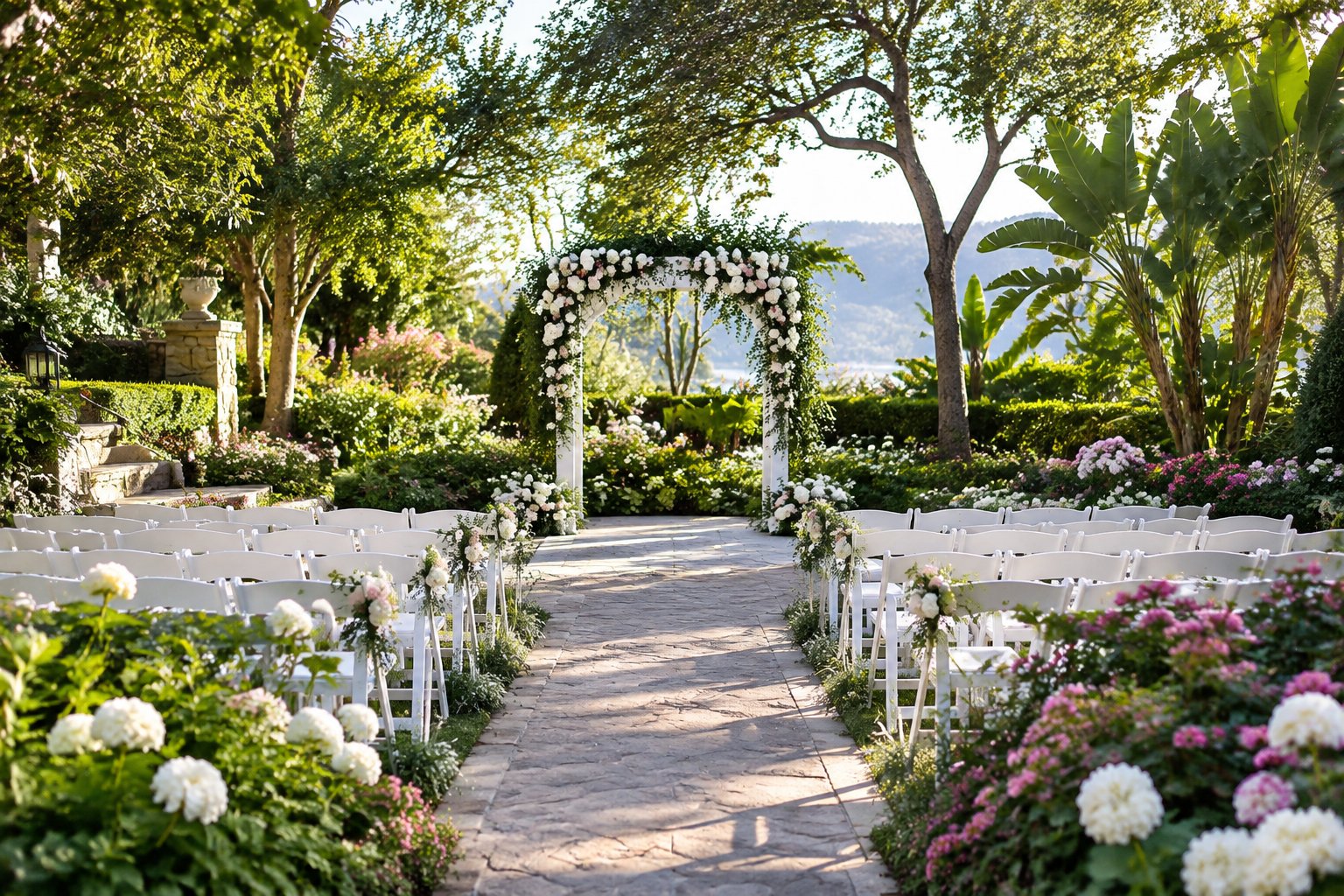
Choose a garden setting that fits your wedding style, guest count, and weather needs. A beautiful site still needs comfortable seating, clear paths, restrooms, power access, and a workable plan for every part of the day.
Your best match will balance atmosphere with logistics. Check how guests move between spaces, whether the garden remains open to visitors, and which rules apply to décor, music, alcohol, transportation, and photography.
What Type of Garden Fits Your Wedding Style?
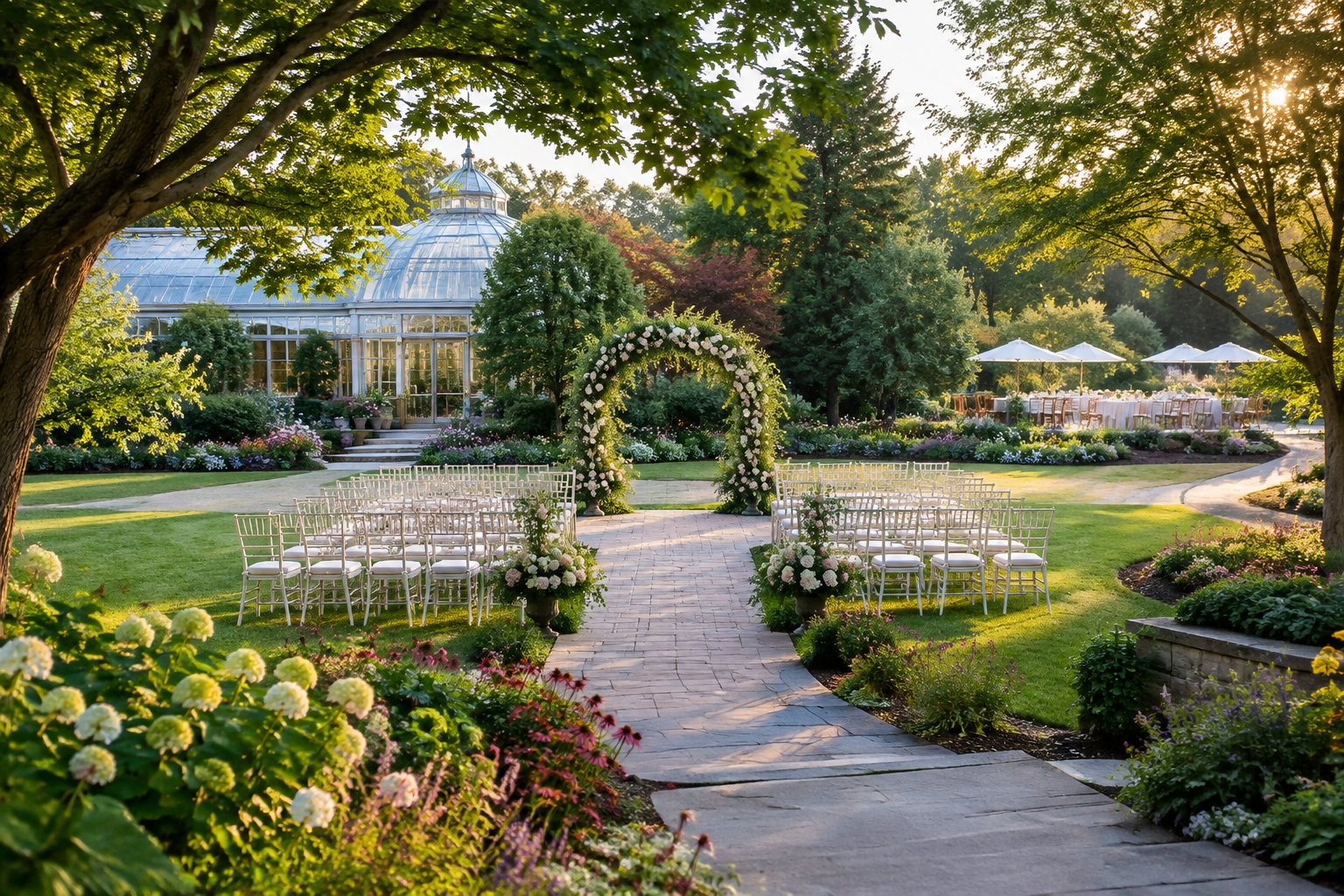
A formal garden with clipped hedges, fountains, and structured paths suits an elegant wedding with classic décor. A rose garden creates a romantic setting for vows and portraits, while a Japanese garden brings calm textures, bridges, and carefully framed garden views.
A tropical garden works well for a colorful, relaxed celebration. A desert garden offers sculptural plants and warm sunset tones. A conservatory gives you lush greenery with protection from rain and temperature changes.
For a boho wedding, look for open lawns, natural textures, and woodland edges. A garden wedding with a small guest list may fit a secluded terrace or intimate garden wedding site. If you are planning an elopement, ask about short rental windows and semi-private ceremony packages.
Couples hosting a destination wedding should also check nearby hotels, parking, airport access, and guest transportation.
How Many Guests Can the Space Comfortably Host?
Start with the ceremony and reception capacities for the exact spaces you plan to use. A lawn may hold a large outdoor wedding ceremony, while a conservatory or pavilion has a lower seated limit once you add tables, a dance floor, buffet stations, and service areas.
Ask the venue to show you a sample floor plan at your guest count. Confirm space for wheelchairs and strollers, accessible restrooms, vendor loading, and a quiet area for older guests.
A site that feels spacious during a tour may feel crowded after seating, catering equipment, and décor arrive. Your guest list can also affect which garden wedding venues fit your budget.
Smaller spaces support an intimate celebration, while larger outdoor wedding venues may require additional rentals, staffing, and security.
What Should an Outdoor Rain Plan Include?
A strong rain plan names the backup space, decision deadline, setup process, and added cost. Confirm whether the venue moves guests into a conservatory, covered pavilion, garden room, or tented area.
Ask these questions before signing:
- How much indoor seating is available?
- When must you make the weather decision?
- Who moves chairs, décor, and sound equipment?
- Does the backup space support your full guest count?
- Are tents, fans, heaters, flooring, or rain protection extra?
- What happens if wind, lightning, smoke, or extreme heat affects the event?
Include shade and cooling in your plan for hot weather. Fans, water stations, covered seating, and an indoor retreat help guests stay comfortable during an outdoor wedding.
What Do Garden Celebrations Cost?
A botanical garden celebration can cost from several thousand dollars for venue access to more than $50,000 for a full wedding with 150 guests, catering, bar service, rentals, and fees. Published prices vary by city and space, so request an itemized estimate for your date and guest count.
A venue fee may cover access to one site for a fixed number of hours. Your complete budget may also include catering, alcohol, tables, chairs, linens, lighting, staffing, insurance, security, cleaning, taxes, and service charges.
What Is Included in a Venue Rental?
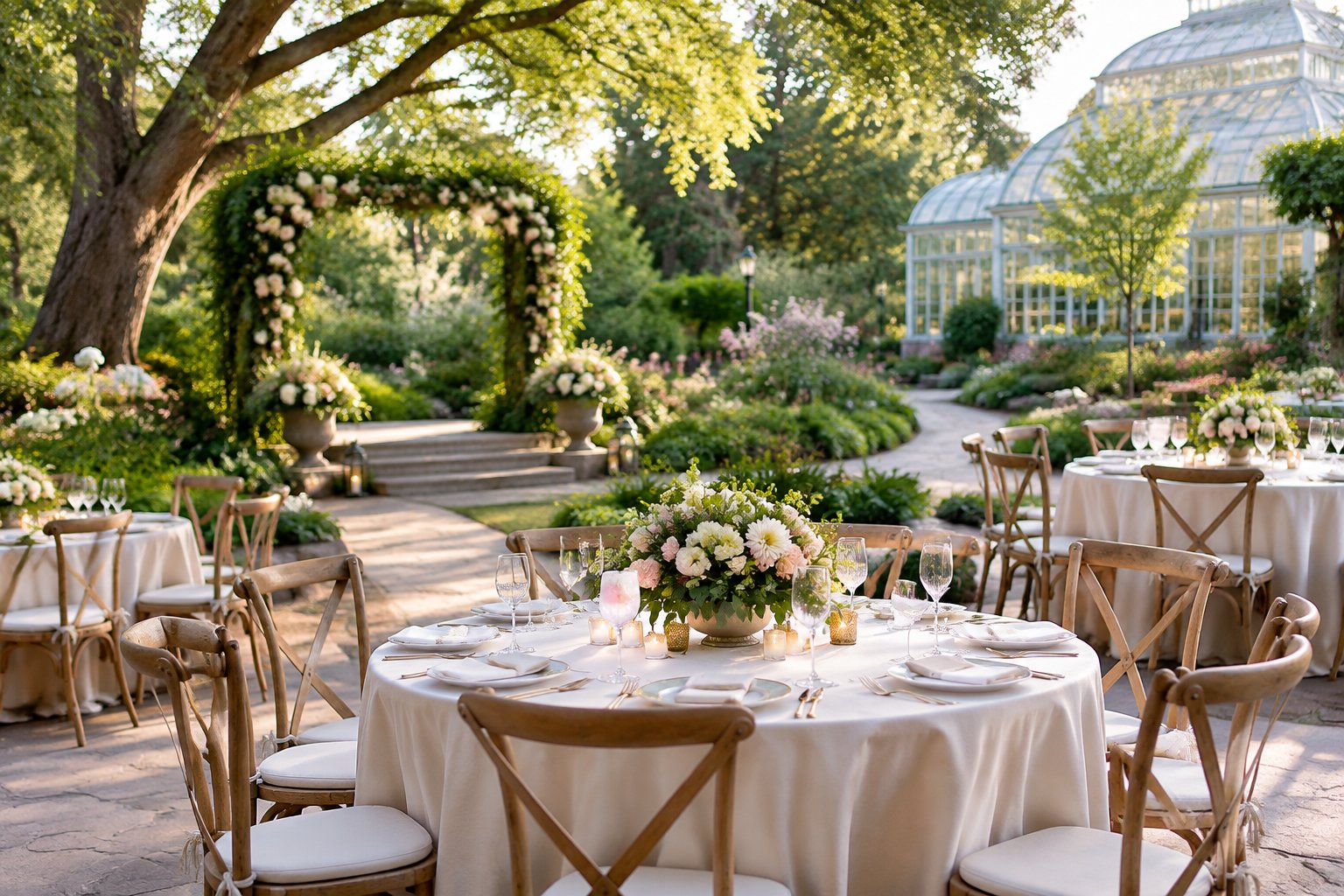
A venue rental may include access during the contracted hours, setup and teardown time, an on-site coordinator, guest admission, parking, a rehearsal, directional signs, and a dressing room or bridal suite. Each garden sets its own package terms.
Some wedding packages pair a ceremony site with a reception package. Others price each space separately, such as a lawn for vows and a pavilion for dinner.
A venue may also provide garden staff, venue furniture, or basic sound equipment. Read the package carefully and ask for a written list of inclusions.
Confirm whether the rental covers exclusive use, vendor access, rehearsal time, cleanup, restroom attendants, and power.
Which Fees Are Easy to Miss?
Build room in your budget for fees that sit outside the advertised rental price. Common charges include:
- Security deposit
- Cleaning and trash removal
- Security guards
- Event insurance
- Permit fees
- Overtime
- Delivery and loading charges
- Power, lighting, or generator rental
- Tent, heater, or fan rental
- Service and administrative fees
- Taxes and gratuities
Some gardens require approved caterers or specific beverage providers. Ask whether a membership, minimum spend, or required staffing charge applies.
Confirm the cancellation policy and the date when your security deposit becomes refundable or nonrefundable.
How Catering and Rentals Affect the Final Budget
Catering and bar service often make up the largest part of a garden wedding budget. A venue that requires approved caterers may offer smoother coordination, while a venue that permits outside caterers may give you more pricing choices.
Request per-person pricing for hors d’oeuvres, dinner, dessert, coffee, and nonalcoholic drinks. Ask whether the wedding cake, cake cutting, service staff, china, glassware, and linens are included.
Rental needs rise when the garden provides only the setting. You may need tables, chairs, linens, a dance floor, a tent, portable bars, lighting, and weather equipment.
Compare the full event rental estimate with each venue’s package before choosing a site based on its starting fee.
Planning the Ceremony, Cocktail Hour, and Reception
Plan the wedding ceremony, cocktail hour, and wedding reception as one connected route across the garden. A clear guest flow reduces delays and helps you use each setting for its strongest purpose.
Map every transition from arrival to departure. Note walking distances, slopes, stairs, shade, restrooms, service entrances, and places where guests can wait comfortably.
Creating a Smooth Guest Flow Across the Grounds
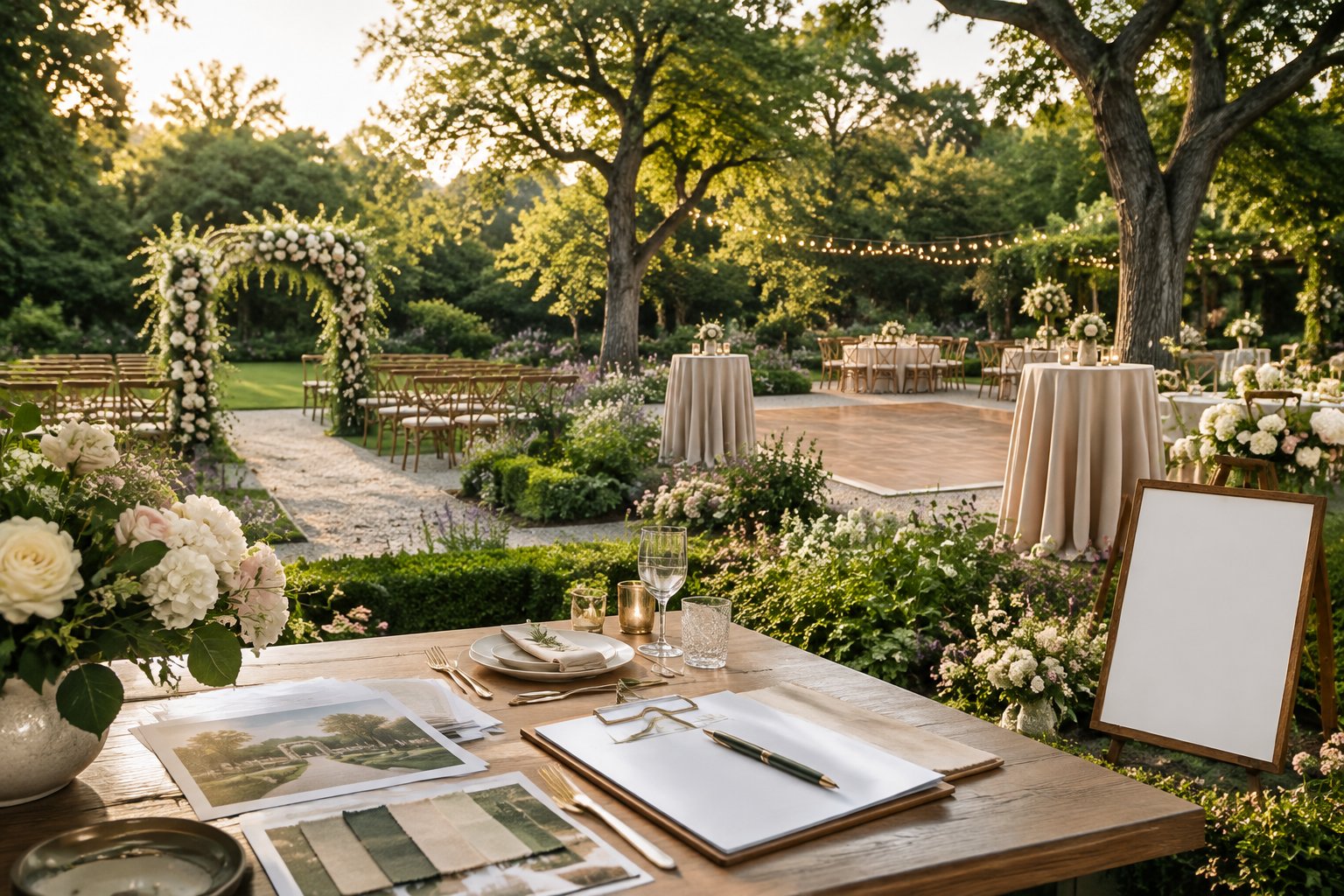
Give guests a simple route from the entrance to the ceremony site. Use signs, staff, printed maps, or a welcome host when paths branch or the garden covers a large area.
A common layout places the ceremony near a scenic feature, moves guests to a nearby cocktail hour area, then leads them to dinner. A reflecting pool, koi ponds, or an amphitheater can provide natural gathering points, though guests still need clear instructions and accessible paths.
Plan a quiet reset period between events. During that time, your team can refresh the ceremony site, move chairs, check the reception tables, and guide guests toward drinks and appetizers.
Choosing Indoor and Outdoor Reception Spaces
Outdoor spaces create open views and natural air, while an indoor garden room or garden terrace room offers more control over temperature, lighting, and sound. The pavilion can provide partial shelter with an outdoor feel.
Ask about the venue’s sound limits, event end time, lighting rules, and power supply. Check whether the reception space supports your band or DJ, bar, buffet, cake table, and dance floor.
A combined indoor and outdoor plan gives you options throughout the day. You might hold vows outside, host cocktail hour under a covered terrace, and serve dinner in a garden room.
Photography Rules and Public-Access Considerations
Ask the garden for its photography rules before booking your photographer. Public gardens may restrict tripods, flash, drones, blocked paths, private areas, or portrait sessions during busy hours.
Confirm whether your wedding photography package includes access to specific areas and whether a photography fee applies. Schedule portraits around guest movement, sunlight, and the garden’s public hours.
Protect the grounds by keeping equipment on approved surfaces and following staff directions. Your photographer should know where vehicles can unload and which routes keep the wedding party away from delicate plant beds.
When Is the Best Time to Get Married in a Garden?
Spring and fall offer comfortable conditions and strong garden color, while summer evenings and winter conservatories provide useful alternatives. Your ideal date depends on regional weather, bloom timing, daylight, venue demand, and the spaces available for your guest count.
Visit during the month you are considering when possible. A garden’s appearance can shift quickly, and the area you love in one season may look different on your wedding date.
Spring Blooms and High-Demand Dates
A spring wedding gives you flowering trees, bulbs, roses, and fresh green foliage. Popular dates fill quickly, especially on Saturdays during peak bloom periods.
Ask the garden which plants are expected to flower on your date. Weather can shift bloom times, so choose a venue with several attractive areas in case one display finishes early.
Spring rain also deserves a firm backup plan. Review covered walkways, indoor seating, tent rules, and the deadline for moving the event indoors before you sign.
Summer Heat, Shade, and Evening Celebrations
Summer works well when you schedule the ceremony later in the day and provide shade, water, fans, and cool indoor areas. A shaded lawn, waterfall deck, or covered pavilion can help guests stay comfortable.
Check sunset time, humidity, air-conditioning access, and the garden’s heat policy. Protect flowers and food from direct sun, and give your wedding party a private place to refresh before portraits.
An evening celebration can bring cooler air and softer light. Confirm exterior lighting, generator needs, noise limits, and the time guests must leave the grounds.
Fall Color and Winter Conservatory Options
Fall offers changing leaves, warm color, and comfortable conditions in many parts of the country. Popular weekends can carry higher demand, so ask about Friday, Sunday, and weekday pricing.
A winter wedding works best when the venue has a heated conservatory, greenhouse, or indoor event room. A Victorian Gazebo Lawn, Lawn House Garden, or Waterfall Deck may suit warmer climates, while indoor spaces provide greater comfort in colder regions.
Ask how seasonal displays affect access. Holiday installations, maintenance schedules, and shortened daylight hours may change the ceremony route or available reception areas.
Notable U.S. Gardens to Consider
The best U.S. garden wedding venues range from grand New York estates to intimate regional gardens, formal Southern landscapes, and desert or coastal settings in the West. Compare each venue by guest capacity, indoor options, catering rules, public access, and travel convenience.
Treat this list as a starting point for venue research. Request current pricing, availability, and event rules directly from each garden before making plans.
Northeast: Iconic New York City Garden Settings
The New York Botanical Garden in the Bronx, New York, offers several distinct settings, including The Stone Mill near the Bronx River and outdoor terraces surrounded by mature plantings. Its large grounds create a formal backdrop with room for portraits and guest activities.
Brooklyn Botanic Garden in Brooklyn, New York, suits couples who want an intimate ceremony in a city setting. Early-morning ceremonies offer a quiet experience in the gardens, so check timing and guest-access rules carefully.
New York City venues bring strong transportation options and recognizable scenery. They also require careful planning for vendor access, guest arrival times, noise rules, and the cost of catering and rentals in a major market.
Midwest and Southern Gardens for Formal or Intimate Events
Cheekwood Estate & Gardens in Nashville, Tennessee, pairs historic architecture with formal gardens and estate views. It fits couples seeking an elegant celebration with a refined Southern setting.
Cleveland Botanical Garden provides indoor and outdoor garden environments for couples who want a plant-filled venue across changing weather conditions. Ask about reception capacities and which areas remain available during seasonal exhibits.
The Garden Villa in Oshkosh, Wisconsin, offers a more intimate regional option. Confirm its current event spaces, guest capacity, vendor policies, and transportation needs before comparing it with larger institutions.
Other gardens worth researching include Atlanta-area gardens and the Chicago Botanic Garden. Chicago’s larger reputation and range of spaces make a detailed package comparison important, especially when catering minimums and rentals apply.
Western Gardens With Coastal, Desert, and Mountain Backdrops
San Diego Botanic Garden offers a mild coastal climate and varied plant collections for outdoor ceremonies and receptions. Its regional setting can support tropical, subtropical, and garden-inspired wedding styles.
Denver Botanic Gardens brings a high-elevation setting with seasonal planting displays and mountain-region character. Check weather, sunset temperatures, elevation concerns for traveling guests, and indoor backup space.
Desert Botanical Garden in Phoenix, Arizona, creates a distinctive backdrop of desert plants, mountain views, and warm evening color. Published venue options include an amphitheater, Binns Pavilion, terraces, patios, and reception halls, with capacities that range from intimate gatherings to larger celebrations.
When comparing Western garden wedding venues, ask about heat plans, shade, lighting, water stations, and late-evening access. You can also use wedding venue ideas to compare garden settings with other venue styles before requesting tours.