
Bus for Wedding Transportation: Planning Guide
A bus for wedding transportation keeps your guests together, helps everyone arrive on time, and gives you a safer plan for travel between hotels, venues, and late-night drop-offs. A full-size charter bus suits a large guest list, while a minibus or sprinter van fits smaller groups and tighter routes.
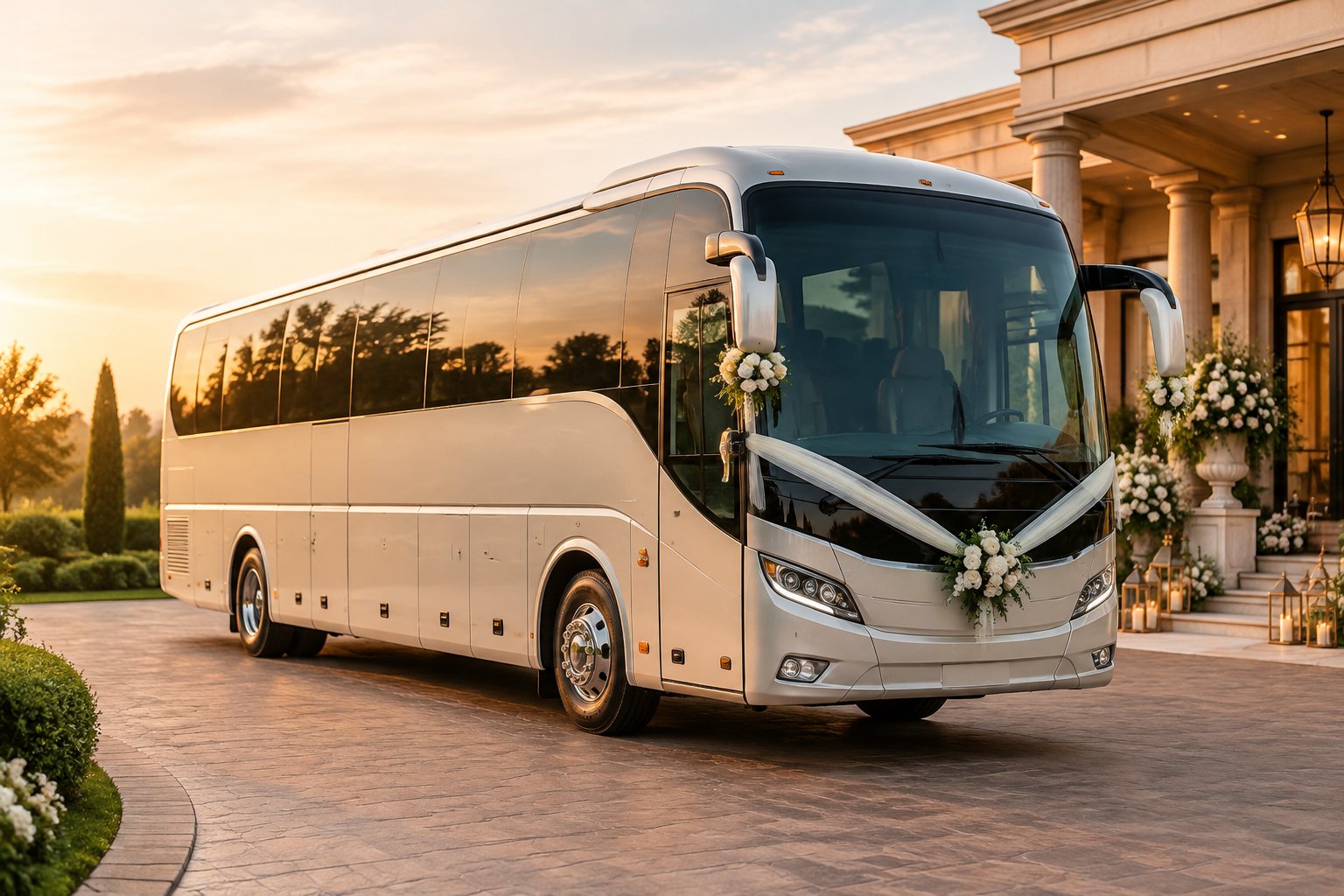
For most weddings with separate venues, limited parking, or an open bar, a wedding shuttle bus is the most practical choice because it moves many guests with one professional driver and one coordinated schedule. You can pair guest transportation with a limousine, party bus, or private car for the couple and wedding party.
Start by confirming your guest count, hotel locations, venue access, and wedding timeline, then request a detailed quote from a wedding transportation provider.
When Does a Wedding Shuttle Make Sense?
A wedding shuttle makes sense when guests need reliable travel between lodging and event locations, parking is limited, or you want a safe ride home after the reception. A planned wedding shuttle service also helps guests avoid unfamiliar roads, surge pricing, and scattered arrival times.
Moving Guests Between Hotels, Ceremony, and Reception
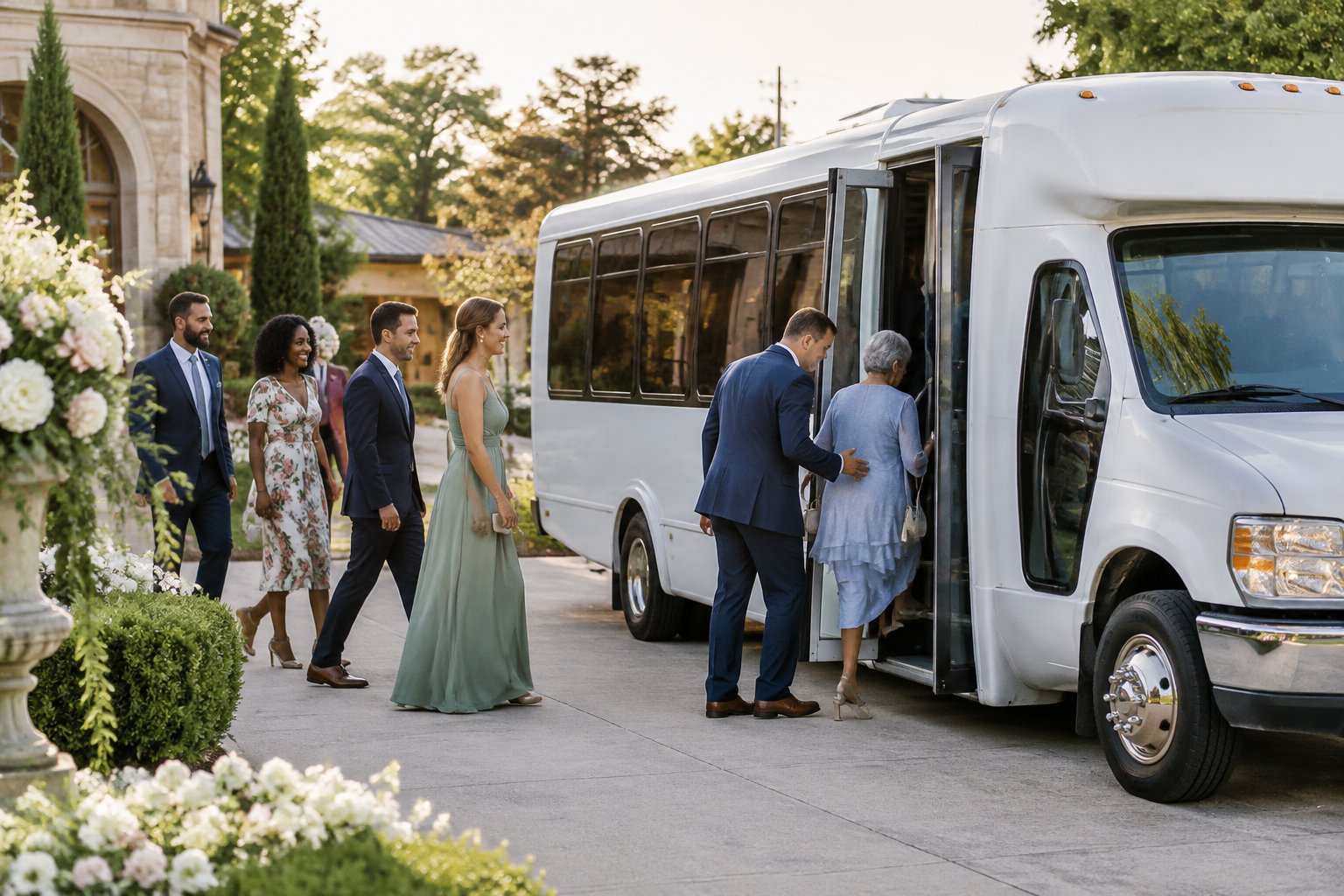
A shuttle can connect a hotel block with the ceremony, reception, rehearsal dinner, and after-party. Grouping guests at one or two hotels makes the route easier to manage and reduces extra travel time.
Give each guest clear pickup details, including the hotel entrance, departure time, estimated ride length, and return schedule. If the ceremony and reception are at separate venues, plan a transfer that leaves enough time for photos, cocktail hour, and venue loading.
Solving Limited Parking and Unfamiliar Routes
Remote venues, downtown locations, narrow roads, and small parking lots create strong reasons to arrange wedding guest transportation. A shuttle brings guests to a planned loading area and reduces the number of cars searching for spaces.
Check the route with the transportation company before signing a contract. Streets in New York City and Chicago vary widely in width, traffic, and loading rules, so the vehicle must fit the access points at every stop.
Providing Safe Late-Night Returns
A return shuttle gives guests a dependable way to leave after dinner and dancing. Plan at least one early departure for guests who leave before the reception ends and one final run after the scheduled close.
Share the last departure time before the wedding. You can also list rideshare details for guests staying outside the main route, though rideshare availability and pricing can change during busy event hours.
Supporting Destination Weddings and Out-of-Town Guests
Destination weddings create extra transportation needs because many guests arrive without a personal vehicle. A shuttle can connect the airport hotel, ceremony site, reception venue, and guest accommodations.
Ask guests where they are staying before you finalize routes. Include transportation details on your wedding website and welcome materials so out-of-town guests know where to wait and whom to contact.
Create a Wedding Transportation Plan That Works
A workable wedding transportation plan connects the guest list, vehicle capacity, route map, and wedding timeline in one clear document. Assign one person, such as your coordinator or a trusted attendant, to manage the transportation service on the wedding day.
Who Should Receive Scheduled Transportation?
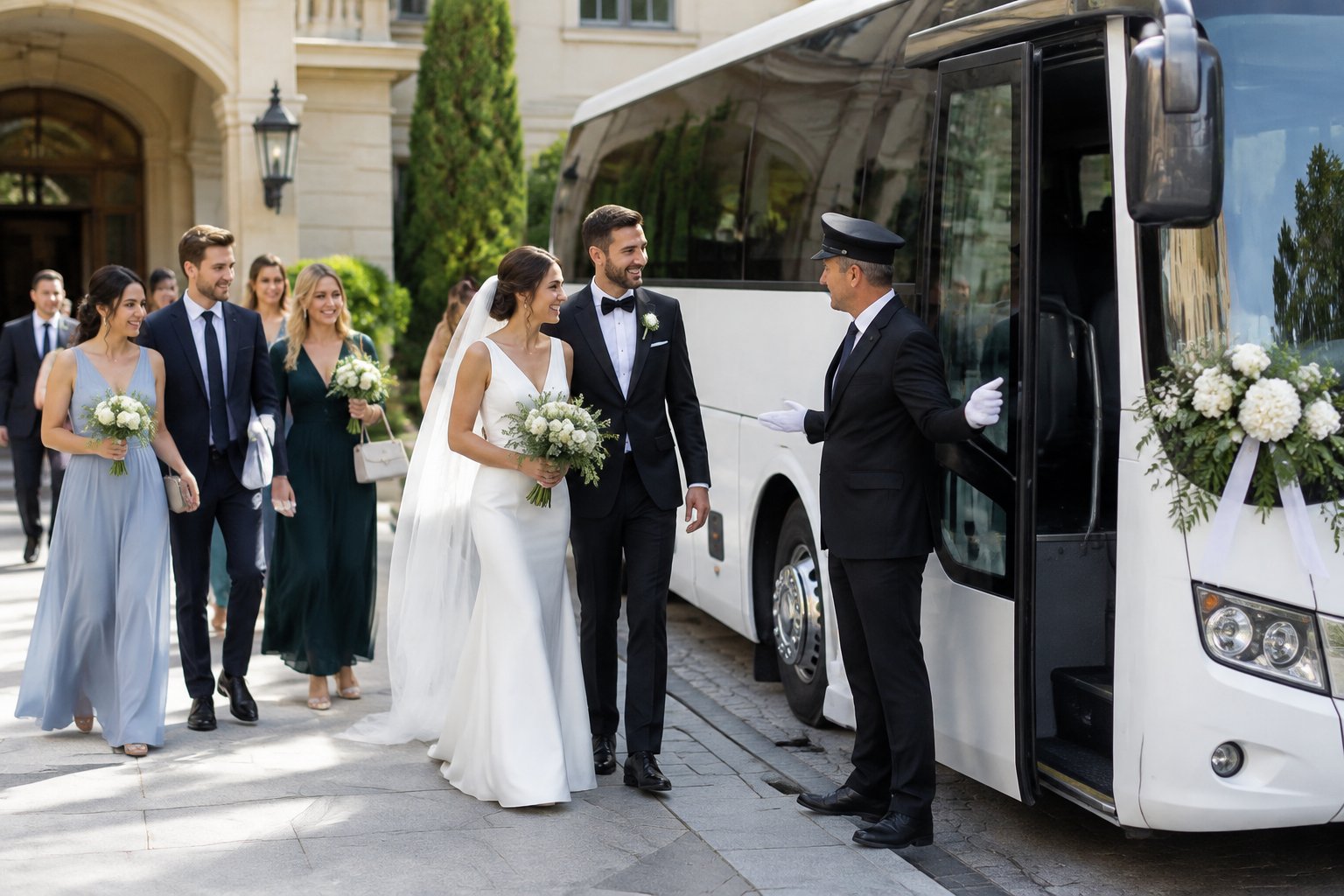
Start with the wedding party, parents, grandparents, close family members, and guests staying at your hotel block. Add guests with mobility needs and anyone traveling from an area with limited parking or few rideshare options.
You can provide transportation for every guest or focus on selected groups. Make the decision early enough to reserve the right number of vehicles and communicate the plan with invitations or your wedding website.
How to Map Routes and Pickup Locations
List every address in the order guests will use it:
- Hotel entrances and alternate hotel stops
- Getting-ready locations
- Ceremony venue
- Reception venue
- After-party location
- Final hotel or guest drop-off points
Choose loading areas that are easy to see and safe for boarding. Confirm whether buses can turn around, wait at the curb, and access the venue without blocking vendors or emergency lanes.
How Much Buffer Time Should a Shuttle Schedule Include?
Build in at least 15 to 20 minutes beyond the expected drive time for traffic, boarding, luggage, and late arrivals. Schedule guests to reach the ceremony about 30 minutes before the start, with extra time for a remote venue or busy city route.
Work backward from the ceremony time. Include travel time, loading time, parking or staging time, and a separate buffer for each transfer. Ask your provider how long boarding takes for your group size and vehicle type.
How to Share the Schedule With Guests
Post the complete schedule on your wedding website and send a reminder about two weeks before the event. Include the pickup address, landmark, departure time, vehicle description, destination, and return options.
Place printed signs at each hotel and venue. Give your transportation point person the guest list, driver contact information, route sheet, and emergency contacts so you do not have to answer travel questions while getting ready.
Choose the Right Vehicle for Each Group
The right vehicle matches passenger count, route conditions, boarding needs, and the type of experience you want. A wedding charter bus works well for large guest groups, while smaller vehicles give you more flexibility on narrow streets and short routes.
When to Reserve a Full-Size Charter Bus
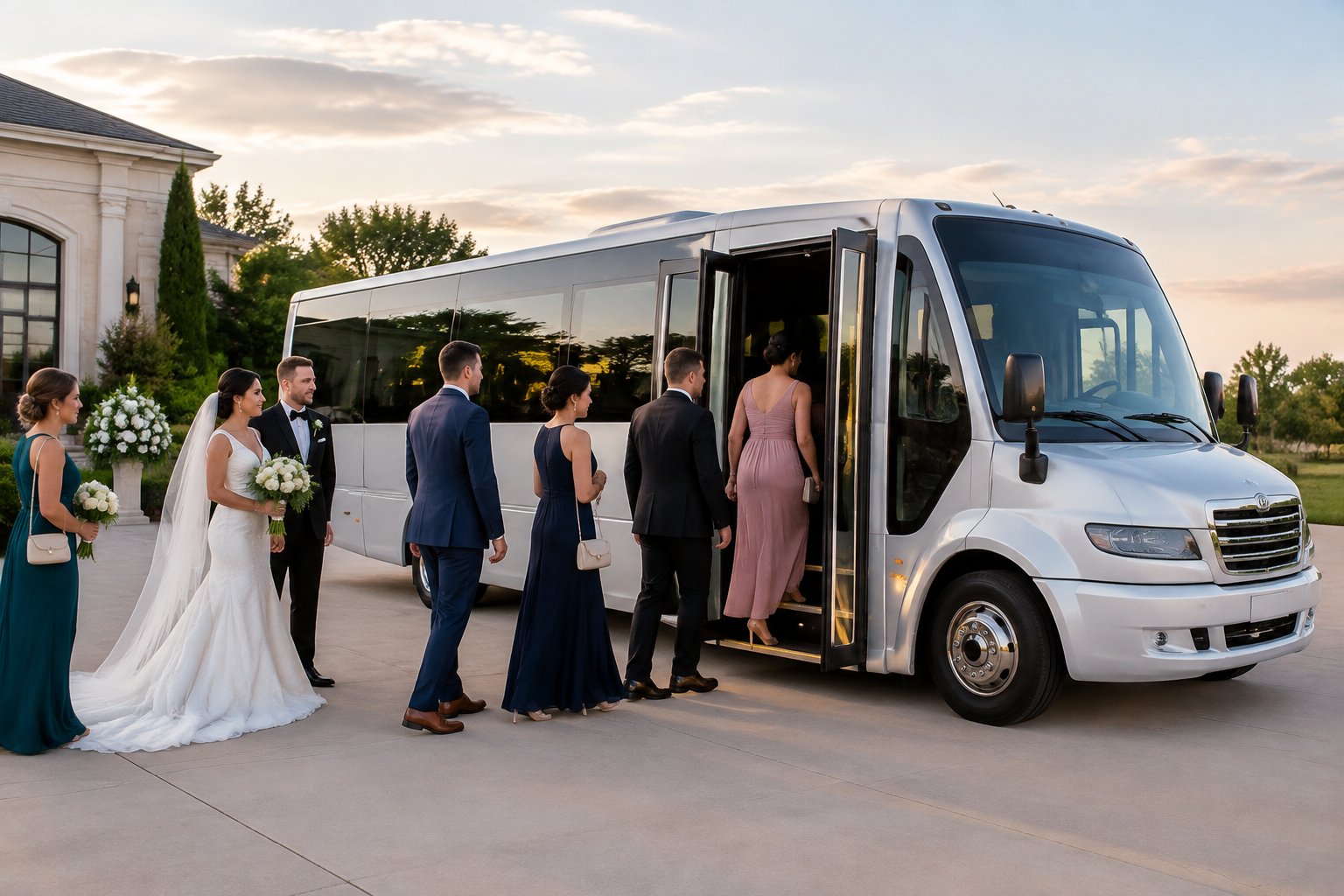
Reserve a full-size charter bus when you need to move a large group between hotels and venues on a shared schedule. A motor coach can carry many passengers and provide luggage space, a restroom on some models, and comfortable seating for longer rides.
Ask for the exact passenger capacity instead of filling every listed seat. Extra room helps guests with formal clothing, coats, bags, and mobility needs. Confirm that the bus can reach every pickup point before booking.
When a Minibus or Mini Bus Is a Better Fit
A minibus suits a smaller guest list, a short shuttle loop, or a route with tight turns and limited staging space. It can also work well when you need separate service for two hotels or two groups with different departure times.
Compare the total number of trips with the cost of adding a second vehicle. A smaller bus may fit the route better, while two minibuses may keep loading times shorter for a large wedding.
Using a Sprinter Van for the Wedding Party
A sprinter van works well for the couple’s attendants, immediate family, or a small group traveling between getting-ready locations and the ceremony. Its compact size helps with urban streets, hotel driveways, and venues with limited bus access.
Confirm seating, luggage space, step height, and accessibility before reserving one. A van designed for sightseeing may have a different layout from a passenger model intended for wedding transport.
Party Bus and Limousine Options for the Couple
A party bus gives the wedding party a shared space for travel between events, while a limousine creates a more private experience for the couple or a small VIP group. Both options require careful attention to capacity, rental minimums, decorations, and route timing.
A separate getaway car suits a private exit after the reception. For ideas on choosing that vehicle, explore these wedding getaway car ideas. Keep the couple’s vehicle schedule separate from the guest shuttle schedule so a delayed photo session does not hold up dozens of guests.
How Much Does Wedding Bus Transportation Cost?
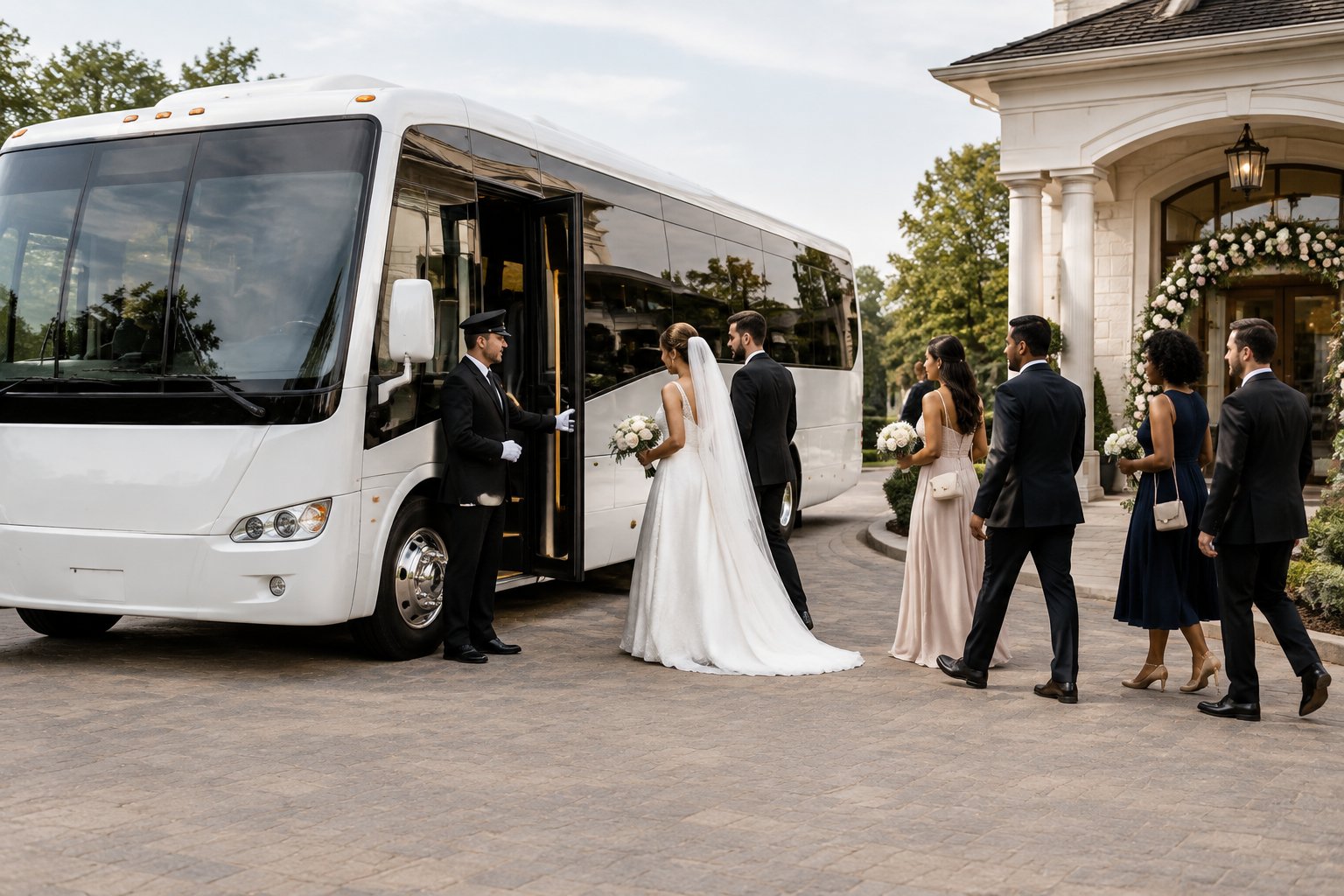
Wedding transportation cost commonly falls within a wide range, from several hundred dollars for a short private ride to several thousand dollars for multiple vehicles and long service hours. Your quote reflects the vehicle, rental window, route, location, season, and added services.
What Affects Wedding Transportation Cost?
The main cost factors include:
- Vehicle type and passenger capacity
- Number of vehicles
- Pickup and drop-off locations
- Total rental hours
- Distance, tolls, and parking
- Driver time and required staging
- Special amenities or decorations
- Gratuity, taxes, and service fees
A larger bus may cost more per hour while lowering the price per guest. A short route can still carry a minimum rental charge, so ask how the provider calculates the full service window.
How Vehicle Size, Hours, and Routes Change the Price
A charter bus rental costs more when you need higher capacity, longer service, multiple hotels, or several event locations. Waiting time between the ceremony and reception also counts if the vehicle and driver remain assigned to your group.
A minibus can lower the cost for a smaller group, while multiple vehicles increase coordination and driver fees. Ask whether the quote covers deadhead travel, tolls, fuel, parking, overtime, and the return trip.
What to Check Before Comparing Quotes
Request written quotes from several charter bus companies using the same information. Give each charter bus company your date, guest count, vehicle type, pickup addresses, service hours, route details, and preferred amenities.
Check these contract details:
- Exact vehicle class and passenger capacity
- Number of vehicles and drivers
- Minimum rental hours
- Overtime rate
- Cancellation policy
- Gratuity and taxes
- Fuel, toll, and parking fees
- Backup plan for a mechanical issue
A free quote is useful when it includes the complete service scope. Compare the final totals and contract terms instead of comparing hourly rates alone.
When to Book During Peak Wedding Season
Reserve wedding bus rental service about six to nine months ahead for a popular Saturday, large guest list, or peak wedding season date. Book earlier when you need several vehicles, a specialty bus, or service in a busy market.
Confirm your reservation after the venue, hotel block, and primary schedule are set. Recheck the passenger count and route several weeks before the wedding, then verify pickup times with the provider during the final week.
Confirm Comfort, Safety, and Day-Of Details
A comfortable wedding bus should have a qualified driver, suitable seating, climate control, and a clear operating plan for every route. Confirm the vehicle details, driver communication process, and venue access before the wedding date.
Amenities That Improve the Guest Experience
Useful amenities include reclining seats, climate control, overhead storage, power outlets, and Wi-Fi. For longer rides, ask about restrooms, luggage capacity, step height, and accessibility features.
Choose amenities that fit the route and guest needs. Guests may value easy boarding, space for coats, and a steady temperature more than entertainment equipment on a short transfer.
Why Professional Drivers and Backup Plans Matter
Professional drivers know how to manage large vehicles, traffic, loading zones, and scheduled departures. Ask the provider about licensing, insurance, driver assignment, and its process for handling delays or vehicle problems.
Request a day-of contact who can reach the driver and operations team. Give that person the final route sheet and a backup contact so transportation questions stay with the coordinator.
How to Prepare Venues for Bus Loading and Parking
Ask each venue where buses should load, unload, wait, and turn around. Confirm clearance for overhead branches, gates, steep driveways, narrow roads, and temporary event structures.
Share the bus dimensions with venue staff and provide a map to the staging area. Reserve space for guest boarding and keep the loading zone clear of catering trucks, photo equipment, and parked cars.
Final Details to Confirm Before the Wedding
Reconfirm these details during the week before the event:
- Vehicle make, model, color, and capacity
- Driver name and contact number
- Pickup times and exact addresses
- Venue loading and parking instructions
- Guest count and mobility needs
- Return trips and final departure
- Gratuity, overtime, tolls, and parking charges
- Emergency contact and backup procedure
Give the final schedule to your coordinator, venue contacts, hotel staff, and drivers. With those details aligned, your wedding transportation service can move guests smoothly while you focus on the celebration.