
Can a Marriage Be Done on Zoom? Exploring Virtual Ceremonies in Today’s World
In today’s digital age, many couples are exploring new ways to celebrate their love. You might be wondering, yes, a marriage can indeed take place over Zoom. Virtual weddings have become a popular option, allowing couples to tie the knot without needing everyone in the same room.

Planning an online wedding can be as simple or as elaborate as you wish. From live-streaming your ceremony to having loved ones join from around the world, Zoom weddings offer a unique experience.
You can enjoy the joy of saying “I do” in the comfort of your home while still involving all your closest friends and family.
There are certain rules and requirements depending on your state, especially for legal matters such as obtaining a marriage license. As you read on, you’ll discover everything you need to know about hosting a successful virtual wedding and making your special day memorable.
Legal Considerations for Online Marriages
When considering an online marriage, it’s important to know the legal factors at play. You’ll need to understand marriage licenses, the role of officiants, and the specific regulations for virtual ceremonies.
Understanding Marriage Licenses
To get married online, you usually need a marriage license. This license is an official document issued by your local county clerk.
In some states, you can apply for a marriage license online, making it easier than ever.
Each state has different requirements for obtaining this license. Be sure to check what documents you need, like identification and payment of fees. Some states may require a waiting period before you can marry.
Always keep in mind that laws can change, so checking with your local clerk’s office for the most current rules is wise.
Role of the Officiant
A legal officiant is essential for your online marriage ceremony to be recognized. This person must be authorized to perform marriages in your state.
In many states, officiants can conduct virtual ceremonies. However, they must still be physically present to sign the marriage certificate. Some couples choose to hire a legal officiant who specializes in online ceremonies.
If you’re considering marriage by proxy, check if your state allows this. In proxy marriages, one partner may not be present, which is a different legal approach.
Virtual Marriage Regulations
Virtual marriages are becoming more accepted, but rules vary by state. For instance, Utah has led the way by allowing couples to marry without being physically present.
Regardless of your state, you should be aware of rules regarding dress codes and setup for your virtual ceremony. These guidelines help ensure your event is recognized legally.
Make sure you have a plan for videoconferencing, a stable connection, and your legal officiant ready. Knowing these details will help make your online wedding smooth and legally binding.
Planning Your Zoom Wedding
When planning your Zoom wedding, there are important steps to consider to make your virtual ceremony special and memorable. You’ll want to choose the right platform, possibly work with a wedding planner, and create a welcoming virtual atmosphere.
Selecting the Right Platform
Choosing the right video conferencing platform is key to a successful Zoom wedding. While Zoom is popular, other options like Google Meet or Microsoft Teams can work too.
Make sure to check the following:
- Guest Limit: Ensure the platform supports the number of guests you want.
- Features: Look for features like breakout rooms for smaller conversations, screen sharing for presentations, and virtual backgrounds for a personalized touch.
- Ease of Use: Choose a platform that you and your guests find easy to navigate.
Testing the platform before your wedding day can help smooth out any technical issues.
Coordinating with a Wedding Planner
A wedding planner can be a major help with your virtual wedding. They can guide you through the planning process and handle logistics.
When selecting a planner, look for someone who:
- Understands Virtual Weddings: Not all planners have experience with online ceremonies. Choose one who knows how to manage a virtual setting.
- Offers Technical Support: They should be able to set up technology and troubleshoot any problems that may arise.
- Creates a Timeline: A good planner will help you set a timeline, from sending invites to the virtual toast, ensuring everything goes smoothly.
This support can make your planning less stressful and more organized.
Creating a Virtual Atmosphere
Creating a cozy and inviting virtual atmosphere is essential for your Zoom wedding. Start with your background. A clean or decorated area can enhance the visual appeal. Consider using virtual backgrounds that reflect your style or theme.
Next, think about your guests. Encourage them to dress up and participate in virtual toasts. You might even send out fun party favors or themed items to include everyone in the celebration.
Lastly, ensure your internet connection is strong. Test it ahead of time to prevent interruptions. Following these tips will help create a warm environment for your special day.
Cultural and Religious Considerations
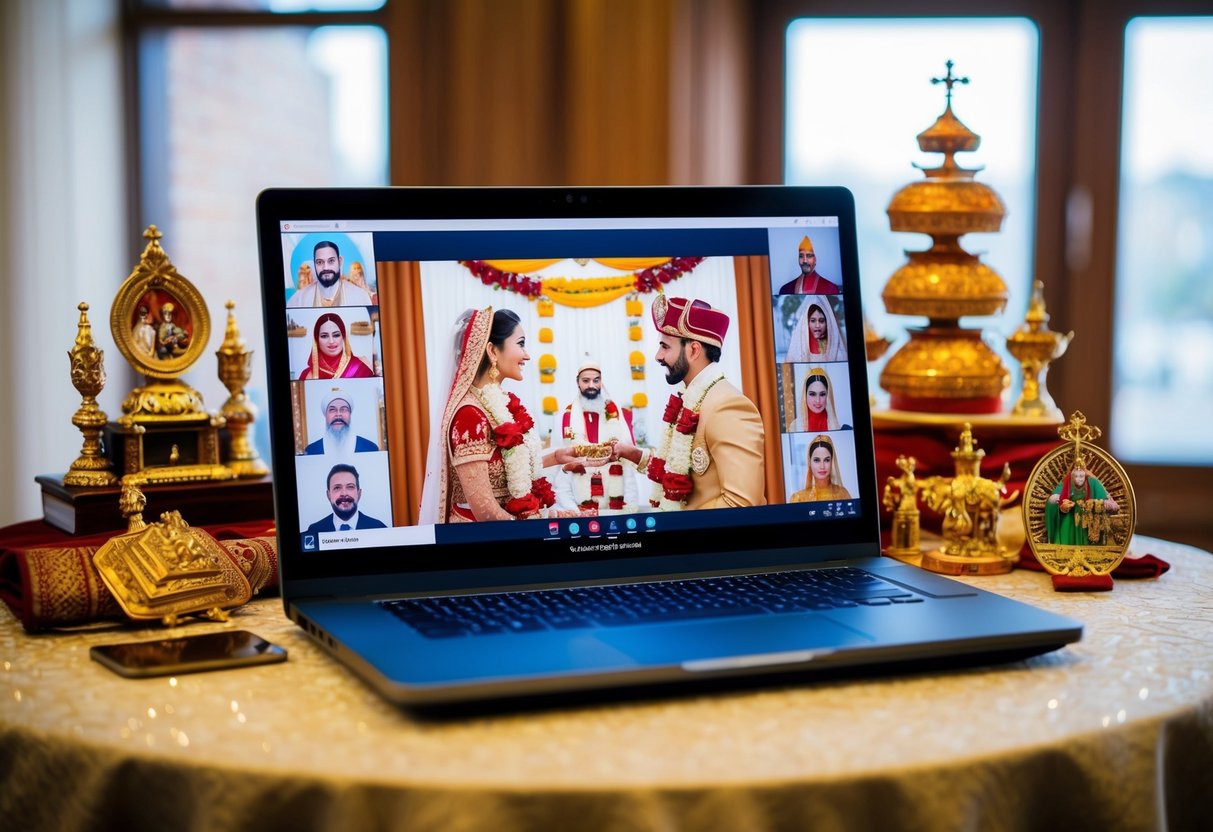
When planning a wedding over Zoom, it’s important to respect cultural and religious traditions. Each culture has unique rituals that hold deep meaning. Understanding how to incorporate these elements can make your virtual ceremony feel more authentic and special.
Incorporating Traditional Elements
Incorporating traditional elements into your Zoom wedding can enhance the experience. For example, if you belong to a particular religion, you should consider the specific rituals that are important to you.
You can opt for a virtual officiant from organizations like the Universal Life Church or the American Marriage Ministries. They often understand how to weave traditional rites into modern technology.
Additionally, you might want to include significant cultural symbols, such as prayers or blessings that are meaningful to you. Don’t forget to share these elements with your guests, making them part of your unique celebration.
Customs and Rituals in a Virtual Space
Navigating customs and rituals in a virtual setting requires thoughtful planning. Many cultural traditions can be adapted for Zoom weddings. For instance, lighting a unity candle or performing a ring exchange can be done seamlessly online.
You can also involve family members in the ceremony by having them participate in reading vows or sharing blessings. This way, even if they are miles away, their presence is felt.
Discuss with your officiant which customs can be adapted for a virtual environment. They may have experience with online wedding ceremonies and can suggest creative ideas. By keeping traditions alive, your wedding will reflect your unique heritage and values while embracing modern technology.
Navigating Social Dynamics
As you plan a virtual marriage ceremony, understanding the social dynamics involved is crucial. This includes managing who to invite and how to create a comfortable environment for your guests, even while physically apart.
Managing Invitations and Guests
When organizing a virtual marriage ceremony, sending out invitations is your first step. Choose a user-friendly platform for your invites, to make it easy for guests to join. Consider using a mix of traditional and digital invitations.
Be clear about the time and platform. Make sure guests know whether they need to download any software beforehand. You might want to create a group chat for guests so they can communicate with each other leading up to the ceremony.
Also, decide whether you want to limit the number of guests. Smaller groups can create an intimate atmosphere, while larger gatherings can feel festive. In either case, make sure your guests feel included and valued.
Social Distancing and Virtual Gatherings
Social distancing has changed how we connect, but it doesn’t mean you can’t celebrate love.
Virtual gatherings allow you to share your special day with loved ones from afar. You can set a welcoming tone by encouraging guests to dress up, as they would for an in-person ceremony.
Consider incorporating interactive elements, like a live stream of your vows or a digital guestbook where attendees can leave messages.
You can also guide guests through virtual activities, such as a toast or a group photo session, to make the event feel more connected.
Remember to stay engaged with your guests throughout the ceremony. Acknowledge their presence and thank them for joining you online. Their involvement can make a big difference in creating a warm atmosphere, despite the physical distance.