
Can Both Parents Walk Bride Down the Aisle? Exploring Modern Wedding Traditions
Many brides today are embracing unique traditions for their weddings. Both parents can walk you down the aisle if that feels right for you. This choice not only honors the support and love from both figures in your life but also reflects the modern approach to weddings where personal preferences take center stage.
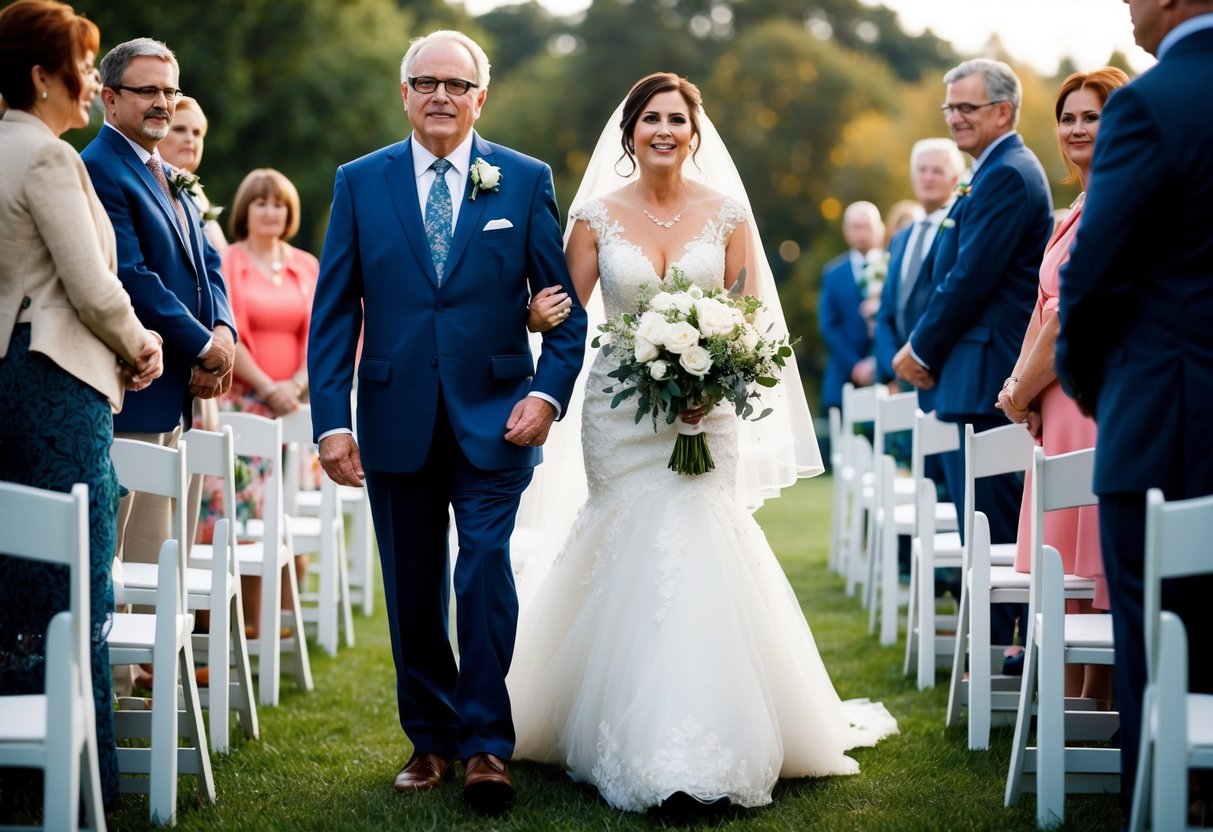
Including both parents in this special moment can create a sense of unity and celebration. It’s a beautiful way to show appreciation for the roles they’ve played in your life. Whether you lean towards tradition or want to make your own path, the decision is ultimately yours.
You might find that more couples are choosing to break away from the classic image of just the father escorting the bride. In the spirit of modern weddings, consider what makes you feel the most comfortable and supported as you prepare for your big day.
Historical Context and Evolution of Wedding Ceremony Customs
Wedding customs have deep-rooted traditions that have evolved over time. The act of walking down the aisle involves meaning and significance for many. As wedding customs change, more couples explore different ways to honor their families during the ceremony.
Significance of Walking Down the Aisle
Walking down the aisle is often seen as a symbolic journey. It represents a transition from one stage of life to another, typically from childhood to adulthood.
In many traditions, this moment is significant as it showcases support from family. Brides often choose to have both parents walk them down the aisle, highlighting the importance of family unity. This shift represents a growing acceptance of collaborative parenting roles in weddings.
Traditional Role of the Father of the Bride
Historically, the father of the bride played a vital role in wedding ceremonies. In arranged marriages, this role often involved giving away the bride. This practice had roots in transferring ownership and confirming the union between families.
Many fathers still walk their daughters down the aisle, reflecting their support and love. This tradition symbolizes a father’s duties and the bride’s connection to her family, while embracing new beginnings with her partner. The emotional aspect of this moment is cherished by many couples.
Adaptations in Modern Weddings
Modern weddings often adapt traditional roles to fit personal values. Some couples now choose to include both parents in this important moment. This reflects a more egalitarian approach, showcasing shared responsibility and love from both sides of the family.
Brides may walk down the aisle alone or with their children as a way to honor their unique family structures. This evolution signifies a movement away from outdated norms towards a more inclusive representation of family dynamics in wedding ceremonies.
Ceremony Processional Variations and Inclusivity
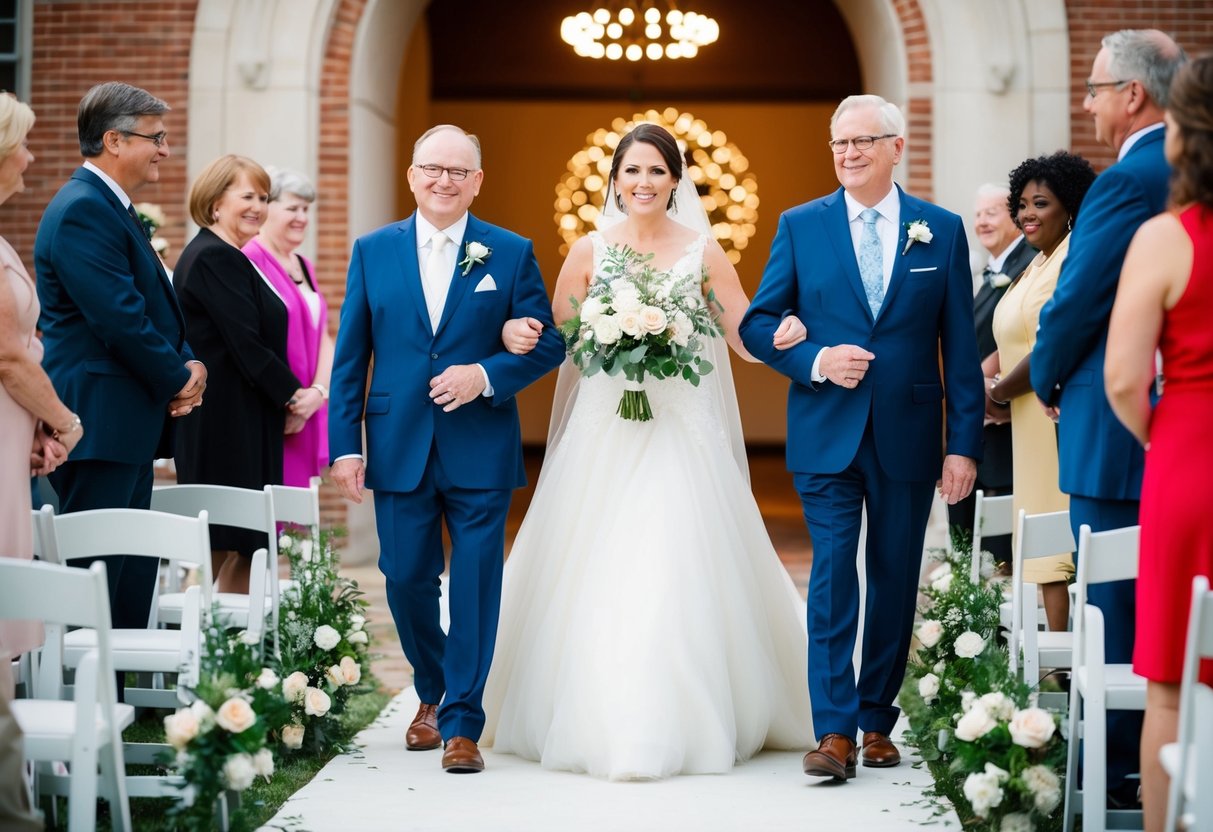
Your wedding ceremony can be a special moment that truly reflects your family dynamics. There are many ways to include various family members, ensuring inclusivity and honoring everyone who has played a role in your life.
Role of Stepfamilies in the Processional
Stepfamilies can significantly contribute to the ceremony. If you have a stepfather, consider having him walk you down the aisle alongside your biological parent. This gesture acknowledges the love and support from both figures in your life.
If you choose to honor both parents, a possible arrangement could involve each parent walking you part of the way. This way, you respect their individual roles while demonstrating unity within your family structure. Remember, every family is unique, and your processional should reflect that.
Incorporating Grandparents and Other Relatives
Including grandparents and other relatives in your ceremony can add a heartfelt touch. You might consider having a grandparent walk you down the aisle or participate in the processional. This inclusion can highlight your family heritage and celebrate relationships that are important to you.
If you have close aunts or uncles, invite them to join the processional too. Recognizing these family members shows love and appreciation for those who have helped shape your life. Tailor your ceremony to reflect your family’s history and connections.
Walking Together as a Symbol of Unity
Having both parents walk you down the aisle is a powerful symbol of unity. This act represents the support and love from both sides of your family. It can also bring a sense of inclusivity, showing that both parents are equally important in your life.
You might find that walking together creates a meaningful moment filled with emotion. Whether you choose to walk with both parents or involve other family members, the process maximizes the special connection between everyone present. Embracing these moments makes your day even more significant for you and your loved ones.
Navigating Personal Preferences and Family Dynamics
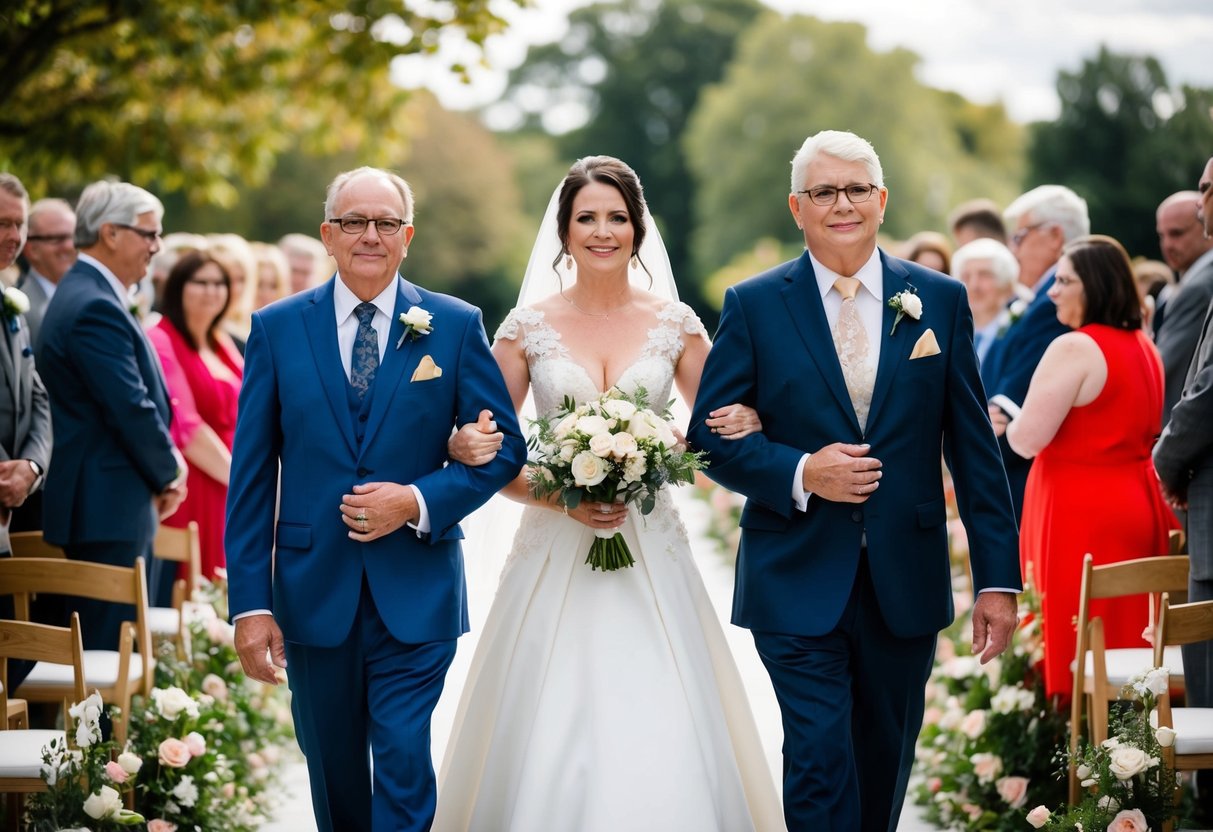
When planning your wedding, deciding who will walk you down the aisle is a special moment. Your choice can reflect personal feelings, family relationships, and cultural backgrounds. Balancing these factors is important for a memorable experience.
Deciding Who Walks You Down the Aisle
Choosing who walks you down the aisle can be personal and meaningful. You might feel a close connection to both your parents or perhaps a guardian or a close family member. Think about who has supported you the most in your journey.
You can also consider various ways to honor important figures in your life. For instance, both parents can walk you together, or a parent can escort you halfway before another family member joins. Remember, this moment is about you and your feelings.
The Role of Cultural and Familial Expectations
Cultural and familial expectations can play a big role in your decision. Some traditions emphasize having both parents involved in this moment, while others may have different customs.
If you have a rich cultural background, think about what this ceremony means in that context. It may be essential to blend your personal preferences with family expectations. Talking to family members can help you understand their views and traditions related to giving away the bride.
Communicating Your Wishes to Your Loved Ones
Once you’ve made your decision, communicate your choice to your loved ones. Clear communication can help prevent misunderstandings and ensure everyone feels included.
Consider sharing your thoughts in a calm and heartfelt way. Explain the importance of your choice and how it reflects your feelings. If anyone has concerns, listen openly and consider their perspectives. Finding common ground can make this process smoother and strengthen family ties.