
Can Groomsmen Walk Alone? Exploring Their Role in Wedding Ceremonies
Groomsmen often have a key role in the wedding processional, but you might be wondering if they can walk alone. Yes, groomsmen can walk alone if it suits the couple’s wedding tradition or personal preference. This flexibility can help balance the procession and make the ceremony feel more personalized.
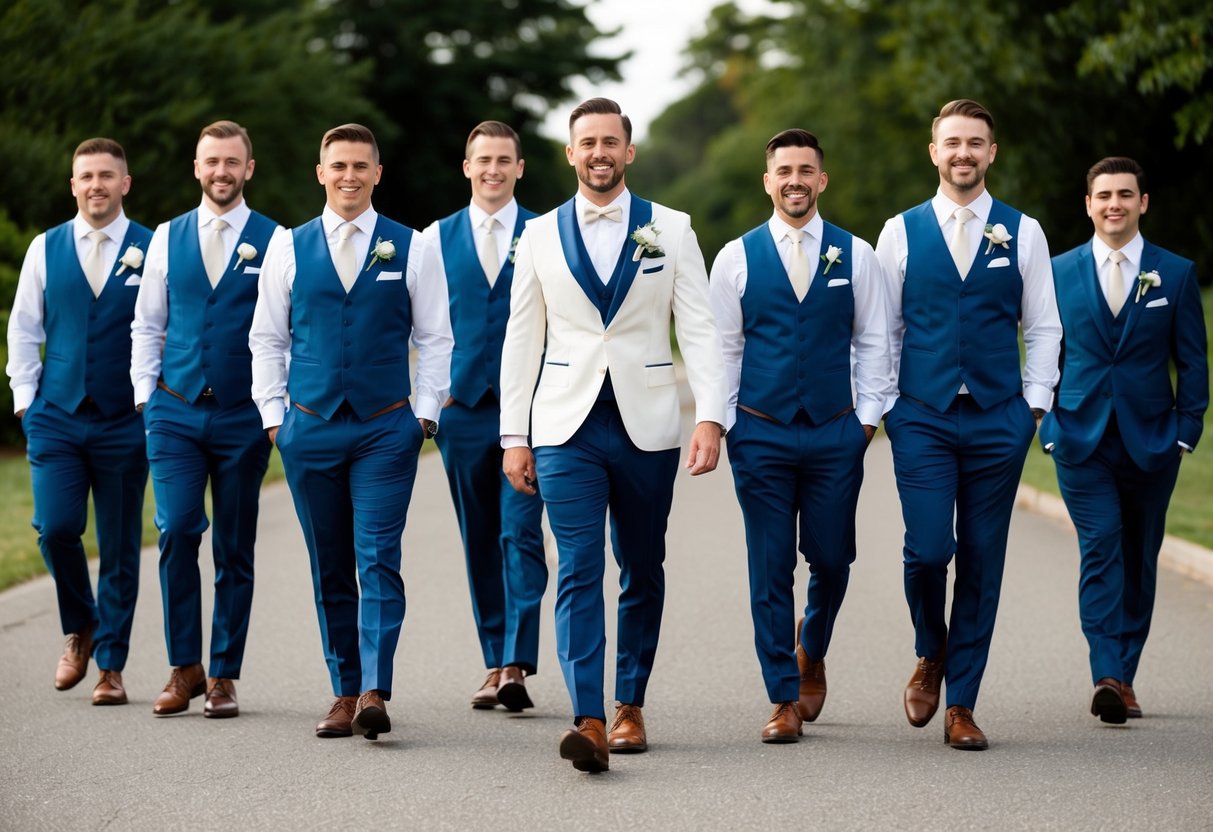
When planning your wedding, consider how the groomsmen will enter alongside the bridesmaids.
Many choose to have them walk in pairs. However, it’s perfectly acceptable for a groomsman to enter the ceremony solo, especially if it creates a better flow or fits with the overall feel of your day.
Every wedding is unique, and your choices should reflect your style and wishes. So, whether you prefer a traditional setup or a more modern twist, knowing that groomsmen can walk alone opens up new possibilities for your big day.
Wedding Processional Basics
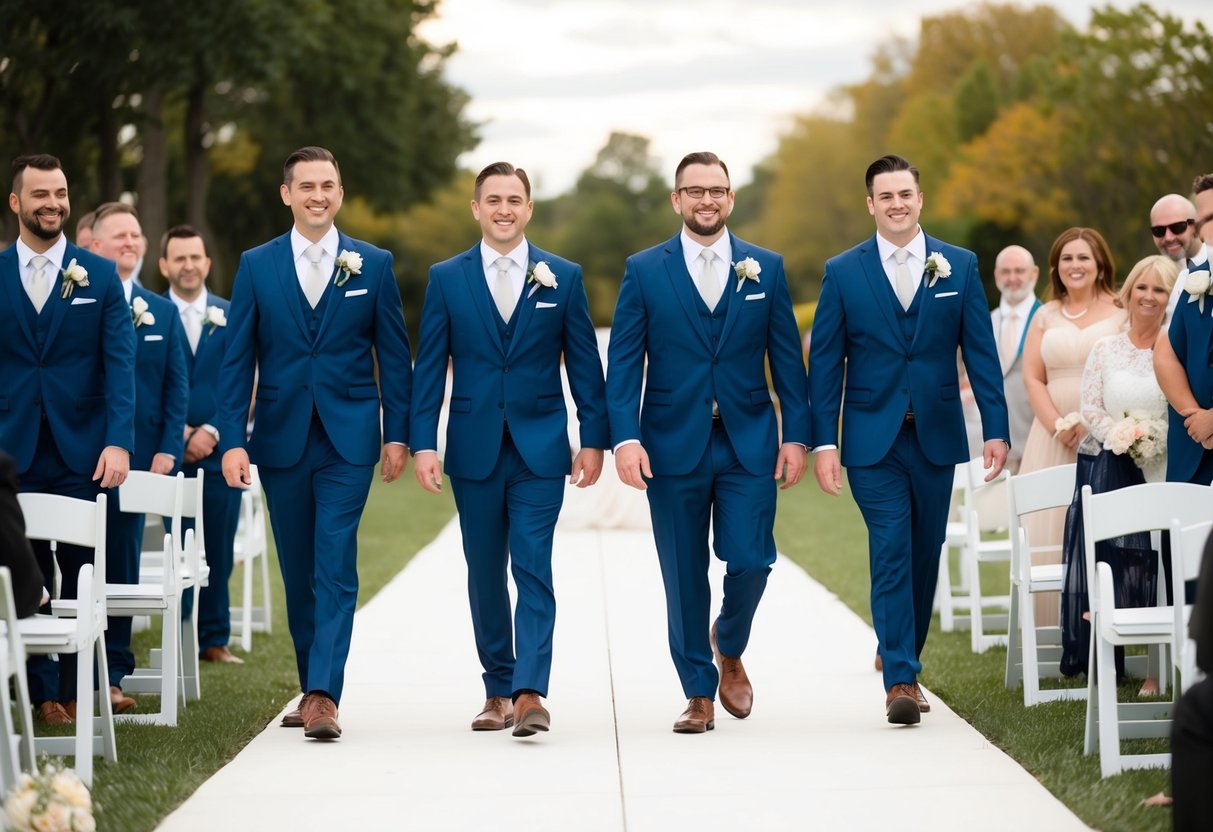
A wedding processional is an essential part of your ceremony. It organizes who walks when and sets the tone for the event. Understanding this flow helps everyone know what to expect.
Understanding the Traditional Processional Order
In a traditional ceremony, the officiant stands at the altar waiting for the wedding party. The processional typically starts with the groom and best man entering from a side door.
Next, the bridesmaids and ushers walk in pairs. If there’s an uneven number, one person can walk alone or two can pair up. Following them is the maid or matron of honor, who walks by herself.
Finally, the flower girl and ring bearer may come next. The bride is the last to enter, usually accompanied by a parent or guardian. This order creates a memorable and structured entrance.
Roles of the Wedding Party
Understanding the roles in the processional helps everyone stay organized. The officiant initiates the ceremony at the altar.
The groom stands beside the officiant as his support. Meanwhile, the best man helps with tasks like holding the rings.
Bridesmaids assist the bride, and the maid or matron of honor plays a crucial role in supporting her. The flower girl brings charm with petals, while the ring bearer carries the rings, often in a small pouch.
Each role enhances the ceremony and allows for a smoother processional. Knowing what to expect can ease any nerves you may have.
Customizing the Processional
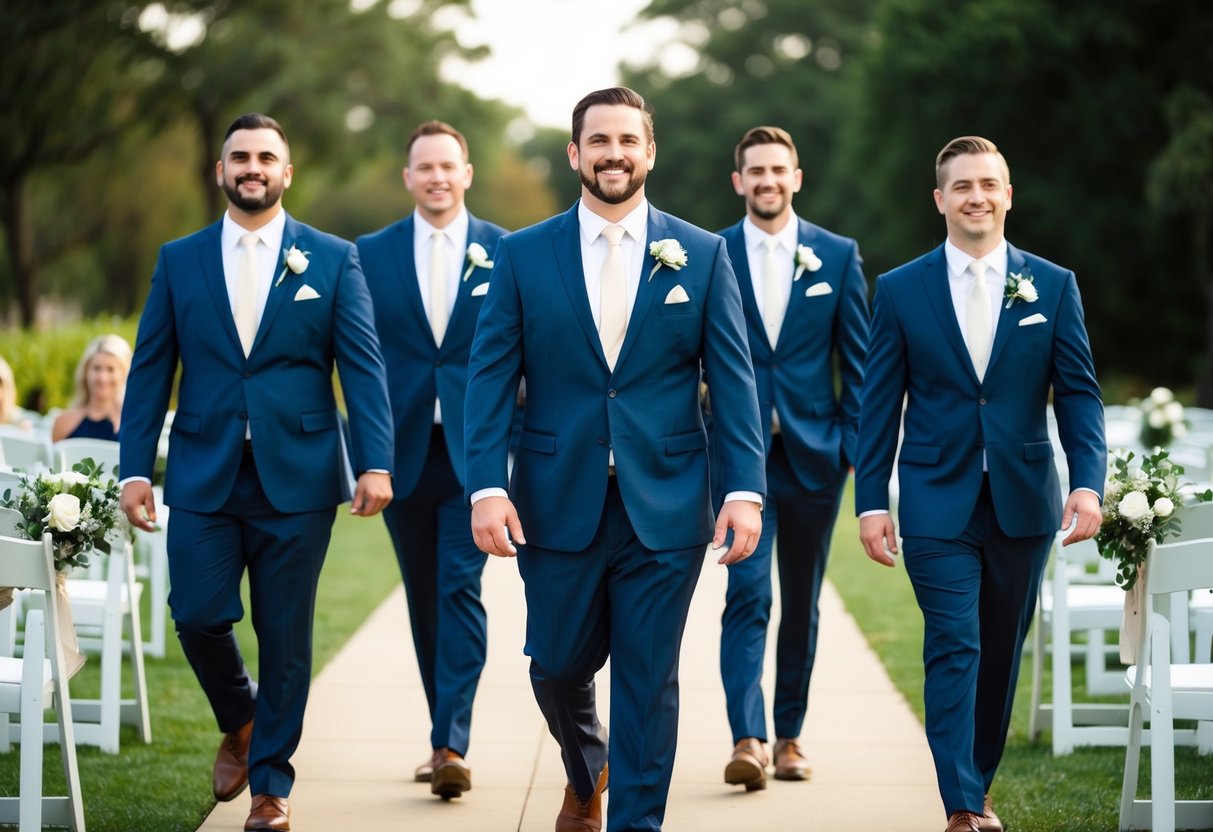
You have the opportunity to make your wedding processional unique. There are many ways to customize how groomsmen enter the ceremony, including whether they walk alone or with others. These choices can reflect your personal style and family traditions.
Solo Groomsmen Walks: Yay or Nay?
Deciding if groomsmen should walk alone is all about your personal preference. Having them enter solo can give each groomsman a moment in the spotlight. This approach can create a more modern and relaxed vibe.
If you choose this option, consider the order of the groomsmen. In a traditional wedding procession, the groomsmen may walk individually before the best man. This maintains formality while allowing for individuality.
Think about your ceremony venue as well. A larger space may feel emptier with solo walks, while a cozy setting can make it more personal.
Additionally, family traditions can guide your decisions. If your family prefers a more traditional approach, you might want to pair groomsmen with bridesmaids instead. Ultimately, it’s your day, so choose what feels right for you!
Cultural Variations in Wedding Processionals
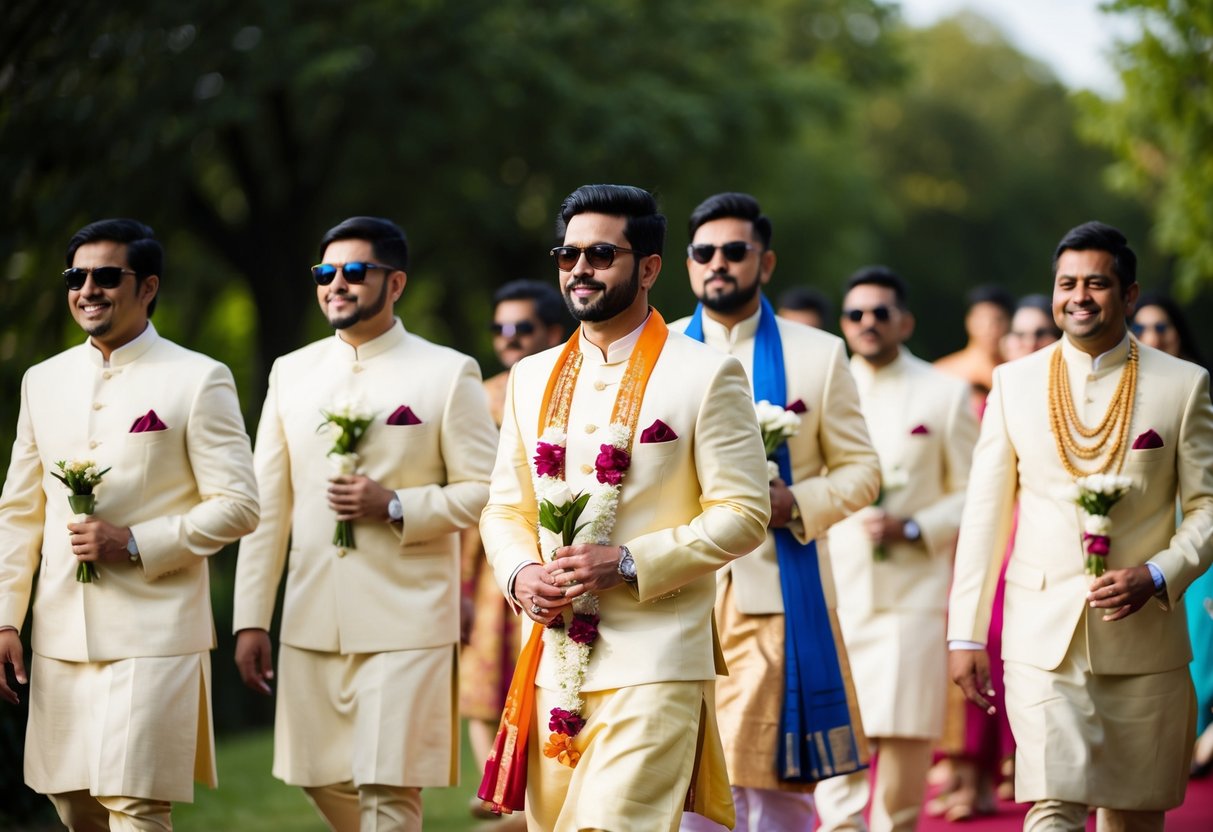
Wedding processionals can vary greatly depending on cultural and religious backgrounds. Each tradition offers unique insights into how you can organize this important moment. Here’s a look at some key differences in wedding processionals across various cultures.
Christian Wedding Processionals and Orders
In Christian weddings, the processional often follows a recognized order. Typically, it starts with the officiant, followed by the groom, best man, and groomsmen. Bridesmaids usually walk down the aisle followed by the maid or matron of honor, and then the bride, often escorted by her father.
Certain denominations, like in a Catholic wedding, might follow a stricter processional order. For instance, parents may walk in together before the bridal party. The music played can vary from traditional hymns to contemporary songs, reflecting personal preferences.
Jewish Wedding Processionals and Chuppah Traditions
Jewish weddings feature distinctive processionals centered around the chuppah, or wedding canopy. The ceremony often includes parents of the bride and groom walking down the aisle first to honor familial relationships.
The groom may walk in alone or with his parents. He usually stands under the chuppah while waiting for the bride. The bride follows, escorted by her parents. This emphasizes the unity of both families. The processional highlights the importance of community and family ties.
Hindu and Non-Denominational Wedding Customs
In Hindu weddings, the processional can start with the baraat, where the groom arrives in a celebratory procession. This festive entry may include music and dancing, making it a lively start to the ceremony.
Once the groom reaches the mandap, or wedding altar, he waits for his bride. The bride enters separately, often accompanied by her parents. Non-denominational ceremonies may blend elements from various traditions, allowing you to personalize your processional order. You can choose to adapt or mix customs to represent your unique personalities.
Planning and Coordination
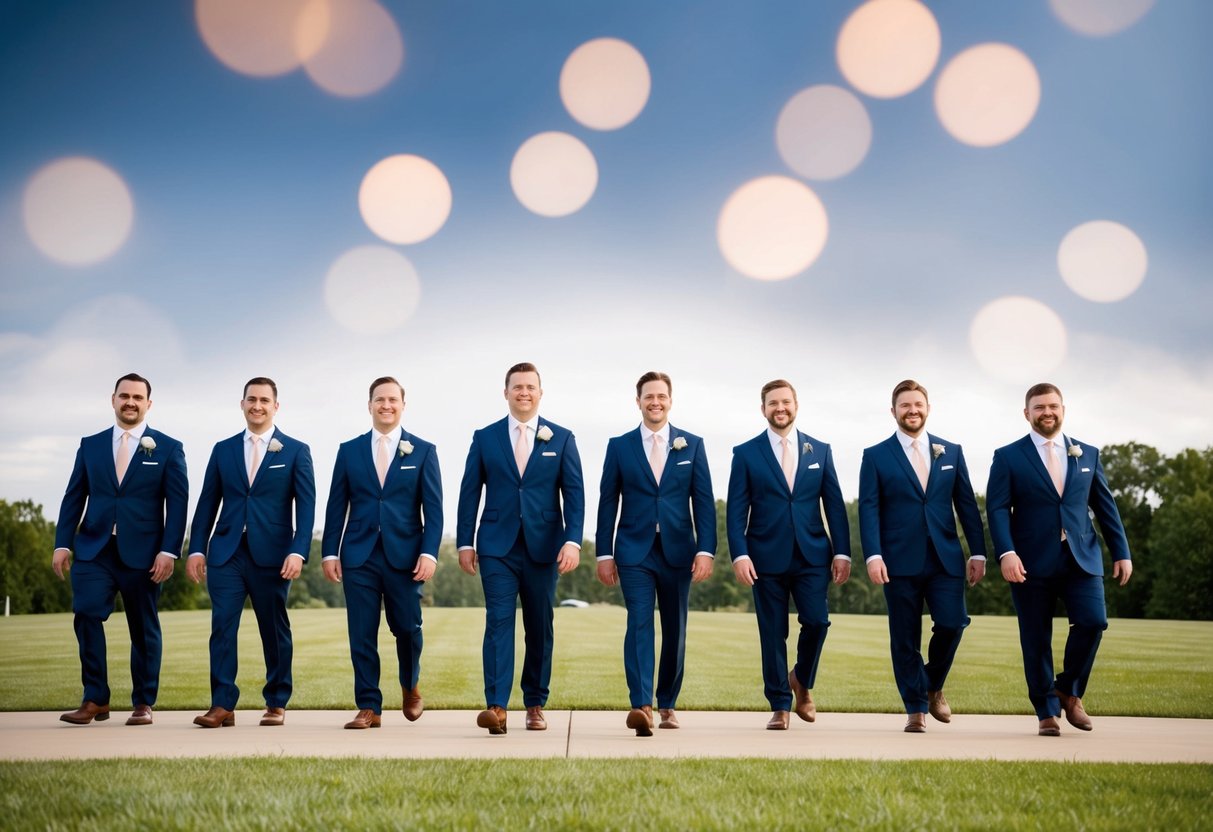
Planning and coordination are essential for ensuring that your wedding ceremony runs smoothly. The details of how groomsmen walk can vary depending on the style of the ceremony, such as a Christian wedding ceremony, Jewish wedding ceremony, or civil ceremony. It’s important to communicate clearly with everyone involved.
The Role of the Wedding Planner
A wedding planner plays a critical role in organizing the grand entrance and other significant moments. They help coordinate the timing of when the groomsmen walk down the aisle.
If you choose to have groomsmen walk alone, the planner will ensure that this is clearly communicated to all participants. Also, they will manage each wedding party member’s timing, especially during the bridal march.
An experienced planner also helps with military weddings where protocols might require specific sequences. They keep everything on schedule, so you can focus on enjoying your day!