
Can I Do a Wedding Without a Coordinator? A Practical Guide
You can do a wedding without a coordinator when your guest count, venue setup, and schedule stay manageable. You can plan and run your own wedding if you are organized, willing to assign day-of duties, and prepared to keep every vendor working from one clear timeline. A small DIY wedding at one location is the easiest format to manage.
The trade-off is time and responsibility. You will handle vendor emails, contracts, payments, schedule changes, guest questions, and day-of decisions. A wedding coordinator normally carries those tasks so you and your family can focus on the celebration.

You can also choose a middle path by planning the wedding yourself and hiring a day-of coordinator for the final weeks and wedding day. That option gives you creative control while placing vendor coordination and troubleshooting with one trained person. If you want a practical starting point, review this step-by-step wedding planning checklist and decide which jobs you want to own.
When Self-Coordination Is a Realistic Choice
Self-coordination works best when your wedding has one venue, a short travel distance, a limited guest list, and vendors with clear responsibilities. Your guest experience improves when someone other than you manages questions, timing, and transitions.

A backyard wedding may feel relaxed, yet it can require extra work for rentals, power, restrooms, weather, parking, and cleanup. A destination wedding adds travel details and local logistics. Use those factors to decide how much support your team needs.
What Makes a Wedding Simple Enough to Self-Run?
A self-run wedding has a clear flow and few moving parts. Look for these conditions:
- The ceremony and reception share one wedding venue.
- Your guest list fits comfortably within the space and meal plan.
- Your vendors arrive, set up, and clean up within written time windows.
- The venue handles tables, chairs, catering service, and basic room transitions.
- You have a trusted person who can answer questions during the event.
- Your decor plan uses prepared pieces that need minimal assembly.
- Your ceremony has a short processional and limited music cues.
You also need enough planning time. If you work full time, have family duties, or dislike detailed scheduling, the hours required for DIY wedding planning can quickly exceed your expectations.
Which Situations Add Too Much Complexity?
Complexity rises when several locations, transportation windows, or large vendor teams must connect. A multi-day destination wedding may involve guest travel, welcome events, hotel information, weather plans, and local suppliers.
Extra coordination is also needed for:
- A large guest list with assigned seating or many meal choices
- Separate ceremony and reception locations
- Outdoor setups with weather-sensitive rentals
- Extensive wedding decor that must be installed and moved
- A large bridal party with hair and makeup appointments
- Multiple performers, readings, speeches, or special dances
- Tight photography windows and complicated transportation
- Vendors who have never worked together
Ask your wedding venue which tasks its staff covers. Some teams manage room flips, catering flow, and guest questions. Others limit their work to venue rules and facility operations.
Is a Day-of Coordinator a Better Middle Ground?
A day-of coordinator gives you help with execution while you keep control of wedding planning. You make the design and booking decisions, then provide the coordinator with contracts, vendor contacts, setup plans, and your approved timeline.
Ask when the coordinator begins work. Some join several weeks before the wedding to review details and confirm vendors. Others focus on the event day. Clarify whether setup, cleanup, rehearsal support, guest questions, transportation, and final payments are included.
This choice fits you when you enjoy planning but want your wedding party and relatives to attend as guests. It also protects your wedding day from turning into a work shift.
Set Up a Planning System Before Booking Details
A reliable planning system gives every task an owner, deadline, and home. Start with your wedding budget, build a wedding planning timeline, and keep vendor information in one shared location.

Use a separate wedding email address and a shared calendar. Your wedding website can hold guest-facing details, while your private planning file stores contracts, payments, notes, and contact information.
Create a Wedding Budget With a Contingency Fund
Set your total spending limit before you request quotes. Divide the budget into major categories such as the venue, food, photography, music, attire, flowers, rentals, stationery, transportation, and lodging.
Add a contingency fund for price changes, extra rentals, overtime, damaged items, delivery fees, and last-minute purchases. Keep this money separate from your planned spending so an unexpected invoice does not affect essential services.
Track each payment with:
- Vendor name
- Contract total
- Deposit paid
- Balance due
- Payment deadline
- Cancellation terms
- Overtime or travel fees
Read every contract before signing. Confirm the cancellation policy, rain plan, arrival window, setup duties, meal requirements, insurance rules, and who supplies equipment.
Build a Wedding Planning Timeline With Clear Owners
Break wedding planning into monthly tasks, then assign each task to you, your partner, a family member, or a vendor. Write the owner beside every deadline. A task without an owner can easily disappear.
Include milestones for venue selection, guest estimates, vendor bookings, invitations, attire fittings, menu choices, ceremony details, seating, final payments, and rehearsal plans. Set internal deadlines earlier than vendor deadlines so you have room to fix mistakes.
Schedule a weekly planning block with a short agenda:
- Review unfinished tasks.
- Confirm upcoming payments and appointments.
- Resolve open vendor questions.
- Update the shared timeline.
- Send decisions to anyone affected.
Keep Contracts, Contacts, and Updates in One Place
Create folders for contracts, invoices, guest information, ceremony documents, decor, and day-of materials. Use one master spreadsheet with vendor names, services, phone numbers, arrival times, payment status, and assigned responsibilities.
Save the latest version of your timeline with a clear date in its file name. Share it with vendors after the main details are confirmed, then send a final version at least two weeks before the wedding. Ask important vendors to confirm they received it.
Keep printed copies at the venue and with your day-of point person. Digital files help with updates, while printed pages remain useful when someone needs information quickly.
Choose Vendors Who Can Work Independently
Independent vendors make self-coordination easier when their contracts define arrival, setup, service, and cleanup responsibilities. Choose professionals who answer clearly, provide detailed plans, and respect the shared schedule.

Your photographer, DJ, caterer, florist, rental company, and wedding venue each control different parts of the day. Vendor coordination means connecting those pieces before the event so no one has to guess.
What to Confirm With Your Wedding Venue
Ask the venue who unlocks the space, receives deliveries, places tables and chairs, manages catering, controls lighting, handles trash, and completes cleanup. Confirm whether venue staff move ceremony chairs or decor between spaces.
Also ask about:
- Vendor arrival and loading instructions
- Parking and freight access
- Setup and breakdown windows
- Power outlets and sound limits
- Rain and extreme-weather plans
- Insurance requirements
- Storage for personal items
- Restrictions on candles, alcohol, confetti, and decor
- Final guest count and meal deadline
Write the answers into your planning file. A venue contact may support facility operations without managing your full wedding timeline, so define the boundary before signing.
How to Give Each Vendor the Information They Need
Send every vendor the details that affect their work. Include the venue address, parking instructions, arrival time, setup location, meal plan, payment contact, emergency contact, and key schedule blocks.
Give the photographer a family photo list and a list of must-have moments. Give the DJ your music cues, announcement names, processional order, and do-not-play requests. Give the caterer the final guest count, dietary notes, meal service plan, and toast schedule.
Use one shared timeline, then add vendor-specific notes. Ask each vendor to confirm arrival time and responsibilities in writing.
Why the Photographer, DJ, and Caterer Cannot Run the Whole Day
Your photographer manages images and photo timing. Your DJ manages music, announcements, and parts of the reception flow. Your caterer manages food service, staff, and meal timing.
Each professional needs to focus on their contracted role. A DJ should not chase a missing rental delivery, and a photographer should not organize family members during every transition. Assign one point person to connect vendors, answer questions, and make decisions when the schedule changes.
Assign Day-of Jobs to Specific People
A wedding without a coordinator needs a named person for every practical duty. Assign responsibilities in writing, brief each helper before the wedding, and give them authority to act within clear limits.
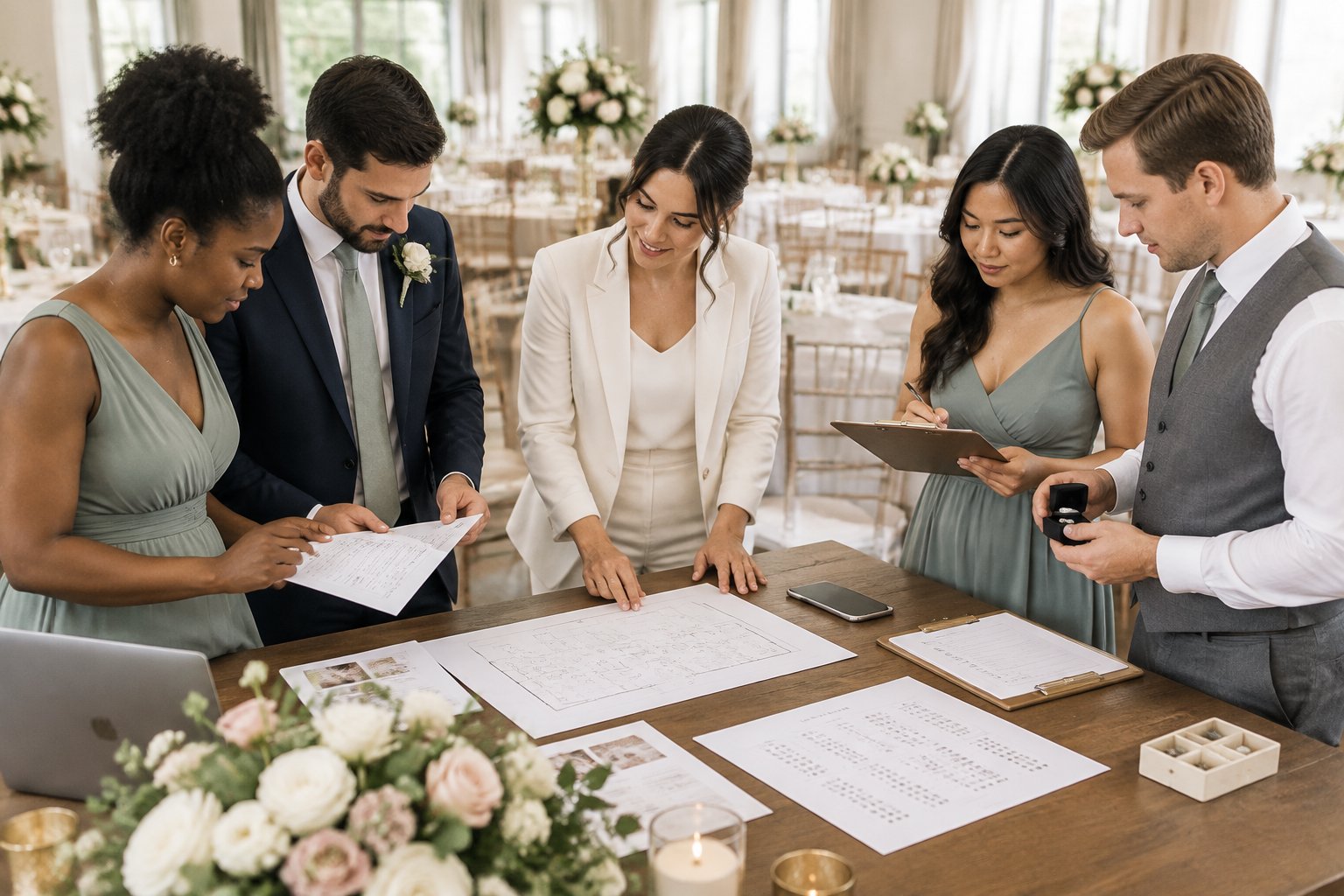
Your bridal party can help with focused tasks, yet your wedding party should still have time to participate in the celebration. Separate emotional roles from logistics so the people closest to you do not spend the entire day solving problems.
Pick One Point Person for Questions and Decisions
Choose one trusted adult who is calm, reachable, and comfortable making decisions. Give this person the final timeline, vendor contacts, venue rules, floor plan, payment envelopes, and emergency instructions.
Tell vendors to contact the point person for schedule questions, deliveries, guest needs, and small changes. Give the point person a spending limit for minor purchases and a clear rule for issues that require your approval.
A day-of coordinator performs this role professionally, yet a capable friend, relative, or venue contact can manage a smaller event when the duties are limited and documented.
Give the Wedding Party Focused, Limited Roles
Assign one task to each helper whenever possible. Examples include:
- Keeping the processional organized
- Checking hair and makeup timing
- Holding ceremony programs
- Moving personal flowers
- Delivering final payments
- Collecting cards and gifts
- Guiding guests to transportation
- Returning rental items
- Packing decor at the end of the night
Give each person a written instruction, deadline, and contact number. Avoid assigning setup, guest questions, vendor payments, and cleanup to the same person.
Protect the Couple and Family From Troubleshooting
Your partner and you should not serve as the help desk. Give your phones to the point person before the ceremony and tell vendors when you will be unavailable.
Parents and close relatives may have strong opinions or important roles, so confirm their responsibilities in advance. Keep them free from routine questions by directing vendors and guests to the designated contact.
Set aside food, water, medication, and quiet time for yourselves. A protected break in the schedule helps you stay present through the ceremony and reception.
Build a Wedding Day Timeline Everyone Can Follow
A complete wedding day timeline turns separate vendor plans into one shared schedule. Include preparation, deliveries, photos, ceremony cues, guest transitions, meal service, speeches, dancing, and cleanup.
Build backward from the ceremony and reception end time. Add buffer time for traffic, late arrivals, outfit changes, family photos, and room transitions. Share the finished wedding timeline with every person whose work affects the day.
Plan Getting-Ready, Vendor Arrivals, and Photos
Start with the first arrival and assign a person to confirm access to the space. List hair and makeup appointments by name, with time for touch-ups and dressing.
Add arrival windows for the photographer, florist, rentals, caterer, DJ, officiant, and transportation. Include setup deadlines and identify who checks each delivery.
Plan photos around the ceremony time and available daylight. Give the photographer a family shot list with names and a gathering point. Tell family members when and where to meet so the photo session does not depend on repeated phone calls.
Leave time for snacks, water, bathroom breaks, and travel between rooms. Your schedule should show when the couple is free to rest.
Who Manages the Processional and Music Cues?
Assign one ceremony captain to line up the wedding party, communicate with the officiant, and signal the music operator. The captain should have the processional order, song names, cue points, and backup plan.
Hold a short walkthrough with the officiant, musicians, DJ, and wedding party. Mark where each person waits and when each person moves. Confirm how the ceremony begins if a participant is late.
Give the music operator a written cue sheet. Include the processional, entrance, recessional, special songs, microphone needs, and volume instructions.
How to Keep Cocktail Hour, Dinner Service, and Toasts Moving
Give the point person a reception cue sheet with the order of announcements, entrances, dances, toasts, meal service, cake cutting, and open dancing. The DJ or emcee can announce transitions, while the point person confirms that vendors and participants are ready.
Coordinate with the caterer before the reception begins. Confirm when guests sit, when food service starts, how dietary meals are delivered, and where speakers stand.
Limit toast length and tell speakers their time before the wedding. Place speeches between natural meal-service pauses so guests stay comfortable and the caterer can work without interruption.
Plan the Reception Timeline Through the Last Dance
Write the reception timeline in blocks with one owner per transition. Include the grand entrance, first dance, welcome remarks, dinner, parent dances, cake cutting, open dancing, special events, last dance, and exit.
Schedule the last dance early enough for guests to gather and for your exit team to prepare transportation, lights, props, and personal items. Assign someone to collect cards and gifts, pack decor, and confirm rental pickup.
A written timeline helps the DJ and venue staff make small adjustments without bringing every decision to you.
Prepare for Problems Without Taking Over the Day
A stress-free wedding comes from preparing for likely problems and giving someone else the authority to handle them. Build an emergency plan, make guest logistics easy to find, and decide in advance when professional help is worth the cost.
Your plan should cover weather, vendor delays, missing items, medical needs, transportation, power, and communication gaps. Keep the couple out of routine troubleshooting so the guest experience stays steady.
Create Contacts, Backups, and an Emergency Plan
Prepare a one-page emergency sheet with the venue address, point person, vendor phone numbers, venue rules, nearest medical facility, transportation contacts, and backup locations.
Pack a labeled kit with sewing supplies, stain remover, safety pins, phone chargers, tape, scissors, pain relievers, tissues, water, snacks, and copies of key documents. Assign one person to carry or store it.
Confirm backup options for outdoor ceremonies, transportation delays, missing rentals, power problems, and absent participants. Ask vendors who calls the backup contact and who pays for approved emergency purchases.
Communicate Logistics Clearly to Guests
Put travel details, parking, dress code, transportation, accessibility information, ceremony timing, and contact instructions on your wedding website. Send updates when plans change.
Give guests one contact for day-of questions. Include directions from hotels, shuttle pickup times, weather guidance, and venue entry instructions. Ask ushers or a welcome helper to guide guests once they arrive.
Destination wedding guests need extra details about lodging, airport transfers, local transportation, currency, activities, and the event schedule. Share these details early so fewer questions reach you during the celebration.
Know When to Bring in Professional Support
Hire a wedding planner or day-of coordinator when the schedule has several locations, the guest list is large, the event includes multiple setup teams, or you feel unable to protect your own wedding day.
Professional support also makes sense when your venue offers limited staff, your event includes complex cultural traditions, or many guests need transportation and lodging help. Ask for a written scope of work that names the planning start date, vendor communication, setup, ceremony support, reception management, cleanup, and emergency response.
If a full-service planner exceeds your budget, price a smaller coordination package or ask the venue which operational tasks it includes. Make the decision before your final month, when changing responsibilities becomes harder.