
Can I Handwrite My Wedding Invitations? Tips for a Personal Touch
Handwriting your wedding invitations can be a wonderful way to add a personal touch to your big day. Many couples wonder, yes, you can absolutely handwrite your wedding invitations! This option gives you the creative freedom to showcase your unique style while reflecting your love story.
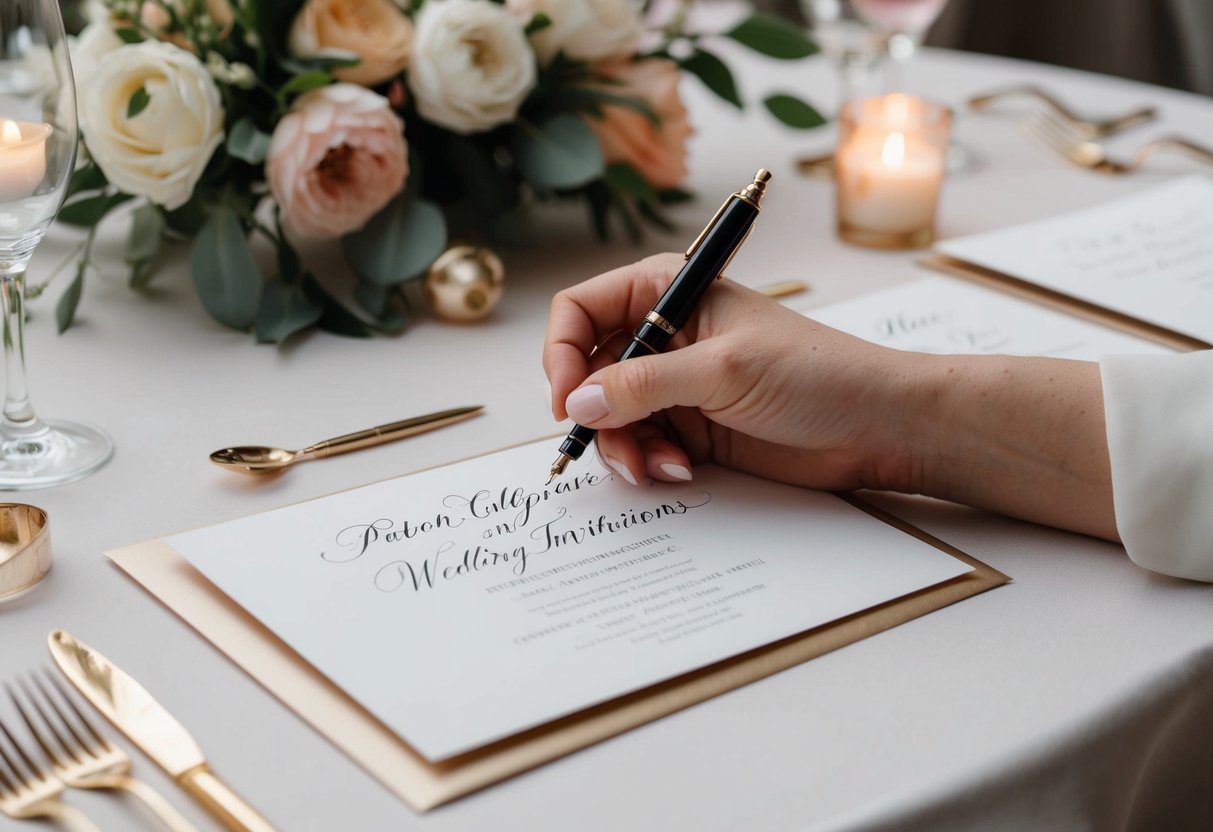
Choosing to handwrite your invites is more than just a trend; it’s a nod to tradition that many couples cherish. It can make your invitations feel more intimate and thoughtful, which is something your guests will surely appreciate.
Whether you have beautiful penmanship or want to practice a new style, your handwriting can truly make your invitations stand out.
As you embark on this exciting task, remember that it’s all about what feels right for you. A handwritten invitation is not just about the words; it’s about setting the tone for your celebration and making a lasting impression. Let’s explore how to create stunning handwritten invites that reflect your personality and occasion.
Planning Your Handwritten Invitations
When planning your handwritten invitations, consider the materials and styles you want to use. Choosing the right paper and ink will set the tone for your invites.
You also need to decide whether to use calligraphy or your own handwriting for a personal touch.
Choosing the Right Paper and Ink
Selecting the right paper is key to making your invitations stand out. Look for high-quality, thick paper that feels luxurious. Options like cardstock or textured paper can add elegance.
For ink, you can use bottled ink with a dip pen or choose fine-tipped pens designed for invitations. Bottled ink comes in various colors and dries well on thicker paper. If you pick a dip pen, consider using metal nibs for smooth, consistent lines.
Testing the paper and ink together is wise. Write a few sample lines to see how they look before committing.
Deciding on Calligraphy or Handwriting
Choosing between calligraphy and your own handwriting can impact the overall look of your invites. Calligraphy offers a formal and artistic style, perfect for elegant weddings.
You can either hire a professional calligrapher or practice your skills with guided tutorials.
If you prefer a more personal touch, your own handwriting might be best. Make sure your letters are legible and consistent. Consider using good-quality pens to enhance the appearance.
Whichever you choose, practice writing your invites a few times to get comfortable. Having a clear direction will make the process smoother and more enjoyable.
Crafting the Perfect Wording and Layout
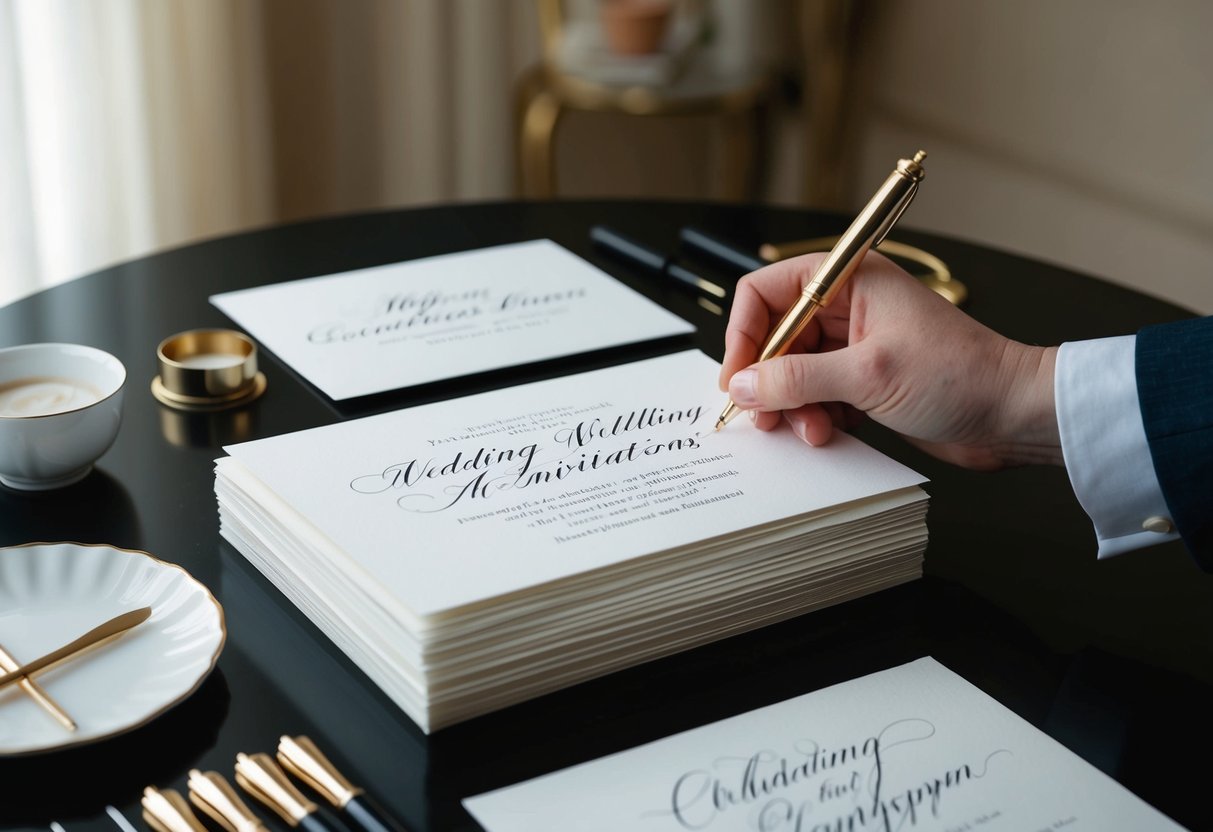
Creating handwritten wedding invitations allows you to express your unique style. The wording and layout are crucial for conveying the right tone and information to your guests.
Structuring the Invitation Wording
Start with a warm greeting. Use a formal script for that elegant touch. You can address your guests as “Mr. and Mrs. Smith” or simply by their first names for a more casual feel.
Next, clearly state the couple’s names. This is usually in a larger font size. For example:
“You are invited to the wedding of Jane Doe & John Smith.”
Then, include the date and time in a straightforward manner. Follow with the venue’s name and address. Be specific and clear to avoid confusion.
A sample wording structure could look like this:
- Names
- Date & Time
- Venue Name
- Address
Always double-check your spelling and punctuation to keep everything looking polished.
Incorporating RSVP and Event Details
Don’t forget the RSVP section! This is key for planning your big day. Make it easy for your guests by including clear instructions.
You can use a line like:
“Please respond by May 1, 2025.”
This encourages your friends and family to reply promptly.
Include a separate card for RSVP. This can also list any additional events, such as the reception or brunch.
Lastly, make sure to highlight any important details, like dress code or parking information. For instance:
- Dress Code: Formal Attire
- Parking: Available on-site
Keeping your information organized and enticing will help guests feel excited about your celebration.
Addressing and Sending Your Invitations
When addressing and sending your wedding invitations, following proper etiquette is key. You’ll want to make sure every detail is covered, from how you address guests to managing your RSVP cards.
Understanding Proper Etiquette
When addressing invitations, use the full name and appropriate title of each guest. For example, for a married couple, write “Mr. and Mrs. Smith.” For unmarried couples, list both names using “and” between them.
Consider using inner envelopes to keep things organized. These can list only the names of the people invited, like “Jessica and Tom.” It creates a personal touch.
Don’t forget to write your return address clearly on the outer envelope. This ensures that any returned invitations find their way back to you. It’s also helpful for guests in case they need to reach you.
Managing RSVP Cards and Return Addresses
RSVP cards are a crucial part of your wedding invitations. Include them with clear instructions on how to respond. A simple “Please RSVP by [date]” is often enough.
When designing your RSVP card, provide options for guests to indicate if they will attend, along with a space for them to write their names. This helps with tracking your guest list.
Also, make sure to have a designated return address on these cards. This way, guests know where to send their responses. It keeps everything neat and orderly as you prepare for your special day.
Benefits and Considerations
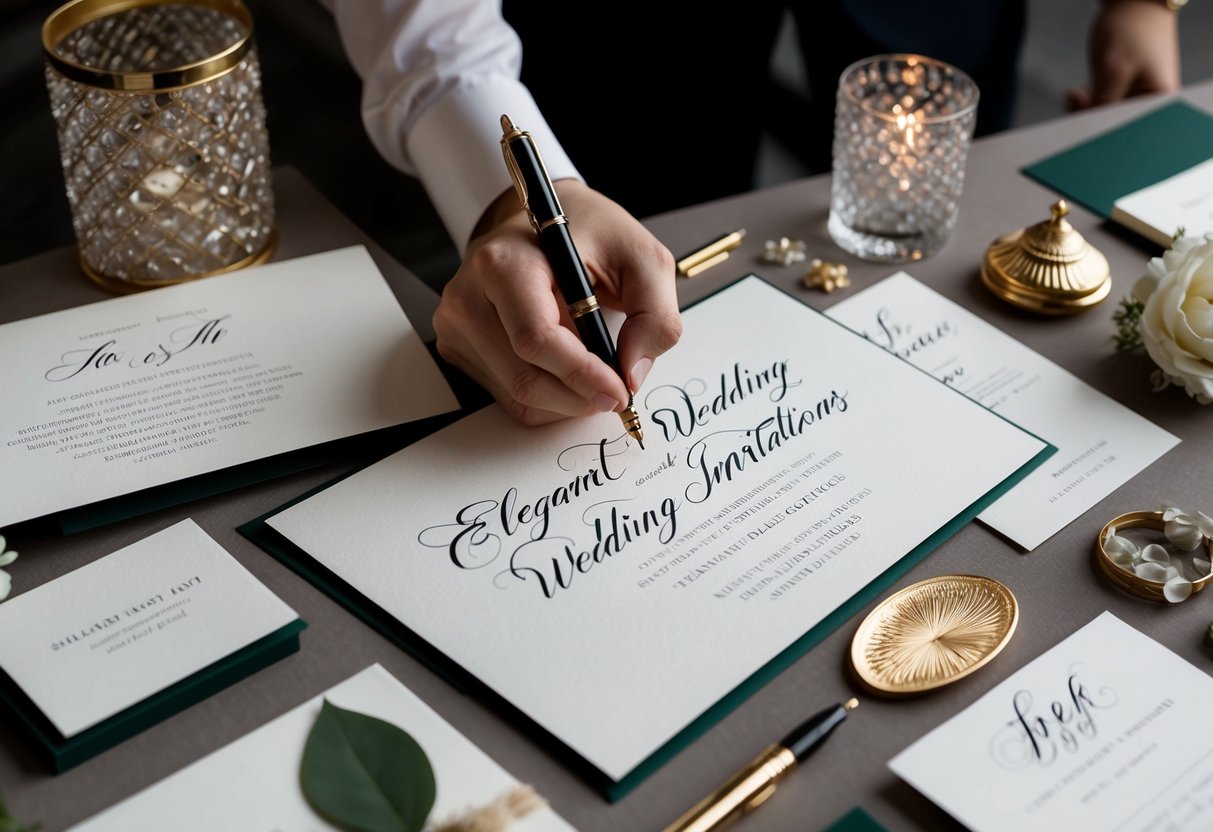
When deciding whether to handwrite your wedding invitations, it’s important to think about how it affects your budget and the time you’ll need to commit. Here’s what you should consider:
Evaluating The Cost vs. Personalization
Handwriting your invitations can add a unique, personal touch that printed invites might lack. It shows your guests that you put extra effort into their invitation, which can mean a lot.
However, it’s essential to consider costs. While DIY invitations may seem cost-effective, materials like quality paper and ink can add up.
You might need to purchase special writing tools if you want to showcase your handwriting skills. Handwriting invitations could be a cost-effective alternative if you enjoy this creative process.
Time Management for DIY Invitations
Another key factor is the time commitment. Handwriting invites can be a lengthy process, especially with a large guest list. You’ll need to set aside dedicated time to ensure each invite looks its best.
Consider breaking it into smaller tasks. For instance, you could complete a set number each day.
If you have other wedding tasks to manage, carefully plan this to avoid feeling overwhelmed. Remember that good preparation can make a big difference in how smoothly everything goes.