
Can I Use Mrs. If I Am Not Married? Understanding Title Usage and Etiquette
When it comes to how you address yourself or others, choosing the right title can feel tricky. If you’re asking, “can I use Mrs. if I am not married?”—the answer is no. Mrs. is traditionally reserved for those who are legally married. Instead, you can use Ms. or Miss based on your preference and comfort.

Using Ms. is a great option if you want a title that does not specify marital status. It suits many situations and is considered polite. If you’re unmarried, you might prefer Miss, which is commonly used to refer to single women. Understanding these titles helps you navigate social and professional settings with confidence.
Choosing the right title reflects your identity. Embracing Ms. or Miss allows you to present yourself accurately, regardless of your marital status. This opens up a discussion on how names and titles can empower you.
Understanding Titles and Marital Status

When it comes to titles for women, it’s important to understand what they signify about marital status. Knowing the differences can help you choose the right title in various situations.
Titles for Women: Mrs, Ms, and Miss
-
Mrs. is used for a married woman. It usually follows her husband’s last name, but some women may choose to use their own name or a combination of both.
-
Ms. is a neutral title applicable to any woman, regardless of her marital status. It’s a good option when you don’t know if a woman is married or prefer to respect her privacy.
-
Miss is reserved for unmarried women. This title indicates that the person has never been married.
Using Ms. instead of Mrs. can avoid assumptions. It’s widely accepted and promotes equality by not highlighting marital status.
Connotations of Marital Status in Titles
The choice of title can carry different connotations. For example, Mrs. implies a specific social identity tied to marriage. It indicates that a woman is part of a couple and may reflect traditional views.
In contrast, Ms. is more progressive. It recognizes a woman’s individuality without pointing out her marital status. This can empower women to be identified solely by their personal merit.
Using Miss can bring attention to one’s unmarried status. For some, this may feel limiting or unwanted, especially in professional settings.
Cultural and Language Considerations
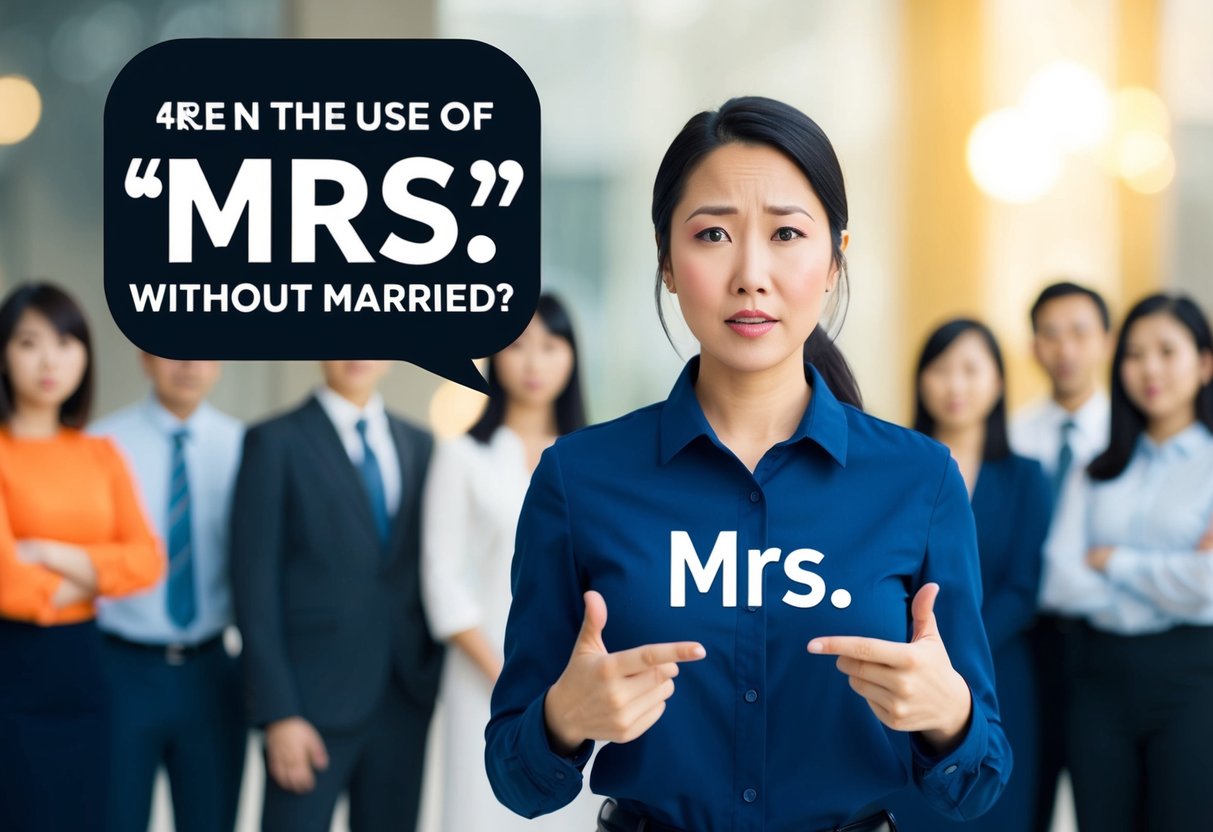
When thinking about titles like “Mrs.” and “Ms.,” it’s essential to consider cultural and language differences. Societal norms and movements shape how we use these terms. Understanding these aspects can help you navigate their use more effectively.
Honorifics in American and British English
In American English, “Mrs.” is commonly used for married women, while “Ms.” is a more neutral term that does not indicate marital status. You might choose “Ms.” if you prefer not to disclose your marital status.
In British English, the distinction is similar. However, “Miss” is still prevalent for unmarried women. This varies slightly between cultures, but the trend toward using “Ms.” has increased in both regions. This choice reflects a growing desire for equality and respect in how women are addressed.
The Role of Feminist and Women’s Movements
The feminist movement has significantly influenced how we view titles. Feminists advocate for language that reflects equality. The introduction of “Ms.” aligns with these ideals, allowing women more freedom in how they identify themselves.
The women’s movement has also played a role in changing perceptions. As women gained more rights and visibility, traditional titles became limiting. Many women today prefer “Ms.” as it helps separate identity from marital status. Recognizing these movements can inform your choices regarding how to be addressed.
Usage in Social and Professional Contexts

When addressing women in different settings, the choice of title can signal respect and understanding. The way you use titles can vary greatly between formal and professional environments. Here, you’ll see how to navigate these situations with confidence.
Formal and Professional Settings
In formal and professional settings, using the correct title is important. If you are unsure of a woman’s marital status, using Ms. is often the safest choice. This title does not reveal whether she is married or not, which makes it respectful and inclusive.
For instance, when sending out wedding invitations, you should stick to the recipient’s preferred title. If you know a woman prefers Mrs., use that. If you don’t know her preference, Ms. is a good neutral option. In professional emails, addressing a coworker as Ms. can maintain professionalism while showing respect.
Addressing Women: From Formality to Familiarity
In social situations, the formality of your address can change. In more casual environments, you might use a first name, depending on your relationship.
For example, if you know a woman well, calling her by her first name may be appropriate. However, if you are meeting someone for the first time, starting with Ms. or Mrs. is a good practice. This shows politeness and respects her choice.
Always pay attention to cues—if she introduces herself as Jane, you can comfortably follow her lead.