
Can You Get Married by Just Signing Papers in the UK? Understanding the Legal Process
When thinking about getting married in the UK, you might wonder if you can simply sign some papers without any formalities. The truth is, you cannot just get married by signing papers; a proper ceremony is required. This process includes specific paperwork that must be completed, even if you choose to hold the ceremony at a registry office.
If you’re considering a civil partnership instead, there are some similar requirements. You will still need to fill out the necessary paperwork and attend a short ceremony with an authorized person present.
Understanding the rules around marriage and civil partnerships can help you plan your special day with confidence.
As you explore your options, it’s important to know what to expect so you can enjoy the process.
Whether you want to exchange vows in a grand setting or a simple gathering, knowing the legal steps can make all the difference.
Legal Requirements for Marriage in the UK
Getting married in the UK involves a few important legal steps. You need to meet eligibility criteria and provide specific documents. Additionally, giving notice at a Register Office is essential before the ceremony takes place.
Eligibility and Documentation
To get married, you must be at least 16 years old in England and Wales. If you are 16 or 17, you will need parental consent. Proof of your age, nationality, and address is required.
Acceptable documents include:
- Birth certificate or passport for age and nationality.
- Utility bill or bank statement showing your current address.
If you’ve been married before, be ready to present your Decree Absolute or a death certificate if you’re widowed. It’s essential to ensure all documents are valid and up-to-date to avoid any delays.
Giving Notice at a Register Office
Before the wedding, you must give notice at your local Register Office. This notice must be done at least 28 days before the wedding.
During this appointment, you will need to provide the necessary documentation:
- Proof of age and nationality.
- Proof of your address.
The notice includes a notice of marriage, which stays posted for 28 days. After this period, if no objections arise, you will be able to book your civil ceremony.
Remember, both partners must be resident in the area for at least seven days before giving notice. This step is crucial to ensure your marriage is legally recognized.
Types of Marriages and Civil Partnerships

When it comes to love and commitment in the UK, you have options beyond just signing papers. Understanding the different types of marriages and civil partnerships can help you make the best choice for your relationship.
Civil Ceremonies
Civil ceremonies are a popular choice for couples who prefer a straightforward and legal way to get married. These ceremonies usually take place at a Register Office or an approved venue. You don’t need a religious element here, which makes it ideal for those who want a simple, no-fuss approach.
In a civil ceremony, both partners must give notice of their intention to marry. This involves signing a declaration and presenting proof of identity. The ceremony itself is brief and can be personalized with readings or music. You can also invite guests to witness your vows.
Religious Weddings
If you’re looking for a more traditional experience, a religious wedding may be right for you. This can take place in a church, mosque, temple, or another religious building. Each denomination, like the Church of England, Roman Catholic, or Jewish faith, has specific requirements for the ceremony.
During a religious wedding, a vicar or another officiant will lead the ceremony. You’ll usually need to attend pre-marriage counseling or classes.
This type of wedding often includes traditional vows and may feature communal elements like hymns or prayers, creating a deeply meaningful experience.
Same-Sex Couples
Same-sex couples in the UK have the same rights to marriage and civil partnerships as heterosexual couples. You can choose to have a civil wedding, which is similar to other civil ceremonies, or a religious ceremony if your faith allows it.
Many religious groups, including some within the Church of England and Quaker communities, perform same-sex weddings.
If you opt for a civil partnership, it provides legal recognition without needing religious elements. This choice allows you to decide how to celebrate your love in a way that feels right for you.
Registering Your Marriage
Registering your marriage involves important steps that ensure your union is recognized legally. You’ll need to choose an approved venue for your ceremony and understand what happens after it.
Wedding Venues and Approvals
In the UK, you cannot get married just by signing papers. You must have a ceremony at an approved venue. This could be a local register office or other authorized locations like hotels or community halls.
When selecting a venue, check if it is licensed for marriages.
Each venue must follow specific rules. For example, it must have a clear area for the ceremony and accommodate witnesses.
It’s a good idea to visit several venues to find one that fits your vision. Ask about their wedding suppliers and available dates. Make sure to book well in advance, as popular venues fill up quickly!
After the Ceremony
Once your ceremony concludes, there are a few essential steps to take. You and your partner, along with two witnesses, must sign the marriage schedule. This document confirms that the ceremony took place.
The officiant will then take the signed schedule to the local register office. After processing, you’ll receive your Marriage Certificate.
This certificate is important for many legal processes, like changing your name or applying for benefits.
Always keep your Marriage Certificate safe since it is a vital document for proving your marriage status.
Planning and Celebrating Your Wedding
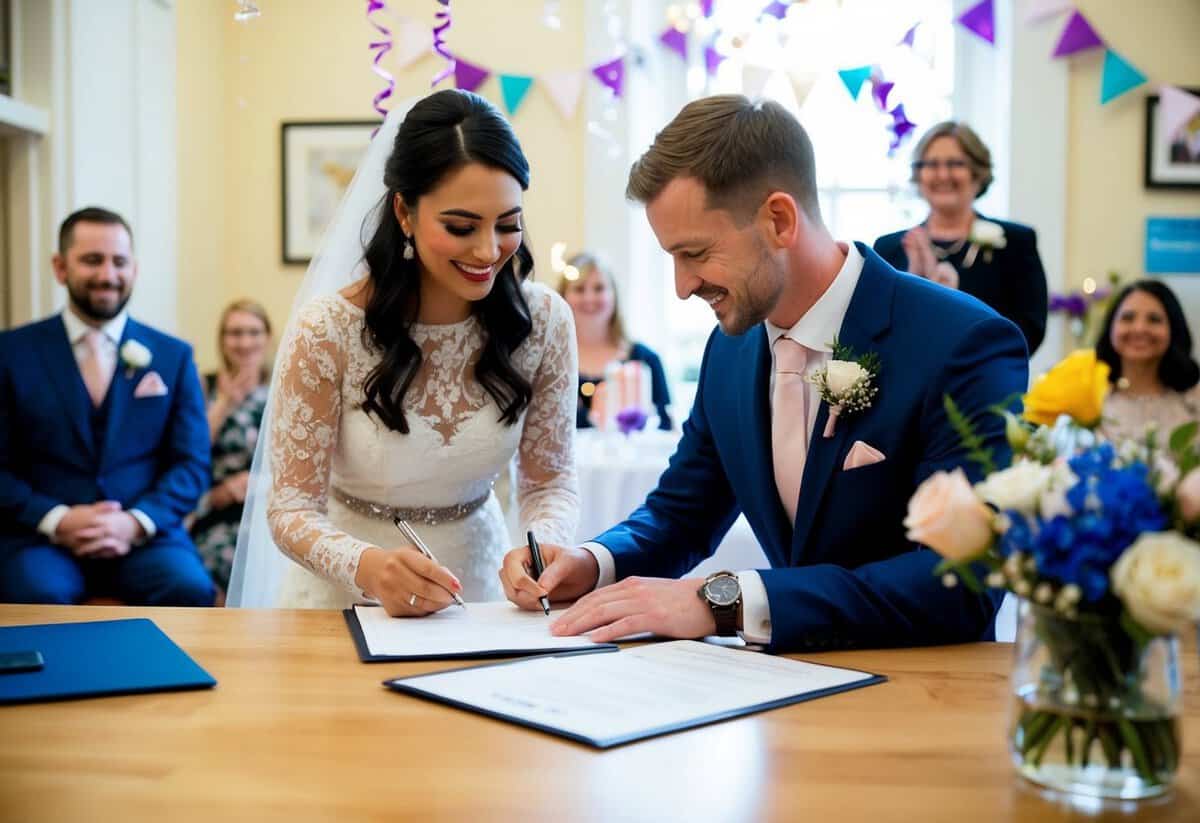
Getting married is an exciting journey. You’ll want to plan carefully to make your special day memorable. This section covers important steps to consider before, during, and after your wedding.
Before the Big Day
Before your wedding day, there are several key tasks.
Start by setting a wedding budget. Decide how much you can spend on venues, food, photography, and other expenses.
If you’re not sure where to begin, consider hiring a wedding planner. They can help you stay organized and find vendors that match your needs.
Choose your wedding date early on, as it affects venue availability and guest attendance.
Once you have a date, make a list of important aspects, like readings and music that reflect your style.
Don’t forget the engagement ring if you haven’t purchased one yet.
The Wedding Day
On the day of your wedding, try to enjoy the moment.
Start with a light breakfast to keep your energy up.
Arrive early at the venue to check on details. Be sure your photographer is in place to capture those special moments.
Have your wedding schedule handy. This will keep everything on track, from the ceremony to the reception.
Celebrate your union with food that you and your partner love. Whether it’s a formal sit-down dinner or a buffet, make sure it matches your vision.
Music can set the mood, so plan your playlist carefully. Whether you prefer a live band or a DJ, make it personal.
Post-Wedding Considerations
After the wedding, remember to take some time for yourselves. Consider a honeymoon to relax and celebrate together.
Send out thank-you notes to your guests and vendors. This small gesture goes a long way in showing appreciation.
Don’t forget to handle legal aspects like changing your name, if applicable. Make sure to register your marriage officially, as this is an important step in marriage in the UK.
Keeping these things in mind will help you enjoy every step of your wedding journey.