
Can You Put Two Names on a Check? Understanding Joint Payments and Banking Policies
When you write a check, you might wonder if you can include two names on it. Yes, you can absolutely put two names on a check, and it may be easier than you think. Whether it’s a payment between friends or a joint account situation, knowing how to properly format a check can save you some hassle.

If the check is made out to both individuals, it is typically written as a two-party check. Depending on how the names are listed, it may determine how the check can be cashed or deposited.
Understanding the rules around joint accounts and checks with two names can help you manage your finances more smoothly.
So if you’re ready to learn about all the options you have for checks with multiple names, keep reading to find out more! You’ll discover the best practices for depositing a check with two names and how to avoid any potential issues at the bank.
Understanding Two-Party Checks
Two-party checks are checks made out to more than one person. Understanding how they work is important for proper handling. You need to know what a two-party check is and the types of endorsements you may encounter.
What Is a Two-Party Check?
A two-party check is a check written to two individuals. This can often happen in cases like joint expenses, gifts, or shared payments. You’ll see phrases like “Person A and Person B” or “Person A or Person B” on the check.
When you receive a two-party check, it usually requires signatures from both payees unless specified otherwise.
This type of check is particularly useful for couples or business partners. Make sure you read the check carefully to know what is required to cash or deposit it.
Different Types of Endorsements
Endorsements are important when cashing or depositing a two-party check. There are two main types: “and” endorsements and “or” endorsements.
-
“And” Endorsement: If the check says “Person A and Person B,” both individuals must sign the check for it to be cashed or deposited. This means that each payee has equal rights to the funds.
-
“Or” Endorsement: If the check states “Person A or Person B,” then either payee can endorse the check without needing the other’s signature. This offers more flexibility, allowing just one person to access the funds.
Understanding these endorsements helps ensure smooth transactions with two-party checks.
How to Properly Endorse a Two-Party Check
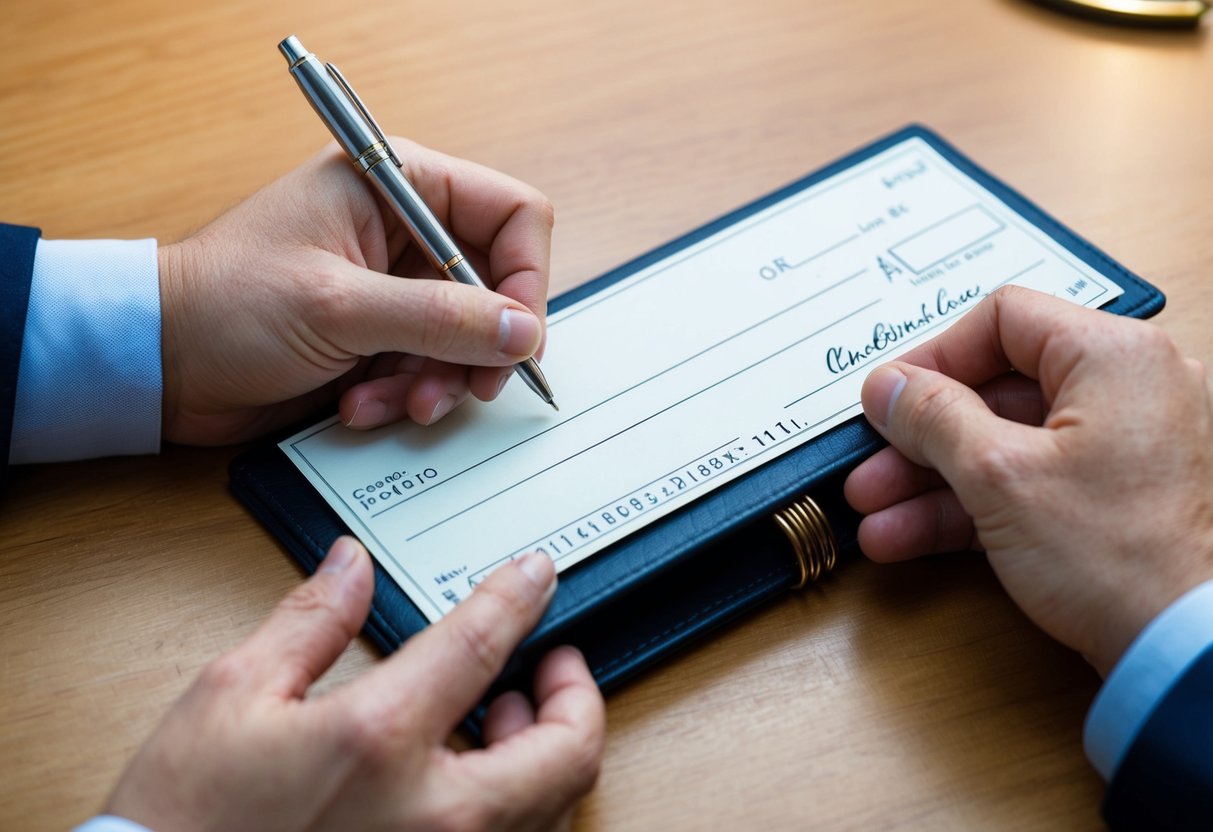
Endorsing a two-party check involves specific steps to ensure that both parties can access the funds. Understanding how to endorse the check correctly is essential. Here are the key methods to follow based on your situation.
Endorsement by All Parties
When a check has two names joined by “and,” both parties must endorse it. This means that both of you need to sign the back of the check.
- Locate the endorsement area: Flip the check over and find the designated area for signatures.
- Signatures: Each person should sign their name exactly as written on the front of the check. Make sure to use the same name style—whether it’s a full name or initials.
- Present at the bank: Both parties should ideally be present at the bank to cash or deposit the check. This helps avoid any issues related to unclear endorsements.
If one party cannot be present, they may need to use a different method to endorse the check.
Endorsement with Power of Attorney
If one party cannot endorse the check in person, they can use a power of attorney. This legal document allows someone to act on behalf of another person.
- Prepare the power of attorney: This document must clearly state that the person has the authority to sign checks for you.
- Signing the check: The person with power of attorney should sign their name followed by “as attorney-in-fact” and then your name. For example, if Jane is signing for John, it would look like: Jane Doe, as attorney-in-fact for John Doe.
- Bank requirements: Make sure to check with the bank about their requirements regarding the power of attorney. Some may want a copy of the document for their records.
This method can make it easier to handle checks if you are unavailable to endorse it yourself.
Depositing and Cashing Checks with Multiple Names
When you have a check with two names on it, you need to follow certain steps for depositing or cashing it. Understanding how to handle joint checks can save you time and effort. Here’s what you need to know about the process.
Depositing into a Joint Account
If both names on the check are on a joint account, the process is straightforward. You can simply endorse the check with your signature. Both parties can deposit the check by visiting the bank together or depositing via an ATM.
If the check includes the word “and,” both signatures are required. If it says “or,” only one signature is enough. This flexibility can make things easier for you. Make sure to verify with your bank about their specific rules for joint checks.
Cashing a Check with Two Names
Cashing a check that has two names requires a bit more attention. If the check is endorsed with “and,” both parties must be present at the bank to cash it. You’ll need to show valid ID for both individuals.
On the other hand, if the check is written with “or,” only one person needs to sign it. Still, it’s crucial to confirm your bank’s policies, as they may differ. Be careful, especially with larger amounts, to avoid complications.
Using Mobile Deposit for Two-Party Checks
Many banks offer mobile deposit options, which can make cashing joint checks easier. However, you need to check whether your bank allows mobile deposits for checks with two names.
If permitted, endorse the check using the same methods mentioned before. Take clear pictures of both the front and back of the check. Your bank will process the deposit as long as it meets their requirements.
Always read the fine print in your banking app to confirm the rules. This way, you can enjoy the convenience of modern banking while handling two-party checks effectively.
Special Considerations for Different Check Types

When you have a check with two names, it’s important to understand how different types of checks can affect how you deposit or cash them. Here are key details about handling tax refund checks and checks involving business partners.
Handling a Tax Refund Check
If a tax refund check is made out to two names, be cautious. The IRS usually issues these checks as joint payments. This means both parties must endorse the check.
You should check your bank’s policy. Some financial institutions may require both individuals to be present for the deposit. If this isn’t possible, ensure both names are signed on the back before you attempt to cash or deposit it.
Keep in mind that if the check has “and” between the names, it’s more strict. Both of you will need to endorse it. If it has “or,” either name can cash or deposit it without the other’s signature.
Dealing with Business Partner Checks
The rules for business partner checks can vary based on your agreements. If the check is made out to both partners, you often need both signatures to deposit or cash it.
When dealing with funds from a partnership, many financial institutions like banks require a joint account to facilitate transactions. This helps maintain transparency and proper record-keeping.
Make sure you follow your company’s protocols. It’s wise to have a written agreement about how to handle checks. Also, know who can cash or deposit checks to avoid any misunderstandings. Clear communication ensures smooth transactions for everyone involved.