
Castle Wedding Venues Barn: A Fairy-Tale Farm Guide
A castle-and-barn wedding venue gives you grand architecture, warm country character, and flexible spaces for one memorable celebration. For couples seeking a fairy-tale wedding with a relaxed reception, a castle farm with a dedicated barn is the strongest fit because it combines dramatic ceremony settings with practical room for dining, dancing, and guest comfort.
You can exchange vows beside stone towers, stroll through gardens for portraits, then welcome guests into a timber-framed barn with glowing lights and long tables. This format suits couples who want the romance of a wedding venue with the freedom to personalize the reception.
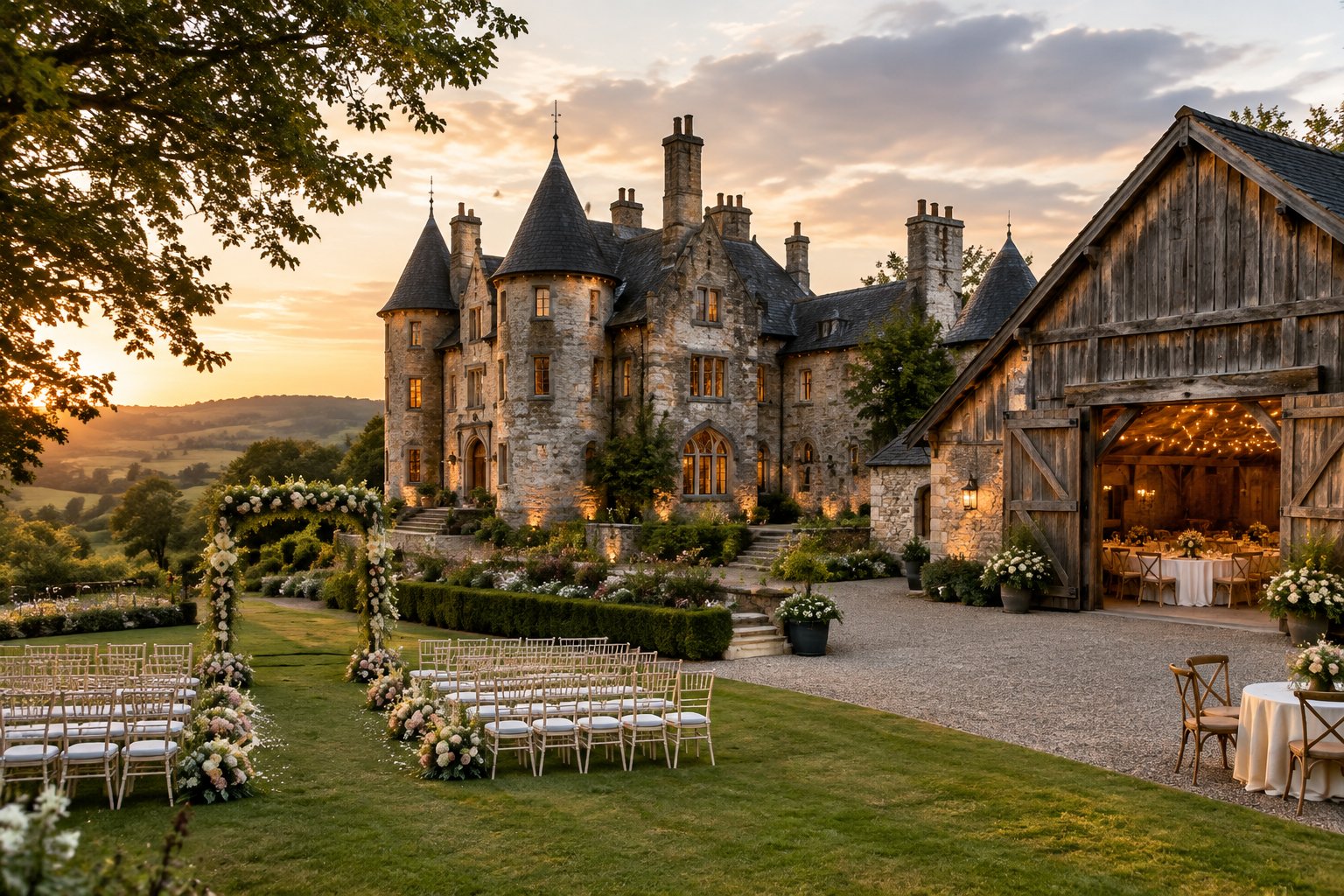
Start by comparing the property’s ceremony plan, weather backup, guest capacity, vendor rules, and overnight options. A thoughtful tour will help you see whether the setting supports your vision from guest arrival through the final dance.
What Defines a Castle-and-Barn Wedding Setting?
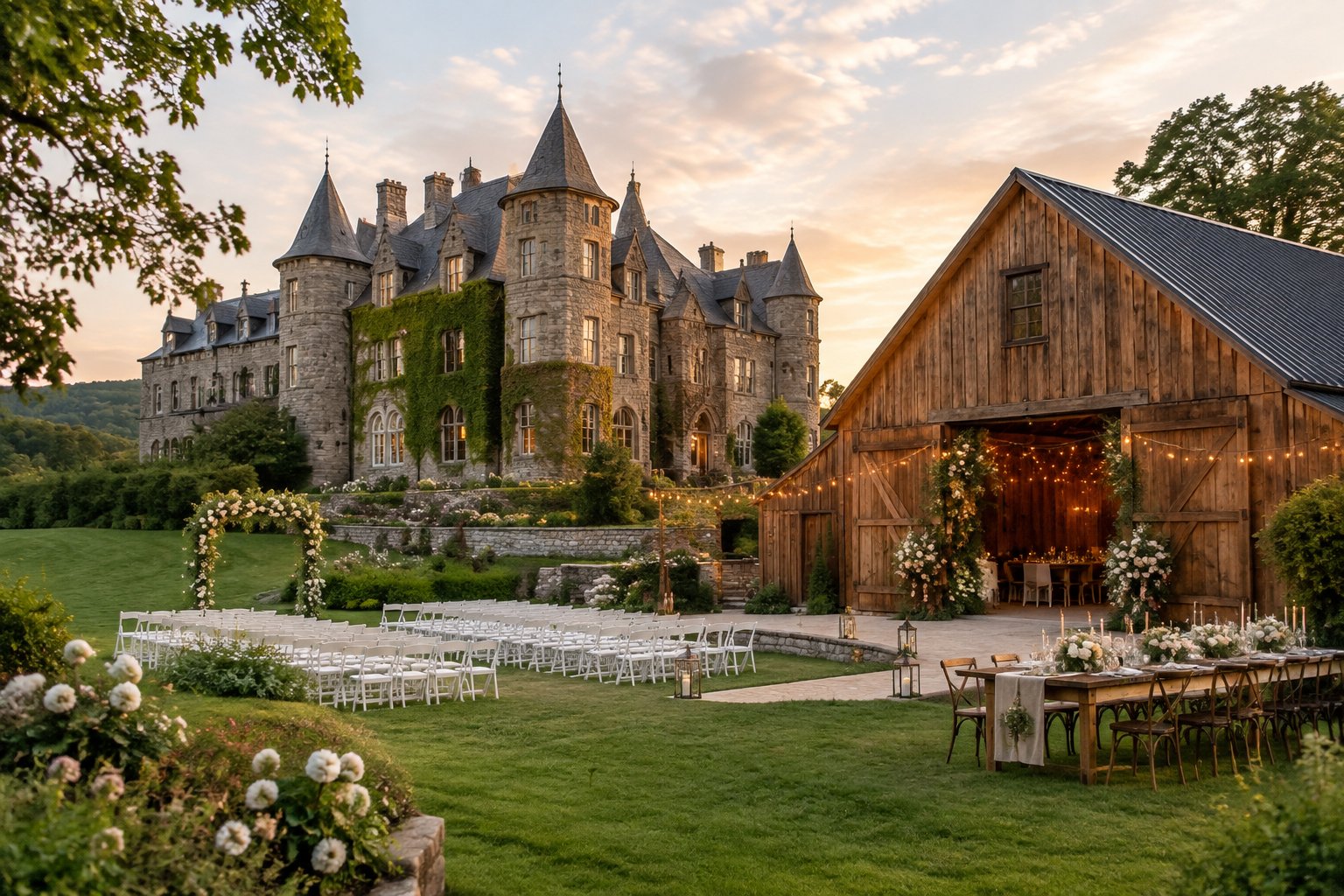
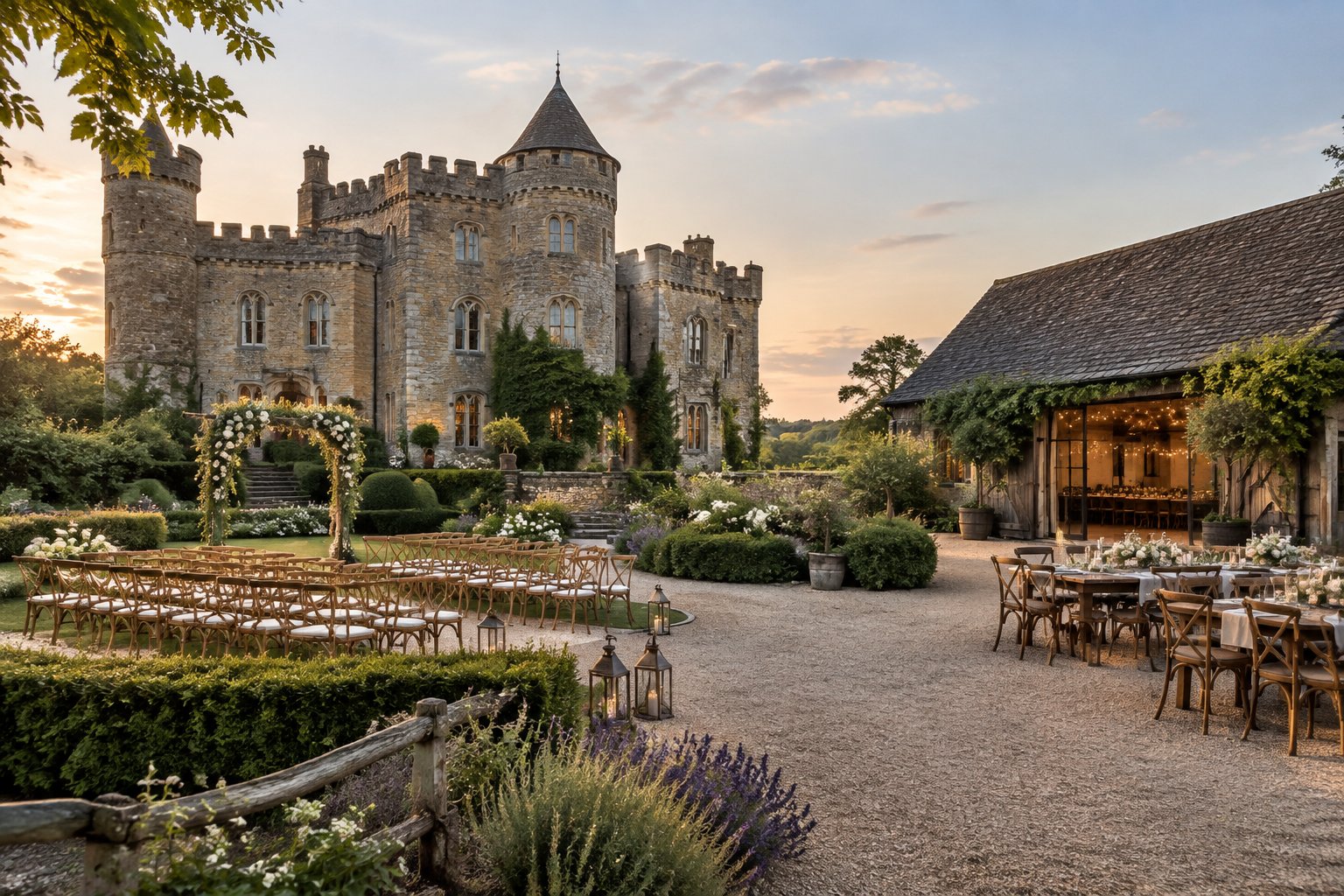
A castle-and-barn setting pairs historic or castle-style architecture with a rustic reception building, creating a celebration that feels grand at arrival and welcoming at dinner. Gardens, vineyards, stone paths, and open farmland add natural variety across the day.
Castle Architecture Meets Rustic Reception Space
The castle side establishes the mood through turrets, stone walls, grand doors, towers, or formal interiors. It works well for vows, cocktail hour, and portraits where you want an elegant backdrop.
The barn brings practical space for your reception. Timber beams, high ceilings, and open floor plans give you room for dining tables, a dance floor, buffet service, and lounge seating. Warm lighting, seasonal flowers, and natural wood details help connect the two settings.
Ask whether guests walk between the castle and barn or need a shuttle. Check the route for stairs, gravel, grass, and evening lighting so every guest can move comfortably.
The Appeal of Gardens, Vineyards, and Historic Grounds
Gardens give you ceremony locations and portrait spots without requiring heavy decoration. A walled garden creates a private feel, while broad lawns support larger ceremonies and outdoor cocktail hours.
Vineyards add rows of greenery, sunset views, and a relaxed countryside atmosphere. Historic grounds may include ponds, mature trees, courtyards, woodland paths, or old farm buildings that give each part of your day a different setting.
Castle farms combine these features with working-land charm. You may find horses, pastures, barns, and wide fields alongside formal architecture. Confirm which areas are available to guests and which remain private or operational.
Is This Style Right for Your Guest List and Vision?
This style suits you if you want memorable architecture with a reception that feels comfortable and personal. It works for formal weddings with plated dinners, casual celebrations with food stations, and celebrations that move between indoor and outdoor spaces.
Review the maximum guest count for each room. A property may welcome a large ceremony yet have a smaller dining area. Ask about accessible entrances, restrooms, parking, transportation, and quiet spaces for children or older guests.
How to Choose the Right Property
The right property gives you a clear event flow, dependable facilities, and enough flexibility to support your wedding planning without creating hidden work. Check the spaces, services, rules, and access details during one detailed visit.
Match the Ceremony and Reception Spaces
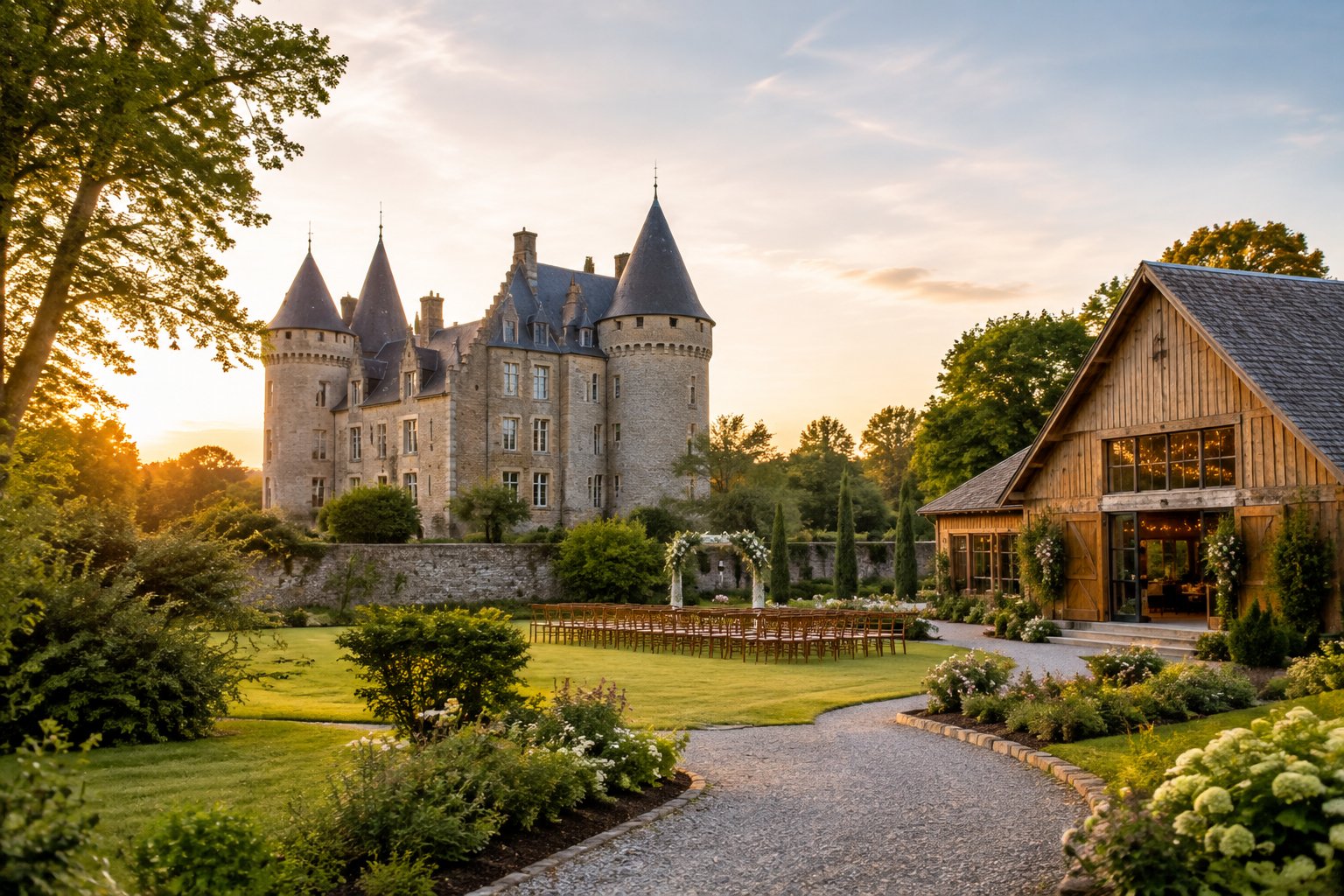
Choose a property where your ceremony, cocktail hour, meal, and dancing fit together naturally. Ask how long it takes to reset a room and where guests wait during transitions.
Measure the ceremony area against your expected guest count. Confirm seating layouts, aisle width, power access, sound equipment, and a private place for your wedding party to prepare.
Look for a Reliable Indoor Weather Backup
A covered barn, ballroom, stone hall, or glass conservatory gives your celebration a clear weather plan. Ask whether the backup space holds the full guest count with the planned tables, bar, dance floor, and entertainment.
Request details about heating, cooling, flooring, lighting, drainage, and covered paths. A backup plan works best when it is ready to use without a major change to your schedule.
Consider On-Site Accommodation and Weekend Access
On-site accommodation makes the event easier for you and your guests, especially when the property sits outside a major city. Ask how many people can sleep there, which rooms have private bathrooms, and whether nearby lodging is available.
Weekend access gives you more time for setup, rehearsal, welcome events, and cleanup. Confirm arrival times, departure deadlines, quiet hours, parking, and transportation between lodging and the venue.
Ask About Vendor Rules, Catering, and Exclusivity
Find out whether the venue requires an approved caterer, licensed bartender, day-of coordinator, or preferred rental company. Ask who handles tables, chairs, linens, restrooms, lighting, trash removal, and end-of-night cleanup.
Clarify whether you receive the property exclusively and whether another event takes place nearby. Review service charges, deposits, overtime, insurance, cancellation terms, and payment dates before signing.
Standout Castle Farm Venues in the United States
Several United States properties combine castle-style appeal, farm landscapes, or barn reception spaces in distinct ways. Compare their setting, scale, and event format with your guest list and travel plans.
Wadley Farms in Utah
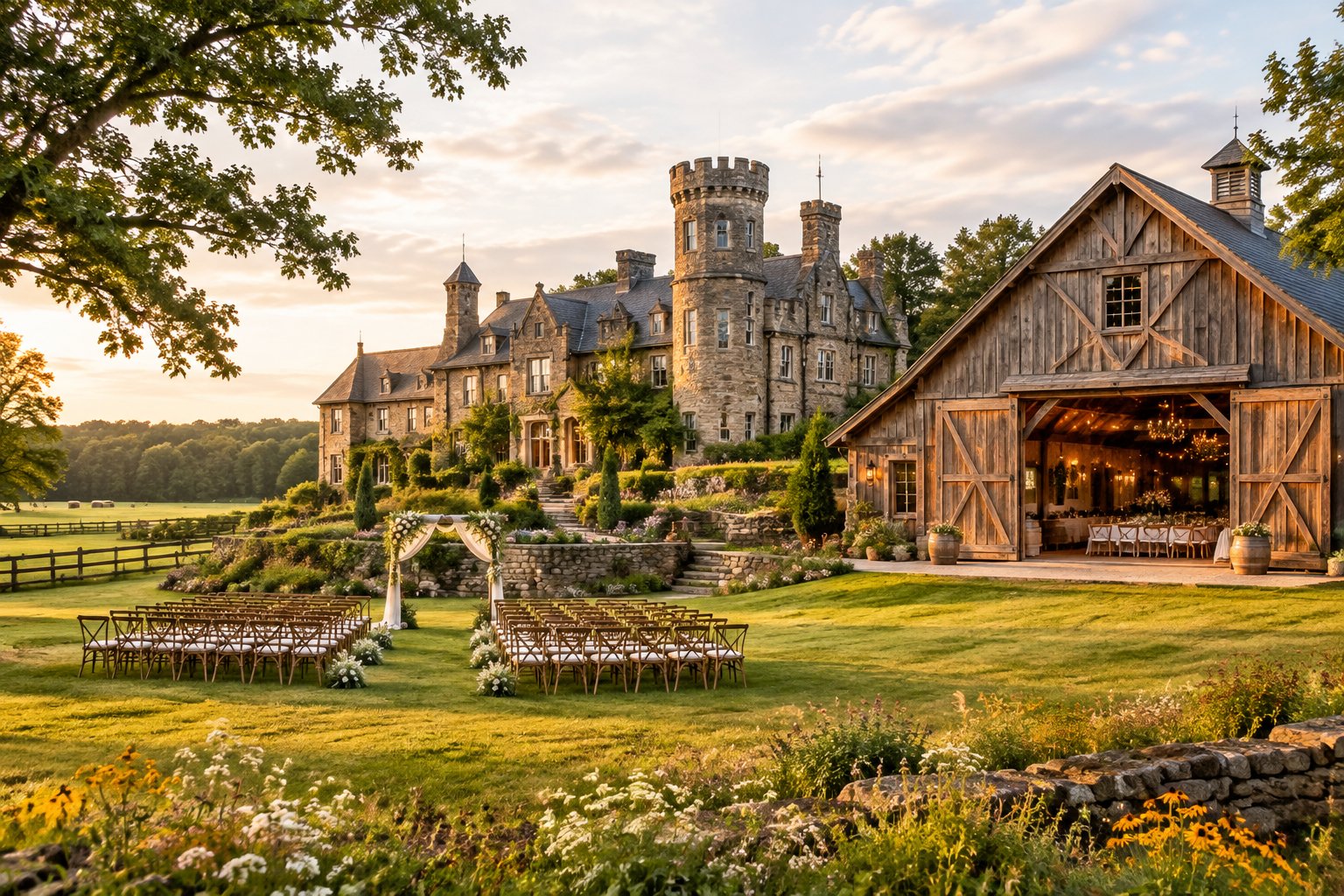
Wadley Farms in Lindon, Utah, offers a countryside setting with historic-style buildings, landscaped grounds, and open-air event areas. The property suits couples who want a romantic farm atmosphere with architecture that adds ceremony and portrait interest.
Ask about the available reception building, seasonal access, guest capacity, and weather plan. Utah’s changing temperatures make shade, heating, cooling, and evening comfort important parts of the conversation.
Castle Farms in Michigan
Castle Farms in Charlevoix, Michigan, is known for castle-style stone buildings, courtyards, gardens, and several event spaces. Its layout gives you choices for ceremony settings, guest flow, and reception style.
The property’s historic character creates a formal backdrop, while garden areas soften the experience. Confirm which building fits your preferred dinner layout and how guests travel between outdoor spaces.
Castle Farm on Maryland’s Eastern Shore
Castle Farm is an equestrian estate on Maryland’s Eastern Shore with a hand-built barn, pastures, pond views, tented options, and room for a customized celebration. The property hosts one event per day and welcomes licensed outside vendors through its venue package.
The farm offers several ceremony and reception locations, free parking, golf cart transportation, a bridal suite, and a groomsmen’s lounge. Its accommodation partnership includes a local bed-and-breakfast that sleeps up to 22 guests, while a longer package supports a fuller wedding weekend.
The Sterling Castle and Other Purpose-Built Options
The Sterling Castle in Tennessee offers a purpose-built castle setting with grand architecture, formal grounds, and event spaces designed for weddings. It fits couples who want the castle experience to lead the visual design of the day.
Purpose-built properties often provide modern event infrastructure alongside historic styling. Compare access, restrooms, climate control, catering facilities, parking, and reception capacity before focusing on the façade.
| Venue | Setting | Reception style | Best fit |
|---|---|---|---|
| Wadley Farms | Utah farm estate | Rustic and open-air | Countryside celebrations |
| Castle Farms | Michigan castle complex | Historic indoor and outdoor | Multi-space weddings |
| Castle Farm | Maryland equestrian farm | Barn, tented, and outdoor | Flexible private events |
| The Sterling Castle | Tennessee purpose-built castle | Formal castle reception | Grand fairy-tale styling |
Historic Castle Venues With Rustic or Garden Appeal
Historic properties bring strong architectural character, while gardens, lawns, and nearby rural spaces help create a softer reception mood. These venues suit couples who want castle atmosphere and a setting that supports outdoor portraits or garden ceremonies.
Whitby Castle and Rhodes Hall
Whitby Castle in Rye, New York, offers stone architecture, formal grounds, and a dramatic setting near a golf course and parkland. Its castle details create a polished backdrop for ceremonies, portraits, and elegant receptions.
Rhodes Hall in Atlanta is a Romanesque Revival mansion with carved stonework, stained glass, and formal interior rooms. It suits a city-based wedding with historic character, especially when you want architecture to carry much of the décor.
Ask each venue about guest capacity, ceremony locations, sound limits, parking, and the relationship between indoor rooms and outdoor grounds.
Skylands Manor and Thornewood Castle
Skylands Manor in Ringwood, New Jersey, sits within a large park setting with gardens, woodland, and grand historic interiors. Its grounds offer a strong mix of formal landscaping and natural scenery.
Thornewood Castle in Lakewood, Washington, provides a romantic castle-style setting with gardens, water views, and private event areas. Its residential feel works well for intimate celebrations and wedding weekends.
Review lodging, event exclusivity, photography access, and guest movement across the property. Historic spaces may have preservation rules that affect candles, hanging décor, amplified sound, and furniture placement.
Hammond Castle Museum and Similar Coastal Estates
Hammond Castle Museum in Gloucester, Massachusetts, brings medieval-inspired architecture, stone interiors, courtyards, and a coastal atmosphere. Its unusual rooms create a memorable setting for smaller celebrations and portraits.
Similar coastal estates pair dramatic architecture with gardens, ocean views, or landscaped grounds. Salt air, wind, uneven paths, and limited parking require careful planning for guest comfort and vendor access.
Ask whether the property permits full receptions or focuses on ceremonies and smaller gatherings. Confirm catering access, restroom locations, accessibility, rain coverage, and the timing of public tours or museum operations.
Planning the Look and Logistics of Your Celebration
Your celebration will feel cohesive when the castle, barn, gardens, and guest experience follow one clear design plan. Choose a restrained color palette, map every transition, and build your budget around venue-specific requirements.
Designing an Indoor-Outdoor Guest Experience
Give each setting a clear purpose. The castle can host vows or portraits, the gardens can carry cocktail hour, and the barn can hold dinner and dancing.
Use signs, staff, lighting, and a simple printed schedule to guide guests. Provide comfortable seating during outdoor portions and covered paths between key spaces.
Your décor should connect the property without covering its best features. Soft linens, natural greenery, candlelight, and wood accents complement stone architecture and barn beams.
Making Gardens and Stonework Work in Every Season
Seasonal planning starts with temperature, daylight, rain, wind, and ground conditions. Spring gardens may need a mud plan, summer events need shade and hydration, and fall celebrations benefit from earlier ceremony times as daylight shortens.
Winter weddings need dependable heating, bright paths, coat storage, and indoor photo locations. Ask how the grounds look during your wedding month and which garden areas remain maintained.
Use lighting to highlight stone walls, trees, entry paths, and barn beams. Keep fixtures secured and confirm candle rules with the venue.
When a Small Elopement Makes More Sense
An elopement or small wedding fits properties with limited historic rooms, complex access, or a strong desire for privacy. A smaller guest count also gives you more freedom to use intimate libraries, courtyards, gardens, and suites.
Ask whether the venue offers ceremony-only packages, weekday dates, private dining, or overnight options. Include photography time, a meal, transportation, and a weather plan when comparing package prices.
A small celebration can still include castle portraits, a garden ceremony, and a barn dinner when the property allows several spaces.
Building a Realistic Venue Budget
Start with the complete venue cost, then add rentals, catering, staffing, bar service, transportation, lighting, lodging, permits, and weather equipment. Ask for a written estimate that separates included items from upgrades.
Your contract should state the access window, guest limit, overtime rate, cleanup duties, vendor requirements, cancellation terms, and payment schedule. Set aside a reserve for rain protection, extra heaters, shuttle service, or restroom needs.
Use a venue comparison sheet with these columns:
- Rental fee and deposit
- Included tables, chairs, lighting, and restrooms
- Catering and bar rules
- Weather backup
- Guest capacity
- Lodging and access
- Vendor and overtime charges
A detailed walkthrough with the venue coordinator and planner lets you confirm each line before you commit.