
Castle Wedding Venues: Grand Ballrooms and Regal Settings
A grand castle wedding venue gives you a ready-made sense of ceremony, with stone architecture, sweeping grounds, and rooms suited to a memorable celebration. For a large guest list, prioritize a property with a ballroom, strong guest flow, indoor ceremony space, and enough room for dining and dancing.
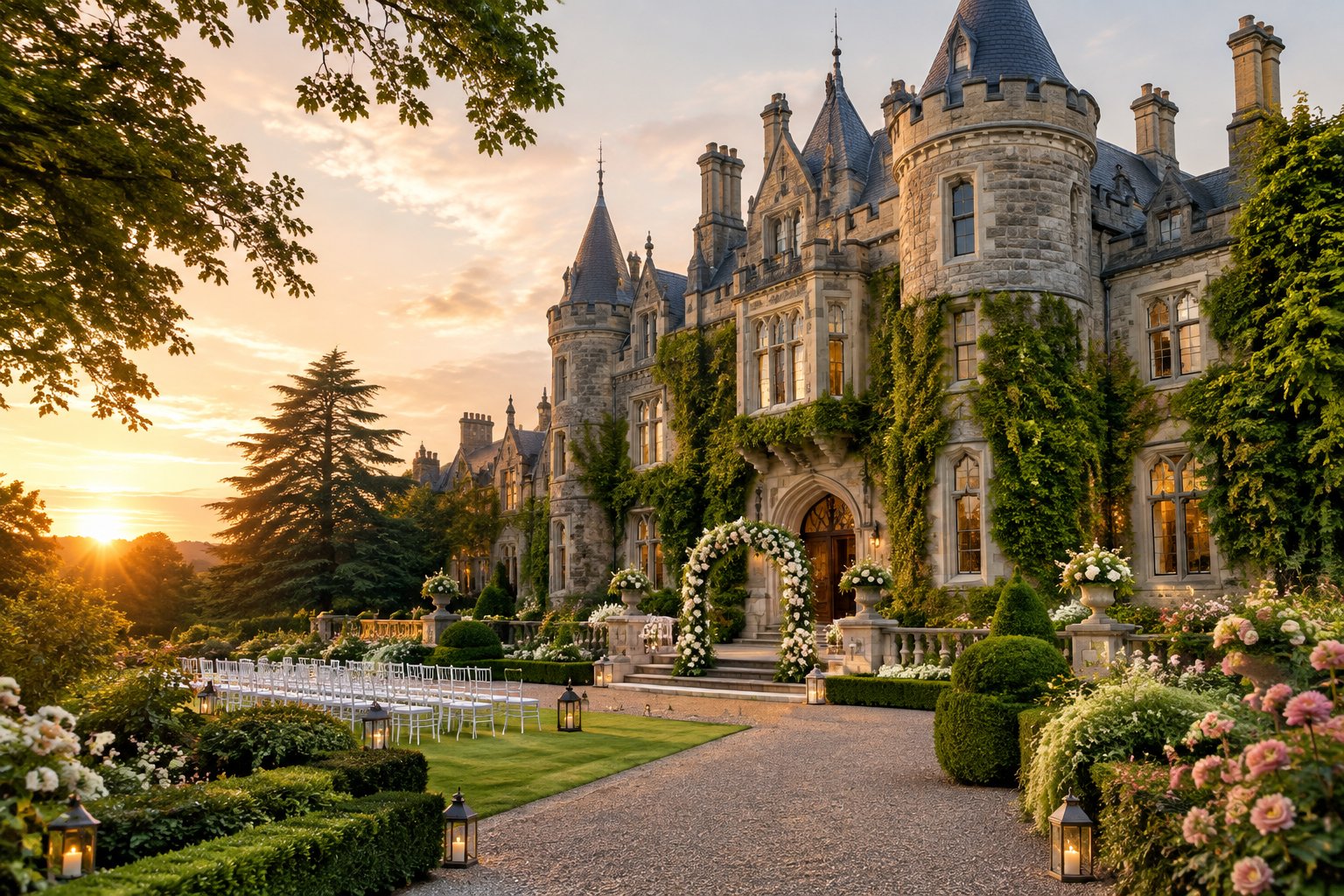
Your choice might be a restored castle, a historic mansion, or a castle-inspired estate. Each setting brings a different mood, scale, and planning style to your castle wedding. A medieval property creates drama through stone walls and towers, while a French château brings formal gardens and refined interiors.
A well-planned fairy tale wedding also needs practical details such as parking, accessibility, catering, lodging, and a clear weather plan. Start by listing your guest count, preferred season, ceremony style, and reception priorities.
With those details ready, you can compare wedding venues with confidence and book a regal setting that feels comfortable for everyone.
What Makes a Reception Space Feel Truly Grand?
A reception space feels grand when its architecture, layout, lighting, and guest capacity work together to create a polished celebration. A grand ballroom helps set the tone, while a well-planned dance floor and comfortable dining layout keep the wedding reception active and inviting.
A large event venue should give guests a clear path from cocktails to dinner and dancing. Look for strong sightlines, nearby restrooms, convenient bar placement, and enough room for service staff to move easily.
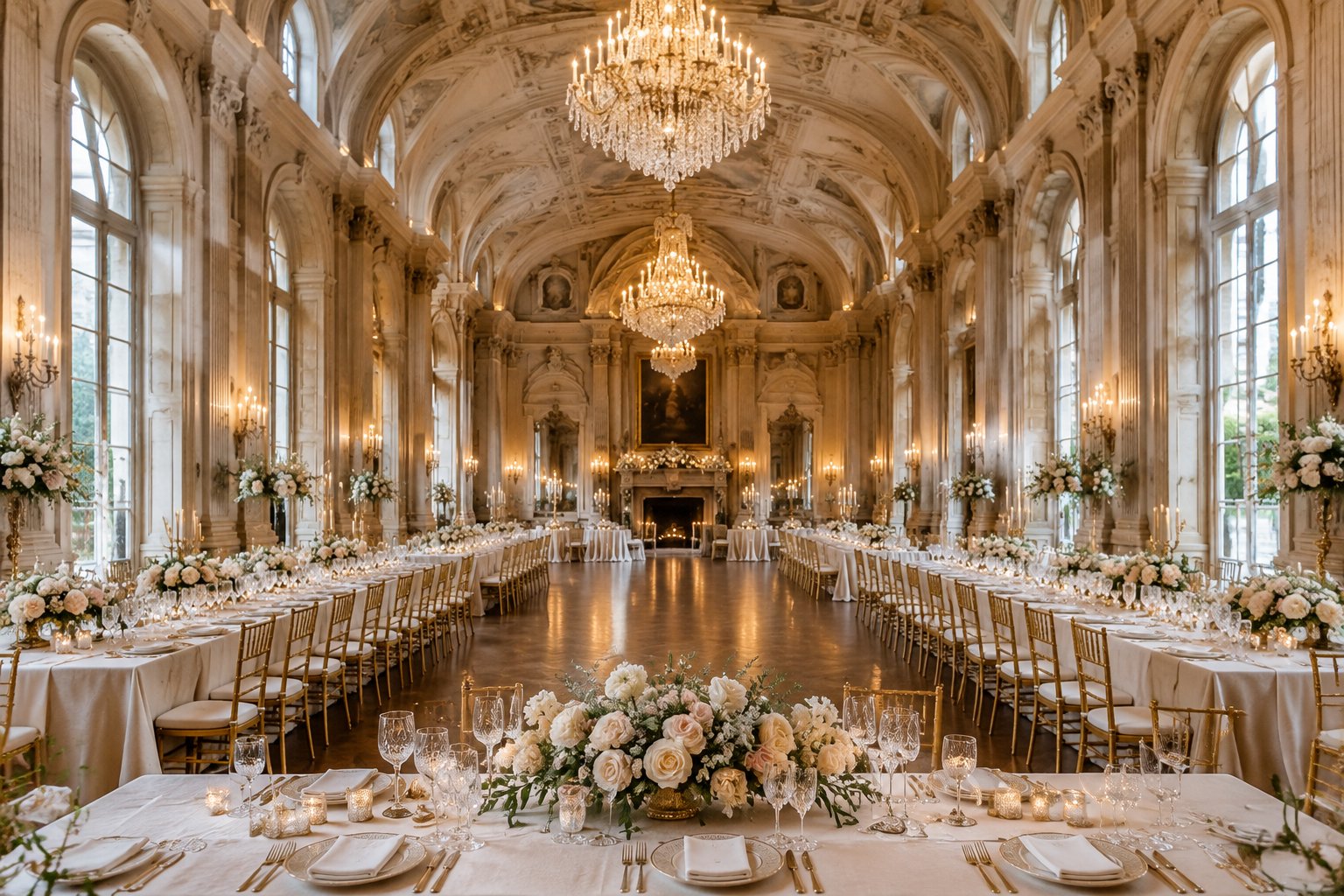
Grand Ballroom Features That Matter Most
An elegant ballroom gains impact from high ceilings, chandeliers, tall windows, fireplaces, polished floors, and architectural details such as arches or wood paneling. These features create a strong setting before you add flowers or other décor.
Check the room’s practical details during your tour:
- Seated capacity with your preferred table style
- Space for a band, DJ, or other entertainment
- Dance floor dimensions
- Bar and buffet locations
- Lighting controls and power access
- Heating and cooling
- Sound quality throughout the room
- Nearby restrooms and accessible routes
A large room needs visual focus. You can use a head table, hanging florals, lounge seating, or warm lighting to bring guests toward the center of the celebration.
How Much Space Is Needed for Dinner and a Dance Floor?
Your venue should provide enough space for tables, chairs, service areas, entertainment, and dancing at the same time. Ask for a floor plan based on your expected guest count, menu style, table shape, and dance floor size.
A plated dinner has different space needs from a buffet. A live band may need more room than a DJ, while lounge seating and a photo booth add more layout demands.
Keep the dance floor close to the main dining area so guests stay connected to the music and festivities. Ask the venue team to mark the location of guest tables, the couple’s table, the bar, cake table, gifts, band or DJ, and accessible seating.
This makes the room easier to judge during your tour.
Why Castles Work So Well for Winter Weddings
Castles suit winter weddings because stone interiors, fireplaces, candlelight, and enclosed reception rooms create a warm seasonal atmosphere. You can plan an elegant celebration with velvet textures, rich florals, metallic accents, and glowing lights.
Winter also makes indoor flow especially important. Confirm that guests can move from parking to the ceremony and reception with minimal exposure to snow, rain, or cold wind.
Ask about coat storage, heating, parking conditions, and indoor photo locations before selecting your date.
How to Choose the Right Property for Your Guest List
Choose a castle wedding venue by matching your guest count to the property’s usable event spaces, lodging, ceremony options, and guest services. A beautiful building will serve you well when its rooms feel comfortable at your planned headcount.
Start with your guest list and decide whether you want an intimate wedding, a full-scale reception, or a weekend gathering. Ask for seated capacities instead of relying on a venue’s maximum standing capacity.
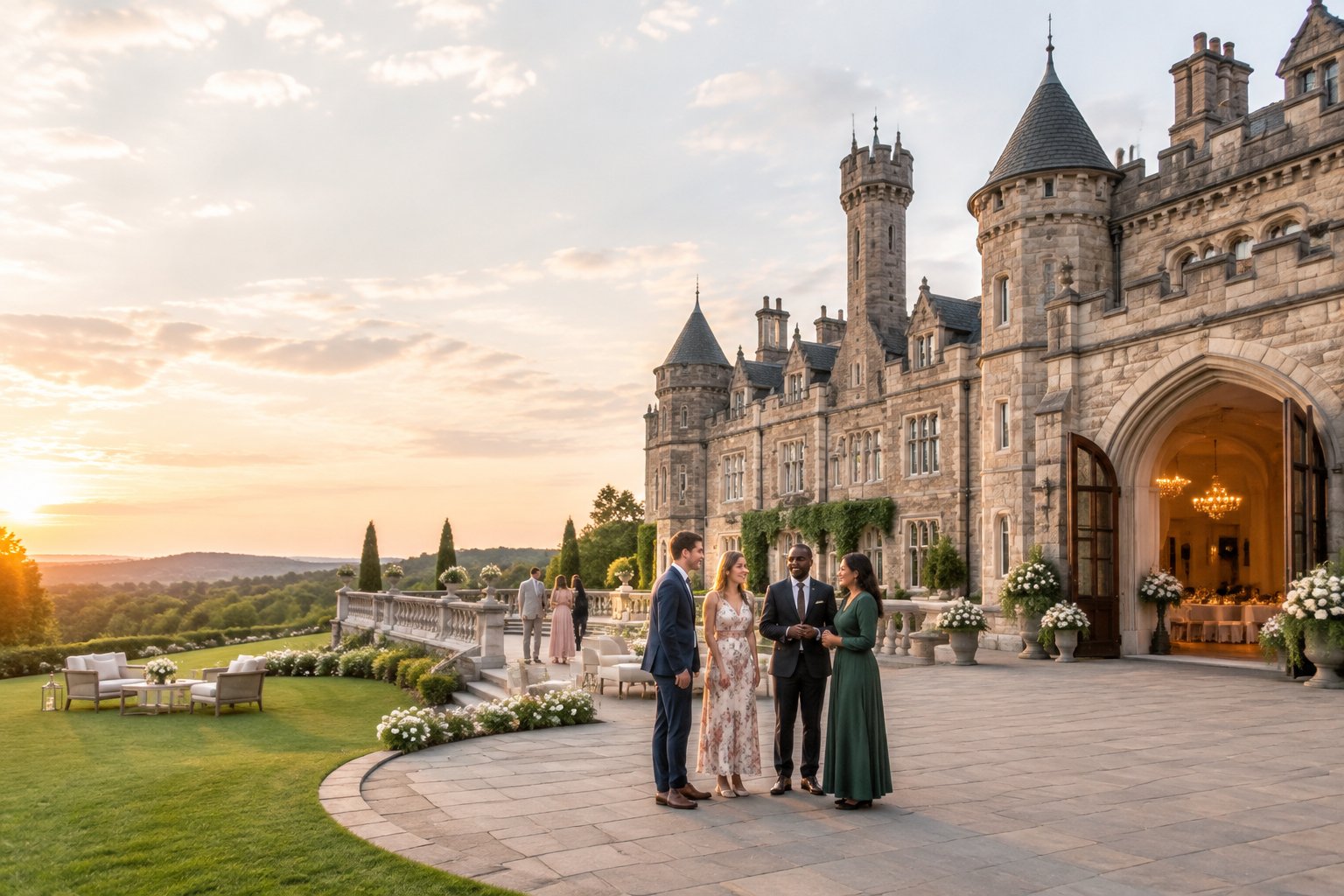
Planning an Intimate Wedding in a Historic Setting
An intimate wedding often suits a library, chapel, drawing room, private dining room, or garden terrace. Smaller spaces help guests stay connected, while historic details provide visual interest without extensive décor.
Ask whether the venue offers private access to the property and whether other visitors share the grounds. Check the distance between the ceremony, reception, restrooms, and parking areas.
Your guests should be able to move through the day comfortably, including anyone who needs a level path or frequent seating. For help refining your numbers, use these tips for creating the perfect guest list for a small wedding.
Comparing a Medieval Castle, Tudor Mansion, and French Château
Your preferred architectural style shapes the mood, décor, and photo settings:
| Setting | Character | Best fit |
|---|---|---|
| Medieval castle | Stone walls, towers, courtyards | Dramatic fairy tale wedding |
| Tudor mansion | Wood paneling, fireplaces, gardens | Warm historic celebration |
| French château | Formal gardens, refined rooms | Elegant, romantic reception |
A medieval castle brings a strong sense of history and ceremony. A Tudor mansion feels inviting through timber details and fireplaces. A French château often centers on symmetry, landscaped grounds, terraces, and graceful dining rooms.
Review the property’s event spaces closely. Original historic rooms may have decoration limits, capacity rules, restricted candle use, or limited electrical access.
Indoor and Outdoor Ceremony Options to Tour
Tour the outdoor ceremony site and the indoor backup space on the same visit. Review seating surfaces, shade, sound equipment, restrooms, power, guest access, and the route to the reception.
A lawn, courtyard, terrace, chapel, or garden can provide a beautiful ceremony setting. Your backup plan should preserve the same sense of occasion through an attractive room, comfortable seating, and a clear transition for guests.
Ask who makes the weather call and how much time the staff needs to reset the ceremony. Confirm whether your photographer can use indoor staircases, galleries, libraries, and reception rooms for portraits.
Standout U.S. Settings by Region
The strongest U.S. castle wedding venues range from Long Island estates and New England landmarks to Colorado mountaintops, Southern mansions, and Western properties with old-world design. Treat each name as a starting point, then confirm current capacity, dates, catering rules, lodging, and event access with the property.
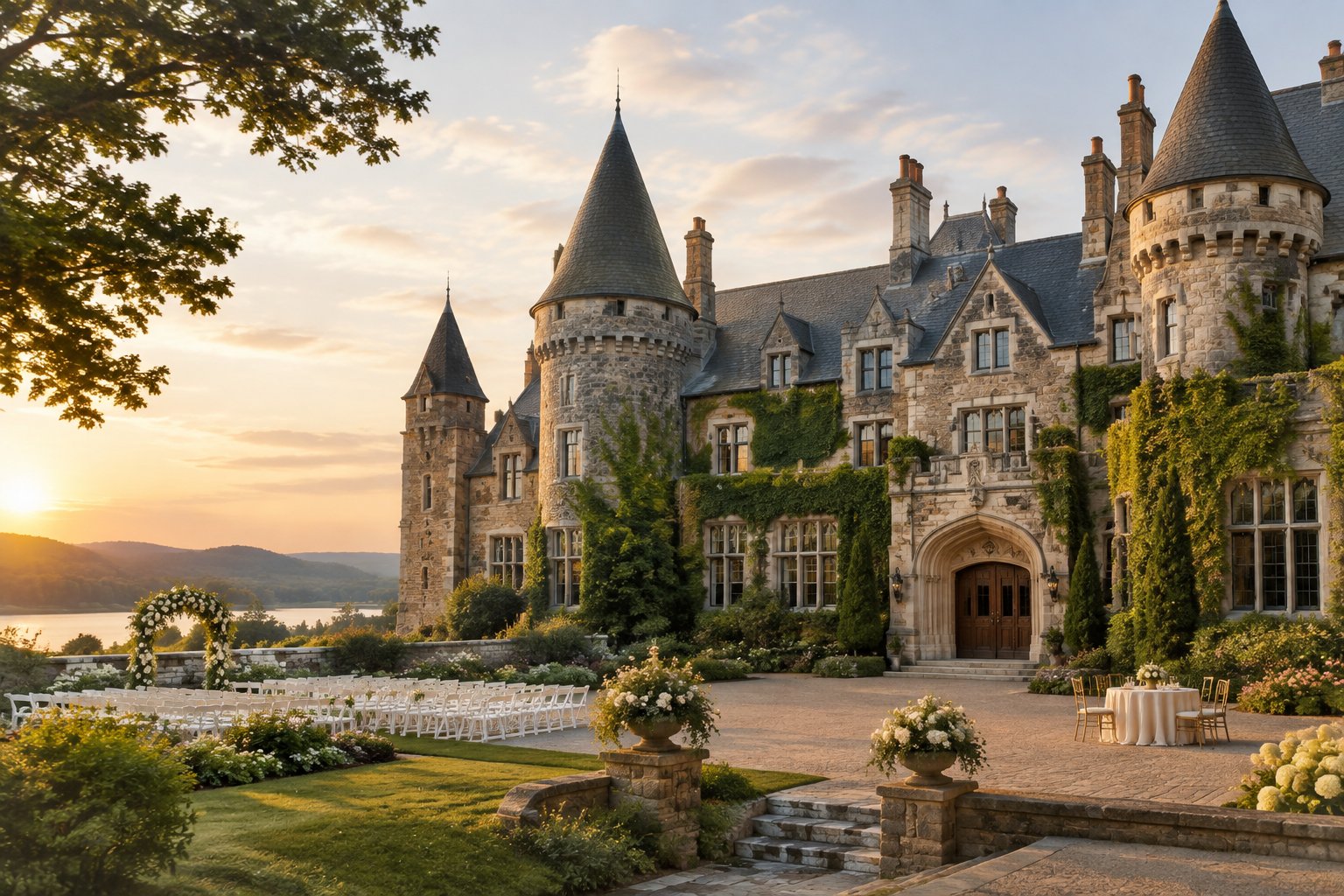
Regional planning helps you compare travel, scenery, weather, and guest convenience. A historic estate near a major city may simplify transportation, while a mountain property creates a more secluded destination experience.
Northeast Estates and Long Island Landmarks
Oheka Castle in Huntington, New York, offers a grand Long Island setting with formal architecture and landscaped grounds. Sands Point Preserve, New York, adds historic buildings and outdoor spaces near Long Island Sound.
In Connecticut, Bill Miller’s Castle and Saint Clements Castle & Marina bring castle-style character to different settings. Saint Clements adds waterfront and marina views, while nearby New England properties provide wooded grounds and classic stone details.
Skylands Manor in Ringwood, New Jersey, combines formal gardens with woodland scenery. Rosecliff in Newport, Rhode Island, gives you mansion-scale elegance and a formal coastal setting.
Whitby Castle in New York offers dramatic architecture and expansive grounds for couples seeking a regal backdrop.
Mountain and Colorado Backdrops
Colorado properties give you striking scenery alongside castle-inspired architecture. Cherokee Ranch and Castle in Sedalia sits south of Denver with open views and historic character. Castle MVP in Manitou Springs adds a mountain-town setting with dramatic terrain nearby.
These locations work well for couples who want outdoor portraits, scenic ceremony views, and a destination feel. Ask about elevation, travel times, weather changes, parking, and indoor guest circulation before choosing a mountain date.
Southern and Southeastern Storybook Properties
Biltmore, also called The Biltmore, in Asheville, North Carolina, pairs grand architecture with formal grounds and views toward the Blue Ridge Mountains. Castle Ladyhawke in Tuckasegee, North Carolina, offers a European-inspired stone setting in a wooded mountain landscape.
Rhodes Hall in Atlanta brings ornate historic interiors to a city setting. Louisiana Castle in Franklinton offers a storybook atmosphere with a distinct Southern location.
These properties give you a range of guest experiences, from urban convenience to secluded countryside celebrations.
Western Venues With Old-World Style
Western and Southern California venues provide castle character in warmer climates. Mt. Woodson Castle offers a historic stone setting in Southern California, while Mission Inn Hotel and Spa in Riverside combines elaborate architecture, hotel lodging, and event services.
The Ashley Castle in Chandler brings a formal castle-inspired style to Arizona. Castle Waterford, Castle Green, and Wadley Farms in Lindon add additional options for couples seeking historic or old-world details in the West.
Ask about heat plans, shaded outdoor areas, evening temperatures, guest transportation, and lodging blocks. A venue’s climate shapes ceremony timing, attire, flowers, and guest comfort.
Destination Castles Worth Considering
A destination wedding at a castle works best when the property offers memorable architecture, reliable event services, convenient lodging, and a clear plan for international or long-distance guests. Ireland, Scotland, England, Germany, and tropical destinations each create a different wedding experience.
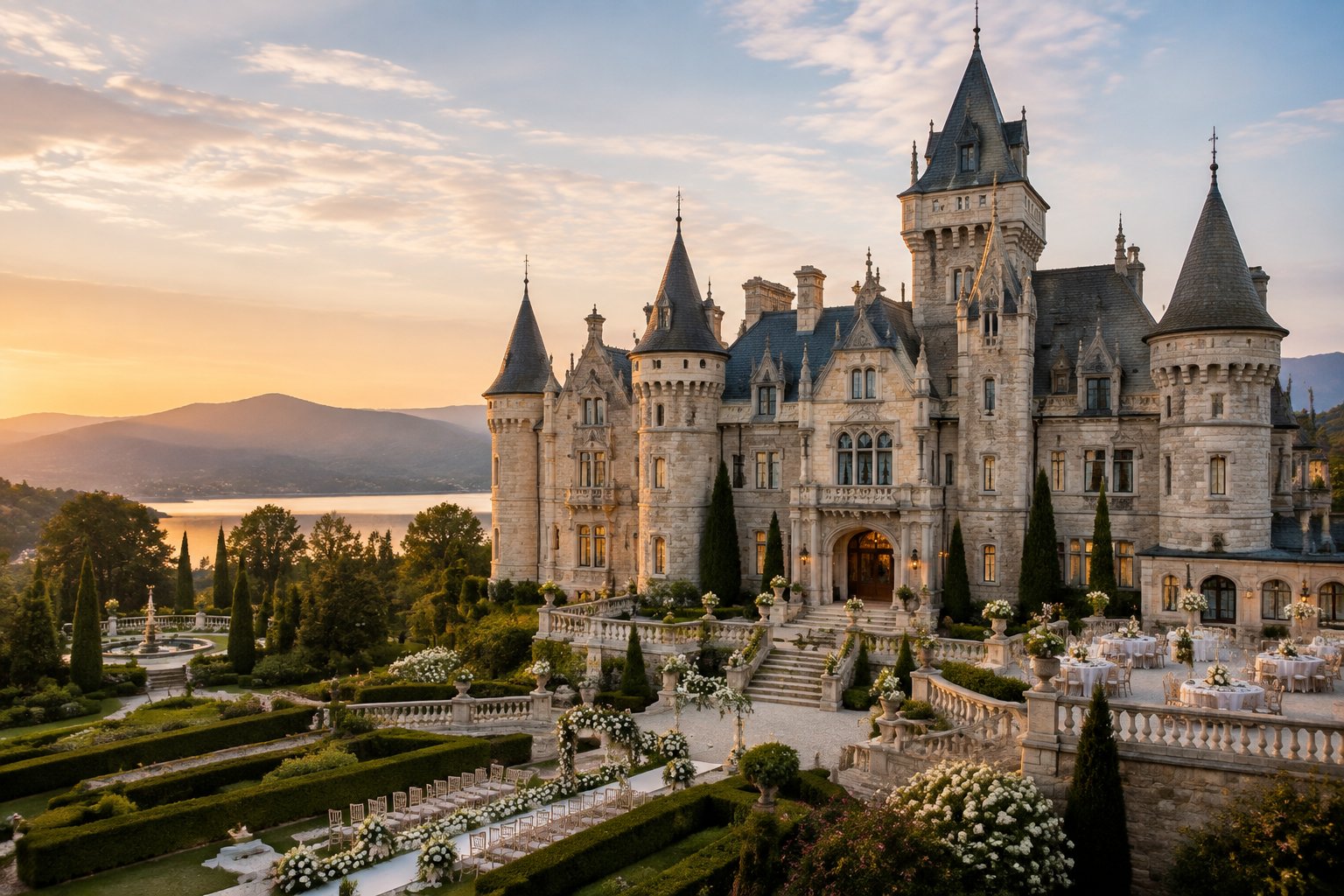
Before choosing an overseas property, review legal requirements, travel times, currency, guest transportation, seasonal weather, and the number of nights your celebration requires. A local planner can help coordinate vendors, paperwork, and guest logistics.
Ireland and Scotland for a Traditional Castle Experience
Ashford Castle in Ireland offers the atmosphere of a historic estate with a strong sense of place. Scotland gives you rugged landscapes, stone architecture, and the intimate interiors associated with a Scottish castle.
Castle weddings in these destinations work well as multi-day celebrations. Guests can arrive early, attend a welcome gathering, and enjoy the setting before the ceremony.
Ask how many rooms are available on-site and where additional guests can stay nearby. Review the legal ceremony process early.
Some couples complete the legal portion at home and hold a symbolic celebration at the destination, while others arrange the required documents for a local marriage.
England’s Historic Estates and Formal Grounds
Warwick Castle offers a dramatic historic setting with strong architectural detail and large grounds. Leeds Castle brings landscaped gardens, water views, and elegant estate spaces. Properties near Gloucester also give you access to English countryside settings and historic landmarks.
Formal grounds work well for ceremonies, cocktail receptions, and portraits. Ask which areas are private during your event, whether public visitors share the property, and how the venue protects your schedule if rain changes the outdoor plan.
European Icons and Tropical Alternatives
Neuschwanstein Castle in Germany provides a powerful reference for romantic European architecture and mountain scenery. Its iconic appearance can inspire your design direction even when you select a different property for the actual wedding.
Honolulu offers a tropical alternative to the traditional stone castle. You can pair a regal venue style with ocean views, warm weather, and resort lodging.
A destination wedding in Hawaii still requires careful planning for guest travel, weather, transportation, and vendor access. Use this destination wedding checklist to organize travel, documents, guest communication, and event details.
Questions to Ask Before You Book a Tour
Ask about costs, lodging, weather plans, accessibility, vendor rules, and package details before you fall in love with a castle wedding venue. Historic properties often have special operating rules, so written answers help you compare them fairly.
Prepare your questions before visiting Castle Farms, Hammond Castle, Hammond Castle Museum in Gloucester, Ravenwood Castle, The Sterling Castle, Pierce Castle in Decatur, Meyer’s Castle in Dyer, Lotte New York Palace, and Joslyn Castle & Gardens in Omaha, Nebraska.
Each property has its own event model and restrictions.
What Is Included in the Venue Fee?
Ask whether the fee includes tables, chairs, linens, setup, cleanup, ceremony access, reception rooms, staffing, security, and parking. Request a complete estimate that separates the venue rental, catering minimum, service charge, taxes, rentals, and required upgrades.
Confirm whether the package includes a coordinator, catering team, bar service, cake cutting, rehearsal access, and sound equipment. Ask what happens when you add a band, tent, specialty lighting, lounge furniture, or an outdoor ceremony.
Request the details in writing before signing. A clear proposal lets you compare packages by total cost and included services.
Can Guests Stay On-Site or Nearby?
Ask how many guest rooms the property offers, whether you receive a private suite, and when guests can check in. Confirm room rates, booking deadlines, accessibility features, breakfast, parking, and transportation between lodging and event spaces.
If the property has limited rooms, ask for nearby hotels and shuttle recommendations. Castle Farms, Ravenwood Castle, and other destination-style venues may serve your event best when you plan lodging as part of the guest experience.
Check whether the property operates as a hotel, museum, public attraction, or private venue. This affects privacy, guest access, and the areas available for your wedding.
What Are the Weather, Accessibility, and Vendor Policies?
Ask for a detailed rain and extreme-weather plan covering the ceremony, cocktails, portraits, dining, and guest movement. Confirm heating, cooling, covered paths, parking conditions, indoor photo locations, and the deadline for changing the layout.
Walk the full route from parking to ceremony, reception, restrooms, and lodging. Look for ramps, elevators, accessible bathrooms, stable outdoor paths, seating areas, and adequate lighting.
Review vendor rules for catering, alcohol, décor, candles, amplified music, fireworks, setup times, cleanup, and insurance. Historic properties often protect original floors, walls, gardens, and furnishings through specific event policies.
How Should You Compare Venue Packages?
Compare packages by total guest cost, usable hours, included rentals, food and beverage terms, staffing, lodging, ceremony access, and backup plans. Ask for a sample floor plan at your guest count and a timeline showing setup, ceremony, dinner, dancing, and cleanup.
A package with a lower starting fee may require more outside rentals or added staffing. A higher package may include catering, furniture, coordination, and room access that reduce separate planning tasks.
Use a written comparison sheet for each property. Record the same details for Castle Farms, Hammond Castle, The Sterling Castle, Joslyn Castle & Gardens, and every other venue on your shortlist before choosing your date.