
Castle Wedding Venues Hiring: Costs, Tours, and Contracts
A castle wedding venue gives you built-in character, memorable photo settings, and a strong sense of occasion. For couples seeking a historic setting with flexible spaces and expert planning support, hiring a castle venue is a strong choice because the architecture, grounds, and event rooms create much of the wedding day atmosphere before you add décor.
Costs range from a modest hire fee for an intimate celebration to a large investment for exclusive use, guest rooms, catering, and a full weekend. Your guest count, wedding date, location, and package details will shape the final price, so request an itemized proposal before paying a deposit.
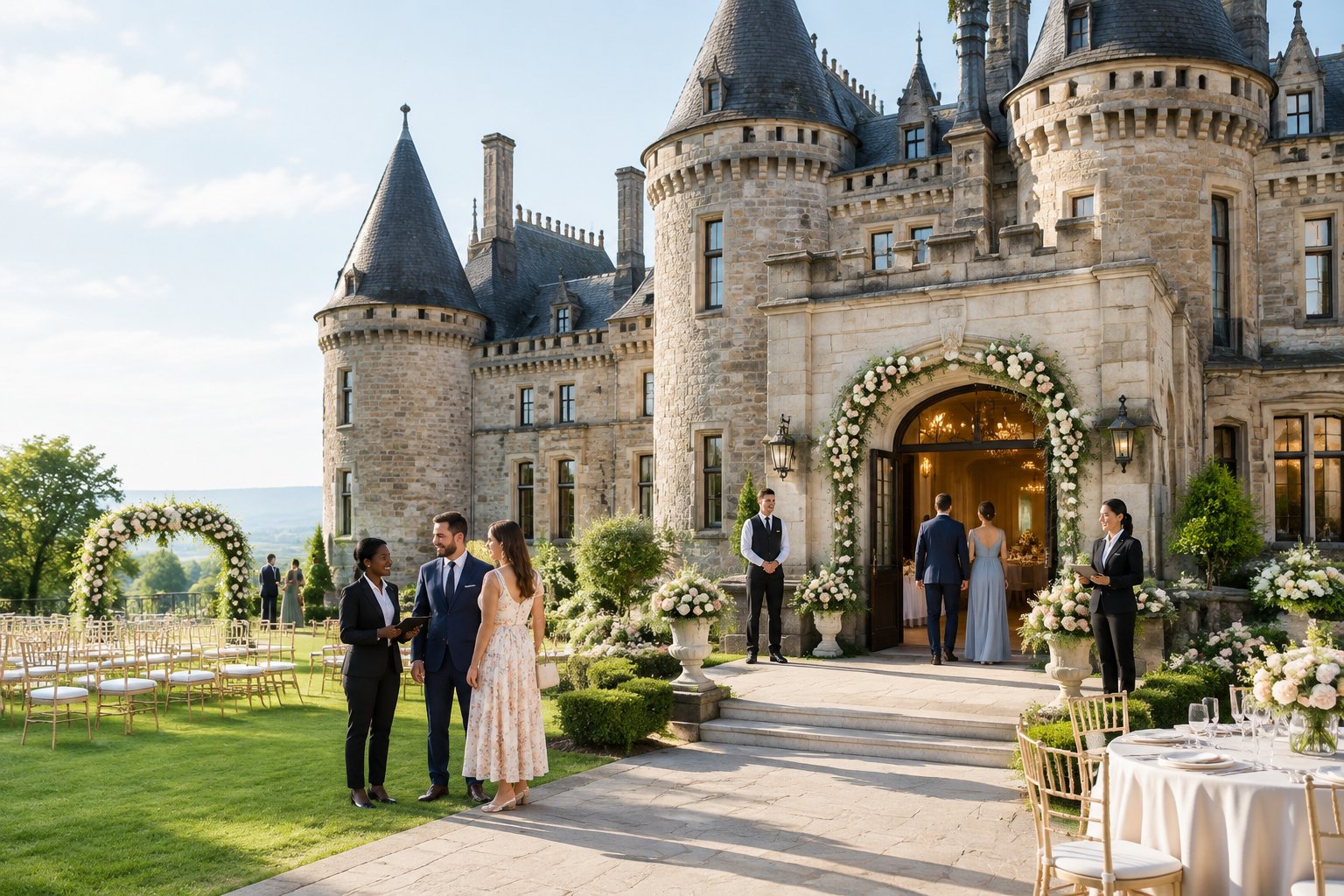
Start by setting your guest range and preferred date, then compare venues with the same questions about access, meals, lodging, suppliers, insurance, and cancellation terms. If you want help finding a suitable castle wedding venue, Celtic Castles offers a free matching service through its website, telephone, video call, or email.
How Does Castle Venue Hire Work?
Castle venue hire reserves specific rooms, grounds, or the entire property for your wedding day or wedding weekend. Your contract sets the access hours, guest limits, supplier rules, included services, and payment schedule.
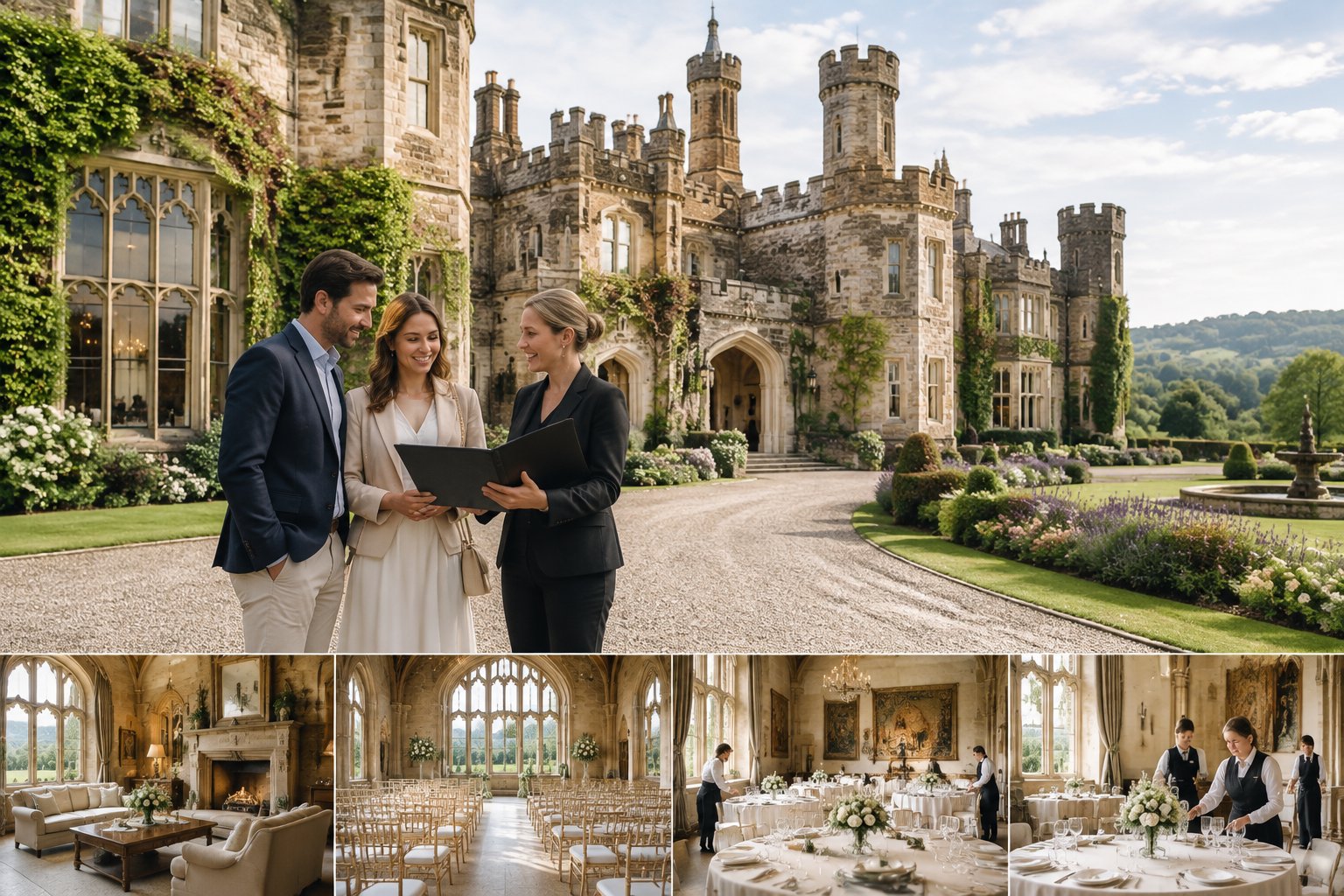
The most important choice is whether you want privacy across the property or a defined event space while other visitors or guests use separate areas. Review the package carefully because the word “hire” can describe an empty room, a staffed event, or a full exclusive-use stay.
Exclusive Use vs. Shared Access
Exclusive use gives you control of the agreed rooms and grounds for a set period. Depending on the property, this might cover the ceremony rooms, reception spaces, gardens, bedrooms, dining areas, and preparation rooms.
Shared access places your celebration within a larger operating property. Public visitors, hotel guests, or another event might use separate areas during your booking. Ask for a site map that marks your private spaces and confirm when vendors can load in.
What Is Usually Included in a Hire Package?
A hire package may include:
- Ceremony and reception rooms
- Tables, chairs, and basic furniture
- Staff or an event coordinator
- Use of gardens or photo areas
- Parking and guest arrival spaces
- Access for setup and breakdown
- On-site accommodation
- Catering or an approved caterer list
- Basic lighting or sound equipment
Check each item in writing. Ask whether linens, bar service, cake cutting, cleanup, security, heating, generators, and restroom facilities carry additional fees. Historic castles may also have rules for candles, confetti, amplified music, décor attachment, and open flames.
How Far Ahead Should You Book?
Book 12 to 18 months ahead for a popular summer date or an exclusive-use weekend. Smaller weekday weddings have more flexibility, while destination celebrations need extra time for travel plans, guest lodging, legal paperwork, and supplier coordination.
Request the current availability calendar and hold deadline. A provisional date becomes secure only after you sign the contract and pay the required deposit.
How Much Does a Castle Wedding Cost?
In the United States, a full castle-style celebration often falls around $35,000 to $90,000, while intimate events and off-season dates can cost less. The venue fee alone may range from about $10,000 to $40,000, with luxury properties extending beyond that range.
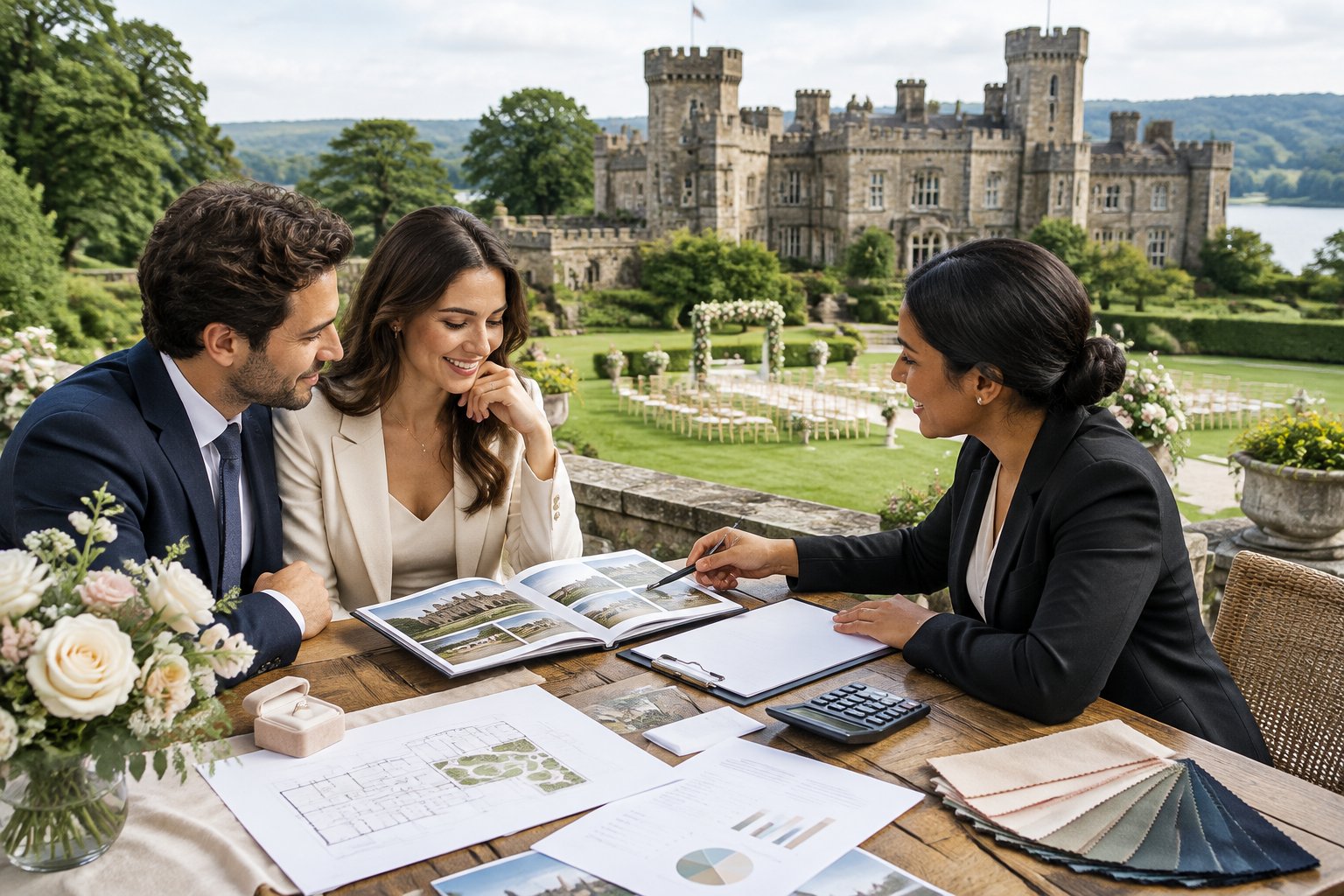
Build your budget from the complete event cost, including catering, rentals, lodging, taxes, service charges, transportation, entertainment, décor, photography, and planner fees. A proposal with separate line items makes it easier to compare historic castles with castle-style estates.
Venue Hire, Catering, and Accommodation Costs
Venue hire covers access to the property and selected event spaces. Catering is priced per guest or through a food-and-beverage minimum, with menu style, bar service, staffing, and rentals affecting the total.
Accommodation adds a separate charge or a required room block. Ask whether bedrooms are included in exclusive use, whether guests must book a minimum number of nights, and whether breakfast appears in the quoted rate. If the property has limited rooms, identify nearby hotels and arrange transportation before you invite guests.
For menu planning, use a clear list of dietary needs and ask how substitutions are priced. You can also review guidance on how to choose the right wedding caterer before tasting appointments.
Guest Capacity and Seasonal Price Differences
Guest count affects the meal bill, staffing, seating plan, restroom needs, and room layout. A castle with a grand hall might host a large reception while offering a smaller ceremony room, so confirm capacity for each part of the day.
Peak spring and summer Saturdays command higher rates at many venues. Weekdays, winter dates, and shoulder-season weekends may offer lower hire fees or added inclusions. Ask for pricing across several dates before you decide.
Questions to Ask About Deposits and Cancellation Terms
Ask these questions before signing:
- What amount is due to reserve the date?
- When are later payments due?
- Which charges are refundable?
- What happens if you postpone?
- How does the venue handle severe weather?
- What happens if the property becomes unavailable?
- Are service charges, taxes, and damage deposits included?
- Does your insurance need to name the venue?
Have every promised inclusion placed in the contract. Save the proposal, menu, floor plan, vendor rules, and payment receipts with the signed agreement.
Choosing the Right Setting for Your Celebration
Your ideal castle setting should match your ceremony plan, guest experience, travel needs, and preferred style of photography. A riverside property creates a different mood from a Tudor castle, while a moated castle offers a strong historic identity from the moment guests arrive.
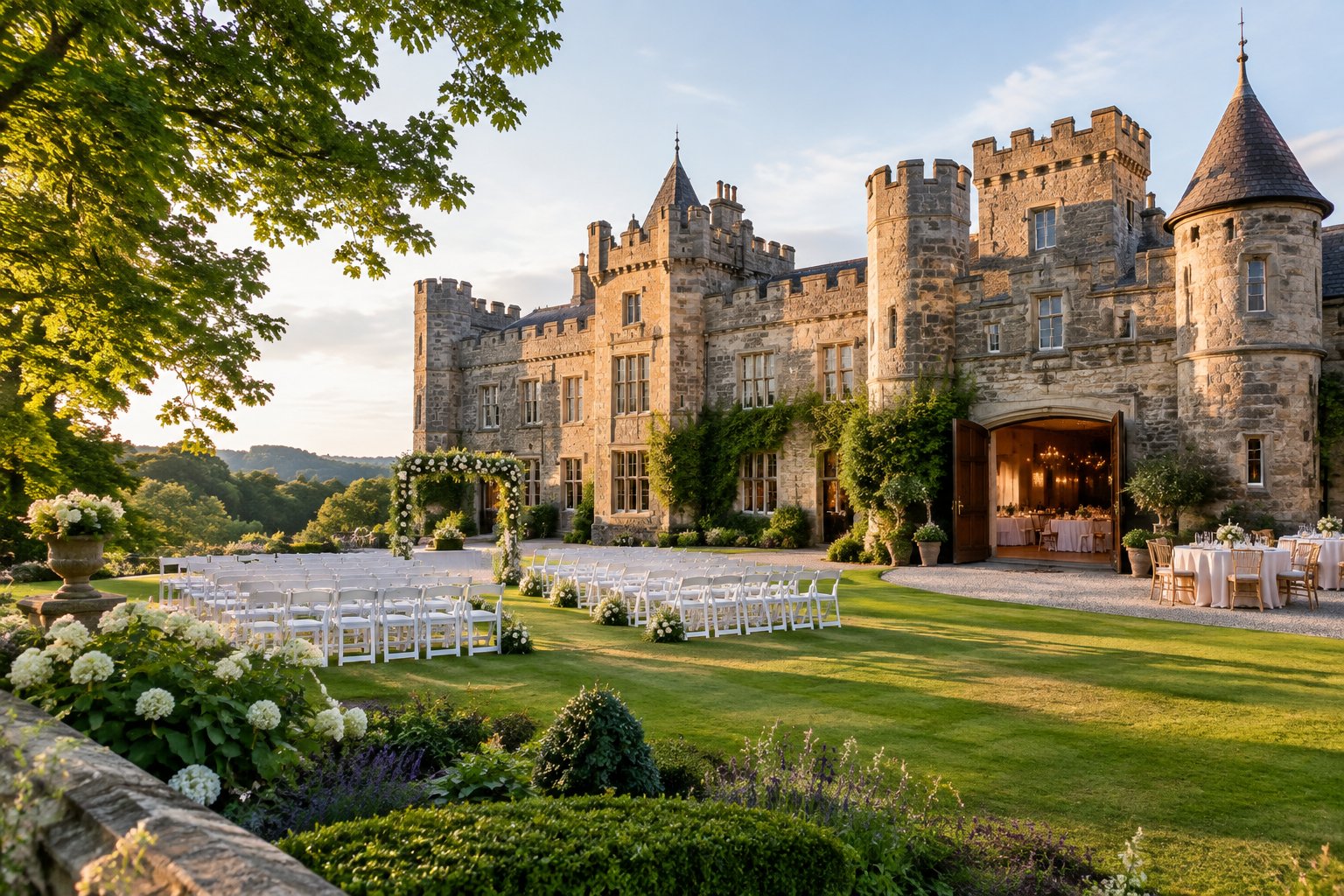
Walk the route between ceremony, drinks, dinner, dancing, and guest rooms. Check accessibility, weather backup spaces, parking, restroom locations, and sound limits during your tour.
Riverside, Garden, and Countryside Backdrops
A riverside castle gives you water views, bridges, lawns, and sunset portraits. Ask about river access, railings, lighting, insects, wind, and wet-weather photography locations.
Gardens offer ceremony lawns, formal paths, courtyards, and seasonal flowers. Countryside estates provide wide views and privacy, though guests might need shuttle service from the nearest town or airport.
Request a rain plan with the same care you give the outdoor layout. Confirm whether the indoor backup space holds every guest at dinner and whether moving chairs, décor, or catering equipment creates extra fees.
Tudor and Moated Castles for Historic Character
A Tudor castle brings timber details, stone walls, grand fireplaces, carved rooms, and a sense of living history. A moated castle adds a distinct arrival scene and strong architectural framing for portraits.
Ask how the property protects historic features during setup. Rules may cover hanging décor, furniture movement, candles, confetti, photography equipment, and amplified music. A venue coordinator should explain approved attachment methods and protected areas before your design is finalized.
On-Site Rooms and Weekend Wedding Options
On-site rooms make a weekend wedding easier for guests who travel long distances. They also support welcome dinners, morning preparations, post-wedding breakfasts, and late-night celebrations.
Confirm the number of rooms, bed types, accessible rooms, check-in times, breakfast arrangements, and distance to overflow lodging. If exclusive use includes the bedrooms, ask whether all guests must stay on-site and whether a minimum occupancy applies.
For a smaller guest list, compare the property with these tips for choosing the perfect venue for a small wedding.
Notable Castle Options in the UK and Beyond
Castle venues range from remote Scottish landmarks to formal English estates and castle-style properties in the United States. Your choice should reflect travel access, legal ceremony requirements, guest lodging, and the setting you want in your photographs.
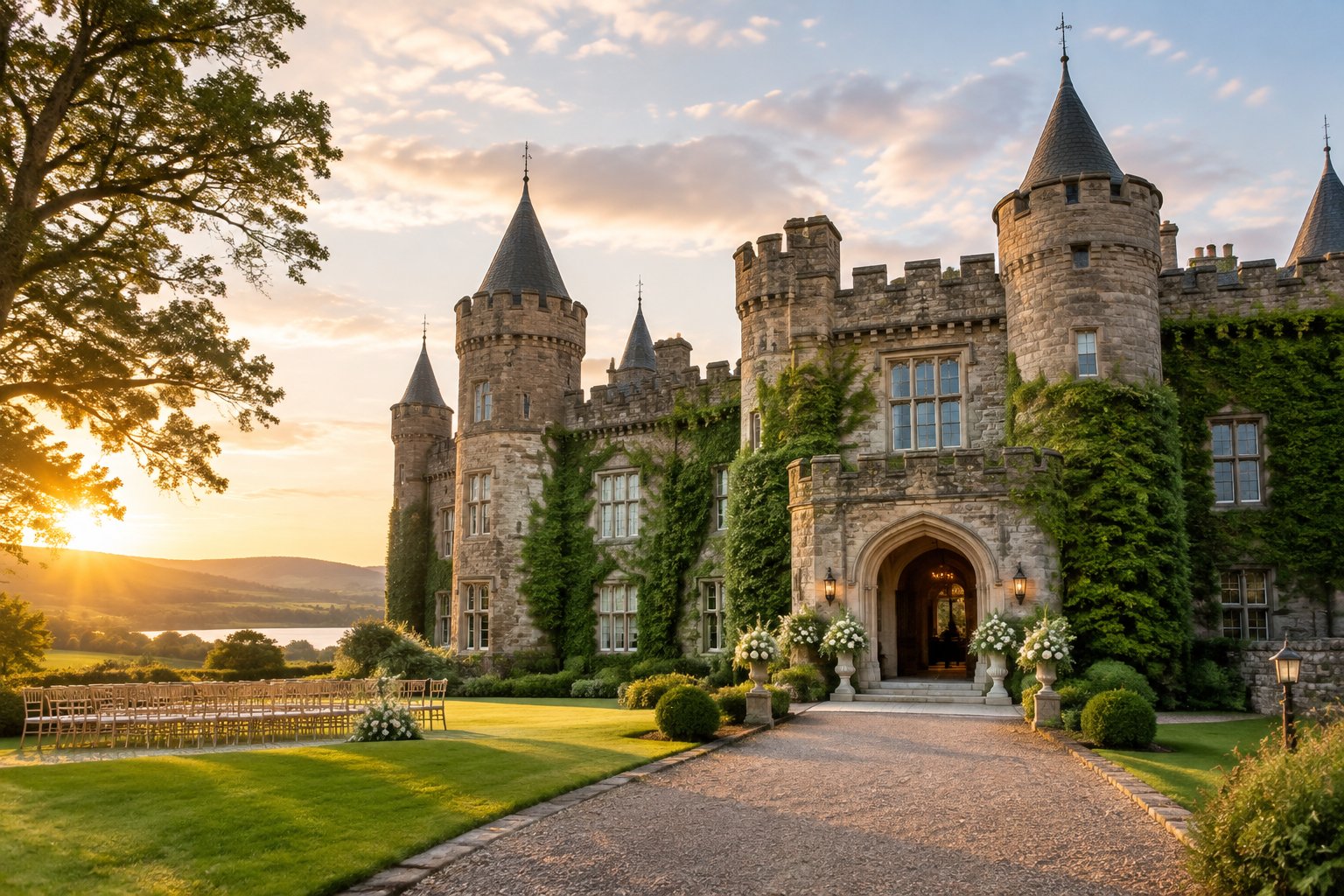
Treat each name as a starting point for checking current availability and private-hire rules. A beautiful property still needs to fit your guest count, event format, and travel budget.
Scotland and the Highlands
Scotland offers dramatic mountain views, lochs, rugged landscapes, and historic interiors. Highland properties suit couples who want a destination celebration with strong scenery and a private, atmospheric feel.
Ask about road access, airport transfers, heating, weather plans, nearby lodging, and supplier travel charges. Legal ceremony requirements also need early attention if you are traveling from the United States.
Eastnor Castle and Other English Estates
Eastnor Castle in Herefordshire combines grand rooms, landscaped grounds, and countryside views. English estates can also include medieval halls, royal residences, formal gardens, and restored historic spaces managed for private events.
Check whether the venue hosts civil ceremonies on site, which rooms are licensed, and how the property separates weddings from public visitation. English Heritage properties offer varied historic settings, from atmospheric keeps to palace gardens, with each site applying its own hire rules.
Hever Castle and Kent Wedding Settings
Hever Castle in Kent is known for its Tudor history, gardens, and connections with Anne Boleyn. The setting suits celebrations that pair historic interiors with formal outdoor spaces and carefully designed guest routes.
Ask about ceremony locations, evening access, music limits, garden availability, and nearby accommodation. Kent has strong transport links from London, though guests still need clear directions and a plan for late-night travel.
Utah Castle-Style Venues in Lindon
Lindon, Utah, offers castle-style event settings for couples seeking a fairytale look in the United States. These properties may provide modern event operations, wedding staff, and spaces designed specifically for receptions.
Ask how the venue defines “castle,” then compare its architecture, capacity, indoor facilities, and vendor policies with historic properties. Confirm whether the quoted rate covers setup, cleanup, tables, chairs, catering access, and outdoor ceremony use.
Beyond Weddings: Events and Filming Opportunities
Historic properties earn revenue through corporate events, private celebrations, photography, and filming as well as weddings. Their period rooms, gardens, stonework, and distinctive landscapes give each event a recognizable setting.
Corporate Events and Private Celebrations
A castle can host board meetings, conferences, award events, birthday parties, dinners, concerts, and milestone celebrations. Match the room to your format, then confirm seating layouts, presentation equipment, internet access, parking, catering, and accessibility.
Ask whether the venue provides event staff, security, furniture, microphones, staging, and cleanup. A private celebration may need a different contract from a wedding, especially when alcohol service, entertainment, or late-night access is involved.
Using Historic Properties as TV Locations
Historic castles provide period architecture, gardens, ruins, passageways, and interiors for television, film, documentaries, commercials, and photo shoots. Production teams should request a location visit and discuss crew size, equipment access, parking, power, catering, insurance, and restoration protections.
Sudeley Castle, for example, promotes varied historic settings across its estate and supports production needs with parking, professional kitchens, and nearby cottages. Ask the location team about filming fees, exclusivity, permitted areas, noise limits, and restoration requirements before scheduling a shoot.
Riverside Castle for Weddings and Events
A riverside castle combines historic architecture with water views and flexible outdoor event space. The setting works for wedding ceremonies, receptions, private dinners, brand events, and corporate gatherings when the property has suitable indoor backup rooms.
Check river safety, weather cover, lighting, guest transport, restroom access, and sound restrictions. A detailed site plan should show the ceremony area, reception room, loading route, parking, and every space included in your hire agreement.