
Castle Wedding Venues Italy: How to Choose Your Perfect Castello
A castle wedding in Italy gives you historic architecture, dramatic scenery, and a built-in sense of occasion. For most couples, Tuscany is the strongest starting point because its castelli combine vineyard landscapes, guest-friendly access through Florence or Pisa, and a wide range of venue sizes. You can also find striking options near Rome, Lake Como, Umbria, Puglia, Sicily, and Venice.
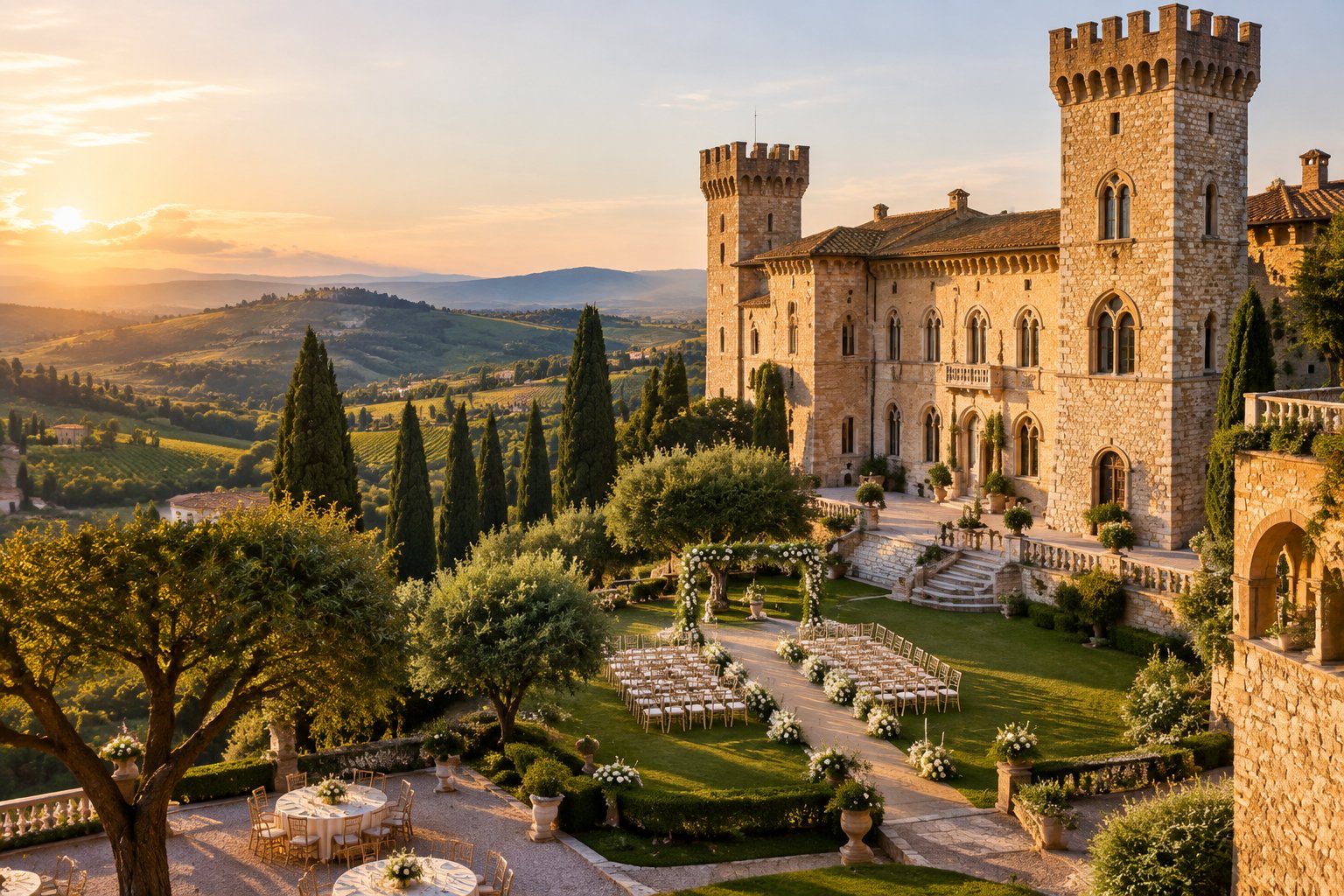
Your choice should match the celebration you want to create. A fortified hilltop estate suits a grand fairytale wedding, while a restored borgo works well for a relaxed wedding weekend with rooms for your guests. A castle hotel offers the easiest blend of history, comfort, and on-site service.
Start with the guest experience, indoor and outdoor spaces, travel time, and the full cost of exclusive use. When you are ready to compare destinations, explore these best wedding locations in Italy and shortlist properties that fit your guest count and style.
What Makes an Italian Castle Right for a Wedding?
An Italian castle works best when its historic character supports your guest experience, ceremony plan, reception layout, and lodging needs. Stone walls, battlements, courtyards, gardens, and frescoed halls create atmosphere, while modern services keep the day comfortable.

Fortress, Borgo, or Luxury Hotel: Which Setting Fits Your Vision?
A fortress gives you the strongest medieval mood. Look for towers, ramparts, a gatehouse, and a medieval courtyard if you want a dramatic ceremony or candlelit dinner. These properties suit couples who value architecture and grand photography.
A borgo is a small historic village or hamlet. It gives you a more relaxed setting for a multi-day celebration, with guest rooms, shared spaces, and local activities close by. Borgo Castelvecchi, Castello Gargonza, and Borgo Castello Panicaglia fit this style.
A luxury hotel places castle character alongside polished service. Properties such as Belmond Castello di Casole, Castello di Velona, and Castello Dal Pozzo offer a strong fit for couples who want elegant rooms, dining, and event support on the estate.
Which Historic Features Matter for the Guest Experience?
Choose features that guests will use throughout the celebration:
- A central courtyard: useful for ceremonies, aperitivi, dinner, or dancing.
- A covered hall: essential for rain, heat, and late-night events.
- A frescoed hall or vaulted room: gives dinner a strong sense of place.
- Gardens and terraces: create space for cocktails and quiet breaks.
- Battlements or elevated viewpoints: add memorable portrait locations.
- On-site rooms: let guests stay close to the event and avoid late-night travel.
Ask whether historic spaces have limits on candles, floral installations, sound equipment, and furniture. Protected buildings often have rules that affect your design plan.
Can You Hold Both the Wedding Ceremony and Reception On Site?
Many Italian castles host both events, though civil ceremony approval is specific to each property and municipality. A castle chapel can support a religious ceremony, while an approved garden, courtyard, or hall can host a civil service.
Confirm the exact ceremony type before signing. Ask whether the venue has a designated legal space, an English-speaking celebrant, a rain backup, and enough time between the ceremony and reception for guest movement. Holding both events on site simplifies transport and lets guests enjoy the property throughout the day.
Where Are the Best Regions for a Castle Celebration?
Tuscany offers the broadest choice for a castle celebration, while Lazio, Umbria, the lakes, Puglia, Sicily, Campania, and Veneto bring distinct scenery and travel patterns. Choose the region by balancing landscape, airport access, season, and the number of nights you want guests to stay.
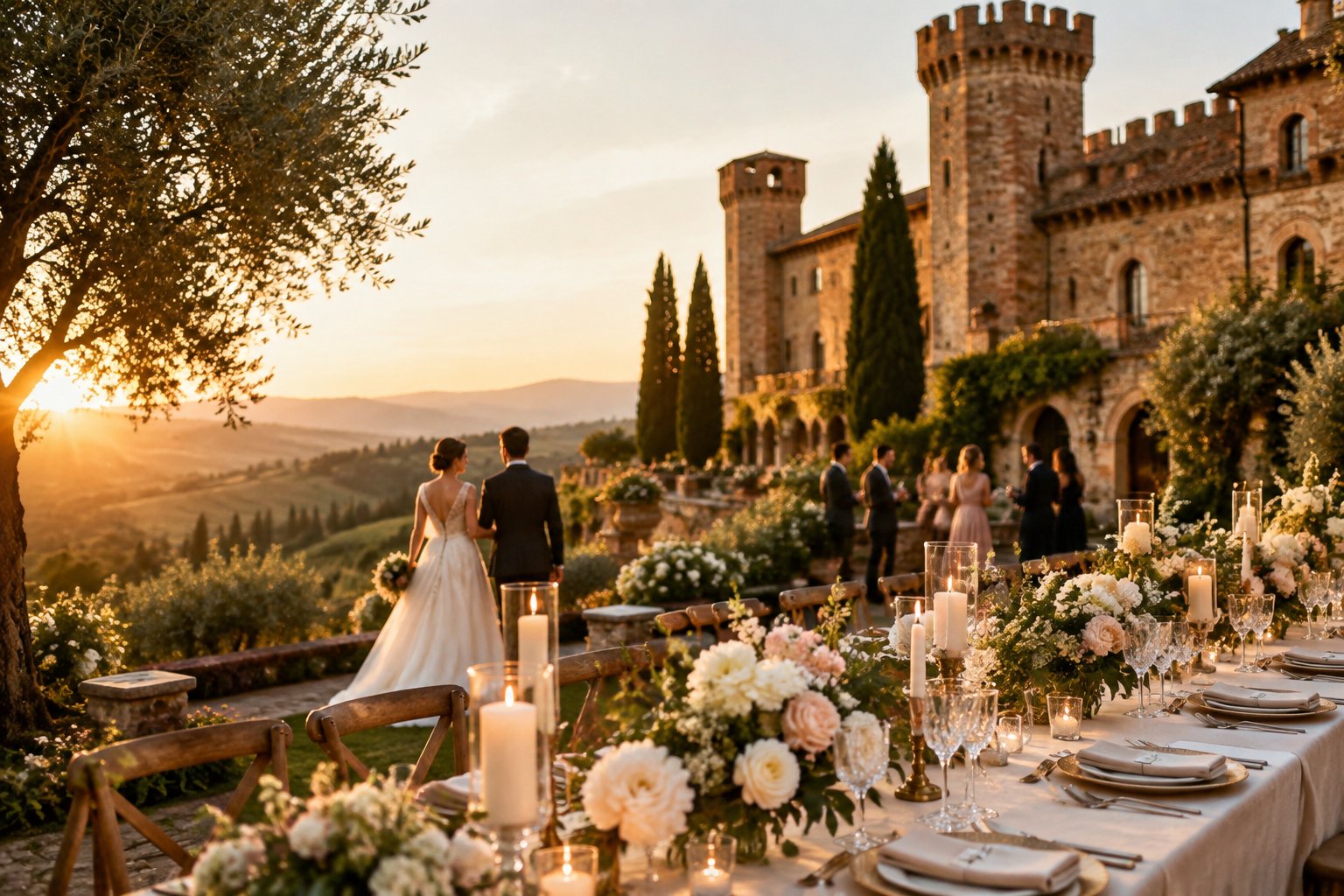
Tuscany and the Tuscan Countryside
Tuscany suits a classic Italian wedding with vineyards, cypress-lined roads, olive groves, and hilltop views. Florence and Pisa provide useful airport links, while Siena, Chianti, Montalcino, and the Val d’Orcia offer strong settings for a countryside celebration.
Castello di Celsa, Castello di Velona, Castello di Vicarello, and Castello Gargonza cover several styles, from refined estates to intimate historic stays. Rural properties sit far from train stations and city centers, so plan guest shuttles and give clear directions for the final drive.
May, early June, September, and October bring comfortable conditions for outdoor ceremonies. July and August require shade, water stations, and careful timing for afternoon events.
Rome, Lazio, and Lake Bracciano
Lazio gives you historic drama near Rome, with easier access for guests who want to add city sightseeing. Castello Brancaccio, Castello Ruspoli, and Castello Odescalchi near Lake Bracciano suit grand celebrations with a strong noble atmosphere.
Rome’s airports support international arrivals, though traffic affects transfers. Lake Bracciano adds water views and a quieter setting outside the city. Ask about municipal ceremony approval, noise limits, parking, and the travel time between guest hotels and the castle.
Umbria’s Hilltop Castelli
Umbria offers rolling hills, medieval towns, olive groves, and a slower pace than the busiest Tuscan destinations. Borgo Castello Panicaglia, Castello di Montignano, and Castello di Petrata work well for wedding weekends with shared meals, local tours, and several nights on site.
Perugia and Rome can serve as arrival points, depending on the property. The final roads may be narrow or winding, so include shuttle details in every guest communication.
Lake Como and Northern Italy
Lake Como and the northern lakes pair castle architecture with water views, mountain backdrops, and elegant towns. Castello di Rossino gives you a hillside setting near Lake Como, while Castello Dal Pozzo sits near Lake Maggiore.
This region suits a polished destination wedding with boat outings, luxury hotels, and formal dinners. Peak summer dates attract high demand, so ask about minimum stays and nearby lodging before choosing a date.
Puglia, Sicily, Campania, and Venice
Puglia brings masserie, dry-stone landscapes, olive groves, and warm coastal light. Sicily offers volcanic scenery, historic estates, and distinctive food and wine. Campania places you near Naples, historic towns, and the Amalfi area, while Venice and the Veneto region offer Renaissance character, vineyards, lakes, and easy connections through Venice Marco Polo Airport.
Southern regions can give you more space and a relaxed guest experience. Venice-area properties work well when architecture, city culture, and elegant transportation are central to your plans. Check airport transfers, local accommodation, and seasonal heat before booking.
Standout Castelli by Wedding Style and Guest Count
The best castello shortlist begins with your guest count and the kind of stay you want. Some properties suit a private weekend for a small group, while others have the space and service structure for a large reception near a major city.
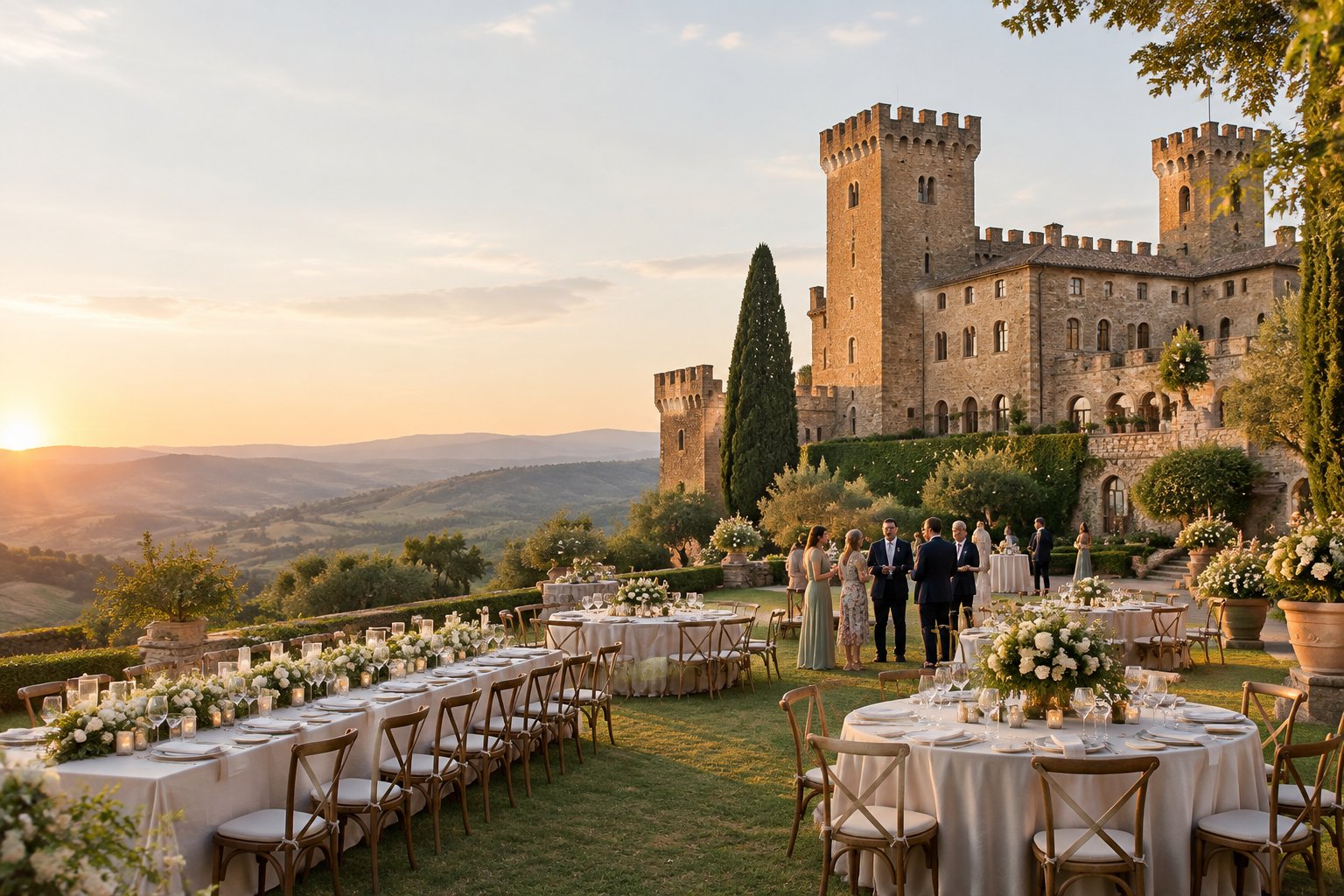
For Refined Tuscan Luxury
Belmond Castello di Casole gives you a high-end Tuscan setting with polished hospitality and countryside views. Castello di Velona combines historic character with resort-style comfort near Montalcino, while Castello di Celsa offers formal gardens and a refined estate atmosphere.
Castello Gargonza works for couples drawn to a restored medieval village. Castello di Vicarello suits a smaller, design-led celebration with an intimate estate feel. Confirm guest capacity for the ceremony, dinner, and dancing separately because outdoor and indoor limits often differ.
For an Intimate Multi-Day Castle Stay
Castello di Vicarello, Borgo Castelvecchi, and Borgo Castello Panicaglia fit a wedding weekend where guests stay, dine, and spend time together on the property. Their village or estate layouts support welcome meals, relaxed breakfasts, and farewell gatherings.
Castello di Montignano and Castello di Petrata offer Umbrian settings with historic architecture and countryside views. Ask how many guests can sleep on site, whether rooms require a full buyout, and where overflow guests can stay.
For Grand Celebrations Near Rome
Castello Brancaccio suits a large historic celebration near Rome, with capacity for up to about 250 guests. Castello Ruspoli offers a strong fortress character and capacity reaching approximately 350 guests. Castello Odescalchi adds Lake Bracciano scenery and a stately setting.
These properties make guest transport a central planning task. Arrange shuttles from agreed hotel hubs, schedule extra travel time for traffic, and confirm the route for coaches before the wedding week.
For Lakeside, Umbrian, and Sicilian Scenery
Castello Dal Pozzo brings northern lake scenery and resort comfort for celebrations of up to about 250 guests. Castello di Rossino offers hillside views near Lake Como, while Borgo Castello Panicaglia, Castello di Montignano, and Castello di Petrata suit Umbrian landscapes.
In Sicily, Castello Camemi provides a historic setting near Vizzini with a distinctly southern atmosphere. Compare airport distance, room inventory, and the weather plan with the beauty of the setting. A dramatic location works best when guests can reach it comfortably and stay nearby.
How Much Does a Castle Wedding in Italy Cost?
A castle wedding in Italy can range from about €50,000 for a smaller, less famous property to €350,000 or more for an exclusive luxury celebration with 100 to 300 guests. Venue fees alone may sit around €8,000 to €50,000, while catering can range from roughly €120 to €350 per guest.
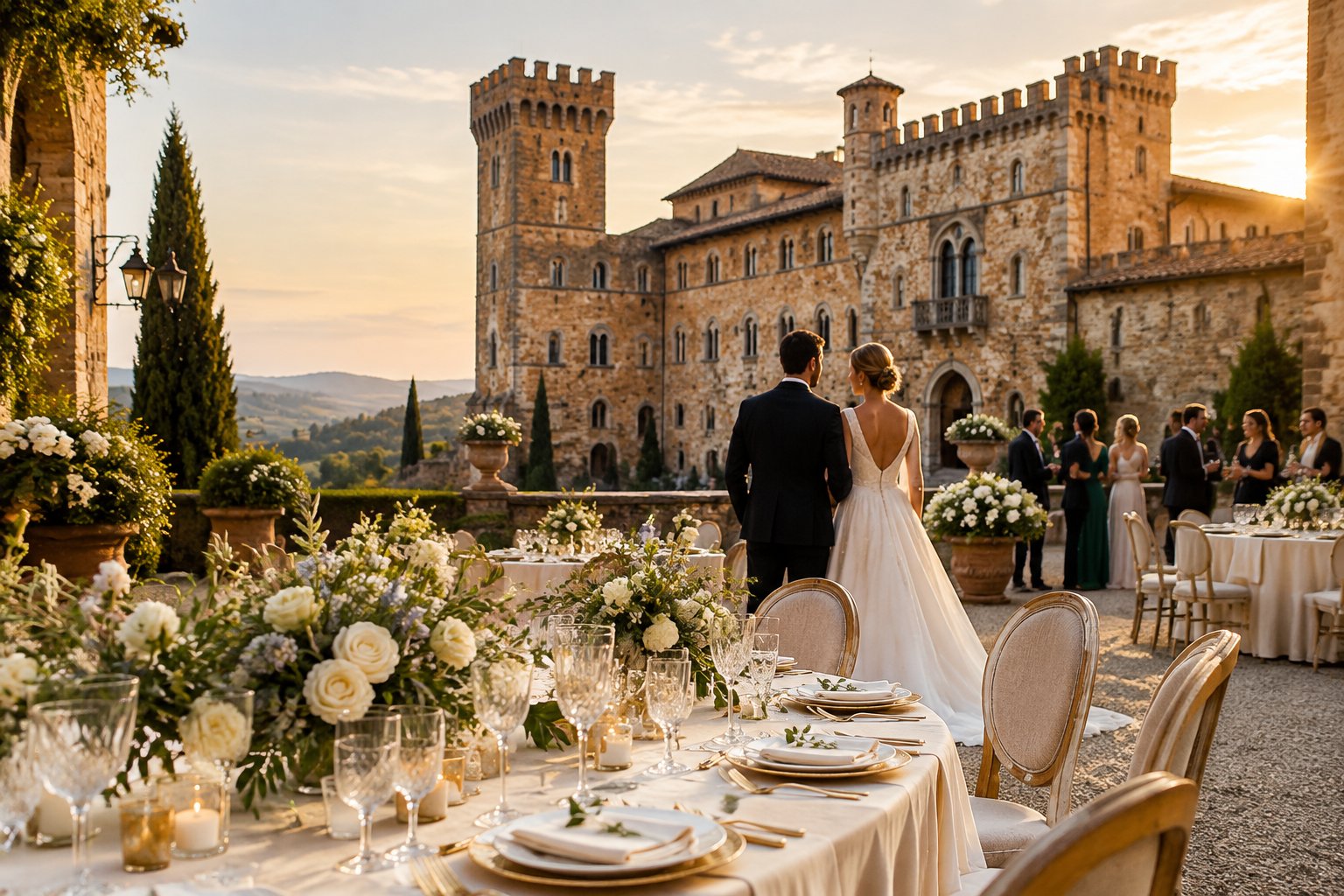
Your quote will reflect the region, guest count, season, exclusivity, accommodation, catering format, and length of stay. Ask for a complete estimate in euros and request a list of taxes, service fees, supplier charges, and minimum spends.
What Is Included in the Venue Fee?
A venue fee may cover the event spaces, furniture, basic staff, cleaning, parking, and access for a set number of hours. Some castles include a ceremony area, sound equipment, or a planner contact. Others charge separately for setup, overtime, lighting, security, and exclusive use.
Request a written inventory covering:
- Ceremony and reception spaces
- Tables, chairs, linens, and glassware
- Catering and bar service
- Heating or air conditioning
- Cleaning and event staff
- Power, lighting, and sound limits
- Access for your planner and suppliers
A wine tasting, welcome dinner, or historic tour may appear in a package or cost extra. Confirm each item before comparing quotes.
How Room Buyouts and Multi-Day Packages Affect the Budget
A room buyout raises the upfront cost while giving you privacy, easier transport, and more time with guests. It can also combine lodging, meals, and event access into one agreement. Ask whether the castle requires exclusive use for a wedding and whether a minimum number of nights applies.
A multi-day plan may include a welcome dinner, wedding reception, breakfast, and farewell brunch. Price each event separately so you can see which parts add the most value. Properties with on-site accommodation help reduce guest transfers, while overflow lodging may add shuttle and coordination costs.
Which Choices Increase or Reduce Total Spend?
Peak dates in June, July, and September carry strong demand. Saturday celebrations, large floral installations, live bands, fireworks, luxury transportation, and open bars also raise the budget.
You can manage costs through a weekday date, shoulder-season booking, a shorter event window, local flowers, regional wine, and a guest list that fits the venue’s existing rooms. Build a 10 to 15 percent reserve for currency changes, taxes, transport adjustments, and last-minute rentals. For more planning context, compare guidance on how much should you budget per person for a wedding.
How to Compare Venues Before You Book
Compare wedding venues through a written checklist that covers privacy, access, lodging, suppliers, sound rules, ceremony status, and rain protection. A beautiful castle becomes a stronger choice when its daily logistics fit your guests and your budget.
Questions to Ask About Exclusivity, Curfews, and Suppliers
Ask these questions before you pay a deposit:
- Is exclusive use required, optional, or unavailable?
- Which areas are private during your event?
- What time can suppliers arrive?
- When must amplified music end?
- Can dancing continue indoors after outdoor music ends?
- Does the venue require approved caterers, planners, florists, or rental companies?
- Are candles, confetti, fireworks, drones, or open flames restricted?
- What insurance and damage deposits apply?
- Who manages the venue on the wedding day?
Request the contract, floor plans, capacity limits, cancellation terms, payment schedule, and overtime rates. A local planner can translate venue rules into a workable timeline and supplier plan.
Accommodation, Transfers, and Accessibility for Guests
Count beds by room type, then map overflow hotels within a practical transfer radius. Confirm check-in times, breakfast service, luggage storage, parking, coach access, and the route from the nearest airport or train station.
Ask about stairs, elevators, uneven stone paths, restroom locations, accessible rooms, and seating for guests with mobility needs. Share transfer times with your guests before they book flights.
Rural castles may require private shuttles because public transport does not reach the final road.
How to Build a Weather-Ready Wedding Plan
Choose a venue with a beautiful indoor option that can hold your full guest count. A frescoed hall, vaulted dining room, covered loggia, or cloistered courtyard gives you a clear plan for rain, wind, or intense summer heat.
Set a decision deadline for moving indoors, then include that decision in the contract and timeline. Check whether the venue supplies umbrellas, heaters, fans, flooring, lighting, and backup furniture.
Keep the ceremony, cocktails, dinner, and dancing in spaces that remain comfortable if the weather changes.