
Castle Wedding Venues Jersey: A New Jersey Planning Guide
New Jersey gives you several ways to create a fairy tale wedding, from authentic historic castles to grand estates with turrets, stone walls, sweeping lawns, and formal ballrooms. For the most dramatic large-scale celebration, The Legacy Castle in Pompton Plains stands out with grand ballrooms, waterfront scenery, landscaped grounds, and space designed for luxury events. Skylands Manor offers a more intimate historic setting, while Pleasantdale Chateau and Park Chateau Estate & Gardens bring European-inspired style with modern event support.
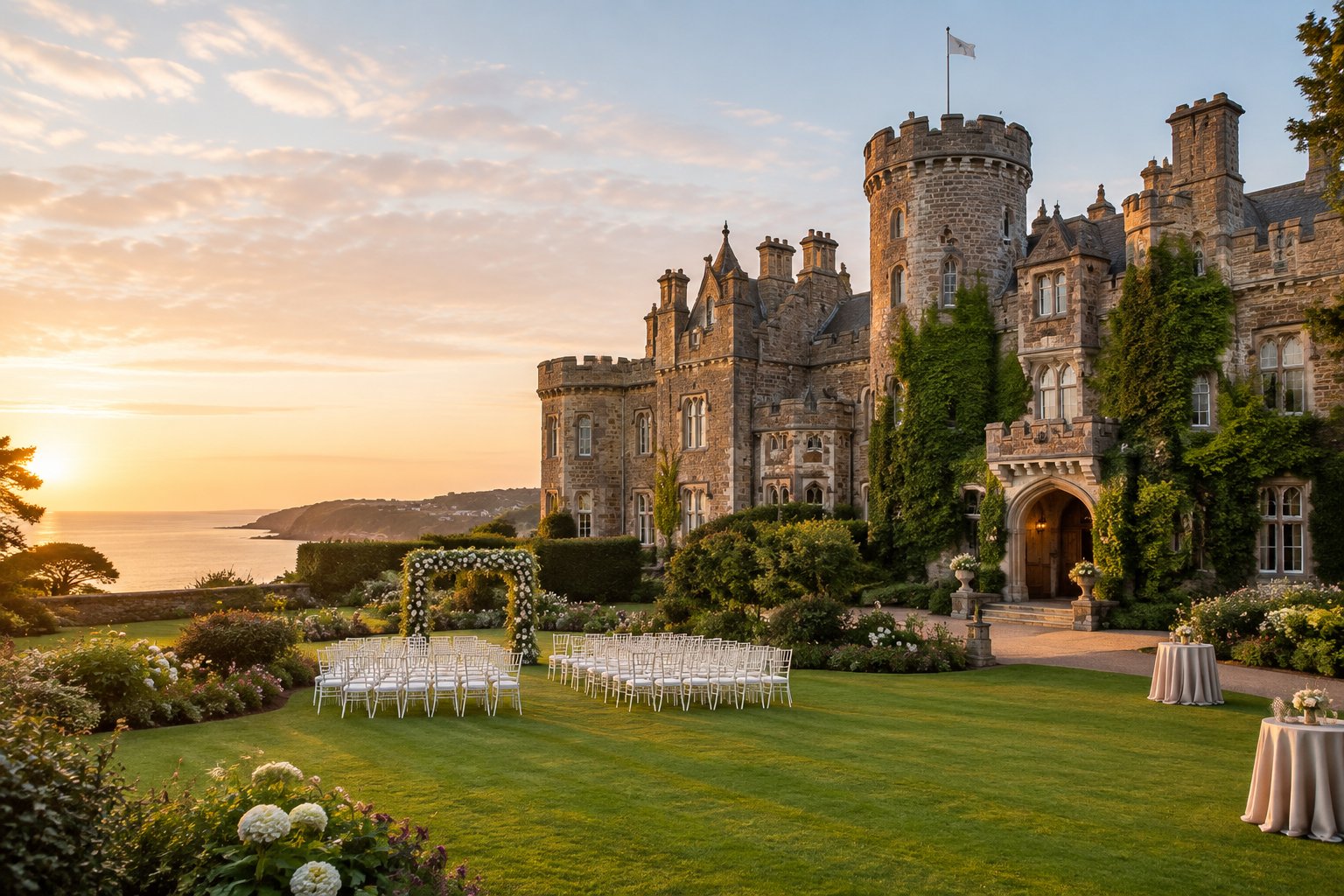
As you compare castle wedding venues in Jersey, focus on the complete guest experience. Your ceremony setting, reception layout, getting-ready rooms, photo locations, weather plan, catering rules, and transportation needs all shape the wedding day. A beautiful façade creates the mood, while practical details keep the celebration comfortable.
Start by choosing the scale and style that fit your guest list. Then schedule tours at your top venues so you can walk through the ceremony route, bridal suite, cocktail hour space, and reception room in person.
What Makes a New Jersey Venue Feel Like a Castle?
A New Jersey venue feels like a castle when its architecture, grounds, and event experience create a sense of grandeur from arrival through the reception. Look for stone or château-style exteriors, towers, dramatic staircases, formal gardens, tall ceilings, and rooms with enough character to shape your décor.
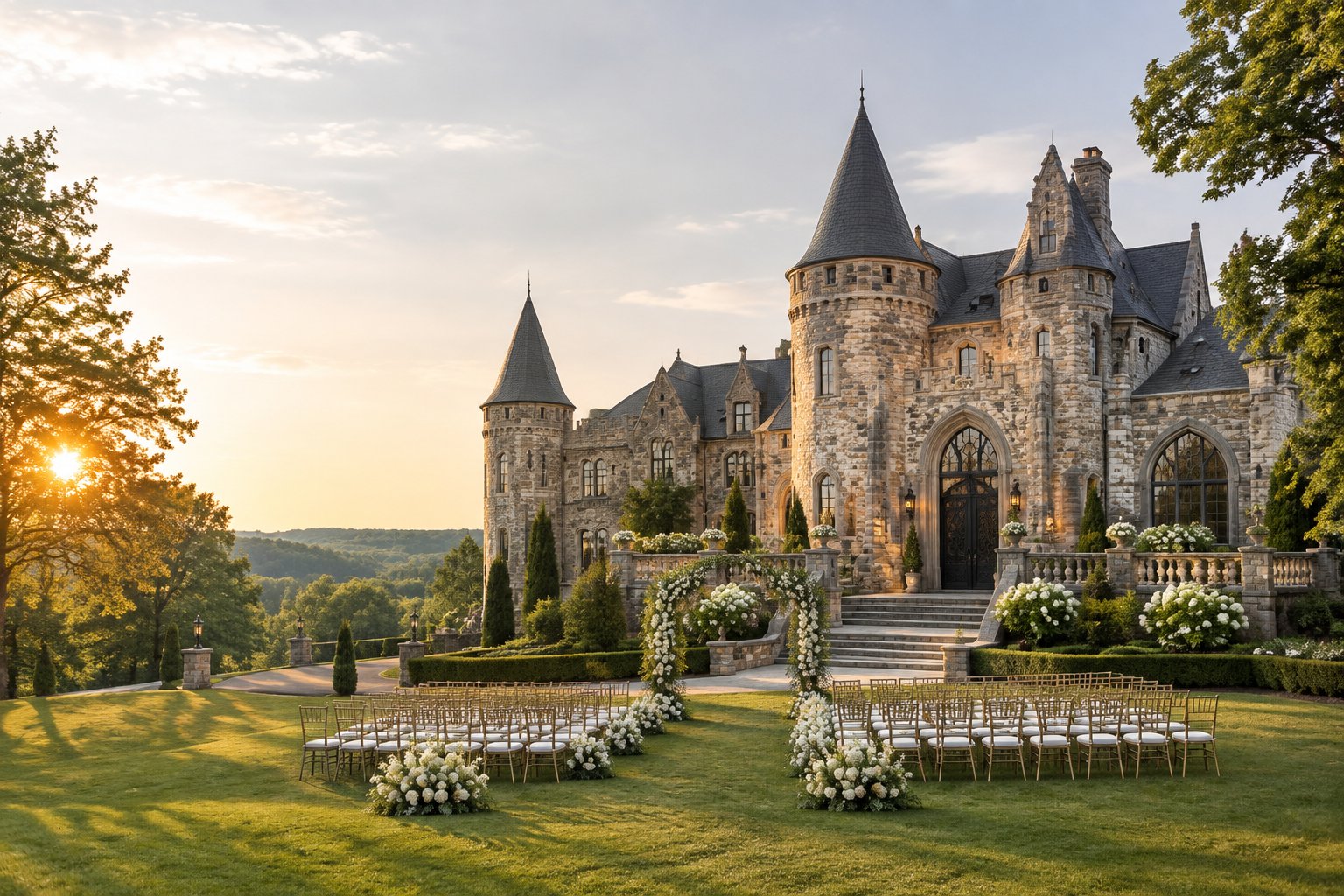
Historic buildings give you aged masonry, carved details, and a strong sense of place. Modern estates create the same fairytale mood with polished finishes, large event spaces, and carefully designed landscaping. Your best choice depends on the guest count, desired formality, and level of venue support you want.
Historic Castles, Châteaux, and Manor Estates
Historic castles bring architectural details that naturally enrich your ceremony and wedding photography. Turrets, stone archways, old-world rooms, and grand entrances provide built-in decoration.
Château-style venues often combine European design with updated kitchens, restrooms, heating, air conditioning, and accessible event areas. Manor estates offer a softer version of the castle look through formal façades, sweeping lawns, wooded paths, and refined interiors.
Ask which rooms are original, which areas were renovated, and whether historic floors or staircases have use restrictions. Those details affect your processional, décor installation, guest flow, and reception design.
Ballrooms, Chapels, Gardens, and Waterfront Grounds
A grand ballroom gives you a reliable reception plan, especially for a large wedding party. Tall ceilings, chandeliers, balconies, and wide dance floors support a formal celebration with a strong visual impact.
A chapel or dedicated ceremony room creates a clear place for vows. Gardens offer seasonal color and outdoor ceremony settings, while waterfront grounds add open views and reflective scenery to portraits and cocktail hour.
Review the distance between each space. A smooth route from the ceremony to cocktails and dinner helps guests move easily and gives your wedding day a natural rhythm.
Choosing the Right Scale for Your Guest List
Match the room to your confirmed guest count, including dinner tables, a dance floor, a bar, entertainment, and any stage or sweetheart table. A venue’s maximum capacity may describe ceremony seating, so ask for the seated dinner capacity in your chosen reception room.
For an intimate castle wedding, a smaller manor can make each room feel intentional and personal. A larger guest list calls for a venue with broad event space, multiple transition areas, substantial restrooms, and parking that handles peak arrival times.
Standout Venues for a Grand Celebration
The Legacy Castle is the clearest choice for a grand New Jersey castle wedding, while Pleasantdale Chateau, Park Chateau Estate & Gardens, and The Skylands Manor offer distinct levels of scale and historic character. Each venue creates a different balance between architectural drama, formal grounds, guest capacity, and reception style.
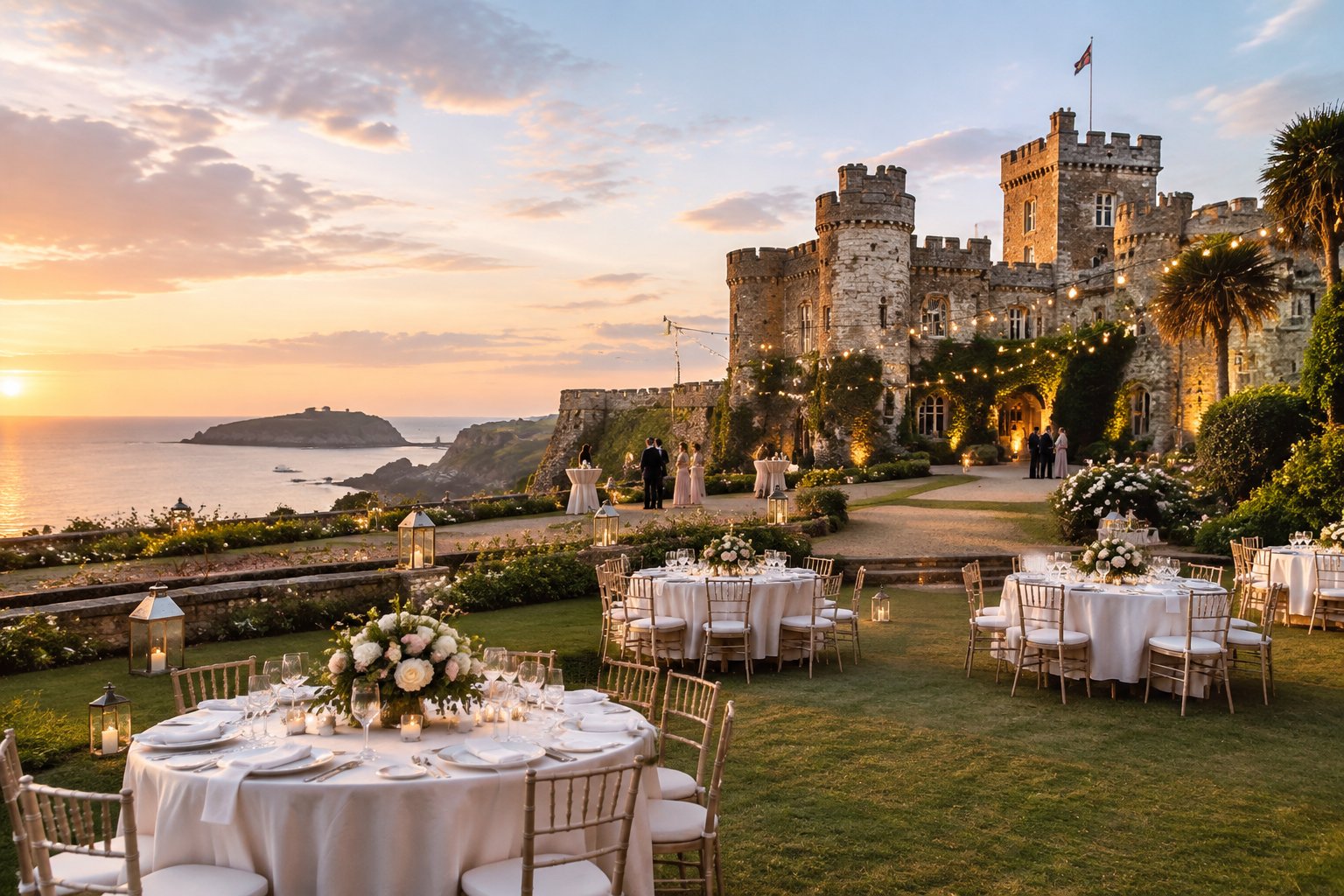
Compare the venues by the feeling you want guests to have when they arrive. A huge ballroom suits a lavish party, while a historic manor creates a more intimate experience with architectural detail close at hand.
The Legacy Castle in Pompton Plains
The Legacy Castle in Pompton Plains is designed for large luxury celebrations. Its property includes 42 acres of lakes and gardens, grand ballrooms, and timeless architecture.
The dual floating staircase creates a strong entrance and ceremony backdrop. The venue’s 55-foot ceilings add scale to the reception setting, while waterfront views and landscaped grounds give you multiple options for portraits and guest photos.
Its full-service approach supports many wedding styles, including Kosher and South Asian celebrations. Ask how your guest count fits each ballroom, where cocktail hour takes place, and which outdoor areas remain available during your selected season.
Pleasantdale Chateau in West Orange
Pleasantdale Chateau in West Orange offers a European estate atmosphere with polished event spaces and landscaped grounds. The property suits couples who want refined château style, formal dining, and a carefully managed guest experience.
The setting gives you opportunities for ceremony portraits, garden photos, and an elegant reception. During your tour, review the ceremony-to-cocktail route and ask how the venue handles room transitions for your expected guest count.
Pleasantdale Chateau works well for a formal wedding that combines estate character with organized event service.
Park Chateau Estate & Gardens in East Brunswick
Park Chateau Estate & Gardens in East Brunswick brings French-inspired architecture, manicured gardens, and a dedicated celebration setting. Its estate design gives your wedding party several polished backdrops for portraits and guest arrival photos.
The grounds suit outdoor ceremonies and cocktail hour plans, while indoor reception spaces protect the evening from changing weather. Ask about the exact ceremony location, rain plan, getting-ready access, and reception layout before selecting your date.
This venue fits couples who want a romantic château mood with a structured wedding-day flow.
The Skylands Manor in Ringwood
The Skylands Manor in Ringwood offers historic Tudor-style character in a more intimate setting. The manor sits within the New Jersey Botanical Garden, giving you stone architecture, gardens, tree-lined paths, and woodland scenery.
The venue accommodates up to 100 guests, making it a strong fit for a curated celebration with close guest interaction. Its bridal suite gives you and your wedding party a dedicated place to prepare, while the grounds create options for a first look and outdoor portraits.
Skylands Manor also features farm-to-table cuisine and flexible ceremony settings, including the gardens and the manor ballroom. Ask about seasonal garden conditions, indoor ceremony capacity, and the timing of outdoor photos.
More Castle-Inspired Estates to Consider
Castle-inspired estates give you more flexibility across Northern and Central New Jersey, with options ranging from an intimate Verona setting to polished estates in Montclair, Florham Park, and nearby communities. These venues bring castle character through towers, stone façades, formal landscaping, historic interiors, or grand mansion design.
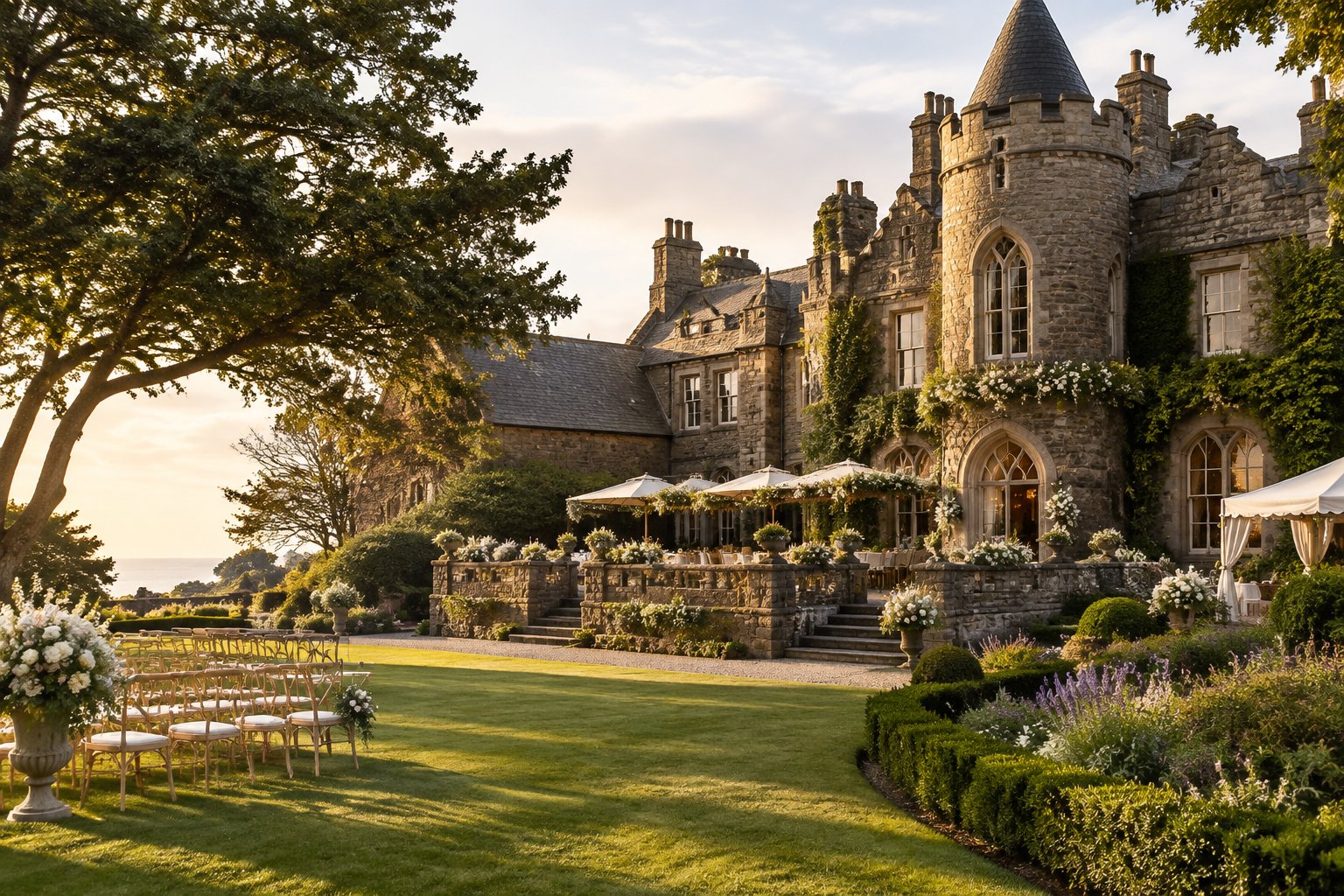
Think about how much of your wedding should take place outdoors, whether guests need overnight lodging, and whether the venue supports a full wedding weekend. An estate setting can give you more privacy and visual variety, while a city-adjacent venue can simplify transportation.
Kip’s Castle for Intimate Verona Weddings
Kip’s Castle in Verona offers a distinctive historic setting with stone architecture, towers, and views across the surrounding landscape. Its character suits couples planning an intimate ceremony, a small reception, or a portrait-focused celebration.
The nearby setting gives you access to Verona and Montclair for guest lodging, dining, and additional wedding events. Ask about event capacity, permitted ceremony areas, restroom access, parking, and weather procedures before treating the castle as your primary reception site.
Natirar and Ninety Acres for an Estate Weekend
Natirar and Ninety Acres offer an estate experience with refined grounds, landscaped views, and space for a wedding weekend. Their atmosphere suits couples who want a destination feel within New Jersey.
The property style supports outdoor ceremonies, formal dinners, and relaxed guest time between events. Ask about room blocks, rehearsal dinner options, transportation between lodging and event spaces, and the length of your private access.
These venues work well when your celebration includes more than one gathering and your guests value time together beyond the reception.
The Ryland Inn and Crossed Keys Estate
The Ryland Inn offers historic country-estate character with an elegant dining experience. Its setting suits couples who want a refined reception surrounded by mature landscaping and classic architecture.
Crossed Keys Estate brings a private estate feel with gardens, open lawns, and a romantic outdoor atmosphere. Ask about ceremony locations, tent or indoor reception plans, catering requirements, and how the property handles wet-weather conditions.
Both venues can support a polished wedding with strong garden and estate portraits, though your preferred guest count should guide the comparison.
The Park Savoy Estate and Crystal Plaza
The Park Savoy Estate in Florham Park combines mansion architecture, landscaped grounds, and formal wedding spaces. Its estate setting creates a classic, romantic look for ceremonies and portraits.
Crystal Plaza offers grand interior design and an elegant event atmosphere for couples who want a ballroom-centered celebration. Compare the two by reviewing room size, outdoor access, décor rules, cocktail hour placement, and guest transportation.
A tour will show you how each venue feels at your event size and whether the available photo locations match your wedding style.
How to Compare Ceremony, Reception, and Photo Settings
The strongest venue gives you a smooth path from getting ready to the first look, ceremony, cocktail hour, reception, and final exit. Evaluate every transition alongside the beauty of each room so your wedding day stays comfortable and your wedding photography includes varied settings.
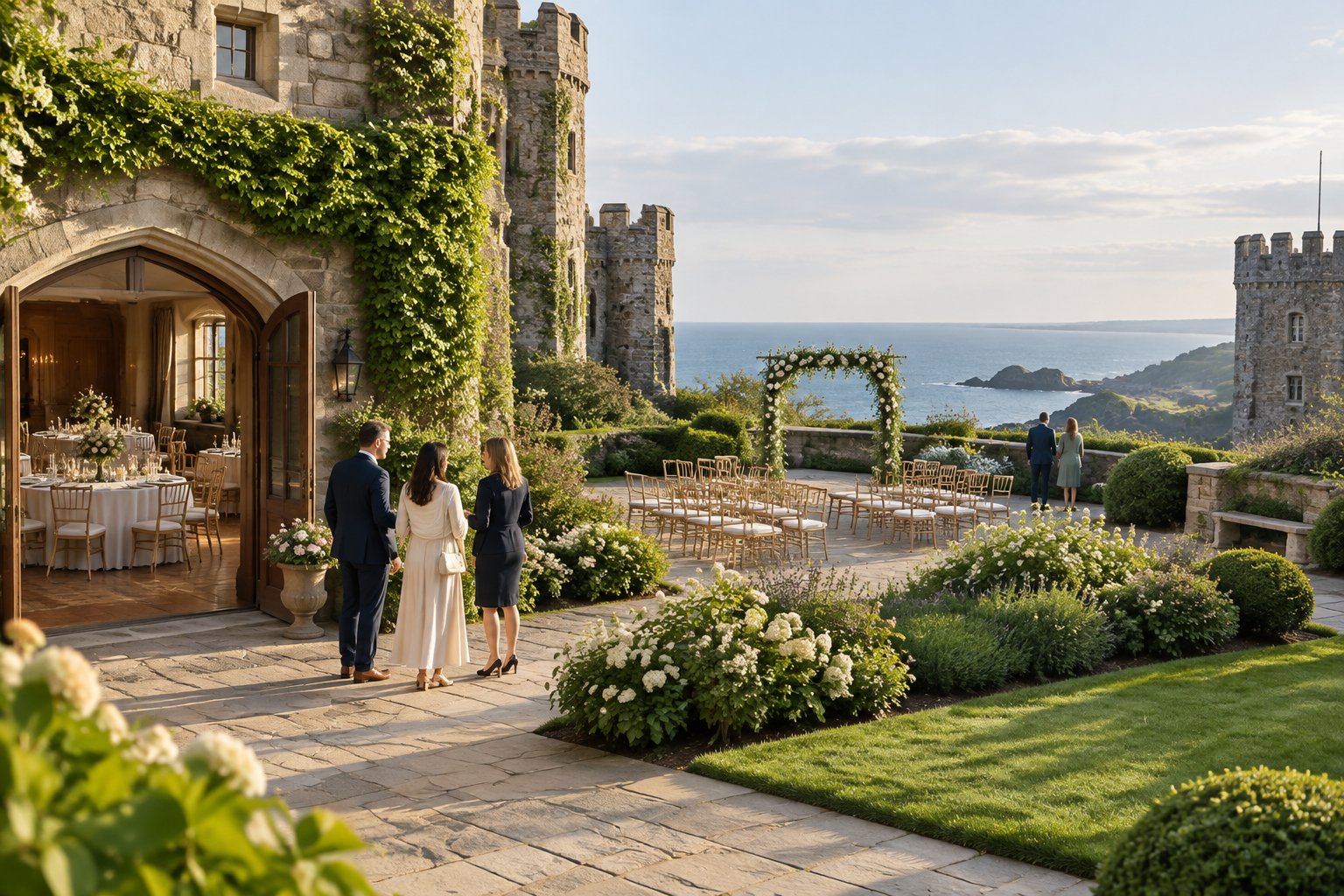
Bring your proposed timeline to each tour. Ask where guests wait, where vendors load in, and where you can step away for private moments without crossing the guest path.
Planning a First Look and Getting-Ready Portraits
A bridal suite with natural light, seating, mirrors, outlets, and room for your wedding party helps the morning run smoothly. Ask when you can enter the suite, whether hair and makeup teams have enough workspace, and where personal items stay during the ceremony.
Choose a first-look location with privacy and a clear route to portraits. A garden path, grand staircase, stone courtyard, or tree-lined lawn can create a meaningful setting without adding a long drive between spaces.
Confirm how much portrait time your timeline allows and whether indoor alternatives are available during rain or extreme temperatures.
Making the Most of Cocktail Hour Spaces
Cocktail hour works best when guests have easy access to drinks, food, restrooms, seating, and conversation areas. A garden terrace, gallery, covered porch, or separate ballroom gives guests room to move while the reception space is prepared.
Ask whether the cocktail hour location is private to your wedding, how far it is from the ceremony room, and what happens if weather changes. Check whether your musicians, lounge furniture, bar, and food stations fit without blocking guest movement.
Finding the Best Wedding Photography Backdrops
List the settings you want before your tour. Stone walls, staircases, arches, gardens, waterfront views, wooded paths, and ballroom details each create a different visual style.
Ask your photographer to review the property’s light at your ceremony time. Exterior areas can look different in midday sun, late afternoon light, or evening darkness. Confirm whether portraits are allowed throughout the property and whether other events could limit access.
A clear portrait plan helps you protect time for family photos, wedding party images, and private couple portraits.
Preparing for Weather and Seasonal Changes
Your rain plan should identify the exact indoor ceremony room, guest capacity, seating layout, and decision deadline. Ask whether the same plan works for wind, extreme heat, snow, or muddy grounds.
Stone buildings can hold cold in winter and heat in summer, so ask which rooms have heating and air conditioning. For outdoor events, confirm the availability of fans, heaters, covered walkways, umbrellas, and indoor photo locations.
Visit the venue during the season of your wedding when possible, then include weather procedures in your contract.
What to Ask Before Booking Your Date
Before you sign, get written answers about capacity, costs, catering, access, lodging, transportation, accessibility, weather, and vendor rules. A venue tour shows you the setting, while the contract explains how that setting works on your wedding day.
Use the same questions at every venue so your comparisons stay clear. Keep the proposal, menu, floor plan, payment schedule, and policies together for easy review.
Capacity, Exclusivity, and Room Transitions
Ask for seated dinner capacity with your planned dance floor, bar, stage, sweetheart table, and rain-plan layout. Confirm whether another event shares the property and whether your ceremony, cocktail hour, and reception spaces are private.
Review your access period, setup time, breakdown deadline, guest arrival route, and music end time. Ask whether the venue moves furniture between rooms and who manages each transition.
Catering, Bar Service, and Vendor Policies
Confirm whether catering is in-house, limited to an approved list, or open to outside vendors. Request sample menus, service fees, minimums, tasting details, bar packages, corkage rules, and policies for specialty meals.
Ask which vendors are required and which you may choose freely. Check rules for candles, sparklers, confetti, floral installations, wall décor, amplified music, and outdoor equipment.
Make sure taxes, staffing, cleaning, rentals, security, valet, and service charges appear in the written proposal.
Overnight Stays, Transportation, and Accessibility
Ask whether you and your guests can stay on the property, how many rooms are available, and whether lodging is included in the venue fee. If rooms are off-site, identify nearby hotels and request shuttle options.
Review parking capacity, valet service, rideshare access, loading areas, and the distance between parking and event spaces. Ask about ramps, elevators, accessible restrooms, paths, seating areas, and transportation for guests with mobility needs.
Questions to Bring to Your Venue Tour
Take this checklist with you:
- What is the seated capacity for our exact reception layout?
- Which rooms are private to our wedding?
- What is the indoor rain plan for the ceremony and cocktail hour?
- Which rooms have heating and air conditioning?
- What does the venue fee include?
- Which charges are added for staffing, rentals, cleaning, security, or valet?
- Can we choose our own caterer and vendors?
- What are the bar rules, minimums, and corkage fees?
- When can we access the property for setup and getting ready?
- Where can we take first-look, family, and wedding party portraits?
- What are the music, candle, décor, and exit restrictions?
- Is overnight lodging available on-site or nearby?
- What accessibility features are available?
- What deposit, payment, postponement, cancellation, and insurance terms apply?
- Who is our venue contact on the wedding day?
Bring the answers home, compare them with your budget and guest priorities, and book only after the complete plan feels workable on paper.