
Castle Wedding Venues Quincy: Planning Guide
Castle-style wedding venues near Quincy give you a storybook setting with historic architecture, landscaped grounds, and photo backdrops built into the property. For a true castle atmosphere near Quincy, Hammond Castle in Gloucester suits couples who want medieval-inspired interiors, ocean-facing grounds, and space for both ceremony and reception.
Its Great Hall holds up to 120 guests for a ceremony and 90 for a reception, while a tented lawn reception accommodates up to 120.
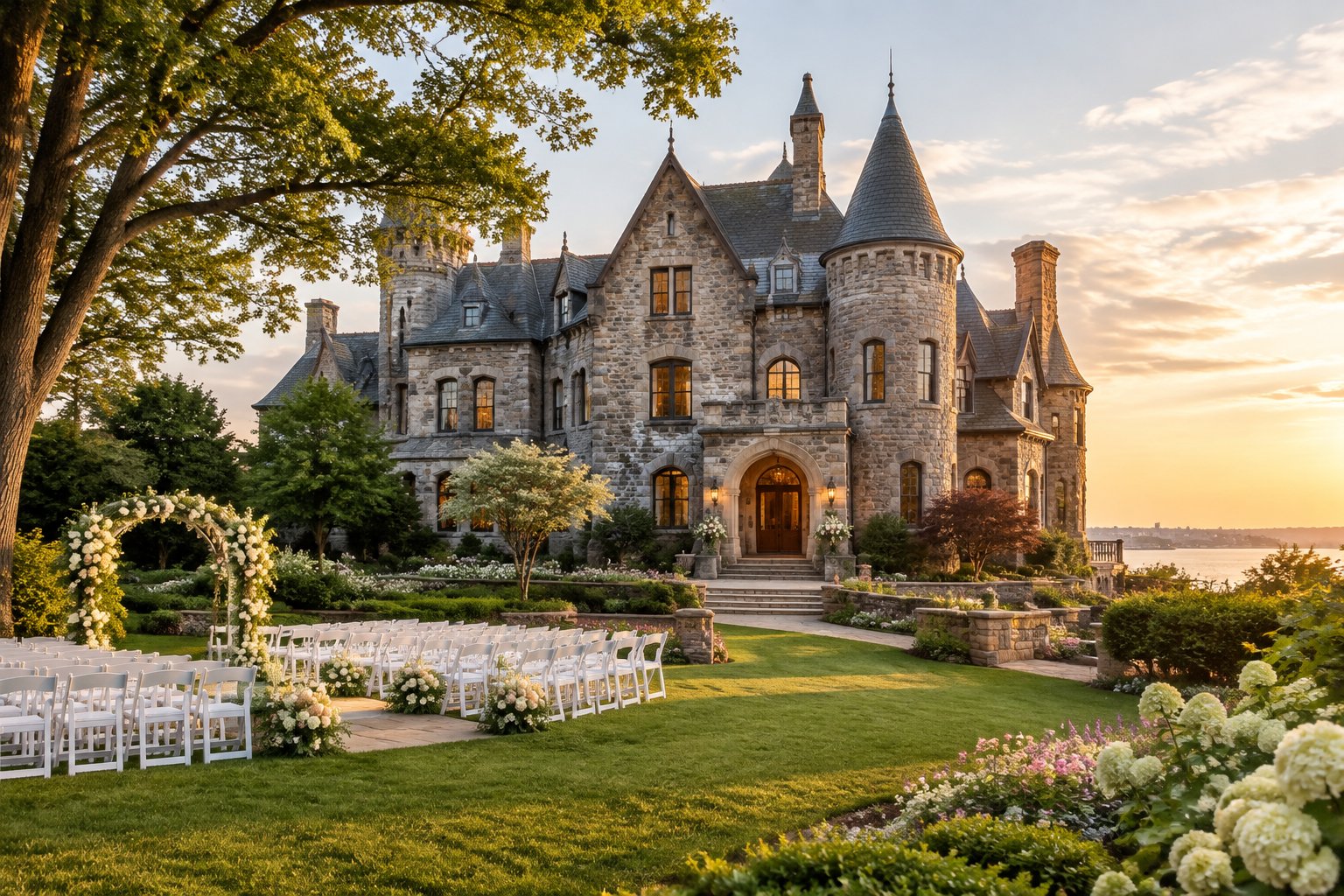
Quincy itself offers historic halls, grand ballrooms, gardens, and estates that create a castle-inspired mood without requiring a remote coastal setting. Start by deciding whether you want authentic historic character, polished event facilities, or a smaller venue with dramatic details.
Then ask about capacity, catering, guest access, weather plans, and the full rental timeline before booking a tour.
Are There Castle-Style Settings in or Near Quincy?
Castle-style choices are available near Quincy, while the search area also includes historic estates, mansion venues, and grand ballrooms in the wider Boston region. You can widen your search to find stronger architecture and scenic grounds while keeping guest travel manageable.
Comparing Quincy, Massachusetts and Quincy, Illinois Search Areas
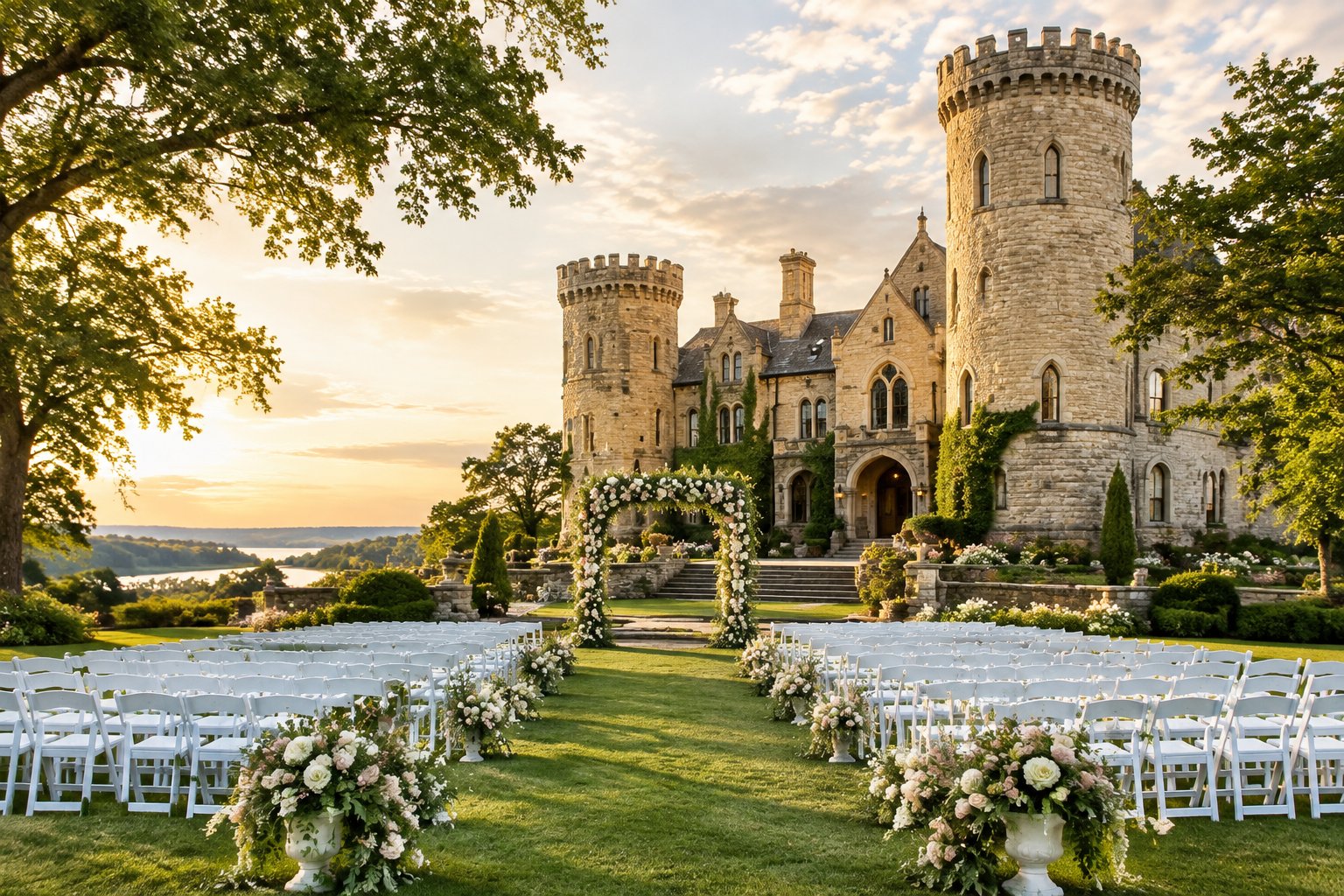
Search for Quincy, Massachusetts when you want access to Boston-area transportation, coastal New England scenery, and nearby historic properties. Local options can include ballroom venues, garden settings, and historic buildings that deliver an elegant castle mood through high ceilings, chandeliers, arched details, and formal grounds.
Quincy, Illinois is a separate market with its own historic homes, event halls, and regional venue network. Confirm the state in every search, inquiry, and map result so you do not compare properties from two different cities.
For Massachusetts couples, expand the map toward Boston, Gloucester, Brookline, and other nearby communities. A wider radius gives you more architectural styles and lets you compare travel time with the setting you want.
When a Historic Estate Delivers the Castle Feel
A historic estate can create the same formal atmosphere through stonework, staircases, fireplaces, wood paneling, gardens, and grand entry doors. The building does not need towers to support a fairytale design.
Look for:
- A dramatic ceremony entrance
- A large staircase or courtyard
- Formal gardens or ocean views
- Indoor rooms with strong architectural details
- A reception space that supports dinner and dancing
- Private areas for getting ready and portraits
Hammond Castle offers a clear example of this approach. Its Great Hall provides an indoor ceremony and reception setting, while the ocean-facing lawn supports an outdoor ceremony and tented reception.
A venue with several distinct spaces also gives you a wet-weather photo route and more variety during the day.
How to Choose the Right Setting for Your Wedding Vision
Choose a venue by matching its spaces, guest capacity, access features, and lodging options to the way you want your wedding day to feel. A dramatic building needs practical event support so guests can move comfortably from arrival through dancing.
Ceremony Spaces, Reception Rooms, and Photo Backdrops
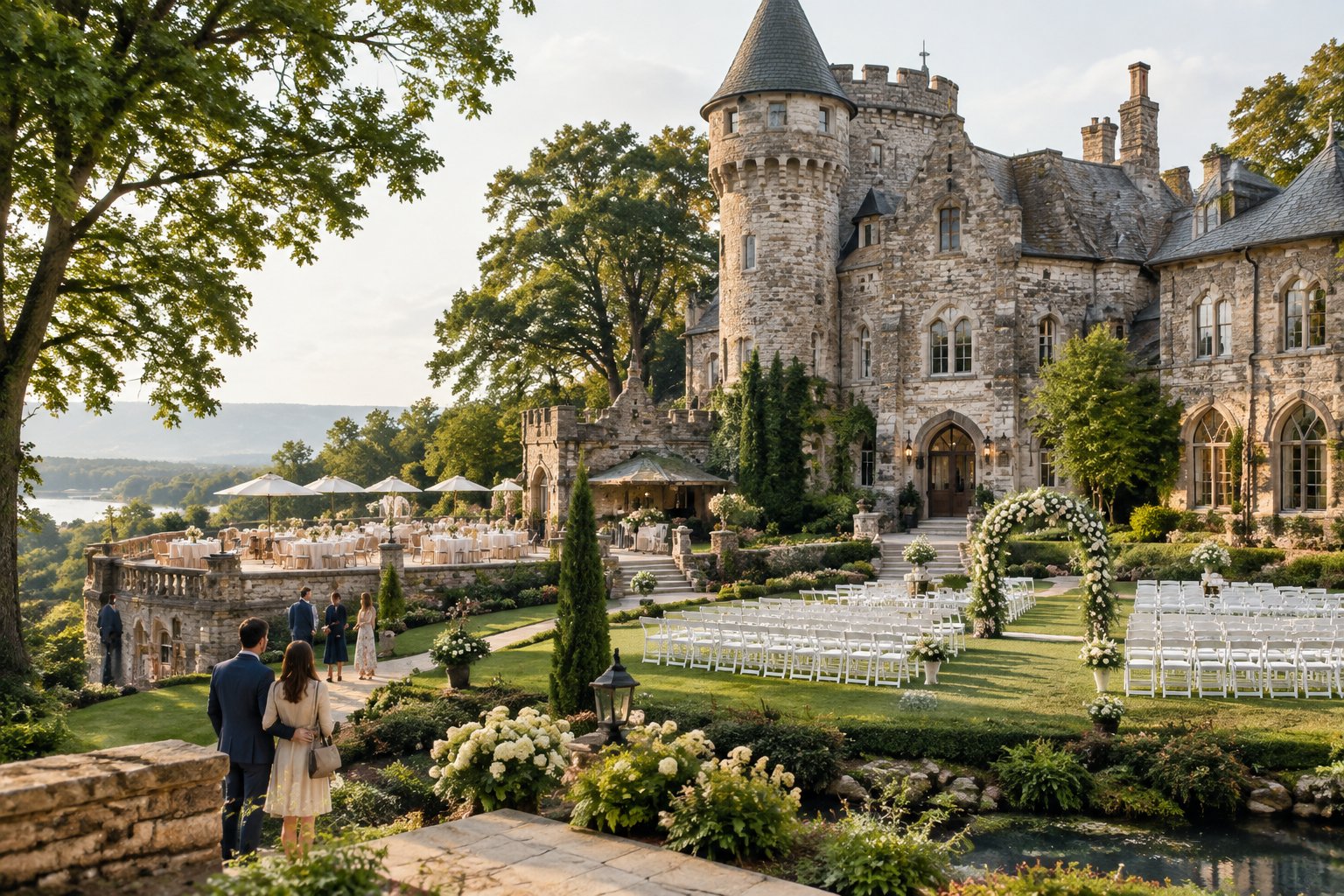
Tour the full guest route, beginning at parking and ending at the dance floor. Check the ceremony layout, aisle width, seating surface, cocktail area, dinner room, bar placement, restrooms, and portrait locations.
For outdoor ceremonies, ask about shade, sound power, seating, walking paths, and a covered rain option. For historic interiors, ask about candle rules, hanging décor, wall protection, furniture movement, and photography access.
A reception room should fit your tables, food service, bar, cake, band or DJ, and dance floor at the same time. Request a floor plan at your expected guest count instead of judging the room from an empty tour.
Matching Guest Count to Venue Capacity
Use the venue’s seated capacity for your actual layout, not its largest possible standing capacity. A room listed for 120 guests needs space for dining tables, service aisles, entertainment, a bar, and dancing.
Hammond Castle lists capacity for 90 guests in its Great Hall reception and 120 guests for its outdoor tented reception. That difference shows why you should ask for capacity by event type.
Create a rough seating plan before signing. Include your head table or sweetheart table, guest book, gifts, cake, DJ or band, buffet or plated service, and accessible routes.
Considering Accessibility and Overnight Accommodations
Walk every route your guests will use and ask about ramps, elevators, accessible restrooms, stable outdoor paths, lighting, and seating areas. Historic properties often include stairs, uneven surfaces, narrow doors, or separate buildings, so request specific details from the venue team.
Ask whether lodging is available on-site, how many rooms can be reserved, and where additional guests can stay nearby. Confirm check-in times, transportation between hotels and the venue, and private spaces for getting ready.
For a smaller celebration, compare these needs with the guidance in tips for choosing the perfect venue for a small wedding.
What Should You Ask Before Touring a Venue?
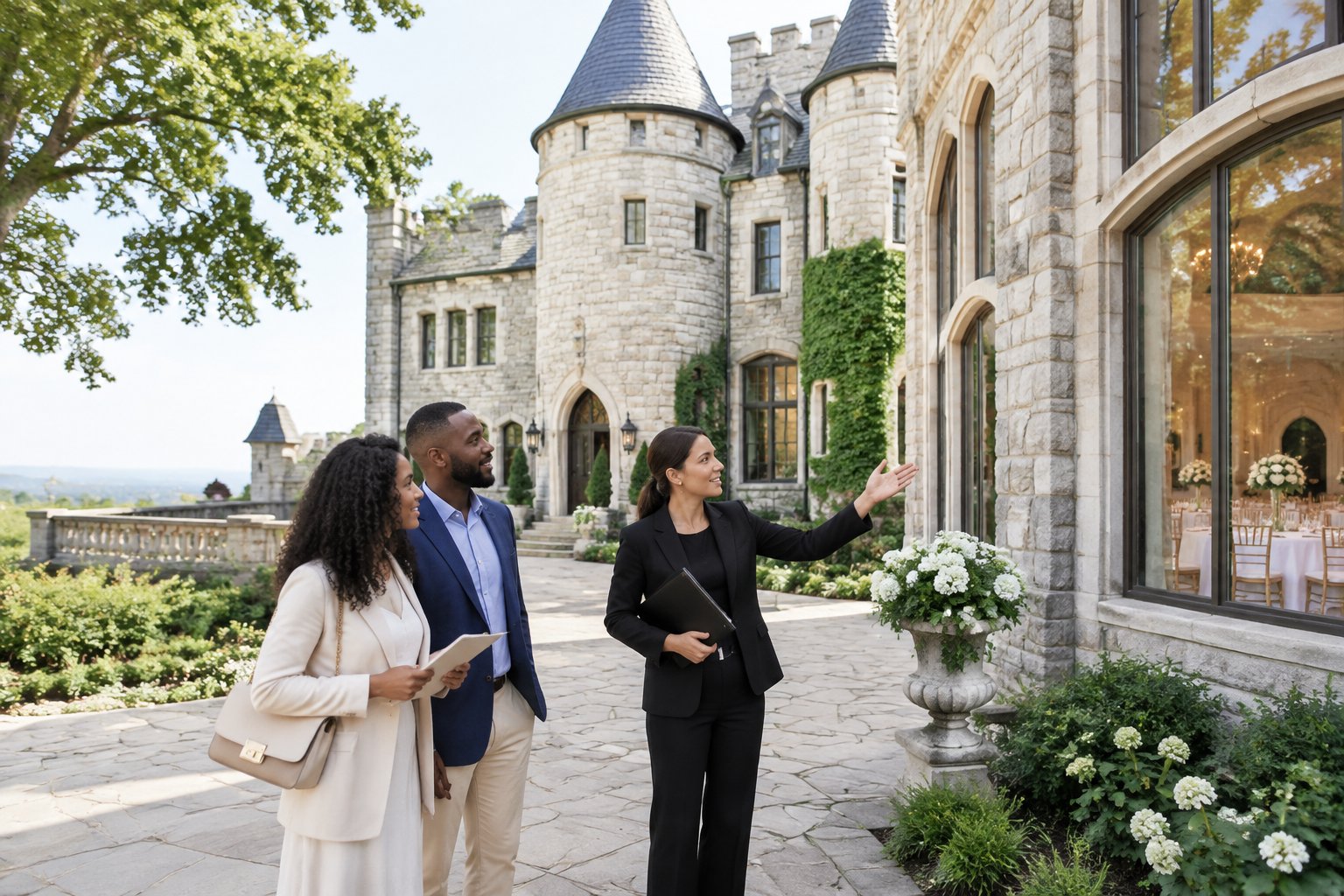
Ask for the complete contract, current pricing, event schedule, vendor rules, weather plan, access details, and guest-management process before you tour. These answers help you remove venues that cannot support your wedding before spending time on site.
Understanding Packages, Vendor Rules, and Rental Windows
Ask whether the price covers the ceremony, reception, or both. Request an itemized list for tables, chairs, linens, setup, cleanup, staffing, furniture, lighting, sound, security, and cake service.
Confirm:
- Required caterer or approved vendor list
- Outside alcohol and cake rules
- Vendor arrival and departure times
- Setup and breakdown hours
- Overtime rates
- Deposit, payment schedule, and cancellation terms
- Noise limits and event end time
Hammond Castle lists event windows from 5:00 to 9:00 p.m. or 5:00 to 10:00 p.m. Its rental details also include vendor setup and breakdown time, guest educational tours, furniture and décor, and separate rooms for both partners.
The venue’s website may provide a contact form for availability and event details. Keep a written record of every answer you receive.
Checking Weather Plans and Seasonal Conditions
Ask where your ceremony, cocktail hour, portraits, and reception will move if rain, wind, heat, or cold affects the original plan. Confirm who makes the weather decision and when the change happens.
Review tent flooring, sidewalls, heating, cooling, lighting, drainage, and power. Walk the indoor backup space to confirm its size and layout.
Check winter access, summer shade, sunset timing, insects, and coastal wind if the property sits near the water. A strong plan names the exact backup room and explains how staff will move chairs, décor, guests, and vendors.
Using Venue Websites and Guest Portals
Use the official venue website to review current event spaces, policies, inquiry forms, menus, directions, and accessibility details. If the venue provides a guest portal, ask how guests will receive parking instructions, transportation updates, room blocks, schedules, and weather notices.
Some venues keep planning documents in an online account, so ask who receives login access and when documents are updated. Save the contract, floor plan, menu, vendor list, insurance requirements, and timeline in one shared folder.
How Much Do Castle-Inspired Weddings Near Quincy Cost?
Castle-inspired weddings near Quincy can range from a package-based ballroom event to a higher-priced historic property with a separate rental fee, catering, staffing, and specialty rentals. Your guest count and service model will shape the final budget more than the architectural style alone.
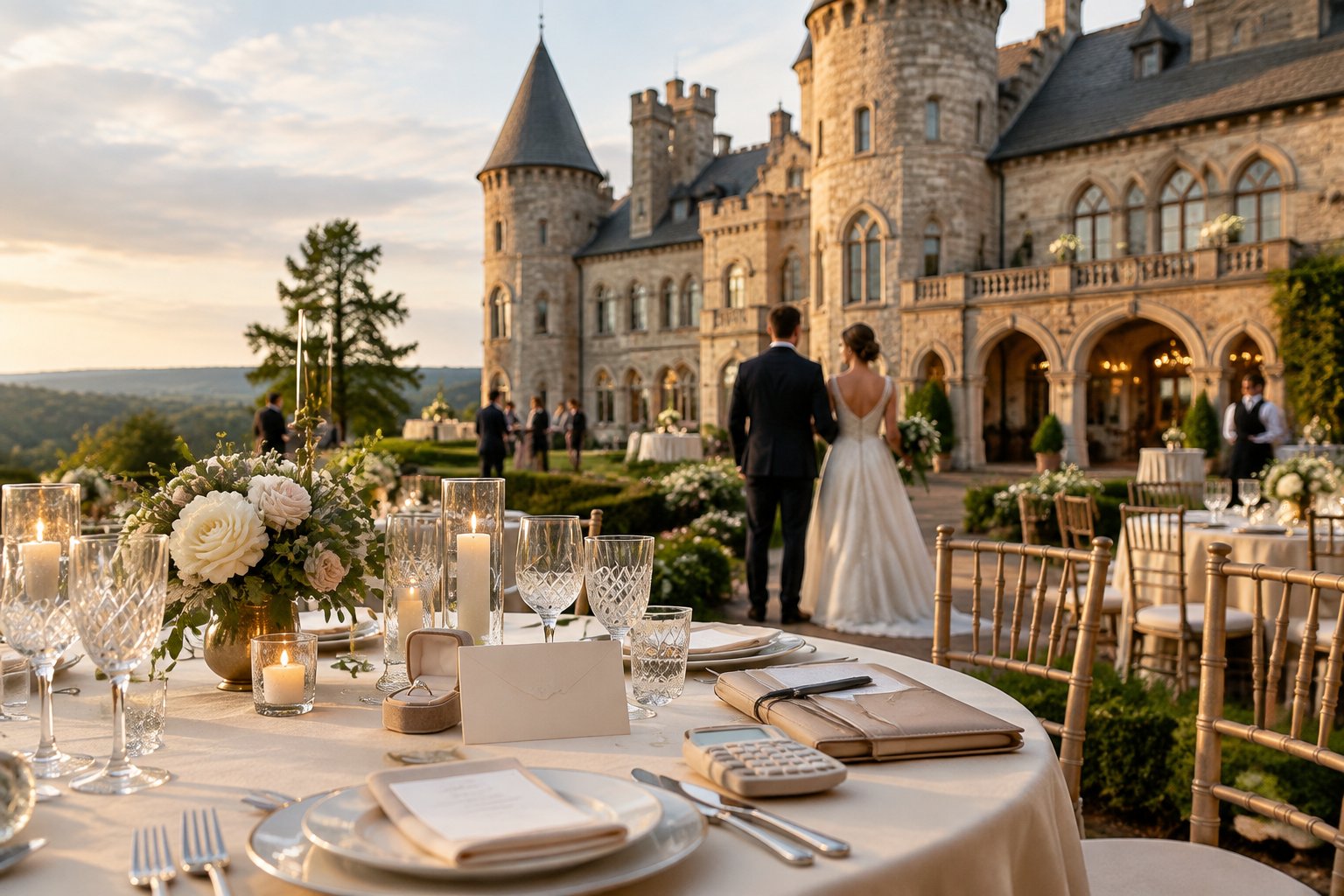
Rental Fees, Food and Beverage Minimums, and Service Charges
Hammond Castle lists rental rates through 2028 at:
- Monday through Thursday: $8,000 for four hours or $9,500 for five hours
- Friday through Sunday: $10,000 for four hours or $11,500 for five hours
The property requires a $2,500 deposit to reserve a date. The deposit is non-refundable, transferable to another date, and deducted from the rental cost.
Full payment is due one month before the event, with payment plans available.
Quincy venues may use a package price per person or separate site fees. One Quincy wedding package lists $95 per person, inclusive of taxes and service fees, with food, staff, linens, a bridal suite, and exclusive use of the function room included.
Ask whether catering has a guest minimum, whether bar service is priced per person or by consumption, and whether taxes and service charges are included.
Costs That Are Often Left Out of Initial Quotes
Request line items for:
- Ceremony fees and rehearsal access
- Tent, flooring, heating, or cooling
- Rentals beyond included furniture
- Specialty linens and upgraded chairs
- Lighting, sound, and power
- Security or police details
- Insurance
- Transportation and shuttle service
- Overtime and extended photography
- Cake cutting and corkage
- Cleanup and waste removal
- Vendor meals and delivery fees
- Guest lodging and room blocks
Ask for a sample invoice from a similar guest count. Then add your expected guest total, service charges, taxes, gratuities, décor, attire, photography, entertainment, and transportation to create a usable budget.
You can also compare the numbers with what do most wedding venues cost before setting your tour list.
How to Plan a Smooth Reception Experience
A smooth reception starts with a detailed plan for arrival, parking, sound, room transitions, vendor access, and timing. Share one approved schedule with your venue team, planner, caterer, entertainment vendor, photographer, and transportation provider.
Building a Realistic Transportation and Parking Plan
Ask for the total parking count, accessible spaces, drop-off location, rideshare area, bus access, lighting, and closing time. Historic properties can have narrow drives, uneven paths, or limited turning space for large vehicles.
Give guests the address, parking instructions, shuttle times, and late-night transportation options. Add extra time for traffic, group photos, valet service, and walking from the lot to the ceremony.
If the venue is outside Quincy, estimate travel from local hotels and the airport. A shuttle schedule should include guest arrival, wedding party movement, return trips, and a final departure.
Creating a Comfortable Sound Environment for Guests
Castle interiors often include stone, plaster, wood, vaulted ceilings, or other hard surfaces that reflect sound. Ask your DJ or band to visit the room and review speaker placement, power, microphones, and volume limits.
Keep speakers away from walls and guest tables when the room creates strong echoes. Use a microphone for vows and toasts, then test the ceremony and reception sound from the farthest guest seat.
Confirm the venue’s quiet hours, outdoor music rules, generator policy, and requirements for a police detail or security staff. Include speeches, dinner service, first dances, and open dancing in the sound check.
Coordinating Timing With Your Venue Team
Build the timeline around the venue’s rental window. Hammond Castle permits the wedding party to arrive at 3:30 p.m. for pre-ceremony photography, then offers evening rental periods with defined setup and breakdown allowances.
Assign one person to answer vendor questions during setup. Give the venue a schedule that includes:
- Vendor arrival and unloading
- Hair and makeup completion
- First look and portraits
- Guest arrival and seating
- Ceremony and cocktail hour
- Dinner service and speeches
- Cake cutting and dancing
- Final song, guest departure, and cleanup
Schedule a final walk-through to confirm the ceremony layout, rain plan, table placement, power, signage, accessibility routes, and transportation timing.