
Castle Wedding Venues: How to Choose Your Perfect Setting
A castle wedding gives you a ready-made sense of romance, history, and celebration. The best castle wedding venues for most couples are properties with flexible ceremony and reception spaces, a clear rain plan, guest-friendly access, and enough accommodation for the people who matter most. You get the fairytale setting while keeping the day comfortable and practical.
Your ideal choice might be a stone fortress, a French-inspired château, a grand manor, or a castle-style estate. Start with the mood you want, then check how the property supports your guest count, budget, travel plans, and wedding schedule. If you are ready to compare settings, explore these wedding venue ideas and begin building your shortlist.
What Makes a Castle Setting the Right Fit?
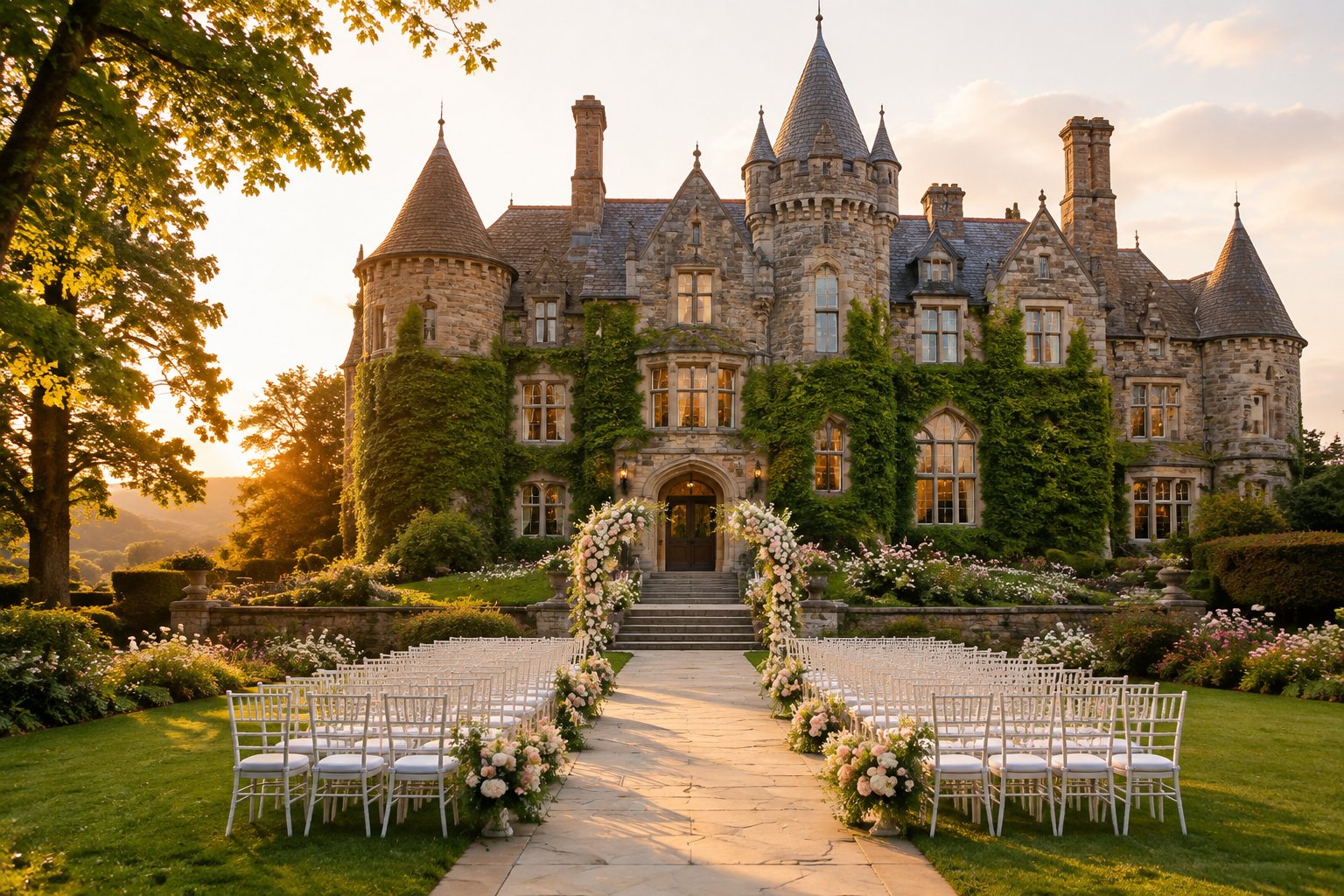
A castle setting fits your wedding when its architecture, grounds, event spaces, and guest services support the atmosphere you want to create. Historic character supplies a strong backdrop, while practical features determine how smoothly your day runs.

Castles, Châteaux, Manor Houses, and Mansions Explained
A castle usually brings medieval architecture, towers, thick stone walls, courtyards, and dramatic history. A château often refers to a French-style country estate with balanced façades, tall windows, terraces, and formal gardens.
A manor house feels more residential and intimate. It may offer period rooms, landscaped grounds, and a smaller guest capacity. A mansion often has grand staircases, sweeping rooms, decorative details, and an estate-like setting without fortress features.
These labels overlap, so review the actual property instead of relying on its name. A restored historic property can deliver the castle mood through turrets, stained glass windows, stone arches, fireplaces, and manicured gardens.
Which Architectural Details Create the Look You Want?
Choose details that match your wedding style:
- Medieval romance: stone walls, battlements, towers, dark timber, and a great hall
- Fairytale elegance: sweeping staircases, stained glass, ornate ceilings, and landscaped terraces
- Garden romance: formal gardens, fountains, lawns, roses, and tree-lined paths
- Gilded glamour: crystal lighting, carved wood, polished floors, and mansion-style reception rooms
Walk through the property at the time of day when your ceremony and reception will take place. Notice natural light, room temperature, sound, and photo locations. A dramatic staircase helps portraits, while a quiet bridal suite supports a calm morning.
When a Historic Property May Be Less Practical
Historic castles come with preservation rules and unusual layouts. You might face narrow stairways, uneven paths, limited elevator access, restricted candle use, protected artwork, or sound limits.
Ask how guests move between spaces, where vendors unload, and which rooms are available during your rental. Confirm restroom locations, heating and cooling, parking, Wi-Fi, and accessibility before you fall in love with the décor. A beautiful venue needs a workable guest journey from arrival through the final dance.
How to Match the Venue to Your Wedding Day
Match the venue to your wedding day by mapping each event space, guest movement, weather plan, and overnight need before you sign. A beautiful property works best when every part of your schedule has a comfortable home.
Choose Spaces for the Ceremony, Cocktail Hour, and Reception
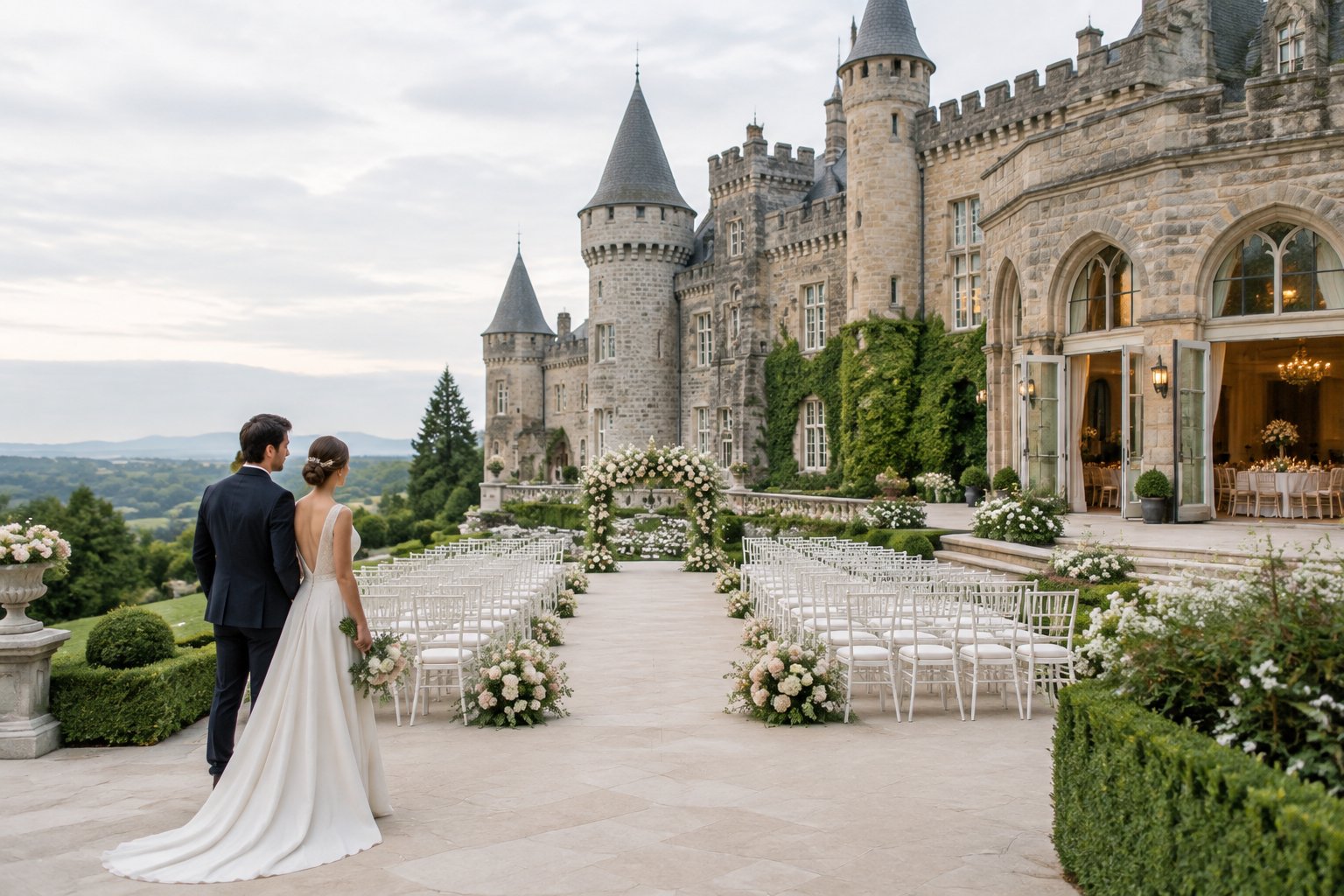
Ask to see the full path from the wedding ceremony to the cocktail hour and wedding reception. Your ceremony space should give guests a clear view and provide enough room for your seating plan, aisle, musicians, and floral design.
The cocktail hour area needs comfortable circulation, seating for older guests, and shelter from strong sun or wind. Your reception space should fit dining tables, a dance floor, a DJ or band, a bar, a cake table, and service stations without crowding.
Ask whether your florist can install décor early, where the wedding cake will be stored, and how catering staff enter the room. These details shape the timing of your day.
Set a Realistic Guest Count Before You Tour
Set a target guest count before visiting venues. Capacity numbers often describe a maximum, while your preferred layout may need more space for dining, dancing, buffet service, or a band.
Bring your likely guest list and separate it into must-invite and flexible groups. Then ask each venue for seated dinner capacity, ceremony capacity, and maximum evening capacity. A property that suits 80 guests may feel tight at 120, even when its advertised limit allows the larger number.
If your celebration will be intimate, these tips for choosing the perfect venue for a small wedding can help you judge room size and guest flow.
Plan for Weather, Accessibility, and Historic-Site Rules
Request a complete indoor backup plan for rain, heat, cold, and high winds. Confirm whether the alternate ceremony room keeps the same guest capacity and whether outdoor portraits can move indoors.
Review accessible entrances, restrooms, parking routes, ramps, elevators, and walking distances. Share these details with guests who need extra support.
Historic-site rules may limit confetti, open flames, amplified music, décor attachment, outside food, or evening access. Get every restriction in writing so your florist, planner, photographer, and entertainment team can plan accurately.
Decide Whether On-Site Accommodation Is Essential
On-site accommodation makes a wedding weekend easier when guests travel from different cities or when the property sits far from hotels. It also reduces late-night transportation needs and gives you a private place to prepare.
Check the number of rooms, room types, accessibility, check-in times, breakfast service, and nearby lodging. Ask whether you must reserve all rooms and whether guests pay individually. If the castle cannot house everyone, request a list of nearby hotels and shuttle options.
What Will You Pay for a Castle Celebration?
Castle wedding costs rise with exclusivity, location, guest count, season, catering style, and the amount of property access you receive. Compare the full package value, not only the advertised venue fee.
What Wedding Packages Usually Include
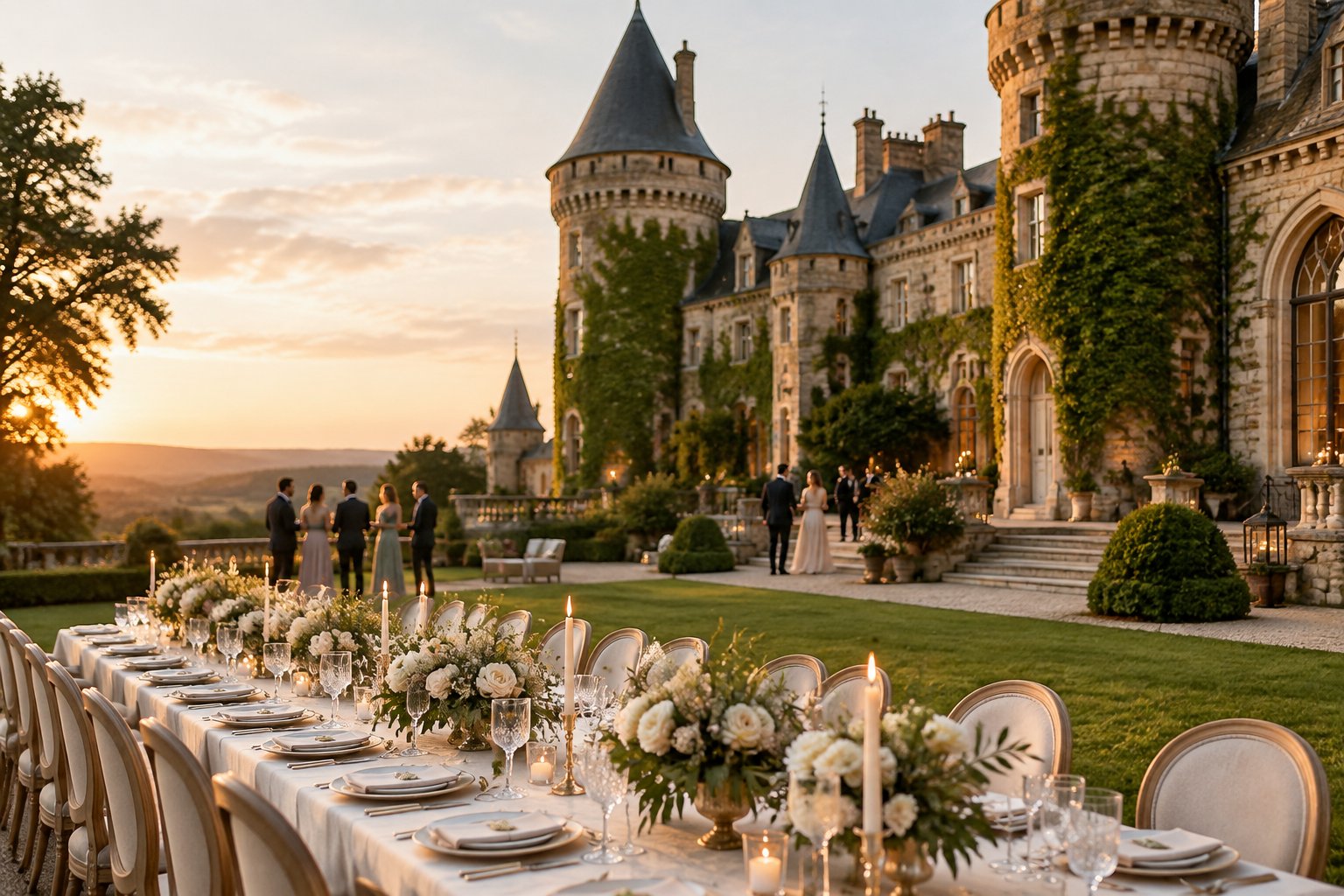
Wedding packages may include venue access, tables and chairs, staff, setup, cleanup, catering, drinks, a coordinator, and use of selected ceremony spaces. Some include a meal and bar service, while others charge each item separately.
Ask for a line-by-line proposal that shows:
- Rental hours and access for setup
- Ceremony and reception locations
- Tables, chairs, linens, and dinnerware
- Staffing and coordination
- Bar service and beverage rules
- Lighting, sound, and furniture
- Taxes, service charges, and gratuities
Check whether the package applies to a weekday, weekend, peak season, or minimum guest count. Request the payment schedule and cancellation terms before booking.
In-House Catering vs. Outside Vendors
In-house catering simplifies staffing, kitchen access, timing, and menu coordination. Ask about tasting dates, dietary options, children’s meals, late-night food, bar packages, and service charges.
Outside vendors give you more choice when the venue permits them. Confirm approved vendor lists, outside-catering fees, kitchen access, insurance requirements, delivery windows, and cleanup duties. A lower menu price can change once rentals, staffing, transport, and service fees are added.
Your florist, baker, photographer, and entertainment team also need to follow the venue’s loading, setup, and departure rules.
Costs That Can Be Easy to Miss
Budget for items that sit outside the headline price:
- Ceremony fees or room flips
- Overtime for vendors or guests
- Delivery, setup, and breakdown
- Corkage or outside-vendor fees
- Transportation and guest shuttles
- Heating, cooling, or tent rentals
- Insurance and security
- Taxes and service charges
- Accommodation and breakfast
- Additional lighting or sound equipment
Ask for a sample final invoice from a similar wedding. It gives you a clearer planning figure than a starting rental rate.
Standout U.S. Properties by Region
The United States offers castle-style wedding venues across several design traditions, from Gilded Age estates and Gothic residences to stone manors, Mediterranean-inspired hotels, and purpose-built storybook properties.
Northeast Estates and Gilded Age Landmarks
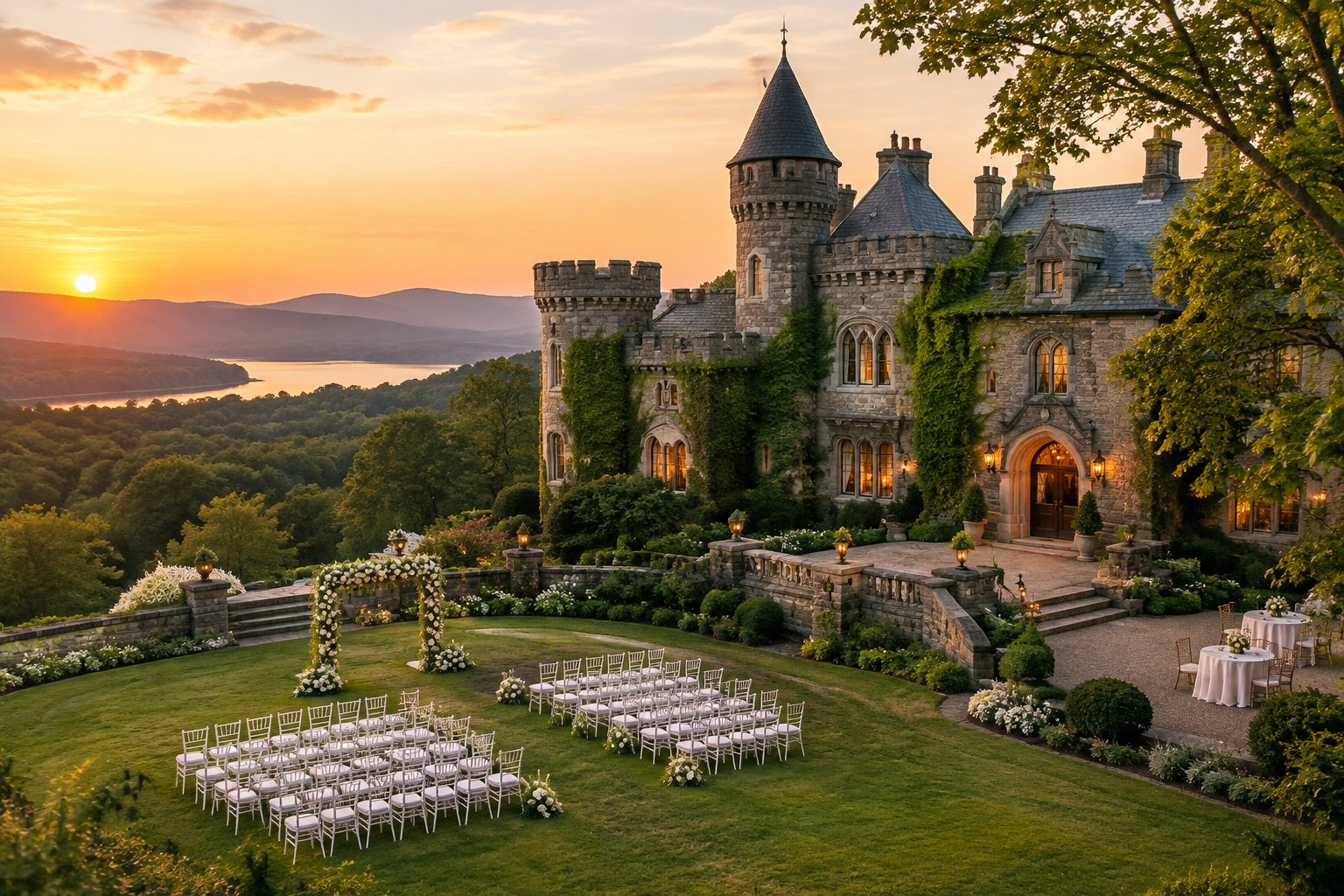
The Northeast gives you historic architecture, coastal scenery, and grand estates within reach of major cities.
- Oheka Castle in Huntington, New York, offers a grand Long Island estate setting with formal gardens and a strong Gilded Age feel.
- Sands Point Preserve sits on Long Island Sound and combines historic buildings, landscaped grounds, and waterfront views.
- Whitby Castle in Rye brings Gothic-inspired architecture and parkland near New York City.
- Rosecliff in Newport, Rhode Island, suits couples who want a Beaux-Arts mansion and formal ballroom atmosphere.
- Skylands Manor in Ringwood, New Jersey, pairs grand rooms with botanical gardens and woodland scenery.
- Thornewood Castle in Lakewood, Washington, offers a romantic Tudor-style setting near Tacoma.
- Hammond Castle Museum in Gloucester, Massachusetts, delivers medieval-inspired rooms and coastal character.
- Saint Clements Castle & Marina in Branford, Connecticut, combines castle architecture with waterfront grounds.
- Searles Castle in Windham, New Hampshire, brings stonework, ornate interiors, and a secluded estate mood.
Review each property’s current event calendar, guest limits, catering rules, and ceremony options before making travel plans.
Southern and Midwestern Storybook Settings
Southern and Midwestern properties give you broad lawns, distinctive architecture, and settings that range from grand estates to purpose-built castles.
- Castle in the Clouds overlooks Lake Winnipesaukee and suits a scenic New Hampshire celebration.
- Biltmore and Biltmore Estate in Asheville, North Carolina, offer expansive grounds, formal architecture, and multiple event settings.
- Rhodes Hall in Atlanta, Georgia, provides a romantic mansion with stained glass and detailed historic interiors.
- Joslyn Castle in Omaha, Nebraska, blends stone architecture with formal rooms and landscaped grounds.
- Castle Farms in Charlevoix, Michigan, offers stone buildings, courtyards, and an event-focused historic setting.
- The Castle at Rockwall near Dallas gives you a storybook atmosphere with modern event facilities.
Ask about seasonal weather, indoor capacity, parking, and how far guests walk between ceremony and reception areas.
Western Castles and Mediterranean-Inspired Venues
Western properties include castle-style estates, mission architecture, and warm-climate venues with dramatic gardens.
- Alden Castle in California offers a romantic historic setting with architectural character.
- Castle Green in Pasadena combines Victorian design, elegant rooms, and Southern California access.
- Mission Inn Hotel and Spa in Riverside, California, surrounds celebrations with Spanish-style architecture and detailed interiors.
- The Ashley Castle in Chandler, Arizona, gives you a polished castle setting with landscaped grounds.
- The Sterling Castle in Shelby, North Carolina, provides a storybook estate atmosphere and event-ready spaces.
- Lindon offers access to Utah’s mountain scenery and castle-inspired wedding settings.
For an American venue search, compare travel time, guest lodging, climate, and vendor rules alongside the architecture.
Planning a Destination Celebration in Europe
A European castle destination wedding works best when you secure legal guidance, guest lodging, transportation, and a weather-ready event plan before paying a deposit. The setting becomes part of a full travel experience for everyone you invite.
Ireland and England for Traditional Castle Weddings
Ireland offers dramatic landscapes, warm hospitality, and historic estates suited to a weekend celebration. Popular castle wedding venues in Ireland include Ashford Castle and Luttrellstown Castle, each associated with grand grounds and a strong sense of place.
In England, Warwick Castle, Leeds Castle, and Sudeley Castle offer distinct experiences. Warwick brings fortress history, Leeds combines water and landscaped grounds, and Sudeley Castle in Gloucestershire offers gardens and historic romance.
Ask whether the property hosts civil ceremonies, how far guests travel from the nearest airport, and whether exclusive hire includes bedrooms. Confirm the rain plan, music curfew, and transport between lodging and event spaces.
France and Austria for Palace-Scale Romance
France suits couples who want château architecture, gardens, and countryside scenery. A palace-scale celebration near the Palace of Versailles creates immense visual impact, while smaller French estates give you more privacy and a relaxed wedding weekend.
Austria offers imperial rooms, mountain views, and storybook landscapes associated with The Sound of Music. A Scottish castle provides another route to historic atmosphere, rugged scenery, and local traditions.
Review currency, taxes, service charges, menu pricing, and vendor travel costs in the local contract. A planner who works in the region can help you manage language, timing, and site rules.
Questions to Ask Before Booking Abroad
Ask these questions before signing:
- Which ceremonies are legally recognized for U.S. couples?
- What documents, translations, and residency rules apply?
- Is the ceremony fee separate from the reception rental?
- How many guests can sleep on-site?
- What hotels and transportation options serve the property?
- What happens during rain, wind, heat, or travel delays?
- Which vendors can you bring, and what insurance is required?
- What are the payment currency, taxes, refund terms, and cancellation rules?
- How will guests handle airport transfers and local travel?
- Who manages the event on the wedding day?
Schedule a site visit when possible, or request a live virtual tour with the coordinator. Give yourself time to review the contract with a wedding professional familiar with international events.