
Catering Cost for 100 People Wedding: A Budget Guide
For 100 wedding guests, plan about $7,000 to $10,000 for food, service, and common reception extras, with food-only catering often falling near $4,000 to $8,000. Your final wedding catering cost will reflect the menu, service style, location, staffing, rentals, bar package, service charges, gratuity, and sales tax.
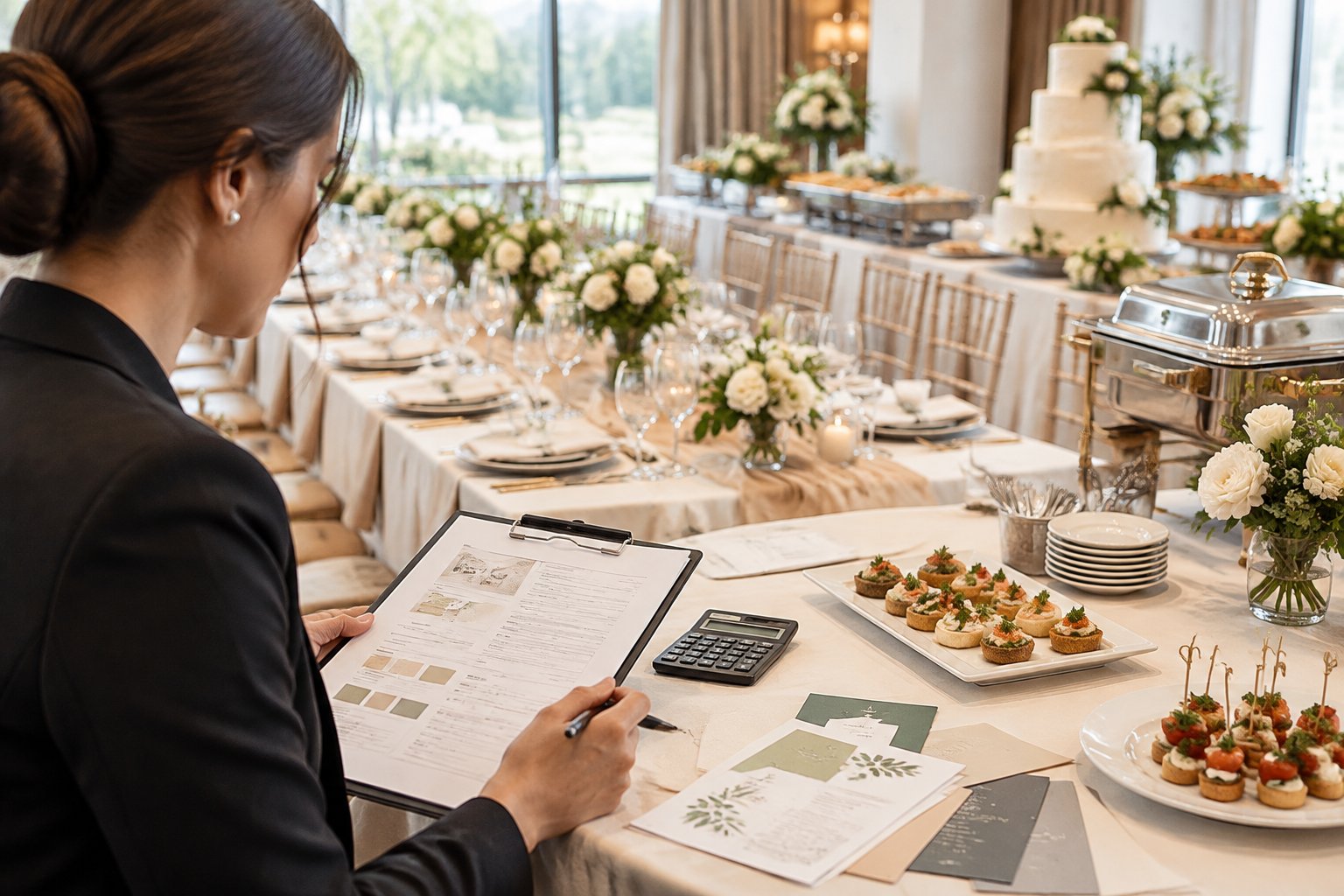
That range works as a starting point for catering for 100 people, yet your choices can move the price far lower or higher. Drop-off catering keeps labor light, while a plated dinner with a full bar, rentals, and extensive staffing raises the invoice.
You can create a clearer wedding catering budget by separating food from service, beverages, rentals, and fees before comparing proposals. If you want to estimate the full cost of your 100-guest reception, start with a per-person target and request itemized quotes from wedding caterers.
What Should You Budget for 100 Wedding Guests?
A 100-guest wedding catering budget of $7,000 to $10,000 gives you a practical starting range for food, service, and common reception extras in the United States. Food-only catering may land near $4,000 to $8,000, while premium menus and full-service packages can exceed $15,000.
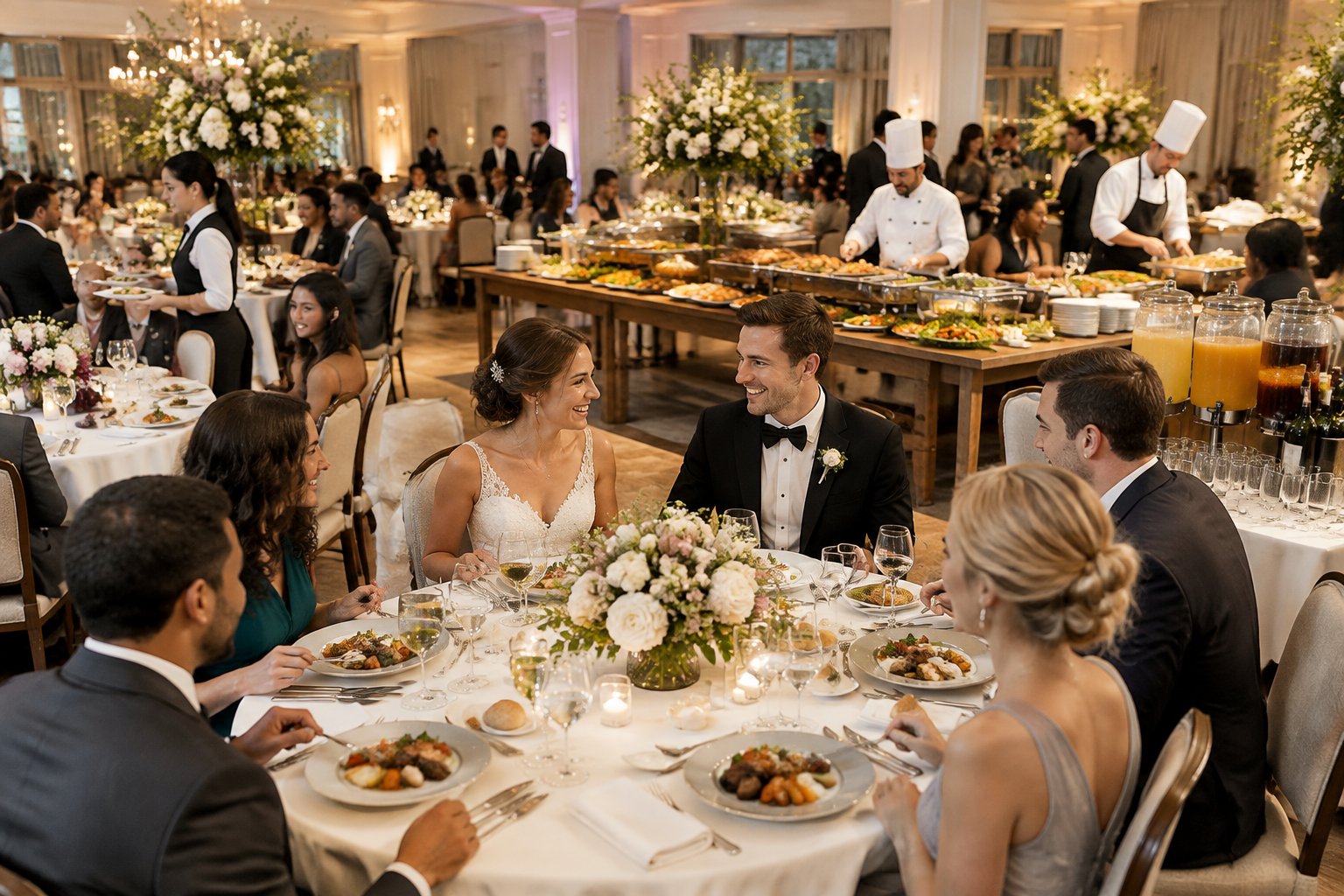
Your catering costs depend on the cost per person, menu, labor, venue, and event length. A catering calculator helps you test different guest counts and service levels, though a written catering package gives you the most useful details for your venue.
Food-Only vs. Full Reception Cost
Food-only pricing covers the meal itself. Full-service catering may include:
- Food preparation and delivery
- Buffet attendants, servers, or bartenders
- Setup and breakdown
- Serving equipment and serviceware
- Linens or basic rentals
- Cleanup
- Service charges and gratuity
A drop-off catering order might cost $20 to $45 per person for 100 guests, creating a food total of about $2,000 to $4,500. A staffed buffet may run $45 to $85 per person. A formal plated dinner with table service can reach $80 to $150 or more per person before bar service and taxes.
Budget, Mid-Range, and Premium Scenarios
| Catering level | Approximate cost per person | Estimated cost for 100 guests |
|---|---|---|
| Budget catering | $20-$45 | $2,000-$4,500 |
| Mid-range catering | $50-$90 | $5,000-$9,000 |
| Premium catering | $100-$175+ | $10,000-$17,500+ |
Budget catering suits casual receptions, food trucks, drop-off meals, and simple buffets. Mid-range catering supports a staffed buffet, family-style meal, or selected food stations. Premium catering may include a plated dinner, specialty ingredients, chef-attended stations, upgraded rentals, and expanded staffing.
How to Estimate Cost per Person
Use this formula:
Total catering estimate = guest count × cost per person + fixed fees + percentage-based fees
For example, a $65 meal for 100 guests equals $6,500. Add a $750 staffing charge, $500 in rentals, a 20% service charge, and sales tax according to your local rate. Ask whether the quoted cost per person includes children, vendor meals, bartenders, cake service, and nonalcoholic beverages.
How Does Service Style Affect the Total?
Buffet catering often costs less than plated dinner service because it uses fewer servers and gives guests control over portions. Plated meals cost more because they require detailed timing, table service, extra labor, and careful coordination.

Your service format also shapes the guest experience. A buffet encourages movement and choice, while plated dinner service creates a more structured reception timeline. Stations and cocktail formats keep guests mingling throughout the event.
Buffet Service and Staffed Buffets
A buffet service provides dishes at one or more serving tables. Guests choose their portions, which makes the format flexible for mixed appetites and varied dietary needs.
A staffed buffet adds buffet attendants who replenish trays, guide guests, and maintain clean stations. Staffing improves flow and presentation, especially when 100 guests need to serve themselves within a short dinner window. Plan space for lines, plates, utensils, and access for the catering team.
Plated Dinner Service and Formal Timing
A plated dinner gives each guest a meal at the table. You may offer one entrée or collect entrée selections through your RSVP cards.
This format requires servers, place settings, a seating chart, and a firm schedule. The kitchen must coordinate courses with speeches, dancing, and other reception events. More labor and timing control push the per-person cost upward, especially for meals with multiple courses or premium proteins.
Cocktail Receptions, Stations, and Casual Alternatives
A cocktail reception may combine passed appetizers, substantial hors d’oeuvres, food stations, and late-night snacks. Guests receive smaller portions across a longer period, so your caterer must plan enough food variety and replenishment.
Interactive food stations can add entertainment as well as dinner. Popular choices include a pasta station, taco bar, carving station, or chef-attended station. This style suits receptions where you want guests to move around, though several stations may require more equipment and chefs than one buffet line.
What Is Included in a Catering Quote?
A complete catering quote should list food, labor, equipment, rentals, fees, taxes, and gratuity so you can see the expected final invoice. A low base price may rise after service charges, delivery, rentals, and overtime are added.
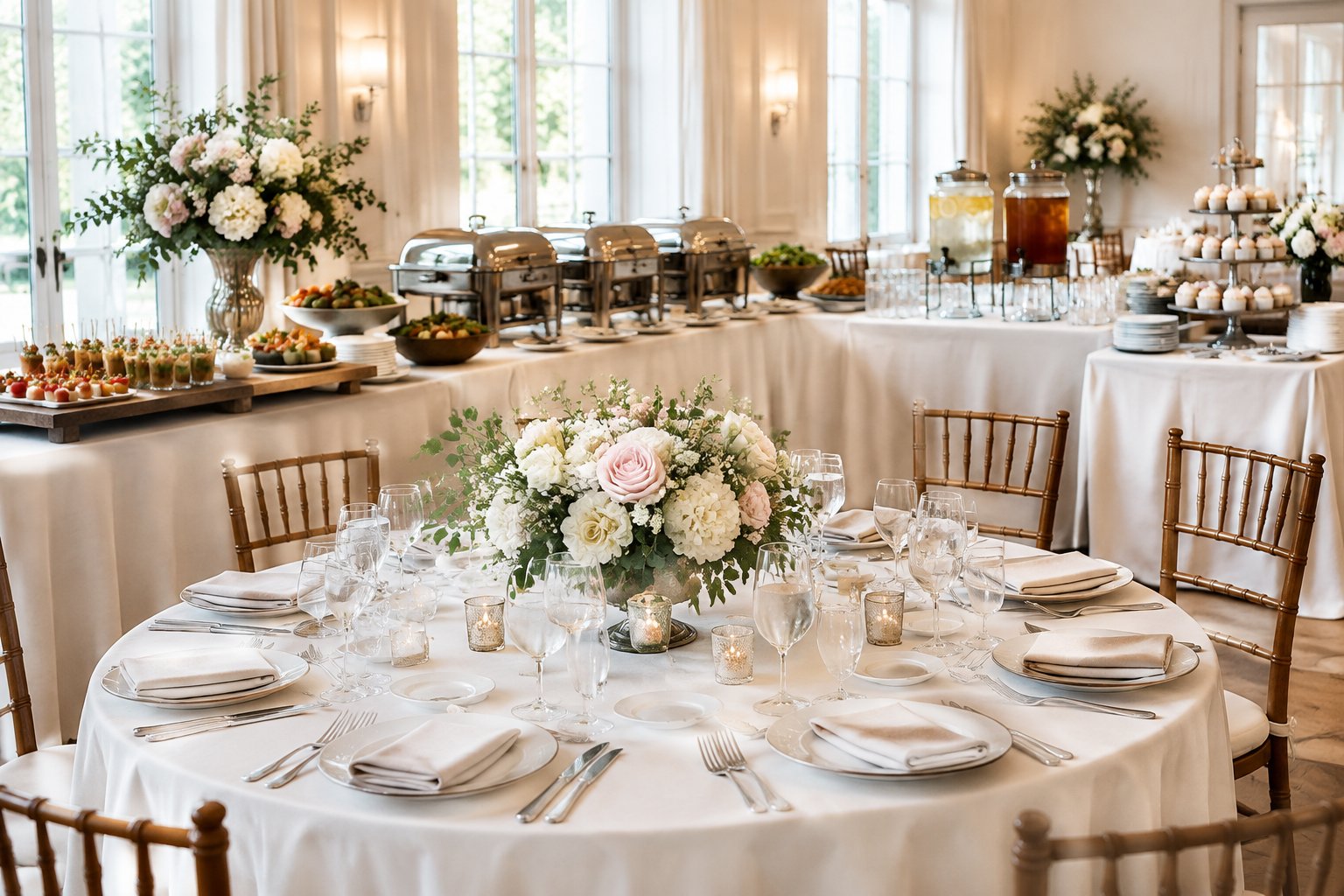
Ask every wedding caterer to separate included items from optional upgrades. This makes catering quotes easier to compare and helps you match the proposal to your venue contract.
Staffing, Setup, and Serviceware
Confirm the number of catering staff, waitstaff, bartenders, chefs, and cleanup workers included. Ask when the team arrives and whether setup and breakdown cover the entire reception area.
Your quote should also identify serving equipment, plates, glasses, flatware, chafing dishes, trays, and linens. Specialty linens may carry an extra charge. Check whether the team washes and removes serviceware after dinner.
Rentals and Venue Requirements
Some venues include tables, chairs, kitchen access, china, and basic linens. Others require outside catering companies to bring every item.
Ask who supplies:
- Tables and chairs
- Buffet tables and bars
- Plates, glasses, and flatware
- Serving equipment
- Trash containers
- Ice and refrigeration
- Coffee service equipment
In-house catering may follow a venue’s set package and approved menus. Outside catering may provide more menu control, though delivery access, kitchen rules, insurance, and rental needs require careful planning.
Charges That Can Change the Final Invoice
Review these line items before signing:
- Service charge or service charges
- Gratuity
- Sales tax
- Delivery fee or delivery fees
- Cake cutting fee
- Corkage fee
- Overtime fees or overtime charges
- Vendor meals
- Extra staffing
- Rental replacement fees
Ask whether the service charge is taxable and whether gratuity is included or suggested. Confirm the final guest-count deadline and the price for adding meals after that date.
How Menu and Bar Choices Raise or Lower Costs
Your wedding menu and bar package can shift the catering bill by thousands of dollars for 100 guests. Premium proteins, several courses, full bar service, and specialty cocktails raise spending, while seasonal ingredients, a focused menu, and limited beverage choices help contain it.

Choose food and drinks together because service time, staffing, refrigeration, glassware, and bar setup all affect the quote. A menu tasting also gives you a chance to test portion sizes and discuss menu changes before the contract is complete.
Choosing Proteins, Entrées, and Seasonal Produce
Premium proteins such as filet mignon and specialty seafood raise food costs. Salmon, chicken, pork, pasta, and a well-planned vegetarian entrée offer more room in the budget.
Seasonal vegetables and local ingredients can support a fresher menu while keeping purchasing practical. Ask about substitutions when you compare wedding menu ideas. A caterer may suggest seasonal vegetables or a different cut of meat that preserves the style of the dish.
Plan dietary accommodations early. Gluten-free, vegan, vegetarian, halal, kosher, and allergy-conscious meals may require separate preparation and labeling. Include these needs in your guest count and ask how menu changes affect the per-person rate.
Comparing Beer and Wine, Limited, and Open Bars
A beer and wine bar has fewer products and simpler staffing than a full bar. A limited bar may add one signature cocktail, while an open bar offers a wider selection of spirits, mixers, beer, wine, and cocktails.
A premium bar increases costs through higher-priced liquor and expanded inventory. A consumption bar charges based on what guests drink, while a package sets a per-person rate for a defined service period. Ask whether bartenders, mixers, ice, glassware, and setup are included.
Planning for Dietary Needs and Menu Changes
Give your caterer the first dietary list when you request a quote. Keep a record of allergies and restrictions as RSVPs arrive, then submit the confirmed list by the caterer’s deadline.
Ask how many menu changes your contract allows after the tasting. Changes to proteins, side dishes, sauces, or bar selections can affect purchasing and labor. Put approved substitutions in writing so the final invoice reflects the menu you chose.
How to Keep the Catering Budget on Track
Use your confirmed RSVP count, compare itemized catering quotes, and choose the service level that fits your reception before committing to a menu. These steps reduce surprise charges while preserving the parts of the meal your guests will notice.
Set the Count From Confirmed RSVPs
Build your final catering count from confirmed RSVPs, then follow the caterer’s deadline for adjustments. Ask how the contract handles late responses, children’s meals, staff meals, and guests who attend the ceremony but skip the reception.
Your 100-person estimate should separate invited guests from expected attendees. A smaller confirmed count can reduce food, rental, and staffing costs, though minimum charges may still apply.
Peak wedding season often brings higher demand and fewer available dates. A weekday wedding or off-season reception may open more package choices and improve negotiating room. Check your venue and caterer’s calendar before changing the date for savings.
Save Without Sacrificing Guest Experience
Use one substantial entrée with two sides, choose seasonal produce, and serve a beer and wine bar when that matches your guests. A staffed buffet can provide choice and efficient service at a lower labor cost than a plated dinner.
You can also:
- Offer a signature cocktail instead of a full premium bar
- Serve cake as dessert instead of adding a separate dessert station
- Use passed appetizers during the cocktail hour
- Schedule a shorter bar service period
- Choose drop-off catering for a casual reception
- Keep late-night snacks focused on one filling option
For more ideas, explore what is the cheapest way to cater for 100 people.
Compare Caterers on Scope, Not Just Price
Place each catering quote beside the same checklist. Compare food portions, staffing, setup, breakdown, serviceware, rentals, bar labor, delivery, tax, gratuity, and overtime terms.
A full-service catering package may carry a higher base price while including equipment and labor that another quote bills separately. A drop-off catering quote may look affordable because it covers food delivery without reception staff. Use a catering calculator for planning, then rely on the written contract for your final wedding catering budget.