
Catering Costs for Wedding: Per-Person Pricing and Fees
Wedding catering costs average about $6,927 nationwide, or roughly $46 to $55 per guest for many celebrations, while a full-service wedding meal often reaches about $80 per person before some fees, bar packages, tax, and gratuity. Your final bill depends on guest count, menu, service style, location, and what the caterer includes in the quote.

A smaller guest list does not always create a lower per-person price because caterers may set minimum spends. A 150-person reception might cost about $6,900 to $9,500 for catering, while 200 guests may bring the food and service total to $8,000 to $12,000 or more.
Use these figures as planning ranges, then request itemized proposals for your date and venue. You can also compare your numbers with this guide to how much you should budget per person for a wedding.
Start by choosing the guest count and service format you want, then reserve room in your wedding budget for charges beyond the advertised meal price. If you are ready to set a realistic range, gather quotes from local wedding caterers with the same guest count, menu style, and service hours.
How Much Should You Budget Per Wedding Guest?
Plan on about $80 per guest for a full-service wedding meal, with common catering ranges from $35 to $85 per person before added fees and premium choices.

Your cost per person includes more than the food on each plate. Staffing, rentals, beverages, setup, service charges, tax, and gratuity all shape the wedding catering cost per person.
A quote near the national average can become much higher once you add a full open bar, upgraded dinnerware, or extended service hours.
The National Average and Why Your Quote May Differ
Recent national figures place the average catering cost for a wedding near $80 per person. Another broad national estimate puts the average wedding catering cost at $6,927, with many couples spending between $5,500 and $8,300.
Regional pricing creates a wide spread. A 150-guest celebration in Manhattan has been estimated near $13,100, while a similar event in Salt Lake City has been estimated around $4,218.
Venue access, local labor rates, transportation, and demand all influence wedding catering prices.
Guest count changes the math in two directions. A larger event increases the total bill, though it might qualify for volume discounts. A small reception can carry a higher cost per person because the caterer still needs to cover kitchen labor, transportation, equipment, and minimum spending requirements.
Food-Only vs. All-In Catering Cost per Person
Food-only pricing covers the menu and preparation. All-in catering cost per person adds the people and equipment required to serve it. Ask whether your quote includes:
- Servers, bartenders, chefs, and event captains
- Setup, replenishment, clearing, and breakdown
- Plates, flatware, glassware, and serving pieces
- Linens, chargers, and other rental items
- Nonalcoholic drinks and bar service
- Service charges, tax, and gratuity
- Cake cutting, corkage, delivery, or overtime
A food-only quote might look affordable at $40 to $60 per guest, while a full-service package reaches $80 to $140 after labor, rentals, beverages, and fees. Compare the final projected total, not the menu price alone.
Quick Cost Examples for 150 and 200 Guests
For a starting estimate, multiply the guest count by the quoted price per person:
- 150 guests at $50 per person: $7,500 before fees
- 150 guests at $80 per person: $12,000 before fees
- 200 guests at $50 per person: $10,000 before fees
- 200 guests at $80 per person: $16,000 before fees
These examples show why catering for 150 guests cost and catering for 200 guests cost estimates need the same assumptions. A buffet with beer and wine will produce a different total from plated service with a full open bar, even with the same guest count.
How Service Style Changes the Final Bill
Plated service costs the most in many wedding catering packages, while buffet service and cocktail-style receptions offer lower starting price ranges.
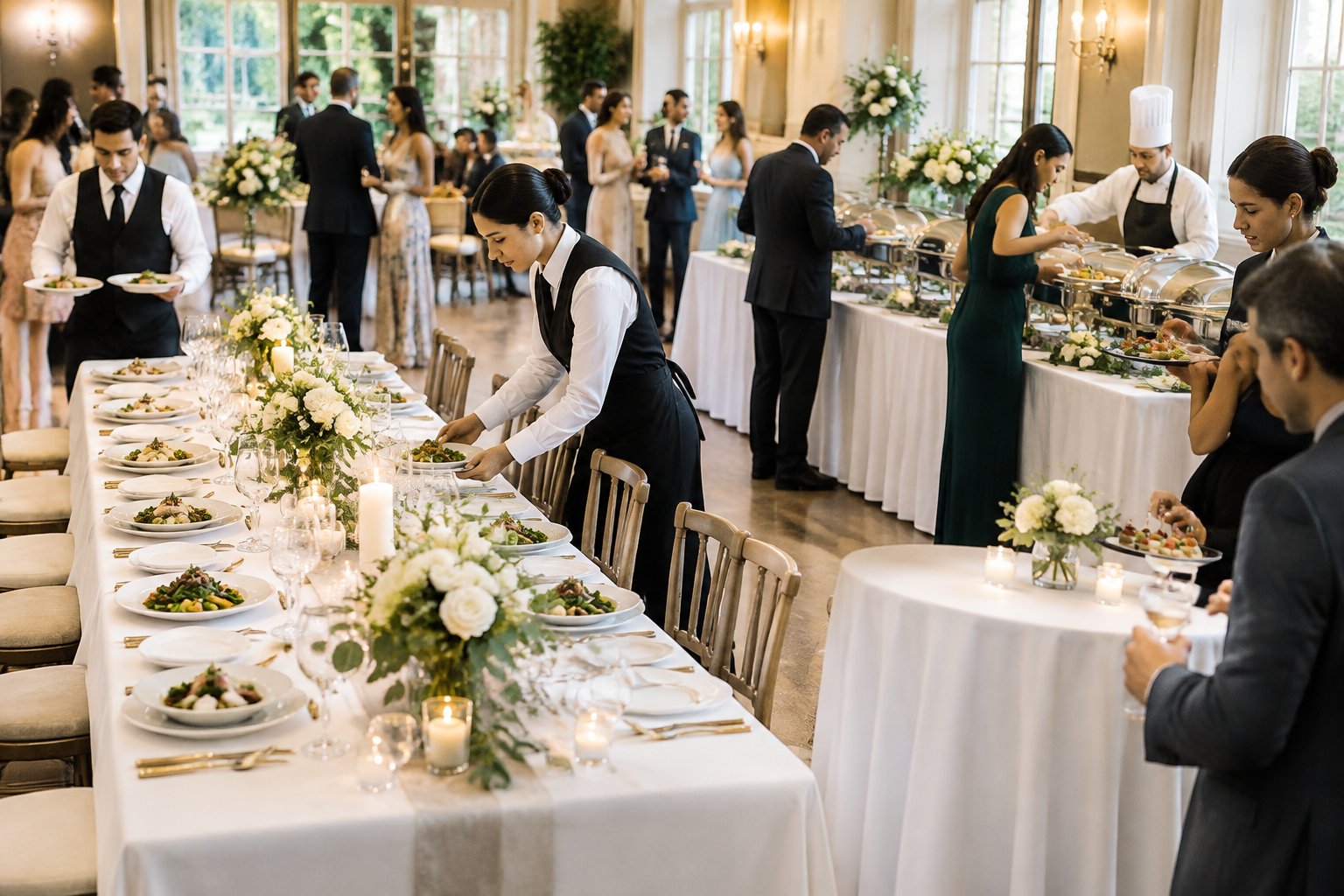
Your service format affects staffing, kitchen labor, room layout, meal timing, and guest flow. Choose the format that matches the reception experience you want, then ask the caterer to price that format with the same menu and bar plan.
Plated Dinner Service
A plated dinner service delivers each course to guests at their seats. This format creates a polished, timed meal and works well when you want speeches, toasts, and dancing to follow a clear schedule.
Plated dinner pricing often falls near $65 to $85 per person for standard wedding menus. Staffing costs rise because servers deliver individual plates and the kitchen prepares each meal with precise timing.
You also need a system for collecting entrée choices and dietary details from your guests. Premium proteins, extra courses, wine service, and upgraded china raise the plated dinner price.
Ask how many servers the proposal includes and whether the staffing level changes with your final headcount.
Buffet Service and Family-Style Meals
Buffet catering often runs about $40 to $65 per person, while family-style meals commonly fall near $50 to $70 per person. Both formats give guests more choice and reduce some individual plating labor.
A buffet places prepared food on serving tables, with guests moving through a line. Your venue needs enough space for the line, replenishment, and guest traffic.
Family-style meals bring platters to each table, creating a shared dining experience with more table service.
Food quantity planning affects the price. Guests control their portions at a buffet, so your caterer needs enough food to keep popular dishes available. Family-style service needs sufficient platters and servers to deliver, refresh, and clear each table.
Food Stations and Cocktail-Style Receptions
Food stations often cost about $45 to $75 per person, depending on the number of stations and the labor required. A pasta bar, carving station, taco station, or dessert display gives guests an interactive experience and spreads people across the room.
A cocktail-style reception with heavy appetizers commonly costs about $35 to $55 per person. Passed bites, small plates, and stationary displays need enough volume to replace a full meal.
Tell guests the reception format clearly on the invitation and plan substantial food if the event runs through dinner.
What Is Included in a Catering Quote?
A complete catering quote should list food, staff, setup, rentals, beverages, service charges, and every extra fee that could affect your final invoice.
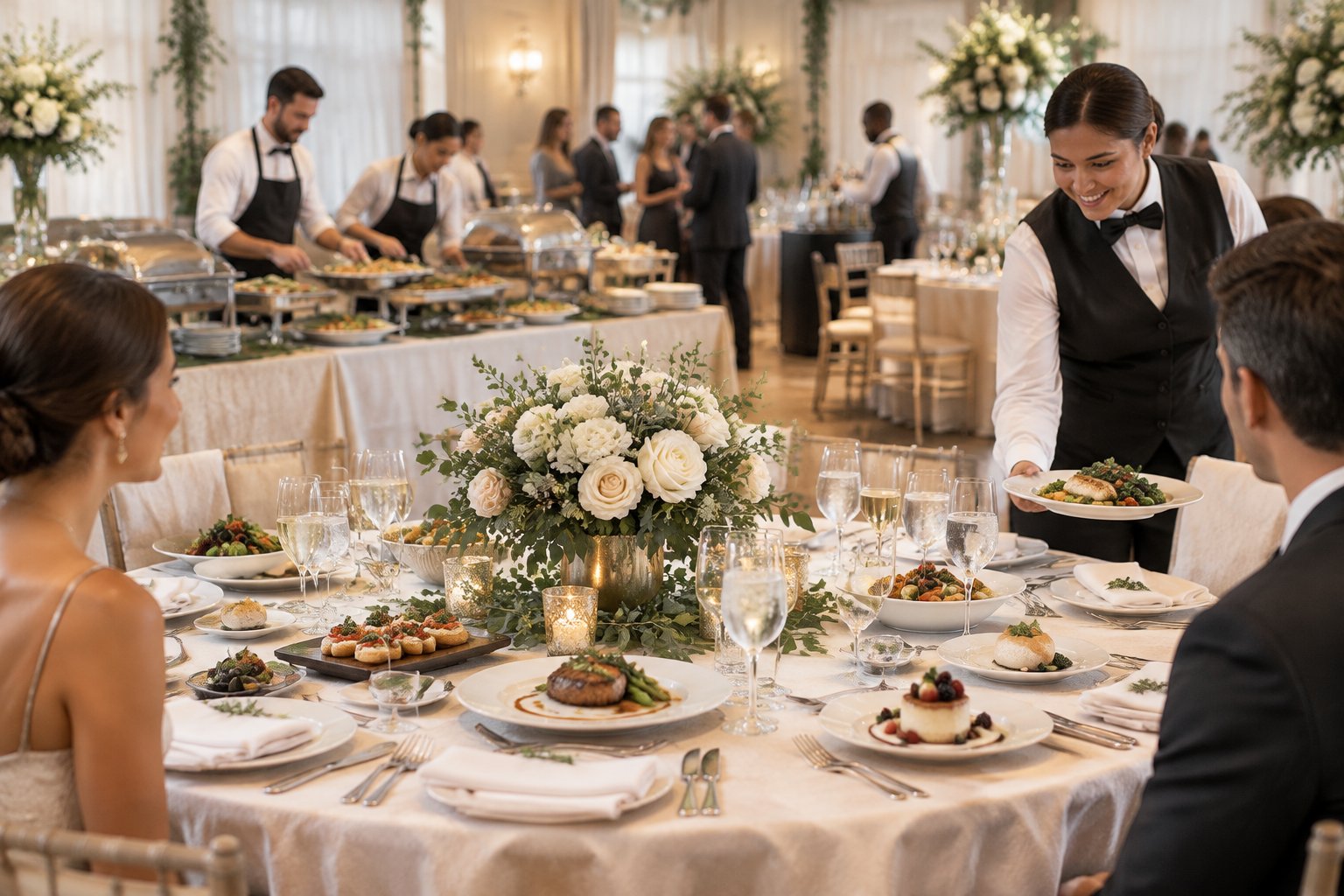
Catering quotes use different package names and pricing structures, so two proposals with the same menu price might produce different totals. Ask each wedding caterer to separate included services from optional upgrades and pass-through costs.
Food, Staffing, and Setup Basics
Most full-service packages include the selected menu, food preparation, kitchen labor, and a defined service window. Staffing may include servers, bartenders, chefs, a captain, and cleanup workers.
Confirm whether setup and breakdown are included. Ask when staff arrive, how long they remain, who clears tables, and whether trash removal or venue cleanup appears as a separate charge.
Delivery and kitchen-use fees also deserve a written answer when your venue has special access rules.
Tableware, Linens, and Rental Items
Basic rentals might include standard plates, dinnerware, flatware, glassware, and serving pieces. Linens, chargers, specialty glassware, upgraded china, and decorative tabletop items may carry separate prices.
Ask whether the caterer owns the rental items or orders them from another company. Confirm delivery, pickup, replacement charges, and cleaning costs.
A proposal should state the quantity and style of each item so you can compare it with another caterer quotes package.
Bar Service, Desserts, and Vendor Meals
Bar service can include soft drinks, coffee, beer, wine, a signature cocktail, or a full open bar. A cash bar changes who pays for drinks, while an open bar places the beverage cost with you.
Ask about bartenders, mixers, ice, glassware, alcohol quantities, and the service end time. Dessert pricing may include cake service or a separate cake-cutting fee.
A corkage fee applies when the caterer serves alcohol you provide. Vendor meals for your photographer, DJ, planner, and other vendors are often available at a reduced rate, though you should list those meals separately in the headcount.
Which Factors Raise or Lower Your Total?
Your guest count, menu complexity, venue, season, date, and dietary needs can move your catering total by thousands of dollars.

Use a guest list calculator to create a working headcount before requesting proposals. Then test menu and date choices against your wedding budget calculator so you see how each change affects the projected total.
Guest Count, Minimums, and Volume Discounts
Most wedding caterers price food and service per guest, so each added invitation affects the budget. Small events may face minimum spends of about $2,500 to $4,000, which raises the effective cost per person for an intimate reception.
Larger weddings spread fixed costs across more guests and might qualify for volume discounts. Ask whether the minimum applies to food, food and beverage, or the complete package.
Confirm how children, infants, and vendors count toward the minimum.
Menu Choices, Local Ingredients, and Dietary Needs
Menu complexity drives food cost. Filet, lobster, specialty seafood, premium cheeses, and multi-course menus require more expensive ingredients and preparation. Seasonal menus built around local ingredients can provide strong flavor at a lower price when those foods are plentiful.
Dietary accommodations need careful planning. Tell the caterer about vegetarian, vegan, gluten-free, kosher, halal, allergy-sensitive, and other requirements before receiving the proposal.
A clear count helps the kitchen plan separate ingredients and safe preparation areas.
Location, Season, and Your Wedding Date
Large cities, destination venues, remote properties, and sites with limited kitchen access often bring higher labor, travel, rental, or production costs. Ask whether the venue charges a kitchen fee or requires an exclusive caterer.
Saturday evening dates during peak wedding months command strong demand. A Friday, Sunday, weekday, or off-season wedding can open lower pricing, with some caterers offering discounts of about 10% to 25%.
Compare the savings with guest travel and lodging needs before changing your date.
How to Calculate an All-In Catering Budget
Estimate your all-in catering budget by multiplying the guest count by the food and beverage rate, then adding rentals, service charges, tax, gratuity, and fixed fees.
Start with the parts you know, then create low, mid-range, and high scenarios. Include cocktail hour appetizers, dessert, vendor meals, and bar service so your estimate reflects the full reception.
A Simple Wedding Catering Calculator Formula
Use this formula:
All-in estimate = guest count × food and beverage price per person + rentals + fixed fees + service charge + tax + gratuity
For example, 150 guests at $70 per person creates a $10,500 food and beverage subtotal. Add $1,200 for rentals and $500 for vendor meals, then apply the stated service charge and tax.
If gratuity is separate, add that amount before setting your final reserve.
Your wedding catering calculator should include service hours, bar style, cocktail hour appetizers, dessert, and late-night food when you plan to serve them. Keep the assumptions beside each number so you can update the estimate after each quote.
Add Service Charges, Tax, and Gratuity
Service charges often fall near 18% to 24% of food and beverage costs. This fee goes to the catering company and can cover administration, coordination, equipment transport, and operating expenses.
Tax rates vary by location and by which services or rentals are taxable. Gratuity may be separate from the service charge, with many couples budgeting 15% to 20% for service staff when the contract does not include it.
Ask the caterer exactly how each percentage is calculated.
Test Menu and Bar Scenarios Before Booking
Run at least two menu scenarios through your catering cost calculator. Compare plated and buffet service, then price beer and wine against a full open bar or a signature cocktail plan.
Add each scenario’s fees and taxes before judging the difference. A lower menu rate can lose its advantage after extra staffing, rentals, or bar labor appear on the proposal.
Save the estimates with your wedding budget so you can track changes through the contract deadline.
How to Compare Caterers Without Surprise Fees
Compare caterers by matching the final, itemized total for the same guest count, service style, menu, bar plan, hours, rentals, and fees.
A low per-person number tells you little when one proposal excludes staffing or tableware. Request proposals from three or four suitable wedding caterers, then narrow your list based on food quality, service plan, venue experience, and complete pricing.
Request Matching Itemized Proposals
Give every caterer the same details:
- Wedding date and venue
- Expected guest count and vendor meals
- Meal format and menu preferences
- Cocktail hour appetizers and dessert
- Bar type and service duration
- Rental needs and staffing expectations
- Setup, breakdown, and cleanup requirements
Ask each caterer to show the food subtotal, beverage subtotal, rentals, labor, service charge, tax, gratuity, delivery, and fixed fees. Confirm minimum spending, deposit amounts, payment dates, cancellation terms, and the deadline for final guest numbers.
What to Ask at a Catering Tasting
A catering tasting lets you assess flavor, presentation, portion size, and menu flexibility. Ask whether the tasting fee applies to your final balance and how many people may attend.
Discuss allergy procedures, dietary meals, children’s pricing, reheating, buffet replenishment, plated timing, and the plan for leftover food. Ask how the caterer handles venue restrictions and whether the tasting menu represents the same ingredients and preparation planned for your wedding.
Confirm Contract Terms Before You Sign
Read every page of the contract before paying a deposit. Confirm the service charge, overtime charges, corkage fee, cake cutting fee, travel costs, rental replacement charges, and any venue fees.
Check the contracted service window and the hourly rate for extra time. Ask whether gratuity is included, where it goes, and whether the final guest count can increase or decrease after the deadline. Keep the approved menu, staffing plan, rental list, and final projected total attached to the signed agreement.