
Catering for Weddings on a Budget: Smart Menu Ideas
You can plan catering for weddings on a budget by trimming guest count, choosing a buffet or family-style format, and building the menu around filling seasonal foods. Those choices reduce staffing, equipment, and ingredient costs while giving guests plenty to eat.
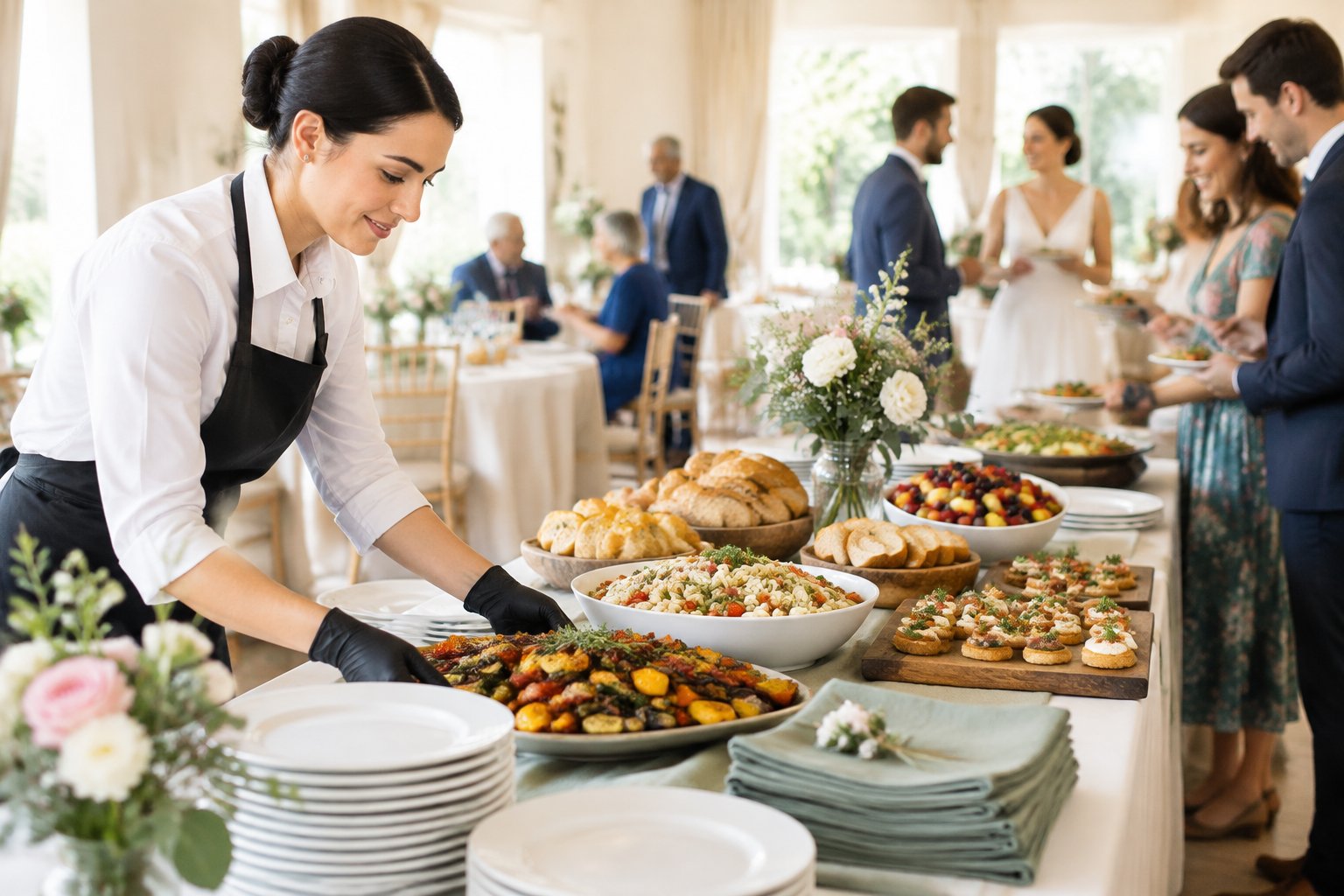
A buffet with two entrées, hearty sides, seasonal vegetables, and a focused drink menu suits couples who want affordable wedding catering because it reduces table-service labor while preserving guest choice. You can also create a memorable wedding reception with taco bars, pasta stations, brunch menus, barbecue, or a dessert bar.
Start by asking local caterers for a quote based on your guest count, venue, date, and preferred service style.
What Actually Drives Wedding Catering Costs?
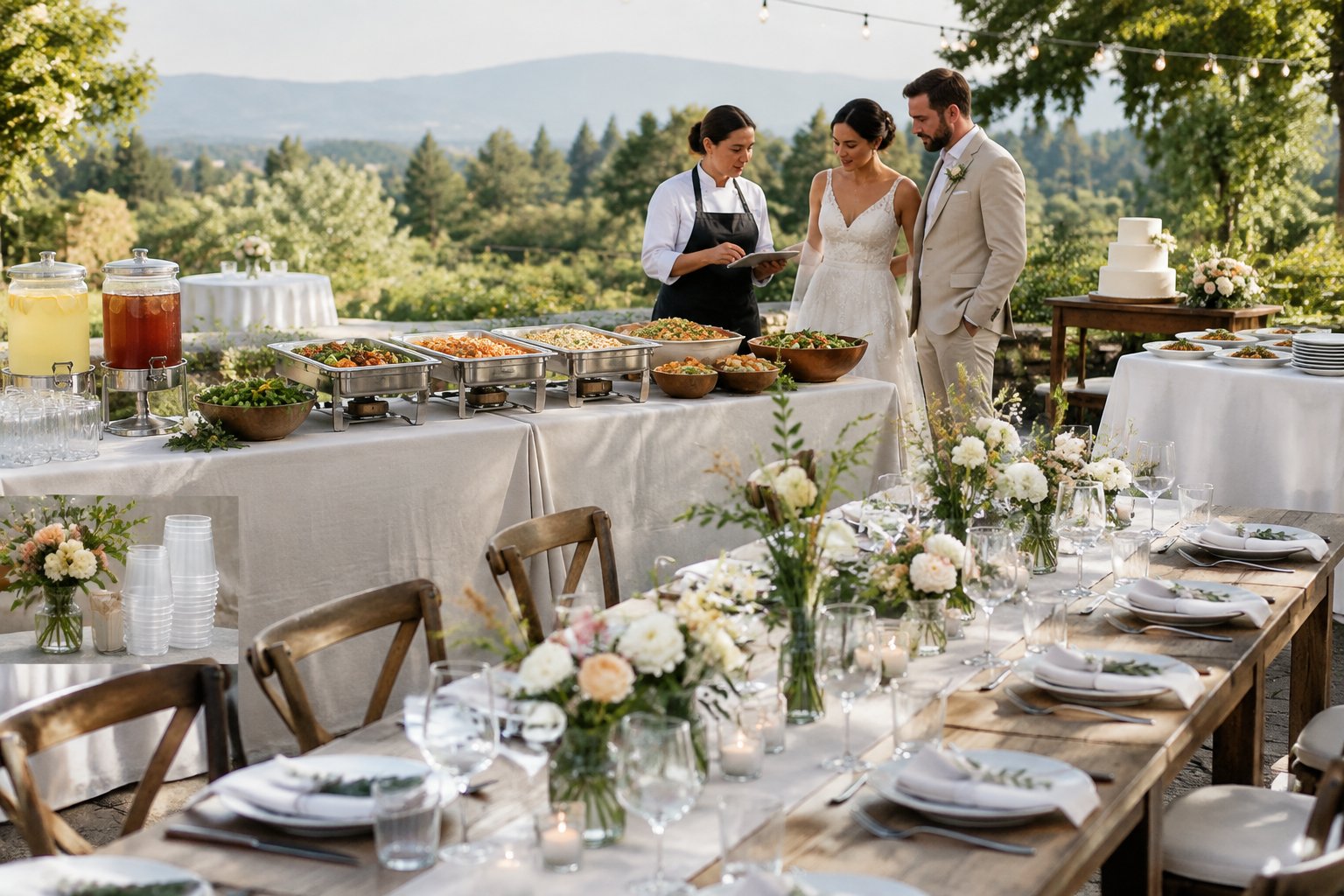
Wedding catering costs come from food, labor, rentals, venue requirements, and service details, so the full quote deserves close review. Guest count and plated dinner service create the largest increases, while venue fees and add-ons can change the final total after the menu price looks affordable.
How Guest Count and Service Style Affect the Total
Each guest adds food, serving utensils, plates, glassware, setup, and cleanup needs. A smaller guest list lowers the bill directly, although some caterers set minimum charges for smaller events.
A plated dinner needs kitchen staff to portion every entrée and servers to deliver each course. Buffet service uses fewer servers, while family-style meals require staff to place shared platters at each table. Compare quotes using the same guest count and service level so you see the true price difference.
Which Venue Fees and Add-Ons to Confirm First
Ask your wedding venue about:
- Outside-caterer fees
- Kitchen or prep-space charges
- Required staffing
- Table, linen, plate, and glassware rentals
- Delivery, setup, and breakdown costs
- Cake-cutting and corkage fees
- Overtime charges
- Rules for food trucks or drop-off meals
A venue with limited kitchen access may require extra equipment or transportation. Confirm these rules before you select a wedding caterer.
What to Ask a Wedding Caterer Before Signing
Request an itemized proposal that lists food preparation, staffing, rentals, taxes, service charges, gratuity, delivery, and cleanup. Ask how many staff members will attend, which serving utensils are included, and how the team handles allergies and dietary needs.
Confirm the deposit, payment schedule, cancellation terms, final guest-count deadline, tasting policy, and leftover-food rules. Ask whether the caterer has worked at your venue and how the team will keep hot food hot during service.
Choose a Service Style That Fits the Budget
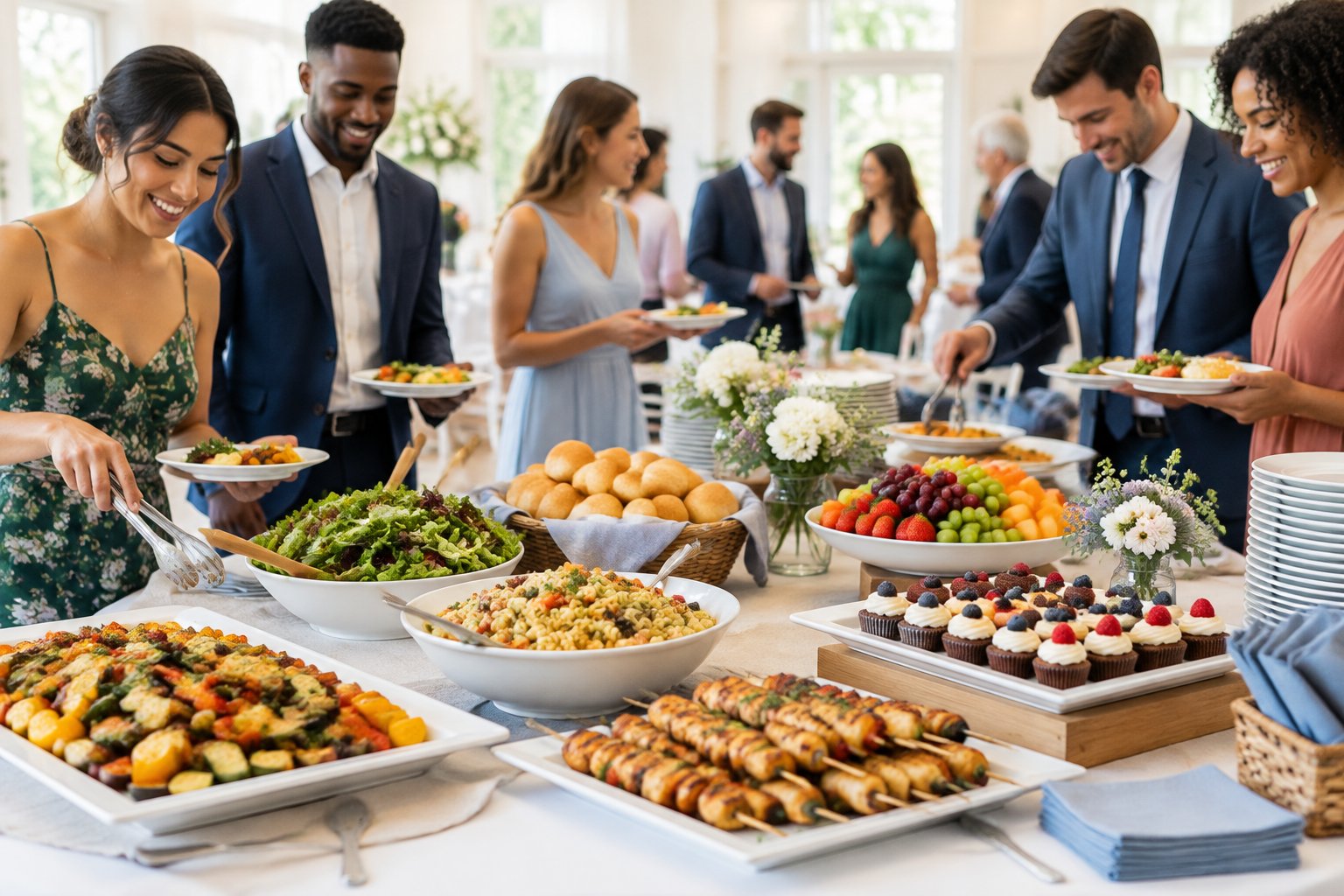
Buffet-style catering gives you the strongest value for a full meal, while brunch weddings and cocktail receptions reduce costs by changing the timing and amount of food served. Family-style dining brings a shared-table feel, and food stations add variety when you choose a small number of focused options.
Why Buffet-Style Catering Usually Costs Less
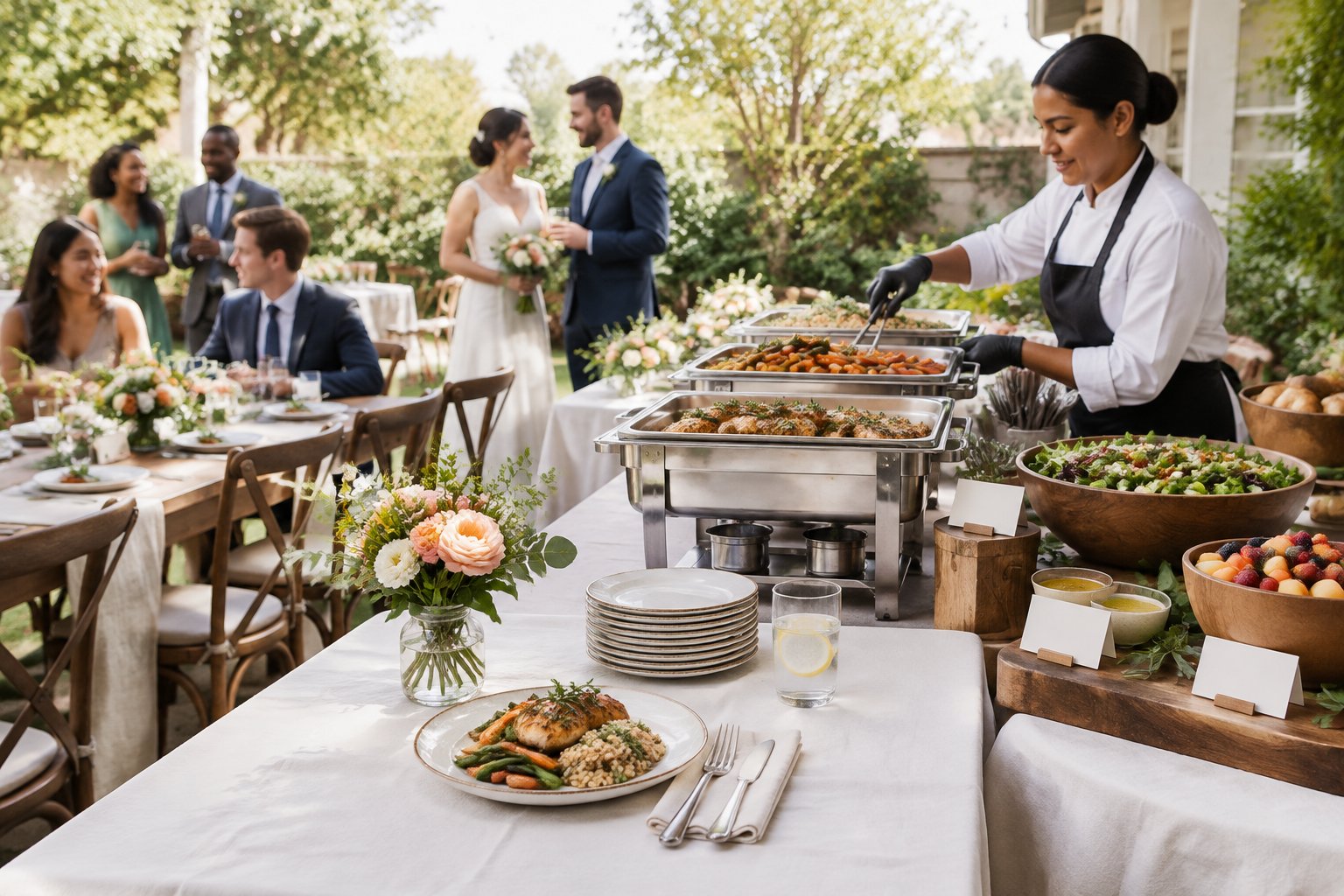
A buffet lets guests choose their portions while a smaller team replenishes shared dishes. You save on individual plating and table service, and guests get flexibility for vegetarian, gluten-free, and allergy-friendly choices.
Plan the layout carefully. Use two serving lines for larger groups, label dishes clearly, and release tables in waves to reduce waiting. Include two entrées, several filling sides, salad, bread, and sauces so the buffet feels generous without becoming complicated.
When Food Stations Are Worth the Extra Setup
Food stations work well when you want guests to mingle and build their own plates. A pasta station, taco bar, or baked potato setup provides variety through affordable base ingredients and toppings.
Each station needs tables, serving utensils, signs, and possibly an attendant. Choose two stations with shared ingredients, such as a pasta bar and salad station, instead of filling the room with several elaborate displays.
Can Family-Style Dining Save Money?
Family-style dining can fit a mid-sized wedding when shared platters match the table layout and menu. Guests stay seated, while servers deliver large dishes that everyone passes around.
Choose foods that hold well, such as roast chicken, rice dishes, roasted vegetables, and salad. Leave enough table space for platters, bread, and drinks, and ask your caterer how much staff the delivery pattern requires.
When a Brunch Wedding or Cocktail Hour Reception Makes Sense
A brunch wedding lowers food and beverage costs through menus built around eggs, potatoes, fruit, pastries, and coffee. A morning or early afternoon schedule also supports a lighter bar plan.
A cocktail hour reception works when you serve substantial appetizers and state the format clearly on the invitation. Offer filling finger foods, wedding appetizers, and small plates across the service window so guests receive enough food for the timing.
Build a Filling, Affordable Wedding Menu
A budget-friendly wedding menu starts with affordable starches, a practical protein, two satisfying sides, and seasonal produce. Build flavor with sauces, herbs, pickles, and fresh toppings so the meal feels special without relying on expensive ingredients.
Pasta, Rice Dishes, and Grain Bowls That Stretch the Budget
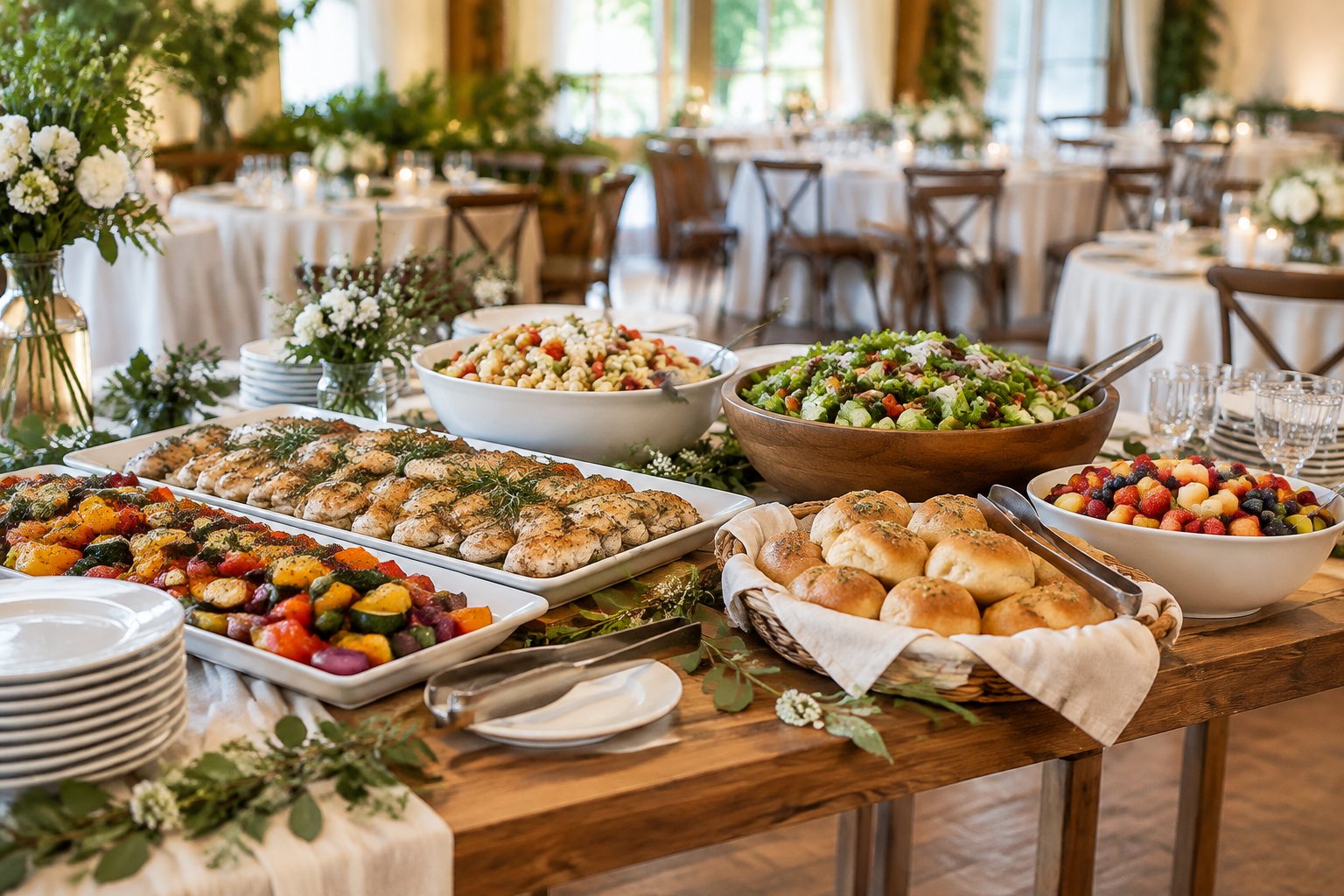
Pasta buffet menus feed a crowd with modest ingredient costs and simple preparation. Offer one sauce, one protein option, and roasted vegetables, or create a pasta bar with marinara, pesto, grilled chicken, and Parmesan.
Rice dishes and grain bowls also stretch the budget. Quinoa and wild rice add texture, while rice pilaf supports roast chicken, beans, vegetables, and sauces. Use one grain base across several toppings to simplify food preparation.
Affordable Proteins and Meatless Choices
Roast chicken, pulled pork, beans, lentils, eggs, and mushrooms provide satisfying protein at a manageable price. A menu with one meat entrée and one vegetarian protein gives guests choice without requiring several separate preparations.
Try herb-roasted chicken with a vegetarian baked pasta, or pulled pork with black beans and rice. Ask your caterer about portion sizes and recipes that can be prepared in large batches.
Use Seasonal Produce for Better Value
Seasonal vegetables, seasonal fruits, and other seasonal produce bring better flavor and pricing when they are plentiful. Local ingredients from nearby farmers markets can also shape a menu that feels connected to your location.
Choose a few produce items that work across the meal. For example, summer tomatoes can appear in salad and bruschetta, while autumn squash can support soup, grain bowls, or a roasted vegetable platter.
How Many Entrées and Sides Do You Need?
For a standard buffet, plan on two entrées, two or three sides, one salad, bread, and a dessert. A smaller menu reduces purchasing, prep, labeling, and waste.
Offer one meat or poultry entrée and one vegetarian choice. Add a starch, a vegetable, and a fresh salad, then confirm quantities with your caterer based on the guest count, service style, and expected appetite.
Low-Cost Menu Ideas Guests Will Enjoy
Interactive stations and familiar comfort foods make affordable meals feel intentional and festive. Taco bars, barbecue buffets, pasta bakes, and fresh appetizer spreads all provide strong flavor while keeping preparation manageable.
Taco, Potato, and Bruschetta Bars
A taco bar offers tortillas, seasoned meat or beans, rice, salsa, guacamole, cheese, lettuce, and toppings. Guests build plates to suit their preferences, and the same ingredients support vegetarian meals.
A potato bar uses baked potatoes with chili, cheese, sour cream, scallions, broccoli, and bacon. A bruschetta bar or bruschetta station pairs toasted bread with tomato basil topping, white bean spread, roasted vegetables, and balsamic glaze.
BBQ, Sliders, and Comfort-Food Buffets
A BBQ buffet works well for outdoor receptions and relaxed venues. Serve pulled pork with buns, barbecue sauce, potato salad, slaw, baked beans, and cornbread. You can add chicken if you want a second entrée.
Sliders provide easy portions during a cocktail-style event or late-night service. A slider station with pulled pork, grilled chicken, or vegetables needs fewer ingredients than a large plated menu and pairs well with simple salads.
For a rustic celebration, explore these BBQ wedding menu ideas.
Pasta Bakes and Family-Style Favorites
Lasagna, baked ziti, stuffed shells, casseroles, and macaroni and cheese travel well and hold their texture during buffet service. Pair one rich dish with a green salad and roasted vegetable medleys for balance.
Serve the meal family-style when you have enough table space. Large pans and serving platters create a warm, shared experience while keeping the menu familiar to guests of different ages.
Fresh Appetizers for a Lighter Reception
Fresh appetizers add color and variety without requiring costly ingredients. Try caprese skewers, stuffed mushrooms, hummus with vegetables, homemade dips, and a roasted vegetable platter.
Cheese and charcuterie boards look generous when arranged with grapes, apples, crackers, olives, and bread. Use charcuterie boards as part of cocktail hour, then serve a filling main meal if the reception spans a normal dinner period.
Desserts and Drinks Without the Premium Price
You can reduce dessert and beverage costs by choosing easy-to-portion sweets and limiting bar service to a focused selection. Sheet cakes, cupcakes, cookies, infused water, and one signature cocktail create a polished spread with fewer specialty labor hours.
Alternatives to a Large Traditional Wedding Cake
Order a small decorated wedding cake for the cake-cutting moment and serve sheet cakes to the rest of the guests. Sheet cakes cost less to decorate and are easier to portion in a kitchen.
Cupcakes, mini cakes, and cookies provide simple individual servings. A cupcake tower adds height to the dessert table, while a mix of flavors helps guests find an option they enjoy.
For more ideas, explore these wedding dessert ideas.
Build a Simple Dessert Bar
A dessert bar can include cookies, brownies, fruit, mini cakes, and cupcakes. Use matching platters, small signs, and a few decorative accents to make inexpensive items feel coordinated.
An ice cream sundae station works well for warm-weather receptions. Provide two ice cream flavors and a short topping list. A DIY sundae bar or s’mores station creates an activity while keeping portions flexible.
Keep Beverage Costs Under Control
Limit the bar to beer, wine, sparkling water, coffee, tea, and one signature cocktail. Infused water with citrus, cucumber, or berries gives guests a refreshing nonalcoholic option.
Ask the venue about corkage, bartender requirements, ice, glassware, and service hours. A defined bar window helps control consumption and staffing while keeping drinks available during the most social parts of the reception.
Smart Sourcing and DIY Boundaries
Bulk suppliers, local vendors, restaurant drop-off, and food trucks can lower costs when their service matches your venue and guest count. Keep DIY tasks to safe, manageable details, and assign food handling, timing, and cleanup to experienced help.
When Costco, Sam’s Club, and Local Vendors Can Help
Costco and Sam’s Club can supply bulk beverages, snacks, produce, bakery items, and disposable serving supplies. Compare bulk prices with a caterer’s wholesale purchasing, then include delivery, storage, preparation, and labor in your calculation.
Local vendors can provide bread, produce, desserts, barbecue, or prepared dishes with a personal connection to your area. Ask about order minimums, pickup times, food safety, serving instructions, and replacement plans for delayed deliveries.
Food Trucks, Restaurant Drop-Off, and Potluck Options
Food trucks create a lively pizza station, taco service, or late-night meal. Confirm parking access, power, guest capacity, service time, weather plans, and minimum charges before booking.
Restaurant drop-off works well for casual receptions, rehearsal dinners, and farewell brunches. Request disposable pans, labels, serving utensils, and reheating instructions.
A potluck wedding suits a small gathering with trusted contributors and a clear coordinator. Assign dishes in advance, track allergens, and hire help for setup, temperature control, serving, and cleanup so guests are free to celebrate.
What to DIY and What to Leave to Professionals
DIY-friendly tasks include printed menu cards, simple drink stations, cookie trays, table labels, and purchasing sealed beverages. Keep the menu short if friends or family will prepare food, and schedule cooking at least one or two days before the reception.
Leave hot-holding, refrigeration, allergy controls, large-scale food preparation, and service timing to professionals when the guest count is substantial. You and your wedding party should not spend the reception heating pans or clearing tables.
Get written responsibilities for every food task before the event, including who receives deliveries and who handles leftovers.