
Cheap Indoor Wedding Venues: Ideas and Costs
A low-cost indoor wedding venue gives you weather protection, comfortable seating, and a clear plan for your ceremony and reception. Community centers, private dining rooms, libraries, and small event halls often provide the best value because you can focus your wedding budget on the people and details you care about most.
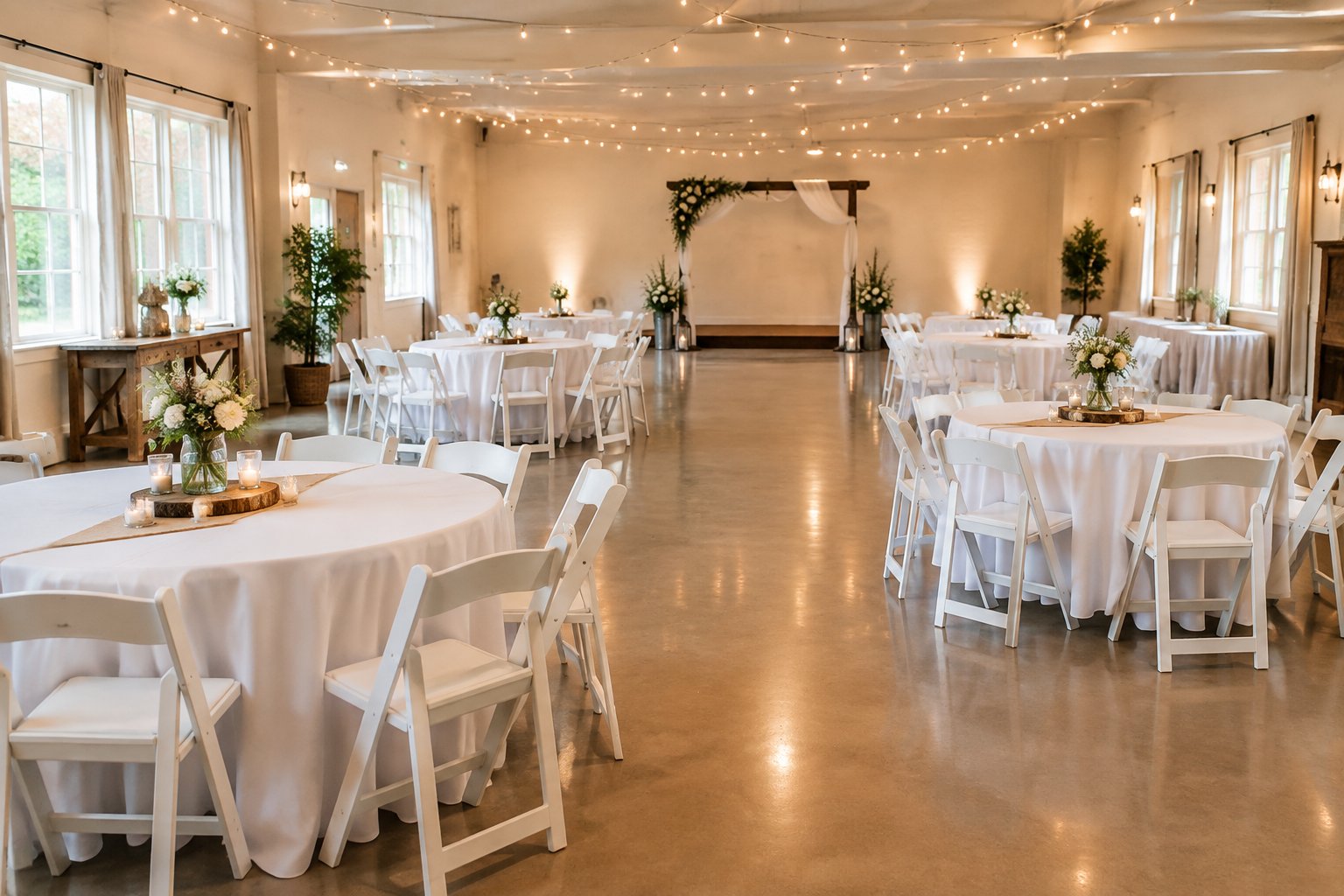
Community centers are often the best starting point for cheap indoor wedding venues because they offer flexible rooms, basic furnishings, and practical amenities at a manageable wedding venue cost. Restaurant dining rooms, civic buildings, museums, and campus spaces give you other affordable wedding venues to compare. Your guest count, wedding date, vendor rules, and included services will shape the final price.
You can find a space that feels warm and personal without putting your entire budget into the room. Start by requesting itemized quotes for your date and guest count, then compare the full cost before you tour. For more inspiration, explore these cheap wedding venue ideas as you build your shortlist.
How to Find a Venue That Is Actually Affordable
An affordable venue has a manageable total price after rental fees, food, staffing, insurance, permits, and cleanup are included. A low advertised rate loses its value when you must add every table, chair, service, and hour of labor.

Compare the Full Cost, Not Just the Rental Rate
Request an itemized estimate that includes:
- Venue rental costs and security deposit
- Tables, chairs, linens, and setup
- Catering, cake cutting, and bar service
- Staffing, cleanup, and trash removal
- Heating, cooling, sound, and lighting
- Parking, insurance, taxes, and permit fees
- Overtime and early access
Some venues charge a flat rental rate, while others combine room fees with per-person catering. Place every quote in a spreadsheet using the same guest count and categories. This makes it easier to compare a small wedding venue with a larger budget wedding venue that includes more services.
Ask about required vendors, cancellation terms, payment dates, and refund rules. A package with a higher starting price can cost less when it includes furniture, staffing, and cleanup.
Set a Guest Count Before You Tour
Your guest count affects the room size, catering bill, seating plan, staffing needs, and ceremony and reception layout. Create an early guest list before touring so you can compare spaces that fit your celebration.
A room that feels charming with 50 guests may feel crowded with 90. A large hall can leave you paying for space you do not use. Ask each venue for its seated capacity, dance-floor capacity, accessibility details, and parking information.
If your list is small, search specifically for small wedding venues and private rooms. These spaces can reduce furniture rentals and make a modest event feel intentional.
Ask What Is Included in the Contract
The contract should state your access hours, room layout, included equipment, vendor rules, cleanup duties, and every added charge. Ask who handles setup, moves furniture, removes trash, and locks the building after the event.
Confirm whether the venue includes a kitchen, restrooms, sound equipment, climate control, rehearsal time, and a coordinator. Ask whether a ceremony in the same room requires a room flip between events.
Request written answers about alcohol, candles, music volume, décor attachments, photography, and outside catering. Keep those answers with the signed agreement so your wedding budget reflects the actual terms.
Best Low-Cost Indoor Venue Types
Community centers, restaurants, libraries, museums, galleries, schools, and campus chapels provide affordable indoor settings with different rules and service levels. Focus on the features that reduce extra rentals, such as built-in seating, usable kitchens, attractive architecture, and accessible restrooms.
Community Centers and Civic Buildings
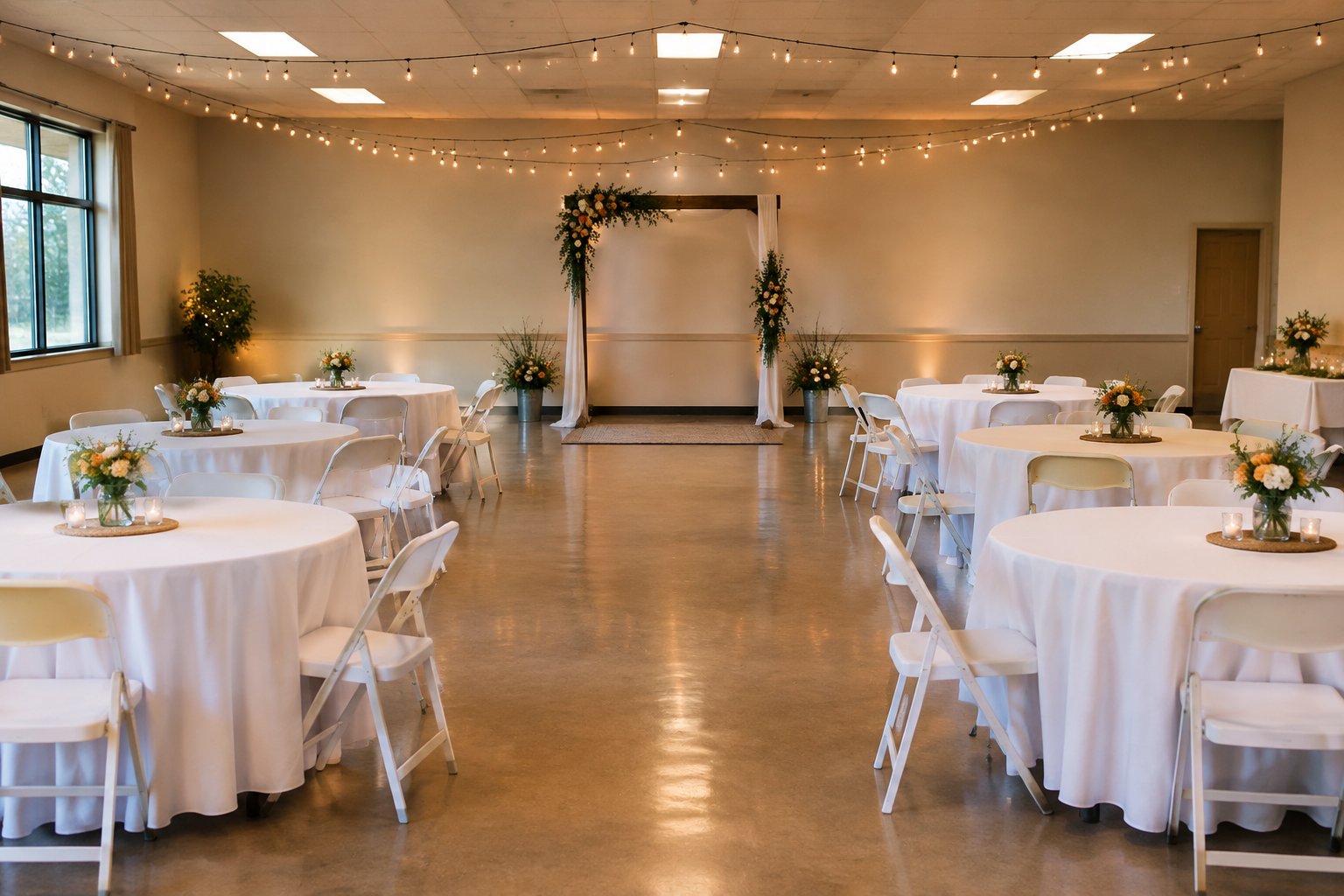
Community centers and civic buildings are strong choices for a budget wedding because they often include a large multipurpose room, restrooms, tables, and chairs. Neutral walls let you create a polished look with focused flowers, linens, and lighting.
Ask about resident rates, nonprofit discounts, weekend hours, deposit amounts, kitchen access, and required cleaning. Check the furniture condition and confirm whether staff must stay during your event.
Restaurants and Private Dining Rooms
Restaurant weddings combine a meal and event space in one booking. A private dining room works well for a small guest list because existing tables, chairs, tableware, lighting, and staff reduce rental needs.
Review food and beverage minimums, service charges, gratuity, cake policies, corkage, music limits, and reservation length. Ask whether the room supports a short ceremony before dinner and whether you can bring personal décor.
Libraries, Museums, and Art Galleries
Historic libraries, museums, and art galleries provide built-in character through woodwork, artwork, display cases, murals, or tall windows. The setting can reduce your need for large floral arrangements and elaborate backdrops.
A museum wedding venue may restrict candles, hanging décor, amplified music, food placement, or guest movement. Confirm accessibility, insurance, photography areas, closing time, and the approved catering list before booking.
Schools, Campus Chapels, and Banquet Halls
Schools and universities may rent auditoriums, chapels, student centers, or banquet halls during breaks. These spaces can work well for couples who need a formal ceremony room plus a reception area.
Ask about campus access, parking, security, sound limits, outside vendors, and building hours. A campus chapel might suit the ceremony while a nearby banquet hall handles dinner and dancing. Include transportation and separate rental fees in your quote.
Indoor Spaces for Small and Intimate Celebrations
Courthouses, private dining rooms, micro-wedding packages, and homes help you keep an intimate wedding focused and affordable. Smaller spaces reduce seating, staffing, food, and décor needs while giving guests more time with you.
Courthouse Ceremonies With a Separate Reception
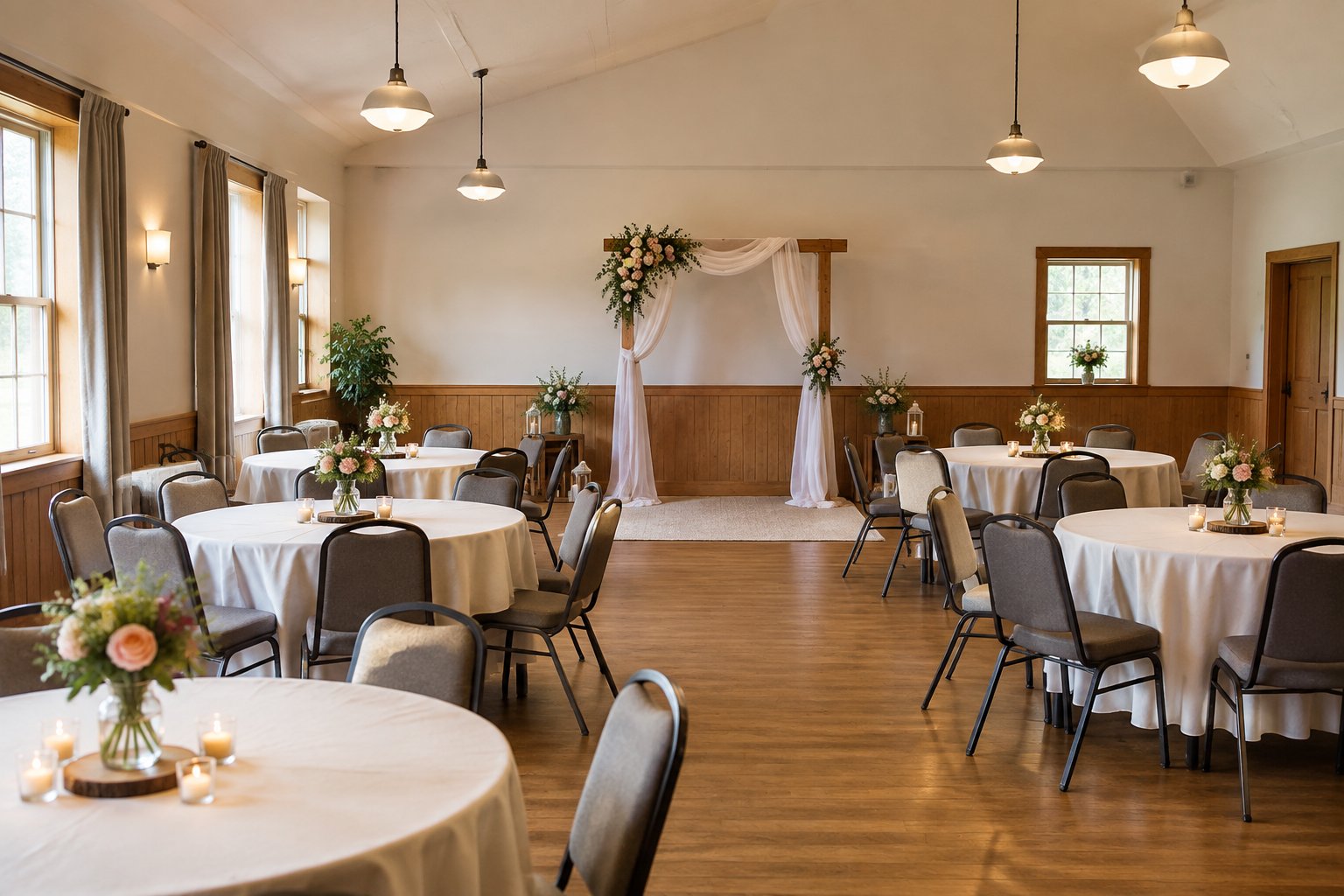
A courthouse wedding keeps the legal ceremony short and focused. Contact your county clerk to confirm the marriage license process, identification requirements, waiting period, appointment schedule, guest limit, and accepted payment methods.
You can hold portraits nearby and invite close family to a restaurant reception afterward. Ask about photography rules, ceremony timing, accessibility, and parking before you plan the day.
Private Rooms and Micro-Wedding Packages
Private dining rooms, boutique event spaces, and small hotels offer packages for limited guest counts. These options often combine the room, meal, tables, chairs, and service staff, which makes costs easier to track.
Ask whether the package includes a ceremony, reception, cake service, drinks, linens, setup, and cleanup. Confirm the minimum guest count and the charge for any guests who cancel. A weekday wedding can open more package choices at a lower rate.
Home Weddings With Indoor Entertaining Space
A home wedding works when your rooms, parking, restrooms, and seating can support the guest list. You can use a living room for the ceremony and a dining or family room for dinner.
Check local occupancy rules, noise limits, parking concerns, insurance coverage, and any special use permit requirements. Write a plan for food storage, guest flow, restroom access, cleanup, and weather backup if part of the event moves outdoors. These intimate small wedding ideas for 50 guests can help you shape the celebration around a smaller space.
Hidden Fees and Logistics to Price Before Booking
The most common budget surprises come from catering rules, labor charges, limited access hours, décor restrictions, and equipment rentals. Price every operational detail before you compare one venue with another.
Catering Minimums, Service Charges, and Bar Policies
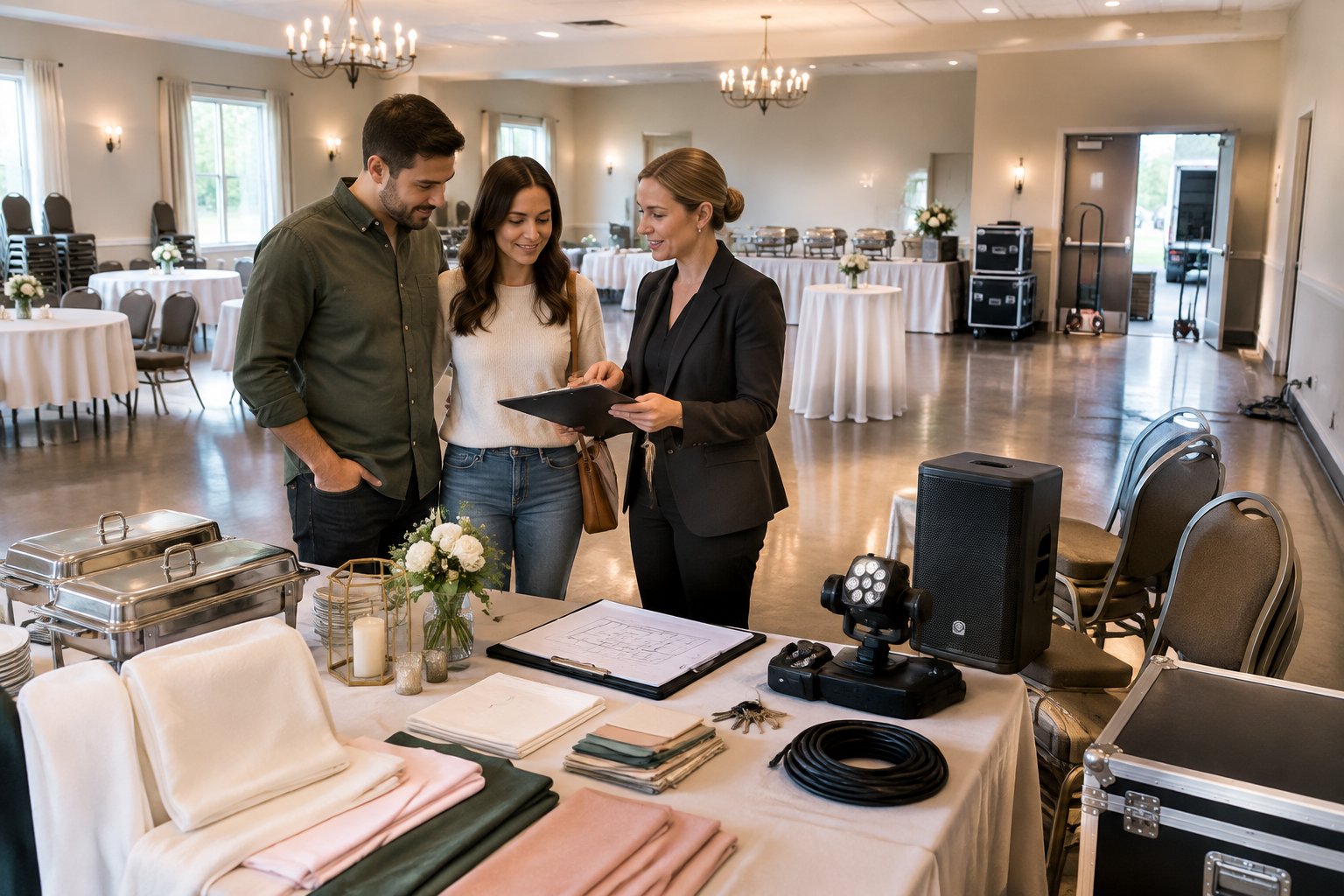
Ask whether the venue requires a catering minimum, beverage minimum, or both. Request the full calculation for food, drinks, service charges, taxes, gratuity, cake cutting, corkage, bartender labor, and children’s meals.
Confirm whether outside caterers are allowed and whether the venue charges a kitchen or prep fee. A restaurant may offer an attractive room rate while requiring a minimum spend. A community hall may allow your caterer but charge for kitchen access and cleanup.
Setup, Cleanup, Insurance, and Overtime
Check when you can enter, when vendors can unload, when guests may arrive, and when the building must be empty. Price rehearsal time, early access, overtime, breakdown, trash removal, security, and professional cleaning.
Ask whether event insurance is required and whether the venue has specific coverage limits. Include transportation for rental deliveries and any staff gratuity in your worksheet. Write each responsibility into the contract so you know who handles the room after the last dance.
Decor, Lighting, and Power Needs
A plain hall can require extra décor, while a historic room may need only a few personal touches. Ask about wall hooks, ceiling attachments, candles, open flames, tape, confetti, and outside décor teams.
Check the outlets and circuit limits before booking a DJ or band. A room with poor lighting might require uplights, string lights, or lanterns. An outdoor extension plan could require generator rentals, while an indoor space may support your equipment through existing power. Confirm storage and fire-safety rules for every installation.
Ways to Lower the Price Without Settling for Less
You can lower venue costs by choosing a flexible date, selecting a room with built-in character, and comparing bundled services with separate rentals. These choices preserve guest comfort while reducing décor, labor, and equipment expenses.
Choose a Weekday or Off-Season Date
Thursday, Friday, Sunday, and winter dates can cost less than a peak Saturday booking. Ask about January, February, late fall, Sunday brunch, and afternoon options that fit your guests.
Tell the venue which dates you can accept and ask about open calendar gaps. Compare the venue discount with vendor pricing, travel costs, and guest schedules before you commit.
Use Built-In Character to Reduce Decor Costs
Choose a room with attractive windows, brick, woodwork, artwork, or warm lighting. These features create a finished backdrop for photos and reduce the amount of floral design and draping you need.
Add detail in a few high-visibility areas, such as the ceremony arch, head table, welcome table, or centerpieces. Check décor rules first, especially if the building has historic finishes or museum displays. These indoor wedding table decoration ideas can help you create a refined look with limited materials.
Bundle Food, Furniture, and Staffing When It Saves Money
A package can offer better value when it includes tables, chairs, linens, catering, staffing, setup, and cleanup. Compare the package total with separate vendor quotes that cover the same services.
Ask for a lower-cost menu, limited bar, shorter reception, or smaller room before removing important guest services. Keep cake, photography, accessibility, and restroom needs on your must-have list while adjusting extras.
When an Indoor-Outdoor Venue Is the Better Value
An indoor-outdoor venue can offer better value when you want natural scenery for part of the day and dependable shelter for dinner, dancing, or severe weather. Compare the indoor backup, permit requirements, rentals, and guest travel before choosing an outdoor setting.
Parks and Gardens With Event Halls
Public parks, city parks, state parks, botanical gardens, and rose gardens sometimes pair outdoor ceremony areas with indoor event halls. You can use the landscape for portraits while keeping the reception in a climate-controlled room.
Ask whether the indoor room is included, reserved exclusively, or available only as a weather backup. Check parking, accessibility, restrooms, closing times, catering rules, and the cost of moving guests between spaces. A garden with an indoor hall can reduce décor needs while keeping your reception protected.
Nature Venues That Require Permits
A park wedding or public beach ceremony may require a special use permit, event insurance, reservation fee, or limits on guest count. Ask about amplified music, alcohol, candles, tents, chairs, photography, and cleanup.
Outdoor spaces can require extra rentals for power, lighting, seating, shade, and restrooms. Price portable restrooms, tenting, transportation, and a rain plan before comparing the location with an indoor hall. Review the permit terms with your caterer and coordinator so your layout follows local rules.
Unique Cultural and Animal Attractions
Vineyards, zoos and aquariums, historic cultural sites, and an aquarium wedding venue can provide strong visual character with less added décor. These locations may offer an indoor room beside outdoor paths, gardens, exhibits, or terraces.
Ask about private access, guest routes, noise limits, food service, photography areas, exhibit rules, and event end times. Confirm whether admission, security, staffing, parking, and insurance are included in the quote.
A distinctive venue earns its place in your wedding budget when its setting replaces several décor and entertainment expenses.