
Coastal Wedding Weekend Itinerary: A Seamless 3-Day Plan
A well-planned coastal wedding weekend itinerary gives you three days to welcome guests, celebrate your marriage, and enjoy the shoreline without packing every hour. A Friday arrival, Saturday wedding, and Sunday send-off create a comfortable rhythm for most destination wedding weekend plans.
Build each day around one main purpose. Use arrival day for connection, wedding day for the ceremony and reception, and the final day for relaxed goodbyes. Add generous travel buffers for narrow coastal roads, parking, wind, changing tides, and weather shifts.
A clear wedding itinerary also helps guests know when they need formal attire and when they have free time. Share the schedule through your wedding website, a mobile-friendly document, or a printed card. Start shaping your plan now with a destination wedding checklist so important travel details stay in one place.
How to Build a Relaxed Three-Day Schedule
A relaxed wedding weekend itinerary gives each day one central event, enough transition time, and open hours for rest or exploration. Your wedding plan should guide guests without making every moment mandatory.
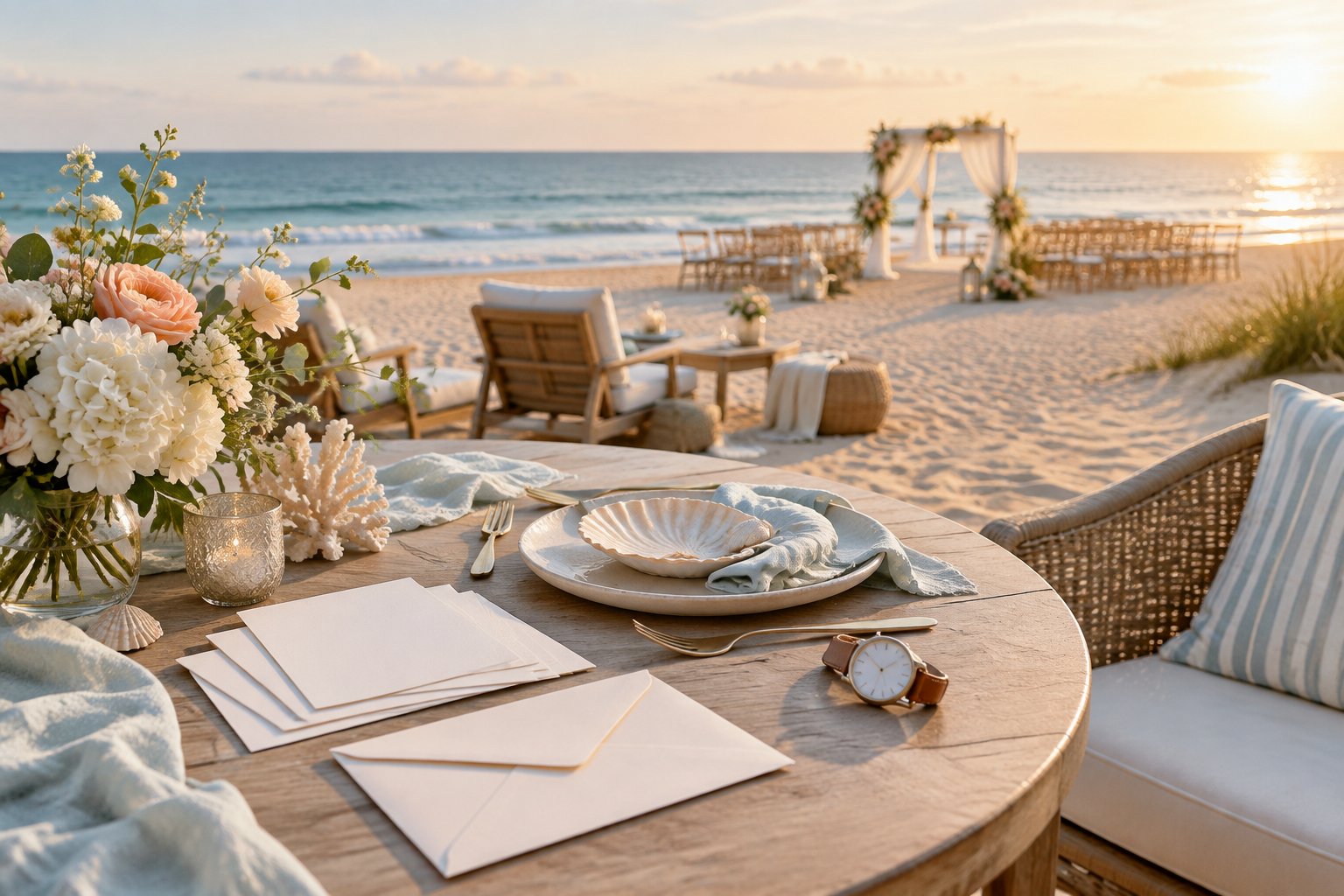
Plan around guest energy, travel time, and the coastal setting. Confirm venue access, sunset timing, meal service, and weather backup plans before you publish the wedding schedule.
Choose the Right Length for Your Celebration
A three-day format works well when most guests arrive Friday and leave Sunday. It gives you space for a welcome gathering, rehearsal activities, the main celebration, and a farewell meal.
Use a four-day plan when flights arrive late, guests are traveling internationally, or you want a group excursion. A two-day schedule fits a local guest list or a smaller destination wedding with limited activities.
A sample three-day structure looks like this:
- Friday: Guest arrivals, hotel check-in, welcome drinks, and optional dinner
- Saturday: Getting ready, wedding ceremony, cocktail hour, reception, and dancing
- Sunday: Farewell brunch, optional beach time, and departures
Set Priorities Before Adding Extra Activities
Choose the events that support your celebration first. Place the ceremony, reception, rehearsal, and guest meals on the wedding schedule before adding boat rides, group tours, or beach games.
Give each optional activity a clear start time, meeting point, cost, and RSVP deadline. Label it as optional so guests can rest, explore alone, or spend time with family.
Keep the wedding party’s schedule lighter than the guest schedule when possible. Members of the wedding party already have duties, photos, outfit changes, and setup responsibilities.
Leave Room for Beach Time and Weather Delays
Keep at least one open block each day for beach time, naps, errands, or weather changes. Coastal conditions can affect transportation, outdoor seating, photography, and sound equipment.
Create indoor alternatives for every outdoor event. A covered terrace, private dining room, or nearby indoor lounge gives you a practical backup when rain or strong wind changes the plan.
Add 15 to 30 minutes between events that require travel or a change of clothing. Tell guests when they need to arrive, then give your vendors an earlier internal call time.
Arrival Day: Welcome Guests Without Overbooking Them
Arrival day works best when guests have a clear landing point, one welcoming gathering, and enough time to settle in. Keep the first evening warm and flexible so late arrivals do not feel rushed.

Your guest-facing plan can stay simple while your private wedding schedule tracks transportation, room blocks, vendor setup, and rehearsal needs. Send updates through one main channel so timing changes reach everyone quickly.
Coordinate Guest Arrivals and Hotel Check-In
Set a welcome desk or digital information point at the main hotel. Include room details, transportation instructions, emergency contacts, and the location of the first gathering.
Ask guests to share arrival times before the weekend. Group airport transfers by arrival window, and set a clear meeting place for guests driving themselves.
Plan a casual window for check-in, such as 3:00 to 6:00 p.m. Guests arriving after that time should have simple instructions for collecting welcome bags and joining the event.
Plan a Flexible Welcome Party
Hold the welcome party for about two hours, with food available throughout the event. A coastal restaurant, hotel terrace, or covered patio gives guests space to mingle without requiring a formal program.
Use stations, passed snacks, or a relaxed buffet so late arrivals can eat when they enter. Keep speeches brief and save major announcements for the rehearsal or wedding day.
Live music can set the mood at a comfortable volume. Confirm the venue’s sound rules, wind protection, power access, and end time before booking performers.
When to Hold the Rehearsal and Rehearsal Dinner
Schedule the rehearsal before the welcome party when the wedding party arrives early and the ceremony site is available. A short run-through helps everyone learn where to stand, when to walk, and how the processional will flow.
Place the rehearsal dinner after the rehearsal or on a separate evening for a larger group. Include immediate family, the wedding party, and any guests you want to honor according to your plans.
Give participants a written arrival time that comes before the guest-facing start. Reserve time for parking, outfit changes, and questions about the wedding ceremony.
Wedding Day Timeline From Getting Ready to the Last Dance
A strong wedding day timeline works backward from the ceremony, sunset, photography needs, and reception end time. Give every major transition a named lead person and a buffer.
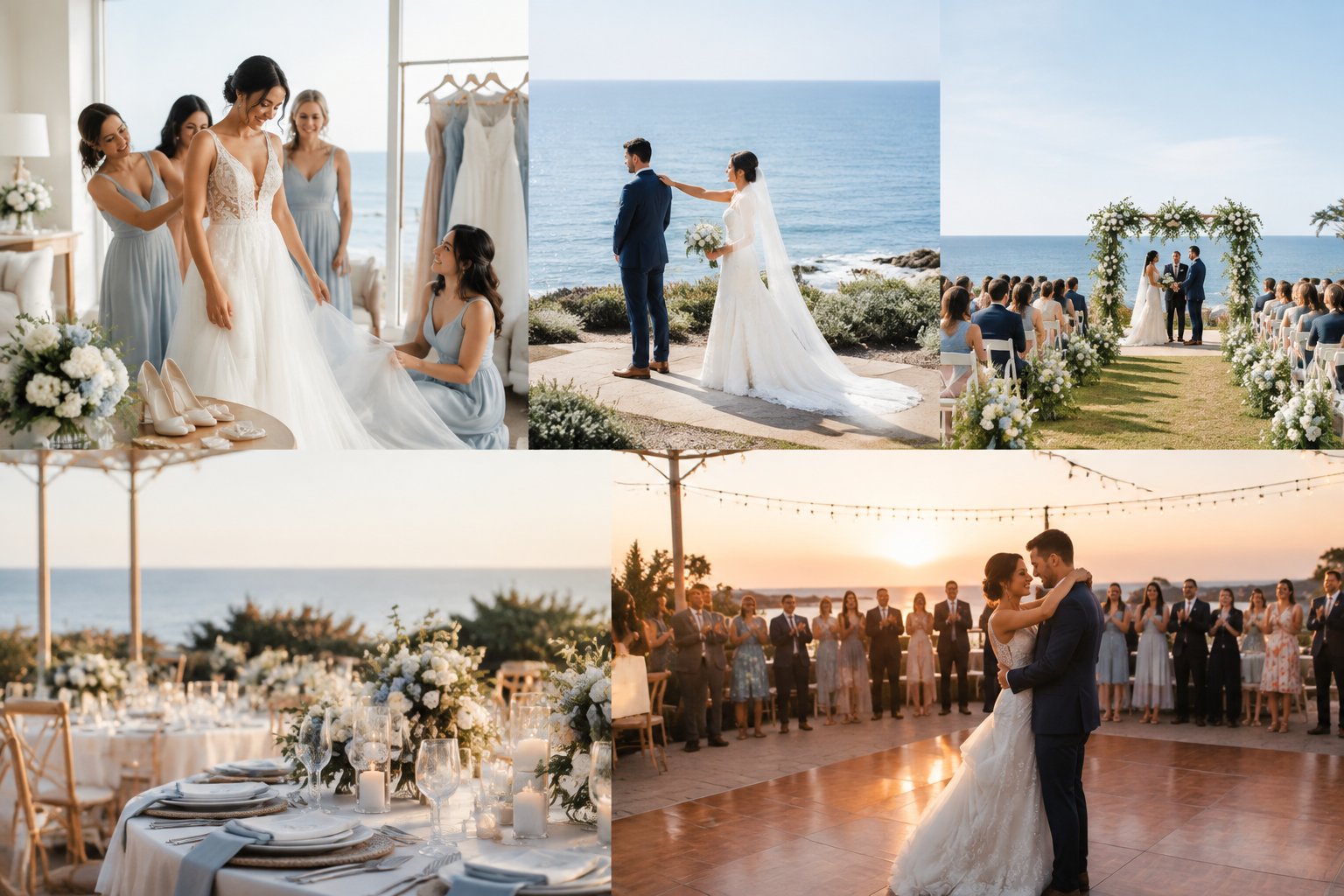
Your private wedding timeline will include hair and makeup, vendor arrivals, photos, transportation, and setup. Guests need a shorter wedding itinerary with the moments that affect them.
Schedule Hair and Makeup Around Light and Travel Time
Start hair and makeup early enough to protect the ceremony start and photo plan. Work backward from the time you need to be dressed, photographed, and in position.
Give each person a written appointment slot. Include the couple, bridal party, parents, and anyone with a special role.
Keep the getting-ready location close to the ceremony site when possible. If travel is required, add time for loading bags, parking, wind, and unfamiliar roads. A wedding day photo checklist can help you group portraits without creating extra trips.
Time the Wedding Ceremony for Coastal Conditions
Choose the ceremony time after checking sunset, heat, wind, shade, and tide conditions for your date. Late afternoon often provides comfortable light, though the best time depends on the location and season.
Tell guests when doors open and when seating begins. Offer water, fans, shade, or indoor seating when temperatures rise.
Place the ceremony on solid, accessible ground. Test microphones, chairs, arches, and floral arrangements in conditions similar to the event. Keep a backup location ready and tell key vendors how the change will be announced.
Keep Cocktail Hour, Dinner, and the First Dance Flowing
Build the reception around a clear order of events. Move guests from the ceremony to cocktail hour, then guide them to dinner, toasts, the first dance, and open dancing.
Use a seating announcement or escort display to reduce confusion. Ask the emcee or planner to give short instructions before each transition.
Protect time for the first dance while guests are still attentive. Place formal dances and toasts near the start of dinner, then open the floor after the meal. If you want a later party, share the after-party location and transportation plan before the reception ends.
The Day-After Send-Off
A day-after send-off should offer one easy shared meal and optional coastal activities that fit different departure times. Guests need a clear ending without feeling required to stay all day.

Review departure times before setting the brunch start. Include luggage storage, checkout details, transportation, and a way to reach the airport or train station.
Plan a Farewell Brunch That Works With Departures
Schedule the farewell brunch in a hotel dining room or venue near guest lodging. A two-hour window gives early travelers a chance to attend while leaving room for later departures.
Offer a simple menu with coffee, juice, fruit, pastries, and filling breakfast choices. Use a buffet or family-style service to keep the pace relaxed.
Ask guests to include departure times with their RSVP. Create pickup windows and publish them with the brunch details. Make luggage storage available so guests can join the meal after checking out.
Offer Optional Low-Key Coastal Activities
Suggest activities that require little planning, such as a beach walk, casual coffee stop, local market visit, or shaded picnic. Give guests meeting points, estimated costs, accessibility notes, and weather alternatives.
Keep these options separate from required wedding weekend events. Guests who need rest or travel time should have an easy way to skip them.
Provide a short list of local businesses and public spaces through your wedding website. Include parking details and expected travel time from the hotel.
Make Space for a Private Post-Wedding Moment
Reserve time for you and your partner after brunch or before departures. A quiet walk, private meal, or room service break gives you space to talk through the weekend.
Ask your planner or wedding party to handle gifts, leftover items, vendor questions, and transportation during that window. Pack a small personal bag before the wedding day so you do not need to sort belongings during the send-off.
Share the Itinerary and Manage Coastal Logistics
A useful wedding itinerary gives guests the information they need in one place, while separate schedules guide your wedding party and vendors. Keep the guest version short, readable, and easy to update.
Your wedding planner should maintain the master wedding schedule with contact numbers, load-in times, setup notes, weather decisions, and transportation assignments. Share the latest version with people who have an active role.
What Guests Need to Know Before They Travel
Send the main itinerary before guests leave home. Include hotel booking details, arrival instructions, event times, dress codes, meal information, transportation plans, and optional activities.
Add coastal packing guidance, such as comfortable shoes, sun protection, a light layer, and clothing that handles wind. Tell guests whether the ceremony surface includes sand, grass, stairs, or uneven ground.
Include a weather update plan. State where guests should check for changes and who will send the message. A wedding website and group text can work together when each has a clear purpose.
Include Venue Addresses, Attire, and Transportation Details
List the complete address for every venue, including parking entrances when they differ from the main address. Add a map pin, driving notes, rideshare guidance, and shuttle pickup points.
Write dress codes in plain language. Explain whether guests will walk on sand, sit outdoors, or move between indoor and outdoor spaces.
Show transportation times in both the guest itinerary and the wedding party schedule. Include the vehicle name, pickup location, departure time, and a contact person. Keep a backup vehicle or driver contact available for urgent changes.
Create Separate Guest, Wedding Party, and Vendor Schedules
Create three versions of your plan:
- Guest schedule: Public event times, locations, attire, meals, transportation, and optional activities
- Wedding party schedule: Call times, rehearsal details, portraits, outfit changes, ceremony roles, and reception duties
- Vendor schedule: Load-in, setup, deliveries, sound checks, meal breaks, teardown, payments, and emergency contacts
Use one shared master file for your planner and lead vendors. Add a version date and highlight updates so everyone knows which schedule is current. Keep printed copies at the hotel, getting-ready space, ceremony site, and reception entrance.