
Comparing Luxury Wedding Venues: A Practical Guide
A luxury wedding venue shapes your guest experience, design budget, and wedding-day flow, so comparing polished photos alone will leave important questions unanswered. The best choice is the venue that fits your guest count, full budget, event format, service expectations, and design vision at the same time.
A useful wedding venue comparison looks at the complete cost, how guests move through the property, what the contract allows, and how much work the space needs from your planning team. A grand ballroom, private estate, historic landmark, or luxury hotel can all create a beautiful celebration when its practical details support your plans.

Start by writing down your guest range, preferred date, ceremony style, reception format, and budget ceiling. Then request itemized proposals from each finalist and compare matching services line by line.
You can also explore these wedding venue ideas if you are still defining your setting. With clear priorities in hand, you will be ready to tour luxury wedding venues with confidence and choose a space that supports your wedding planning from the first arrival to the final dance.
Set Your Non-Negotiables Before You Tour
Your non-negotiables should filter venues before you schedule tours, especially when guest count, date, budget, and location affect every other decision. Write your priorities down so a dramatic view or ornate interior does not pull you toward a poor practical fit.

Define Your Wedding Vision and Overall Experience
Describe the feeling you want in two or three clear words, such as garden romance, modern glamour, or historic elegance. Your vision should include the guest experience you want to create, from a relaxed cocktail hour to a lively late-night dance floor.
Consider whether you want a full wedding weekend, a single-day celebration, or an intimate elopement. A luxury destination wedding may call for private rooms, welcome events, and organized transportation. A local celebration may place greater value on nearby hotels, easy parking, and familiar vendors.
Use your vision to assess each property’s existing character. A historic estate with mature gardens supports a layered floral design with less structural décor. A plain event hall may require additional lighting, draping, furniture, and rentals to achieve the same atmosphere.
Confirm Your Guest Count and Event Format
Build a working guest list before you tour. Include likely plus-ones, children, wedding party members, and any vendors who need meals or workspace.
Ask each venue for its comfortable seated capacity for your chosen format. A room’s standing capacity does not show whether you will have space for dining tables, a band, a dance floor, lounge seating, buffet stations, or wide service paths.
Confirm whether the venue handles your preferred format, including plated dinner, family-style service, buffet, or a cocktail-style reception. Ask for a sample floor plan using your estimated headcount, since the same room can feel spacious for a ceremony and crowded for a reception.
Decide Whether You Need Ceremony and Reception Spaces
Choose whether you want the ceremony and reception in one room, separate areas, or different properties. A single-site plan can reduce transportation needs, while separate spaces can give each part of the day its own mood.
Ask how the venue handles a room flip if the ceremony and reception share a space. Confirm where guests wait during the transition, how long the change takes, and whether your cocktail hour can happen in a dedicated area.
Check the rain plan for outdoor ceremonies. The backup space should fit your guest count, preserve clear sightlines, and support your décor plan. Ask whether the backup carries an added fee and when the venue makes the weather call.
Compare the True Cost of Each Venue
The fairest comparison uses each venue’s full projected cost, including venue pricing, food, bar services, rentals, staffing, taxes, service charges, transportation, and overtime. A lower rental fee does not guarantee a lower wedding budget.

Request itemized proposals that show what is included, required, optional, and charged per guest. Review payment schedules, cancellation terms, insurance requirements, and date-change policies before you compare totals.
How to Compare Venue Pricing Beyond the Rental Fee
Record the base rental fee beside every mandatory expense. Include setup and breakdown hours, cleaning, security, staffing, valet, ceremony fees, cake cutting, corkage, furniture, linens, lighting, and sound equipment.
Ask how taxes and service charges apply to the rental, catering, and bar. A service charge may cover administration and operations, while gratuity may be separate. Request the exact percentages and the dollar amount in your proposal.
Check overtime rates and the contracted end time. Ask when vendors may arrive, whether early access costs extra, and whether a late departure triggers another hourly fee. Add a contingency line to your comparison so small changes do not distort your final budget.
What Is Included in Bar Services, Catering, and Rentals?
Ask whether the proposal includes food, bartenders, glassware, ice, mixers, water service, coffee, tea, cake cutting, tables, chairs, linens, china, flatware, and basic staffing. Confirm the guest count used for every per-person estimate.
Compare bar packages by service length, liquor level, wine and beer choices, signature drinks, nonalcoholic options, and last-call policy. If you want to bring alcohol, ask about corkage, licensed bartenders, storage, delivery, and required insurance.
Review catering flexibility. A venue may offer in-house menus, an approved list, or outside-caterer access. Ask about tastings, dietary accommodations, kitchen access, rentals, service style, and vendor coordination.
How Venue Type Changes Your Total Budget
Ballrooms may include tables, chairs, lighting, service staff, and built-in climate control. Ask about décor restrictions, production fees, and minimum food and beverage spending.
Restaurants can provide an established kitchen and polished service. Confirm private-event hours, menu customization, room rental, sound limits, and whether the dining layout leaves space for dancing.
Hotels can simplify room blocks, guest transportation, getting-ready rooms, and multi-day events. Review resort fees, parking, guest-room requirements, and food and beverage minimums.
Private estates can offer privacy and design freedom with a full-property feel. Budget for rentals, temporary power, restrooms, staffing, tenting, transportation, and weather protection when those services are not built in.
Evaluate Layout, Service, and Guest Experience
A luxury venue should move guests smoothly from arrival through the ceremony, cocktail hour, dinner, dancing, and departure while providing clear staffing and vendor support. Walk the guest route during your tour and test the plan against your actual floor layout.
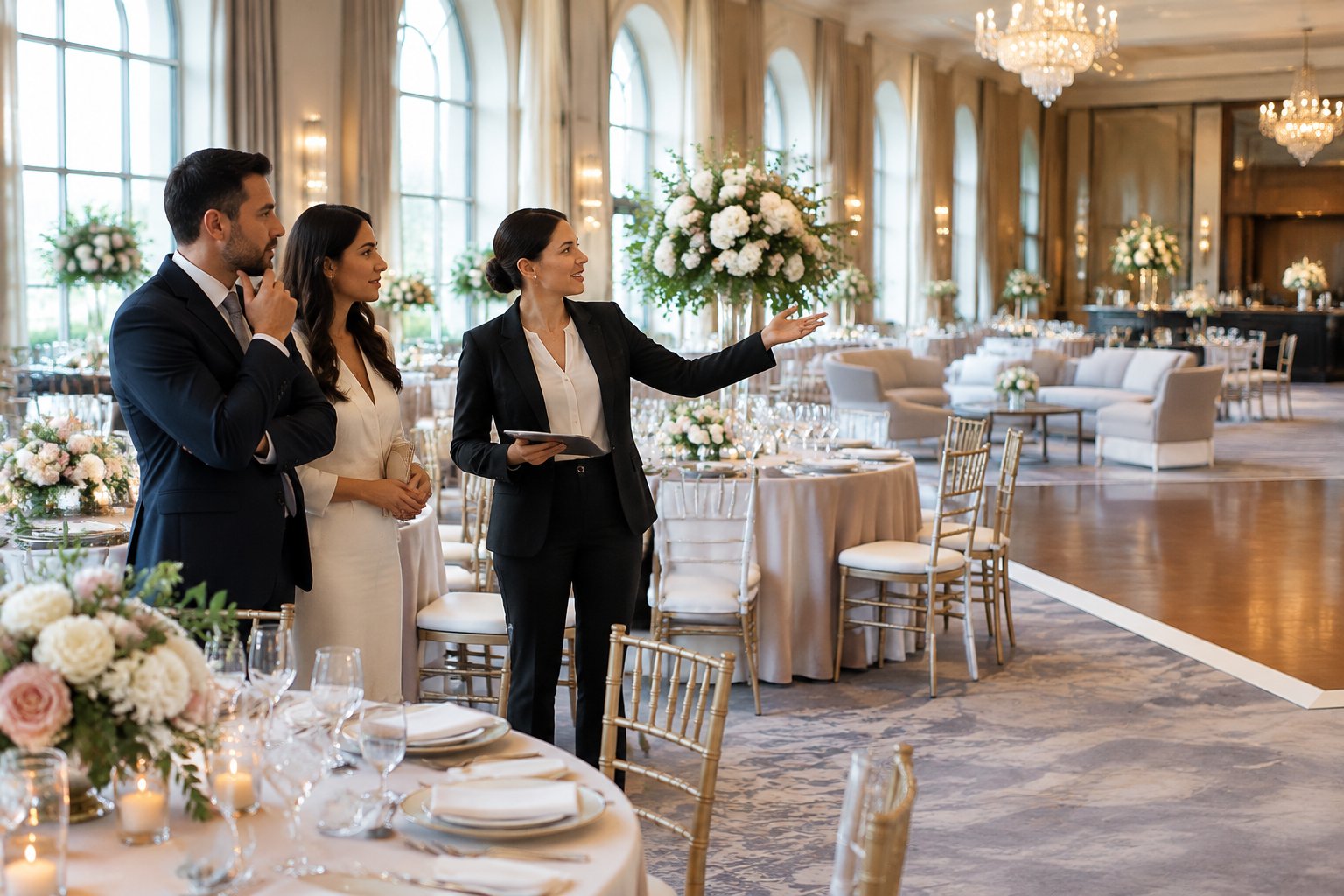
Pay attention to restrooms, temperature control, sound, lighting, elevators, parking, and quiet spaces. Ask your planner to review loading access, power, storage, and timing with the venue team before you sign.
Can the Space Flow Smoothly From Ceremony to Dancing?
Map the route from parking or drop-off to the ceremony. Then follow the path to cocktail hour, dinner, the dance floor, restrooms, lounges, and exits. Look for narrow doors, stairs, long outdoor walks, or areas that force guests to cross service paths.
Ask where the bar, buffet, band, DJ, photo booth, cake, and lounge furniture will go. Each feature needs enough room for guests to gather without blocking circulation.
Confirm the view from every ceremony seat and dining table. Check whether columns, raised platforms, chandeliers, or staging affect sightlines. Ask how staff will manage a room flip and where personal items, gifts, and vendor equipment will be secured.
How to Assess Staffing, Vendor Rules, and Flexibility
Ask who manages the event on your wedding day and how many staff members will be present. Clarify the difference between a sales contact, venue coordinator, catering manager, and day-of lead.
Review vendor rules in writing. Confirm whether you can select your planner, caterer, photographer, floral designer, entertainment, rentals, and production team. Ask about approved lists, outside-vendor fees, insurance, arrival times, setup access, and cleanup duties.
Discuss design flexibility before booking. Confirm rules for candles, hanging installations, draping, amplified music, confetti, specialty furniture, food stations, and floral design. A venue that welcomes your creative plan will reduce last-minute changes.
What Makes a Venue Accessible and Comfortable for Guests?
Check step-free entrances, elevators, accessible restrooms, aisle width, seating options, and paths between event areas. Ask how the venue supports guests who use wheelchairs, walkers, or mobility aids.
Review parking, valet, rideshare access, shuttle stops, and distance from nearby hotels. Confirm lighting along outdoor paths and whether guests can reach every key area without crossing uneven ground.
Evaluate comfort throughout the day. Look for shade, heating, air conditioning, seating, water stations, coat storage, restroom capacity, and a quiet room. Hotels may offer convenient accommodations, while estate venues may require you to arrange more guest services yourself.
Assess Style, Privacy, and Destination Logistics
The right venue should support your design language, protect the level of privacy you want, and make travel manageable for every guest. Evaluate architecture and scenery alongside room blocks, transportation, weather plans, local rules, and vendor access.

Ask how the property feels during the season and time of day you plan to marry. Light, heat, wind, crowds, noise, and nearby events can change the guest experience and your design requirements.
How to Match the Venue’s Architecture to Your Design Vision
Let the property’s permanent features guide your palette and décor budget. Stone walls, historic details, gardens, water views, dramatic ceilings, or large windows can provide a strong foundation for your floral design.
Study empty-room images and request a floor plan with measurements. Note ceiling height, wall color, flooring, windows, built-in lighting, chandeliers, and available rigging points.
Check whether the venue permits the installations your design requires. Ask about hanging flowers, candles, draping, specialty linens, lounge furniture, and temporary structures. A ballroom may suit a polished formal design, while a private estate may support an intimate garden setting with more flexible layouts.
What to Check for Destination Weddings
Start with travel access, flight routes, airport transfers, local transportation, and hotel availability. Ask whether the venue can hold room blocks and coordinate guest arrivals across several days.
Review the weather pattern for your wedding month. Confirm indoor backup rooms, tenting, generators, cooling, heating, rain protection, and a clear decision schedule.
Ask about local marriage requirements, permits, insurance, noise rules, curfews, and vendor travel fees. For an international luxury destination wedding, confirm passports, visas, translations, witnesses, legal ceremony requirements, and import rules for décor or specialty goods. A destination wedding checklist can help you organize these details before you commit.
When Is a Private Estate Better Than a Hotel or Ballroom?
A private estate suits you when privacy, exclusive use, outdoor scenery, and a residential atmosphere lead your priorities. It can provide a strong sense of place and room for a multi-day celebration, especially with a smaller guest list.
A hotel suits you when guest rooms, dining, transportation, accessibility, and consistent service need to operate in one property. Hotel teams may also simplify welcome events, brunches, and room-block management.
A ballroom suits you when you want weather protection, a formal setting, reliable infrastructure, and a large open floor plan. Compare the venue’s décor rules, sound limits, loading access, and minimum spending before choosing based on appearance alone.
Use a Weighted Wedding Venue Comparison Worksheet
A weighted worksheet gives you a fair way to compare venues with different pricing models, layouts, and service levels. Assign more points to the features that affect your wedding most, then verify the top score against the contract and your personal response to the space.
Keep every proposal, floor plan, tour note, and contract question in one file. Update the numbers after each venue answers your follow-up questions, since early estimates may omit required services.
What to Put in a Venue Comparison Spreadsheet
Create one column for each venue and rows for the same decision points:
- Date availability and location
- Guest capacity by event format
- Ceremony, cocktail hour, and reception spaces
- Base rental fee
- Food and beverage minimums
- Bar package and corkage terms
- Rentals, staffing, taxes, and service charges
- Setup, breakdown, overtime, and cleanup fees
- Catering and vendor restrictions
- Weather backup and power plan
- Parking, transportation, hotels, and accessibility
- Getting-ready rooms and storage
- Privacy, noise rules, and event end time
- Design permissions and floral installation rules
- Deposit, payment schedule, cancellation, and insurance
Add columns for estimated total, estimated cost per guest, open questions, proposal date, and contract status. A wedding venue comparison spreadsheet can support cost tracking while you request updated quotes.
How to Score Priorities Instead of Choosing on Emotion Alone
Choose five or six categories and assign each a weight based on your plans. For example, you might give budget 25%, guest experience 25%, layout 20%, style 15%, flexibility 10%, and location 5%.
Score each venue from 1 to 5 using the same standards. Multiply each score by its weight, then add the results. A venue with a lower rental fee may score poorly after required rentals and staffing are added.
Use deal-breakers as pass-or-fail checks outside the score. A venue that cannot host your guest count, date, ceremony format, or accessibility needs should leave the shortlist even if its design score is high.
How to Compare Landmark Venues Fairly
Landmark properties need a separate value check because historic architecture and cultural importance can affect pricing, access, and design rules. Compare the experience they provide with the restrictions and production costs they require.
For example, Vizcaya Museum And Gardens in Miami offers a historic setting with formal gardens and strong architectural character. The New York Public Library in New York offers grand interiors and a city landmark setting.
Use the same questions for both: capacity, event areas, catering, vendor rules, accessibility, timing, privacy, permits, and full cost.
| Comparison point | Vizcaya Museum And Gardens, Miami | New York Public Library, New York |
|---|---|---|
| Core setting | Historic villa and gardens | Grand city library |
| Design character | Mediterranean elegance | Beaux-Arts grandeur |
| Outdoor potential | Strong garden setting | Limited landmark exterior focus |
| Guest logistics | Miami travel and heat planning | Manhattan travel and traffic planning |
| Key questions | Weather, garden rules, permits | Access, production, timing |
Score each venue against your own priorities, then read the written proposal line by line. Keep the venue whose confirmed capacity, full cost, guest plan, and design permissions fit your wedding date and celebration style.