
Cost for Wedding Flowers: Prices and Budget Tips
For most U.S. couples, the cost for wedding flowers is about $2,500 to $5,000 in 2026, with smaller plans starting near $1,500 and large floral installations reaching $7,500 or more. Your wedding flower cost includes bouquets, ceremony flowers, reception designs, delivery, setup, rentals, and design labor.
A practical wedding flower budget starts at 8% to 12% of your total wedding spending. For a $30,000 wedding, that gives you about $2,400 to $3,600 for flowers. Your guest count, venue, location, wedding style, season, and preferred blooms can move the final number higher or lower.
Set your spending limit before you request quotes, then tell a professional florist which floral moments deserve the most attention. You can also compare ideas in this guide to how much should I spend on my wedding flowers before scheduling a florist consultation.
What Couples Typically Spend on Florals
The average cost of wedding flowers falls between $2,500 and $5,000 for many U.S. celebrations, while full-service designs with large installations can reach $7,500 or more. Your wedding venue, guest count, region, and design plan shape the average wedding flower cost.
A smaller wedding flower budget might cover personal flowers and modest reception arrangements. A larger proposal can include a floral arch, aisle décor, lush tablescapes, delivery, setup, rentals, and removal.
Why National Averages Differ So Widely
National figures combine very different wedding plans. One couple might order a bridal bouquet, boutonnieres, and a few centerpieces. Another might hire a professional florist for ceremony flowers, a floral arch, large reception designs, and a flower wall.
A useful planning range looks like this:
- $1,000 to $2,000: Personal flowers, simple centerpieces, and limited ceremony décor
- $2,500 to $5,000: Wedding party flowers, reception centerpieces, ceremony accents, and one focal arrangement
- $5,000 to $8,000: Full personal flowers, upgraded centerpieces, ceremony installations, and added design details
- $8,000 and up: Large arches, hanging flowers, flower walls, premium blooms, and extensive venue styling
Ask each florist what the quoted total includes. Delivery, setup, rentals, taxes, and teardown can sit outside item prices.
How Guest Count and Location Affect the Total
Guest count changes the number of tables, attendants’ bouquets, boutonnieres, and family corsages you need. A 50-person wedding might use five to seven centerpieces, while a 150-person celebration could need 15 or more.
Table shape also affects the order. Round tables often need one centerpiece each. Long banquet tables need several arrangements or a continuous floral design.
Location affects wedding florist cost through labor rates, studio overhead, delivery distance, and venue rules. Major metropolitan areas often carry higher service fees. A venue with gardens, an arbor, or strong architectural details can reduce the amount of ceremony décor you need.
How Much of Your Overall Budget Should Go to Flowers
Set aside about 8% to 10% of your wedding budget for standard floral coverage. Move toward 12% to 15% when flowers play a major role in your design.
For example:
- $25,000 wedding: About $2,000 to $3,000 for flowers
- $40,000 wedding: About $3,200 to $4,800 for flowers
- $60,000 wedding: About $4,800 to $7,200 for flowers
Reserve room for delivery, setup, rentals, taxes, and changes caused by flower availability. If your wedding flower budget is tight, protect the pieces that appear in the most photos and simplify lower-visibility areas.
Price Ranges for Each Floral Element
Wedding flower costs range from about $15 for a boutonnière to $4,000 or more for a large floral arch. Arrangement size, stem count, flower choice, mechanics, labor, and installation all influence the final price.
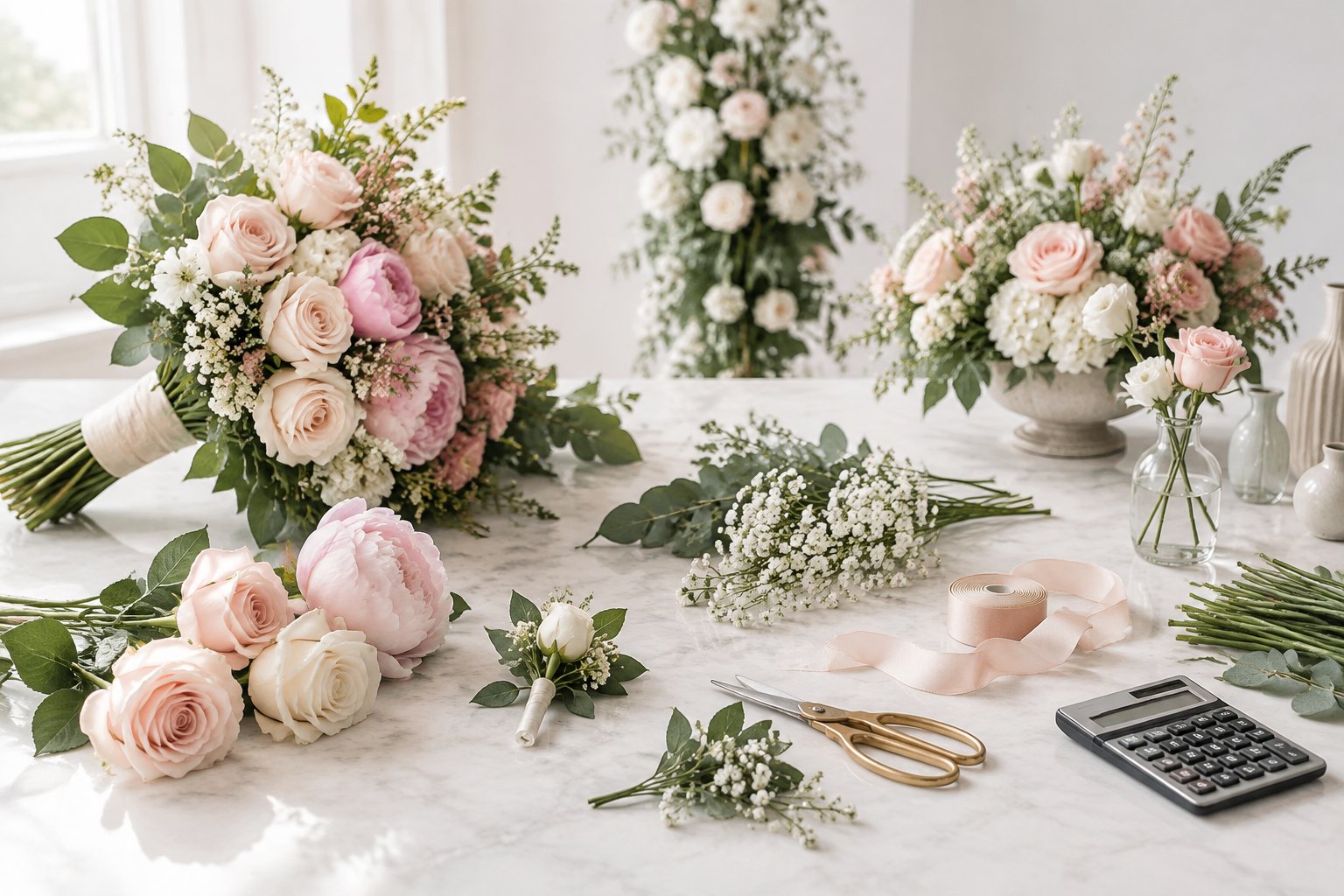
Pricing each group separately helps you see where your wedding flower budget goes. Personal flowers usually create a smaller total, while ceremony installations and reception centerpieces grow with guest count.
How Much Does a Bridal Bouquet Cost?
A bridal bouquet costs about $150 to $350, while a large cascading design can reach $500 or more. Ribbon, flower variety, stem count, shape, and trailing greenery all affect the bridal bouquet cost.
A compact hand-tied wedding bouquet with standard roses, seasonal flowers, and greenery sits near the lower end. Oversized designs with peonies, garden roses, orchids, or complex mechanics require more product and design time.
What Do Wedding Party Flowers Cost?
Common personal flower prices include:
- Bridesmaid bouquet: $75 to $175 each
- Boutonnière: $15 to $35 each
- Corsage: $35 to $75 each
- Flower crown: $75 to $200
- Hair flowers: $25 to $100
- Toss bouquet: $50 to $125
- Flower girl basket and petals: $25 to $75
A large wedding party raises the total quickly. Six bridesmaid bouquets and six boutonnieres can add several hundred dollars before you include parent corsages or flowers for grandparents.
You can keep a consistent look by using the same color palette with a simpler recipe for bridesmaid bouquets. Protect more detail for the bridal bouquet and other high-visibility wedding party flowers.
What Do Ceremony Designs Cost?
Ceremony flowers cost about $500 to $4,000 or more, depending on the number and size of designs.
- Aisle markers: $40 to $150 each
- Aisle arrangements: $100 to $350 each
- Altar arrangements: $250 to $1,000 each
- Ceremony arch: $1,500 to $4,000 or more
- Large floral installation: $2,500 to $10,000 or more
A few aisle markers and two altar arrangements create a focused plan. A full floral arch requires more flowers, support structures, mechanics, labor, and installation time.
Ask whether ceremony flowers can move to the reception after the vows. Repurposing arrangements can stretch the value of a ceremony design.
What Do Reception Arrangements Cost?
Reception centerpieces cost about $75 to $250 per table, while tall or lush designs can reach $300 to $500 or more.
- Bud vase groupings: $75 to $150 per table
- Low centerpieces: $100 to $250 each
- Tall centerpieces: $250 to $500 or more each
- Sweetheart table flowers: $150 to $600
- Head table or long-table florals: $400 to $2,000 or more
Low centerpieces use fewer mechanics and suit many reception layouts. Tall centerpieces need larger vessels, more flowers, and added setup work. Candles and greenery can add texture across the room while reducing the amount of fresh flower product.
For layout ideas, explore these floral wedding table decoration ideas.
Small Floral Details That Add Up
Small floral extras can increase your wedding flower cost by hundreds of dollars when you order several types. Include these items in your first estimate:
- Cake flowers or cake florals
- Welcome sign flowers
- Bar and cocktail-hour arrangements
- Chair or pew flowers
- Flower girl petals
- Hair flowers
- Toss bouquet
- Restroom arrangements
Ask your florist to group extras by priority. Cake flowers and a welcome sign arrangement might create more value for you than flowers in every secondary space. Bridesmaid bouquets can also move into reception vases after the ceremony.
What Makes a Florist Quote Rise or Fall
A wedding florist quote rises with premium blooms, high stem counts, complex floral décor, large installations, and added delivery or setup labor. Seasonal flowers, flexible substitutions, focused designs, and reusable pieces help keep the wedding florist cost controlled.
Your proposal covers more than fresh flowers. It can include flower processing, design planning, mechanics, vessels, transportation, installation, teardown, and rental items.
Flower Variety, Stem Count, and Arrangement Size
Premium flowers cost more per stem, and large arrangements require more stems. A compact bouquet with standard roses uses fewer costly ingredients than an oversized design filled with peonies, orchids, or garden roses.
Arrangement density also changes the quote. A loose design with open space needs fewer flowers than a compact, flower-heavy arrangement. Greenery such as eucalyptus, ferns, ruscus, and Italian ruscus adds shape and volume while reducing the number of focal blooms required.
Complex shapes raise labor costs too. Cascading bouquets, hand-wired details, suspended flowers, and custom mechanics require careful construction.
In-Season, Local, and Imported Blooms
In-season flowers are easier for your florist to source during their natural growing period. Locally grown flowers can also offer reliable availability when your wedding date matches the growing season.
Out-of-season flowers may require greenhouse production, special ordering, or long-distance shipping. Imported flowers carry transportation and supply costs that affect the quote. Holiday demand can also raise prices for popular blooms.
Give your florist a color palette and preferred mood with room for substitutions. A flexible flower list lets the designer select fresh flowers with similar color, texture, and shape.
Design Labor, Delivery, Setup, and Rentals
Florist labor covers ordering, flower processing, hydration, recipe planning, vessel preparation, construction, delivery, placement, and cleanup. Large designs need more hours and more staff.
Your location also affects the quote. Stairs, long delivery distances, narrow setup windows, separate ceremony and reception spaces, and venue restrictions add work.
Ask whether the proposal includes:
- Delivery
- Setup
- Teardown
- Rentals
- Taxes
- Venue access fees
- Moving ceremony flowers
- Cleanup or floral breakdown
Compare complete proposals instead of comparing one arrangement price at a time.
Why Floral Installations Carry Premium Prices
A flower wall, floral arch, hanging design, or large floral installation uses significant product and labor. The florist must build a safe support system, transport the pieces, install them on-site, and remove them after the event.
Potted plants can also raise costs when you need many units, delivery, placement, and pickup. Custom structures and difficult access increase the work further.
Choose one strong installation for the ceremony or reception when you want a dramatic focal point. Use smaller floral arrangements and greenery in nearby spaces so the installation remains the visual anchor.
Flower Choices by Budget and Season
Budget-friendly wedding flowers include carnations, chrysanthemums, baby’s breath, standard roses, daisies, alstroemeria, and greenery, while premium blooms work best as focused accents. Your wedding date and willingness to accept substitutions have a major effect on flower prices.
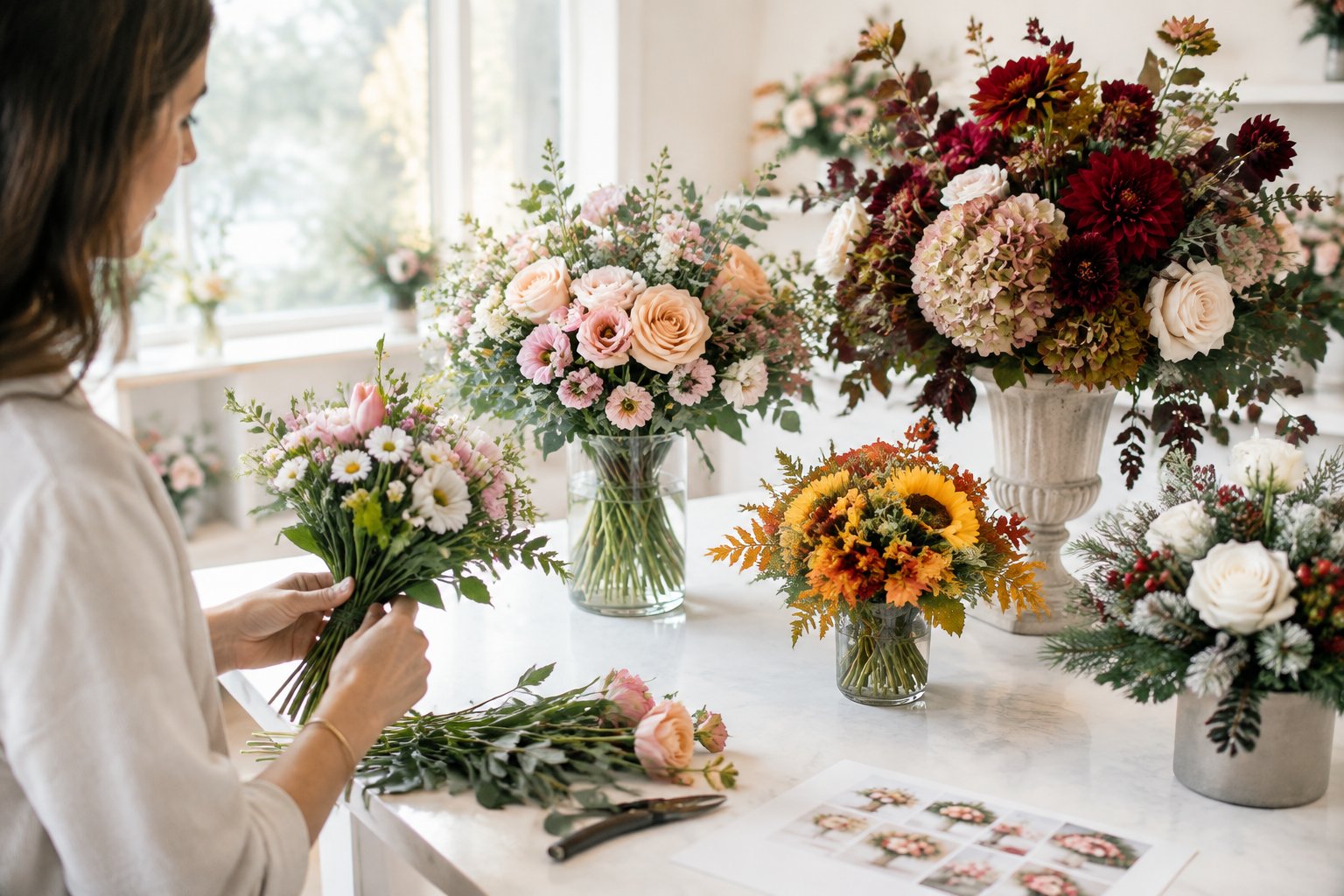
A balanced recipe combines affordable volume flowers with a few focal blooms. Your florist can match the style you want while selecting flowers that fit the season and supply available for your date.
Budget-Friendly Flowers That Still Look Special
These flowers provide strong coverage at accessible prices:
- Carnations and chrysanthemums
- Baby’s breath and daisies
- Alstroemeria and lilies
- Standard roses
- Sunflowers and zinnias
- Lisianthus
- Eucalyptus, ferns, ruscus, and Italian ruscus
Carnations create full, textured arrangements in many colors. Chrysanthemums add round shape and staying power. Baby’s breath creates an airy look, while greenery fills space around focal flowers.
Roses offer a classic base for bouquets and centerpieces. Lisianthus gives arrangements a soft, garden-inspired shape without requiring every stem to be a premium bloom.
Premium Blooms to Use Strategically
Peonies, garden roses, orchids, gardenias, lily of the valley, and some hydrangeas can push your wedding flower budget higher. Ranunculus, dahlias, calla lilies, tulips, anemones, amaryllis, and cherry blossoms also become expensive when they are out of season or needed in large quantities.
Use premium flowers in areas that receive close attention:
- Bridal bouquet
- Ceremony focal arrangement
- Head table
- Cake flowers
- Welcome sign
A few special blooms create emphasis while standard roses, carnations, greenery, and filler flowers provide volume throughout the rest of the order.
Wedding Flowers by Season
Seasonal availability helps you plan wedding flowers by season:
- Spring: Tulips, ranunculus, anemones, sweet peas, cherry blossoms, and forsythia
- Summer: Garden roses, dahlias, zinnias, sunflowers, lisianthus, and hydrangeas
- Fall: Dahlias, chrysanthemums, amaranth, standard roses, calla lilies, and seasonal foliage
- Winter: Amaryllis, orchids, roses, anemones, evergreens, and berries
Availability changes by region and growing conditions, so ask your florist for a date-specific list. If you love a flower that is unavailable, request a similar substitute by color, size, or texture.
How to Get the Most From Your Floral Spend
Prioritize the floral areas guests see most, then reuse ceremony flowers, compare fresh and alternative materials, and arrive at your florist consultation with clear quantities. This approach helps you direct your wedding flower budget toward the designs that shape your photographs and guest experience.
Choose the Highest-Impact Areas to Prioritize
Start with the bridal bouquet, ceremony focal point, reception tables, and head table. These areas receive close attention from guests and appear often in wedding photos.
Create three lists before requesting a proposal:
- Must-have flowers: Pieces you want included
- Preferred upgrades: Designs you would add with extra room
- Easy cuts: Lower-priority details you can remove
A strong ceremony arch might matter more to you than flowers on every chair. Lush floral centerpieces might matter more than cocktail-hour arrangements. Tell your wedding florist where you want detail, size, and premium blooms.
Repurpose Ceremony Flowers at the Reception
Repurpose ceremony flowers whenever the venue schedule and design structure allow it. Altar arrangements can move beside the sweetheart table, aisle markers can decorate the bar, and smaller ceremony flowers can fill welcome or dessert tables.
Confirm the logistics before booking. Moving arrangements requires time, staff, suitable containers, and access between spaces. Ask whether the florist includes the transfer in the quote.
Your ceremony arch might remain in place for photographs or move to the reception entrance. A plan that uses the same flowers twice gives one design more value.
Compare Fresh, Silk, and Potted Alternatives
Fresh flowers provide natural scent, texture, and seasonal character. Silk flowers offer a reusable option for selected designs, including some arches, bouquets, and centerpieces.
Potted plants bring living texture and can work well around entrances or lounge areas. Compare the full cost of each option, including delivery, setup, rental, pickup, containers, and styling.
A mixed plan can use fresh flowers for personal flowers and focal arrangements, with silk flowers or potted plants for selected décor.
If you are considering artificial arrangements, review how much should I spend on fake wedding flowers before making a purchase plan.
Prepare for a Productive Florist Consultation
Bring your wedding date, venue details, guest count, table layout, inspiration images, preferred colors, and a firm spending range. List every personal flower, ceremony design, reception arrangement, and floral extra you want priced.
Ask these questions:
- What does the proposal include?
- Which fees are separate?
- Which flowers are in season for my date?
- What substitutions protect the budget?
- Can ceremony flowers move to the reception?
- Who handles delivery, setup, and teardown?
- What is the payment schedule?
- When can quantities change?
Share your wedding flower budget early. A professional florist can adjust stem counts, flower varieties, arrangement sizes, and installation coverage before the proposal becomes difficult to change.