
Cost for Wedding Photographer: 2026 Pricing Guide
Your wedding photography budget needs room for more than the hours your photographer spends taking pictures. Editing, planning, equipment, travel, albums, and the photographer’s experience all shape the final quote. In the United States, you can expect to spend about $2,500 to $4,500 for a professional wedding photographer in 2026, with many full-day packages landing near $3,000 to $4,000.

Short coverage can cost less than $2,000, while luxury or destination services can reach $10,000 or much more. Your guest count, wedding date, location, coverage needs, and package details determine where your quote falls.
Start by setting your coverage priorities, then request itemized proposals from photographers who match your style. You can also explore how much a wedding photographer costs for an hour when you are planning a courthouse ceremony, elopement, or shorter celebration.
2026 Price Benchmarks by Coverage Level
The average wedding photographer cost for a full wedding day sits near $3,000 to $4,000 in the United States, while 2026 wedding photography prices range from about $1,500 for basic coverage to $8,000 or more for premium services. Your quote reflects the photographer’s time, skill, team, editing process, and included products.
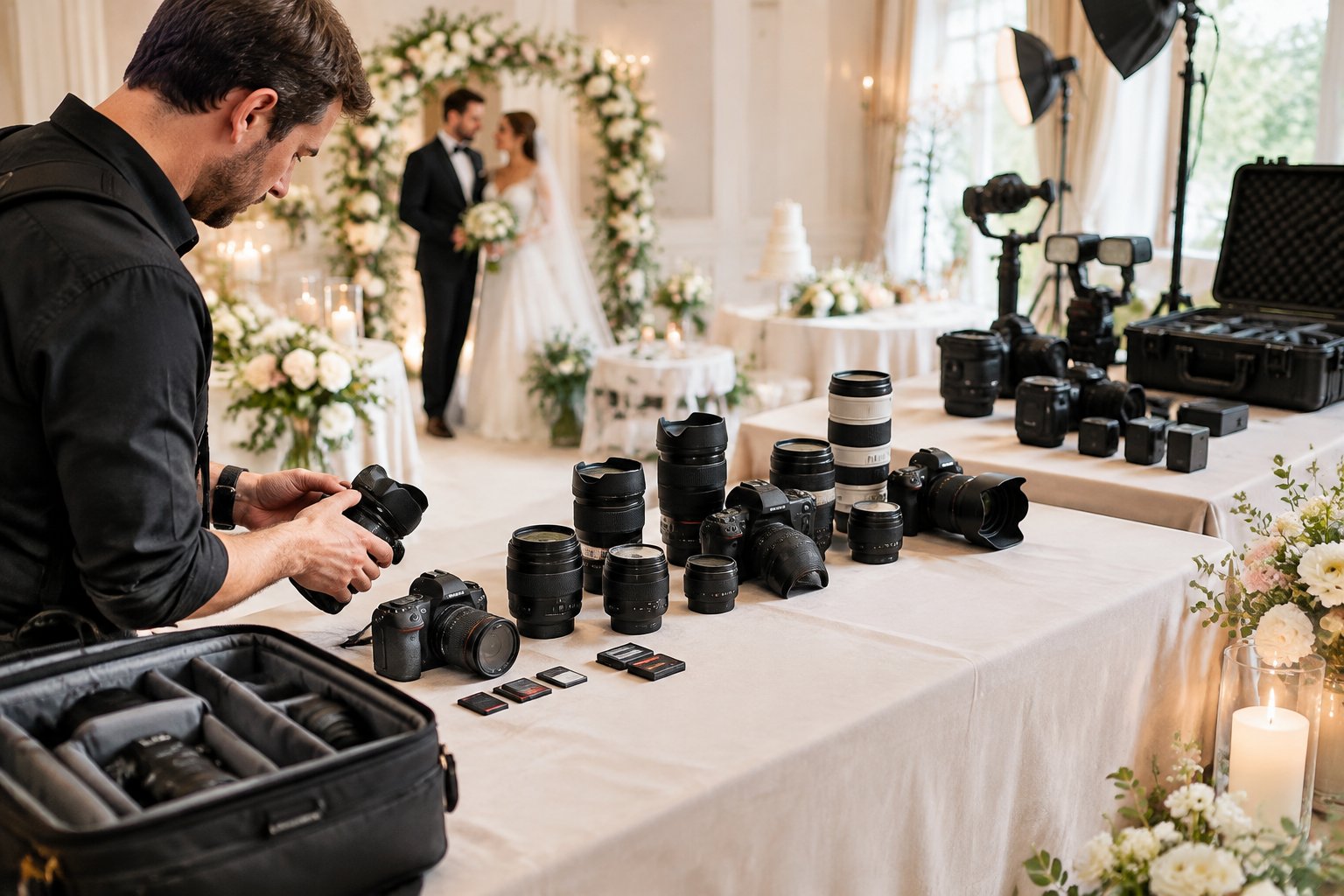
What Is the Average Wedding Photographer Cost?
Recent national benchmarks place the average professional wedding photographer near $3,000. A practical 2026 planning range looks like this:
| Service level | Common price range | Coverage profile |
|---|---|---|
| Entry-level | $1,500–$2,500 | Shorter coverage, one photographer, digital files |
| Mid-range | $2,500–$4,500 | Six to eight hours, edited gallery, stronger experience |
| Premium | $5,000–$8,000+ | Extended coverage, multiple photographers, albums or custom service |
| Luxury | $10,000–$50,000+ | Highly sought-after talent, editorial work, extensive personalization |
A low quote can suit a small wedding with a simple schedule. A higher quote may include more planning, backup equipment, advanced lighting, faster delivery, a second photographer, or fine-art products.
What Do Short, Full-Day, and Extended Bookings Typically Cost?
Short bookings of two to four hours often fall between $800 and $2,000. They work well for elopements, courthouse ceremonies, small receptions, or couples who need ceremony and portraits without getting-ready coverage.
Six to eight hours often costs $2,500 to $4,500. This range covers much of a standard wedding day, including preparation, the ceremony, family portraits, couple portraits, and part of the reception.
Ten to twelve hours can reach $4,000 to $8,000 or more. Extended coverage gives you time for both partners’ preparation, a large family group, a long reception, cultural traditions, and late-night celebrations.
Extra hours frequently cost $250 to $600 per hour, depending on the photographer and team size. For a closer look at hourly pricing, review how much a wedding photographer costs for an hour.
How Do Wedding Photography Rates Differ by Market?
Wedding photography rates rise in major metropolitan areas with higher living costs and stronger demand. Regional benchmarks place average spending near $3,700 in the Northeast, $3,800 in the Mid-Atlantic, $2,900 in the Midwest and West, $2,700 in the South and Southeast, and $2,600 in the Southwest.
A photographer’s reputation also affects wedding photography pricing. An experienced professional wedding photographer with a consistent portfolio, strong reviews, and refined client process can charge more than a newer photographer building a portfolio.
Compare photographers who offer similar coverage and deliverables within your wedding market.
What Changes Your Final Quote?
Your final quote changes most with location, travel, date, guest count, coverage length, and the number of photographers working your wedding. A package that looks affordable at first can grow when you add travel, overtime, albums, or a second shooter.
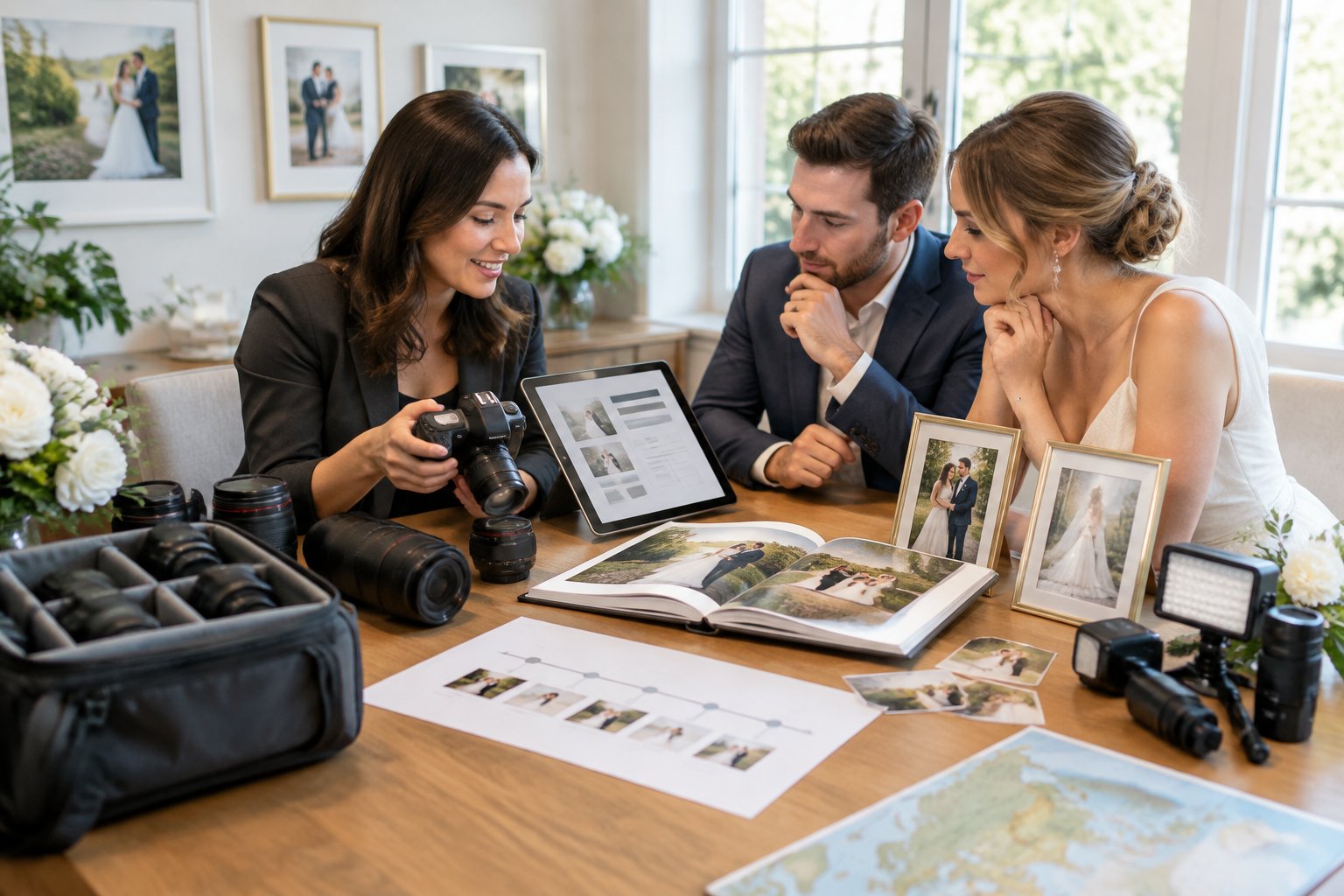
Ask each photographer to show the base price, included services, and possible extra charges on one proposal. That format lets you compare wedding photographer costs without guessing what each package name includes.
How Location and Travel Fees Affect Pricing
Your wedding city affects the photographer’s operating costs and demand. A photographer based in New York City, Los Angeles, or another high-cost market often charges more than a photographer serving a smaller town.
Travel fees can cover mileage, flights, lodging, parking, meals, and travel time. Some photographers include nearby locations within their base price, while others add a mileage rate after a set radius.
Ask whether the fee applies to engagement sessions, rehearsal events, or multiple venues.
You might save money by hiring a photographer near your venue. An out-of-town photographer can also fit your budget if their base rate is lower and travel remains modest. Request a complete travel estimate before signing.
Why Peak Wedding Season and Guest Count Matter
Saturday weddings in spring and fall attract high demand, so peak wedding season can raise rates. A Friday, Sunday, weekday, or off-season date may offer more availability and a lower package price.
Guest count affects the amount of work and staffing your wedding needs. A 40-person event may be easy for one photographer to cover. A 200-person wedding with separate preparation spaces, a large family list, and several reception areas can call for more coverage or a second photographer.
Your timeline also affects cost. A ceremony and reception at one venue require less travel and transition time than events held across several locations.
When a Destination Wedding Photographer Costs More
A destination wedding photographer costs more when the job requires flights, lodging, rental transportation, extra travel days, or an assistant. Some photographers charge a set destination rate, while others itemize each expense.
Ask whether travel days count as working days, who books accommodations, and whether meals or baggage fees are included. Your contract should state the travel plan and the amount you owe if airfare or lodging prices change.
Destination celebrations may also need additional coverage for welcome parties, rehearsal dinners, or farewell brunches. Add those events to the first quote so your budget reflects the complete photography plan.
What Should a Photography Package Include?
A complete wedding photography package should state coverage hours, photographer count, edited image delivery, gallery access, turnaround time, usage rights, and every product included. Clear details make wedding photography packages easier to compare than names such as Silver, Gold, or Platinum.
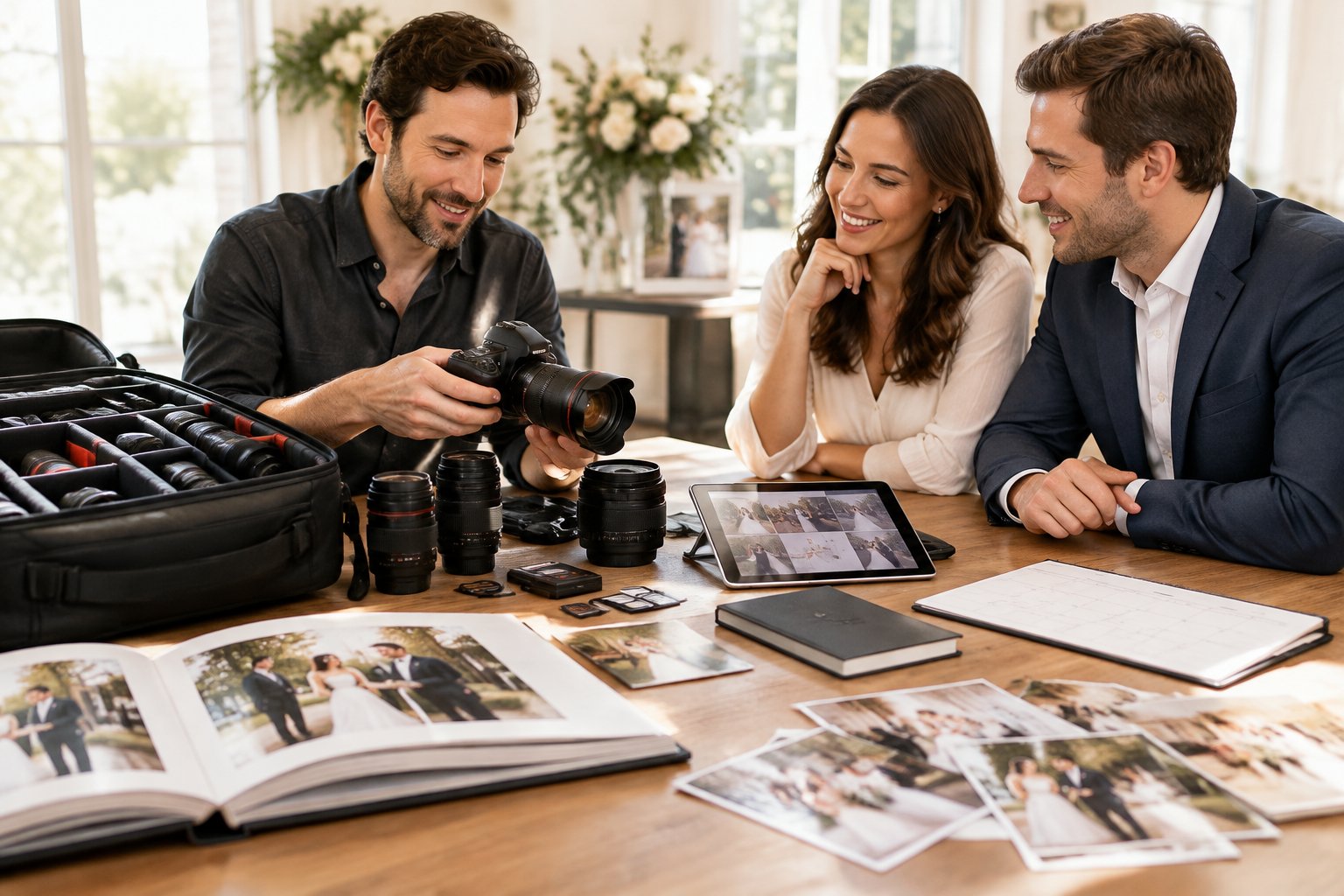
Read the deliverables beside the price. Two packages with the same number of hours can provide very different value if one includes an album, a second photographer, or a larger edited gallery.
Coverage Hours and Professional Editing
Coverage hours describe how long the photographer works at your wedding. Confirm the start time, end time, overtime rate, meal break policy, and whether travel between venues counts toward coverage.
Professional editing includes culling, color correction, exposure adjustments, cropping, retouching, export, and gallery preparation. Ask how many edited images you will receive and when they will arrive.
Full-day packages often deliver several hundred edited photographs, though the number depends on the photographer’s process and your wedding schedule.
Confirm whether sneak peeks, black-and-white images, high-resolution files, and print permissions are included. These details affect the practical value of your package.
Online Gallery Delivery and the Full Wedding Gallery
Online gallery delivery gives you a place to view, download, share, and sometimes order prints. Ask how long the gallery remains active, whether downloads are high resolution, and whether you receive a backup of the files.
A full wedding gallery should include the complete edited story of your day. Ask whether the gallery includes preparation, ceremony moments, family portraits, reception details, dancing, and guest candids.
Request a delivery date or delivery window in writing. Some photographers deliver a preview within days and the full gallery within four to twelve weeks. Your contract should identify the expected timeline.
Albums, Prints, and Raw Files
A wedding album may be included in a premium package or offered as an upgrade. Confirm its size, page count, cover choices, paper type, design revisions, and delivery schedule.
Parent albums and individual prints may carry separate prices. A print package can include a set of fine-art prints, enlargements, or a keepsake box. Ask whether you receive a personal print release that lets you order products from another lab.
Raw files are unedited camera files. Many photographers do not include them in standard wedding photography packages, so ask about the policy before booking. Edited high-resolution files usually provide the finished look your photographer designed for you.
Which Add-Ons Are Worth the Extra Spend?
The most useful add-ons are the ones that solve a coverage gap, protect important moments, or create a lasting physical product. A second shooter helps with large or split-location weddings, while an engagement session gives you practice with your photographer and images for personal use.

Review add-ons against your timeline and guest list. You can skip products that do not fit your habits and direct that money toward additional coverage or a stronger photographer.
Do You Need a Second Shooter?
A second shooter is valuable when both partners get ready in different places, your guest list is large, or your venue has several active spaces. Two photographers can cover parallel moments, capture different angles, and reduce the chance of missing reactions during a busy timeline.
A second shooter often adds $600 to $1,200 for a full day. Some photographers include one in their main package, while others offer a limited number of hours.
One photographer may be enough for a small wedding at one venue with a simple schedule. Ask who the second shooter will be, how long they will work, and whether the lead photographer edits all delivered images.
Is an Engagement Session Worth Adding?
An engagement session, engagement shoot, or pre-wedding shoot often costs $500 to $1,500 when purchased separately. It gives you engagement photos for announcements, invitations, a wedding website, or gifts.
The session also lets you learn how your photographer gives direction and handles natural movement. You can test locations, outfits, and lighting before the wedding day.
An engagement session is a strong choice when you feel nervous in front of the camera or want more casual images. Check whether travel, extra locations, wardrobe changes, and image delivery are included.
When to Book Rehearsal Dinner Photography or a Photo Booth
Rehearsal dinner photography makes sense when the evening includes important family gatherings, cultural traditions, speeches, or guests who will leave before the wedding. Three hours of coverage often costs $700 to $1,500, depending on the photographer and market.
A photo booth works well when you want guest interaction during the reception. Ask whether an attendant, props, setup, digital copies, prints, and travel are included.
Compare the booth’s guest experience with the cost of additional wedding-day coverage. Book either add-on early if it requires separate staff or equipment. Include its start time, end time, location, and deliverables in your agreement.
How to Compare Photographers and Avoid Surprise Charges
Compare photographers by matching coverage, deliverables, experience, and contract terms before comparing wedding photography prices. A lower quote has limited value if it excludes the hours, files, staffing, or products you need.
How to Evaluate a Portfolio Beyond the Highlight Reel
Ask to view at least one or two complete galleries from weddings similar to yours. A highlight reel shows a photographer’s strongest selected images, while a full gallery reveals consistency across preparation, ceremony lighting, family groups, portraits, reception action, and difficult indoor scenes.
Look for natural expressions, clear skin tones, sharp focus, balanced flash, and thoughtful compositions. Check whether the photographer captures guests as well as the couple. Review galleries from venues with lighting and layouts close to yours.
Read recent reviews for comments about communication, timeline help, delivery speed, and professionalism. Your photographer will spend many hours with you, so the working relationship belongs in your decision.
What to Confirm in a Wedding Photography Contract
Your wedding photography contract should list:
- Total price, deposit, payment dates, taxes, and late-payment terms
- Coverage start and end times
- Overtime rate and approval process
- Lead photographer and second shooter details
- Editing style, image count, file resolution, and gallery access
- Delivery timeline for previews, full gallery, albums, and prints
- Travel fees, meals, lodging, parking, and venue changes
- Cancellation, postponement, illness, equipment failure, and replacement plans
- Image usage rights, privacy preferences, and raw-file policy
Ask who owns the copyright and what personal printing rights you receive. Confirm whether the photographer carries backup equipment and stores copies of your files in more than one place.
How to Save Without Sacrificing Essential Coverage
Save money by shortening coverage during low-priority parts of the day. You might book preparation through dinner instead of paying for late-night dancing, or choose one venue to reduce travel time.
A weekday, Sunday, or off-season date can lower demand-based pricing. You can also select digital delivery and purchase an album later if your photographer allows post-wedding orders.
Protect ceremony coverage, family portraits, couple portraits, and the moments that fit your priorities. Ask for a smaller package with the same editing quality and professional backup plan, then price extra hours separately.
A clear comparison of matching proposals will show where each dollar goes.