
Cost for Wedding Videographer: Packages and Pricing
Your wedding videographer cost will usually fall between $2,000 and $6,500 in the United States, with many couples spending around $2,300 to $4,000 for a polished highlight film and ceremony coverage. A basic package costs less, while longer coverage, extra camera operators, cinematic editing, and travel raise the price.
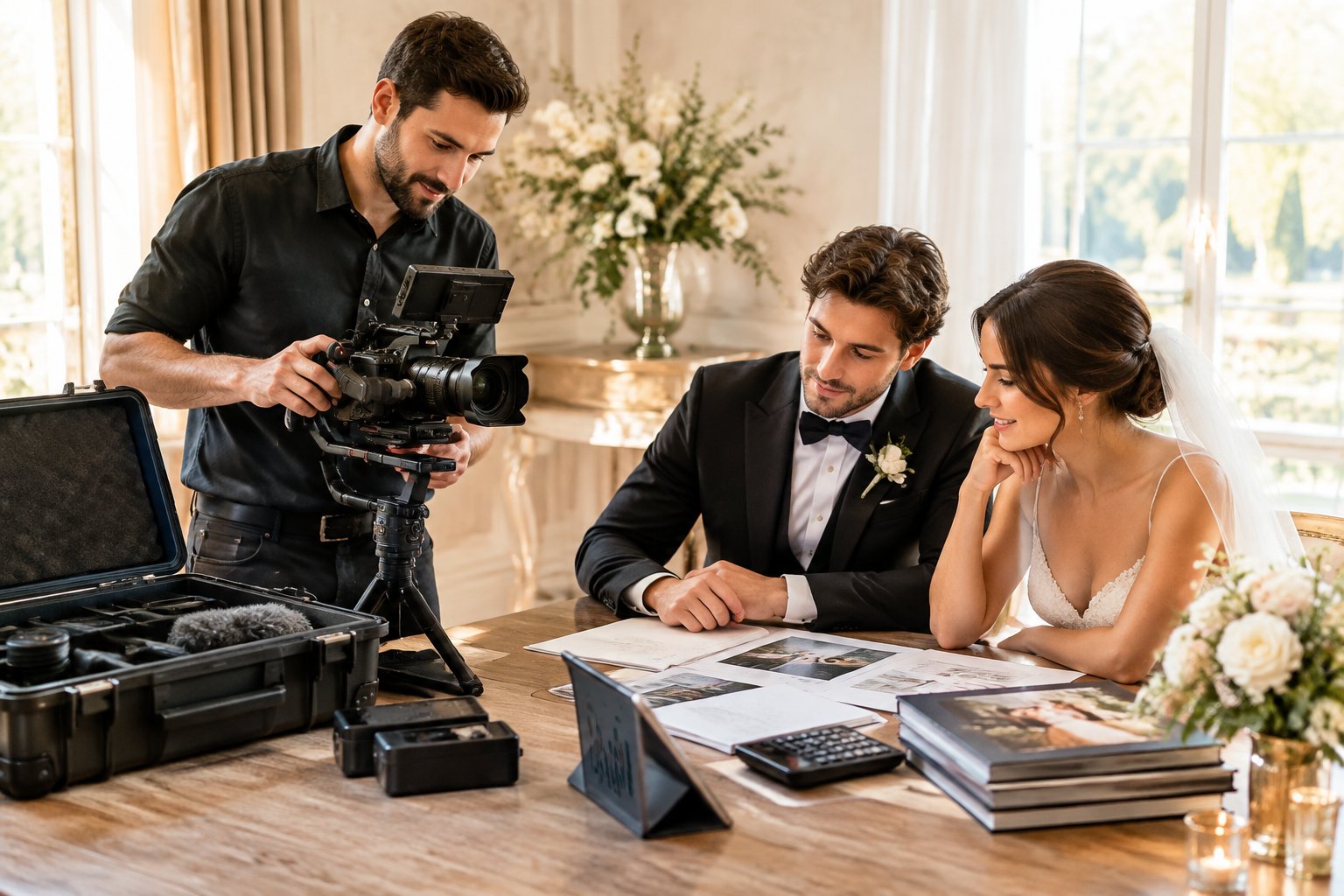
Your wedding video preserves voices, movement, and moments that photographs cannot fully capture. To set a practical budget, decide which parts of the day you want filmed, how long you want the final wedding film to be, and whether you want full ceremony and speech edits.
A clear package quote makes it easier to protect your wedding memories without letting videography crowd out other priorities. Start by comparing coverage and deliverables from local wedding videographers before you reserve your date.
What Should You Budget for Wedding Videography?
Plan on $2,000 to $6,500 for wedding videography, with about $2,300 to $4,000 covering many mid-range wedding video needs. Your wedding videographer cost reflects filming time, crew size, editing, location, and the final films included in the agreement.
Why National Averages Differ
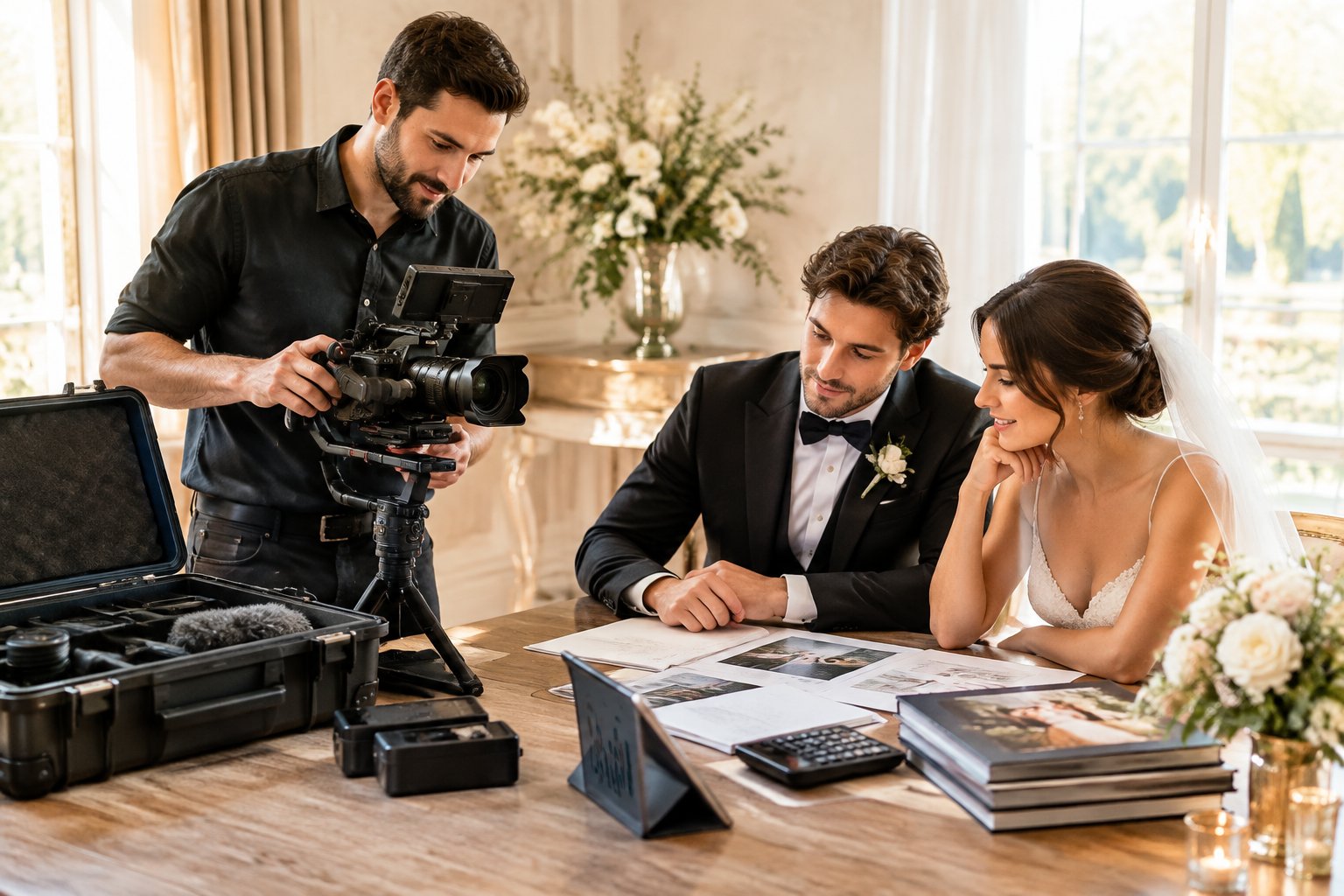
National figures provide a starting point, not a guaranteed quote. The average wedding videographer cost shifts with local demand, business experience, venue access, season, and the amount of work completed after the wedding.
A videographer in a major metropolitan area may charge more because of operating costs and demand. A rural provider may quote less while adding travel fees for a distant venue. The Knot Real Weddings Study and the Zola Wedding Cost Index also measure different groups and package types, so their figures will not match perfectly.
Ask whether a published price includes sales tax, travel, overtime, audio recording, and final delivery. Those details make a major difference when you compare wedding videography cost.
Typical Spending by Package Level
| Package level | Common price range | Typical deliverables |
|---|---|---|
| Basic | $1,000 to $2,500 | Short coverage, one shooter, highlight edit |
| Standard | $2,500 to $5,000 | Several hours, ceremony edit, speeches, highlight film |
| Premium | $5,000 to $10,000+ | Full-day coverage, multiple cameras, cinematic film, extended edits |
A basic wedding videography package suits couples who want key moments documented with a shorter wedding film. Standard wedding videography pricing often includes enough coverage for preparation, the ceremony, portraits, reception entrances, speeches, and major dances.
Premium wedding videographer costs cover more production time and a larger post-production project. Request a written list of filming hours, film length, audio sources, revision terms, and delivery format.
How Videography Fits Into a Wedding Budget
Treat wedding videography as a dedicated line in your wedding budget. Many couples place it alongside photography, venue, catering, attire, and entertainment, then adjust coverage to fit the total they can spend.
A useful planning method starts with your priority moments. If hearing your vows and family speeches matters most, reserve enough hours to capture them with clean audio. If you want preparation footage and a full reception story, budget for longer coverage.
You can reduce the wedding video cost by shortening coverage, choosing one final film, or booking outside peak dates. Keep reliable audio and the moments you will want to revisit when making those changes.
What Do Wedding Video Packages Include?
A wedding videography package should state the coverage hours, crew, edited films, audio plan, and delivery method in writing. Package names vary, so the contents matter more than labels such as “basic,” “classic,” or “cinematic.”
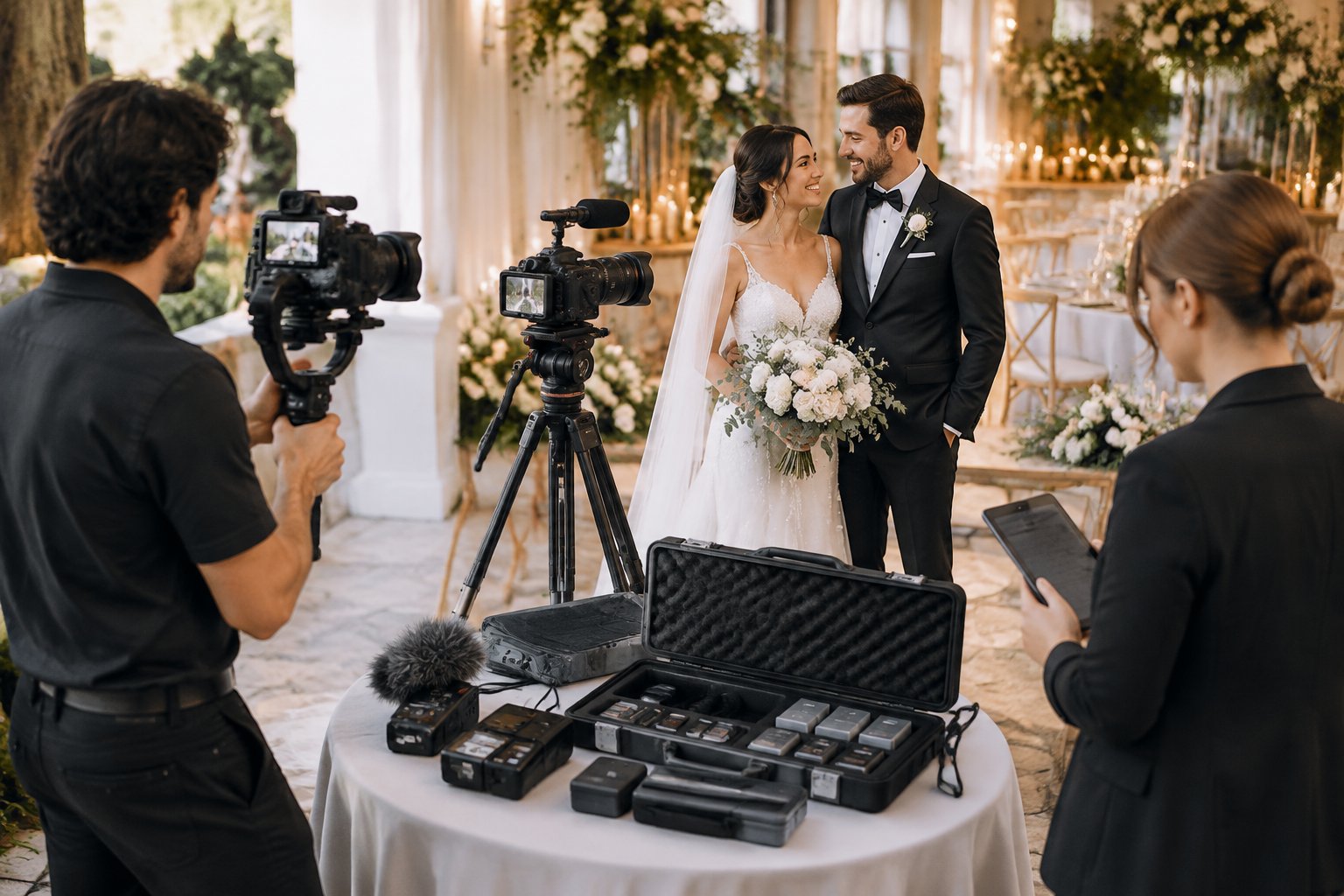
The right package matches the story you want to watch later. Check the number of shooters, the final film length, ceremony and speech coverage, revision policy, and expected delivery date before signing.
Basic Coverage and Highlight Reels
A basic wedding video package often includes a single videographer for a limited number of hours. The final deliverable is commonly a highlight reel that combines vows, reactions, portraits, dancing, and short audio clips.
Ask how the videographer records sound. A camera microphone alone may not capture vows or speeches clearly across a large room. A professional wedding video package should explain whether the team uses microphones, a recorder, or audio from the venue.
A highlight film gives you a concise way to relive the day. Confirm its expected length, music licensing approach, delivery format, and number of revision rounds.
Standard Packages With Ceremony and Speech Edits
A standard package adds more coverage and separate edits. You may receive a highlight film, a ceremony edit, speech edits, and digital delivery through a private viewing link.
Full ceremony coverage preserves the complete vows, readings, music, and reactions. Speech edits keep the words from your family and wedding party available in a format that is easy to watch.
Check whether preparation begins at both locations or only at one. Travel between venues can reduce filming time if the schedule is tight.
Premium Cinematic Films and Full-Day Coverage
A premium package supports a longer story and a more involved production process. It may include multiple cameras, a second shooter, carefully recorded audio, professional color grading, sound design, and a cinematic wedding film.
A cinematic film uses intentional framing, natural audio, music, pacing, and detailed editing to shape the day into a cohesive story. Ask for a sample with a similar package scope, since a short teaser does not show how full ceremony or speech edits are handled.
Full-day coverage may begin with preparations and continue through the last major reception event. Confirm the exact start and end times, overtime rate, meal requirements, and delivery schedule.
How a Wedding Content Creator Differs From a Videographer
A wedding content creator focuses on quick, social-ready clips, often captured on a phone or lightweight camera. Delivery may happen within hours or days for use on Instagram, TikTok, or private sharing.
A videographer builds a finished wedding film through planned coverage, dedicated audio, professional cameras, and longer post-production. Many couples choose both services when they want immediate clips and a polished film for long-term viewing.
Read the contract closely so you know who owns the footage, what resolution you receive, and which edits are included.
What Drives the Final Quote?
Coverage time, crew size, post-production, and location create most of the difference between wedding videographer quotes. Two providers can film the same date for different prices because their production methods and final deliverables differ.
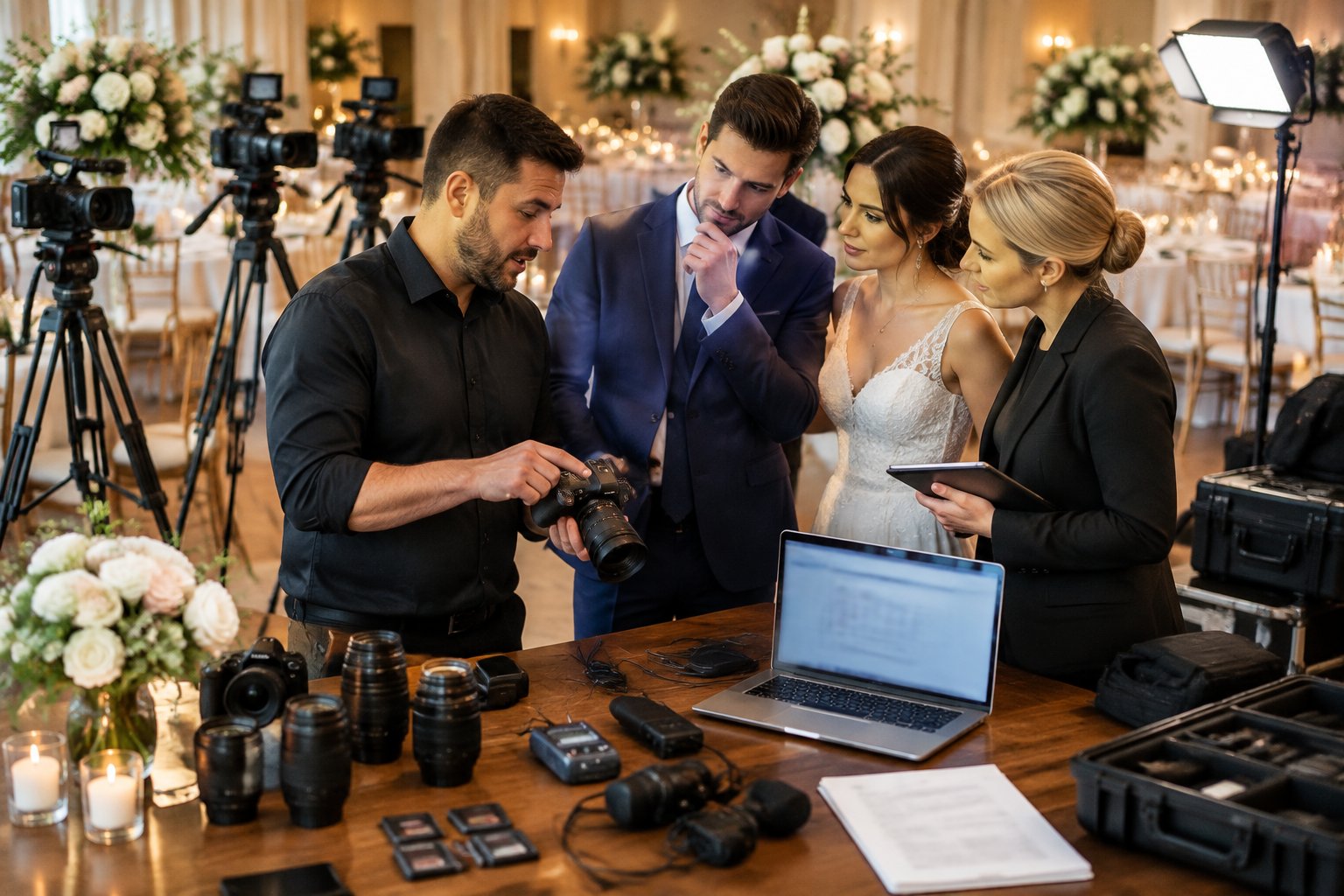
A lower quote may include fewer hours or a shorter edit. A higher quote may reflect additional cameras, stronger audio capture, more editing, or a longer film. Compare the work included before comparing the total.
Coverage Hours and Your Wedding Timeline
The wedding videographer cost per hour matters most when your timeline includes long gaps, travel, or several locations. A short event with one venue needs fewer booked hours than a day that begins with separate preparation sites.
Build coverage around key transitions. Preparation, the first look, ceremony, family portraits, reception entrances, speeches, first dance, and open dancing each require time to film well.
Share your wedding timeline before requesting a quote. The videographer can identify travel time, overlapping events, setup needs, and the coverage window that fits your plans.
Solo Coverage vs. a Second Shooter
A solo videographer can document a smaller wedding with a focused approach. A second shooter adds another viewpoint and helps cover events happening at the same time.
You might choose a second shooter when you want both partners’ preparations, wide and close ceremony angles, or reception coverage across a large venue. A second camera operator also helps create safer coverage when guests or movement block one camera.
Ask whether the second shooter edits footage, operates a camera, records audio, or assists with equipment. Those responsibilities affect the value of the added fee.
Editing, Audio, and Production Quality
Post-production may take much longer than the filming itself. Your quote can include media backup, story selection, music licensing, audio mixing, sound design, professional color grading, titles, and multiple export versions.
Clean audio requires planning during the ceremony and reception. Ask which voices receive microphones and how ambient sound, music, and readings are balanced.
Color grading gives footage a consistent look across changing light conditions. If a quote includes a cinematic wedding film, ask how many hours of editing and how many revision rounds are included.
Location, Date, and Travel Fees
Wedding videographer cost by region reflects local demand, business expenses, venue rules, and travel distance. A destination or remote venue may require mileage, lodging, parking, tolls, or a travel day.
Saturday dates during peak wedding season often have fewer available providers. Friday, Sunday, and off-season dates can create more scheduling options and sometimes lower pricing.
Send the venue address, date, start time, parking details, and event locations with your inquiry. A complete brief helps the videographer give you a quote that includes likely travel fees.
Which Add-Ons Are Worth Paying For?
Prioritize add-ons that preserve important words or solve a clear viewing need, then choose extras that match how you plan to watch and share your wedding film. Audio upgrades, ceremony edits, and useful delivery options often provide more lasting value than features chosen only because they look impressive.
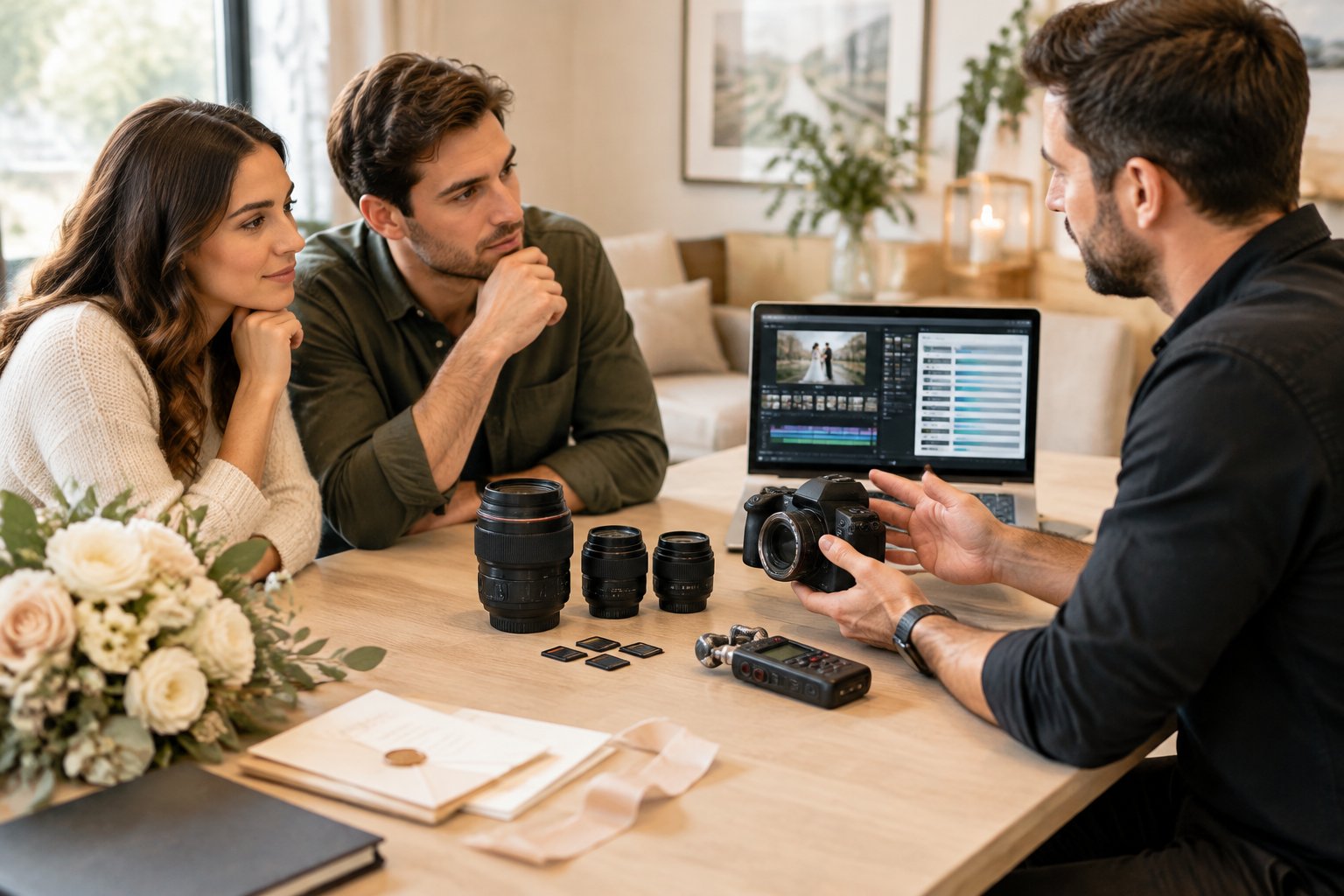
Review each add-on beside your wedding timeline and budget. A feature earns its place when it adds coverage, improves sound, protects access, or gives you a format you will use.
When Drone Footage Adds Real Value
Drone footage works best when the setting contributes to your story. A venue with sweeping grounds, coastline, mountains, vineyards, or distinctive architecture benefits from a brief aerial opening or transition.
Weather, local rules, venue permission, and safe operating space affect whether a drone can fly. Ask whether the videographer holds required credentials and carries insurance where applicable.
Use drone footage as a small part of the wedding film. Aerial shots rarely replace coverage of vows, speeches, or family moments.
Is a Same-Day Edit Right for Your Reception?
A same-day edit delivers a short film during the reception, often using footage captured earlier that day. It creates a shared viewing moment for guests and adds a high labor cost because filming and editing happen on the same date.
Choose this add-on when your reception schedule allows a screening and you value an immediate experience. Confirm the screening equipment, film length, music plan, backup process, and the time the editor needs away from active coverage.
The same-day edit does not replace your completed wedding film. It is an additional highlight created under a compressed schedule.
Raw Footage, Social Clips, and Digital Delivery
Raw footage gives you unedited camera files, while social clips provide short finished videos sized for online sharing. Ask whether raw files include audio tracks, how they are organized, and how long the download remains available.
Digital delivery through a private gallery or Vimeo link makes your wedding film easy to watch and share. Check the resolution, download rights, archival period, and access instructions before approving the wedding video package.
Social clips suit couples who want quick vertical posts. A polished wedding film serves longer viewing, so choose delivery formats that support both uses when your budget allows.
How to Compare Videographer Quotes and Book Confidently
Compare wedding videography packages by deliverables, coverage, and contract terms before you compare the headline price. A quote with fewer hours or one short edit may look cheaper while offering a different service.
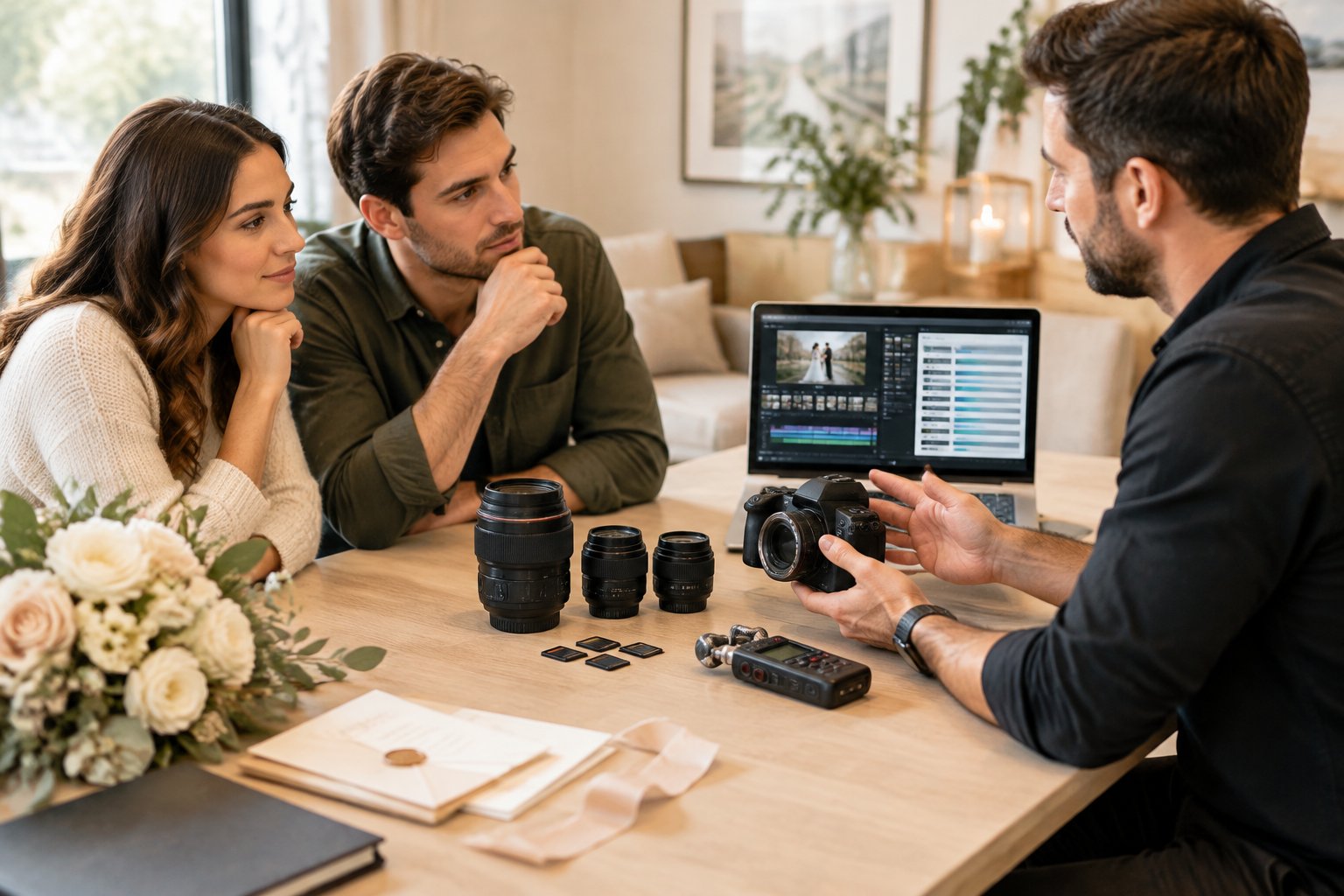
Your booking decision should cover creative style and practical details. Watch complete sample films, ask direct questions, and confirm every promise in the agreement.
Compare Deliverables Before Comparing Prices
Create a simple comparison sheet with these fields:
- Coverage start and end times
- Number of videographers
- Camera and audio approach
- Highlight film length
- Ceremony and speech edits
- Raw footage or social clips
- Delivery method and resolution
- Revision rounds
- Travel, overtime, tax, and deposit terms
Review samples that match the package you are considering. A short trailer cannot show how a provider handles a full ceremony, long speeches, changing light, or difficult audio.
Your wedding planning notes should also include the videographer’s meal break, venue restrictions, arrival time, insurance requirements, and cancellation terms. Bridebook and similar planning tools can help you keep vendor details organized alongside your timeline.
Questions to Ask About Revisions and Turnaround
Ask when you will receive a preview and final film. Request the expected delivery window in writing, along with the number of revision rounds and the fee for additional changes.
Clarify who selects music, whether licensed tracks are included, and how audio from private speeches is handled. Ask how your files are stored and how long your online gallery remains available.
A clear contract should name every final product, its approximate length, delivery format, payment schedule, cancellation policy, and overtime rate.
Bundling a Wedding Photographer and Videographer
Hiring a wedding photographer and videographer from one team can simplify communication and scheduling. Ask how the two professionals coordinate positions during the ceremony, portraits, entrances, and speeches.
A bundle may offer a combined price or shared travel arrangement. Compare the bundled deliverables with separate quotes so the savings are clear.
Review both portfolios before booking. Strong photography does not automatically show the quality of the team’s wedding film, audio, or editing.
Ways to Reduce Costs Without Losing Key Coverage
Protect the ceremony, vows, speeches, and major reception events first. Reduce the price by shortening preparation coverage, choosing one shooter for a smaller venue, or removing extras you will rarely use.
Select a weekday or off-season date when your schedule allows. Use one carefully planned venue to limit travel and setup time.
Ask for a custom wedding videography package with the hours and edits you value. Keep clear audio, stable footage, and secure digital delivery in the written agreement.