
Cost of Flowers for a Wedding: 2026 Price Guide
For most U.S. couples, the cost of flowers for a wedding falls between $2,500 and $5,000 in 2026, with smaller plans starting near $1,500 and large floral installations reaching $7,500 or more. Your total includes bouquets, ceremony designs, reception centerpieces, delivery, setup, rentals, and design labor.
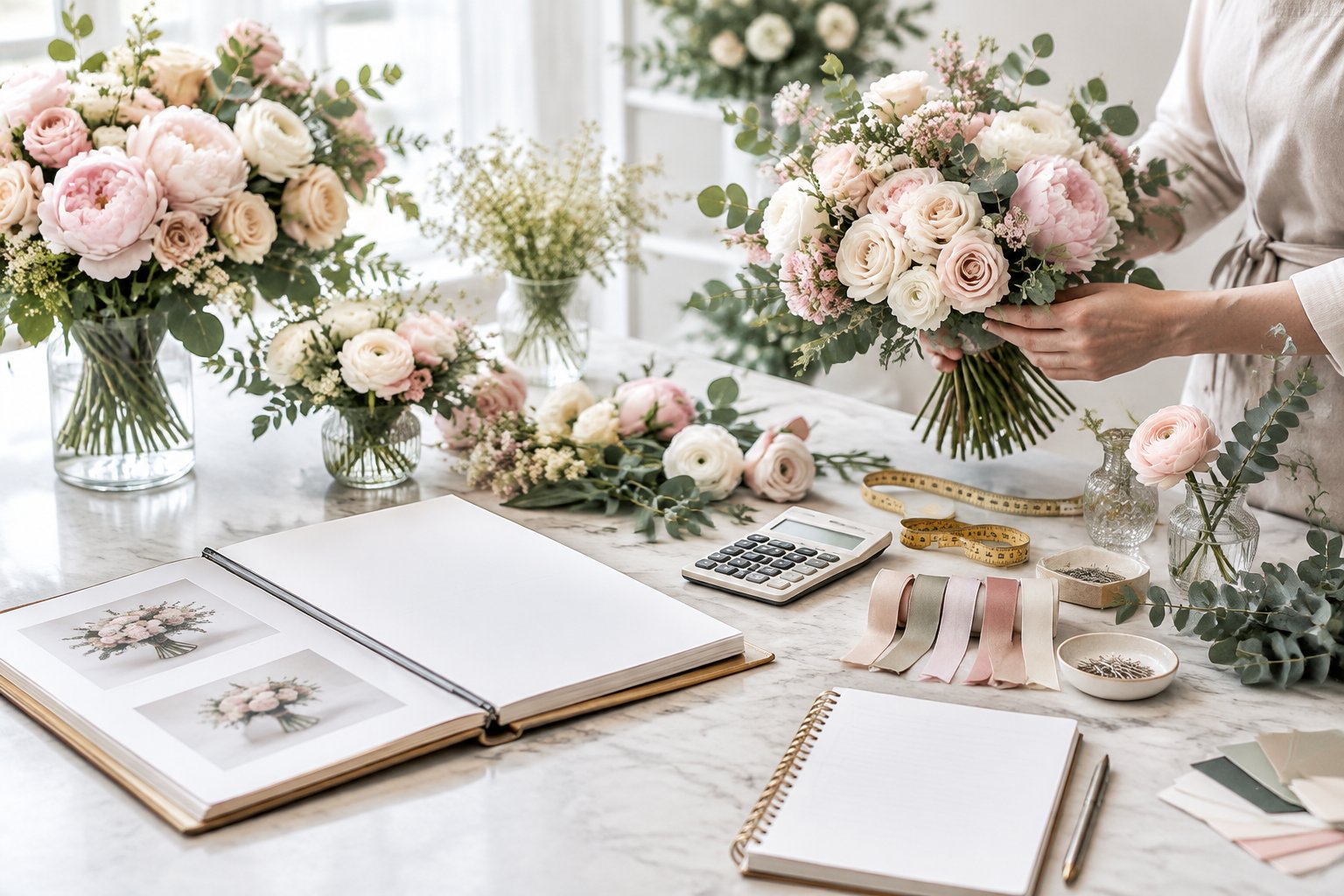
Your guest count, wedding location, flower choices, and design style shape the final quote. A small celebration with seasonal blooms may stay near the lower end, while a large wedding with a floral arch, lush centerpieces, and premium flowers will require more room in your wedding flower budget.
Use the ranges below to set a starting point, then ask a local florist for a detailed proposal based on your date and plans.
What Is a Realistic Floral Budget?
A realistic wedding flower budget is $2,500 to $5,000 for many U.S. weddings in 2026, with full-service designs ranging from about $1,500 to $7,500 or more. Your wedding florist can turn that target into a plan that fits your guest count, venue, and priorities.

Typical Spend Ranges for Different Wedding Styles
A simple floral plan with personal flowers and modest table arrangements may cost $1,500 to $2,500. This range suits a small wedding, courthouse celebration, brunch reception, or venue that already has strong décor.
A mid-range plan often costs $2,500 to $5,000. It may include a bridal bouquet, bridesmaid bouquets, boutonnieres, ceremony flowers, reception centerpieces, delivery, and setup from a professional florist.
A lush or luxury design can reach $5,000 to $7,500 or more. Large floral arches, hanging installations, premium blooms, dense centerpieces, and several ceremony or reception areas raise wedding flower costs quickly.
How Guest Count and Location Affect the Total
Guest count affects the number of centerpieces, chairs requiring flowers, personal flowers, and place settings. A 100-guest wedding with 10 reception tables has a different wedding flower cost from a 200-guest event with 20 tables, even when the style is similar.
Location also shapes pricing. Major metropolitan areas and high-demand wedding destinations often have higher labor, delivery, storage, and rental charges. A remote venue may add travel time, while a downtown venue may require timed loading, elevator access, or extra setup crew.
Ask whether your quote includes:
- Delivery mileage and parking
- Installation and breakdown
- Vases, arches, stands, and candles
- Taxes and service charges
- Venue access or labor restrictions
How Much of the Overall Wedding Budget Should Go to Florals?
Set aside about 8% to 13% of your total wedding budget for flowers, then adjust the figure to match your priorities. A $30,000 wedding might reserve $2,400 to $3,900 for florals, while a $50,000 wedding might allow $4,000 to $6,500.
A flower-heavy celebration with a floral arch and large reception designs may need more. A venue with built-in décor, a small guest list, or a minimalist style may need less. Review your complete wedding budget before choosing a floral package so the quote reflects what you can spend comfortably.
Wedding Flower Cost Breakdown by Arrangement
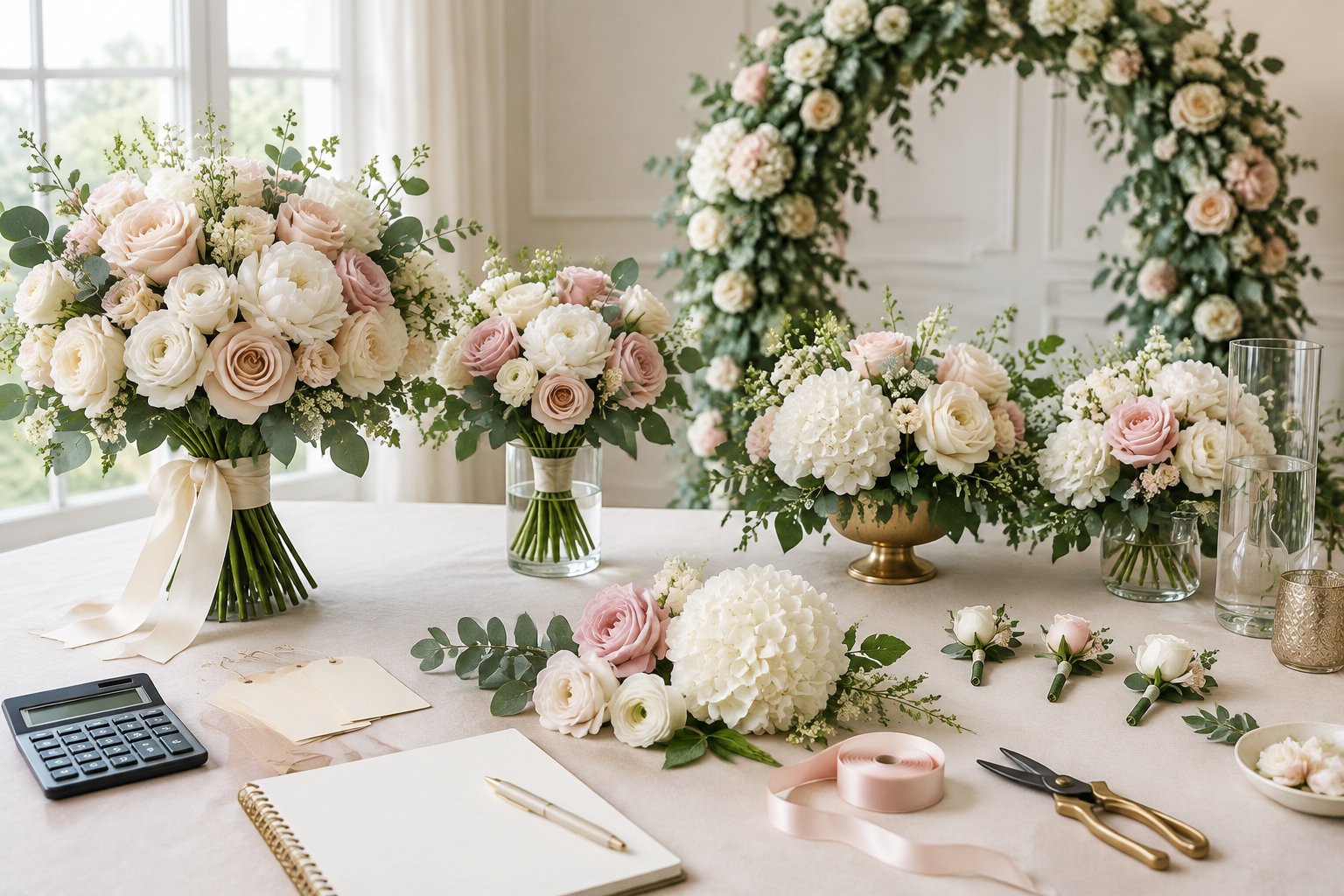
The main parts of a wedding flower cost breakdown are personal flowers, ceremony designs, reception centerpieces, and service fees. Listing each item helps you see where to spend more and where to simplify.
How Much Does a Bridal Bouquet Cost?
A bridal bouquet costs about $150 to $350, with larger, loose, or premium designs reaching $500 or more. The price reflects stem count, flower variety, bouquet shape, ribbon, mechanics, and the time needed to condition and arrange the flowers.
A compact hand-tied bouquet uses fewer stems and has a lower labor cost. A cascading design, oversized garden-style bouquet, or bouquet filled with peonies, orchids, or specialty blooms requires more product and design time.
What Do Bridesmaid Bouquets and Personal Flowers Cost?
Bridesmaid bouquets commonly cost $80 to $150 each. A smaller version of the bridal bouquet keeps the wedding party’s look coordinated while controlling the total.
Personal flowers may include:
- Boutonnieres: $10 to $30 each
- Corsages: $35 to $75 each
- Flower girl basket flowers: $30 to $75
- Toss bouquet: $50 to $125
- Hair flowers: $25 to $150, depending on size and placement
The number of attendants and family members receiving flowers has a direct effect on your wedding flower cost. Confirm every personal-flower recipient before requesting a quote.
How Much Do Ceremony Designs Cost?
Ceremony flowers range from $500 for light aisle or altar décor to $3,000 or more for a large floral arch. A partial ceremony arch may cost around $800 to $1,800, while a full floral arch requires more flowers, mechanics, labor, and installation time.
Common ceremony items include:
- A ceremony arch or floral arch
- Aisle arrangements or aisle markers
- Altar arrangements
- Welcome-table flowers
- Chair flowers
- Ground arrangements
A professional florist can design one focal point that frames your vows and photographs well. Concentrating flowers at the altar or arch often creates more impact than spreading small arrangements throughout the venue.
What Do Reception Centerpieces Cost?
Reception centerpieces commonly cost $75 to $250 each, while elevated or lush designs may reach $500 or more. The table shape, vessel, stem count, flower variety, candle plan, and arrangement height all affect the price.
A low compote arrangement may use seasonal flowers and greenery at a moderate cost. Tall designs require stands, additional mechanics, and more product. Candles, bud vases, table runners, and rented vessels also add to the reception design.
What Other Floral Extras Should You Budget For?
Set aside funds for items that sit outside the main bouquet and centerpiece plan. Cake flowers may cost $50 to $200, while ceremony or reception transfers can add labor and transportation fees.
Other possible extras include:
- Candles and candle vessels
- Floral décor for a sweetheart table
- Bar or escort-card arrangements
- Cake flowers
- Flower girl basket
- Toss bouquet
- Hair flowers
- Additional greenery
Request an itemized proposal so each extra has a clear price before you approve the design.
What Makes a Florist Quote Go Up or Down?
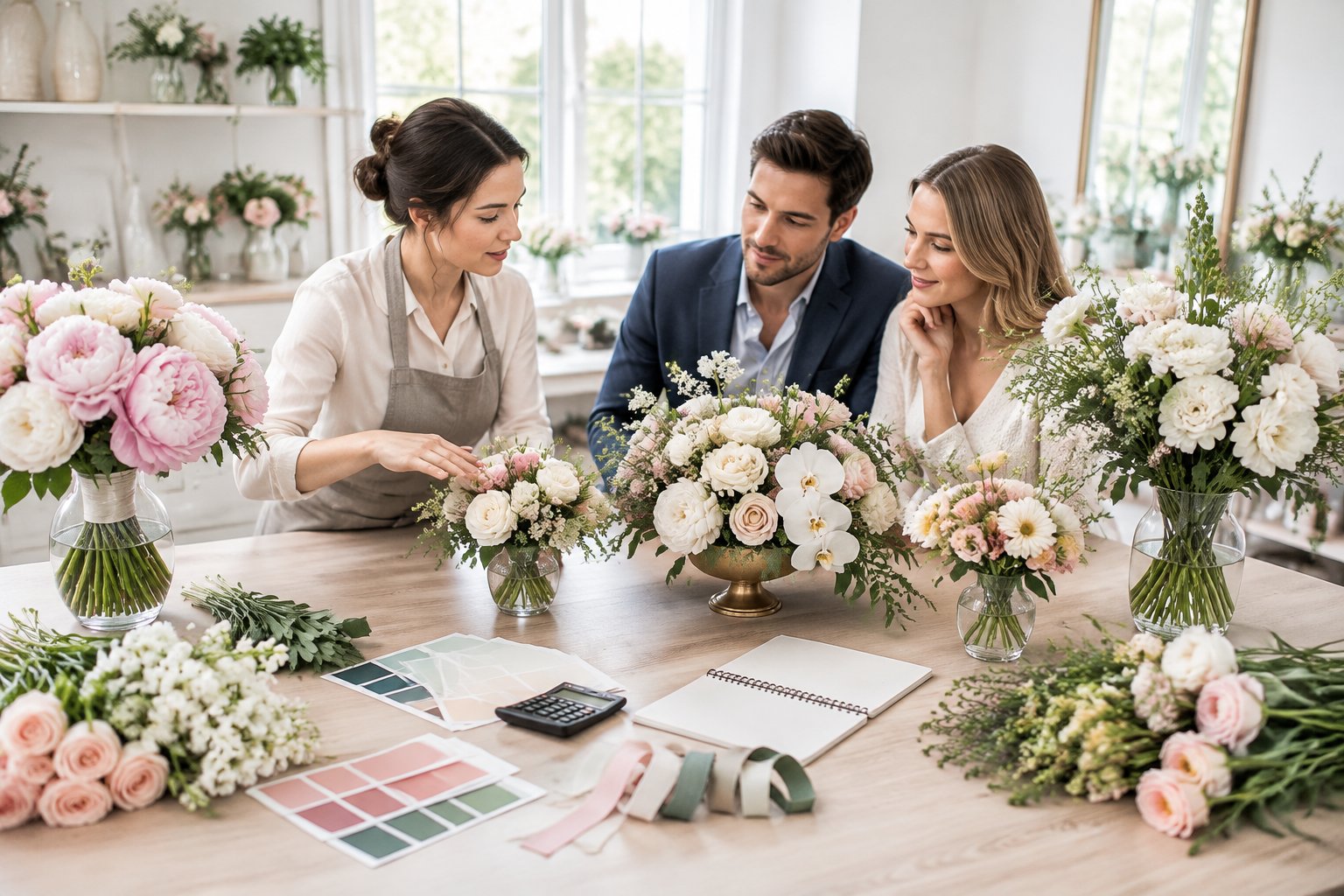
A florist quote rises with premium flower varieties, higher stem counts, complex installations, and added labor. Seasonal flowers, flexible color choices, greenery, and a focused design plan help control the wedding flower cost.
Flower Variety, Stem Count, and Design Complexity
Fresh flowers carry different wholesale costs. Garden roses, peonies, orchids, and lily of the valley often cost more than standard roses or filler flowers. A design filled with premium blooms needs a larger product budget.
Stem count also changes the quote. A compact bouquet with 25 stems uses fewer materials than a wide, airy bouquet with 60 stems. Dense centerpieces and full floral installations require additional flowers, support materials, and handling.
Greenery affects both style and price. Eucalyptus, Italian ruscus, ruscus, and ferns add movement and volume, though large quantities still require product and labor. A design with several flower varieties also takes more time to source and arrange.
Why Seasonality and Imports Matter
In-season flowers are easier to source at the time of your wedding, so they often offer better value and freshness. Out-of-season flowers may require special ordering, controlled growing conditions, or imports from another region.
Imported flowers carry added shipping and handling costs. Weather, supply changes, and holidays can also affect availability. Ask your florist which seasonal blooms offer a similar color, shape, or texture to your preferred flower.
You can keep a favorite flower as a focal bloom and let your florist fill the rest of the design with seasonal alternatives. This approach protects the look while giving the proposal more flexibility.
Labor, Delivery, Setup, and Rental Fees
Design labor covers flower processing, arranging, mechanics, packing, transport preparation, and installation. Delivery and setup cover the time and equipment needed to bring finished work to your venue and place it safely.
Floral installations require extra labor because arches, hanging pieces, aisle designs, and suspended arrangements must be assembled and secured on-site. Breakdown service may also appear as a separate charge.
Rental fees may cover:
- Arches and ceremony structures
- Compotes and vases
- Stands and columns
- Urns and specialty vessels
- Candles and lanterns
- Delivery crates or other equipment
Ask your full-service florist which fees are included, which are separate, and when rentals must be returned.
How to Choose Flowers That Fit Your Budget
Choose seasonal flowers, set a flexible color palette, and reserve premium blooms for the arrangements guests see most. Roses, carnations, baby’s breath, and lisianthus can provide volume, while select ranunculus, dahlias, or garden flowers add texture.
Premium Blooms vs. Budget-Friendly Alternatives
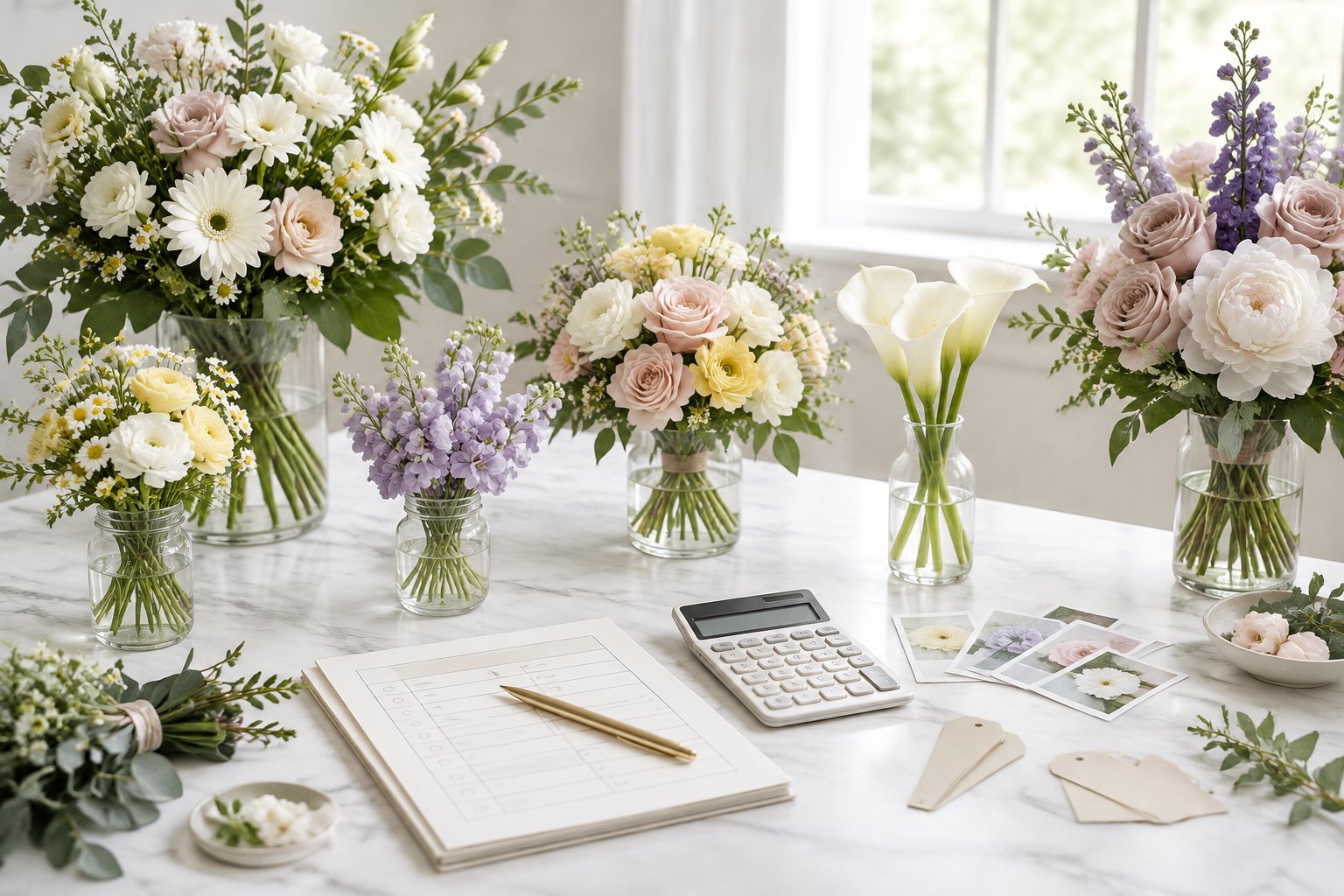
Premium flowers create a distinctive focal point, though they do not need to fill every arrangement. Peonies, gardenias, orchids, calla lilies, and anemones may carry a higher price than standard roses, chrysanthemums, daisies, or alstroemeria.
Ask your florist to pair statement blooms with cost-conscious flowers such as:
- Standard roses
- Carnations
- Baby’s breath
- Lisianthus
- Chrysanthemums
- Daisies
- Alstroemeria
Ranunculus, dahlias, hydrangeas, tulips, sunflowers, zinnias, and amaryllis can fit different budgets depending on the season and local supply. A florist can recommend substitutes that keep a similar shape, color, or mood.
Wedding Flowers by Season
Your wedding flowers by season should start with blooms that grow or ship well during your wedding month.
- Spring: tulips, ranunculus, anemones, peonies, and sweet seasonal fillers
- Summer: dahlias, sunflowers, zinnias, hydrangeas, roses, and lisianthus
- Fall: dahlias, chrysanthemums, roses, amaranth, and warm-toned foliage
- Winter: amaryllis, roses, carnations, orchids, evergreens, and baby’s breath
Availability varies by region and weather. Give your florist a color direction and flower preferences, then ask for a seasonal list that fits your date.
How to Build a Beautiful Palette With Flexible Substitutions
Choose a color family, texture, and preferred bouquet shape before naming every flower. A palette built around ivory, blush, and green gives your florist room to select the best available blooms.
Write your proposal with phrases such as “cream flowers with soft peach accents” when you are open to substitutions. Keep one or two must-have flowers for the bridal bouquet or ceremony focal point, then allow related varieties in the remaining designs.
A flexible plan can use roses, lisianthus, carnations, and seasonal filler as the base, with ranunculus, dahlias, or garden roses added where they create the most visual impact. Share your full budget with your florist so the professional florist can balance product, labor, and design across every arrangement.
Ways to Reduce Floral Spending Without Losing Impact
You can reduce floral spending by concentrating flowers at high-visibility moments, reusing ceremony designs, and giving your wedding florist a clear budget with flexible flower choices. These steps protect the visual style while reducing low-impact purchases.
Prioritize the Moments Guests and Cameras Will Notice
Choose two or three visual priorities, such as the bridal bouquet, ceremony arch, sweetheart table, or reception centerpieces. Use your largest floral investment where guests gather and where photographs will focus.
Reduce smaller arrangements that add little to the guest experience. A few well-placed designs can create a stronger look than many tiny pieces spread across the venue.
You can also use candles, textured linens, rented vessels, and greenery to add detail around reception tables. These elements support the floral design and help stretch the product budget.
Repurpose Ceremony Flowers at the Reception
Plan to repurpose ceremony flowers before your florist creates the design. A ceremony arch can move behind the sweetheart table, while aisle arrangements can become décor near the bar, entrance, or cake table.
Ask your florist to design arrangements that are safe and practical to move. Transfer labor, timing, and transportation need to appear in the proposal, especially when the ceremony and reception use separate spaces.
Bridesmaid bouquets can also decorate the head table or guest-book table after the ceremony. Place them in water-filled vessels so they remain fresh through the reception.
How to Work Productively With a Wedding Florist
Share your wedding date, venue, guest count, inspiration images, must-have items, and target budget during the first consultation. A clear brief allows a wedding florist to recommend flowers and arrangements that fit the available funds.
Ask for an itemized proposal with quantities, flower substitutions, delivery, setup, rentals, taxes, and service charges. Discuss which elements are essential and where you accept changes.
A full-service florist can manage sourcing, conditioning, design, installation, and event-day logistics. If you prefer a hand-tied bouquet and a smaller floral plan, ask for a package that keeps the design focused and the service needs clear.