
Cost of Gold Wedding Band: Prices and Buying Factors
A gold wedding band in the United States usually costs about $300 to $1,100 for a plain band, while diamond details, heavier construction, custom work, and luxury branding can raise the price to $2,000 or more. For most couples, a 14K gold band priced around $500 to $1,000 offers a practical balance of durability, color, and value for everyday wear.
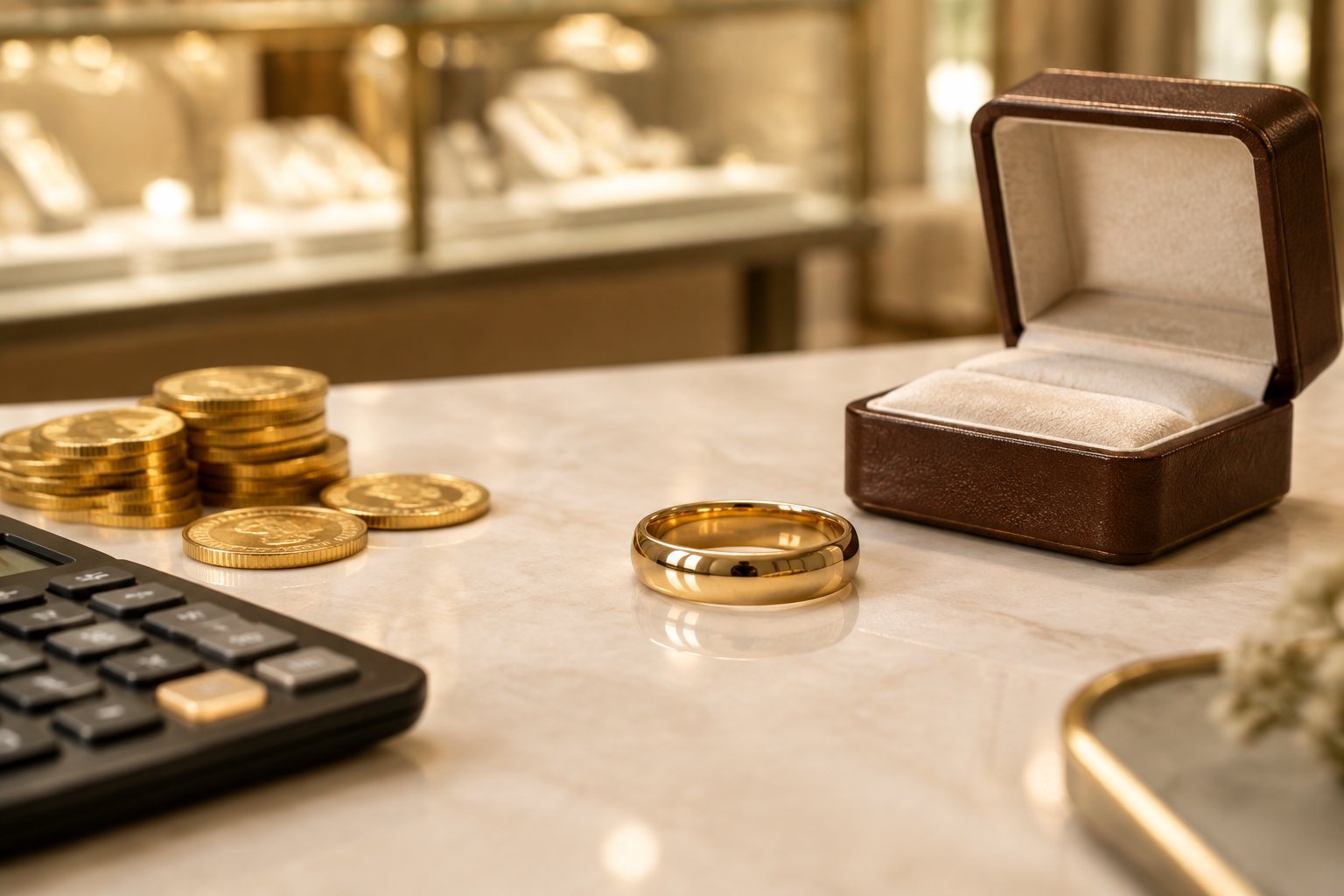
The gold wedding band cost you see at checkout includes much more than the metal. Gold purity, gram weight, width, finish, labor, gemstones, retailer pricing, and services such as resizing all shape the final wedding band price.
A clear quote makes it easier to compare wedding band prices without focusing on the wrong number. If you are ready to shop, contact a trusted local jeweler and ask for the karat, gram weight, width, and services included in the quoted wedding band cost.
What You Can Expect to Pay for a Gold Band
A plain gold wedding band generally costs $300 to $1,100 per ring, with 14K styles commonly landing in the middle of that range. Size, width, weight, finish, and retailer pricing create the largest differences between gold wedding bands.
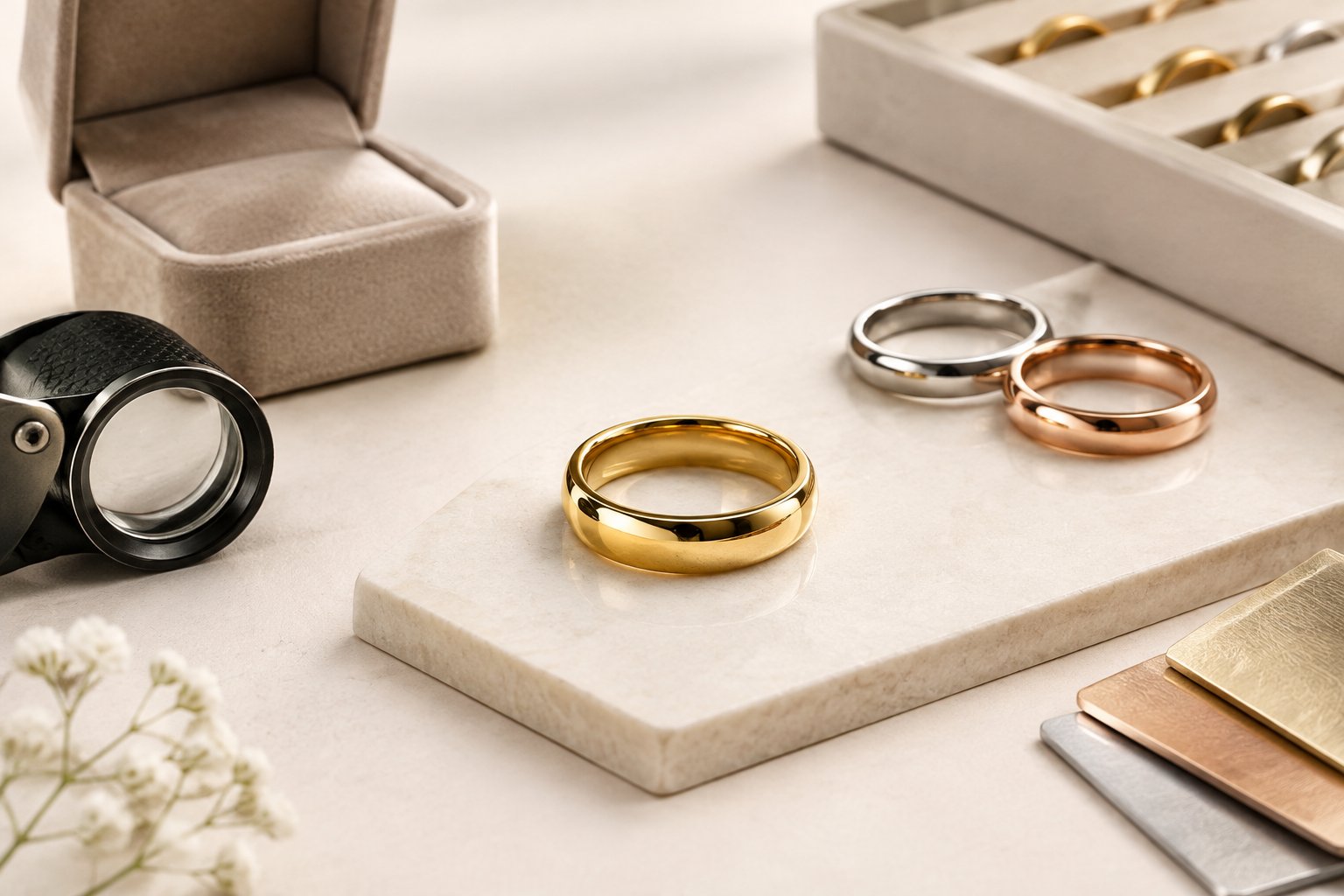
Typical Price Range for a Plain Gold Wedding Band
A basic 10K band can start near $300 to $600. A 14K gold band with a polished finish often falls around $400 to $900, while an 18K band may cost $700 to $1,500 because it contains more pure gold.
Thin bands with a narrow width and low gram weight sit near the lower end. Wider comfort-fit rings, larger sizes, and thicker profiles move toward the higher end. A plain band from a designer collection may cost more even when its gold weight matches a less expensive ring.
Price Expectations for a Pair of Wedding Bands
A matching pair of gold wedding bands may cost about $800 to $2,500 for simple designs. A pair with different widths, karats, finishes, or ring sizes can cost more because each ring has its own material and production needs.
Matching does not always mean identical. You might choose a narrow 14K band for one partner and a wider 14K band for the other while keeping the same color and finish. Ask whether a listed price covers one ring or two before comparing offers.
For broader planning, you can compare these figures with guidance on how much are wedding rings on average.
When a Gold Band Costs More Than the Usual Range
A gold band can exceed $1,100 when it uses 18K gold, a heavy profile, hand finishing, diamonds, or custom construction. Full-eternity diamond bands and detailed engraved designs may reach $2,000 to $5,000 or more.
Brand reputation also affects the price. A well-known jewelry house may charge a premium for design, quality control, customer service, warranty coverage, and presentation. Compare the details behind the quote before deciding whether the added cost fits your priorities.
What Determines the Final Ring Price?
The final ring price comes from the gold content, the amount of material used, the labor required, and the seller’s business costs. A heavier 18K ring with a detailed finish will cost more than a thin 10K band with a basic polish.
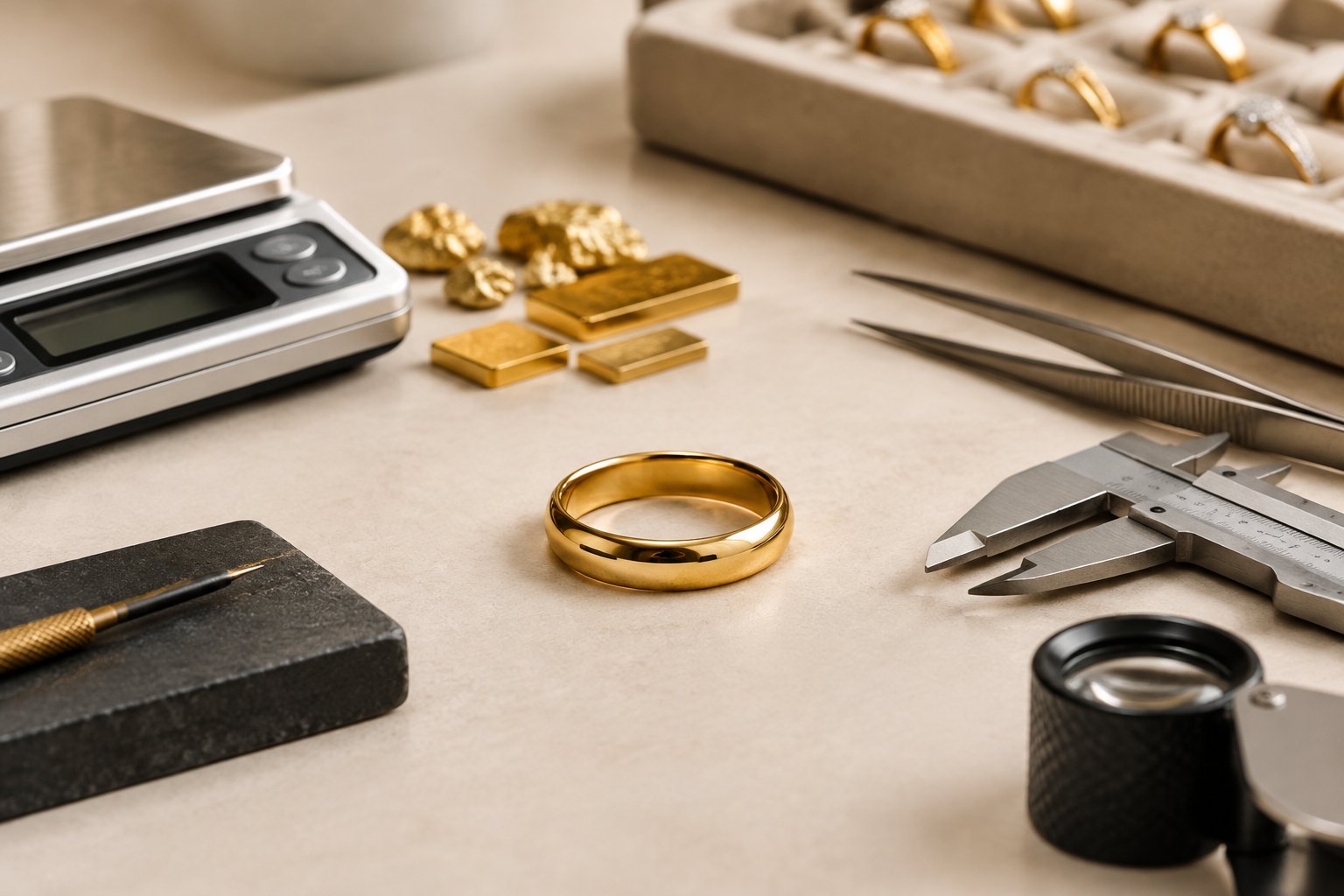
How Gold Purity and Gold Content Affect Cost
Gold purity describes the share of pure gold in the alloy. A 10K ring contains 41.7% gold, 14K contains 58.3%, and 18K contains 75%. More gold content raises the raw metal value and often raises the retail price.
The daily gold market also affects material costs. Retail prices do not change in exact step with market prices because labor, design, overhead, and markup remain part of the ring’s price.
Why Width, Thickness, and Ring Size Matter
Width and thickness affect the amount of gold needed to make the band. A 6mm ring uses more material than a 2mm ring, and a thick rounded profile weighs more than a thin flat profile.
Ring size affects the circumference and can change gram weight. A larger size may require more metal, while a smaller size may use less. Comfort-fit interiors also add material and shaping work.
Ask for the ring’s approximate gram weight when you compare quotes. Two bands with the same karat and width can still have different prices if their profiles or weights differ.
How Finish, Craftsmanship, and Brand Reputation Add Cost
A polished finish is often the most accessible option. Brushed, hammered, milgrain, hand-engraved, and mixed-metal finishes require extra bench work and quality checks.
Handmade or custom bands include design time, fitting, casting, finishing, and revisions. Brand reputation adds value through design identity, service, warranty policies, and retail positioning. Review the included services before treating a higher price as a sign of better construction.
Which Gold Karat Fits Your Budget and Lifestyle?
10K gold offers the lowest entry price and strong resistance to wear, 14K gold provides the most popular balance for daily use, and 18K gold delivers richer color with higher cost and a softer feel. 24K gold has the highest purity, yet its softness makes it a poor fit for a daily wedding band.
| Gold karat | Pure gold content | Typical use | Price level |
|---|---|---|---|
| 10K gold | 41.7% | Active daily wear | Lowest |
| 14K gold | 58.3% | Everyday wedding bands | Mid-range |
| 18K gold | 75% | Rich color and luxury style | Higher |
| 24K gold | 99.9% | Ceremonial or investment pieces | Highest |
10K Gold: The Lowest-Cost Durable Option
10K gold contains the most alloy metal of the common wedding band choices. That composition gives it a lighter gold color and strong resistance to scratches and bending.
It is a good fit for a tighter budget or a physically active routine. The lower purity also keeps the ring’s price down. Some wearers prefer the deeper color of 14K or 18K gold, so view the ring in person before buying.
14K Gold: The Everyday Balance of Value and Durability
14K gold is the standard choice for many U.S. wedding bands because it combines a clear gold color with useful strength. Its 58.3% gold content keeps the price accessible while providing a traditional precious-metal feel.
A 14K gold band works well for daily wear, including many hands-on lifestyles. It is also available in yellow, white, and rose gold, giving you flexibility in color and design.
18K Gold: Higher Gold Content and a Richer Color
18K gold contains 75% pure gold, producing a warmer and deeper color than 14K gold. The higher gold content raises the price, especially in heavier bands.
Its alloy is softer than 10K or 14K gold, so surface scratches may appear sooner with hard daily use. Choose 18K when richer color and higher purity matter more to you than the lowest purchase price.
Why 24K Gold Is Rarely Ideal for Daily Wear
24K gold is nearly pure gold and has a vivid yellow color. Its softness makes it prone to dents, scratches, and changes in shape during everyday activities.
Ceremonial jewelry and investment pieces can use 24K gold effectively. A daily wedding band needs an alloy that supports its shape, so 10K, 14K, or 18K is a more practical choice.
How Color, Diamonds, and Custom Details Change the Total
Color choice usually changes the appearance and alloy mix, while diamonds and custom details create larger price increases. White gold also brings a future rhodium plating cost that belongs in your long-term budget.
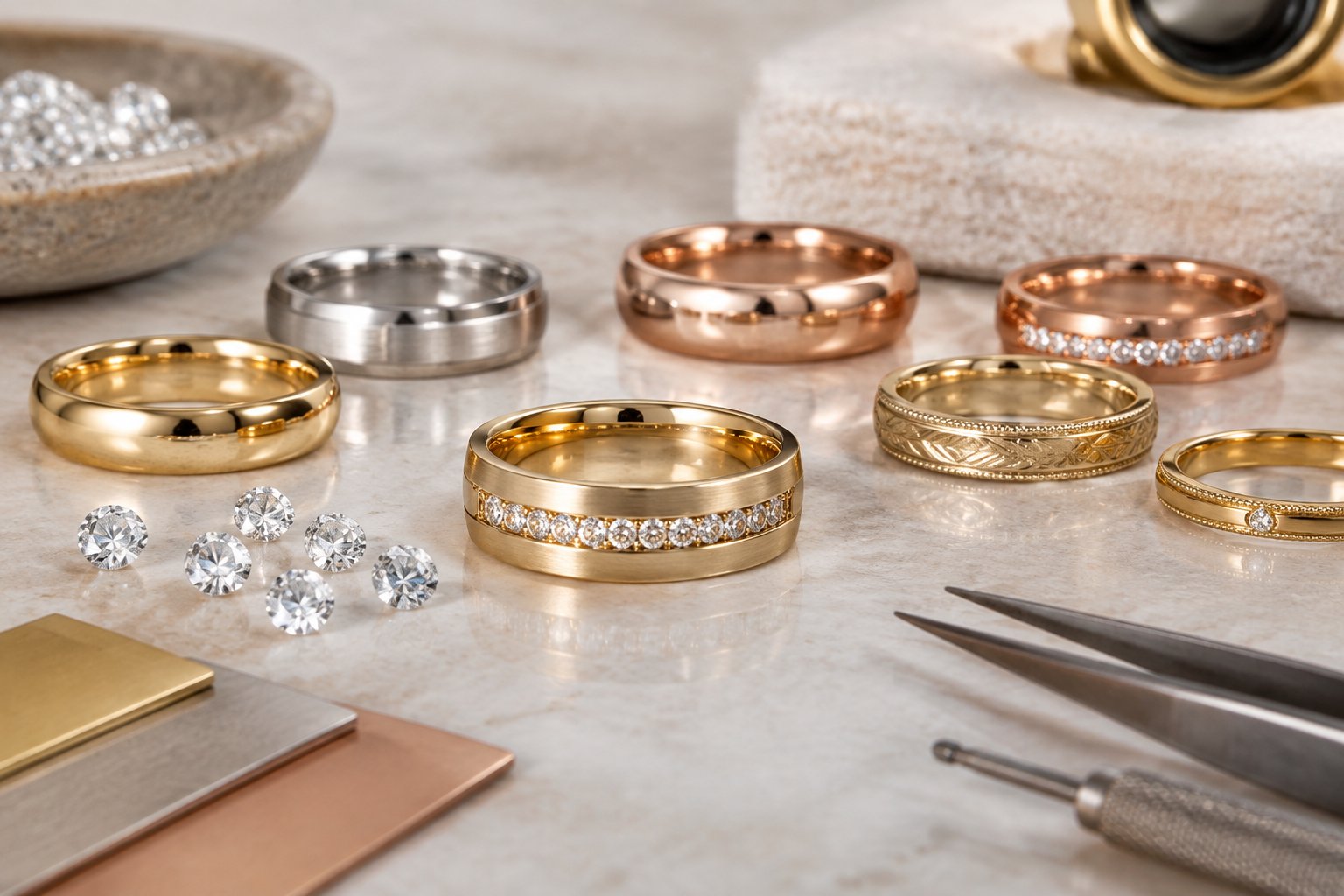
Yellow Gold vs. White Gold vs. Rose Gold
Yellow gold keeps its warm tone through its alloy and does not need a surface coating. It suits classic designs and pairs well with many engagement ring styles.
White gold uses alloy metals to create a pale base color, then rhodium plating adds a bright white surface. The plating wears with use and may need refreshing every one to two years. If you have a nickel sensitivity, ask whether the white gold uses nickel or a nickel-free alloy.
Rose gold gets its pink tone from copper in the alloy. It does not require rhodium plating and offers a distinctive look. Prices for yellow, white, and rose gold at the same karat can be close, though alloy choice, production, and retailer pricing create differences.
The Added Cost of Diamonds and Stone Settings
Diamonds increase the price through their total carat weight, quality, number, and setting style. A few small accents add less than a full-eternity design with stones around the entire band.
The setting also requires skilled labor. Pavé and channel settings need careful placement and secure metal work. Lab-grown diamonds can lower the stone cost, while natural diamonds and higher grades raise it.
Ask whether the quote includes stone specifications, setting labor, inspection, and future tightening services.
Custom Engraving, Textures, and Bespoke Work
Basic machine engraving may add a modest fee. Hand engraving, exterior lettering, fingerprint designs, unusual textures, and matching details require more time.
A fully bespoke band includes design work, measurements, model approval, casting, and finishing. Request a written quote that separates the metal, labor, stones, engraving, and revisions. This format shows which choice is driving the increase.
How to Compare Quotes and Buy With Confidence
The safest way to compare gold wedding band quotes is to match the same karat, dimensions, weight, design, and included services. Price alone cannot show whether two wedding bands offer the same materials or support.
Check Whether the Price Is for One Band or a Set
Product pages and showroom tags may show a per-ring price even when photos display a pair. Confirm whether the amount covers one band, two bands, or a matching set.
For a set, ask whether both rings share the same karat and color. Different sizes and widths can make a set cost more than twice the price of the smaller ring.
Ask for Karat, Gram Weight, Width, and Included Services
Request these details in writing:
- Gold karat and color
- Approximate gram weight
- Width and thickness
- Ring size and fit profile
- Finish and stone details
- Engraving charges
- Resizing policy
- Warranty or inspection services
A quote with these details lets you compare wedding band prices on equal terms. It also helps you spot a low price that comes from a lighter profile or fewer included services.
Online Retailers vs. Local Jewelers
Online retailers may offer a wide selection and clear product filters for karat, width, and size. Read the return, resizing, warranty, shipping, and insurance terms before ordering.
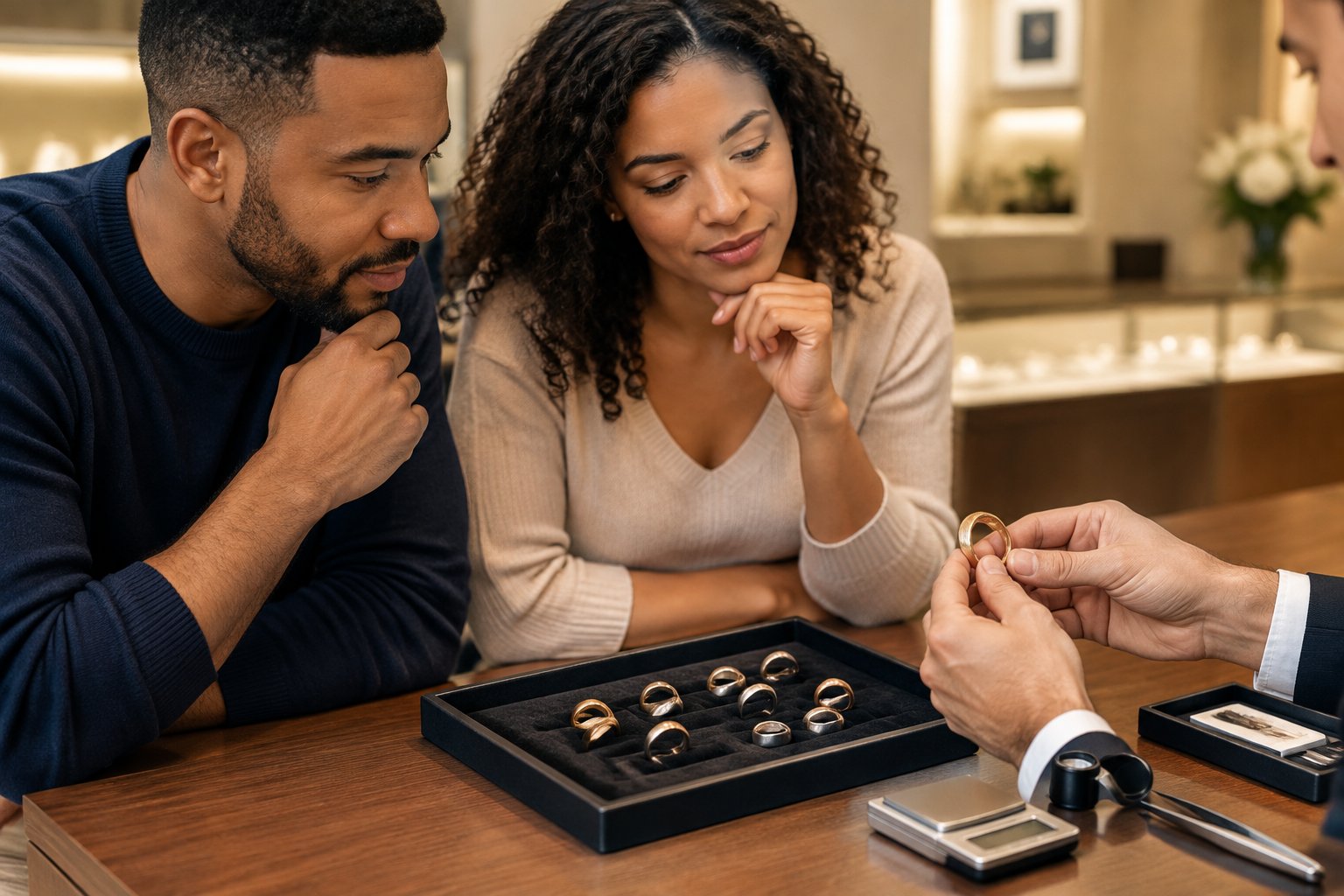
Local jewelers let you inspect the color, feel the weight, compare widths, and receive in-person fitting help. They may also provide cleaning and inspections after purchase. Visit more than one jeweler if you want to compare workmanship and service.
Account for Tax, Resizing, Shipping, and Future Care
Your final budget should include sales tax, shipping, insurance, engraving, and possible resizing. Custom orders may have limited return rights, so confirm the fit before production begins.
White gold adds a recurring rhodium plating cost. All gold bands benefit from cleaning and periodic inspections, especially when they include diamonds or detailed settings.
Retail Price vs. the Gold Value Inside the Ring
A ring’s retail price includes gold content plus labor, design, finishing, overhead, services, and profit. Its scrap or melt value reflects the precious metal alone, so the two figures can be far apart.
How to Estimate Intrinsic Metal Value
Use this formula for a rough estimate:
Ring weight in grams × purity percentage × current gold price per gram = approximate gold value
For example, a 6-gram 14K band contains about 3.5 grams of pure gold because 14K gold is 58.3% pure. Multiply that pure-gold weight by the current market price per gram to estimate the metal value.
The calculation becomes less precise when the ring contains diamonds, other gemstones, solder, or non-gold parts. A jeweler or buyer may separate those components before making an offer.
Why a New Ring Costs More Than Its Scrap Gold Value
A new band includes skilled labor, casting, polishing, inspection, design, packaging, retailer overhead, and customer service. Those costs create a wearable finished product and do not transfer fully into scrap value.
Resale buyers also price for refining, risk, and their own margin. A plain, heavy ring with clear karat markings may attract stronger interest than a highly customized piece, yet resale value still remains below most original retail prices.
Keep your receipt, appraisal, and metal documentation. They help with insurance and support a private resale or trade-in conversation.
Maintenance Costs That Can Affect Long-Term Value
Yellow and rose gold maintain their color without plating. White gold needs periodic rhodium plating as the surface wears, adding a recurring care expense.
Professional inspections can identify worn edges, thinning areas, loose diamonds, or sizing problems before they become costly repairs. Store the band away from harder jewelry, remove it for harsh chemical work, and use mild soap with warm water for routine cleaning.