
Cost of Real Flowers for a Wedding: 2026 Prices
Fresh wedding flowers add color, fragrance, and personality to your celebration, yet the price can range from about $1,500 for a small, focused design to $7,500 or more for full-service floral work. For most US couples in 2026, the cost of real flowers for a wedding falls between $2,500 and $7,500, with a practical planning target of 8% to 10% of your total wedding budget.
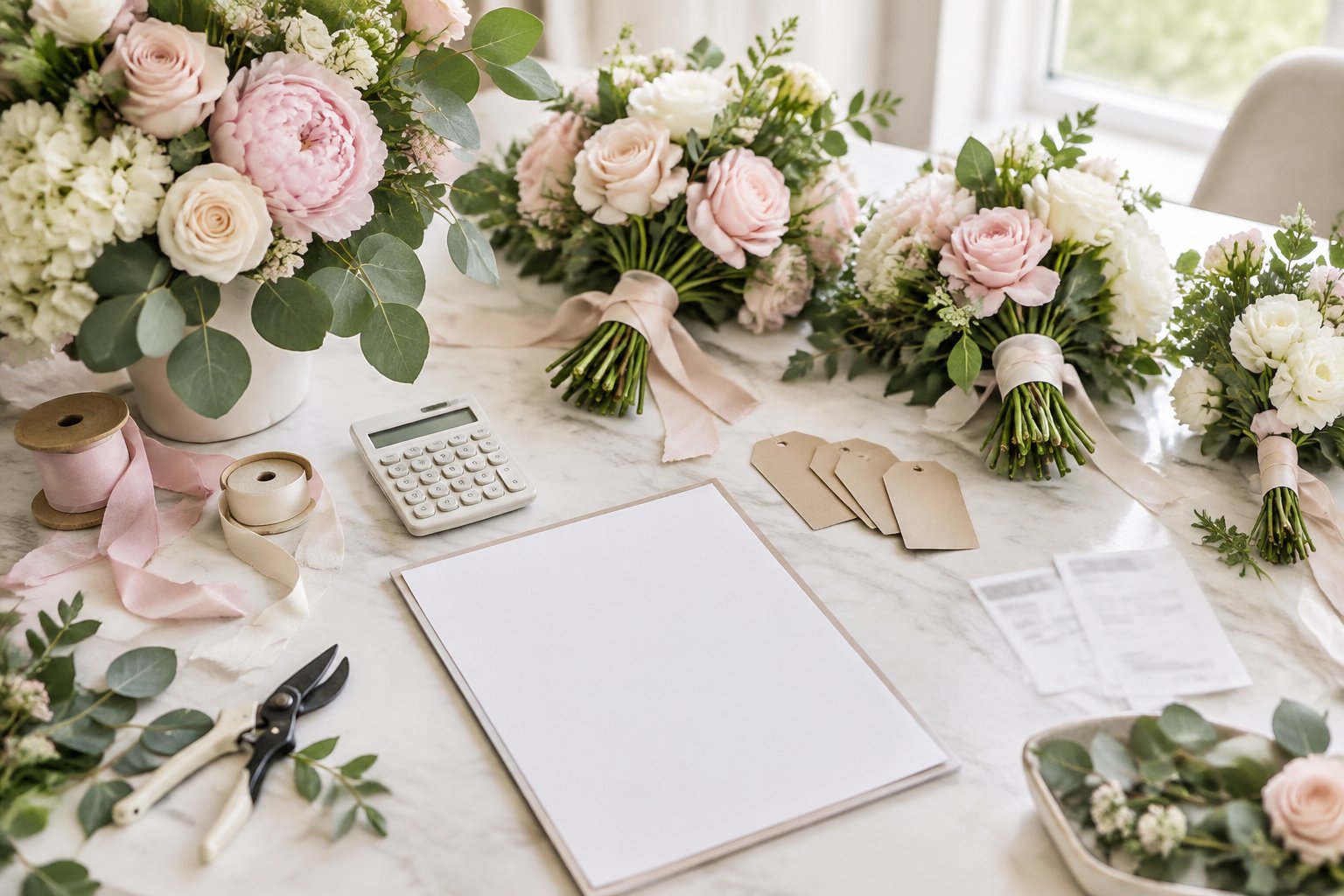
A national average gives you a starting point, though your guest count, location, flower varieties, and design plans shape the final quote. A small wedding with personal flowers and modest centerpieces may stay below $2,000.
A 100-person celebration with an arch, aisle flowers, reception centerpieces, delivery, and setup can reach $4,000 to $7,500. You can set a clear wedding flower budget by choosing your highest-priority moments first and sharing that number with a professional florist.
Use the ranges below to build a realistic plan before requesting quotes.
What Should You Expect to Spend Overall?
Plan on $2,500 to $7,500 for wedding flowers in 2026, with full-service designs landing toward the higher end.
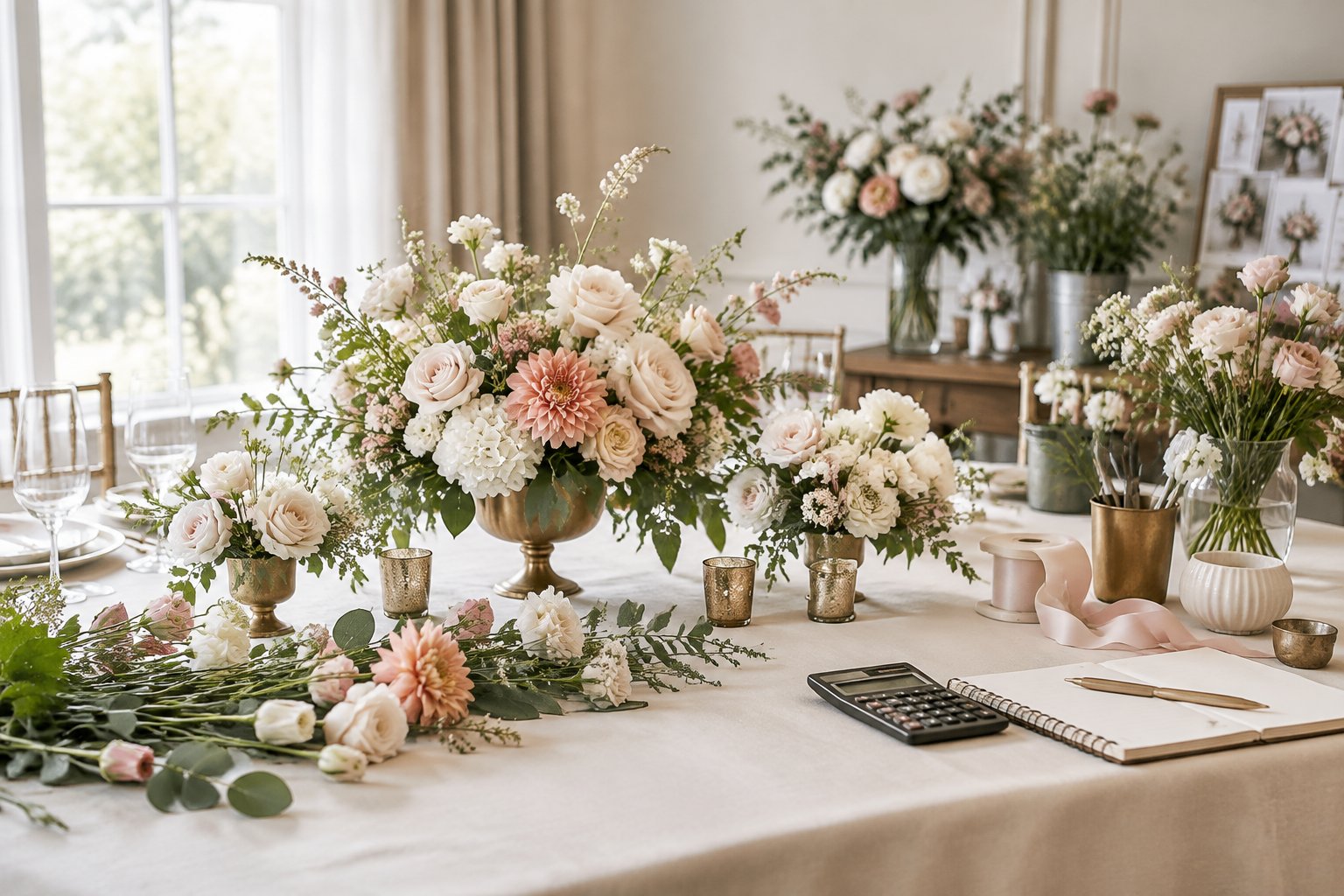
The average cost of wedding flowers looks different across studies because each figure counts different services. The Knot Real Weddings Study reports an average wedding flower cost of $2,800, including personal flowers and basic ceremony and reception pieces.
Full-service florist pricing often reaches $5,100 to $7,600 when it includes design planning, premium blooms, delivery, installation, and breakdown.
National Averages vs. Full-Service Florist Pricing
A $2,800 budget can cover a bridal bouquet, a boutonniere, wedding party flowers, a simple ceremony focal point, and modest table arrangements. The median reported spend is about $1,900, while higher-budget weddings push the upper quartile near $4,800.
A professional florist quote between $5,000 and $7,500 reflects a broader service package. You pay for consultations, flower sourcing, stem processing, design labor, hard goods, refrigeration, transportation, venue setup, and cleanup.
Ask each wedding florist what the proposal includes so you compare matching services.
How Guest Count and Location Change the Total
Guest count affects wedding flower costs through table quantity and ceremony seating. Reported averages are about $1,600 for weddings with up to 50 guests, $2,400 for 51 to 100 guests, and $3,300 for celebrations with more than 100 guests.
Location changes labor, delivery, sourcing, and studio costs. Regional averages range from about $2,400 in the West to $3,600 in the Mid-Atlantic.
A city venue may carry higher labor and parking fees, while a rural venue may add travel charges.
Setting a Realistic Wedding Flower Budget
Start with 8% to 10% of your wedding budget. A $30,000 wedding gives you a floral target of $2,400 to $3,000, while a $50,000 wedding supports about $4,000 to $5,000.
Choose 10% to 15% when florals play a major role in the ceremony design, reception styling, or photography. Write down your must-have pieces before contacting a florist.
Include the bridal bouquet, personal flowers, ceremony arrangements, reception centerpieces, delivery, setup, and possible breakdown fees.
Wedding Flower Cost Breakdown by Arrangement
A useful wedding flower cost breakdown separates personal flowers, ceremony flowers, reception flowers, and service fees.
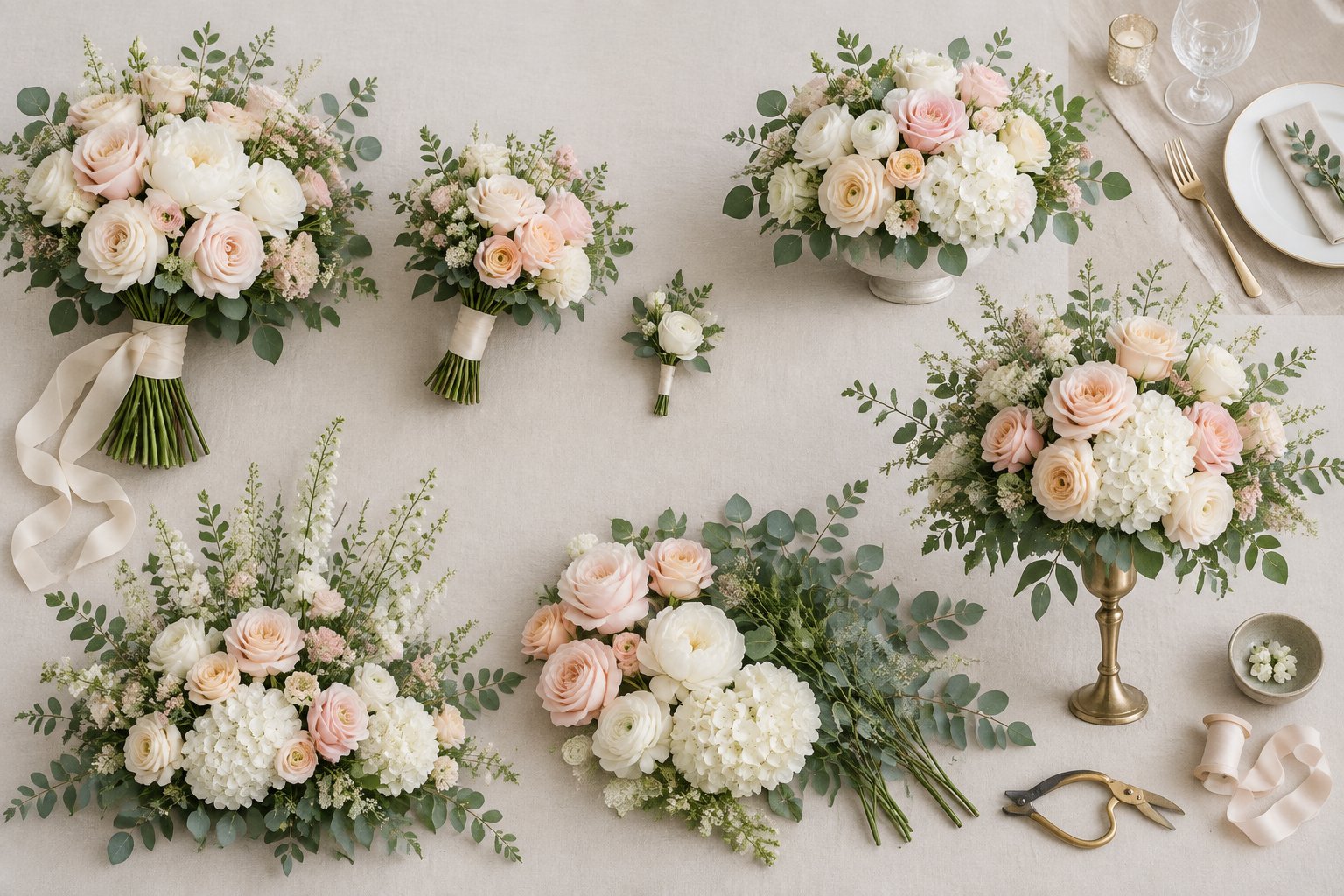
Your arrangement list helps you see which choices drive the total. A few large focal designs may cost less than many small pieces, while a larger guest list increases the number of centerpieces.
Bridal and Bridesmaid Bouquet Pricing
A bridal bouquet costs about $175 to $600. A standard hand-tied design often lands near $250 to $350, while a large cascading bouquet with premium flowers requires more stems and labor.
A bridesmaid bouquet costs about $80 to $150 each. Size, flower variety, ribbon finish, and design style all affect the wedding bouquet cost.
Give your florist a target size and a list of favorite colors, then allow seasonal substitutions when premium flowers fall outside your budget.
Boutonnieres, Corsages, and Other Personal Flowers
A boutonniere costs about $20 to $40. Budget for the groom, groomsmen boutonnieres, fathers, grandfathers, and other honored guests who will wear them.
Corsages range from about $30 to $50 each. A flower girl basket with petals may cost around $30, while a flower crown can cost $50 to $100.
Add a toss bouquet if you want a separate arrangement for that tradition.
Ceremony Arch, Altar, and Aisle Flower Costs
A ceremony arch or large altar arrangement starts around $500 for a modest design and can exceed $2,000 for a lush installation. The price rises with coverage, flower density, structure, mechanics, and on-site labor.
Aisle markers and aisle arrangements often cost $20 to $50 per row. Aisle petals add a separate material and cleanup charge, especially when your venue requires removal after the ceremony.
Ask whether the florist can move ceremony flowers to the reception.
Reception Centerpieces and Table Decor Costs
Low reception centerpieces cost about $100 to $250 each. Tall wedding centerpieces range from $250 to $500 or more because they require additional flowers, vessels, support, and setup.
For 15 tables, table centerpieces alone may total $1,500 to $4,000. Reception decor can also include a sweetheart table arrangement at $150 to $600, cake flowers at $50 to $150, and welcome or bar arrangements at $100 to $300.
Small Floral Extras to Budget For
Small details add up across a full wedding flower order. Consider:
- Cake flowers
- Flower girl basket
- Toss bouquet
- Welcome table flowers
- Bar or lounge arrangements
- Cocktail table pieces
- Head table decor
- Extra aisle petals
- Rental vases and compotes
- Candles or floral mechanics
Request an itemized proposal so you see which extras are included, rented, or charged separately.
Why Fresh Floral Quotes Vary So Much
Fresh floral quotes vary because flower selection, abundance, labor, logistics, and installation scale change from one wedding design to another.
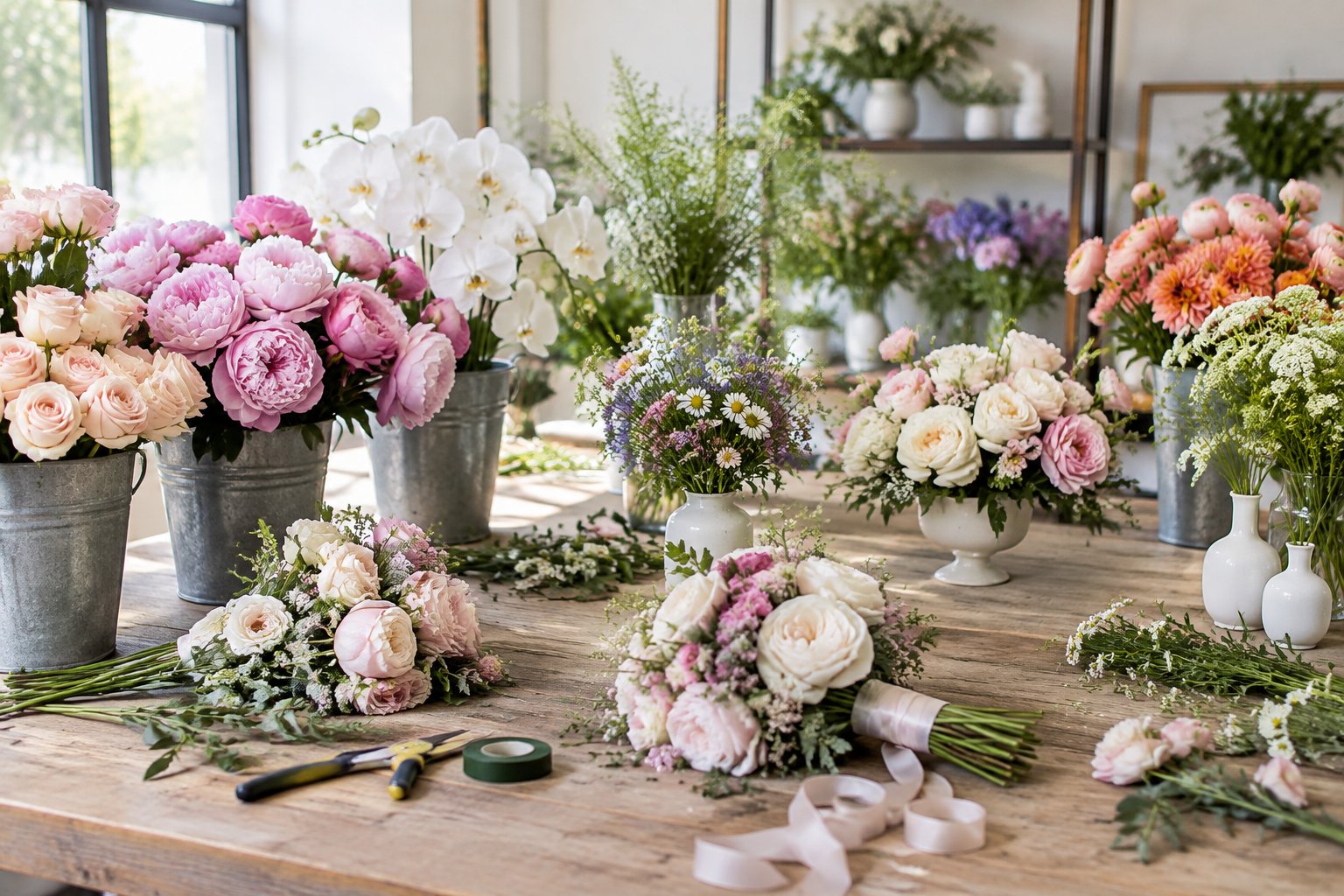
Two proposals with the same color palette may use different stem counts, flower grades, vase styles, or service levels. Compare the details behind each price before choosing the lower number.
Flower Variety, Density, and Seasonality
Premium flowers carry higher costs because of demand, limited growing seasons, or delicate handling. Peonies, garden roses, ranunculus, dahlias, gardenias, lily of the valley, sweet peas, poppy, and some tulips can raise your quote when they are scarce or out of season.
Roses, hydrangeas, and many seasonal flowers give your florist more supply flexibility. In-season flowers reduce shipping pressure and offer better value.
More blooms per arrangement also increase the total, while greenery such as eucalyptus, ruscus, and ferns adds texture and volume.
Design Complexity and Floral Installations
A hand-tied bouquet requires less labor than a wired cascade. A small altar arrangement requires less time than a flower-covered arch, hanging meadow, ceiling treatment, or floral wall.
Installation work includes mechanics, ladders, structural supports, venue rules, and a larger design team. Tell your florist whether you want a light floral accent or full coverage so the quote reflects the intended scale.
Delivery, Setup, and Breakdown Labor
Delivery, setup, and breakdown may add several hundred dollars to your invoice, with complex installations reaching much higher. The team must transport fragile flowers, unload vessels, place arrangements, complete venue styling, move pieces after the ceremony, and collect rentals.
Ask whether the proposal includes mileage, stairs, elevator access, parking, setup hours, venue flips, and post-event pickup. A clear service list prevents surprise charges.
What Each Floral Budget Level Can Realistically Buy
Your floral budget sets the design scale: under $2,000 supports focused personal and ceremony flowers, $5,000 to $7,000 supports fuller coverage, and $8,000 or more opens the door to major installations.
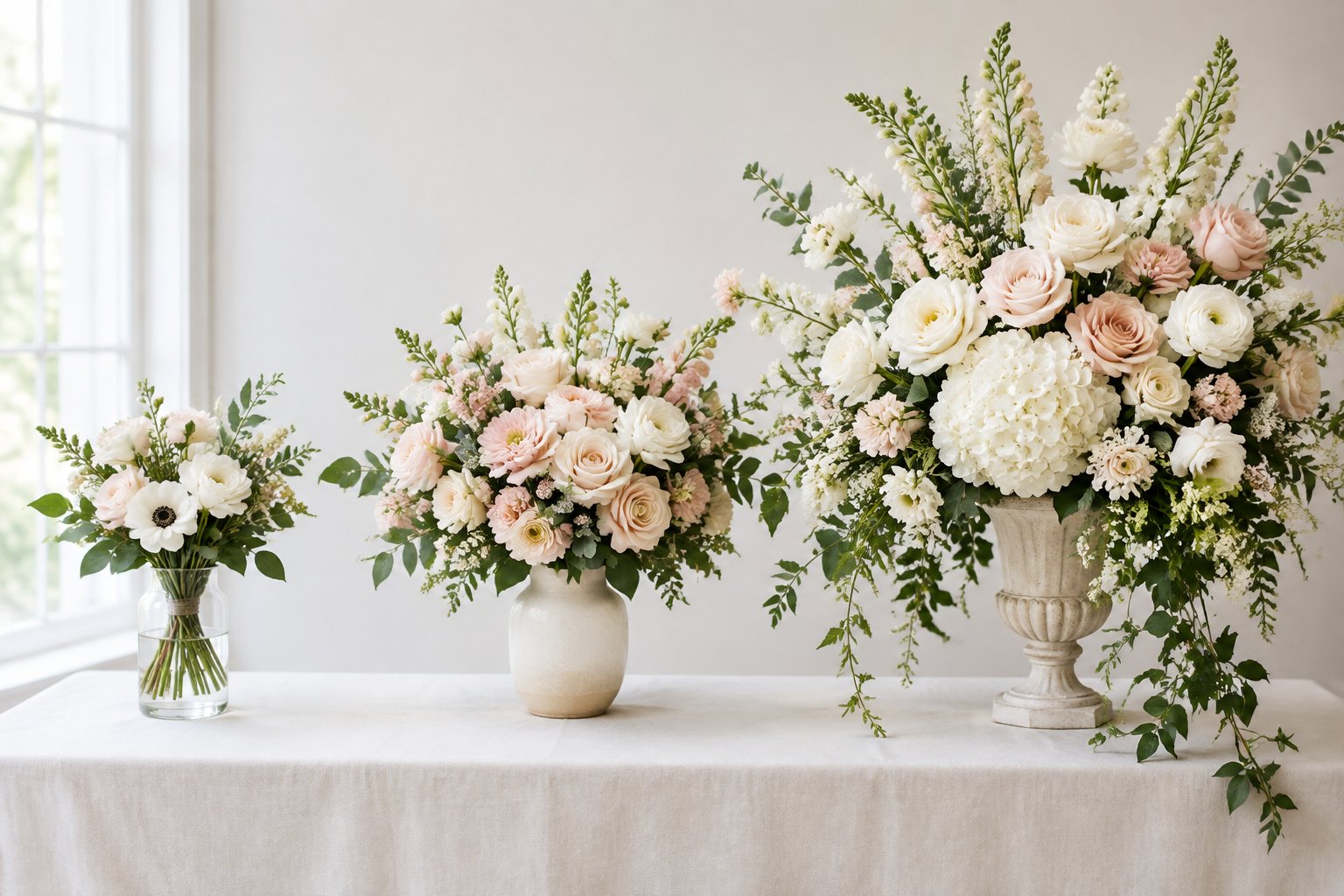
Flower selection and arrangement count shape the look within every price range. Affordable wedding flowers can feel polished when your florist uses strong color choices, varied textures, and intentional placement.
Affordable Wedding Flowers Under $2,000
A budget under $2,000 works best for an intimate celebration or a focused floral plan. You might cover:
- A bridal bouquet
- A few bridesmaid bouquets
- Boutonnieres and corsages
- A small ceremony arrangement
- Simple reception centerpieces
- Limited delivery or pickup service
Standard roses, carnations, chrysanthemums, lisianthus, baby’s breath, and seasonal greenery help create volume while keeping stem costs controlled. Choose one high-impact ceremony piece and keep lower-priority areas light.
What a Mid-Range Floral Budget Covers
A $5,000 to $7,000 budget supports a fuller design for a medium-sized wedding. You can include personal flowers, a more substantial arch or altar arrangement, aisle accents, reception centerpieces, sweetheart table flowers, welcome decor, and professional setup.
This range also gives your florist room to blend premium focal blooms with affordable supporting flowers. A few garden roses or dahlias can draw attention while roses, lisianthus, chrysanthemums, and greenery build the rest of the arrangement.
When a Statement-Focused Budget Makes Sense
An $8,000 to $15,000-plus budget fits weddings where florals transform the venue. You can consider a lush arch, flower-lined aisle, elevated centerpieces, hanging flowers, ceiling greenery, floral walls, or several custom reception moments.
Choose this level when the ceremony backdrop, reception room, or editorial-style photographs carry high priority. One large installation may use 30% to 50% of your wedding flower cost, so confirm the structure, labor, delivery, and removal charges before approving the design.
How to Lower Costs Without Losing Impact
You can lower your wedding flower budget by concentrating flowers in visible areas, choosing in-season flowers, and designing a plan that serves more than one part of the day.
Prioritize the Flowers That Matter Most in Photos
Put your largest investment into the bridal bouquet, ceremony focal point, sweetheart table, or head table. These areas appear frequently in photographs and shape the visual style of your wedding.
Use candles, linens, or restrained greenery in lower-priority spaces. A few intentional floral moments create a stronger look than small arrangements spread across every surface.
Choose Seasonal Substitutions With Your Florist
Give your florist a color palette, texture preference, and shape you like. Ask for in-season flowers that create the same feeling when your first-choice bloom carries a high price.
Carnations, chrysanthemums, lisianthus, roses, baby’s breath, eucalyptus, ruscus, and ferns can provide fullness and movement. Your florist can reserve premium flowers for focal points and use flexible seasonal stems throughout the supporting arrangements.
Repurpose Ceremony Flowers at the Reception
Repurpose ceremony flowers by moving altar arrangements to the sweetheart table, welcome table, bar, or lounge after the vows. Aisle markers can become table arrangements, and bridesmaid bouquets can decorate the head table.
Include the move in your florist’s timeline and budget. Venue access, ceremony length, room distance, and setup restrictions determine whether a floral flip is practical. Ask who handles the transfer so your wedding party can stay focused on the celebration.