
Cost of Wedding Bands: What Couples Should Expect
Wedding bands commonly cost about $500 to $2,000 per ring, or $1,200 to $3,500 for a pair, with plain gold bands near the lower end and platinum, diamonds, and custom work pushing the price higher. Your wedding budget should reflect how you plan to wear the rings, the metal you prefer, and the ring budget you can manage without adding financial stress.
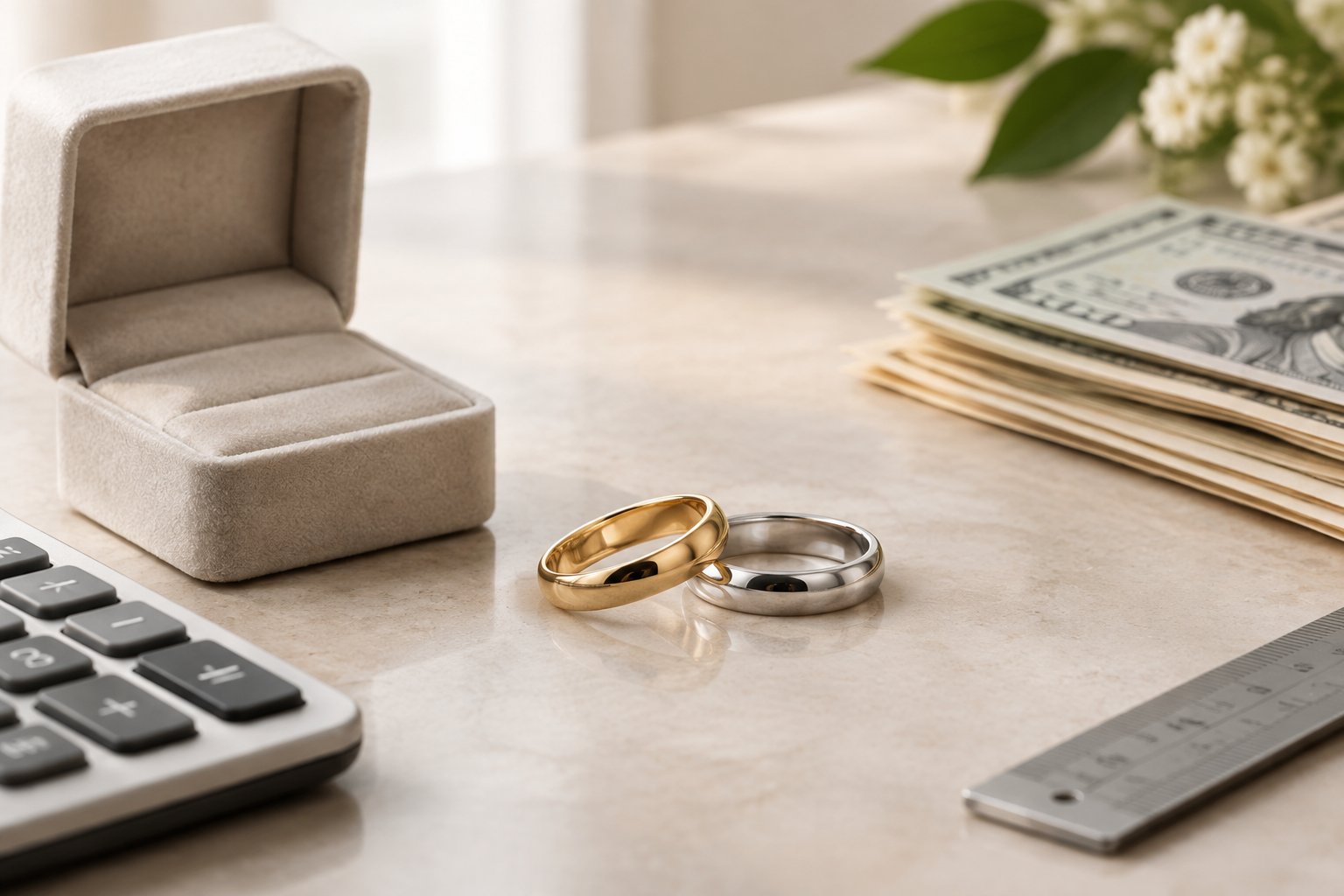
A wedding band is an everyday piece, so comfort, durability, and fit deserve as much attention as the price tag. A modest ring can be a strong choice when it suits your work, style, and long-term plans.
Set a spending limit first, then compare metals, widths, stone details, and warranties within that range. You can also use this guide to how much do you spend on wedding rings before you start visiting retailers.
What Couples Typically Spend
Most couples spend $500 to $2,000 for one wedding band, while a pair often lands between $1,200 and $3,500. Your wedding band cost rises with metal weight, stone coverage, design work, and brand pricing.

Average Cost per Wedding Band
A plain 14k gold wedding band often costs about $400 to $1,200. Wider bands, heavier rings, platinum, and diamond details can move the price above $2,000.
A simple alternative-metal band may cost a few hundred dollars. A hand-finished or custom ring with engraving and gemstones can reach several thousand dollars. These ranges help you judge wedding band prices, though the final quote also includes labor, sizing, taxes, and the retailer’s service package.
Typical Cost for a Pair of Rings
For two plain gold bands, plan on roughly $1,000 to $2,500. A pair with one diamond band, wider profiles, or platinum construction can reach $3,500 to $6,000 or more.
Matching rings do not need to use identical metals or widths. You can create a coordinated pair through a shared finish, engraving, or design detail while keeping each ring suited to its wearer.
How Wedding Band Spending Compares With Engagement Ring Cost
The average wedding ring cost is lower than the average engagement ring cost because a band may use less metal and fewer stones. An engagement ring with a natural diamond can cost several thousand dollars, while a plain wedding band may cost less than $1,000.
The average cost of a wedding ring depends on whether the term means an engagement ring or a band. Compare the complete wedding ring cost by separating the engagement ring, wedding bands, taxes, insurance, and future care. That approach gives you a clearer ring budget than applying a fixed rule to the engagement ring cost.
Price Ranges by Metal and Purity
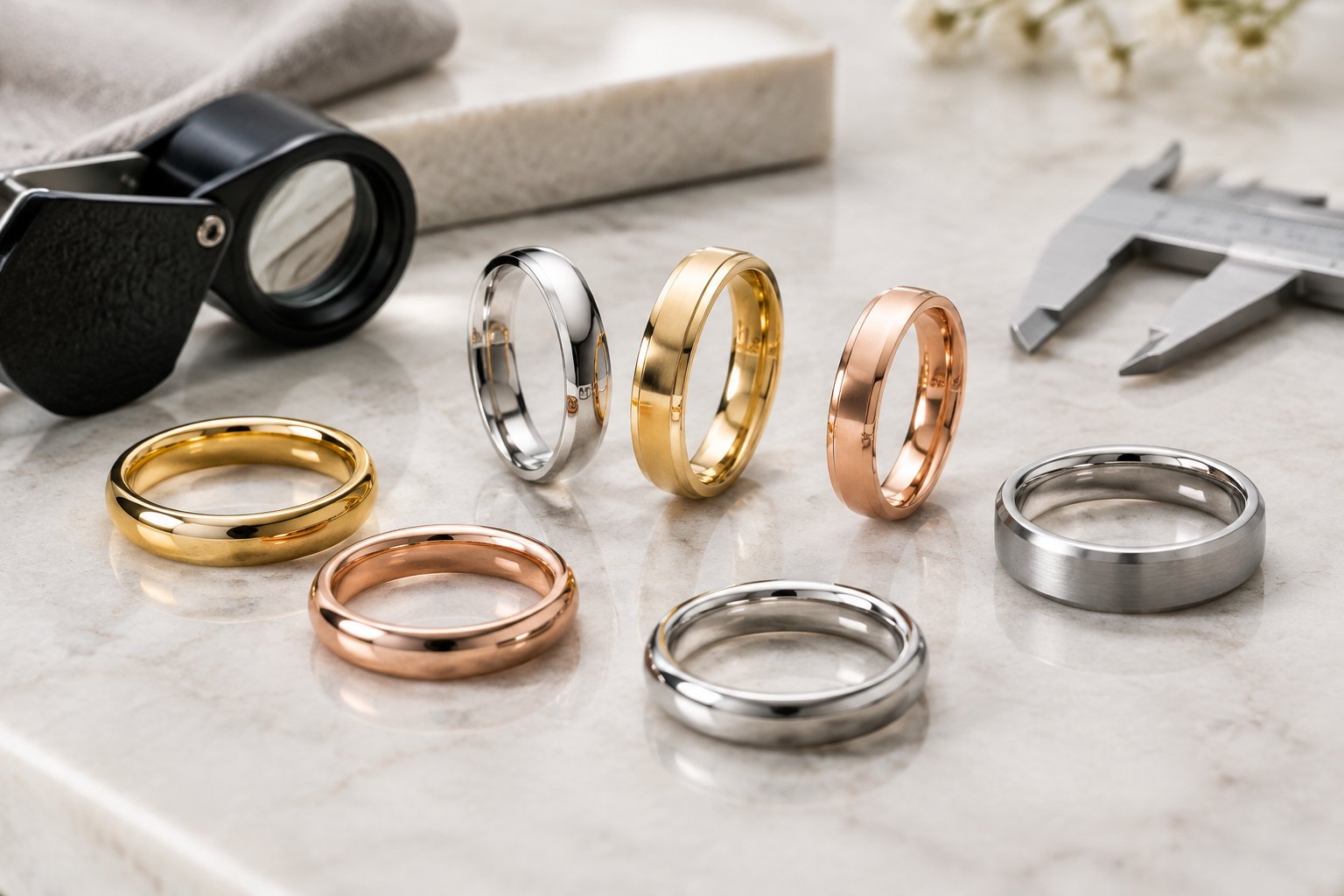
Gold wedding bands often provide the broadest price range, while platinum wedding bands carry a higher starting price because of their purity, density, and manufacturing needs. Alternative metals offer lower-cost styles with different options for resizing and customization.
Gold Options: 14K vs. 18K
14k gold contains 58.3% pure gold and balances color, durability, and price. A plain 14k white gold, 14k yellow gold, or rose gold band often falls near the entry and middle parts of the market.
18k gold contains 75% pure gold, giving it a richer color and higher material value. It costs more per gram and feels softer during daily wear. Yellow gold shows the clearest difference in color, while alloy choices shape the tone of white gold and rose gold.
White gold receives rhodium plating for a bright surface. That coating wears with time and needs renewal as part of routine jewelry care.
Why Platinum Carries a Premium
A platinum wedding band is made from a dense, durable metal. Platinum 950, also marked Pt950 platinum, contains 95% platinum and is a common standard for certified platinum jewelry.
Platinum uses more metal because its density creates a heavier ring. Its purity and specialized finishing also raise the price. Scratches create a soft patina as metal moves across the surface, while polishing restores a smoother finish when you prefer that look.
When Alternative Metals Make Sense
Alternative metals include titanium, tungsten, cobalt, and stainless steel. They suit you when you want a light, modern, or highly scratch-resistant ring at a lower price.
Check the care and sizing policy before buying. Some alternative-metal rings have limited resizing options, and their styles may use fixed widths or fewer setting choices. Gold and platinum give you broader options for future repairs, engraving, and stone work.
Design Choices That Raise or Lower the Price
A narrow, plain band keeps the price controlled, while added metal, stone coverage, intricate settings, and custom labor raise it. Design decisions also affect comfort and the care your ring needs each day.
How Ring Width and Metal Weight Affect Cost
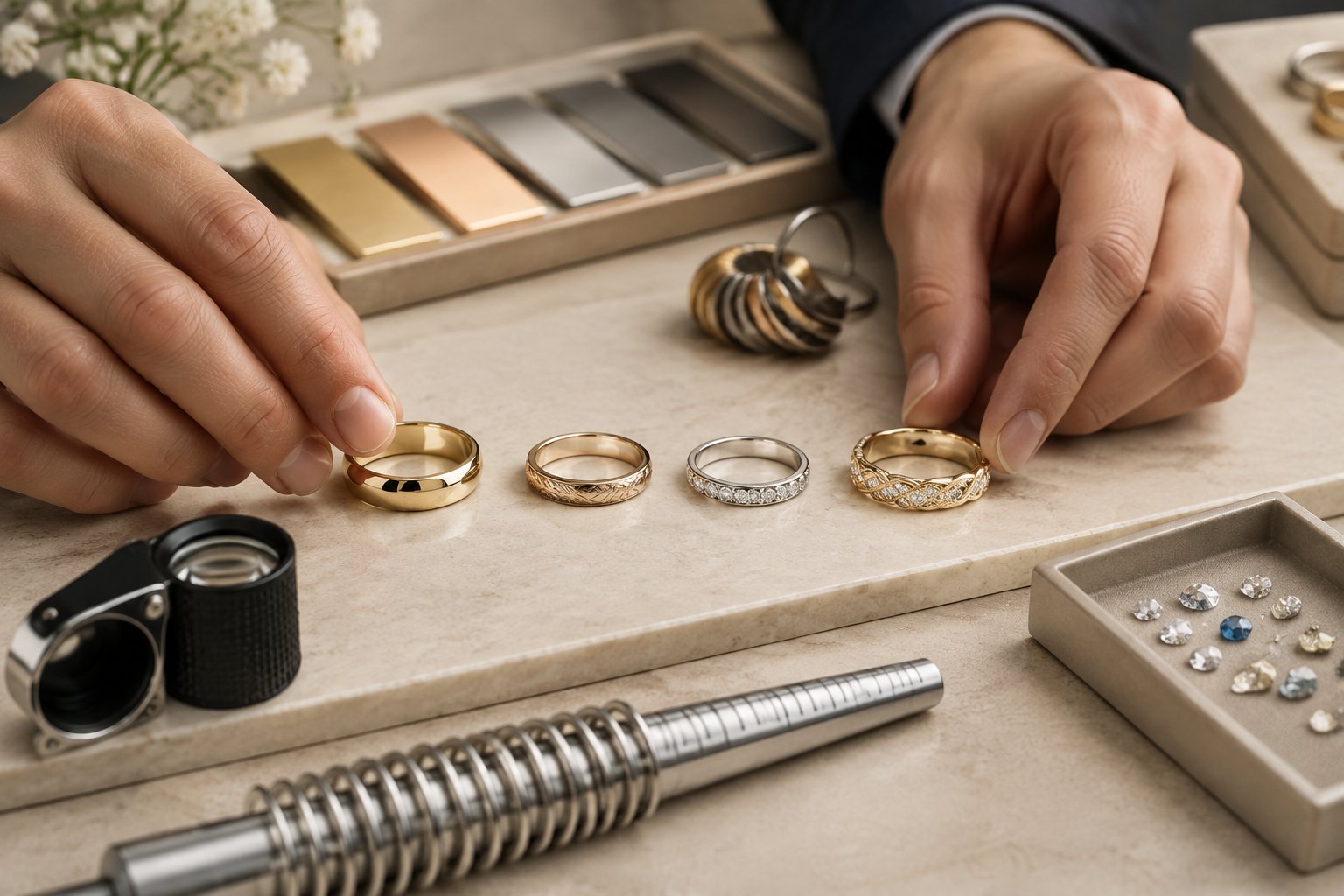
Ring width affects both material use and visual weight. A 2mm band uses less gold or platinum than a 6mm band, so the wider style costs more when other details match.
Your finger size also affects the amount of metal required. A comfort-fit band has a rounded interior that slides over the finger with ease, though its extra shaping can add a small production charge. Try several widths in person, especially if you work with your hands or wear gloves.
The Added Cost of Diamonds and Gemstones
Diamond wedding bands cost more as the number, size, quality, and setting complexity increase. A few diamond accents create a lower price point than a band covered across the top.
Natural diamond pricing reflects carat weight, color, clarity, and cut. Lab-grown diamonds provide the same crystal structure at a different price structure. Moissanite offers strong sparkle at a lower cost, while a colored gemstone such as a sapphire adds color and personal meaning.
Ask whether the quote includes stone grading details, setting work, and a care plan. Those details help you compare diamonds and gemstones across retailers.
Eternity Styles, Finishes, and Personal Details
An eternity band has stones around the full circle, which increases stone count, setting labor, and maintenance needs. A half-eternity design places stones across the visible top and can reduce both cost and future repair work.
A brushed finish gives a soft, low-shine surface, while polished metal reflects more light and shows fine marks sooner. Custom engraving adds a personal message for a set fee, with character limits and production time set by the jeweler.
Budgeting for Both Partners’ Rings
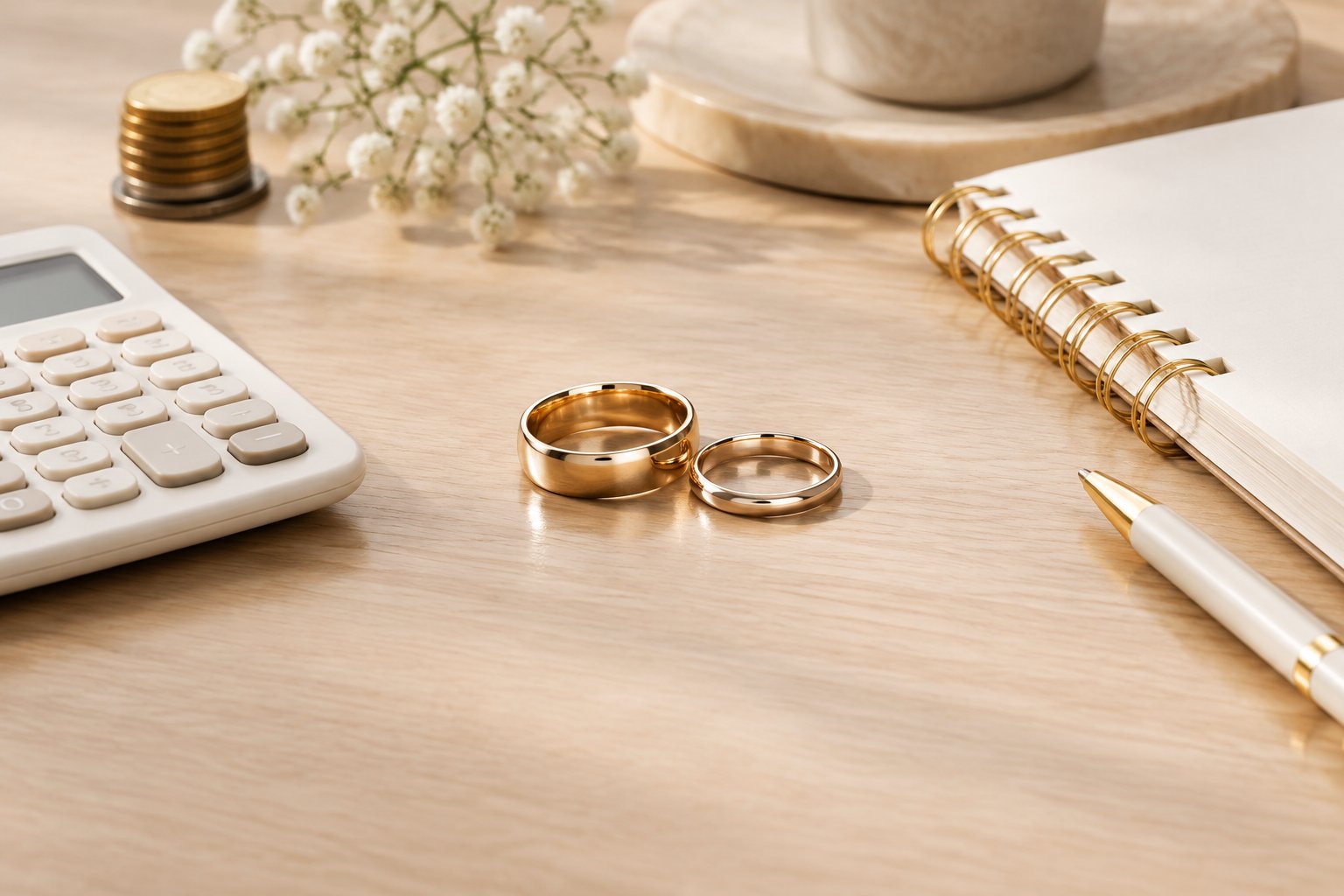
A practical wedding band budget sets a shared spending ceiling, then gives each partner room to choose a ring that fits their hand, work, and style. A pair can include different metals and still feel connected.
Setting a Comfortable Wedding Band Budget
Start with money you have available after venue, travel, attire, photography, and other wedding bills. Set a ceiling for both rings and reserve room for sales tax, engraving, sizing, insurance, and future maintenance.
A useful planning range is $1,200 to $3,500 for a pair of straightforward rings. Move higher when you want platinum, full diamond coverage, custom production, or heavier profiles. You can how much should you spend on wedding ring for another way to frame your personal limit.
Choosing Styles for Women and Men
Wedding bands for women may include contouring, pavé diamonds, milgrain, or a profile designed to sit beside an engagement ring. Men’s wedding bands often use wider profiles, heavier metal, beveled edges, or textured finishes.
These categories describe common shopping patterns, not fixed rules. A platinum ladies wedding band and platinum wedding band for him can share the same alloy while using different widths. Men’s platinum wedding bands may cost more because their larger profiles require additional metal.
Matching platinum couple rings or platinum love bands work well when you want a shared material with distinct shapes.
Ways to Save Without Sacrificing Everyday Wear
Choose a slimmer width, a lower stone count, or a half-eternity layout before cutting comfort or metal quality. Compare 14k and 18k gold, and consider a well-made alternative metal when its care and resizing terms suit your plans.
Shop during a planned promotion, ask about recycled metal, and compare the full delivered price. Reusing family gold can also preserve sentimental value when a jeweler accepts outside metal for a new design.
How to Shop With Confidence
You shop with confidence when the jeweler clearly states metal purity, stone details, sizing terms, warranty coverage, delivery timing, and the full price. Documentation turns an attractive ring into a purchase you can evaluate.
What to Verify Before You Buy
Look for a hallmark such as 14k, 18k, or Pt950 platinum. Ask for the ring’s exact width, approximate metal weight, stone count, total carat weight, and treatment details.
Confirm whether the price includes engraving, sizing, shipping, taxes, and a protective case. Review the return period and learn how the retailer handles repairs, loose stones, scratches, and lost items. A trusted jeweler should provide written terms and answer questions without pressure.
Ethical sourcing policies should explain how the business obtains metals and gemstones. Professional groups such as Jewelers of America and insurance specialists such as Jewelers Mutual can provide useful background as you compare sellers.
Online Retailers vs. a Local Jeweler
Online retailers such as James Allen, Blue Nile, Brilliant Earth, and Jewelove let you compare many specifications from home. Check their sizing support, return window, warranty, shipping coverage, and independent documentation before ordering.
A local jeweler gives you hands-on fitting and face-to-face service. You can feel the ring’s weight, compare finishes under normal light, and discuss alterations with the person handling the work.
Whether you shop online or locally, compare equivalent details. A low listed price can reflect a narrower band, lighter weight, fewer stones, or fewer included services.
Timing, Resizing, and Rush Fees
Begin shopping at least eight to twelve weeks before your ceremony when you want engraving, custom work, or a hard-to-find size. Standard rings may arrive sooner, while custom designs require approvals, production, and inspection.
Ask for the exact sizing process before placing the order. Some rings resize easily, while alternative metals and full-eternity bands have tighter limits. Rush fees apply when a jeweler must move production ahead of scheduled work, so request the regular and expedited timelines in writing before you commit.