
Cost of a Wedding Photographer: What You’ll Pay
Wedding photography is one of the largest parts of many couples’ wedding budget, and the cost can range from about $1,000 to more than $50,000 in the United States. Most couples spend about $2,500 to $4,000 for professional wedding photography, with location, coverage time, experience, and package details shaping the final quote.
Your photographer spends more time on your wedding than the hours spent carrying a camera. Planning, travel, equipment, backups, editing, gallery delivery, and album design all contribute to wedding photography prices.
A lower quote may include fewer hours or fewer products, while a higher quote may reflect a seasoned professional wedding photographer, a larger team, or a luxury experience.
Set your target amount early, then compare complete packages instead of looking only at the headline price. As you contact photographers, ask for a full quote that lists coverage, deliverables, travel, payment terms, and overtime.
That step gives you a clearer path to a photography choice that fits your wedding budget.

How Much Should You Expect to Pay?
The average wedding photography cost in the United States falls around $2,500 to $4,000, while local quotes may range from roughly $1,000 to $50,000 or more. Your geographic location and the photographer’s experience create much of that spread.
A quote also reflects coverage length, the number of photographers, editing time, travel, and physical products. Use the ranges below as planning estimates, then request quotes from photographers who work in your wedding area.

National Averages vs. Realistic Local Quotes
National figures help you set a starting point, yet local wedding photography costs give you a more useful planning number. A photographer in a major city may charge several times more than a photographer in a smaller market because of operating costs, demand, and clientele.
You may see these broad ranges:
- Entry-level coverage: $1,000 to $2,500
- Mid-range coverage: $2,500 to $5,000
- Premium coverage: $5,000 to $10,000
- Luxury or destination work: $10,000 to $50,000 or more
A quote near the lower end can suit a short celebration, courthouse ceremony, or newer photographer with a strong portfolio. A higher quote may include a full-day team, custom albums, multiple events, and extensive planning support.
Typical Price Ranges by Photographer Tier
Your photographer’s experience level gives you another way to compare wedding photography pricing:
| Photographer tier | Common range | Coverage you may see |
|---|---|---|
| Newer professional | $1,000–$2,500 | 4–6 hours, one photographer, digital gallery |
| Established local photographer | $2,500–$5,000 | 6–8 hours, edited images, planning support |
| Premium photographer | $5,000–$10,000+ | 8–10 hours, second photographer, album options |
| Luxury or destination specialist | $10,000–$50,000+ | Multi-day coverage, larger team, custom products |
Review full wedding galleries at every tier. A polished portfolio shows how the photographer handles changing light, family portraits, crowded receptions, and emotional moments across an entire day.
How Much of Your Wedding Budget Should Go to Photography?
Plan to reserve about 10% to 15% of your total wedding budget for photography. A $30,000 wedding could support a photography budget of $3,000 to $4,500, while a $60,000 wedding could support $6,000 to $9,000.
Your priorities can shift that percentage. Couples who care deeply about photography may reduce spending on physical favors or printed stationery.
Couples planning an intimate wedding may spend a larger share on coverage because photography remains one of the main lasting purchases.
What Drives the Final Price?
Coverage hours, location, date, team size, experience, editing work, and travel create most of the difference between wedding photography rates. Your quote reflects the full service surrounding the wedding day, including preparation and post-production.
Ask each photographer to show how each cost enters the proposal. Clear line items make it easier to adjust coverage while keeping the parts of the service you value.
Coverage Hours and the Wedding-Day Timeline
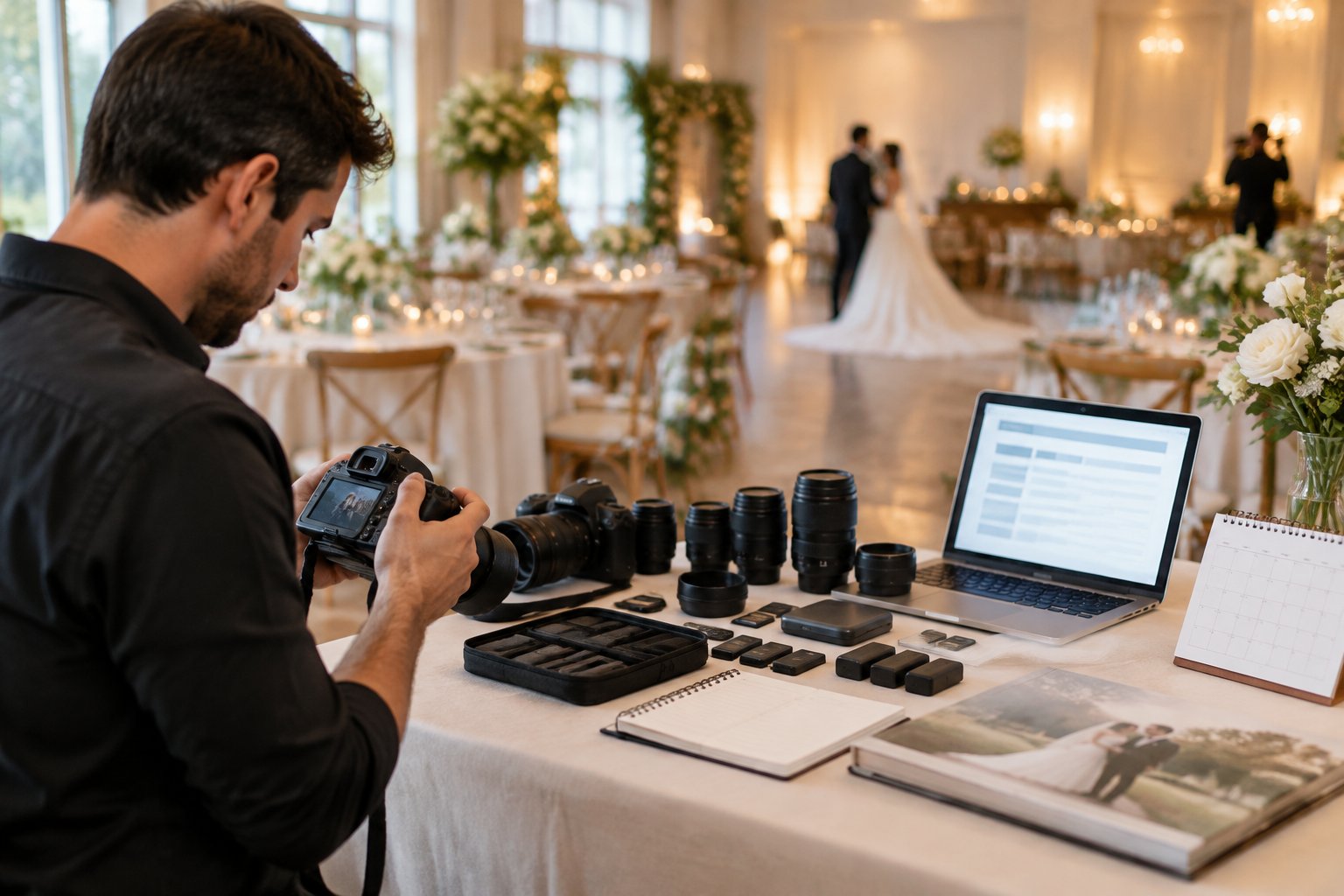
More coverage increases the price because your photographer spends more time shooting, traveling between locations, managing equipment, and editing the resulting images.
A 4- to 6-hour booking may cover the ceremony, portraits, and early reception events. An 8- to 10-hour booking can include getting-ready photos, separate preparation locations, the ceremony, family portraits, dinner, toasts, first dances, and open dancing.
Build your timeline before choosing hours. If you want getting-ready coverage and the grand exit, calculate the time between those moments.
Extra hours may cost several hundred dollars per hour, so a precise start and end time helps prevent surprise charges.
Location, Season, and Wedding Size
A large city, a high-demand venue area, and a Saturday during peak wedding season can raise wedding photography costs. Weekday dates, winter celebrations, and smaller towns may offer more flexible pricing.
Guest count affects the work as well. Larger weddings create more family combinations, guest interactions, table coverage, and movement between spaces.
A photographer may recommend a second photographer for a large guest list or a venue with several rooms.
Share your venue, guest count, date, and timeline when requesting a quote. Those details allow a photographer to price the assignment with better accuracy.
Experience, Style, and Post-Production Work
Experience helps a photographer respond to dark reception rooms, harsh sunlight, rain, fast timelines, and important moments that happen once. Your photographer also spends many hours selecting and editing images after the wedding.
Post-production may include culling, exposure adjustments, color correction, cropping, retouching, gallery preparation, and backup management. An artistic editing style or detailed retouching takes additional labor.
Look for a style that matches your preferences. Documentary, classic, editorial, and film-inspired work create different results, even when two photographers provide the same number of hours.
Travel Costs for Destination Celebrations
A destination wedding photographer may add airfare, mileage, lodging, meals, rental transportation, assistant travel, and travel days to the package. Some photographers include these expenses in one destination rate, while others list each item separately.
Ask who pays for travel, how lodging is selected, and whether travel days count as coverage days. Your agreement should also address weather delays, border requirements, permits, and backup equipment for international events.
For a local wedding, confirm whether mileage or parking applies when the ceremony and reception use separate venues.
What Is Included in a Photography Package?
A wedding photography package commonly includes scheduled coverage, professionally edited digital images, and an online gallery, while albums, extra events, raw files, and rush delivery require close review. Package names mean little without a detailed list of deliverables.
Compare the number of hours, photographers, images, products, rights, and delivery dates. Two packages with the same price may offer very different services.
Digital Galleries, Edited Images, and Raw Files
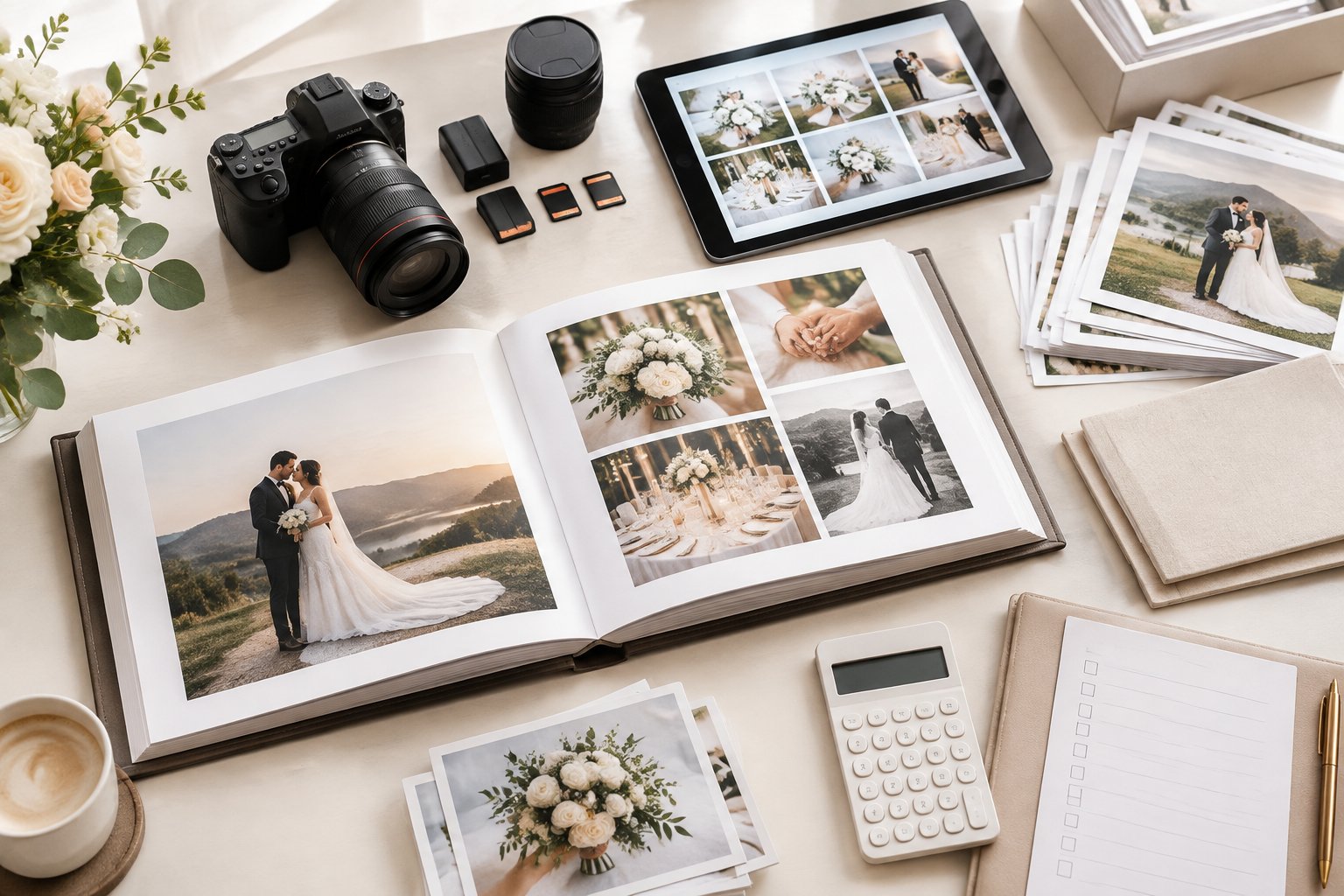
Most packages provide a private online gallery with downloadable, high-resolution JPEG files. Ask how many edited images you can expect, how long the gallery remains available, and whether the gallery supports sharing with family.
Professional editing may include exposure, cropping, color correction, and consistency across the full gallery. Advanced retouching, such as removing objects or changing backgrounds, may carry an extra fee.
Raw files are unedited camera files. Many photographers do not include them because their finished work depends on their selection and editing process.
Ask about raw files before booking if access to them is important to you.
Engagement Sessions and Rehearsal Dinner Coverage
An engagement session may be included in a standard or premium package. Your engagement photos can support save-the-dates, wedding websites, guest books, and personal announcements.
The session also gives you time to learn how your photographer directs poses and movement.
Rehearsal dinner photography is a separate service unless your package includes it. Ask whether the photographer offers a set number of hours, a full evening, or a multi-day collection.
You may also see bridal portraits, welcome-party coverage, post-wedding sessions, or anniversary sessions listed as add-ons.
Albums, Prints, and Personal-Use Rights
A wedding album may include a set number of pages, cover materials, images, and design revisions. Parent albums and canvas prints may be included in premium packages or sold separately.
A print release gives you permission to print and share images for personal use. It does not transfer copyright or allow commercial use.
Confirm whether the package includes a print release and whether it covers high-resolution files.
Ask about lab quality, album deadlines, print credits, and shipping costs before adding physical products to your budget.
Rush Delivery and Other Common Add-Ons
Standard gallery delivery may take several weeks or months, depending on the photographer’s workflow and season. Rush delivery can shorten that timeline for an added fee.
Other add-ons may include:
- Additional coverage hours
- A second photographer
- Rehearsal dinner photography
- Extra retouching
- Same-day previews
- Wedding albums
- Parent albums
- Canvas prints
- Film photography
- Photo booths or short video clips
Ask for the price of each add-on in writing. A detailed list helps you choose the services that support your day without adding products you will not use.
How to Compare Photographer Quotes Fairly
Compare quotes by matching coverage, team size, deliverables, rights, delivery time, travel, and contract terms before judging the price. A $2,500 quote and an $8,000 quote may describe different levels of service.
Create a comparison sheet with the same questions for every photographer. Review complete galleries as well as highlight images so you can see how each person handles the full wedding day.

Questions to Ask Before You Book
Ask each photographer:
- Are you the person photographing my wedding?
- How many hours are included?
- Is a second photographer included?
- How many edited images should I expect?
- Are engagement photos part of the package?
- Is travel, parking, or lodging included?
- What happens if you become ill?
- What is the gallery delivery timeline?
- Do you provide a print release?
- What are the overtime and rush-delivery rates?
- Are vendor meals required for the photography team?
Confirm whether the photographer has worked at your venue or at a similar location. Ask for a full gallery from a wedding with comparable lighting and timeline demands.
How to Evaluate a Portfolio and Experience Level
A strong portfolio should show consistency across preparation, ceremony, portraits, reception details, dancing, and family groups. Look for natural expressions, clear focus, balanced exposure, and images that feel cohesive.
Ask how many weddings the photographer has photographed and who will appear on your wedding day. An established business may send an associate or contracted second photographer, so identify each person before signing.
Pay attention to communication as well. Timely replies, clear planning, and calm guidance during consultations give you useful information about the client experience.
Deposits, Payment Schedules, and Overtime
Most photographers require a retainer when you sign the contract, followed by one or two scheduled payments. The agreement should list each due date, the total balance, accepted payment methods, and the cancellation or postponement policy.
Overtime rates should appear in dollars per hour and identify whether the charge applies to one photographer or the full team. Ask what happens when your reception runs late and who must approve extra time.
Budget for meals, parking, lodging, and travel when those costs sit outside the quoted package. Confirm vendor meal requirements with your venue and photographer.
Why the Contract Matters
Your wedding photography contract defines the service you are purchasing. It should state the date, locations, coverage hours, photographer names, deliverables, delivery timeline, payment schedule, cancellation terms, image rights, backup plan, and overtime rate.
Read the sections on force majeure, venue restrictions, model release, and image storage. Ask for an explanation of any clause you do not understand before you sign.
Online marketplaces such as WeddingWire can help you discover local vendors, while the contract remains the document that controls your agreement with the photographer.
Ways to Stay Within Budget Without Sacrificing Coverage
You can lower wedding photography prices by choosing the right hours, date, team size, and products while protecting coverage for the moments you value most. Careful planning gives you room to adjust the package without removing essential parts of the day.
Start with a list of must-have moments. Then shape the package around those moments instead of buying every available add-on.
Prioritize the Moments You Want Documented
Write down the moments you want preserved, such as preparation, a first look, family portraits, the ceremony, toasts, first dances, or a sparkler exit. Share this list with your photographer so the timeline supports it.
If preparation photos matter most, begin coverage before the ceremony. If late-night dancing ranks low, ending coverage after the main reception events can reduce hours while preserving the key story of the day.
A clear shot list also helps your photographer work efficiently. Include family groupings, important details, cultural traditions, and people who must appear in the gallery.
Choose Coverage Length Before Extra Products
Choose the number of coverage hours first, then add albums, prints, or specialty services if your budget allows. Strong coverage protects the moments you will want to revisit, while physical products can be ordered later when your finances are less pressured.
Ask whether the photographer offers 6-, 8-, or 10-hour options. Review the start and end times carefully, including travel between venues and the time needed for family portraits.
You can also ask about an associate photographer through an established studio. Review that photographer’s full galleries and confirm that the editing process matches the studio portfolio.
Consider Off-Peak Dates and Local Talent
Friday weddings, Sunday celebrations, winter dates, and shorter events may bring more flexible wedding photography pricing. Ask whether your preferred photographer has date-based rates or custom packages.
A newer local photographer with a strong full-gallery portfolio may offer a lower rate while building experience. Review complete weddings, ask about backup equipment, and confirm their plan for illness or equipment failure.
Hiring locally also reduces travel fees. Request quotes from photographers who regularly work near your venue and know the lighting, access rules, and parking conditions.
Decide Whether a Second Photographer Is Worth It
A second photographer adds coverage for simultaneous events, separate preparation locations, guest reactions, alternate ceremony angles, and large family groups. The extra photographer may be useful for a large wedding or a venue with several rooms.
A single photographer may suit an intimate wedding with one location and a focused timeline. Ask how the lead photographer handles family portraits, ceremony coverage, and reception details alone.
Compare the cost of a second shooter with the moments that would otherwise happen outside the lead photographer’s view. If you add one, confirm the person’s name or experience level, working hours, and image ownership in the wedding photography package.