
Cost to Resize a Wedding Band: What Affects the Price
A cost to resize wedding band is usually about $40 to $150 for a plain gold or silver band, while platinum, wide bands, gemstone settings, and major size changes can raise the bill to $300 or more. Your jeweler gives the firm price after checking the metal, design, current ring size, and target fit.
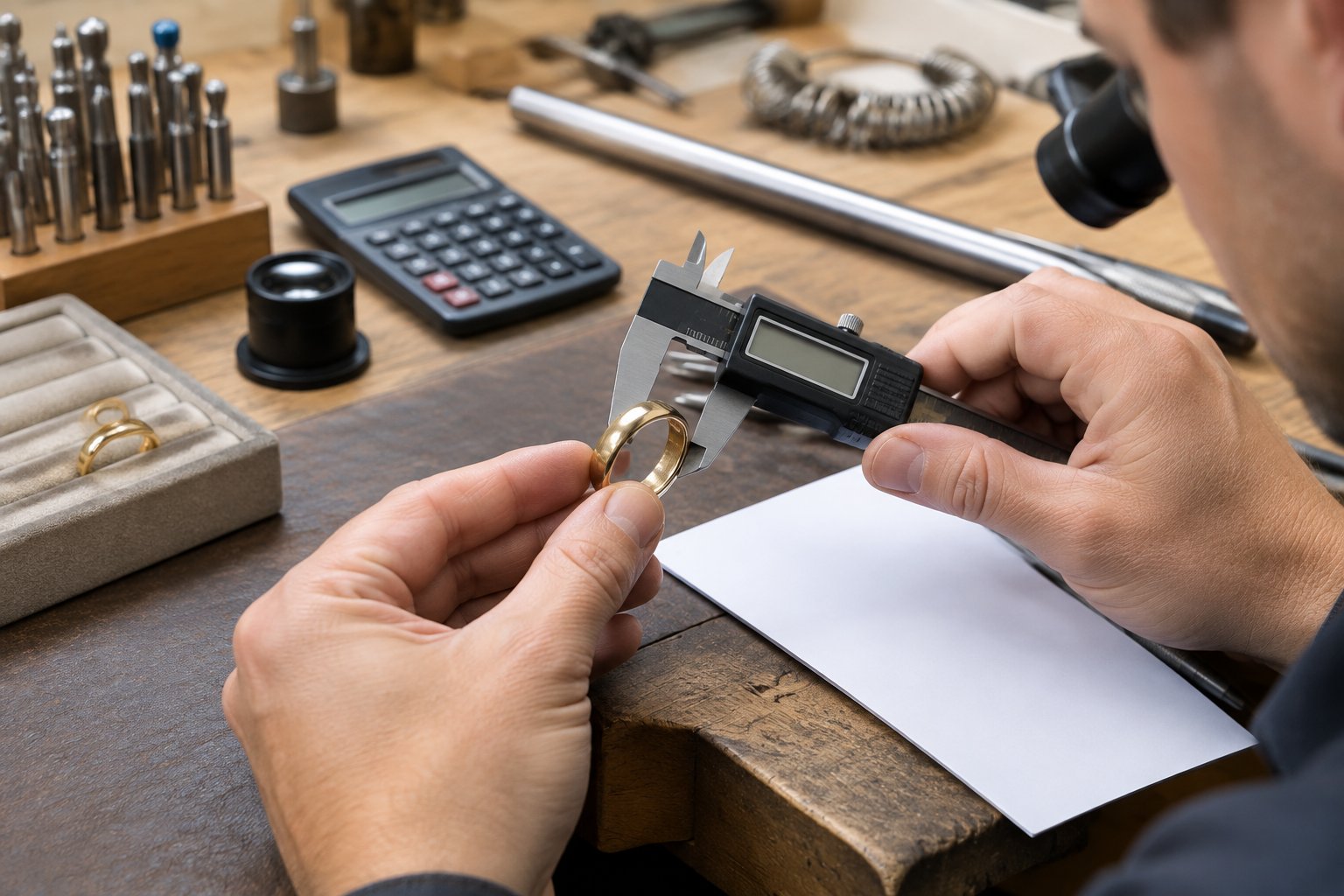
A wedding band may stop fitting after weight changes, finger swelling, or natural aging. A ring that spins, pinches, or leaves deep marks deserves a professional fit check before you choose a permanent adjustment.
Bring your band to a trusted local jeweler for an inspection and written estimate. You will learn whether resizing protects the ring or whether a guard, sizing beads, or replacement offers a safer fit.
What Will You Pay for a Size Adjustment?
A standard ring resizing cost falls near $40 to $150, while complex work can reach $300 or more. The cost to resize a wedding ring rises when the jeweler must remove or add substantial metal, protect stones, or restore detailed finishes.
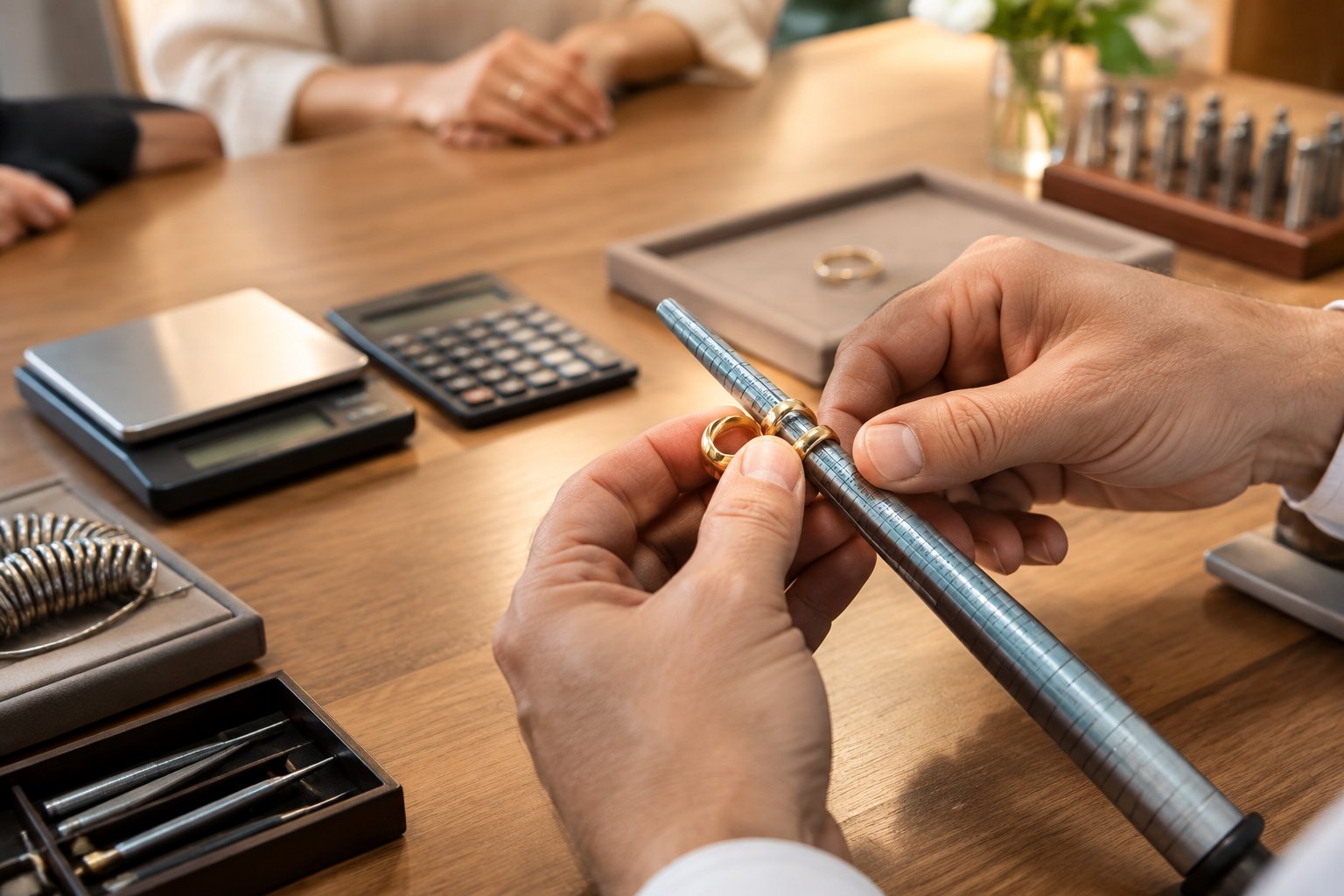
Typical Cost to Make a Band Smaller
Sizing down a plain band often costs $40 to $80. The jeweler cuts a small section from the lower part of the shank, joins the ends, and reshapes the ring.
A narrow silver or gold band sits near the lower end of that range. A wide band, patterned surface, or previous repair adds labor and finishing time. Ask whether polishing, cleaning, and rhodium plating for white gold are included.
Typical Cost to Make a Band Larger
Making a band larger often costs $60 to $150 or more. A jeweler might stretch a small amount for a plain, durable band or cut the shank and add a matching insert for a larger change.
The added metal affects the cost to resize a ring. Gold and platinum inserts carry material costs, and alloy matching helps the new section blend with the original band. Ask whether the quote includes the metal, soldering, polishing, and any stone inspection.
When a Major Resizing Costs More
A major resizing involves a large size change, a thick band, a fragile shank, or a design that needs reconstruction. Prices can pass $200 to $300 when the jeweler must rebuild sections, move settings, restore engraving, or complete several finishing steps.
A large change also affects the ring’s shape and strength. Your jeweler may recommend a new shank or a replacement band when removing or adding metal would leave the ring thin, uneven, or poorly balanced.
What Determines Your Final Quote?
Your final wedding ring resizing cost is driven by the ring material, its width and thickness, the distance between sizes, and the condition of the band. Precious metals and complex alloy matching require more specialized work.
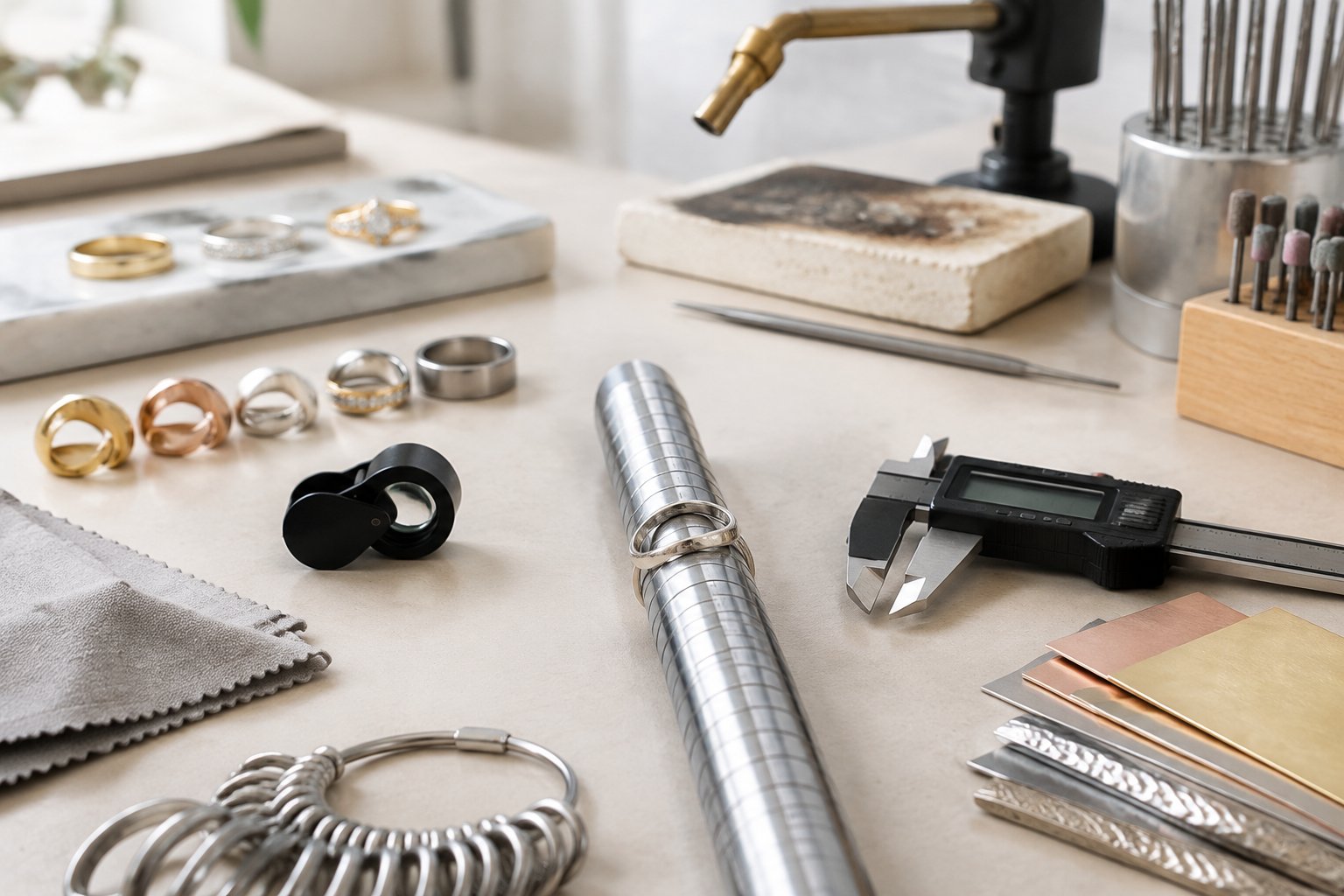
How Ring Material and Karat Change the Price
A silver ring and a plain 14k gold band usually cost less to resize than a platinum ring. The price reflects both the jeweler’s labor and the metal added during an enlargement.
- 14k gold: Durable and widely used, with a moderate resizing price.
- 18k gold: Contains more gold, so added material costs more.
- Yellow gold: Easier to match when the alloy is familiar.
- Rose gold: Needs a close copper-alloy match for a consistent color.
- White gold: May need rhodium plating after repair.
- Platinum: Requires dedicated tools and careful heat control, which raises labor costs.
- Silver: Often sits at the lower end for a plain band.
Old or unusual alloys deserve an inspection before work begins. A professional jeweler checks the metal stamp and compares the color, hardness, and finish before selecting an insert.
Why Ring Thickness and Width Matter
Ring thickness controls how much metal the jeweler must cut, remove, or add. Ring width affects the work area and the amount of material needed for the same size change.
A thin band requires careful handling because excessive heat or filing can weaken it. A wide, heavy band takes more time to shape and polish. Comfort-fit interiors also need accurate rounding so the ring feels smooth after the adjustment.
How Far Can a Band Safely Move?
A small adjustment of about one size is easier to complete cleanly. Many bands handle changes near one or two sizes, while a larger move calls for a structural review.
The limit depends on the metal, thickness, setting, and current condition. A jeweler checks whether the shoulders remain balanced and whether the stones stay secure. When the change is too large, a new shank or replacement ring protects the design better.
How Settings, Stones, and Details Affect the Work
Gemstones and decorative details increase the price because the jeweler must protect the stone setting and restore the ring’s surface after the size changes. Pave, channel, and tension settings require special inspection.
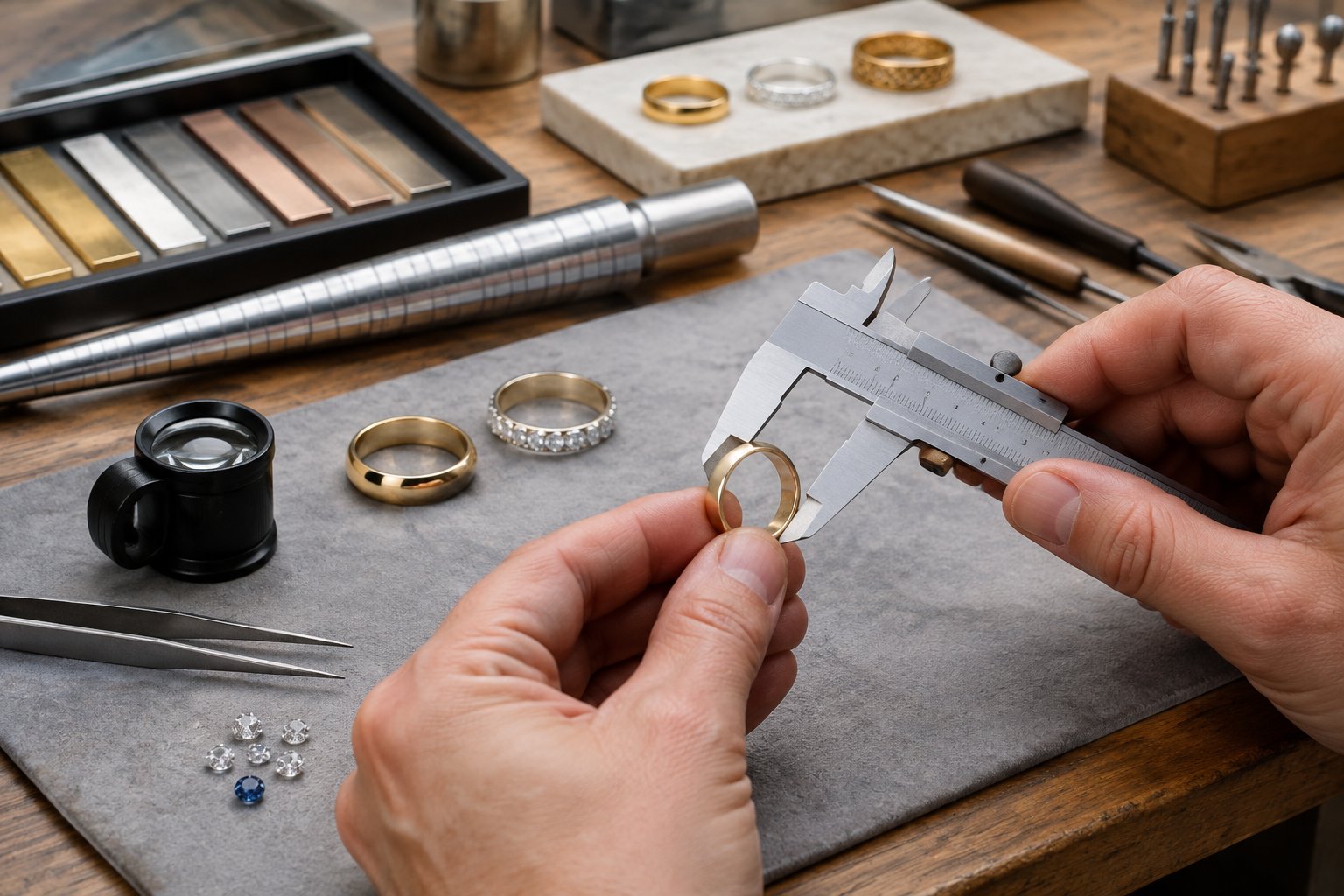
Which Gemstone Bands Need Extra Care
Gemstones can loosen when heat, pressure, or reshaping affects the band. A pave setting holds many small stones close together, while channel settings depend on aligned metal walls. Both designs need a stone check after resizing.
A tension setting requires the most caution because pressure holds the stone in place. A jeweler may recommend a different solution when altering the band could change that pressure.
Stone removal and resetting adds labor and risk. The quote should state whether the work includes stone removal, stone resetting, prong tightening, and a final inspection.
Can an Eternity Design Be Resized?
An eternity band with stones around the full circle has limited resizing options. Cutting the band interrupts the stone pattern, and adding or removing metal can change the spacing.
A jeweler might resize a small amount in select designs after removing and resetting stones. That process can cost substantially more than a plain band. Ring guards or a replacement in the correct size may preserve the original design with less disruption.
Will Engraving and Milgrain Survive?
Engraving and milgrain can survive a careful adjustment when the cut stays in a plain area. A cut through lettering or a repeating edge requires re-engraving or engraving restoration.
Milgrain is the beaded border found on many vintage-style bands. Heat, filing, and polishing can soften those beads, so ask whether the jeweler will recreate the pattern. Include restoration in the written quote before authorizing the work.
How a Professional Jeweler Resizes a Band
A professional jeweler begins by confirming your ring size, inspecting the band, and choosing a method that preserves its shape and settings. The work may involve soldering or laser welding, followed by polishing and a detailed stone check.
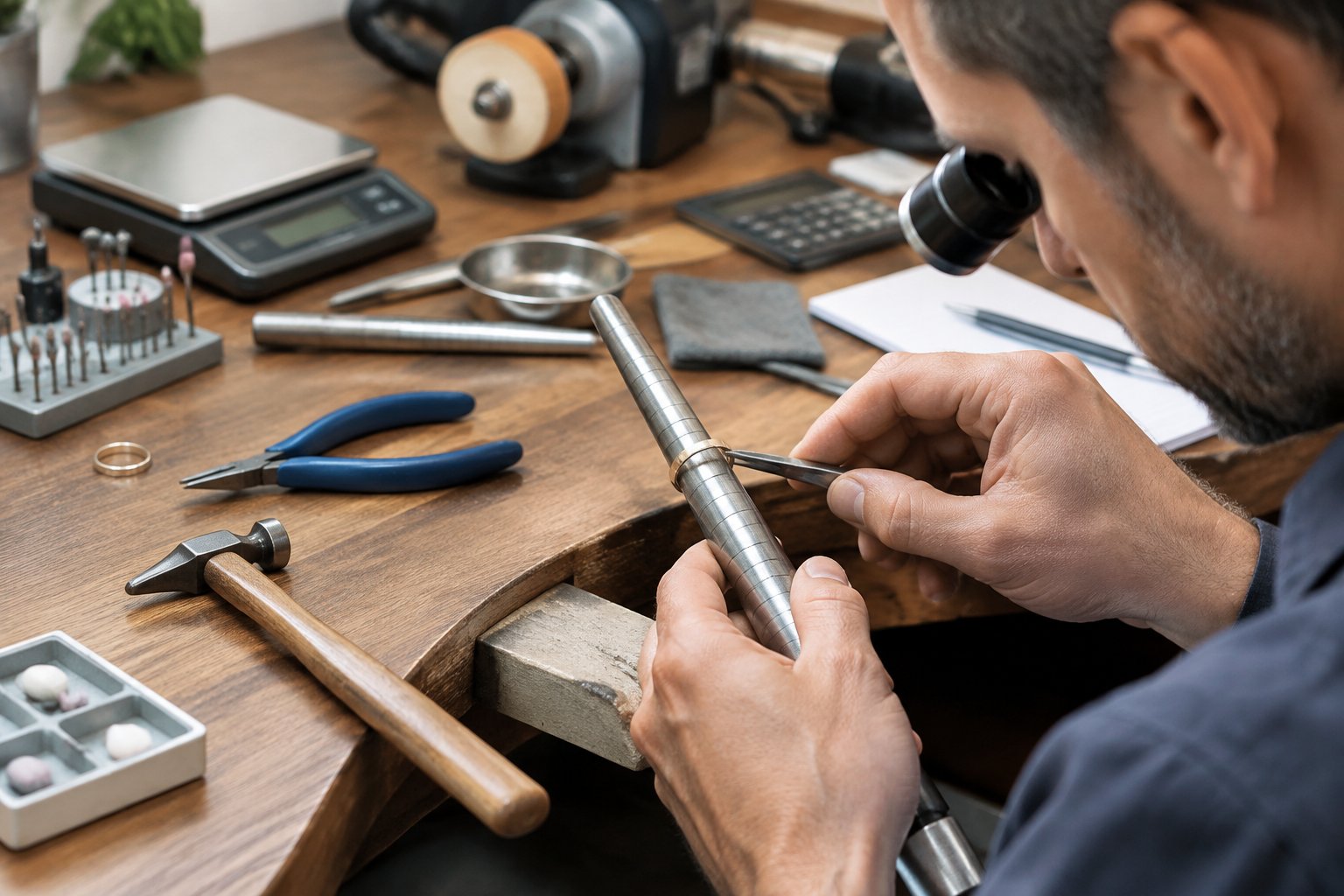
Sizing Down by Removing Metal
To size down, the jeweler marks the lower shank and removes a measured section. The ends are joined with soldering or laser welding, then rounded until the ring matches its original profile.
The jeweler checks the ring size against a ring size chart and a sizing mandrel. A precise measurement prevents a loose fit or excessive pressure around your finger.
Sizing Up With a Matching Insert
For a larger size, the jeweler may open the shank and add a matching insert. The insert must match the ring material, karat, color, thickness, and interior shape.
Laser welding gives the jeweler fine control on some metals and detailed designs. Traditional soldering remains suitable for many plain gold and silver bands. The method depends on the ring’s construction and the jeweler’s equipment.
Finishing, Polishing, and Stone Checks
After the size change, the jeweler rounds the band, smooths the seam, and restores the surface finish. Polishing removes small marks, while white gold may receive rhodium plating to refresh its bright color.
The final inspection checks the ring size, seam, stone security, prongs, engraving, and interior comfort. Request a written record of the completed size and any warranty on the workmanship.
Which Bands Should Not Be Resized?
Tungsten rings, ceramic bands, and some titanium or stainless-steel designs usually need replacement because their material or construction resists standard resizing. Ring guards and sizing beads offer practical options for a loose band that can remain intact.
Why Tungsten and Other Hard Metals Usually Need Replacement
Tungsten rings have extreme hardness and cannot be cut, stretched, and joined like gold or silver. Ceramic bands can crack during alteration, while titanium requires specialized equipment and presents limited options for size increases.
A ring replacement is the safest path when the material cannot accept a reliable seam. Check the original retailer’s exchange policy before paying for a new ring.
When a Guard or Sizing Beads Are Better
A ring guard fits inside the band and reduces the interior space. It works well for temporary changes, seasonal swelling, or a ring you want to preserve without cutting.
Sizing beads are small metal additions placed inside the lower part of the band. They reduce movement while leaving more room over the knuckle. A jeweler can select their size and placement to improve comfort.
When Replacement Is Safer Than Another Repair
Replacement makes sense when the band has a thin shank, several old solder seams, severe wear, or a size change beyond its safe range. It also helps when the original design has stones around the full circle and no plain section for a cut.
A jeweler can assess whether rebuilding the shank costs more than a new band. Ask for both options in writing, including metal, stone, engraving, and finishing charges.
Where Should You Take Your Wedding Band?
Choose a local jeweler who inspects the ring in person, explains the method, and provides a written quote before work begins. An independent jeweler may offer direct access to the bench professional, while jewelry stores such as Zales, Kay Jewelers, and Jared may route repairs through a service center.
Independent Jeweler vs. Jewelry Store
An independent jeweler can discuss alloy matching, repair limits, and design details directly with you. A jewelry store may offer established repair procedures, brand records, and store-based service options.
Compare the inspection process, turnaround estimate, workmanship guarantee, and return procedure. Price alone does not show whether the repair includes plating, stone checks, or finish restoration.
What to Ask Before Leaving Your Ring
Ask these questions before you approve the work:
- What ring size will you target?
- How much metal will you remove or add?
- Which method will you use?
- Are stone checks, polishing, and plating included?
- Will engraving or milgrain need restoration?
- What happens if the ring cannot be resized safely?
- How long will the repair take?
- What written warranty covers the work?
Photograph the band and record its identifying details before handing it over. Request a receipt that notes the metal, stones, condition, and promised services.
Checking Warranties and Insurance Coverage
Review your jewelry insurance policy before authorizing repair. Coverage for loss, damage, shipping, and workmanship differs by policy, and a repair claim may require an approved jeweler or a detailed estimate.
Ask the jeweler whether the repair includes a workmanship guarantee and what it excludes. Keep the estimate, receipt, appraisal, and before-and-after photographs with your jewelry records.