
Creating a Wedding Weekend Itinerary: A Practical Guide
Your wedding weekend itinerary should give guests clear plans while leaving room to rest, explore, and enjoy time together. Start with the events that shape the weekend, then add travel details, personal moments, and helpful contact information.
A well-planned schedule turns a destination wedding into a comfortable experience from arrival through farewell.

Creating wedding weekend itinerary plans works best when you build around your guests, anchor the schedule to the ceremony, and share separate details with each group that needs them. Give yourself time to confirm venue access, transportation, vendor arrival times, and meal service before you publish the final version.
You can also use a destination wedding checklist to track travel-focused details. Start with the guest experience, then shape each day around a relaxed and realistic flow.
Start With the Guest Experience
Design the weekend around what guests need to know, when they need to know it, and how much free time they should have. Your wedding website can hold the full schedule, while a shorter printed version fits inside welcome bags.

Choose Events and Mark Who Is Invited
List every planned event before assigning times. Common choices include welcome drinks, a welcome party, the ceremony, the reception, and a farewell brunch.
You might also add a group activity, casual breakfast, or local outing.
Label the guest list for each event clearly:
- Everyone: Open to all invited guests
- Wedding party: Required for rehearsal or group photos
- Immediate family: Included in family gatherings and formal planning moments
- Optional: Available for guests who want extra time together
Add attire, meal details, location, RSVP instructions, and an estimated end time for each event. Guests appreciate knowing when participation is expected and when they have freedom to choose.
Set Arrival, Departure, and Free-Time Windows
Use broad arrival and departure windows until travel details become firm. Include hotel check-in, shuttle pickup, luggage storage, and the time guests should be ready for each group event.
Free time belongs on the schedule. Give guests space to nap, explore the area, visit a coffee shop, or spend time with family.
This matters especially for a destination wedding, where guests may be traveling across time zones.
Include practical notes such as:
- Hotel address and parking information
- Airport or train transportation
- Weather guidance
- Nearby restaurants and attractions
- A contact person for urgent questions
Build the Schedule Around the Ceremony Time
Set the wedding ceremony time first, then place photography, transportation, meals, and reception moments around it. Confirm the ceremony length with your officiant and ask the venue when guests may enter.
Work backward for getting ready, portraits, and guest arrival. Work forward for cocktail hour, the grand entrance, dinner, dancing, and the farewell plan.
Add buffers between locations and major transitions so a small delay does not disrupt the entire wedding timeline.
Plan Friday Arrivals and Pre-Wedding Events
Friday should welcome guests without exhausting the people taking part in the ceremony. Coordinate hotel check-in, welcome bags, the rehearsal, and dinner so each group knows where to go and when.
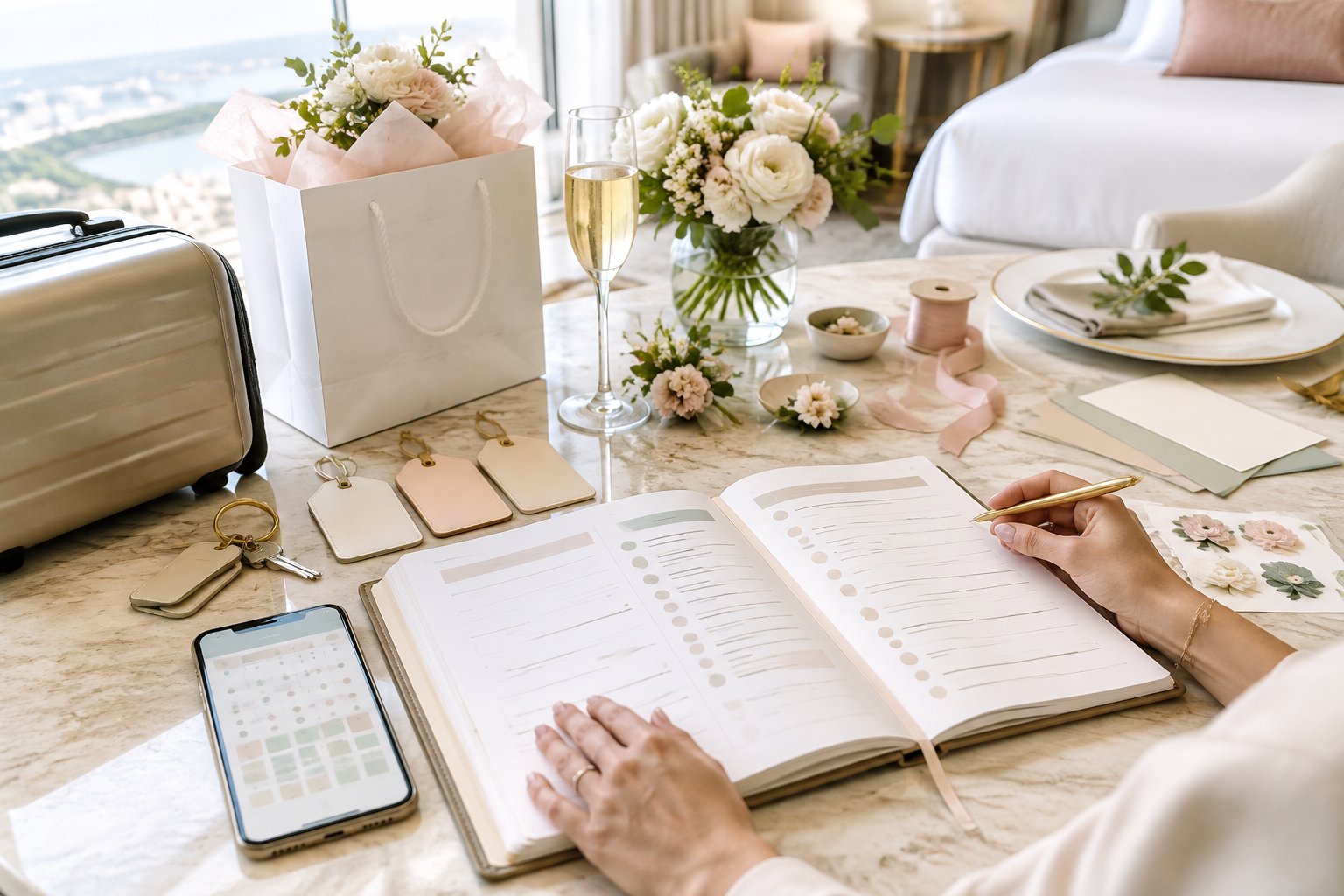
Coordinate Hotel Check-In and Welcome Bags
Ask the hotel about early arrivals, luggage storage, room blocks, and the best place to distribute welcome bags. Add the bags to guest rooms, hand them out at check-in, or place them at a welcome desk.
Include items that support the weekend:
- Bottled water and snacks
- A printed itinerary
- Local treats
- Weather supplies
- Transportation instructions
- A note from you
Tell guests what to do if their room is not ready. A nearby lounge, restaurant, or scheduled welcome activity gives them a comfortable option while they wait.
Schedule the Ceremony Rehearsal
Schedule the ceremony rehearsal early enough for the wedding party and immediate family to arrive without rushing. Confirm who needs to attend with your officiant and coordinator.
Walk through the processional, readings, vows, ring exchange, recessional, and any cultural or religious elements. Assign someone to answer questions about where each person should stand.
Give participants the rehearsal location, start time, parking details, and expected end time.
Sequence the Rehearsal Dinner and Welcome Toast
Place the rehearsal dinner after the rehearsal, with enough travel time for everyone to reach the restaurant or event space. Keep the meal timing clear so guests know when seating, food service, and remarks begin.
A welcome toast can open the dinner or follow the first course. Keep the speaking list short and tell each speaker how much time they have.
If the dinner includes only the wedding party and immediate family, list the guest limits clearly so other attendees do not arrive expecting to join.
Map the Wedding Day From Getting Ready to the After-Party
Build the wedding day timeline around the ceremony, then connect each moment with realistic travel and transition time. Your schedule should guide hair and makeup, portraits, the wedding ceremony, reception events, and the after-party without filling every minute.
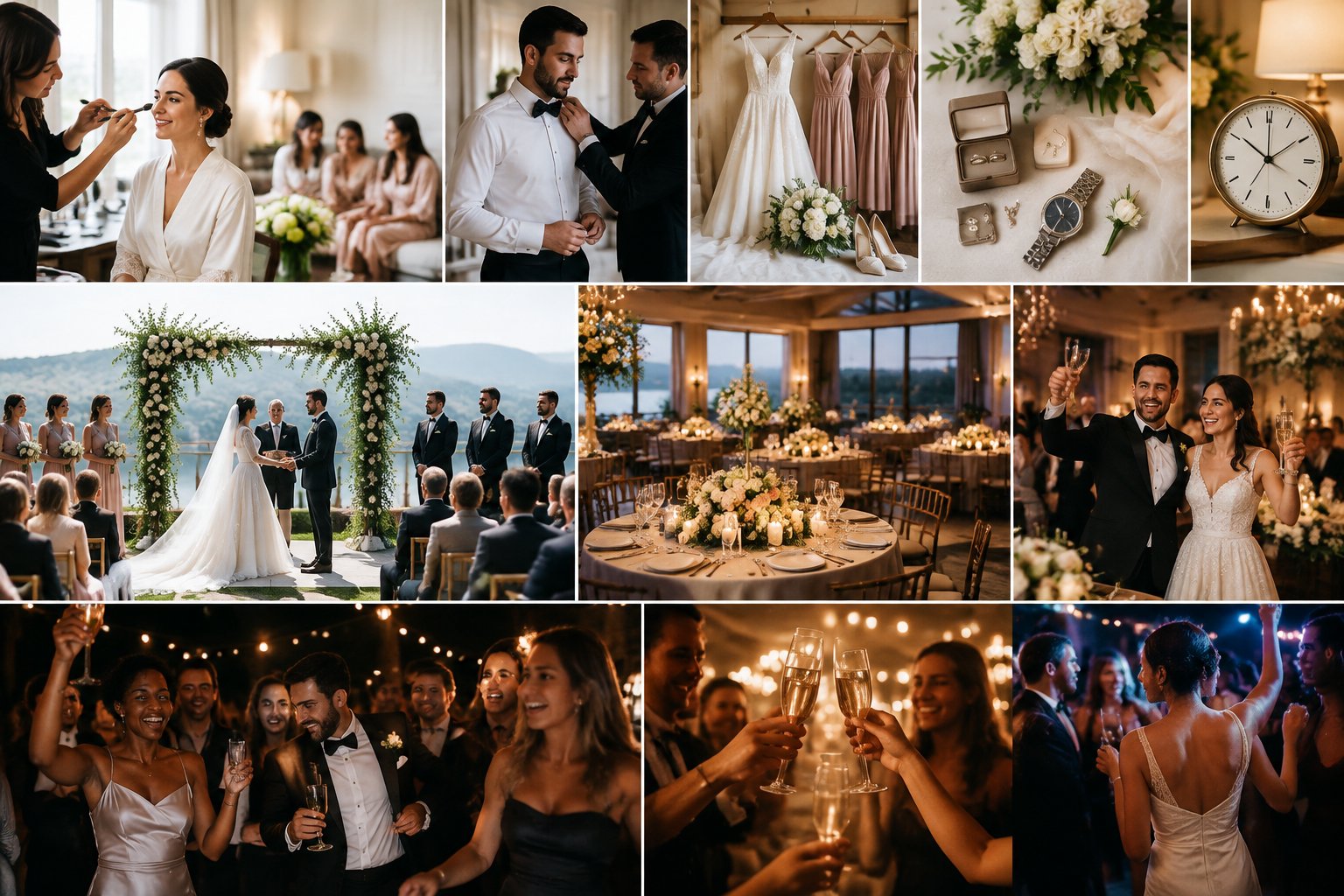
Allow Enough Time for Hair, Makeup, and Getting Dressed
Ask your hair and makeup team for a timing plan based on the number of people and services. Start early enough to include setup, breaks, touch-ups, meals, and the time needed to put on the wedding dress.
Place lunch and water on the schedule. Keep the final getting-ready window calm by finishing services before the ceremony departure time.
Give one person responsibility for checking the clock and gathering the wedding party.
Schedule the First Look and Portrait Sessions
Decide whether you want a first look before the ceremony. A first look gives you time for couple portraits and may allow more time with guests after the ceremony.
If you prefer to see each other at the ceremony, reserve more portrait time during cocktail hour.
Create a photo list that names the people needed for wedding party photos and family photos. Start with larger groups, then move to smaller combinations.
Assign a helper who knows the family members and can bring each group to the photographer.
A wedding day photo checklist can help you organize requested images before the timeline is set.
Time the Ceremony, Cocktail Hour, and Reception Flow
Use the ceremony start and end times to place cocktail hour and the reception. Tell guests where to go after the ceremony, especially if the ceremony site and reception space are separate.
A reception sequence might include:
- Guest seating
- Grand entrance
- First dance
- Welcome remarks
- Dinner service
- Toasts
- Cake cutting
- Open dancing
Ask the caterer, DJ, band, and venue coordinator to review the order. Keep speeches within their assigned time so dinner and dancing stay on schedule.
Include travel time, guest seating, vendor resets, and small buffers between major events.
Decide When the After-Party Begins
Set the after-party start time before the wedding day. Include the location, transportation, age limits, dress guidance, food or drinks, and expected end time.
Give guests a clear way to leave the main reception and reach the after-party. A shuttle rotation, rideshare pickup point, or walking directions can prevent confusion.
Keep the after-party optional so guests who need rest can return to their hotel comfortably.
Create Versions for Each Audience
Create one master wedding day timeline, then edit it for guests, the bridal party, immediate family, and vendors. Each version should show the information that group needs without exposing private details that do not affect its plans.

What Should Guests See?
Guests need event names, dates, start and end times, locations, attire, meal information, transportation, and RSVP instructions. Include optional activities and free-time windows so they can make choices with confidence.
Leave out private vendor notes, room assignments, payment details, and personal phone numbers. Add a welcome message and a clear emergency contact who can answer weekend questions.
What Does the Bridal Party Need to Know?
The bridal party needs call times, getting-ready locations, attire, transportation, rehearsal details, photo assignments, and personal items to bring. Include the time each person must be dressed and ready.
Mark responsibilities such as carrying rings, holding bouquets, helping with guest directions, or gathering family members for photos. Give the group one shared schedule so everyone sees the same updates.
What Belongs on the Vendor and Family Schedule?
The vendor schedule should include load-in, setup, deliveries, venue access, sound check, meal service, photography coverage, breakdown, and key contacts. Add the names of the person who approves changes and the person who handles urgent questions.
The family schedule should show rehearsal attendance, ceremony arrival, photos, reserved seating, readings, speeches, dances, and transportation. Keep private family notes separate from the guest-facing itinerary.
Share and Finalize the Weekend Schedule
Publish the schedule after your venue, vendors, transportation team, and key family members confirm their times. Keep one master wedding weekend itinerary for updates, then share shorter versions through your wedding website, email, and welcome bags.
Include the Details Guests Need for Every Event
For every event, include:
- Date and start time
- End time or estimated duration
- Venue name and address
- Transportation instructions
- Dress code
- Meal and drink information
- RSVP deadline or attendance note
- Accessibility details
- Contact for questions
Add hotel check-in guidance, parking information, weather notes, and local recommendations. Make the farewell brunch easy to find, especially if guests need to check out before attending.
Send the Itinerary at the Right Time
Send the first detailed schedule when guests need it to plan travel and lodging. Update the wedding website as details change, then send a final version close to the wedding weekend.
Place a concise printed schedule in welcome bags for guests who need quick information. Give the complete master timeline to vendors and key participants so they can prepare for their assigned responsibilities.
Check Transportation, Buffers, and Last-Minute Updates
Review every movement between hotels, venues, airports, photo locations, and after-party spaces. Confirm pickup times, vehicle capacity, loading areas, parking, and a backup plan for weather or traffic.
Check that each major event has breathing room. Add time for guests to gather, move between spaces, find seats, and handle delays.
Name one coordinator or trusted contact to send updates so you can stay focused on the celebration. Before guests arrive, print the final schedule and share the current digital version with everyone who needs it.