
Destination Wedding Photography Packages Explained
Your destination wedding photography packages should cover the moments that shape your celebration, the travel required to reach your venue, and the finished images you will keep for years. For most couples, the strongest package combines full wedding-day coverage, clear travel terms, a private online gallery, high-resolution files, and an experienced destination wedding photographer who can handle unfamiliar locations.
A destination wedding creates more photographic opportunities than a single ceremony and reception. Welcome events, quiet time with family, local scenery, and day-after portraits all add context to your special day. Your package should match the full experience you want to remember.
Before you compare prices, ask each photographer for a complete proposal with coverage hours, travel expenses, deliverables, delivery dates, album options, and backup plans. If you are still shaping your plans, browse these destination wedding ideas and then contact photographers early, especially for popular dates and international venues.
What Should a Destination Photography Package Include?
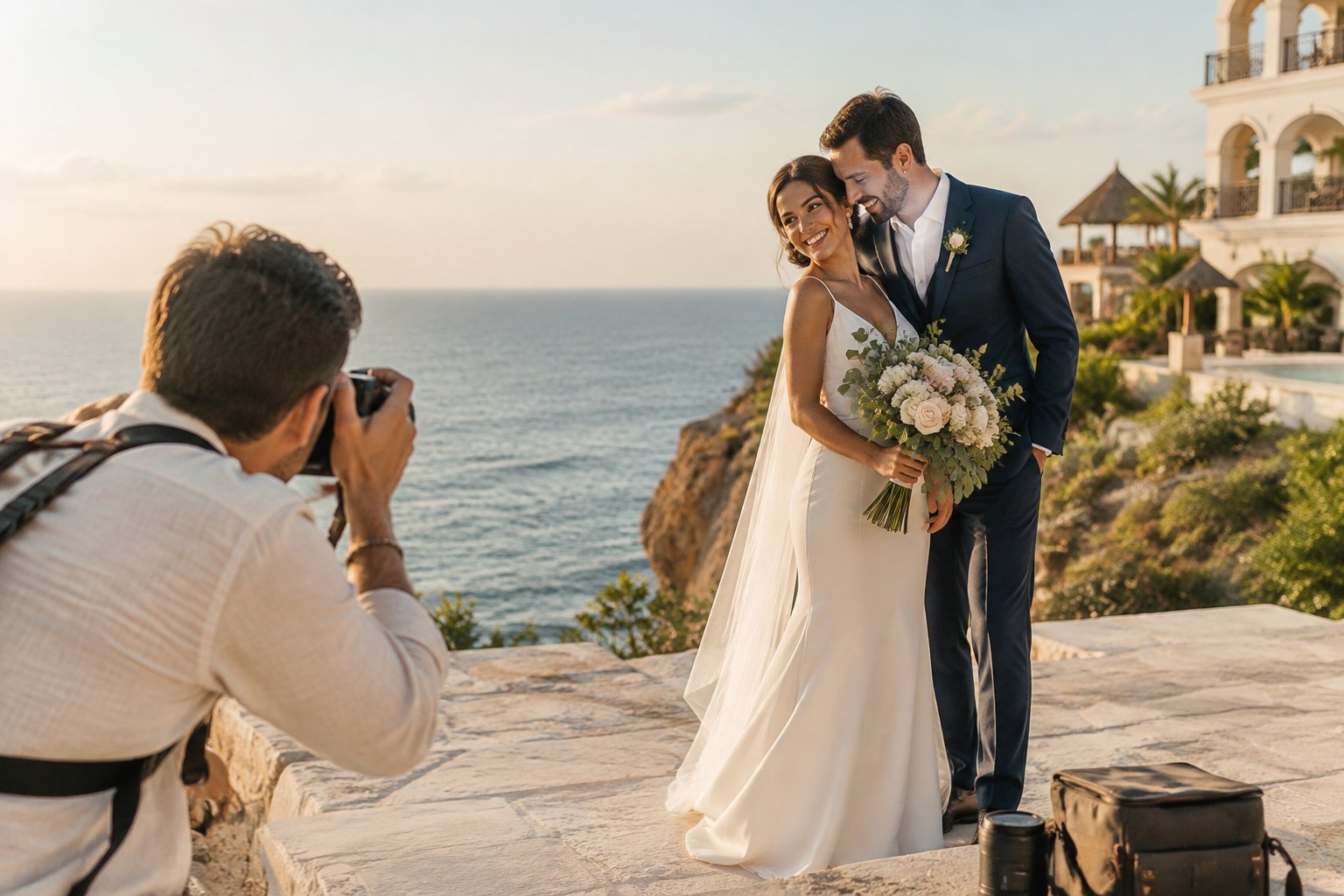
A complete destination wedding photography package should define coverage, staffing, travel, image delivery, album choices, and your rights to use the photographs. Packages differ in detail, so a written list of inclusions helps you compare proposals fairly.
Your wedding photography plan should also account for the pace of a wedding weekend. Confirm who will photograph each event, how many hours are included, and when you will receive your finished gallery.

Core Wedding Day Coverage
Full wedding-day coverage often includes getting ready, portraits, the ceremony, family photographs, cocktail hour, reception details, dinner, speeches, dances, and part of the evening celebration. Ask whether the package uses a fixed number of hours or a day-rate structure.
Check the start and end times against your timeline. A long gap between the ceremony and reception can create extra charges if your photographer must leave and return. Ask whether a second photographer is included. Two photographers help document separate preparation rooms, guest reactions, cocktail hour, and simultaneous activities.
Your proposal should also state:
- The number of coverage hours
- The number of photographers
- Planning calls and timeline support
- Engagement or portrait sessions
- Overtime rates
- Meals and breaks for the photography team
Multi-Day Wedding Weekend Events
A multi-day package extends coverage to events that give your story its setting and emotion. Welcome dinners, rehearsal gatherings, cultural ceremonies, after-parties, and farewell brunches each add meaningful photographs.
Ask for a separate schedule for every event. A package that lists “weekend coverage” without daily hours leaves room for confusion. Confirm whether travel days count as coverage days and whether the same lead photographer attends each event.
For large celebrations, ask how the team handles overlapping events. A lead photographer with an assistant or second shooter can cover parallel moments while keeping the visual style consistent.
Deliverables, Galleries, Albums, and Usage Rights
Deliverables should include edited high-resolution files through a private online gallery. Ask how many images you can expect, how long the gallery remains active, and whether the files include printing rights.
A professional gallery should make it easy for you to download, share, and organize your photographs. Ask about backup storage and the delivery schedule. Wedding galleries may arrive within several weeks or a few months, depending on the event length and editing process.
Album options deserve their own line in the contract. Confirm the album size, page count, cover materials, revision process, and price for extra copies. Also review usage rights. Personal printing and sharing rights give you freedom to make prints, cards, and gifts, while the photographer may retain copyright for business promotion.
How Much Do Destination Photography Packages Cost?
Destination wedding photography packages often begin around $5,000 for photography, with travel expenses added when the photographer flies to your venue. International travel, multi-day coverage, a larger team, albums, films, and specialty services can raise the final quote considerably.
Your destination wedding packages should show the photography fee and travel costs in separate lines. This makes it easier to compare a local photographer with a travel wedding photographer and see what you are paying for.
Photography Rates vs. Travel Expenses
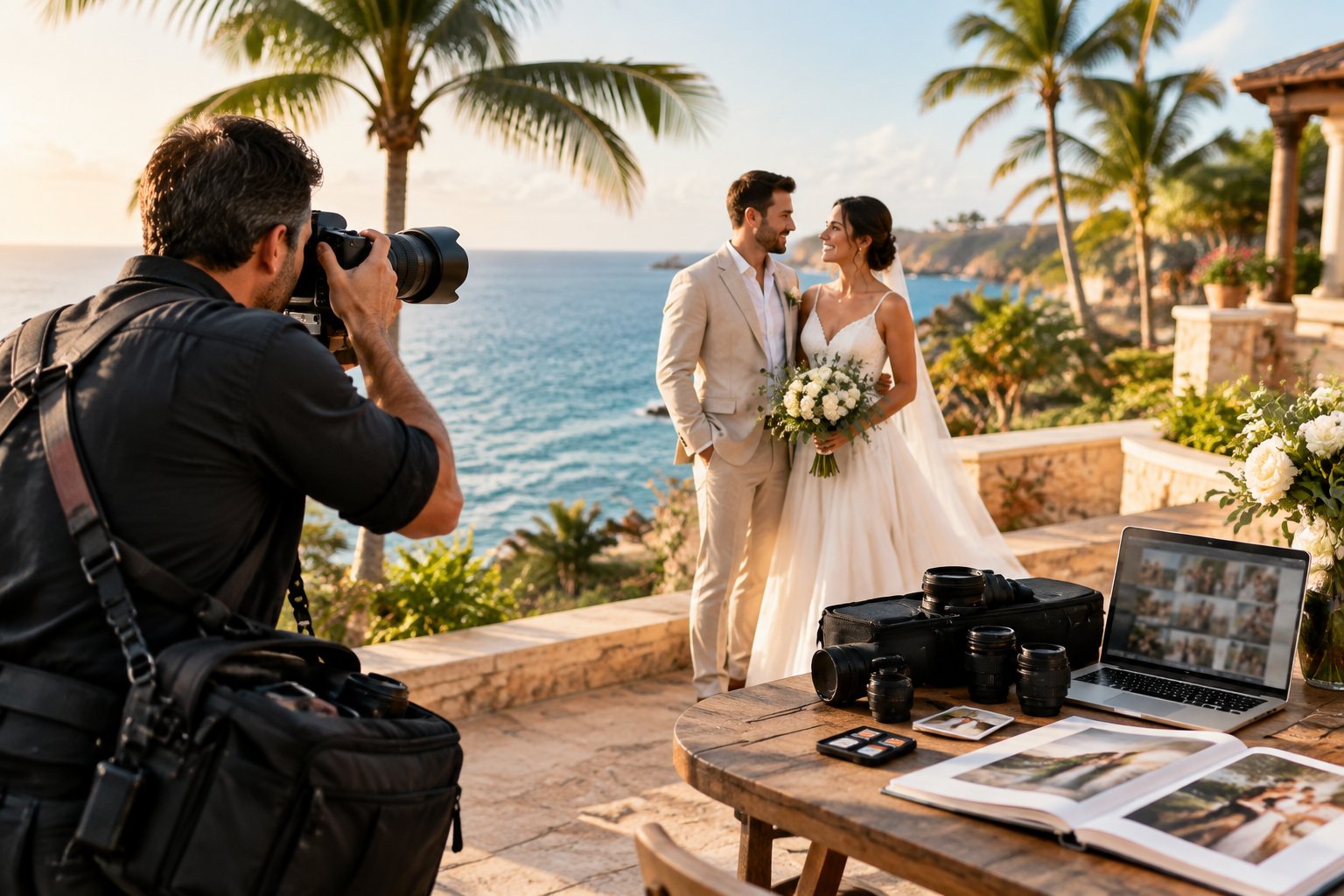
The photography rate pays for creative work, planning, shooting, editing, and delivery. Travel expenses cover the cost of getting the photographer and any additional team members to the destination.
Travel charges can include:
- Airfare and baggage
- Hotel nights
- Ground transportation
- Meals or a daily allowance
- Travel-day fees
- Work permits or equipment paperwork
A domestic trip may add hundreds or several thousand dollars. International travel can add $1,500 to $3,000 or more, depending on distance, timing, and the number of people traveling. Ask whether the photographer books travel directly or reimburses expenses after you approve them.
If your guests travel as a group, coordinate vendor lodging and transportation with the venue or planner. A room block may simplify logistics, though your contract should identify who pays for the photographer’s room.
What All-Inclusive Pricing Really Covers
An all-inclusive quote can include photography, flights, lodging, ground transport, meals, and selected products in one price. Read the itemized terms so you know whether the price also covers a second shooter, travel days, taxes, permits, and extra events.
Some photographers use a flat travel fee. Others charge the actual cost of approved travel. Both structures can work when the contract explains limits, booking dates, upgrades, and cancellation rules.
Ask whether “all-inclusive” covers the full wedding weekend or only the main wedding day. A welcome party, rehearsal, or brunch may still carry a separate coverage fee.
Add-Ons That Change the Final Quote
Common add-ons include extra coverage hours, a second shooter, engagement sessions, day-after portraits, drone images, wedding films, same-day previews, fine-art albums, and parent albums.
Ask for prices before you sign. Overtime rates can be higher than planned package hours, and album upgrades can change the total after the wedding. Drone work also depends on venue permission, weather, and local airspace rules.
Create a priority list before reviewing upgrades. If your budget is limited, you might choose full coverage of the wedding day first, then add a welcome event or album after comparing the complete quote.
Choosing the Right Photographer for Your Celebration
Choose a destination wedding photographer whose full galleries show strong work in locations, lighting, and celebrations similar to yours. Experience with travel logistics, clear communication, and a comfortable personal fit will support you from planning through delivery.
Review complete galleries instead of selecting a photographer from a small group of favorite images. You need to see how the photographer handles bright outdoor light, dark receptions, family groups, quiet moments, and fast-moving events.
Travel Wedding Photographer vs. Local Wedding Photographers
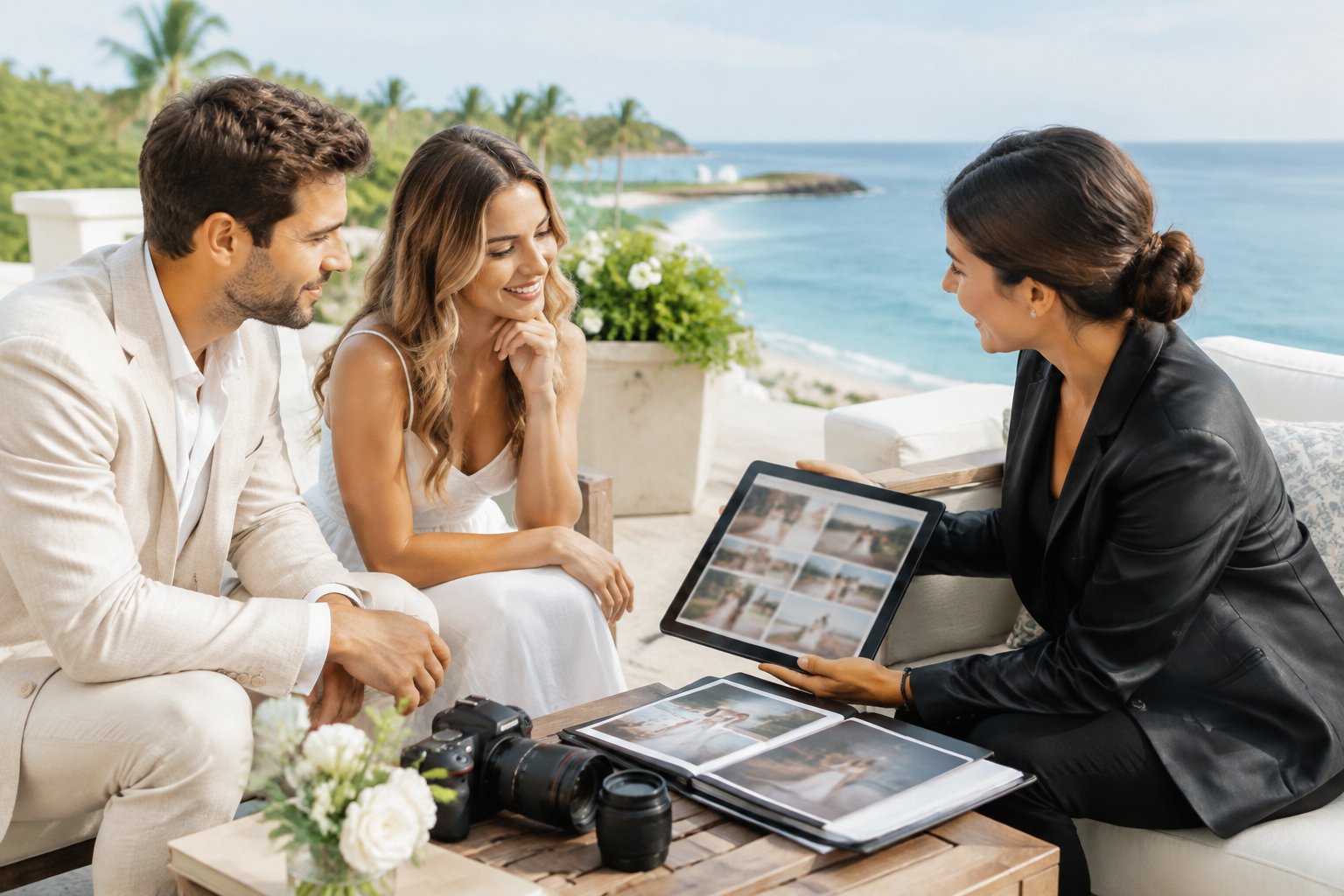
A travel wedding photographer brings an established relationship, a known style, and experience working in unfamiliar places. You pay for travel and may need to arrange additional lodging or permits.
Local wedding photographers offer knowledge of the venue, local customs, regional light, and nearby locations. You should review full galleries from weddings in settings close to yours and confirm that the photographer is available for every event you want covered.
| Criteria | Travel wedding photographer | Local wedding photographer |
|---|---|---|
| Travel cost | Added or bundled | Often lower |
| Venue knowledge | Requires scouting | Local familiarity |
| Existing rapport | Strong if already known | Built during planning |
| Local customs | Ask about experience | Regional knowledge |
| Travel disruption plan | Essential | Simpler logistics |
Ask your venue or wedding coordinator for trusted local referrals. Whether you bring someone from home or hire locally, request proof of insurance and a clear plan for permits.
Portfolio Style, Experience, and Personal Fit
Look for a portfolio that matches the feeling you want. Documentary work emphasizes real interactions, while editorial photography uses direction, composition, and polished portraits. Many wedding photographers blend both styles.
Study the photographer’s use of natural light, flash, architecture, landscape, and color. A beach ceremony, mountain lodge, and historic villa each require different approaches. Ask to see a complete gallery from a destination wedding with a similar timeline.
Schedule a video call before booking. You should feel comfortable sharing family details, cultural traditions, schedule concerns, and personal preferences. The photographer will be close to you during private and emotional moments, so communication should feel easy.
Questions to Ask Before Signing a Contract
Use your consultation to clarify both service and logistics. Ask:
- How many destination weddings have you photographed?
- Have you worked in a similar climate or venue?
- Who will photograph each event?
- What happens if a flight is delayed or canceled?
- What backup cameras, lenses, and storage systems do you bring?
- Who handles permits and insurance?
- What travel costs are included?
- When will you receive your gallery?
- What happens if you need to reschedule?
- What personal-use rights come with the final files?
Read the cancellation, postponement, force majeure, model release, and copyright terms. The contract should name the photographer or team member assigned to your date.
Build Coverage Around Your Full Wedding Experience
Plan coverage around the events that carry meaning for you, including guest gatherings before the ceremony and portraits after it. A flexible schedule gives your destination wedding photography room to record relationships, traditions, and the character of the location.
Share your full itinerary with your photographer before selecting a package. This helps you assign coverage to the moments your guests will remember.
Welcome Parties, Rehearsals, and Farewell Brunches
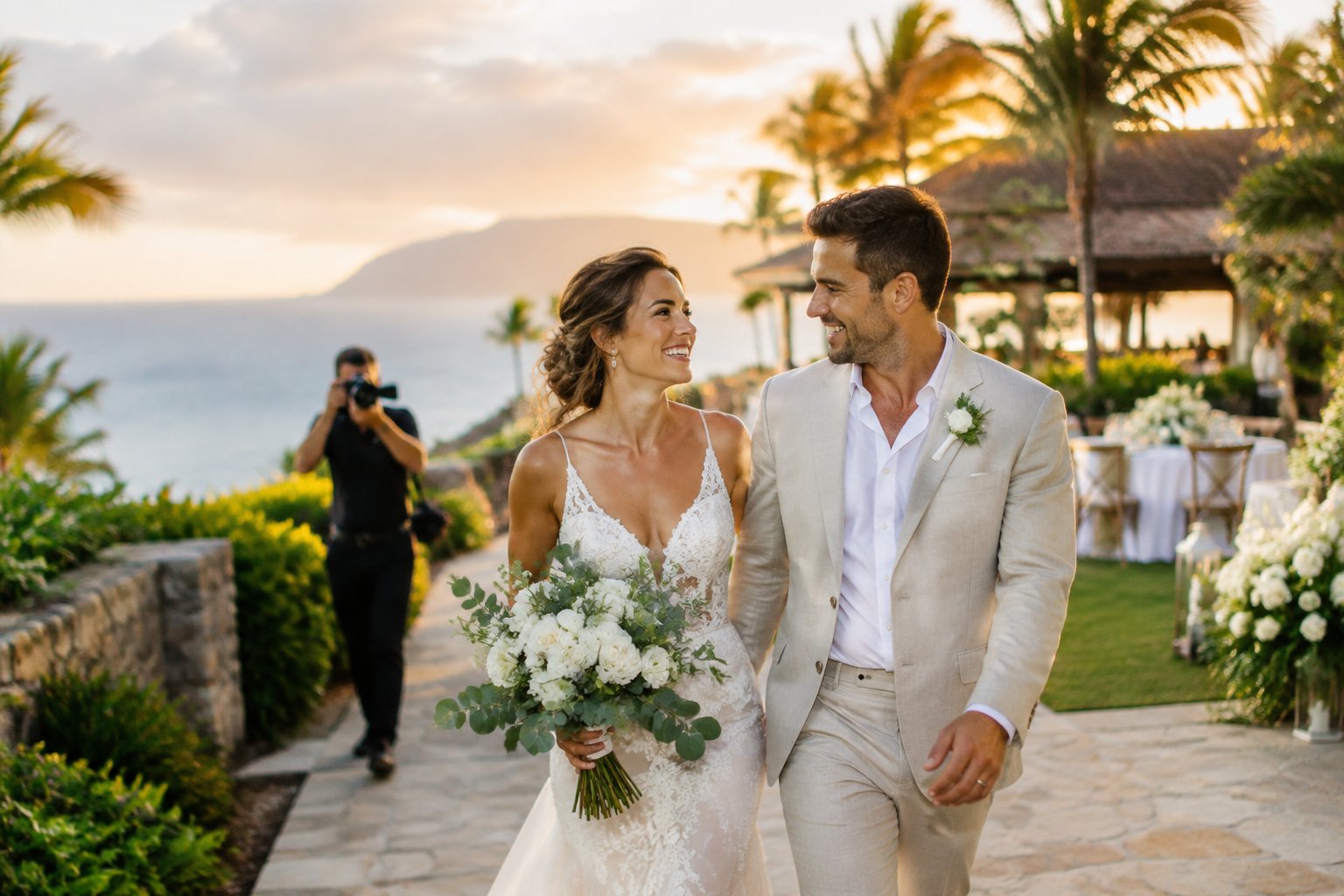
Welcome parties introduce guests who may have traveled from different places. Candid coverage captures greetings, toasts, local food, music, and the first shared moments of the wedding weekend.
A rehearsal dinner can include family speeches and cultural traditions that do not appear on the wedding-day schedule. A farewell brunch gives you relaxed photographs with guests before everyone leaves.
Ask whether these events receive full coverage or a shorter block of hours. If the events happen at different venues, include transportation time in the plan.
Planning an Engagement Session or Day-After Portraits
An engagement session helps you learn how your photographer directs movement and poses. It also gives you portraits in the destination before the wedding day becomes busy.
Day-after portraits offer more flexibility with clothing, locations, and timing. You might visit a beach, old town, vineyard, or mountain overlook that does not fit into the wedding timeline.
Schedule these sessions when the light and weather suit the location. Confirm whether permits, transportation, styling, and extra editing are included.
Combining Still Photography With Wedding Films
Photo and film teams should share a timeline and coordinate movement during key moments. Ask whether one studio provides both services or whether separate vendors will collaborate through your planner.
Confirm the film format, expected length, audio recording, delivery date, and music licensing. For photography, confirm the number of edited images and the delivery method.
A combined package may simplify communication, though you should still review separate responsibilities. Make sure the photographer and filmmakers know who leads during the ceremony, speeches, first dance, and family traditions.
Plan for Destination Logistics Before Booking
Your photographer should address venue rules, travel delays, backup gear, permits, and coordination with your local team before you sign. These details protect your coverage when the destination brings unfamiliar conditions or a tight schedule.
Share the venue contract, event itinerary, local contact information, and guest transportation plan. Early planning gives your photographer time to solve practical issues before arrival.
Venue Scouting, Permits, and Local Requirements
Ask whether your photographer will scout the venue before the wedding. A site visit helps identify ceremony angles, portrait locations, shade, sunset timing, and indoor options for rain.
Some destination wedding locations require permits for professional photography, beach access, drone use, or historic sites. Confirm who obtains each permit and who pays the fee.
International work can also involve visa rules, equipment declarations, insurance, and local restrictions. Your photographer should explain the documents needed for the destination and keep copies available during travel.
Travel Delays, Backup Gear, and Contingency Plans
Professional destination wedding photographers should carry essential cameras, lenses, batteries, and memory cards in carry-on luggage. Ask about backup camera bodies, duplicate image storage, and a replacement plan if equipment fails.
Build a travel buffer into the schedule. Arriving at least one day before coverage gives the photographer time to recover from travel, check gear, and respond to delays.
Your contract should explain what happens if the photographer cannot reach the destination. Look for a replacement network, refund terms, communication steps, and a clear process for severe weather or venue changes.
Working With a Wedding Coordinator and Vendor Team
A wedding coordinator can connect your photographer with the venue, transportation team, florist, planner, and entertainment vendors. Give everyone the same timeline so portrait time and travel windows remain realistic.
Ask your photographer to join a planning call with the coordinator. Discuss ceremony restrictions, family photo groupings, cultural events, meal timing, and rain locations.
Provide one local emergency contact for the wedding weekend. This keeps urgent questions away from you while you prepare and spend time with your guests.
Match Your Package to the Setting and Season
Select coverage and timing that suit the destination’s light, weather, travel demands, and venue layout. Italy and France offer varied settings, so your package should reflect whether you are celebrating in a countryside villa, a city landmark, a château, or a coastal venue.
Review sunset times and seasonal weather before you build the photography timeline. Your photographer can suggest portrait windows that fit the location and ceremony schedule.
Villa and Countryside Celebrations in Italy
Italy destination weddings often combine historic interiors, gardens, terraces, vineyards, and nearby villages. A photographer needs time to move between locations and account for uneven paths, narrow roads, and changing light.
A villa wedding may benefit from a second photographer when preparations happen in separate buildings. Add travel time for portraits at a nearby lake, vineyard, or town.
Summer brings long daylight and strong midday sun. Schedule formal portraits closer to the morning or evening when possible, and confirm an indoor plan for heat or rain.
Châteaux, Cities, and Coastal Venues in France
France offers château grounds, Paris streets, Provençal estates, mountain settings, and coastal landscapes. Each setting brings different access rules and travel times.
City weddings may require permits for public portraits and coordination with traffic or crowds. Château celebrations may involve long walks between guest rooms, gardens, ceremony spaces, and reception areas.
Ask your photographer whether the package includes location scouting. A planned route helps you use portrait time efficiently while respecting venue restrictions.
Light, Weather, and Timeline Considerations
Your timeline should account for sunrise, sunset, heat, rain, wind, and seasonal darkness. Coastal wind affects veils and audio equipment, while mountain weather can change quickly.
Create a rain plan with indoor portraits and covered ceremony options. Ask whether weather-related location changes affect travel charges or coverage time.
Include buffer time between events. A delayed transfer, crowded road, or late ceremony can reduce portrait time when the schedule has no flexibility.
Share a final timeline with your photographer and coordinator several weeks before departure.