
Destination Wedding Weekend Itinerary: A 4-Day Plan
A well-paced destination wedding weekend itinerary gives your guests time to celebrate, rest, and enjoy the place they traveled to see. A four-day plan works especially well because it creates room for arrivals, shared activities, the wedding itself, and a relaxed goodbye without packing every hour.
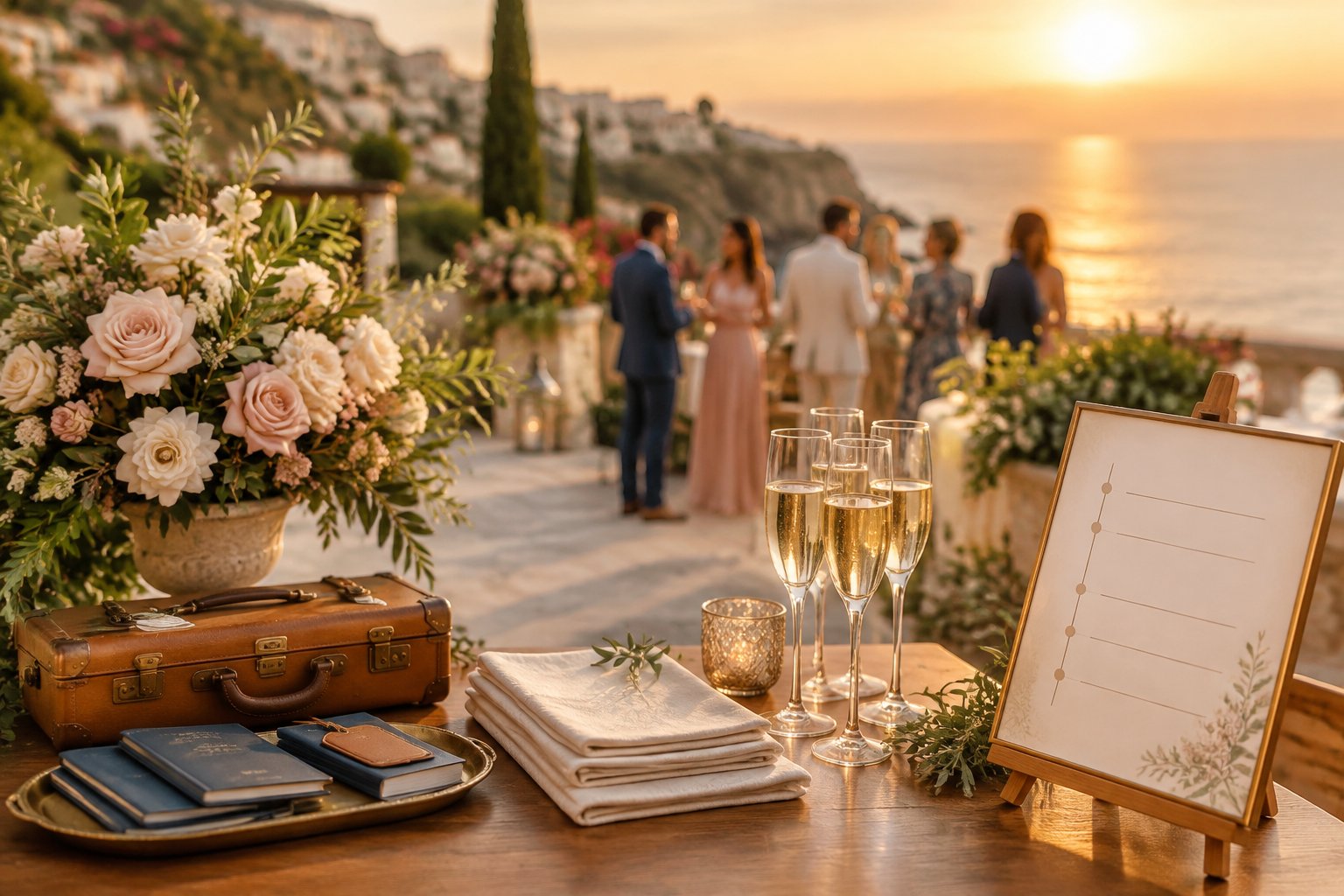
A four-day destination wedding weekend is ideal for couples who want a complete guest experience, with one main event per day and open time for rest or exploring. You can use the schedule below as a starting point, then adjust it for your venue, travel times, guest needs, and celebration style. As you plan, a destination wedding checklist can help you track the details that stretch beyond the ceremony.
Start With the Right Pace and Planning Priorities
A successful destination wedding weekend starts with a manageable wedding schedule, clear guest communication, and enough time between events. Your wedding planner or wedding coordinator should shape the wedding itinerary around the venue, transportation, weather, and the energy of your guests.

How Long Should a Destination Wedding Weekend Be?
Plan for four days when most guests need to travel and you want to include several shared moments. A common structure looks like this:
- Day One: Arrivals and welcome gathering
- Day Two: Free time, optional activities, rehearsal, and dinner
- Day Three: Wedding ceremony, reception, and after party
- Day Four: Farewell brunch and departures
A three-day plan works for a nearby destination or a smaller guest list. A five-day plan gives guests more time to settle in, explore, or recover from long travel. Choose the length that fits your guests’ budgets, work schedules, and travel distance.
Choose Events That Fit Your Guests and Destination
Build the wedding weekend around the destination’s strongest features. A coastal location might suit a beach welcome party or boat outing, while a historic city could offer a walking tour, museum visit, or local food experience.
Give every event a clear purpose. Your welcome gathering helps guests meet, the rehearsal dinner brings close family together, and optional activities let guests choose their own pace. Include accessibility details, age-friendly options, dietary information, and estimated costs before guests commit.
Build Free Time Into the Wedding Schedule
Leave open blocks each day for naps, pool time, local sightseeing, meals, and personal plans. One scheduled group activity in a day gives guests a shared experience while preserving space for independent plans.
Avoid placing a morning excursion directly before a formal dinner. Add travel time between locations and allow guests to return to their rooms before changing clothes. Your destination wedding timeline should feel like a helpful guide, not a list guests must follow every minute.
Coordinate the Wedding Planner, Venue, and Transportation
Your wedding planner should create one master wedding itinerary for vendors, the venue team, and your wedding party. Confirm setup access, guest transportation, meal timing, weather plans, room blocks, and who handles last-minute updates.
Use a separate guest version with only the details they need. Include meeting points, pickup times, dress codes, contact names, and any costs. Share the final schedule with the photographer, caterer, DJ, officiant, transportation company, and wedding party several weeks before arrival.
A Sample Four-Day Celebration Schedule
This destination wedding sample itinerary gives you a flexible framework for a multi-day destination wedding. Keep the welcome cocktail party warm and brief, protect free time before the wedding, and let the wedding day carry the most formal moments.
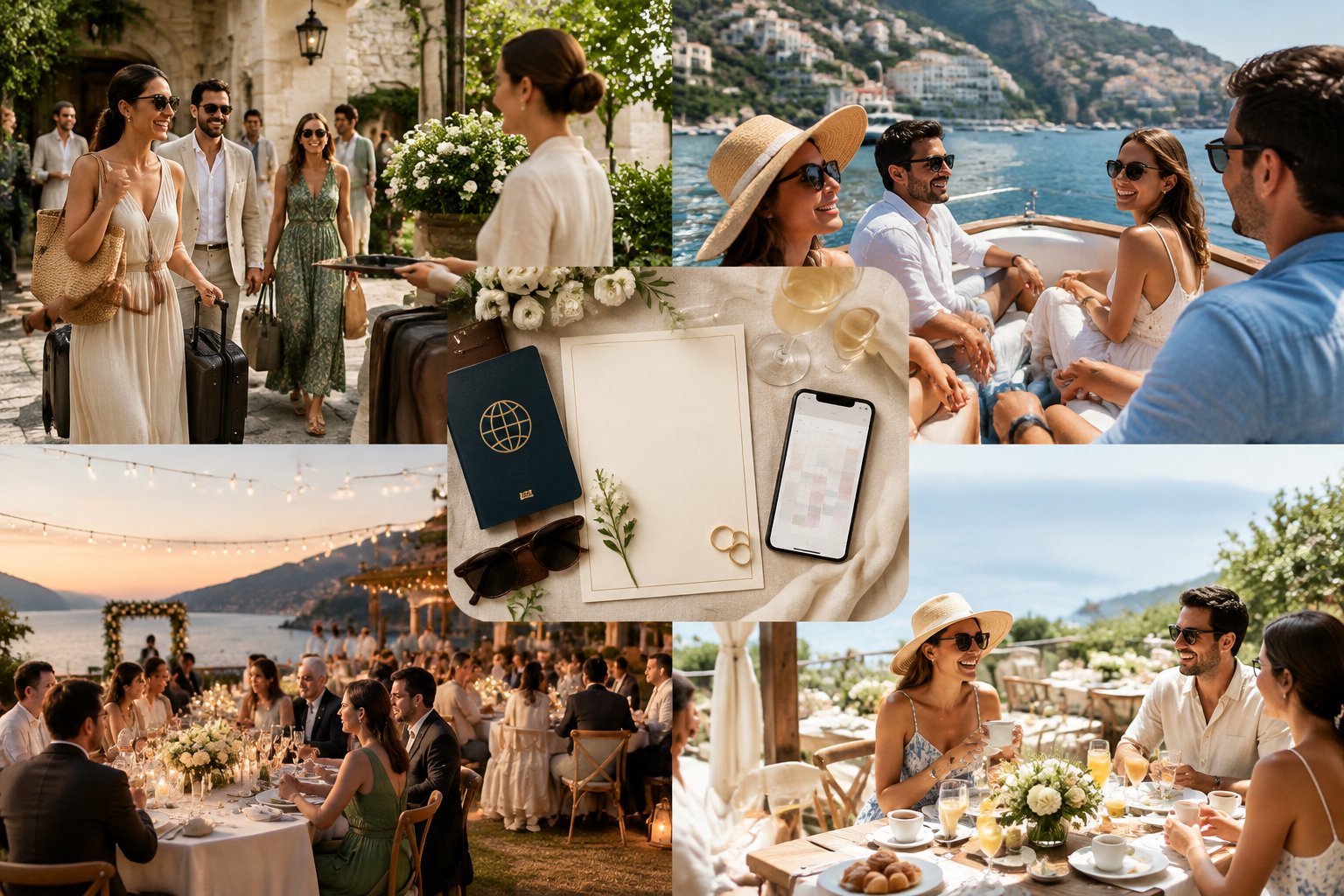
Day One: Guest Arrivals and a Welcome Cocktail Party
Morning through afternoon
- Guests arrive, check in, and settle into their rooms.
- Transportation meets guests at the airport or designated pickup point.
- Welcome bags are delivered or offered at check-in.
- Guests receive time to rest, unpack, and explore the property.
6:00 to 8:30 p.m.
Host a relaxed welcome cocktail party at the venue, resort terrace, garden, or nearby restaurant. Offer a signature drink, local bites, nonalcoholic choices, and a short welcome toast. Keep the mood casual so guests can connect without feeling committed to a late night.
Day Two: Optional Activities, Rehearsal, and Welcome Dinner
Morning
Offer a few optional activities, such as a spa appointment, guided tour, pool gathering, or beach walk. Guests who prefer quiet time should have easy access to the resort or nearby area.
Afternoon
Schedule the ceremony rehearsal for immediate family, the wedding party, and anyone with a ceremony role. Keep the rehearsal focused on entrances, exits, cues, and logistics. A wedding coordinator can answer questions while you save your energy for the celebration.
6:30 to 9:00 p.m.
Host the rehearsal dinner or welcome dinner. Use local cuisine to give the meal a sense of place, then include a few meaningful toasts. Share the next day’s key information before guests leave, including ceremony time, transportation, and where to go for help.
Day Three: Wedding-Day Events From Getting Ready to the After Party
A practical wedding-day flow might look like this:
- 9:00 a.m.: Breakfast and vendor arrivals
- 10:00 a.m.: Hair and makeup begin
- 1:00 p.m.: Lunch and getting-ready photos
- 2:30 p.m.: First look and portraits, if planned
- 4:00 p.m.: Wedding ceremony
- 4:30 p.m.: Cocktail hour
- 5:45 p.m.: Reception entrance and first dance
- 6:00 p.m.: Dinner and toasts
- 7:30 p.m.: Dancing, cake, and entertainment
- 10:00 p.m. onward: After party
Adjust these times for sunset, venue rules, travel between locations, and your preferred reception length. Give guests clear directions for every transition.
Day Four: Farewell Brunch and Departures
Host a farewell brunch between 9:00 and 11:00 a.m. Choose a relaxed setting with coffee, fresh fruit, pastries, and filling options. Guests who have late departures can linger, while early travelers can collect bags and leave without missing the meal.
Share checkout times, luggage storage instructions, airport transportation, and any remaining resort charges. If you are extending the trip into a honeymoon stay, tell guests when the formal wedding weekend ends so you can enjoy private time afterward.
Make Arrival Day Easy for Every Guest
Arrival day works best when guests can find lodging, transportation, schedules, and support details before they land. A few clear messages and thoughtful welcome bags reduce questions while giving everyone space to recover from travel.

When Should Guests Arrive?
Ask guests to arrive one day before the wedding when the trip includes international travel, multiple connections, or a morning welcome event. For a nearby domestic destination, some guests might arrive on the wedding day, though you should avoid making them responsible for a tight schedule.
Set the welcome party for the evening of arrival day and give guests at least a few hours between check-in and the event. This allows time for delayed flights, luggage issues, showers, and rest.
What to Put in Welcome Bags
Choose useful items that suit the destination and your guests. Consider including:
- A printed weekend itinerary
- Bottled water or electrolyte packets
- Local snacks
- Sunscreen or insect repellent
- A small first-aid item
- A map or neighborhood guide
- A handwritten welcome note
- Emergency contact information
Skip items guests cannot easily pack or use. If you are staying at an all-inclusive resort, check which drinks, snacks, and toiletries are already provided before filling the bags.
How to Share Travel, Check-In, and Event Details
Your wedding website should hold the full travel plan, including airport options, hotel blocks, destination wedding packages, transportation instructions, dress codes, accessibility information, and event times. Send a short version by email before departure so guests can find the most important details offline.
List the property’s check-in time, luggage storage process, parking rules, and contact for late arrivals. Add a weather plan for outdoor events and explain how you will send urgent updates. A group messaging service can support day-of changes, while the website remains the main source for stable information.
Plan Pre-Wedding Events Without Overbooking Everyone
Pre-wedding events should offer connection and local flavor while leaving guests enough freedom to rest. Give guests optional choices, publish costs in advance, and keep the wedding party’s required schedule short.

Relaxed Resort Activities for a Flexible Day
A flexible activity day might include a spa block, spa treatments, massages, a poolside cabana, beach time, or a casual group lunch. Reserve spaces only for guests who sign up, and provide a free option for anyone who prefers to relax independently.
Avoid scheduling every guest into the same activity. A short list of choices with start times, prices, meeting points, and booking instructions lets people build a day that suits their budget and energy.
Adventure and Cultural Experiences Worth Offering
Choose one signature experience that reflects the destination. Options include snorkeling, a sunset catamaran cruise, a cooking class, a historic walk, or a visit tied to local culture and local cuisine.
Consider travel time, weather, physical demands, age limits, and cancellation terms. Keep alcohol service moderate during excursions, especially when guests have a rehearsal or wedding the next day. A shorter experience that ends before dinner leaves guests comfortable and ready for the evening.
How to Handle the Rehearsal Dinner and Wedding Party Schedule
Reserve the rehearsal for people with ceremony roles and immediate family. Send the wedding party a precise arrival time, clothing guidance, rehearsal location, and expected end time.
Plan the rehearsal dinner soon after the practice so guests do not face a long gap. Include a few planned toasts, then end at a reasonable hour. The bridal party and wedding party need time to prepare, sleep, and arrive refreshed for the wedding day.
Create a Smooth Wedding-Day Timeline
A smooth wedding day timeline works backward from the ceremony and forward from the reception, with buffers for photos, travel, meals, and guest movement. Share one detailed version with vendors and a simpler schedule with guests.
When to Schedule Hair and Makeup
Start hair and makeup early enough to finish before portraits, dressing, and transportation. Your start time depends on the number of people receiving services, the number of artists, and the complexity of each look.
Schedule the couple or focal person toward the end of the beauty block so the look stays fresh for photos. Add time for touch-ups, dressing, jewelry, and a quick meal. Your planner should confirm the room setup, lighting, outlets, refreshments, and final departure time with the beauty team.
Should You Do a First Look?
A first look gives you private time together and moves couple, wedding party, and some family portraits before the ceremony. It also helps you join guests during more of cocktail hour.
Skipping a first look preserves the aisle reveal and places most portraits after the ceremony. That choice requires a longer photo window and might reduce your time at cocktail hour. Choose the option that fits your priorities, then build the photo schedule around it.
How to Time the Ceremony, Cocktail Hour, and Reception
Use the ceremony as the anchor. A sample flow is:
- 4:00 p.m.: Wedding ceremony
- 4:30 p.m.: Cocktail hour and portraits
- 5:30 p.m.: Guests move to the reception
- 5:45 p.m.: Entrance, first dance, and welcome remarks
- 6:00 p.m.: Dinner service
- 7:15 p.m.: Toasts, cake, or special dances
- 7:45 p.m.: Open dance floor
- 10:00 p.m.: Reception ends or after party begins
Allow extra time when ceremony and reception locations are separate. Confirm sunset, sound limits, meal service, and transportation with the venue team before locking the wedding timeline.
Keep Guests Informed When Plans Change
Choose one person, such as your coordinator, to approve and send schedule updates. Guests should receive changes through the same channel used for transportation and meeting points.
Place printed updates at the welcome desk and tell guests about changes at meals or group events. For a weather shift, include the new location, departure time, clothing guidance, and whether transportation has changed.
Keep vendors on the master timeline so every team works from the same update.