
Do Bride and Groom Sleep Together the Night Before a Wedding?
You and your partner decide whether to sleep together the night before your wedding. Bride and groom may sleep together the night before the wedding if sharing a room helps them feel calm, connected, and well rested. Sleeping apart also works well when you want to honor tradition, enjoy personal space, or create anticipation for your wedding day.

Talk about the choice early, including where you will stay, when you will stop seeing each other, and how you will handle last-minute wedding preparation. If you want more help weighing both options, explore whether the bride and groom spend the night before the wedding together. A thoughtful plan lets you enjoy the night before the wedding without pressure.
The Short Answer: It Is Entirely Up to You
Modern couples choose either spending the night together or spending the night apart, and both choices can support a meaningful wedding experience. Your shared decision should reflect your comfort, beliefs, sleep needs, and hopes for the morning.

Why There Is No Universal Wedding Rule
Wedding customs offer guidance, but they do not control your private plans. Sleeping apart does not guarantee good luck, and sleeping together does not create bad luck. Those ideas come from older beliefs surrounding weddings and marriage.
Open communication helps you avoid hurt feelings. Ask each other:
- Do you sleep better together or alone?
- Do you want to preserve a first look at the ceremony?
- Would family expectations affect your comfort?
- What arrangement makes the morning schedule easier?
You can also split the difference. Spend the evening together, exchange a letter, or share a phone call before sleeping in separate rooms.
What Modern Couples Commonly Choose
Some couples share a hotel room because familiar routines ease stress. They might order a quiet meal, review the next morning’s schedule, and go to bed at a planned time.
Other couples choose separate rooms with family, friends, or members of the wedding party. This arrangement gives each person personal space and preserves the excitement of seeing each other dressed for the ceremony.
Your choice does not define your commitment. It shapes one evening and the way you want to begin your wedding day.
Why Some Couples Choose Separate Accommodations
Separate accommodations appeal to couples who value wedding traditions, want a dramatic first look, or expect pre-wedding nerves to feel easier in a private room. A separate stay can also simplify morning preparations when each person has a different schedule.
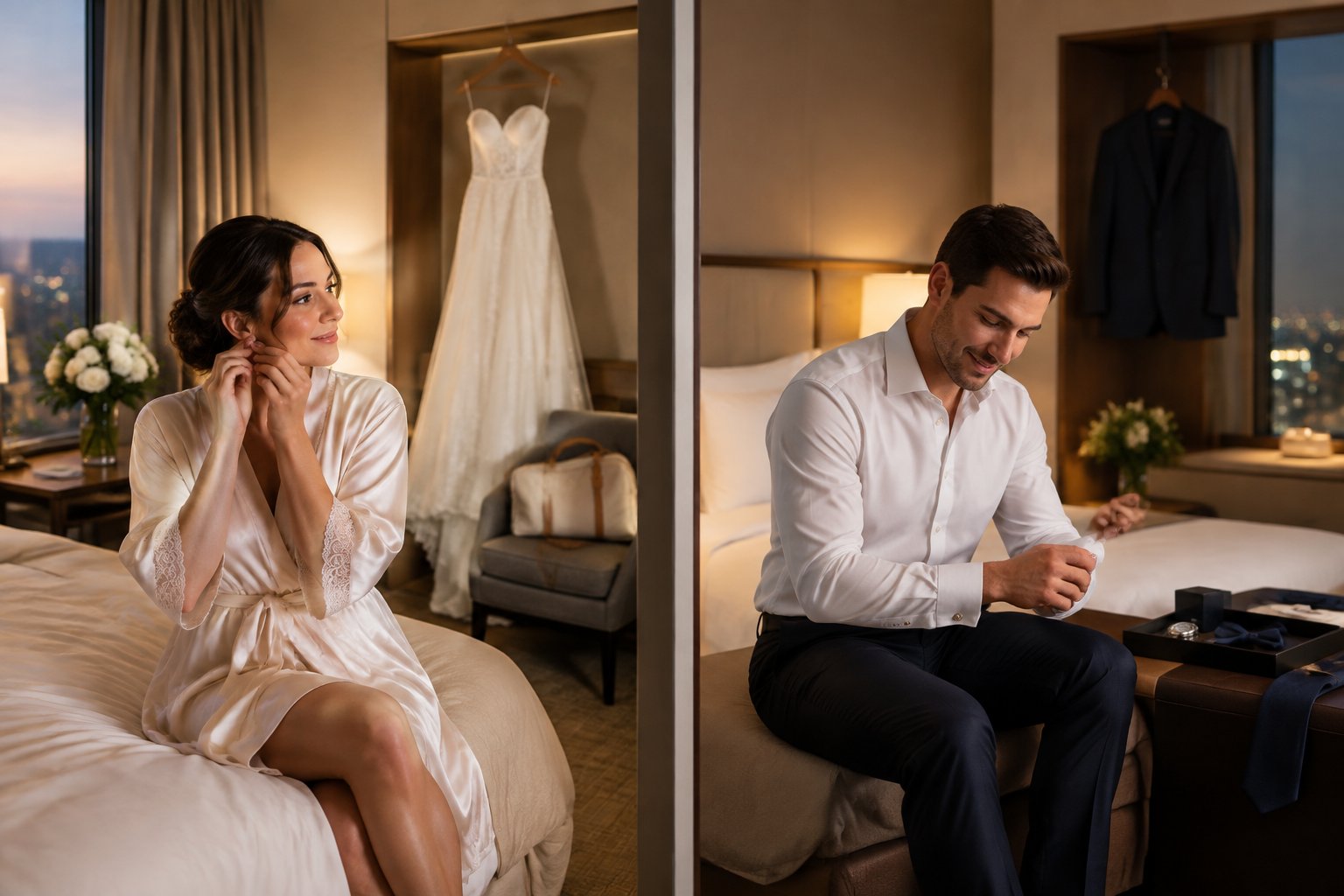
A good plan covers transportation, clothing, phone contact, and the exact time you will stop seeing each other. You can preserve the feeling of separation while still offering reassurance through a message or call.
Tradition, Bad Luck, and the First Look
The custom of sleeping apart grew from older wedding traditions and beliefs about bad luck. In some historical settings, families kept the bride and groom apart until the ceremony to protect the arrangement and preserve mystery.
Today, couples often keep the custom for its emotional meaning. Waiting to see each other can make the first look at the ceremony feel more powerful. You might also keep the dress, suit, or full wedding-day appearance private while sharing other parts of the evening.
If a family member connects separation with good luck, you can honor that feeling without letting superstition create fear. Treat the practice as a meaningful ritual you choose for your wedding.
Creating Anticipation and Personal Space
Separate rooms create a clear pause before the celebration begins. You can spend quiet time alone, write a note, organize your personal items, or enjoy a low-key evening with someone close to you.
Personal space also helps when you have different sleep habits. One partner might need silence, an early bedtime, or a cool room. The other might want to talk with family or attend a small gathering.
Agree on boundaries before the evening starts. Decide whether texts, calls, or video chats fit your version of the tradition.
Managing Pre-Wedding Nerves Independently
Pre-wedding jitters feel easier for some people when they have room to process emotions alone. You can use the evening for breathing exercises, light reading, meditation, or a familiar bedtime routine.
Choose a nearby location with a reliable route to the venue. Pack your outfit, shoes, rings, documents, medications, and personal essentials before you settle in. Ask a trusted person to handle questions from vendors so you can protect your rest.
Reasons to Stay Together Before the Big Day
Staying together supports couples who find emotional connection, familiar routines, and shared reassurance more calming than separation. A quiet hotel room can give you a private place to finish wedding preparation and settle into the change ahead.
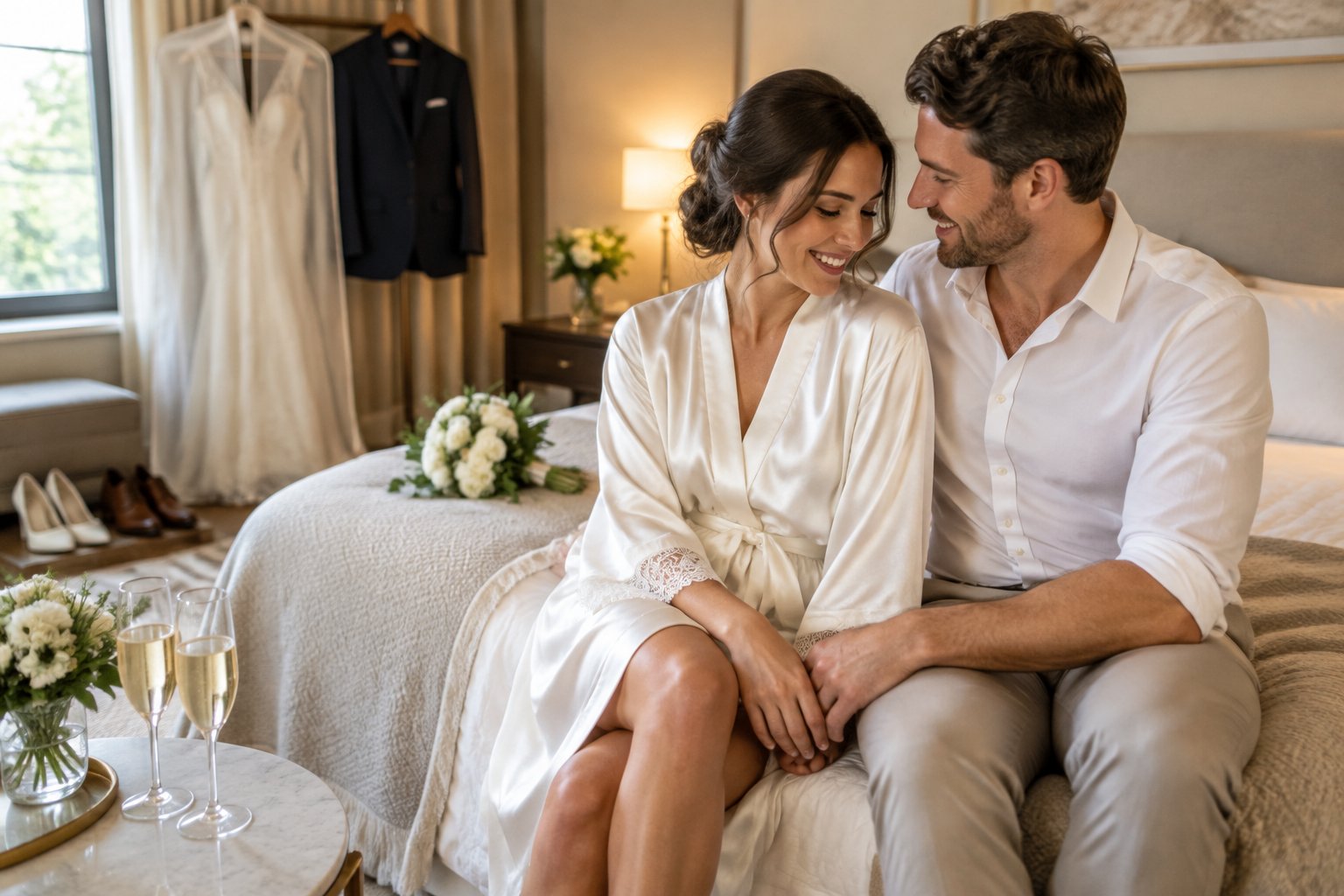
You do not need to fill the night with a large celebration. A simple plan with a firm bedtime often creates a better start to the wedding day than a packed schedule.
Comfort, Rest, and Emotional Connection
Your partner’s presence can reduce tension after a busy day. A familiar bedtime routine, a short conversation, or a quiet hug may help you feel grounded before the ceremony.
Sharing a room also lets you check practical details together. Confirm the alarm, transportation, venue address, and morning appointments. Keep the conversation focused so planning does not turn into a late-night problem-solving session.
If one of you sleeps poorly beside the other, choose separate beds within the same suite or reserve adjoining rooms. You can stay close while protecting the rest you need.
Creating a Meaningful Shared Ritual
A shared ritual gives the night before your wedding personal meaning. You could exchange letters, listen to songs from your relationship, review your vows, order a favorite meal, or take a short walk.
Keep the activity familiar and low pressure. Your ritual should help you slow down, not create another event to manage. Save major decisions and emotional discussions for an earlier date.
You might also share breakfast plans for the morning or place gifts beside each other’s bags. Small actions create a sense of continuity during a busy transition.
When a Familiar Hotel Room Makes Sense
A hotel room works well when it is close to the venue, supports your morning schedule, and gives you a comfortable place to prepare. Staying on-site reduces travel time and helps you keep personal items together.
Check the room before the evening begins. Confirm the wake-up call, room service hours, parking details, and checkout policy. Place clothing and accessories where you can reach them without searching.
If wedding preparation still needs attention, assign tasks to trusted family members or the wedding party. Your room should support rest, connection, and an easy morning.
How Cultural and Religious Beliefs Can Shape the Decision
Cultural beliefs and religious beliefs can influence whether you sleep together, spend the night apart, or follow a specific spiritual preparation. You can respect those practices while discussing what the choice means to you as a couple.
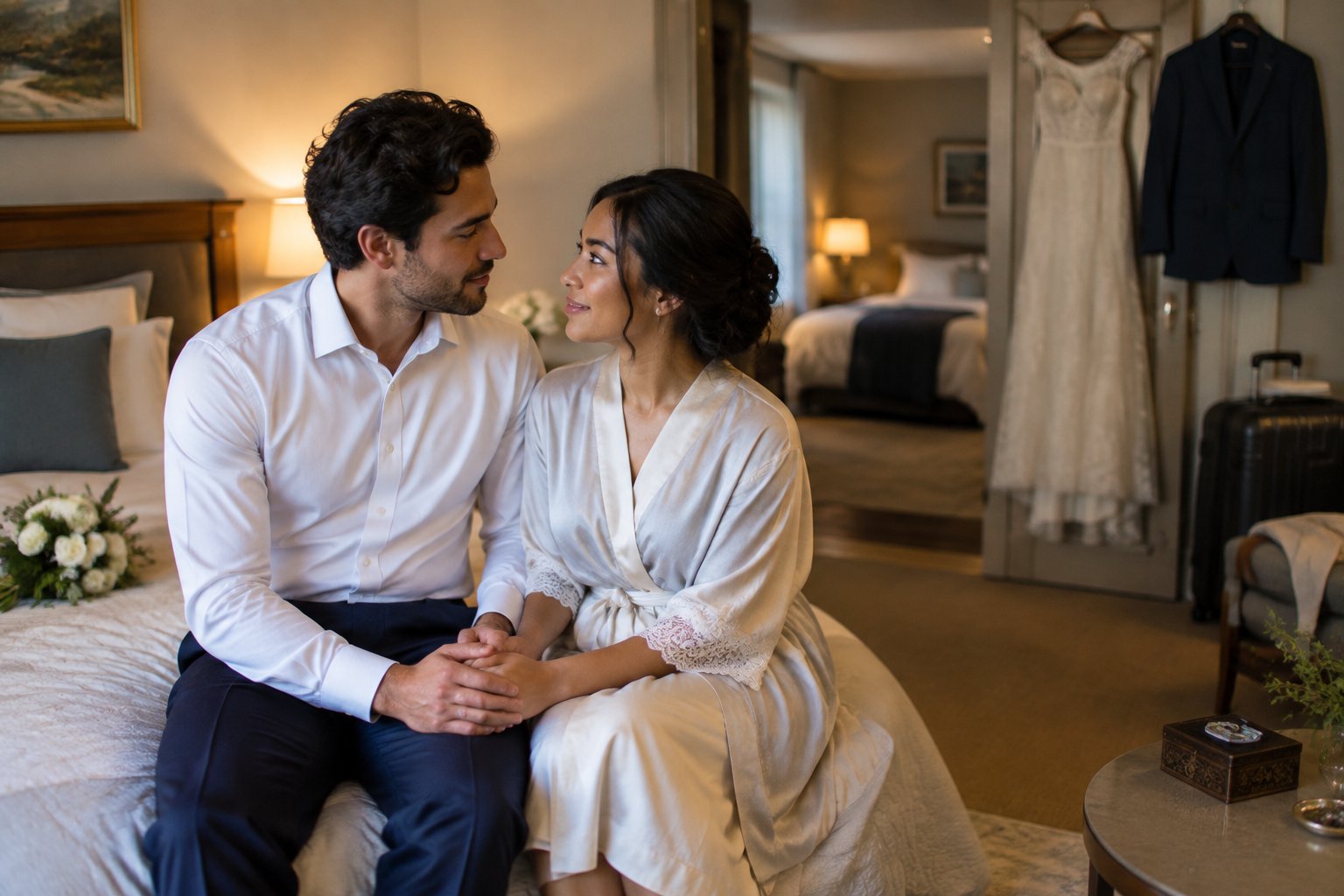
Talk with your officiant and close family before the wedding week if a custom carries religious or cultural requirements. Early conversations give you time to make a plan that feels respectful and personal.
Honoring Family Traditions Without Losing Your Voice
Ask your family to explain the meaning behind a requested custom. You may discover that the practice centers on blessing, family support, privacy, or anticipation.
You can honor the spirit of a tradition through a modified plan. For example, you might attend separate family gatherings, exchange messages, or stay in different rooms within the same hotel. Clear language helps prevent assumptions:
“We want to honor this tradition, and we also need a plan that supports our rest and comfort.”
Family and friends can support the decision once they know the boundaries. Tell them where each person will be and who will answer practical questions.
Spiritual Preparation and Jewish Yichud
Some wedding customs include spiritual preparation before or after the ceremony. Jewish weddings may include yichud, a private period for the newly married couple after the ceremony. Its timing and form depend on the couple’s community and officiant.
Yichud is distinct from deciding where you sleep the night before. If this practice is part of your wedding, ask your rabbi about the ceremony schedule, private-room arrangements, and any customs your families observe.
Other faith traditions may include prayer, blessings, fasting, family gatherings, or periods of reflection. Your religious leader can help you follow the practices that apply to your ceremony.
Finding a Respectful Middle Ground
A middle-ground plan might let you spend the rehearsal dinner together, separate for sleep, and exchange a phone call before bed. You could also stay in the same building while using separate rooms.
Write down the parts of the tradition you want to keep. Then identify choices that support comfort, accessibility, and rest. Share the plan with family and friends so they do not create an accidental meeting or add pressure.
Respect works best when it includes both the beliefs surrounding your wedding and your voice within the marriage.
Plan a Calm, Practical Night Before the Wedding
A calm night before the wedding starts with clear expectations, limited commitments, and delegated tasks. Whether you share a room or sleep apart, protect your bedtime and make the morning easy to follow.
Your rehearsal dinner, bridal party plans, and travel arrangements should support rest. Build a schedule that leaves space for a shower, packing, medication, hydration, and quiet time.
Set Expectations After the Rehearsal Dinner
Decide what happens after the rehearsal dinner before the evening begins. Set a departure time, choose the person responsible for transportation, and confirm where each person will sleep.
Keep food and drinks moderate so you wake up comfortable. Pack your wedding-day clothing and personal items before dinner when possible. Give vendor questions to a coordinator, family member, or trusted member of the bridal party.
A short message to each other after the dinner can confirm that you are safe, settled, and ready for the morning.
Choose Time With the Bridal Party or a Quiet Evening
A slumber party with bridesmaids, groomsmen, siblings, or close friends can create warm memories. Choose activities that keep the energy gentle, such as a movie, board game, conversation, or shared snack.
Tell guests when the evening ends. The bridal party can help with bags, clothing, gifts, and transportation while you step away for sleep.
If group time feels tiring, choose a quiet evening. You can thank everyone for their support, take a few minutes alone, and turn off your phone after urgent questions are handled.
Protect Sleep and Delegate Last-Minute Tasks
Set a bedtime that allows enough time for sleep and the morning schedule. Use a sleep mask, earplugs, familiar toiletries, or a white-noise app if those items help you rest.
Delegate tasks such as vendor calls, welcome-bag delivery, attire steaming, and transportation checks. Give each person one clear responsibility and the contact information they need.
Before bed, place these items together:
- Wedding attire and shoes
- Rings and vow books
- Identification and medications
- Phone charger and alarm
- Water and a light morning snack
Consider Logistics for Destination Weddings
Destination weddings require extra planning because you may be staying far from home and sharing space with family or guests. Confirm room assignments, airport or shuttle times, venue travel, and local contact numbers.
If you sleep apart, book rooms close enough to make morning transportation simple. If you stay together, check that the room has enough space for both sets of clothing and accessories.
Ask a coordinator or trusted guest to manage delayed arrivals and guest questions. Keep passports, travel documents, rings, and ceremony items in secure, accessible places so you can begin the wedding day without a search.