
Do Buttercream Wedding Cakes Melt? Understanding Their Stability in Warm Weather
When planning your dream wedding, the cake is often a centerpiece that reflects your style and taste. If you’re considering a buttercream wedding cake, you might wonder, buttercream cakes can melt, especially in hot and humid conditions, but there are ways to keep them stable. Understanding how buttercream reacts to heat can help you make the best choice for your big day.
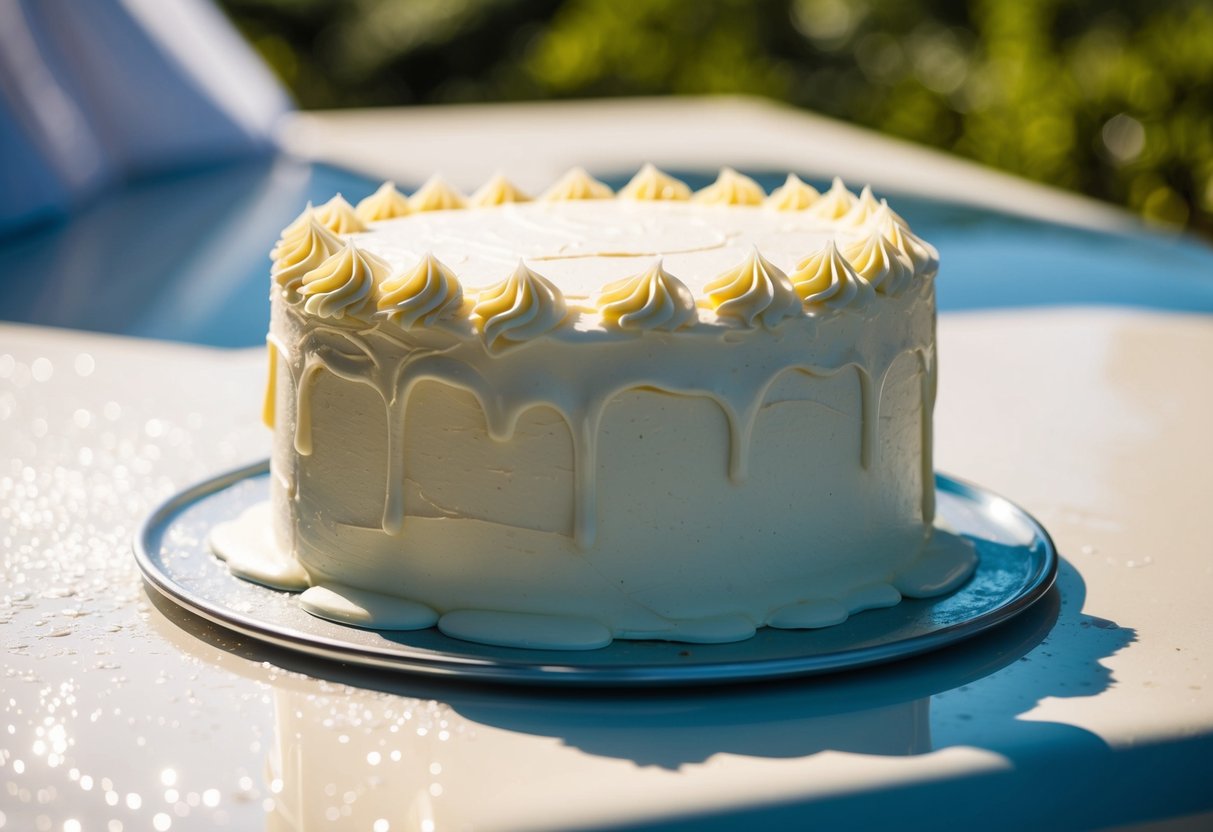
Many cake decorators face the challenge of keeping buttercream cakes looking beautiful, especially during summer. Knowing which type of buttercream to use or how to display your cake can make a significant difference.
By learning some tips and tricks, you can ensure your cake stays stunning from the moment it’s served until the last slice is enjoyed.
As you read on, you’ll discover expert advice and methods to keep your buttercream wedding cake from melting. This information will help you feel more confident about your cake choice, ensuring it adds to the joy of your celebration.
Understanding Buttercream
Buttercream is a popular choice for wedding cakes. It’s creamy and rich, making your cake both tasty and beautiful. There are different types of buttercream, and knowing about them can help you choose the best one for your big day.
Types of Buttercream:
-
American Buttercream: This is the simplest kind, made with butter, vegetable shortening, and confectioner’s sugar. It is sweet and easy to work with.
-
Swiss Meringue Buttercream: This type uses egg whites and sugar, heated and whipped to create a silky texture. It is less sweet than American buttercream.
-
Italian Buttercream: Similar to Swiss, this uses a hot sugar syrup. It creates a smooth and stable frosting that holds up well in warm conditions.
Each type has its own melting point, which matters if your cake is in a hot area. Higher fat content, like that found in butter and shortening, can help prevent melting.
Here’s a quick tip: if you want a stiffer buttercream, add more confectioner’s sugar. This can help keep your cake looking lovely during your celebration.
Choosing the right buttercream can make your wedding cake delicious and visually stunning. Remember to consider the weather and location when making your choice!
Factors Influencing Buttercream Stability
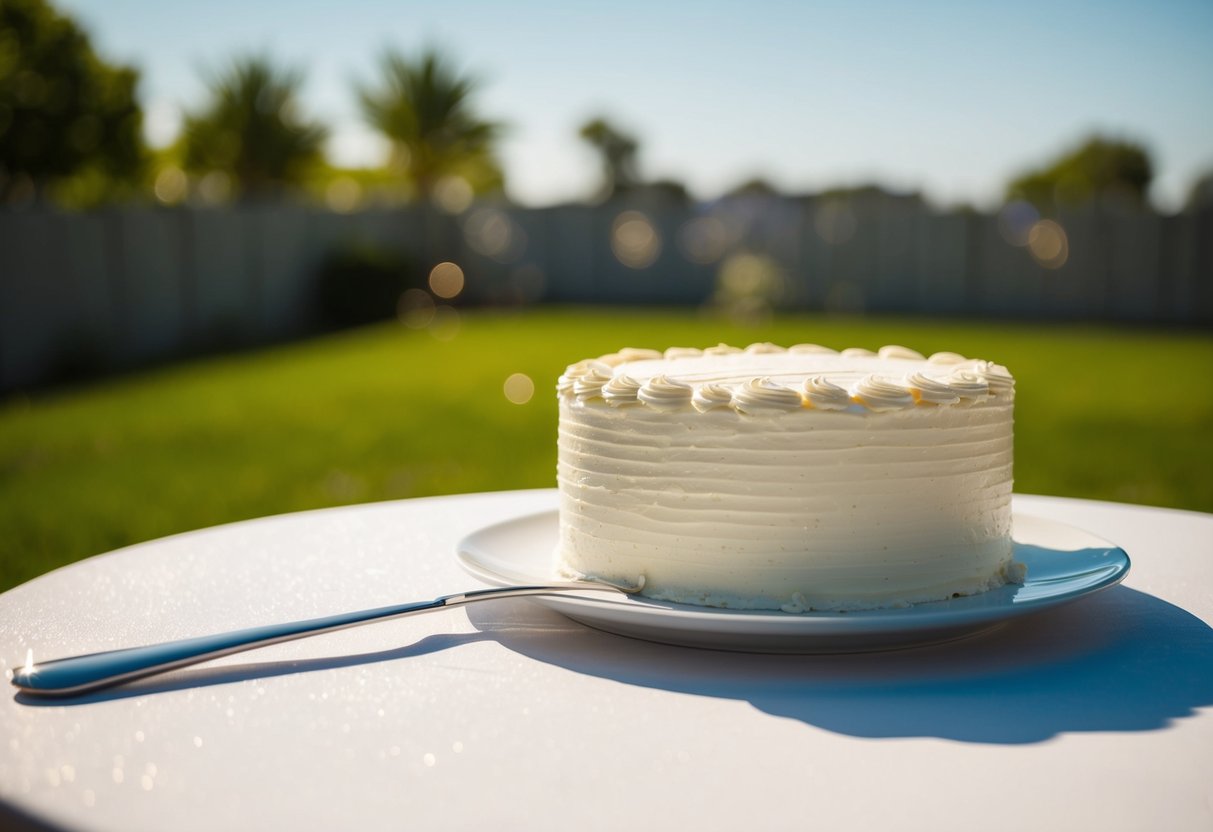
Several key factors can affect how well your buttercream wedding cake holds up. Understanding these factors can help you plan for a perfect cake that stays beautiful.
Temperature and Melting Point
The melting point of butter is around 98.6°F (37°C). When temperatures rise above this point, your buttercream can start to soften. If you’re having a summer wedding, be mindful of the heat. A cake left out in direct sunlight can begin melting in just a few minutes.
To keep your cake stable, consider chilling it before the event. Refrigerate your buttercream-covered cake for a couple of hours, allowing it to set.
Also, if possible, serve the cake in a cool area. You can use cooling fans or air conditioning to help maintain a lower temperature.
Humidity and Weather Conditions
Humidity plays a significant role in buttercream stability. In warm and humid weather, the moisture in the air can make buttercream lose its firmness. When the air is saturated with water, your frosting may become soft and runny.
Using a crumb coat and refrigerating it can help seal in the cake’s moisture, making it more resilient. If you’re expecting a humid day, consider making a sturdier buttercream. Options like using powdered sugar or adding cornstarch can provide extra stability.
Indoor Versus Outdoor Weddings
Indoor weddings usually offer better control over temperature and humidity. You can more easily use air conditioning to keep the environment cool. If you’re having an outdoor wedding, be prepared for changing weather conditions.
Direct sunlight can be a big issue outside. Place the cake in a shaded area or under a tent. This will help protect it from heat. If the venue allows, setting up a cooling fan can also keep the air circulating and reduce melting.
Designing a Wedding Cake with Buttercream
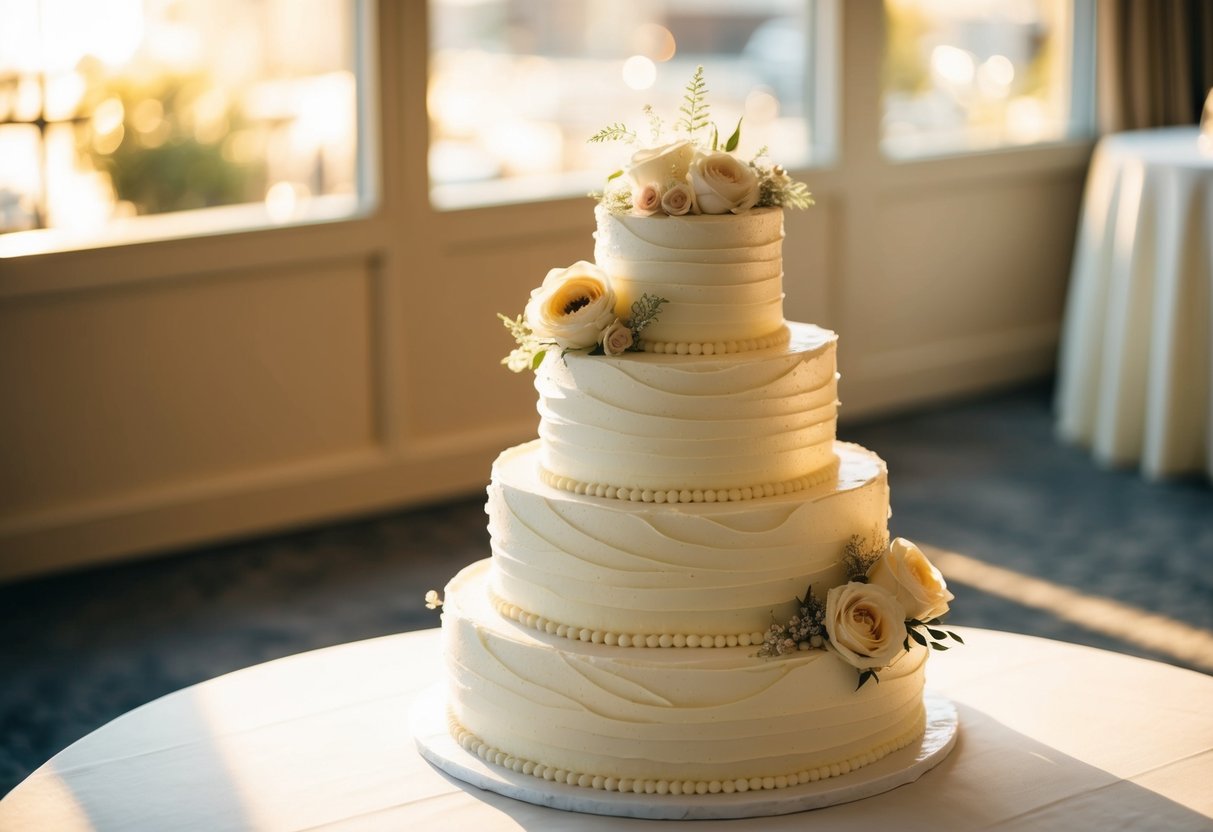
When designing your wedding cake with buttercream, you’ll want to consider the cake flavor, fillings, and how to decorate beautifully. Each choice you make will affect not just the look but also the taste of your cake.
Choosing the Right Cake Flavor and Filling
Selecting a cake flavor is one of the most exciting parts of the process. Consider popular options like vanilla, chocolate, or red velvet. Each flavor pairs nicely with different types of fillings.
You might choose a classic buttercream filling, cream cheese frosting for a tangy twist, or even chocolate ganache for an indulgent touch. Think about combining flavors, like a lemon cake with raspberry filling or a chocolate cake with peanut butter. Make sure to sample your choices to find what best suits your taste!
Selecting a Complementary Frosting
Choosing the right frosting is key to enhancing the cake’s flavor. While buttercream is a classic favorite, you may want to consider other options too, like cream cheese frosting, which adds a rich flavor.
A smooth buttercream frosting can easily be colored or flavored to match your wedding theme. If you prefer something sleek and modern, consider covering your cake with rolled fondant, then adding buttercream decorations for added texture. Make sure whatever frosting you choose complements the cake flavor!
Executing the Cake Decorating Process
Decorating your cake is where your creativity shines. Start with a well-crumb-coated cake to ensure a clean finish.
Use a piping bag to apply your buttercream frosting in beautiful swirls or patterns. You can create elegant rosettes, ruffles, or even smooth finishes.
Don’t shy away from adding details like fresh flowers or edible glitter. If you’d like to add some rich flavor, drizzle some chocolate ganache over the cake for a stunning effect. Remember, the best cakes reflect your personality, so have fun with the design!
Tips for a Meltdown-Free Buttercream Wedding Cake
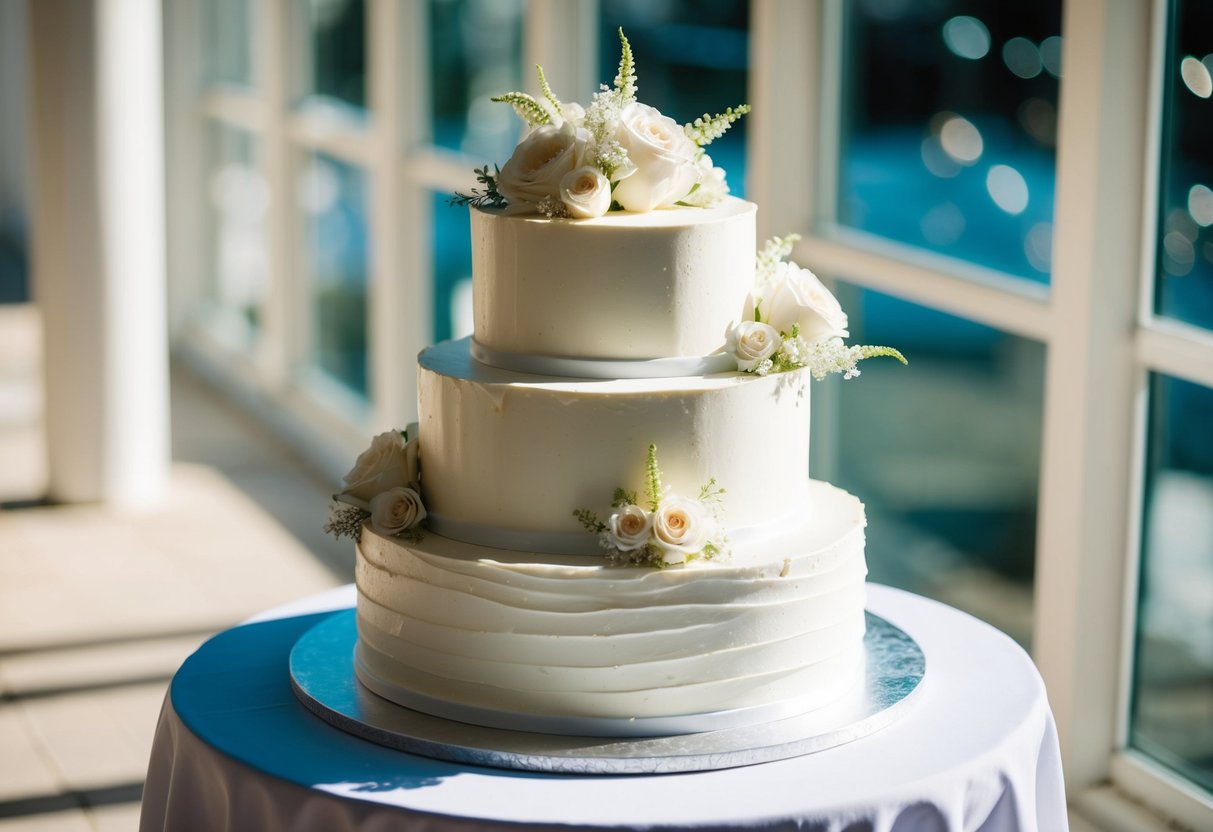
It’s important to take extra steps to keep your buttercream wedding cake stable, especially during warm weather. Here are some specific tips that will help you avoid any meltdowns on your big day.
Adjusting the Recipe for Stability
To keep your buttercream icing from melting, consider using a recipe that includes vegetable shortening. This ingredient helps stabilize the buttercream, especially in hot and humid conditions.
Key adjustments to your recipe can include:
- Increasing sugar content: More sugar thickens the frosting and makes it less likely to melt.
- Using less butter: Substituting some butter with shortening can keep the icing firm.
- Adding meringue powder: This helps create a sturdier structure for your buttercream.
Try preparing a test cake before the wedding to ensure the adjustments work well.
Protective Measures During the Reception
Once you have a stable buttercream cake, you need to protect it during the reception. Here are some practical measures you can take:
- Choose the right location: Keep the cake in a cool, shaded area away from direct sunlight or heat sources.
- Set up a sustainment station: For a summer wedding, consider using cooling trays or ice packs underneath the cake stand to maintain a lower temperature.
- Cover when possible: Use a cake dome or a clean, breathable covering to protect the cake from heat and insects.
With these tips, your buttercream wedding cake will be ready to shine all day long without the risk of melting.