
Do Couples Sit Across or Next to Each Other at Weddings? Understanding Seating Etiquette
When planning your wedding reception, one important aspect to consider is how to seat couples. Most experts recommend that couples sit next to each other at weddings. This allows them to enjoy the event together and maintain a connection throughout the celebration. This seating arrangement not only fosters intimacy but also helps them feel more comfortable in the company of others.
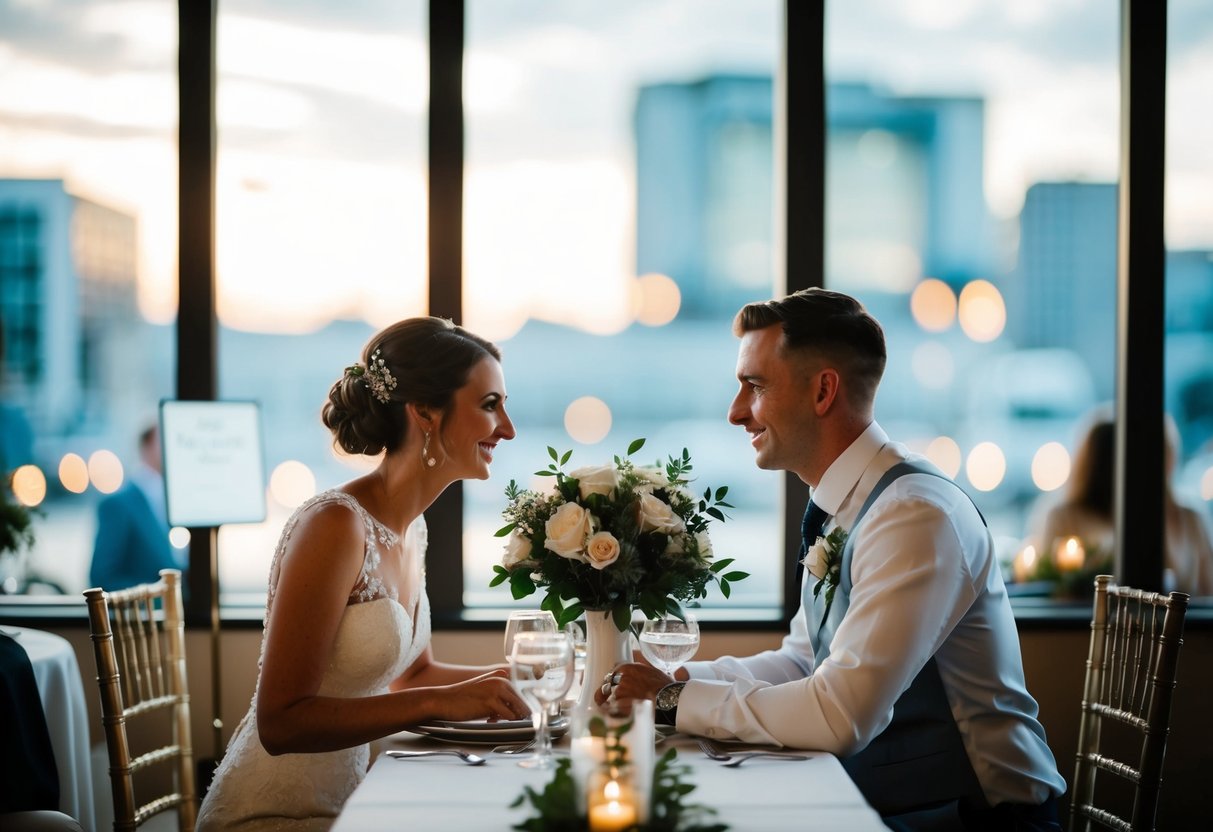
Understanding wedding etiquette can help you make the right choices for your guests. Arranging couples next to each other is especially beneficial at large tables, where they can easily mingle with friends while still enjoying each other’s company. It’s a simple way to create a warm and inviting atmosphere at your wedding.
As you design your seating plan, think about how you want your guests to engage. Seating couples together can help break the ice, making it easier for everyone to socialize during the reception. With the right arrangement, you can ensure that your special day is enjoyable for everyone involved.
Exploring Wedding Seating Arrangements
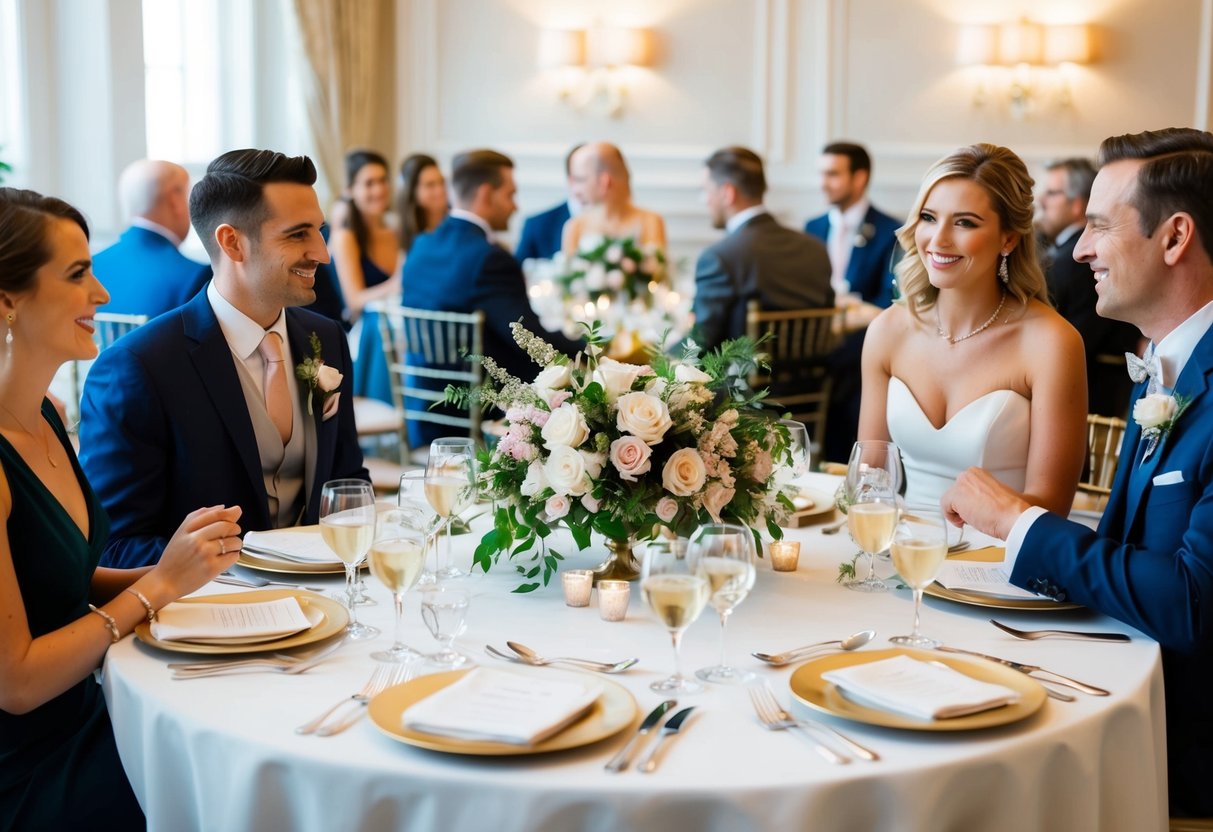
Choosing the right seating arrangement for your wedding is crucial. It helps guests feel comfortable and encourages interaction. By understanding the different table options, you can make informed decisions for your special day.
Traditional Head Table vs. Sweetheart Table
The traditional head table usually seats the wedding party. This table is often positioned at the front of the reception area. It allows easy interaction with other guests. However, it can make you feel out of touch with the rest of your friends and family.
A sweetheart table is more intimate. It seats just the two of you, giving a cozy vibe. This setup allows you to focus on each other while still being part of the celebration. It’s perfect if you want a little space amid the festivities.
Seating Chart Basics
When creating a seating chart, consider your guests’ relationships. Grouping people who know each other can enhance their experience. Many brides and grooms worry about mix-ups. A smart way to avoid this is to use place cards.
Organize the seating chart by tables or sections. Make it easy for your guests to find their spots. Consider a layout that features both couples seated straight beside each other or across from each other. This will help keep their conversations lively.
Deciding on Table Shapes and Layout
The shape of your tables matters. Round tables offer a casual atmosphere and promote conversation. Many guests will be seated together, which can help keep the energy up.
Rectangular tables can create a more formal look. They allow for different seating arrangements, such as couples sitting next to or across from each other. Think about your venue’s layout to maximize space and guest interaction.
Don’t forget about table arrangements when planning. Having a variety of table sizes can encourage mingling. It also allows for creative decoration, enhancing the overall look of your reception.
Arranging Guests at the Reception
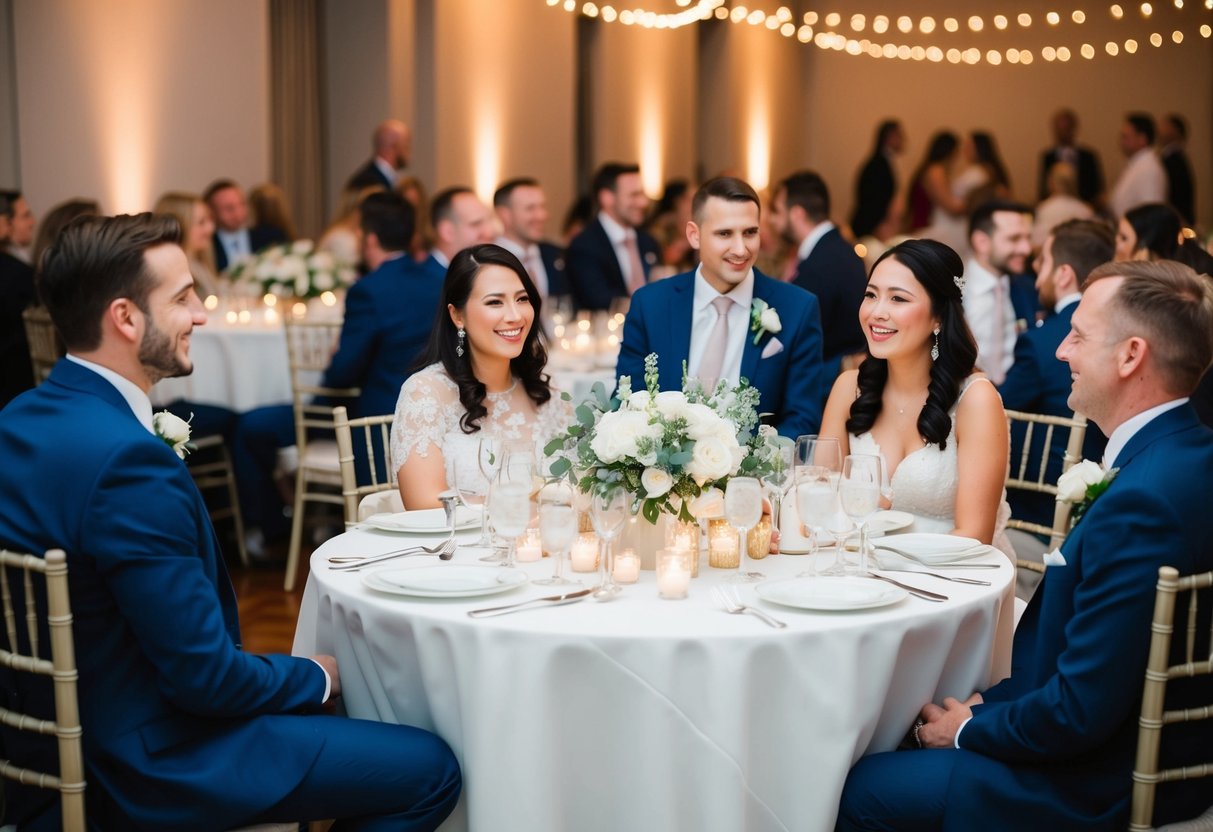
When planning your wedding reception, properly arranging guests is key to ensuring everyone has a good time. You will need to decide on seating arrangements that cater to all your guests’ needs, ensuring comfort and enjoyment.
Assigning Individual Seats vs. Tables
One option for your wedding is assigned seating, where each guest has a specific seat at the table. This can help avoid confusion and ensure everyone knows where to go. Displaying a seating chart at the entrance can guide guests easily.
Alternatively, you might choose to have tables designated for groups of people. This is often more relaxed and allows guests to mingle freely. You can create a seating plan that encourages socializing, letting friends sit together. This approach can also allow couples to sit across from each other, which many find comfortable.
Considering Special Tables for Kids and Singles
At your wedding, you may want to create a kids’ table for younger guests. This allows kids to engage with each other while their parents enjoy the event. Kids often appreciate sitting together, making meals and activities more fun for them.
For single guests, consider a separate table that encourages interactions without pressure. This allows them to connect with others in a similar situation. Special attention to these groups can make your reception more inclusive and enjoyable for everyone.
Seating Couples at Weddings
When planning your wedding seating chart, deciding how to position couples can shape the guest experience. You’ll want to think about seating arrangements that encourage interaction while keeping everyone comfortable.
Etiquette for Placing Couples Together or Apart
In most cases, it’s best to seat couples next to each other. This arrangement allows them to enjoy dinner together and engage with other guests across the table. Keeping couples together can create a cozy and inviting atmosphere.
However, you might consider seating them across from each other if you want to facilitate more mingling. This can also be useful if you have a large group and want to balance conversations and energy at the table.
Try not to split couples up unless you have a valid reason. Doing so can make guests feel uncomfortable. The key is to ensure everyone has a good time while enjoying each other’s company.
RSVP Influences on Seating Couples
Guest RSVPs play a significant role in your seating chart planning. When you know who is attending, you can make informed decisions about seating couples. This can help you arrange tables more effectively.
If a couple’s RSVP includes additional guests, include them at the same table. This helps create a sense of inclusion. Knowing guests’ relationships allows you to mix and match seating arrangements better.
Be mindful of any dietary restrictions or preferences noted on RSVPs as well. This information can guide you in creating a comfortable setting for all guests, ensuring everyone enjoys the celebration without any issues.
Perfecting Your Wedding Seating Chart
Creating the perfect seating chart for your wedding can make a big difference in how guests interact. A well-thought-out seating plan encourages connections and ensures everyone feels comfortable. Here are some key aspects to consider.
Navigating Seating Chart Etiquette
When planning your seating chart, remember that certain rules can help guide you. Start by considering family dynamics. Placing couples across from each other, rather than next to each other, can encourage conversation.
Consider these points:
- Group Guests Wisely: Mix friends and family to spark new interactions.
- Reserved Seating: Assign tables but allow some flexibility for guests to choose their seats if they prefer.
Take note of any conflicts in family relationships. Avoid seating people who may have issues together at the same table. Your guests will appreciate the thought you put into their experience.
Choosing Seating Options for an Inclusive Experience
Various seating options enhance the overall atmosphere. A mix of seating styles can create a welcoming environment.
Here are some tips to consider:
- Long Tables vs. Round Tables: Long tables may bring guests closer, while round tables can make conversations easier.
- Assigning Tables: Use the wedding seating chart to assign tables based on relationships and comfort. This helps guests find their spot quickly.
Creating a thoughtful layout can ensure that everyone feels included. Your plan should balance comfort and connection, helping guests feel at ease throughout your special day.