
Do DJs Need a Licence? Understanding Legal Requirements for DJs
As a DJ, you might wonder about the legal side of your performances. Yes, DJs do need a license to play music in public settings. This helps ensure that artists and songwriters are compensated for their work.
Whether you’re spinning tracks at a club, a wedding, or any public event, having the proper licenses is essential.
You may also need a license for private events if they are held in public venues or if an entry fee is charged. It’s often the venue’s responsibility to secure the necessary licenses, but being informed about music licensing can help you avoid any legal issues down the line.
Understanding these requirements can make a big difference in how you protect yourself and your business as a DJ.
Understanding DJ Licenses
As a DJ, knowing about music licenses is essential. It helps protect your work and ensures artists get paid.
This section covers what a DJ license is, the different types of licenses you may need, and the important role of Performance Rights Organizations.
What Is a DJ License?
A DJ license gives you permission to play music in public settings. This is necessary to honor copyright laws that protect artists and their work. Without this license, you could face legal issues for playing copyrighted songs.
The most common type of DJ license is the public performance license. This license allows you to play music at events like parties, clubs, and weddings. It ensures that artists receive royalties for their work.
Obtaining a DJ license is not just about legality. It also shows respect for creators and their rights. It allows you to create a vibrant atmosphere without worrying about legal risks.
Different Types of Licenses
You may need various licenses depending on your activities as a DJ.
- Public Performance License: This basic license is necessary for playing music at live events.
- Non-Interactive Digital License: This one is needed for streaming your sets online.
- Mechanical License: If you plan to reproduce or distribute music tracks, this license is required.
- Sync License: This allows you to pair music with video content.
Each license serves a distinct purpose and covers different aspects of music usage. Knowing which one applies to you is crucial for your DJ career.
The Role of Performance Rights Organizations
Performance Rights Organizations (PROs) like ASCAP, BMI, SESAC, and PRS for Music play a vital role in music licensing. They help you obtain the necessary licenses to perform legally.
These organizations manage the rights to music and ensure that artists get compensated when their songs are played.
By contacting a PRO, you can find out which licenses you need for your specific events.
Working with a PRO simplifies the process of getting your DJ license. They offer guidance on copyright laws and help you navigate the licensing landscape. This support can save you time and protect your music career.
Copyright Laws and Public Performance
As a DJ, it’s essential to understand how copyright laws affect your performances. These laws protect the rights of artists and songwriters, and following them is crucial to avoid risks while performing music in public.
Copyright Infringement Risks
When you play music that you do not have permission to use, you risk copyright infringement. This can lead to legal action against you or the venue where you perform.
Fines can be steep, and some cases can even result in a venue losing its ability to host live music events.
To avoid these risks, always ensure that you obtain the necessary licenses for the music you intend to play.
Fair Use in DJing
Fair use is a limited legal concept that allows for some uses of copyrighted material without permission. Typically, this applies to educational, commentary, or transformative uses, which are less relevant for DJs.
If you remix or alter a track significantly, you may argue fair use, but this can be a gray area.
Relying on fair use as a DJ can be risky, so it’s best to get clear permissions to protect yourself against potential legal troubles.
Obtaining the Necessary Permissions
To perform legally, you need to secure a public performance license. This license allows you to play music in venues where people gather, like clubs or events.
Organizations like BMI, ASCAP, and SESAC grant these licenses. If you’re unsure what you need, check with the venue or inquire about their licensing status.
Additionally, always keep track of the music you use. This will help ensure that you have everything covered and can enjoy your performances without worries.
Licensing for Various Event Types
Understanding the licensing requirements for different types of events is essential for you as a DJ. Each event type has specific needs when it comes to music licensing.
Let’s look at club performances, private events, and online streaming platforms.
Club and Festival Performances
When you perform at clubs or festivals, you typically need a Public Performance License (PPL). This license allows you to play copyrighted music legally.
The venue usually handles this, but it’s good to confirm.
You might need to check if the club has a blanket license through organizations like ASCAP or BMI. These licenses cover various artists, ensuring you’re protected while spinning your set.
Make sure you understand the rules for the specific venue regarding royalties and licensing. This ensures you can focus on your performance without legal concerns.
Private Events and Parties
For private events, like weddings or birthdays, the rules can differ greatly.
Generally, you won’t need a music license if the event is entirely private. This is because the audience is not paying for entry and the performance is not in a public venue.
However, it’s wise to ask the event organizer about any potential licenses.
Sometimes, organizers may have to secure certain permits depending on the location. In some cases, venues might require DJs to prove they’re licensed to avoid penalties.
Always clarify this up front to avoid surprises.
Online Streaming Platforms
When DJing online, such as on SoundCloud or YouTube, licensing becomes a bit trickier.
Streaming services usually have their own agreements with music rights organizations.
If you’re uploading sets or mixes, you may need a non-interactive digital performance license.
For video content, ensure you have the right sync license to pair music with your visuals.
Without these licenses, your content risks being taken down or you could face penalties.
If you’re sharing mixes online, always read the platform’s guidelines carefully to stay compliant.
Insurance and Liability for DJs
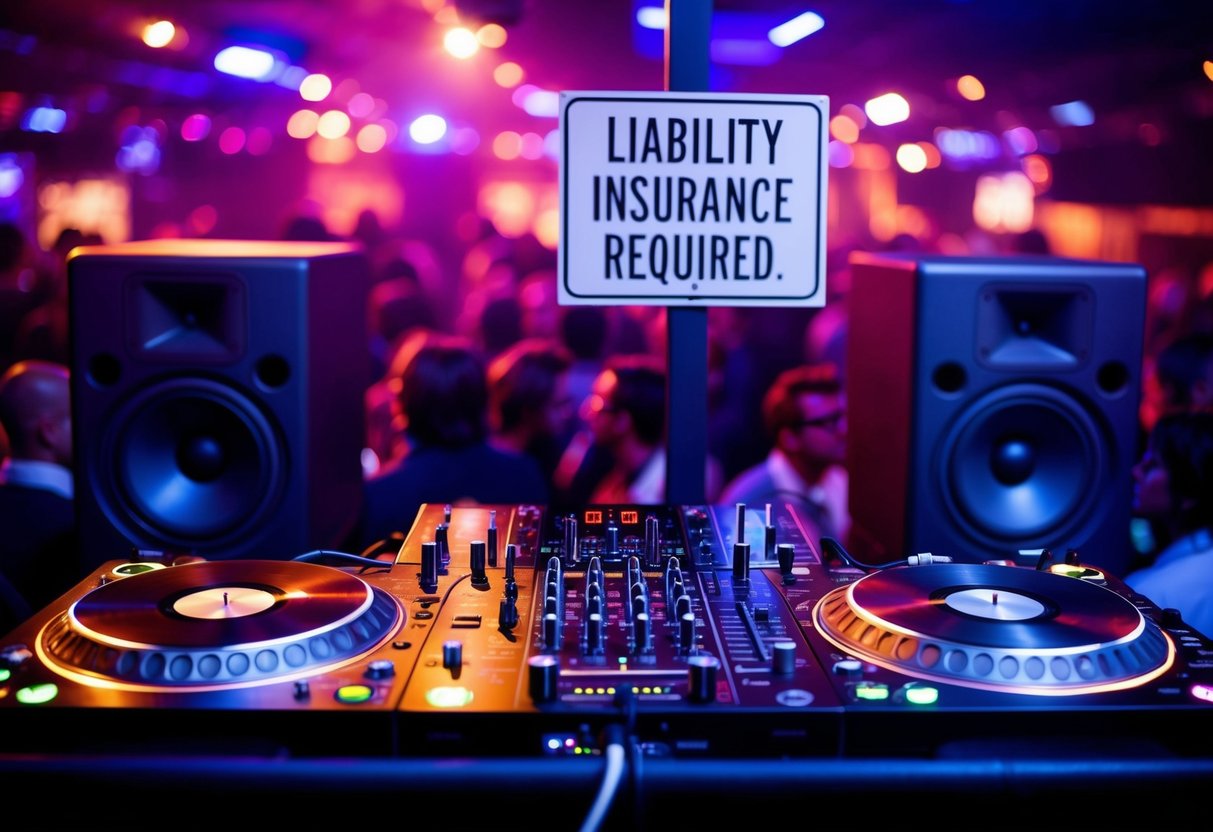
As a DJ, protecting yourself and your business is important. Insurance gives you peace of mind and financial security against various risks.
Let’s explore why you need DJ insurance and the types of coverage available.
The Need for DJ Insurance
Having DJ insurance is essential for your career. It protects you against lawsuits and claims that may arise from accidents during your performances.
If someone gets injured, or if you accidentally damage venue property, liability insurance can cover those costs.
Most venues require proof of insurance before booking. This means that without proper insurance, you might miss out on job opportunities.
Investing in DJ insurance shows you are professional and take your business seriously.
Liability insurance also covers legal fees if you face a lawsuit. This kind of protection can save you from significant financial losses and help you focus on what you love: making music.
Types of Business Insurance
Several types of business insurance should be considered as a DJ:
-
General Liability Insurance: This is the most common form of coverage. It helps protect against claims of bodily injury or property damage.
-
Property Damage Insurance: This coverage helps you replace your equipment if it gets damaged or stolen. Given the high cost of DJ gear, this insurance is valuable.
-
Professional Liability Insurance: This insurance protects you against claims of negligence related to your services. It covers issues like missed performances or contractual disagreements.
Having the right mix of insurance can safeguard your business and ensure that you’re covered in various situations. Investing in comprehensive DJ insurance allows you to perform with confidence.