
Do Groom’s Parents Walk Down the Aisle? Understanding Their Special Role in Weddings
When planning your wedding ceremony, you might wonder about the roles of family members, especially the groom’s parents. In many ceremonies, the groom’s parents do walk down the aisle. They typically walk down the aisle before the groom himself. This tradition varies with personal preferences and modern wedding trends, so there’s no one right answer.
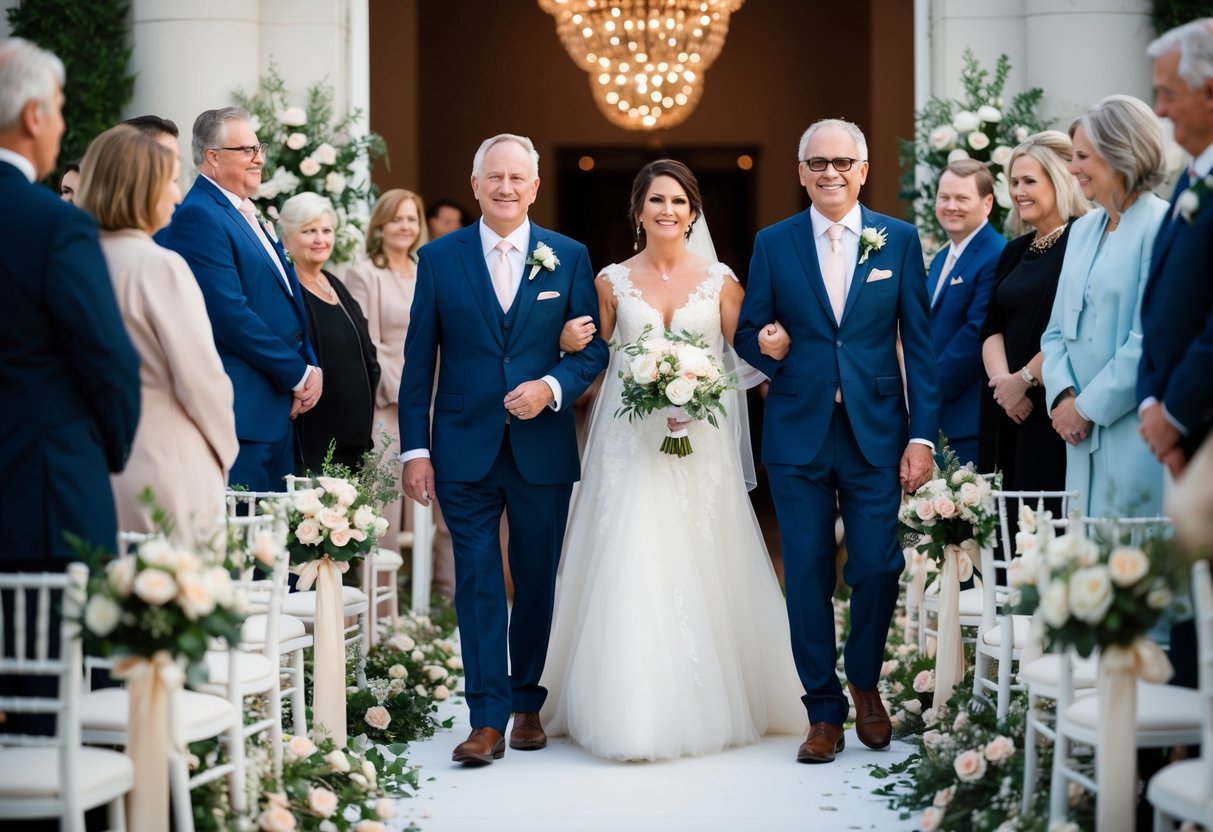
You might choose to have the groom’s parents walk together, setting a warm tone for the day. Alternatively, they can be seated before the ceremony starts. Considering the feelings of both families can help make this moment special and memorable.
Whether you prefer a traditional wedding or a more modern approach, involving the groom’s parents can add a heartfelt touch to your celebration. With so many options available, it’s all about what feels right for you and your loved ones.
The Role of the Groom’s Parents in the Processional
The groom’s parents play an important part in the wedding processional. Their involvement can set the tone for the ceremony. Let’s explore how they participate, the etiquette involved, and how this role can vary in modern weddings.
Involvement of the Groom’s Parents
Traditionally, the groom’s parents are some of the first to join the processional. They typically walk down the aisle together, symbolizing their support for the couple. In many ceremonies, they sit on the right side of the venue, signifying their role in the groom’s family.
While the groom’s parents usually walk ahead of the mother of the bride, customs can vary based on personal preferences. If you want to include a special touch, consider having them walk in with other family members or a close friend.
Walking Down the Aisle Etiquette
When it comes to the wedding processional order, etiquette matters. The groom’s parents are expected to enter after the grandparents and before the bridal party. This respectful order acknowledges the importance of both families in the ceremony.
It’s common for the groom’s mother to be escorted by someone, often a relative, while the father walks alongside. It’s essential to communicate your plans to everyone involved, ensuring that the processional runs smoothly.
Modern Wedding Processional Order
In modern weddings, the processional has evolved. Couples now often personalize their ceremonies in meaningful ways. While many still follow traditional wedding structures, some choose a more casual format.
For a non-religious wedding, you might select a unique order that reflects your preferences. The groom’s parents can be involved in various ways, such as walking down the aisle with their son or standing with him at the altar. This flexibility allows you to create a day that feels authentic to your relationship.
Cultural and Religious Considerations
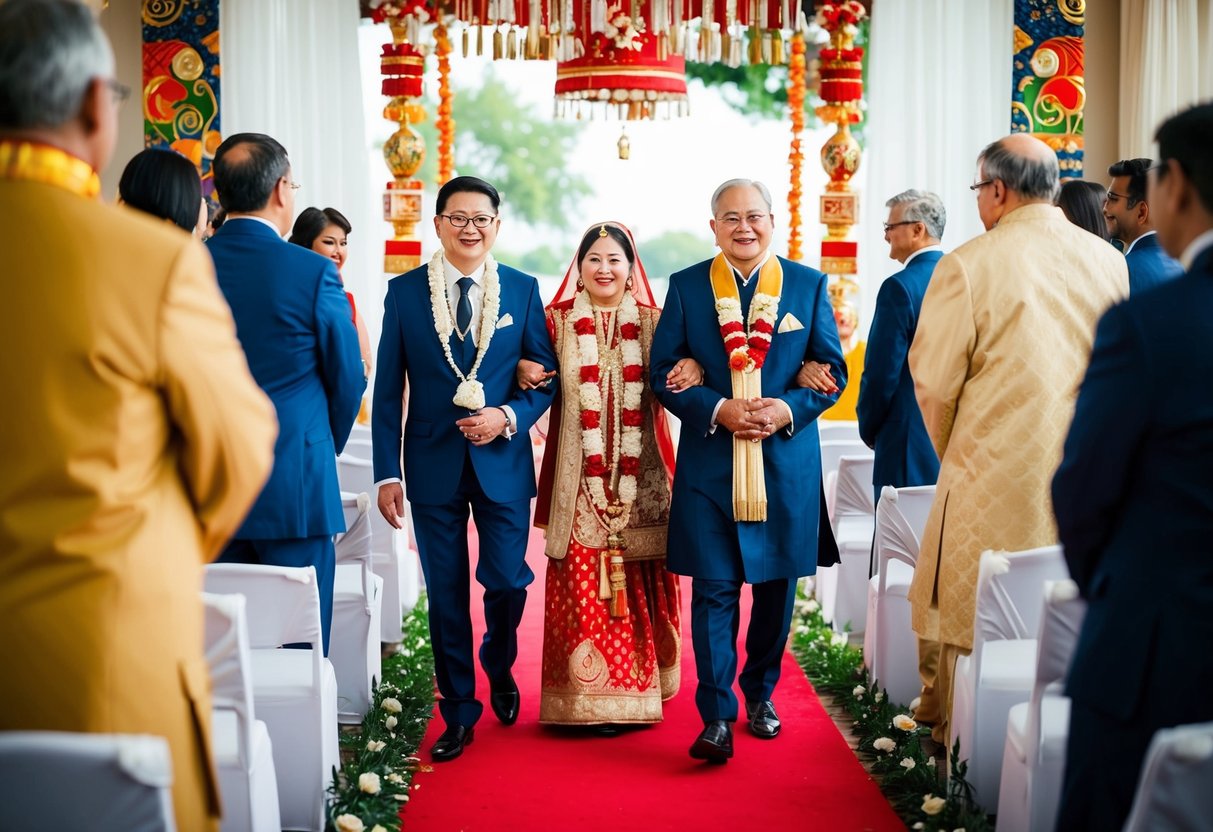
Weddings often reflect the couple’s cultural and religious backgrounds. Understanding these traditions can help you honor familial roles during the ceremony. Below are some important customs for Jewish, Hindu, and Christian weddings.
Jewish Wedding Customs
In a Jewish wedding, the groom’s parents usually walk down the aisle as part of the traditional processional. They often take their place beside the chuppah, which is the canopy that symbolizes home and family. This act honors the family’s role in the couple’s new life together.
During the Jewish wedding processional order, the groom’s parents may walk together right before the ceremony starts. Their presence is a way to show support and blessing as they transition into the next chapter of their lives.
Hindu Wedding Traditions
In Hindu weddings, the groom’s family plays a significant role, often accompanying him during the baraat. This joyful procession can involve music, dancing, and celebration as the groom makes his entrance. The groom’s parents typically walk with him toward the mandap, the sacred altar where the ceremony takes place.
This tradition highlights the importance of family in Hindu culture. It emphasizes the joy and community spirit, making it a lively and colorful part of the ceremony. The involvement of the parents symbolizes their support and love for the couple.
Christian Processional Practices
In many Christian weddings, the groom’s parents also participate in the processional. They often walk together down the aisle and take a seat on the right side of the altar. This role can vary based on individual preferences and regional customs.
In Western weddings, the order may change slightly, with the mother of the groom making her entrance either alone or with a family member. This custom reinforces the idea of family bonds as they witness the couple’s vows.
Personalizing the Wedding Processional
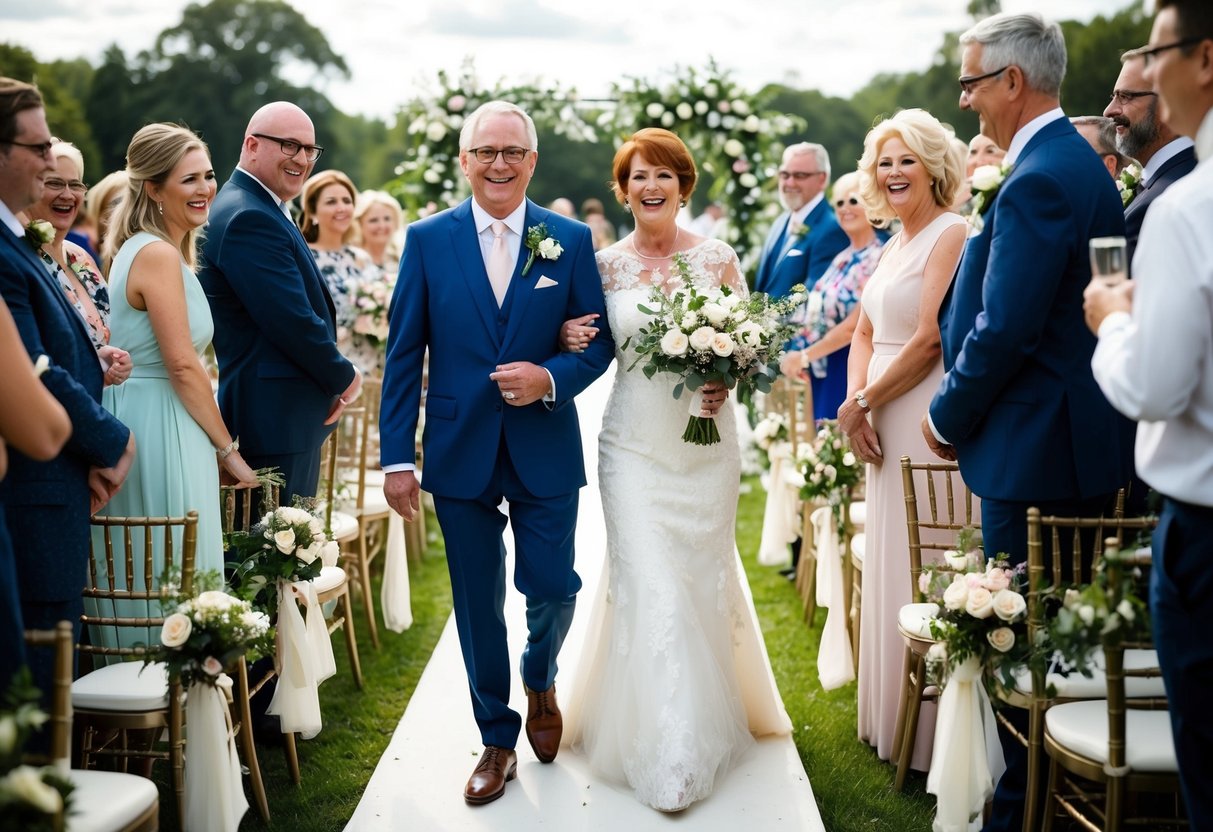
Your wedding processional is a time to reflect your unique story. Personalizing this moment creates a meaningful experience for everyone involved. You can consider varying family structures and embrace creative ideas that align with your vision.
Considering Step-Parents and Blended Families
If you have step-parents, including them in your processional can honor their support. You might choose to have your stepfather walk you down the aisle or join your mom. This can represent the joining of two families.
Discuss with your partner how to incorporate step-parents based on personal preferences. You could also have both biological parents escort you, symbolizing unity and love within your family. This approach showcases your desire for inclusion and respect for all relationships.
Unique Processional Ideas for Contemporary Ceremonies
Modern weddings often seek to move away from traditional norms. You can create a processional that reflects your couple’s wishes.
Think about including friends or loved ones to stand alongside the wedding party.
For a non-religious ceremony, consider unique themes.
For instance, you may decide to have a group of family members walk together to represent the support and blessing of both families.
Another idea is a “family first” approach, where parents and siblings enter together before the bride and groom.
These personalized approaches add depth to your ceremony and highlight the love you share.