
Do I Need My Parents’ Birth Certificate to Get Married? Clarifying Marriage Requirements
Getting ready to tie the knot is an exciting time, but you might wonder about the specific documents needed for your marriage license. Many people ask if they need to have their parents’ birth certificates as part of this process. In most cases, you do not need your parents’ birth certificates to get married.

When applying for a marriage license, you’ll usually need your own identification and your birth certificate. This helps prove your age and identity. While parental consent is often required if you’re underage, they won’t need to provide their birth certificates.
Understanding what documents are necessary can make your journey to getting married smoother.
As you gather your paperwork, remember that each state may have different requirements, so it’s a good idea to check the rules specific to your location.
Understanding Marriage License Requirements

Getting a marriage license involves several important steps. You need to provide specific identification, proof of age, and possibly some vital records. Knowing what is required can help you prepare better and avoid delays.
Identification and Proof of Age
When applying for a marriage license, you must present a government-issued photo ID. This can be your driver’s license or passport. The ID confirms your identity and age, ensuring you meet the legal requirements.
You also need to show proof of age, which is usually satisfied by your birth certificate. If you’re under the legal age, many states require parental consent or court approval.
Make sure that any documents are current and have your full name as it appears on the ID.
Vital Records You May Need
In addition to your photo ID, other vital records might be needed. Most states require a birth certificate as proof of identity and citizenship. You may also need your Social Security Number (SSN) during the application process.
If you’re previously married, you must provide a divorce decree or a death certificate if you’re widowed. It’s important to gather these documents early to avoid any last-minute stress.
Special Circumstances to Consider
There are certain situations where additional requirements apply. If you’re under 18, you usually need parental consent. The requirements for this can vary between states, so check local laws carefully.
If you are a non-U.S. citizen, you may need to show additional documentation, like proof of residency or a visa. Always contact your local County Clerk’s office for specific instructions. Being well-prepared ensures a smooth application process.
Navigating Parental Consent and Court Orders

When getting married, it’s important to know if you need parental consent or a court order. This section will explain when parental consent is necessary and how to obtain court consent if you are a minor.
When is Parental Consent Required?
If you are under 18, many states require parental consent to get married. This means you need a written agreement from your parents or legal guardians. Some states may ask for both parents’ consent, while others may consider only one signature enough.
Be sure to check your state’s specific requirements. If your parents are divorced, both parents might still need to consent. In some cases, if there are special circumstances, like being pregnant, you might be able to marry without parental consent.
For situations where gaining consent is tricky, speaking with a family law attorney can help clarify your options. They can guide you through the process and ensure everything is in order.
Obtaining Court Consent for Minors
If you cannot get parental consent, you may need to seek a court order. This process typically requires filing a petition in court. You will explain your reasons for wanting to marry without parental approval.
The court considers your best interests during this process. You should be prepared to share details about your relationship and why marriage is important for you.
It’s advisable to have a family law attorney assist you with this process. They can help you present your case effectively, making it more likely that the court will approve your request. Court consent can take time, so plan ahead to ensure you meet your desired wedding date.
Applying for Your Marriage License

Getting your marriage license is an important step in your wedding planning. You need to know the process and what documents to gather. This guide will help you navigate the essential steps involved.
Steps to Apply
To start, visit your local vital records office or the website for your state. Each state has its own rules, so it’s important to check what’s needed.
You will typically need to fill out a marriage license application, which may be available online or in person. Make sure you have a government-issued photo ID, and possibly your birth certificate. Some states also ask for proof of residency. In instances where you’re underage, you might need parental consent. You should check specific details for your state to avoid delays.
Handling the Paperwork
When applying, you will need to submit various documents alongside your application. For most states, a certified copy of your birth certificate is mandatory.
If either partner has been married before, bringing a divorce decree or death certificate might be necessary. It’s best to gather these documents ahead of time. After submitting, keep your receipt. This helps track your application.
If you submit your application online, make sure to follow any additional steps. Some states allow online applications, while others require you to apply in person.
Understanding the Costs and Processing Times
The cost to apply for a marriage license can vary by state. Typically, you can expect to pay a marriage license fee ranging from $30 to $100.
Processing times can also differ. Many states issue licenses immediately, while others may take a few days. Make sure to apply well in advance of your wedding date.
Knowing these costs and times helps you plan better. Always check your local vital records office for the most accurate and updated information on fees and wait times.
Final Preparations Before the Wedding
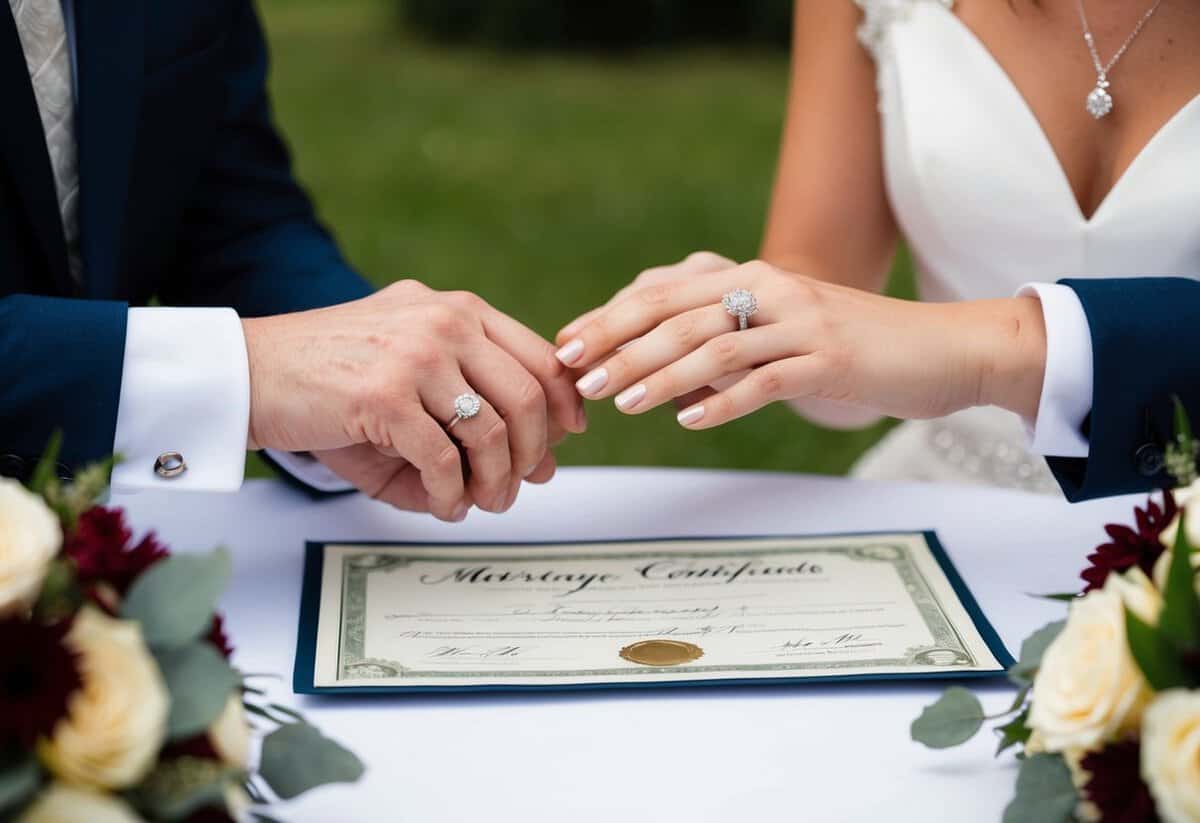
As you approach your wedding day, it’s important to take care of some legal and planning details. Understanding the requirements for your marriage license and being aware of any waiting periods can help ensure everything goes smoothly.
Legal Considerations Before the Ceremony
Before you tie the knot, you need to make sure all legal documents are in order. Most states require you to present a valid photo ID and a certified copy of your birth certificate when applying for your marriage license.
If you’re not a first-time bride or groom, be prepared to show divorce papers or a death certificate from your previous spouse. Check your state requirements early, as they may vary. Additionally, some states have waiting periods ranging from 24 hours to several days between applying for the license and the actual ceremony.
Planning Ahead: Waiting Periods and Name Changes
Knowing about waiting periods is key to your wedding planning. Some states require you to wait a day or more after obtaining your marriage license before you can marry. This is especially important if you are aiming for a specific wedding date.
If you plan to change your last name after the ceremony, keep that in mind when filling out paperwork. You will likely need to update your name on various documents, such as your Social Security card and driver’s license. To do this, gather your marriage certificate and any other needed documents ahead of time to ease the process.