
Do I Need Wedding Welcome Bags? A Practical Guide
Wedding welcome bags are optional, though they offer a thoughtful way to greet guests who travel for your celebration. You need a wedding welcome bag when many guests are staying away from home, especially for a destination wedding or a multi-day wedding weekend. A few useful items can help guests settle in and find important event details.
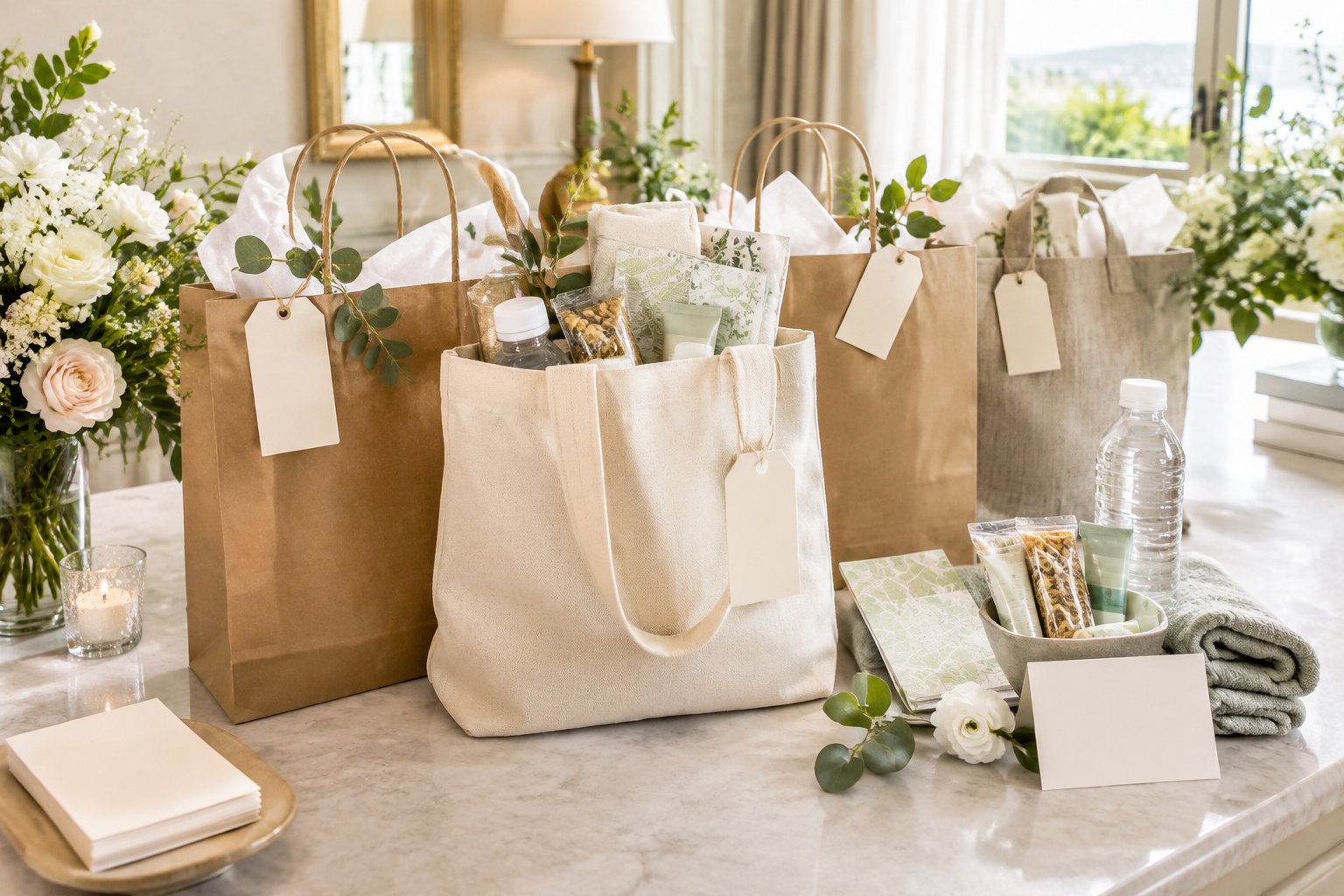
You can also skip them when most wedding guests live nearby, head home after the reception, or when your budget and planning time are tight. Guests will appreciate a warm welcome note and clear details even if those items arrive digitally or at the welcome party. If you decide to make bags, browse these wedding welcome bag ideas for inspiration, then keep your plan useful and manageable.
When Are Welcome Bags Worth It?
Welcome bags are worth the effort when they solve a clear guest need, such as helping out-of-town guests find refreshments, schedules, and local information after traveling. They add the most value when guests stay in a hotel for more than one night.
Who Benefits Most From a Welcome Bag?
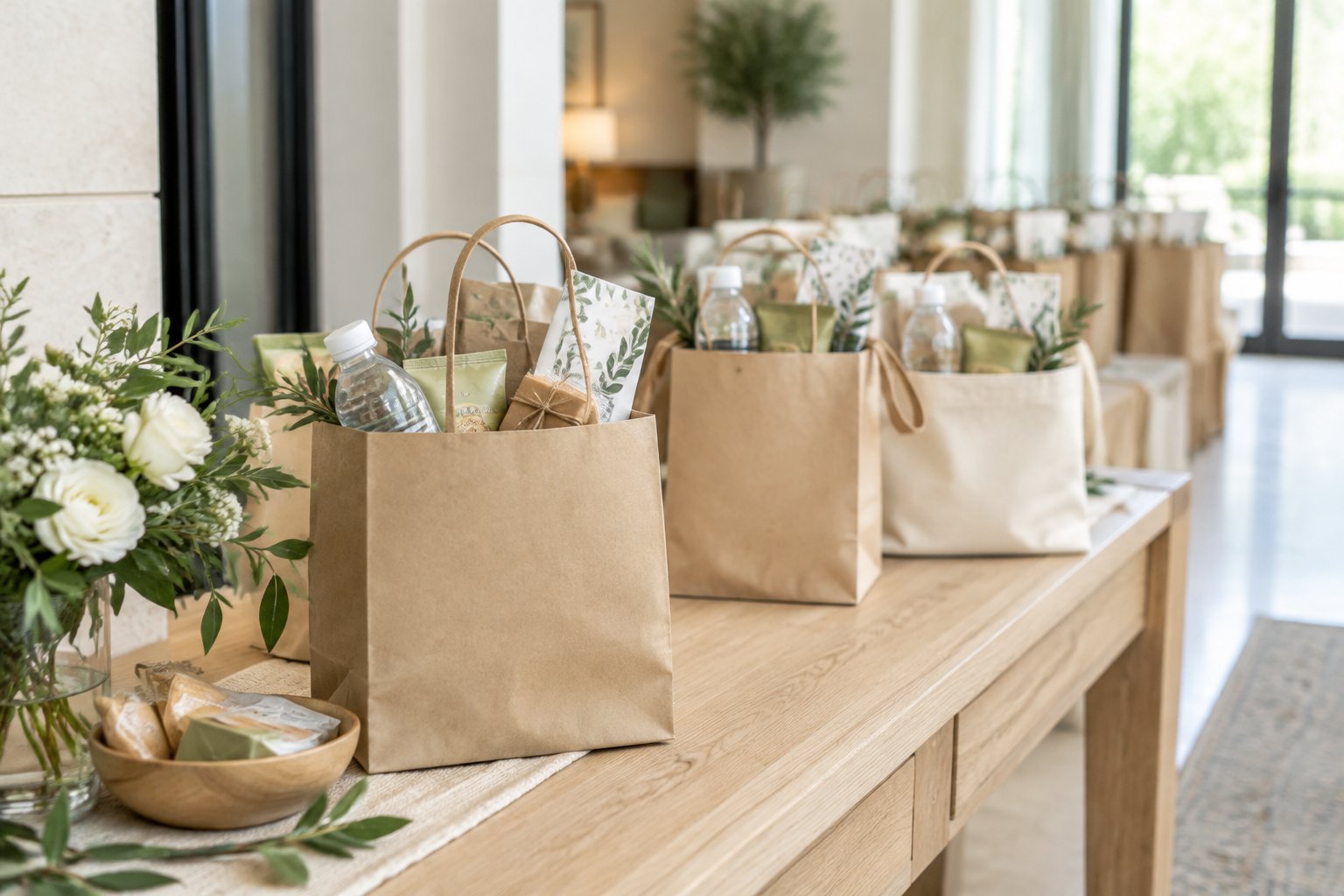
Hotel guests benefit most, especially people flying or driving several hours for your wedding. A destination wedding welcome bag gives travelers a friendly arrival point and useful items for the weekend.
Welcome bags help when guests need:
- Water and snacks after a long trip
- A printed schedule for events and transportation
- Directions, venue details, or local recommendations
- Small comfort items they might not have packed
- A personal note from you
A wedding planner can also use welcome bags to place key information in one easy-to-find location. If you already provide a generous wedding favor, use the welcome bag for practical supplies and let the reception favor serve as the keepsake.
When Is It Fine to Skip Them?
Skip welcome bags when most guests live close enough to return home, hotel arrangements are scattered, or assembling and delivering them would strain your budget. A wedding favor, welcome party, or digital weekend schedule can still make guests feel included.
You can offer a smaller gesture, such as a welcome card at check-in or a shared basket at the welcome event. Guests do not expect every couple to provide a full bag, so choose the option that fits your guest list and energy.
Are They Expected at Destination Weddings?
Destination weddings create the strongest case for welcome bags, though guests still view them as a courtesy instead of a requirement. Travelers often appreciate water, local snacks, a weekend schedule, and details about transportation or nearby services.
Ask your wedding planner or hotel about delivery rules before you promise bags to every hotel. If guests are spread across several properties, focus on the main hotel block or distribute bags at a welcome gathering.
What Should a Useful Bag Include?
A useful wedding welcome bag needs a few practical supplies, one clear source of weekend information, and a personal touch connected to your location. Keep the contents light enough for guests to carry and useful enough to avoid waste.
The Essential Water, Snacks, and Schedule Trio
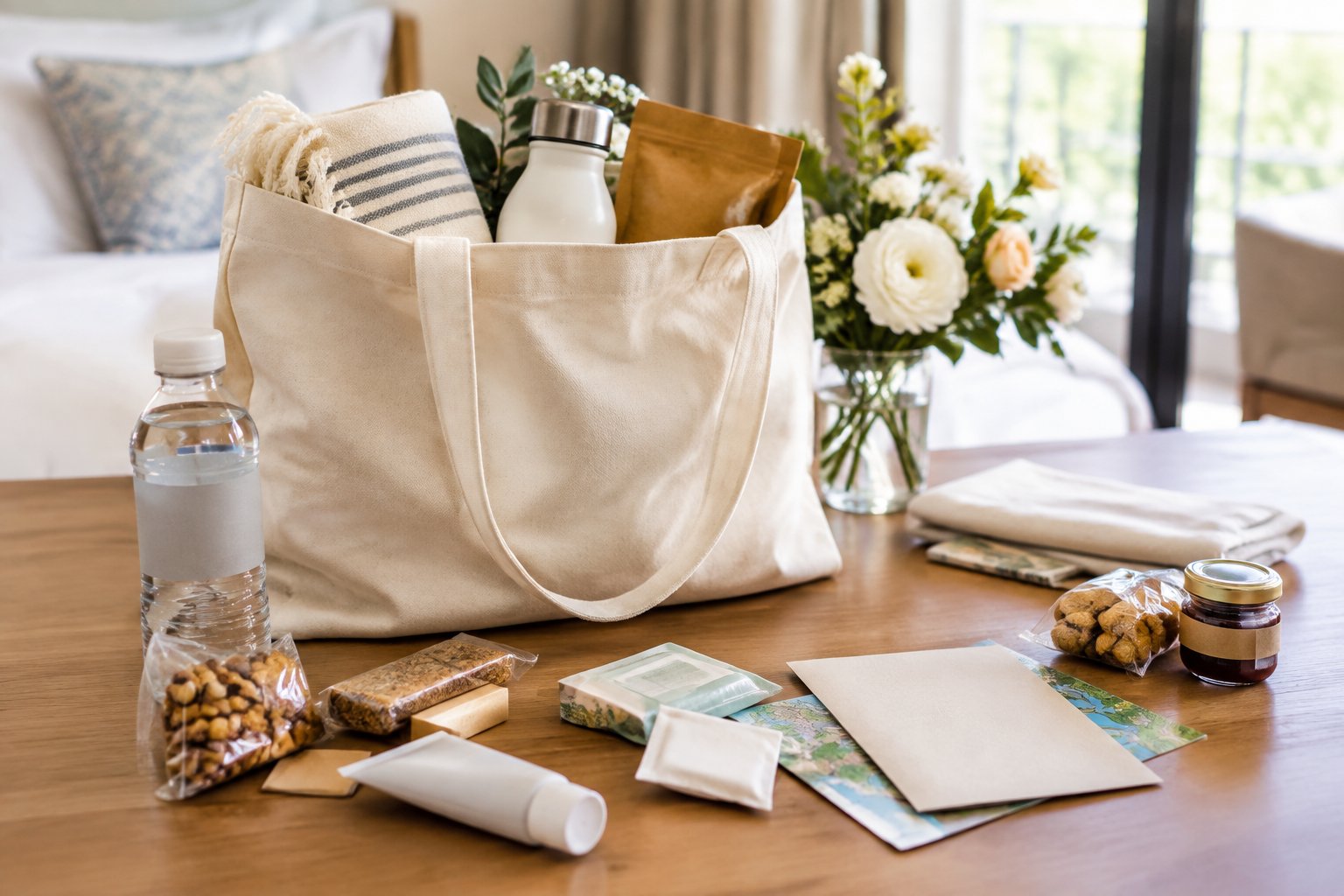
Start with bottled water or sparkling water, individually wrapped snacks, and a printed weekend itinerary. These supplies cover the most common needs when guests arrive tired, hungry, or unsure about the next event.
Add a welcome note, custom welcome note, or welcome card with:
- Your names and a thank-you message
- Hotel and venue addresses
- Event times and dress guidance
- Transportation details
- A contact number for urgent questions
Use two drinks and enough snacks for the people sharing a room. Include options such as popcorn, trail mix, chocolate, or a savory snack so guests have a choice.
Comfort Items Guests May Actually Use
Choose compact items that support the weekend without filling the bag with clutter. Mints, gum, lip balm, hand sanitizer, hand lotion, and band-aids work well for many guests.
A small recovery kit or hangover kit might include pain reliever, electrolyte powder, and an eye mask. Label medication clearly and account for allergies, dietary needs, children, and guests who do not drink. Personal care items should remain sealed and easy to identify.
Local Touches That Feel Personal
Local snacks, local treats, and local coffee give guests a taste of the wedding location. A small souvenir, postcard, or printed list of favorite cafés can add personality without taking much space.
Pick one meaningful local item and pair it with a brief note explaining why you chose it. A regional chocolate bar or a packet of local coffee often feels more personal than a generic branded trinket.
How Much Do Wedding Welcome Bags Cost?
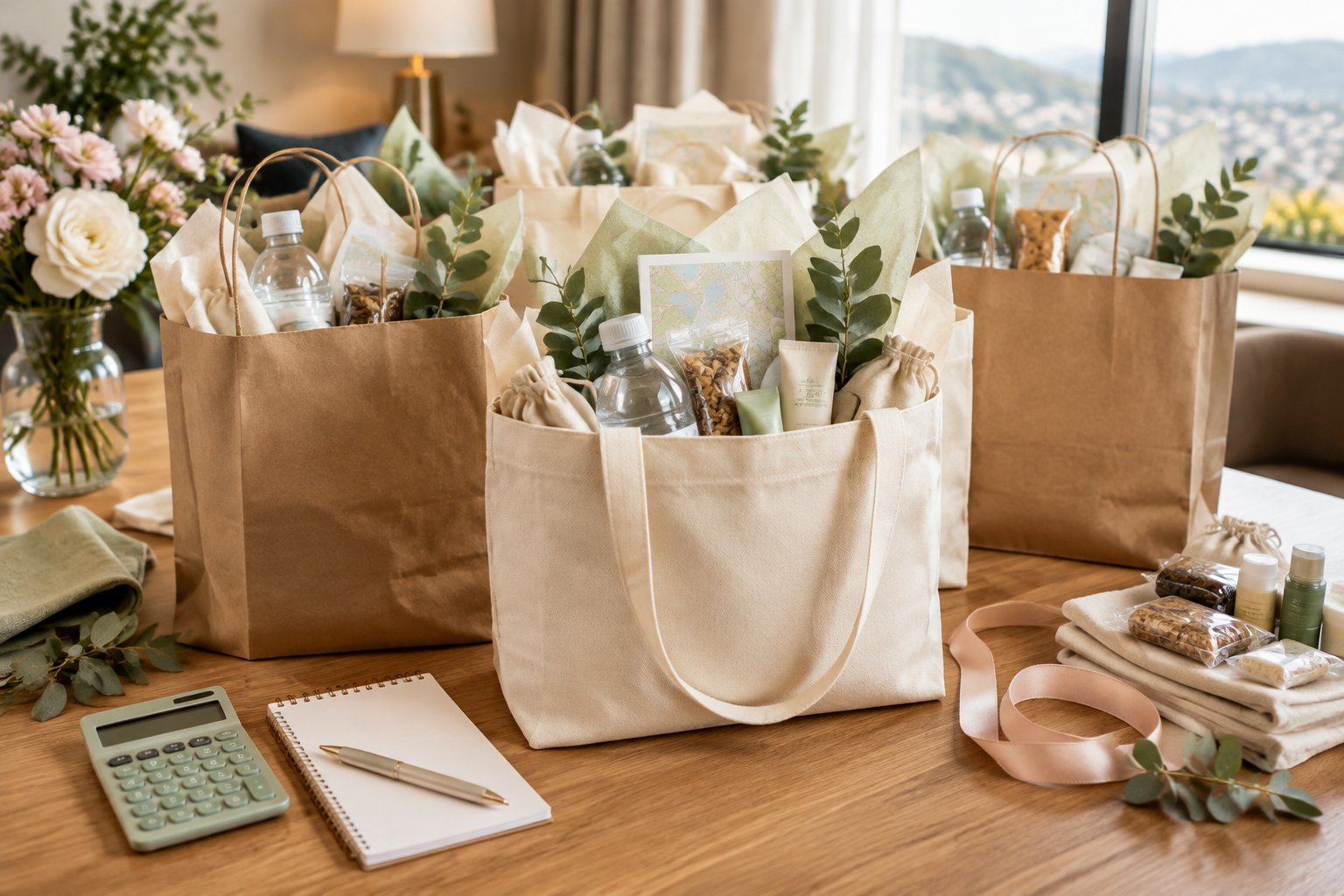
Wedding welcome bags cost about $10 to $25 each for a practical setup, with the final amount shaped by the container, contents, personalization, and hotel delivery fees. Set a per-bag limit before shopping so small upgrades do not spread across the entire guest list.
Budget-Friendly Bags Under $15
Use kraft bags or paper bags, bulk snacks, bottled water, and a printed itinerary to stay near the lower end of the range. A handwritten note adds warmth without raising the materials budget.
A practical $10 to $15 bag might include:
- A kraft bag
- Two bottles of water
- Two snacks
- Mints or gum
- A weekend schedule
- A welcome card
Shop by room count, compare multipacks, and choose one local treat instead of several small extras.
Mid-Range and Elevated Options
Canvas totes, tote bags, and gift boxes create a reusable or more polished presentation. Add local coffee, premium snacks, sunscreen for a warm-weather event, or hand warmers for a cold-weather destination.
Wine or champagne can raise costs and creates extra handling concerns. Confirm hotel rules and consider guests who do not drink before including alcohol. Personalization also adds expense through custom printing, tags, and minimum order quantities.
How to Avoid Paying for Duplicates
Coordinate the welcome bag with your wedding favor before buying anything. If the reception favor includes a tote bag, use that same container for the welcome items or choose a smaller paper bag.
Check whether your hotel already provides water, toiletries, or local guides. Count items by room, then buy a small extra supply for late arrivals and damaged packages. A shared checklist helps you avoid ordering two versions of the same item.
How Many Bags Should You Make?
Plan one bag per hotel room for most wedding welcome bags, then adjust for family rooms, larger groups, and guests staying at separate properties. This approach keeps the count manageable while giving each room a shared welcome.
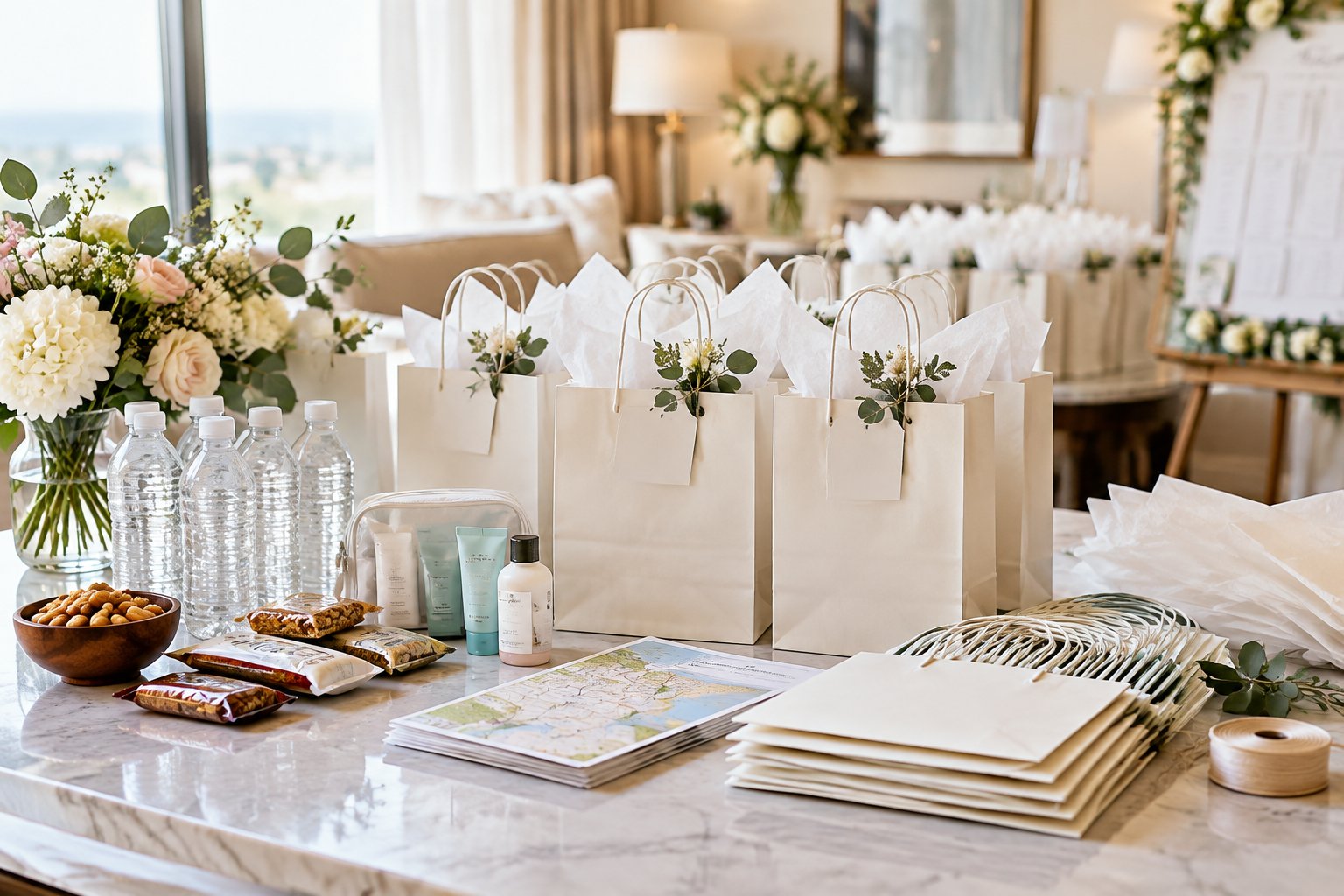
Why One Bag Per Hotel Room Usually Works
Couples and families share a room, so one bag filled with enough supplies for each person covers the standard arrangement. Include two drinks and multiple snacks for a two-person room.
Use the hotel block reservation list to estimate your order. Recheck the room count before assembly because cancellations, added reservations, and room changes affect the final number.
Who Should Receive a Bag?
Give bags to out-of-town guests staying in your hotel block, including guests who travel nearby and need an overnight room. Families and groups sharing one room can receive one larger bag with extra items for each person.
Local guests who drive home do not need a hotel bag. If you want everyone included, offer a small welcome item at the welcome party or place a shared snack display near the entrance.
How Many Extra Bags Should You Prepare?
Prepare about 5% to 10% extra bags, depending on your room count and the hotel’s booking activity. A small wedding might need two or three extras, while a larger block may call for more.
Keep extra snacks, water, and itinerary cards separate so you can refill a bag quickly. Label any bags for special dietary needs or children before delivery.
How to Assemble and Deliver Them Smoothly
Smooth delivery starts with hotel approval, clear labels, and a packing system that matches your final room list. Assemble items by category, check each bag against a list, and keep the weekend itinerary easy to spot.
Coordinate With the Hotel Before Ordering
Contact the hotel block coordinator before buying supplies. Ask whether staff will place bags in rooms or hand them out at check-in, whether a distribution fee applies, how far in advance you can deliver them, and how the hotel wants bags labeled.
Confirm whether the hotel accepts deliveries from Etsy, Amazon, or other vendors. Share the final guest list and arrival dates when the hotel requests them. Pack finished bags in sturdy boxes and keep a count for each property.
Create Clear Inserts and Labels
Print the weekend itinerary on one readable card with event times, locations, transportation details, and contact information. Place the welcome note near the top so guests see it before unpacking the other items.
Use welcome bag tags with your names or a simple room label. If bags contain allergens, alcohol, or special items, mark them clearly. Prepare separate versions for dietary needs, children, or guests who need accessibility information.
Where to Buy Supplies and Personalized Details
Amazon works well for bulk water, snacks, tissue paper, and basic packing supplies. Etsy offers personalized stationery, welcome bag tags, stickers, and custom welcome note designs. Local shops can supply regional treats or coffee.
Order personalized wedding stationery four to six weeks before the wedding. Assemble bags one or two days before hotel delivery, add perishable items at the end, and keep one completed sample nearby while packing the rest.