
Do Mother of Bride and Groom Wear the Same Color? Navigating Wedding Attire Choices
When planning a wedding, one common question arises: should the mothers of the bride and groom wear the same color? The answer is that while it’s not a requirement, coordinating colors can be a great way to create a unified look at the wedding. Maintaining some distinction between both mothers’ outfits can help guests easily identify who is who, especially during those heartfelt moments.
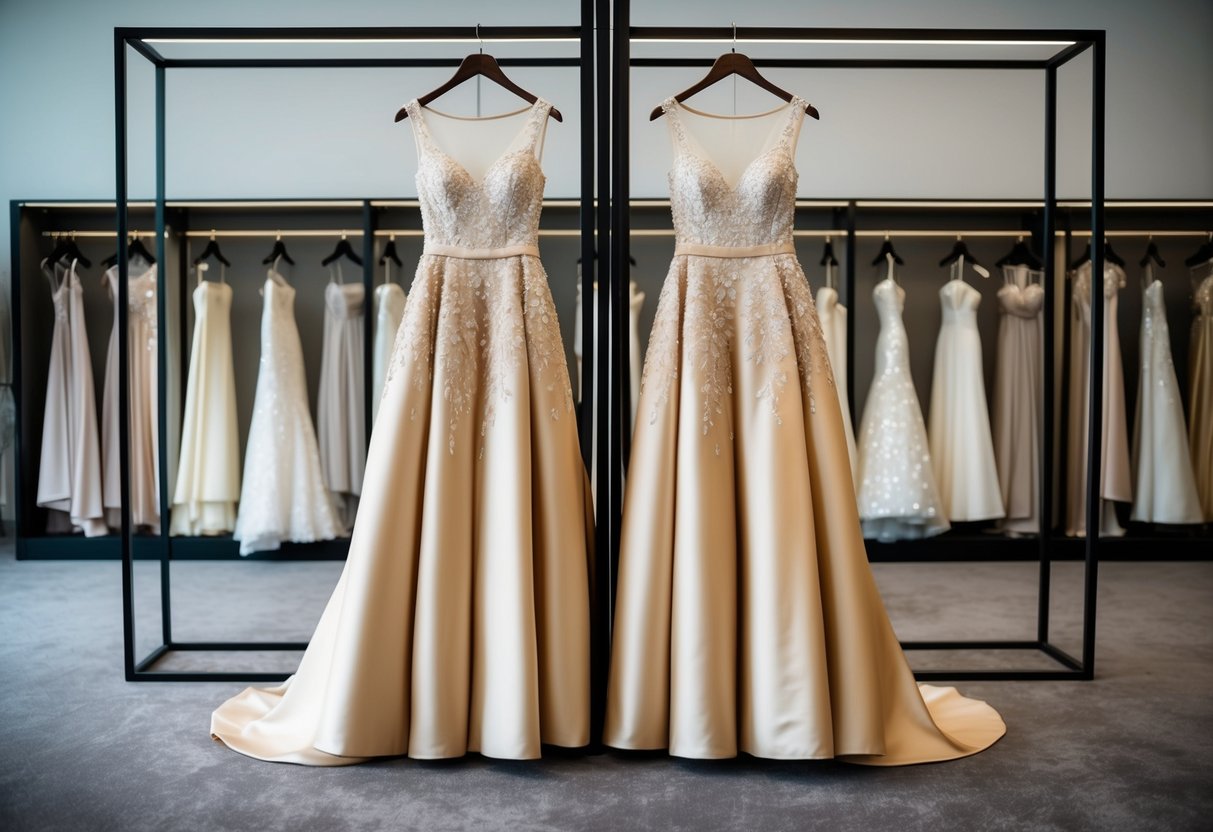
Understanding wedding etiquette can help you navigate this decision gracefully. It’s important for both mothers to communicate openly about their outfit choices. By discussing colors and styles in advance, you can ensure that both the mother of the bride and the mother of the groom feel comfortable and confident without overshadowing each other.
Choosing complementary colors or matching shades can enhance the overall aesthetic of the wedding without causing confusion among the guests. Remember, it’s all about making sure everyone feels special on this big day!
Understanding Wedding Attire Traditions

When it comes to wedding attire, traditions play a vital role in guiding choices for mothers of the bride and groom. These choices can reflect the couple’s style as well as honor relationships. Here are key aspects to consider.
The Role of Mothers in the Wedding Party
The mothers of the bride and groom hold special roles during the wedding. They often help with planning and supporting their children. Their attire should feel elegant but also respectful of the day’s significance.
Traditionally, the mother of the bride selects her dress first, setting a tone for what the bridal party may wear. Meanwhile, the mother of the groom should ensure her outfit complements the mother of the bride without directly matching. This balance allows both mothers to shine in their unique ways. It’s important to coordinate, so the focus remains on the couple.
Traditional Dress Choices for Mothers
When it comes to dress choices, mothers typically choose outfits that reflect their personal style while fitting the wedding’s theme. This might include long dresses, chic cocktail dresses, or elegant pant suits. The dress should be comfortable, allowing movement and enjoyment throughout the day.
Color and fabric are also essential considerations. Soft fabrics like chiffon or lace can add a touch of sophistication. Choosing a style that aligns with the feel of the wedding is crucial. For example, a formal wedding might call for more elegant attire, while a casual beach wedding could allow for lighter, more relaxed options.
Color Significance in Wedding Attire
Color plays a significant role in wedding attire choices. Different colors can convey various meanings and feelings. You might want to check what shades complement the wedding palette.
It’s advisable for the mother of the bride to choose her dress color before others. This helps steer the color decisions for both the bridesmaids and the mother of the groom. While matching colors isn’t necessary, coordinating shades can create a harmonious look.
Avoid colors that might distract from the bride or match her gown directly. Instead, think of colors that enhance the overall aesthetic without overshadowing the bridal party.
Coordinating Colors for a Harmonious Look
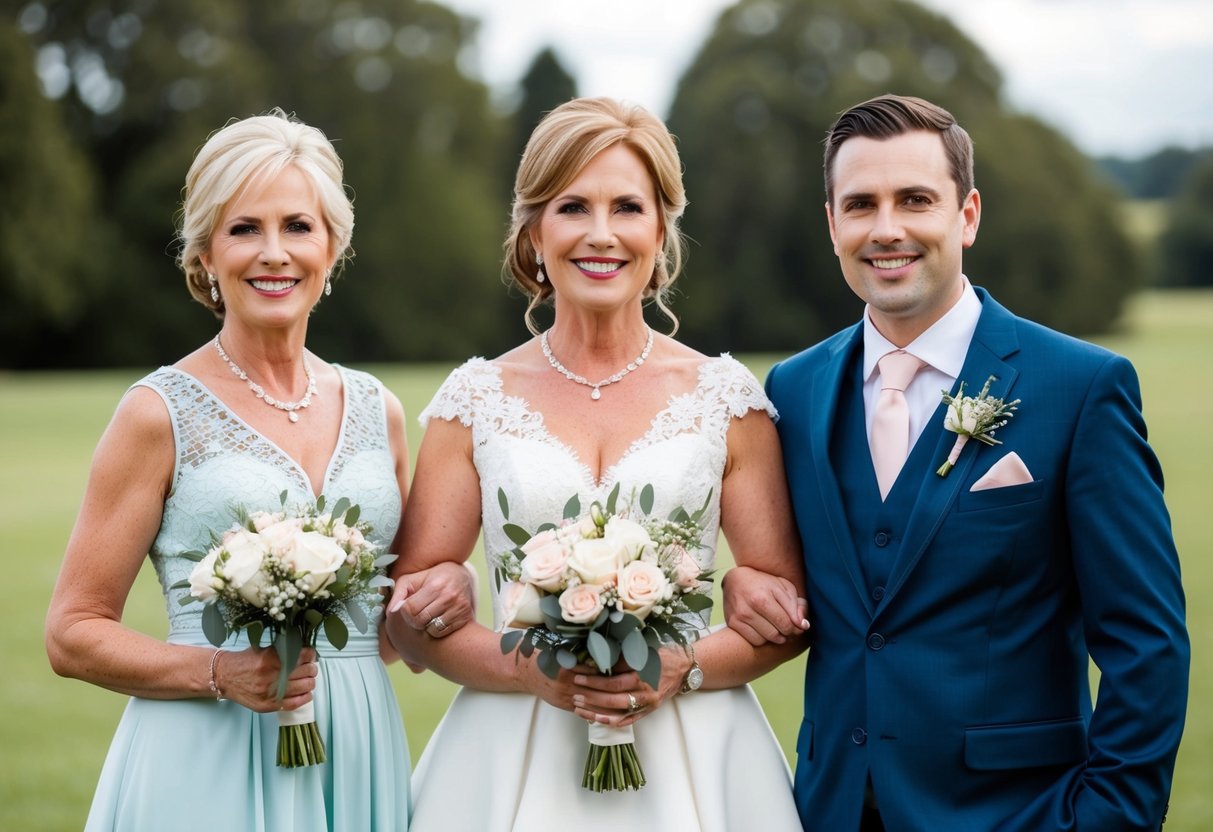
Finding the right colors for the mothers of the bride and groom can create a lovely visual harmony at the wedding. It’s important to consider how these colors relate to the overall wedding color scheme and how they impact the look of your special day.
Importance of Wedding Color Schemes
A wedding color scheme sets the mood and style for the entire event. It includes the colors for decorations, flowers, and attire.
When you choose colors for the mothers of the bride and groom, think about how they work within this larger palette. You want both mothers to look elegant while fitting into the wedding’s overall theme.
Using the same color can make it harder for guests to identify who is who. Instead, choose shades that complement each other. This creates a cohesive look that enhances your wedding’s visual appeal.
Avoiding Color Clashes
Color clashes can be distracting in wedding photos and can take away from the day’s joy. It is important to avoid colors that are too similar to the bride’s dress or the bridal party’s attire.
Consider soft shades such as pastels or jewel tones to prevent any clashes. Avoid white, cream, or colors that might confuse guests about who is the mother of the bride or groom. Choosing distinct yet coordinating colors helps maintain a harmonious look without overwhelming the scene.
Choosing Complementary Colors
Complementary colors add depth and richness to your color palette. Look for colors that enhance each other, like navy blue and blush pink, or emerald green and gold.
These combinations ensure that both mothers stand out while still looking coordinated. Keep in mind the dress length and style as well, as this will impact how colors appear. A flowing gown in a complementary shade can look beautiful and offer an elegant touch for both mothers, creating lasting memories in photos.
Personal Style and Individual Preferences

When selecting outfits for a wedding, it’s important to balance individual style with a cohesive look. Personal preferences play a big role, allowing each mother to feel comfortable and confident. Here’s how to navigate this while still honoring the event.
Expressing Individuality While Staying Cohesive
Finding a dress that reflects your personality matters. Whether you choose a vibrant color or a classic cut, your outfit should resonate with who you are.
You can express individuality through:
- Dress Style: Select a design that flatters your body shape and fits your vibe.
- Color Choices: You might choose different shades that complement each other. For example, one can wear navy while the other wears a lighter blue.
- Accessories: Personalize your look with unique jewelry, handbags, or shoes that showcase your taste.
Remember, while you want to stand out, coordinating colors and styles helps create a unified look in photos.
Personal Preferences and Dress Selection
Personal preference guides your dress selection. Think about what styles make you feel your best. If you love elegant, flowing gowns, embrace that choice.
Your outfit should complement the theme of the wedding but ultimately reflect your style.
When selecting your dress or even a more tailored outfit, consider:
- Comfort: Ensure your dress allows you to move freely.
- Hairstyles: Think about how your hairstyle will pair with your outfit. Updos can enhance formal wear, while loose waves might suit a flowy gown.
- Colors and Fabrics: Discuss with the mother of the bride or groom to avoid matching too closely.
This thoughtful approach can help both mothers feel fabulous while celebrating the special day.
Navigating Dress Etiquette and Wedding Standards
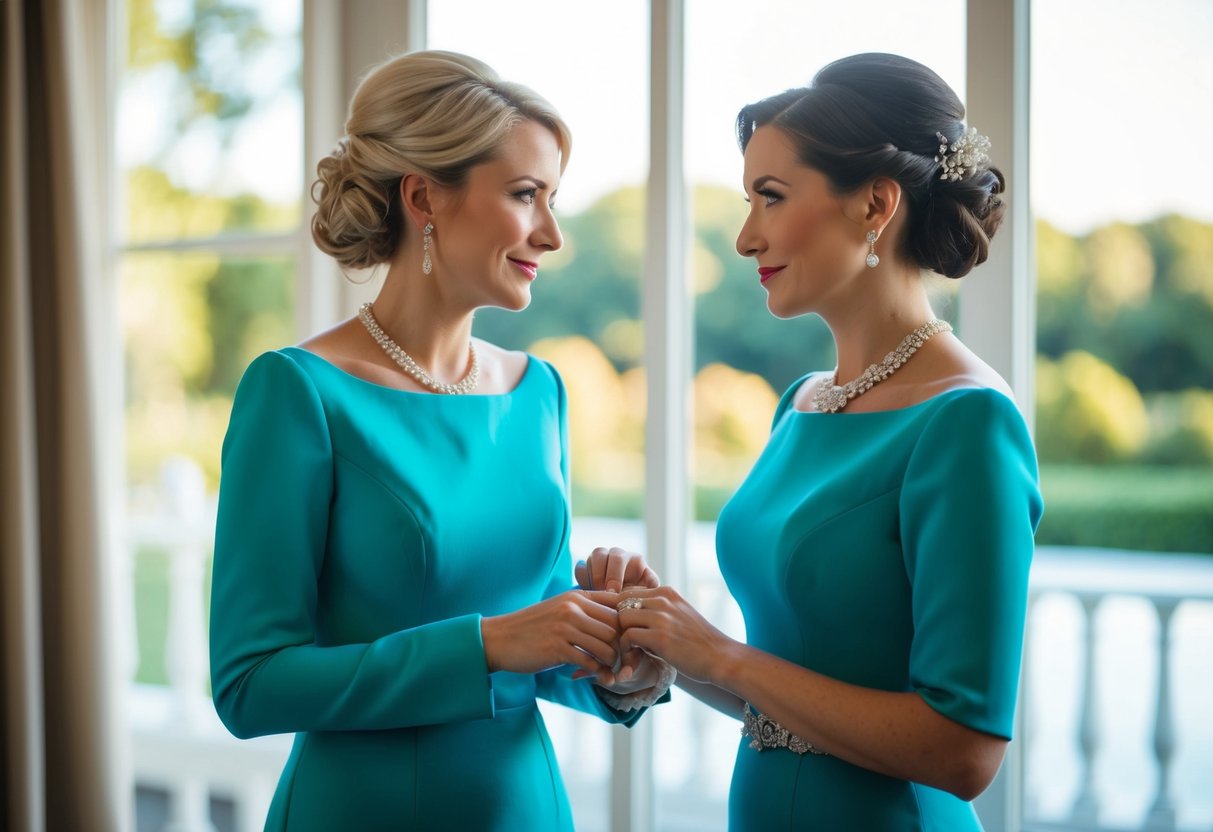
Understanding dress etiquette can help you make choices that align with wedding standards. Whether you’re attending a black-tie event or a more casual gathering, knowing the rules can make a difference in your appearance and comfort.
Dress Codes for Different Types of Weddings
Different weddings come with their own dress codes. For a formal wedding, such as a black-tie event, women typically wear evening gowns, and men often choose tuxedos. Colors like deep navy, black, or even rich shades of champagne are popular.
For less formal occasions, such as a beach wedding, lighter fabrics and colors suit the atmosphere. Think floral dresses for women and lighter suits for men. In both cases, consider the setting and season when choosing your outfit.
Communication Between Mothers and the Couple
Clear communication is key for the mothers of the bride and groom. Discussing color choices and styles early on helps avoid awkward situations.
Coordinating outfits can enhance wedding photos, ensuring that no one clashed with the wedding party. Whether it’s a soft gray or bold hue, choose colors that complement each other. You might want to send pictures or even go shopping together. This collaboration helps create a cohesive look without making identical choices.
Choosing Dresses for Black and White Weddings
Black and white weddings often require special attention to color choices. Traditionally, wearing black to a wedding can be controversial, though it’s increasingly accepted. If you’re unsure, consider consulting with the couple.
When choosing your dress, elegant fabrics and subtle patterns can add interest without being distracting. For example, a long, flowing gown in black with white accents can be stunning.
Think of how your dress will appear in wedding photos and make sure it enhances the overall aesthetic.