
Do Muslims Get Married in White? Exploring Wedding Traditions Across Cultures
When you think of weddings, the image of a bride in a stunning white dress often comes to mind. In the context of Islam, you might wonder if this tradition holds true for Muslim weddings as well. Yes, many Muslims do choose to wear white wedding dresses. This custom originated from Christian traditions.
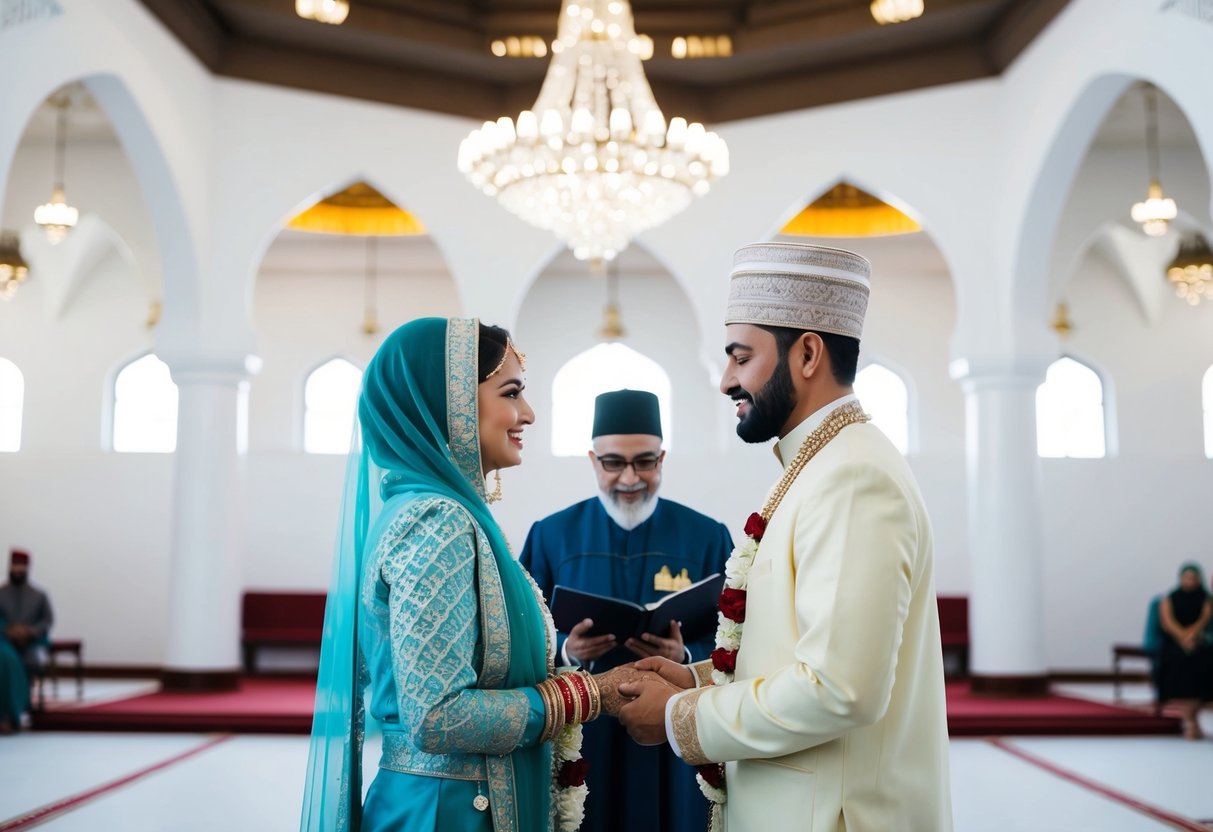
The practice of donning a white dress has become widely accepted among Muslims, integrating into modern wedding ceremonies. Your wedding is a significant event that blends cultural traditions and personal preferences. As you explore the details of a Muslim marriage, you’ll find that while religious customs play a major role, individual expression is also important, especially during the wedding reception.
You’ll also discover how the attire chosen for the ceremony reflects both faith and personal style. As you consider the beauty of these celebrations, remember that the choice of a wedding dress can symbolize joy and new beginnings in your journey of love and commitment.
Cultural Significance of Wedding Attire in Islam
Wedding attire in Islamic culture carries deep meanings that vary across communities. You’ll find that traditional dress reflects both local customs and religious significance. The choice of colors and styles is often influenced by the region and its history.
Traditional Attire Across Muslim-Majority Regions
In many Muslim-majority regions, traditional wedding attire showcases the rich cultural heritage of the area. For example, in the Middle East, brides often wear elaborate gowns that feature intricate embroidery and embellishments.
In Africa, attire can include vibrant colors and patterns that symbolize joy and celebration. Countries like Nigeria showcase unique styles, such as the Aso Oke fabric used in weddings.
In Asia, particularly in South Asia, the bridal outfit can include a lehenga or saree, often in bright colors. These dresses are adorned with gold and silver threading, showing the importance of beauty and tradition. Each region’s attire tells a story and represents the couple’s cultural background.
Meaning of White in Islamic Weddings
The color white holds different meanings in Islamic weddings, influenced by cultural contexts. In many Western cultures, white symbolizes purity and innocence. However, in some Islamic sects, particularly in certain African cultures, white can be associated with funerals, making it less desirable for weddings.
Despite this, many Muslim brides, influenced by globalization and modern trends, choose to wear white dresses. This choice symbolizes a blend of cultural traditions where white is seen as elegant and beautiful.
In many cases, the significance of the color can also relate to the individual’s personal style and the specific customs of their family. Ultimately, attire might convey both respect for tradition and personal expression in a joyous celebration.
Religious and Legal Aspects of Muslim Marriages
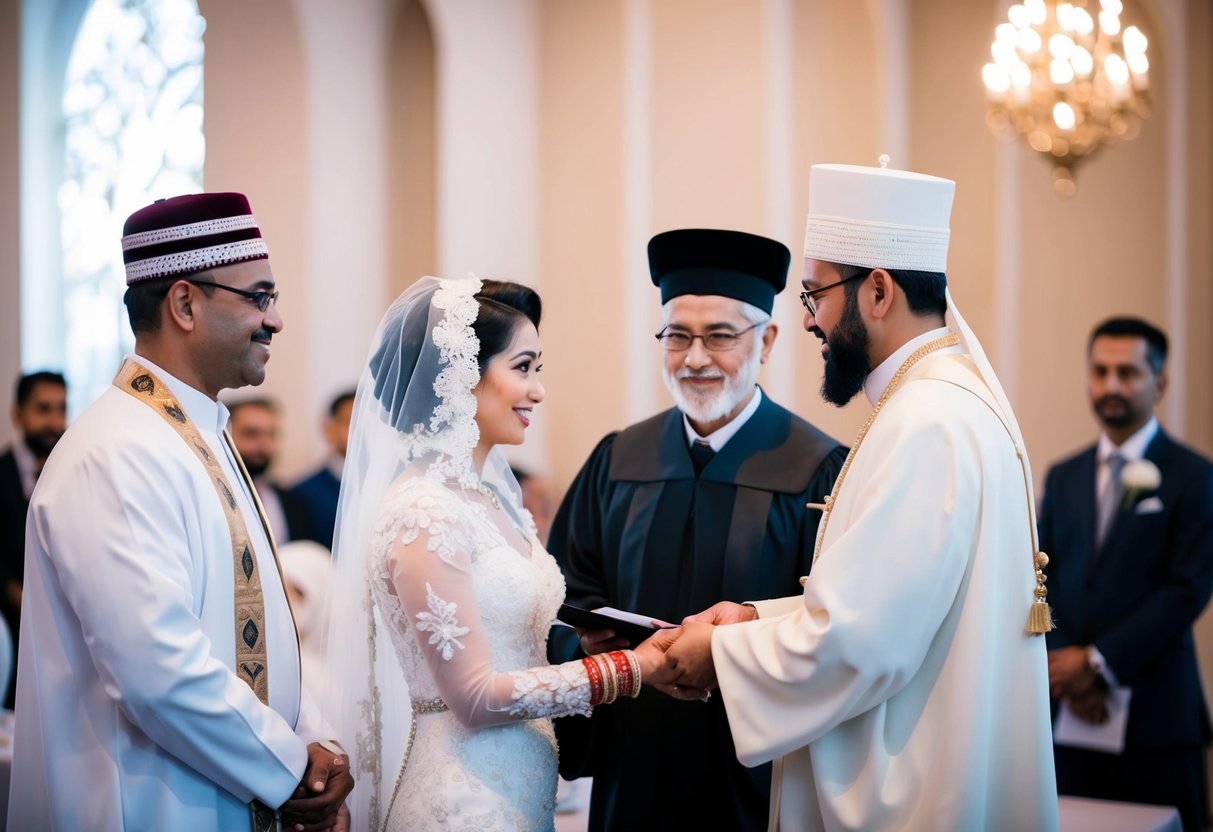
In Islam, marriage carries significant religious and legal importance. This includes the concepts of Mahr, the Nikah ceremony, and the variations in marriage contracts among different Muslim communities.
The Role of Mahr in Islamic Marriages
Mahr is a mandatory gift from the groom to the bride in an Islamic marriage. It represents respect and commitment. You can think of it as a symbolic token that establishes the husband’s responsibility.
The amount of Mahr can vary widely based on personal circumstances or cultural practices. It is usually discussed before the Nikah ceremony and is agreed upon by both parties. Islamic law supports the principle that this gift should not cause financial hardship.
Mahr can be monetary or in the form of valuable items. Sometimes, it’s even a promise to provide something of significance later. Understanding Mahr helps clarify the expectations at the start of the marriage.
Importance of the Nikah Ceremony
The Nikah ceremony is a fundamental religious act that formalizes the marriage in Islam. During this ceremony, both partners express their consent to the marriage. This consent must be given freely without any coercion.
A Wali (guardian), typically the bride’s father or another male relative, is often present to ensure that the union is appropriate. This highlights the importance of family involvement in Islamic marriages.
The Nikah includes the recitation of specific phrases from the Quran and often involves a short sermon. This acts not only as a formal agreement but also as a spiritual connection between the couple.
Variations in Muslim Marriage Contracts
Islamic marital jurisprudence allows for variations in marriage contracts based on cultural practices and individual circumstances. These contracts outline the rights and responsibilities of both partners.
Different communities may have unique customs, but the core principles remain rooted in Islamic law. For example, some couples may choose to include specific conditions in their contract regarding financial matters or living arrangements.
It’s crucial to understand these variations to respect the diverse practices within the Muslim community. Each contract serves to protect the rights of both the husband and wife, ensuring a fair and respectful relationship.
Modern Trends and Interfaith Considerations
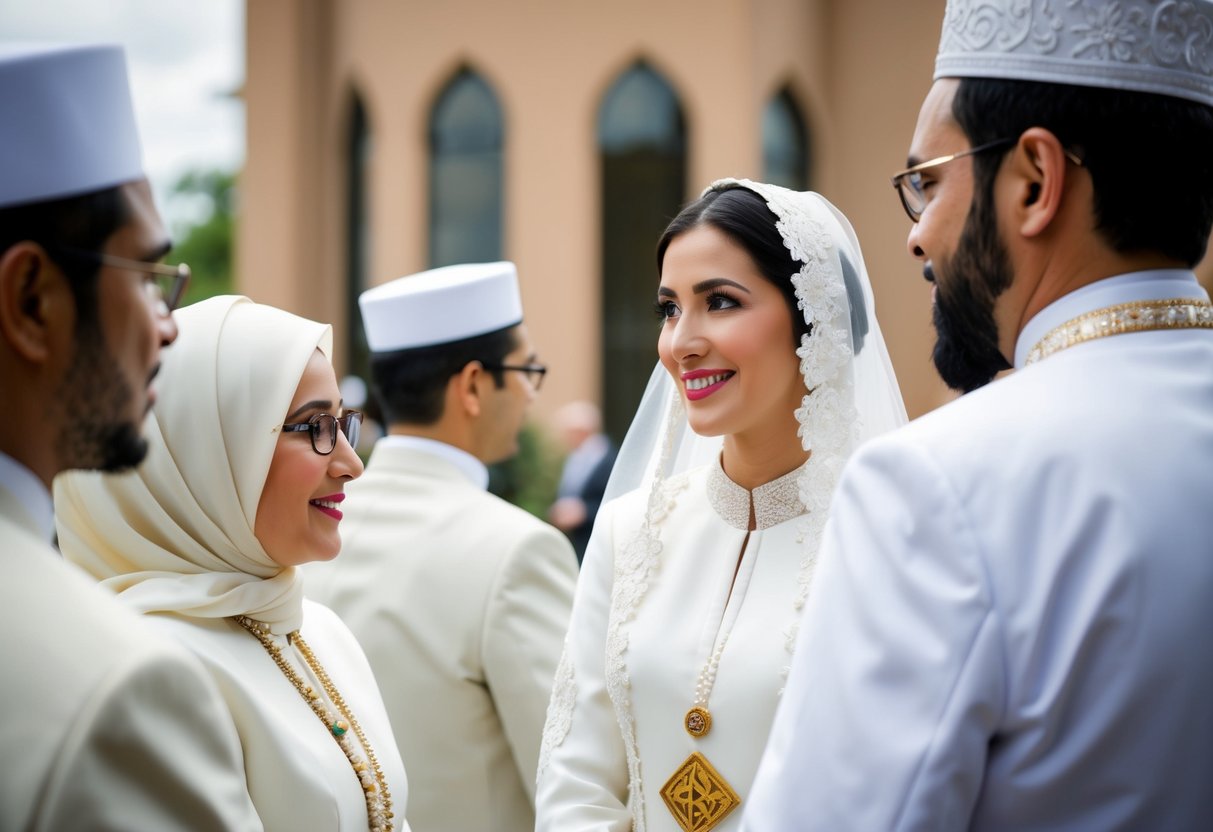
Today, many Muslims navigate complex cultural landscapes in their marriages. This includes adapting to different traditions while also considering interfaith dynamics that influence their choices, especially in diverse regions like Canada and Europe.
Adaptation in Different Cultural Contexts
In various cultural contexts, you may find Muslims celebrating weddings that blend traditional Islamic customs with local practices. For example, in Turkey, couples might incorporate Western styles by wearing white dresses alongside traditional attire during the wedding ceremony.
In Canada, Muslims often adapt their ceremonies to reflect both their religious beliefs and the multicultural environment around them. This merging allows for personal expression while also honoring their backgrounds.
Additionally, the acceptance of interracial and interfaith marriages is growing. People are open to celebrating love that transcends cultural or religious barriers. This shift signifies changing perspectives on religious identity and celebration.
Interfaith Marriage and Islamic Perspectives
Interfaith marriage can be a sensitive topic in the Muslim community. Islamic teachings generally allow Muslim men to marry women from the “People of the Book,” meaning Christians and Jews. This tendency opens a door for many relationships between Muslims and non-Muslims.
However, perspectives differ among communities. In some regions, marrying outside the faith may still face resistance. Conversations surrounding interfaith unions are increasingly common, especially in urban areas across Europe and North America.
When you think about these marriages, consider how they affect personal beliefs and family dynamics. Many families seek to balance their faith while embracing diverse identities through these unions, allowing love to bridge gaps between cultures.
Social and Community Aspects of Muslim Weddings
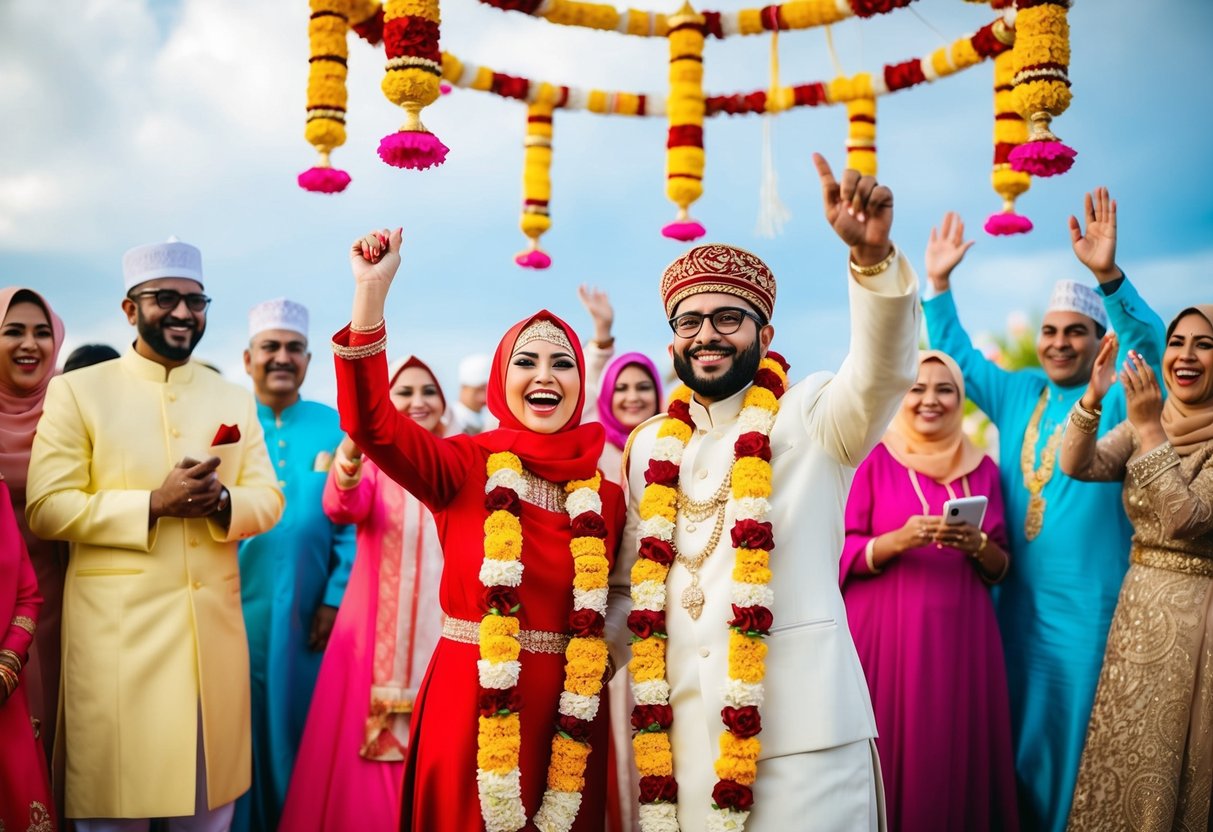
Muslim weddings are rich in social and community significance. They are not only about the couple but also involve families, friends, and cultural traditions that make the event memorable.
The Walima: Celebrating with Family and Community
The Walima is a special reception held after the wedding ceremony. It allows families to gather and celebrate the union. This event often features a lavish meal, music, and dancing.
During the Walima, the groom’s family typically hosts the meal and invites relatives, friends, and community members. The atmosphere is lively, filled with joy and laughter.
Food plays a central role in the Walima, with traditional dishes served alongside modern options. A wedding cake may also be featured, symbolizing the couple’s shared life ahead.
Inclusion of Global Customs in Muslim Matrimony
Muslim weddings often blend various cultural customs, reflecting the diverse backgrounds of the couple.
For instance, in some regions, traditional attire may include colorful garments alongside the typical white dress worn by many brides.
Different cultural practices can include special rituals or unique decorations that add a personal touch.
You might see a fusion of music styles that appeal to the families involved.
This merging of traditions means that a Muslim wedding can look quite different depending on the couple’s background. The aim is always to create a joyful and inclusive celebration that honors their heritage.