
Do Parents of Bride and Groom Get Flowers? Understanding Wedding Traditions
When planning your wedding day, every detail counts, and flowers play a special role. You might wonder if parents of the bride and groom get flowers. Typically, both mothers are honored with corsages, while fathers usually wear boutonnieres. This thoughtful touch adds to the celebration and shows appreciation for their support.
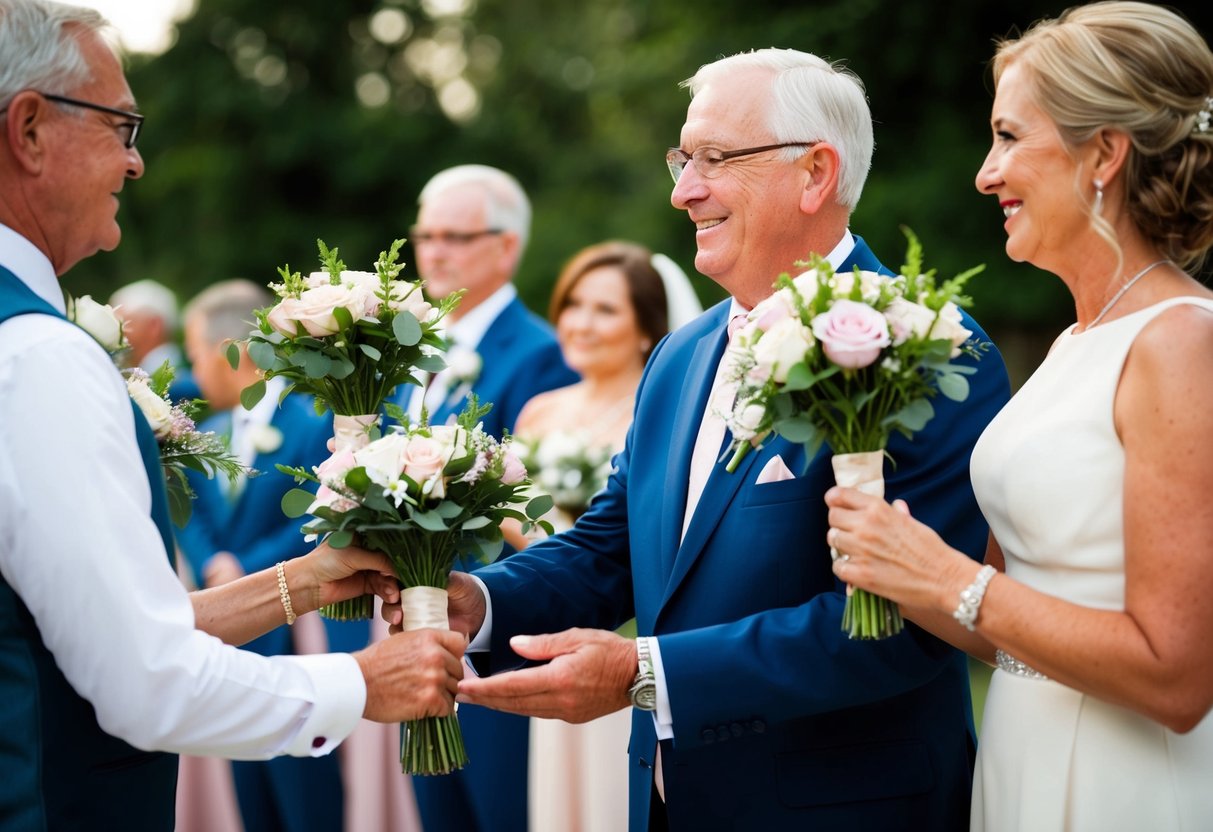
Wedding flowers can help create a cohesive look for your big day. By choosing corsages and boutonnieres that match your wedding theme, you ensure that the parents feel included and valued. It’s a lovely gesture that highlights the importance of family during this special occasion.
Understanding wedding etiquette is essential for a smooth experience. When you provide your parents with flowers, it acknowledges their roles and contributions to your life. With this guide, you’ll know how to honor your parents in a meaningful way, making your wedding day even more memorable.
Traditions and Etiquette
Understanding wedding traditions and etiquette around flowers helps to make the day special for everyone involved. This section covers the roles of family members and financial responsibilities related to floral arrangements.
Roles and Responsibilities
In many weddings, both the mother of the bride and mother of the groom receive special flowers, often in the form of corsages. Traditionally, these are worn during the ceremony and at the reception.
The father of the bride and father of the groom usually do not wear flowers but may have boutonnieres. It’s a thoughtful gesture for the couple to consider flowers that match the mothers’ outfits or that hold a special meaning for them.
Remember to check in with both families regarding their preferences, as this promotes harmony and ensures everyone feels included.
Who Pays for What
Financial responsibilities can vary based on tradition and family dynamics. Typically, parents of the bride cover the wedding flowers while the groom’s parents handle the rehearsal dinner expenses.
For floral arrangements, it’s essential to discuss who prefers certain elements. You might find that the groom’s family wants to contribute to specific flowers, like boutonnieres or unique arrangements.
Open discussions about financial roles help reduce misunderstandings. It’s always better to clarify who pays for what aspect of the wedding to avoid confusion later.
Flower Types and Selection
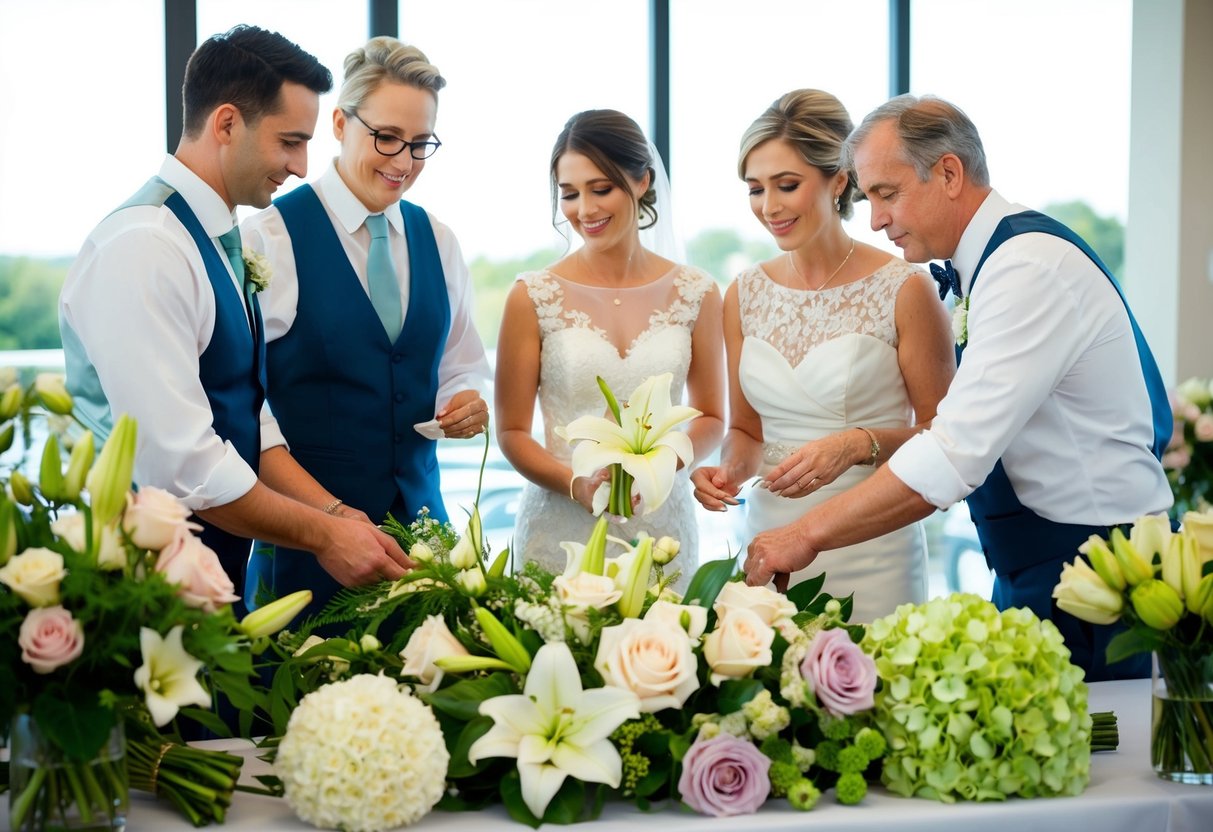
Choosing the right flowers for your wedding can create beautiful memories and highlight important relationships. When it comes to flowers for family members, there are specific options that not only express honor but also add a special touch to the day.
Corsages and Boutonnieres
Corsages and boutonnieres are two important types of personal flowers at weddings. A corsage is typically worn by mothers and grandmothers. This floral accessory is usually pinned to clothing or worn on the wrist as a wrist corsage. Common flowers for corsages include roses, orchids, and lilies.
On the other hand, a boutonniere is worn by the groom and male family members like the father and grandfathers. It usually features a single flower or small cluster, complementing the bridal bouquet. Popular choices include roses, carnations, and delphiniums. Both corsages and boutonnieres serve as a lovely way to honor the important people in your life during the celebration.
Bridal and Family Flowers
The bridal bouquet is often the centerpiece of wedding flowers. It showcases the bride’s style and theme. Many brides choose flowers that match the overall color scheme of their wedding. Depending on your preferences, you might include peonies, sunflowers, or tulips.
In addition to the bridal bouquet, family members can have their own special arrangements. Flower girls usually carry smaller bouquets or flower baskets, creating a charming visual. Ring bearers can also hold a small floral piece, adding a sweet touch. It’s important to coordinate these flowers with the main arrangements to ensure a cohesive look throughout the wedding.
Ceremony and Reception Flowers
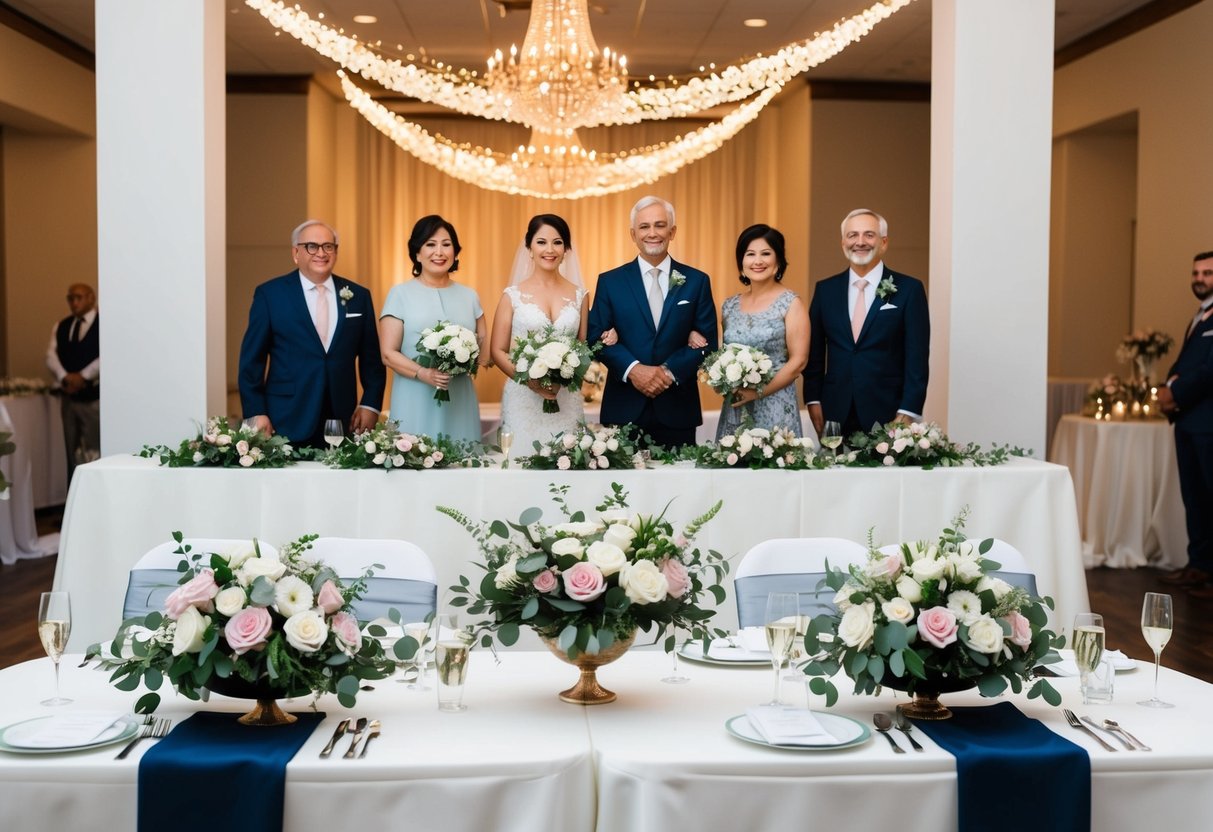
Flowers play a big part in making your wedding venue look beautiful. During both the ceremony and reception, the right flower arrangements can set the mood and create lasting memories. Understanding how flowers are used in these spaces is important for planning.
Venue Decorations
For your wedding ceremony, think about decorative flower arrangements that enhance the setting. Common choices include arrangements at the altar or end of aisles. These flowers add color and elegance to your venue.
Consider using a mix of flowers that reflect your wedding colors. This creates harmony between the venue and your theme. Don’t forget about special people! Grandmothers and other key family members often wear corsages to honor their presence.
Table Centerpieces and Decor
At the reception, centerpieces on tables are a great way to showcase flowers. They draw attention and can start conversations. You can choose tall arrangements for a dramatic look or small ones for a cozy feel.
It’s also helpful to consider the space. If tables are round, circular flower arrangements work well. For rectangular tables, long, low designs can create a flowing look. Remember to select flowers that match or complement your ceremony designs. Including personal touches, like flowers that signify family heritage, makes it even more special.
Pre-Wedding Events
Planning pre-wedding events adds excitement to your journey. Here are some key celebrations you might want to consider.
Engagement Party:
This event usually kicks off your wedding journey. It’s a chance for friends and family to celebrate your engagement. You can host it at home or a local venue.
Bridal Shower:
Traditionally, the bride’s family hosts this gathering. Guests shower you with gifts, and it often includes games and fun activities to make it memorable.
Rehearsal Dinner:
After the ceremony rehearsal, the groom’s parents often host this dinner. This event allows everyone to relax and enjoy a meal together before the big day.
Wedding Planner’s Role:
Your wedding planner can help organize these events. They manage details and ensure everything flows smoothly, saving you stress.
Budgeting for Events:
Don’t forget to include these events in your wedding budget. Costs can add up quickly, so plan ahead to avoid surprises.
Dress Shopping:
Finding the perfect wedding dress is a highlight. Consider inviting your bridal party to join you for support and fun.
Each event helps build excitement and strengthen bonds among family and friends. Enjoy each moment as you prepare for your big day!