
Do People Still Send Wedding Invites? Exploring Modern Trends in Wedding Invitations
In today’s digital world, you might wonder if sending traditional wedding invites is still a common practice. Yes, many couples continue to send out printed invitations as a way to honor tradition and add a touch of formality to their special day. While digital options are growing in popularity due to convenience and cost, paper invites still hold sentimental value for many.

Wedding invitations play an essential role in wedding etiquette. They set the tone for the event and provide important details to your guests. With the mix of modern and traditional approaches, it’s clear that couples have different preferences based on their style and the overall vibe they want for their celebration.
So, whether you’re leaning toward sending elegant paper invites or considering a digital alternative, understanding what works for you can help create the perfect invitation experience. You’ll be well on your way to making your big day feel just right!
The Importance of Wedding Invitations
Wedding invitations play a crucial role in your big day. They set the mood, share essential details, and reflect your unique style. Here’s why they matter.
Setting the Tone for Your Wedding Day
Your wedding invitation is the first impression your guests have of your celebration. It communicates the overall vibe of your event. Are you planning a formal affair or a casual gathering?
The wording you choose can set the scene. Phrases like “You are cordially invited” suggest elegance. More relaxed wording can convey a fun atmosphere.
The colors and design also say a lot. A lavish, gold-embossed card hints at a luxurious event, while a simple, rustic design suggests a laid-back celebration. Your invitation sets expectations for the entire day.
Conveying the Wedding Details
Your wedding invitation serves a practical purpose too. It informs guests about the important details they need to know.
Include the date, time, and venue clearly. This information is essential for your guests to plan their attendance.
Don’t forget to mention any special instructions, like dress code or accommodations. If you have a wedding website, consider adding this to your invitation wording. This way, guests can access more information easily.
Reflecting Your Personal Style Through Invitation Design
Your wedding invitation is a great opportunity for you to showcase your personal style. The design elements should match your taste and the theme of your wedding.
Think about colors, fonts, and images that resonate with you. If you love floral designs, incorporate them.
Have fun with the shape and size too. Traditional rectangular invites are common, but you might choose something unique, like a circular or pocket design.
This is your chance to express who you are as a couple. After all, your wedding is a celebration of your love and style!
Wedding Invitation Essentials
When planning your wedding, invitations play a crucial role. They not only inform your guests but also set the tone for your big day. Here are some key components to consider when creating your wedding stationery.
What to Include in Your Wedding Stationery
Your wedding stationery should include essential information. Start with your names, the date, and the time of the ceremony. It’s also important to provide the venue’s name and address.
Include details about the reception if it’s at a different location. Add RSVP cards for guests to confirm their attendance. Remember to state whether guests can bring a plus one. This clarity helps in planning.
Proper Wedding Invitation Etiquette
Following proper wedding invitation etiquette shows respect to your guests. You should send out invitations at least six to eight weeks before the wedding date. This gives everyone enough time to RSVP.
Always include the full names of the hosts if they are different from yours. It’s also polite to mention dress codes or any special requests clearly. Lastly, ensure all addresses are written correctly for easy delivery.
Choosing Between Digital or Physical Wedding Invitations
Deciding between digital invites and physical wedding invitations depends on your style and budget. Physical invites, like printed cards, offer an elegant and personalized touch. They also serve as keepsakes for your guests.
Conversely, digital invites are eco-friendly and cost-effective. They can be sent quickly and allow for instant RSVPs. Think about your priorities—do you value tradition or convenience? Your choice can also depend on how tech-savvy your guests are.
The Role of Save-the-Dates and RSVP Cards
Save-the-date cards are essential if you’re having a destination wedding or a large guest list. They should be sent as soon as you have your date and venue confirmed. This helps guests make travel plans early.
RSVP cards are equally vital. They let you know how many guests will attend. Make sure to include a clear deadline for replies. This information is crucial for finalizing your headcount and seating arrangements.
Navigating the Logistics of Wedding Invites

Planning your wedding invitations involves several important steps. From deciding when to send them out to managing your guest list, each choice can impact your celebration.
Deciding When to Send Wedding Invitations
Timing is key when it comes to sending your wedding invitations. Generally, it’s best to mail them out three months before your wedding day. This gives your guests enough time to make travel arrangements and clear their schedules.
For destination weddings, consider sending invitations about three months earlier. This extra time helps those traveling from far away. Additionally, sending save-the-dates six months prior lets guests know to mark their calendars, which is especially helpful for larger gatherings.
Managing the Guest List and Plus-Ones
Creating your guest list can take time. Be sure to think about who you want to celebrate with you.
When it comes to plus-ones, be clear about your expectations. You might want to extend invites to partners of single guests, especially for close friends. A simple way to manage this is to specify plus-ones on your invitations or RSVP cards. Keeping your list organized will help prevent any mix-ups later.
Addressing Invitations for Destination Weddings and International Guests
If you’re having a destination wedding, pay attention to how you address invitations. Make sure to include complete addresses for international guests. This includes country names to avoid any delivery issues.
It’s a good idea to provide travel details and accommodation options along with your invites. This keeps guests informed and makes planning easier for everyone. Travel guides or links to hotel options can be helpful.
Communicating clearly with your guests about addresses and travel tips makes the logistics smoother.
After the Invites: What’s Next?
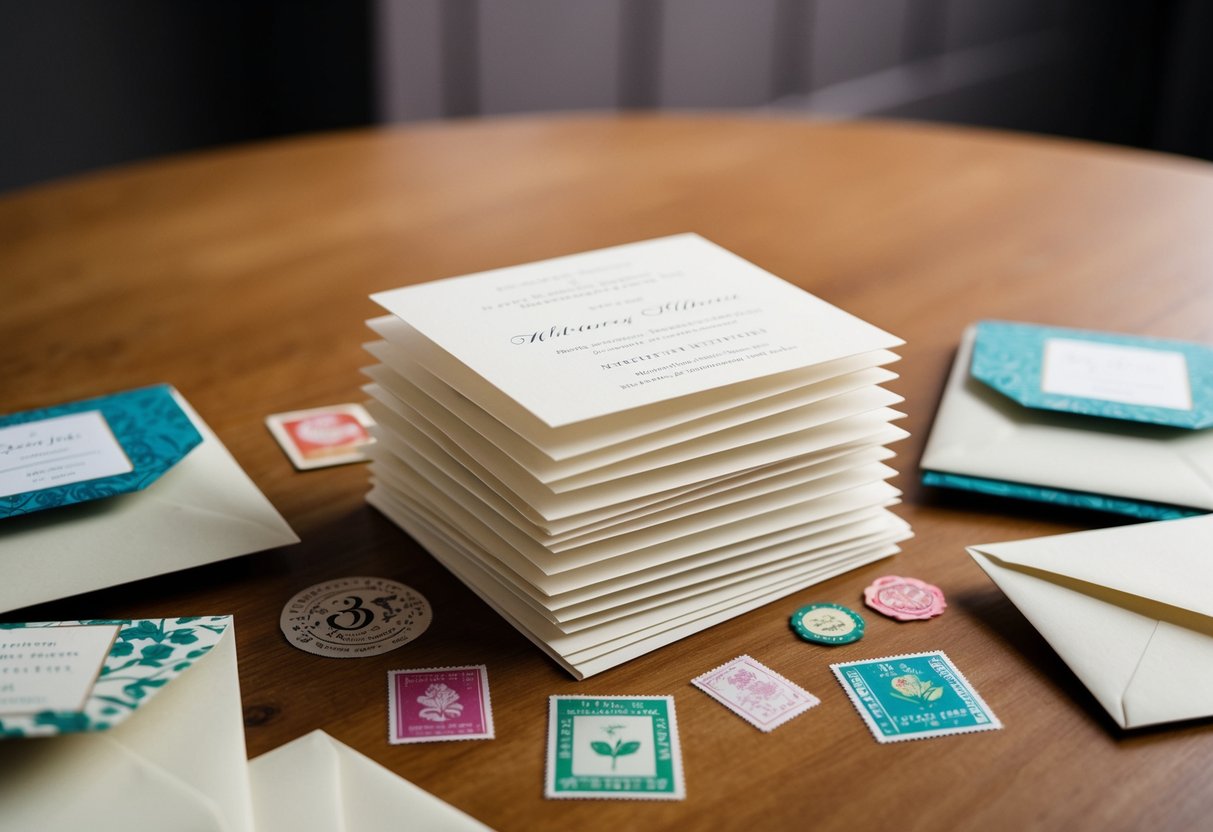
Once you’ve sent out the wedding invites, you’ll need to focus on the next steps to ensure everything goes smoothly. This involves tracking RSVPs, coordinating with your wedding vendors, and keeping an eye on the RSVP deadline.
Tracking RSVPs and Finalizing Guest Count
As RSVPs start rolling in, keep a close eye on who can attend. It’s good to have a spreadsheet or a wedding planning app to track responses easily.
Organize Your List:
- Confirmed Guests: Great to see a yes!
- Maybe: Follow up with them later.
- No: Keep an eye on this number too.
Knowing the final guest count is key. It affects seating arrangements, catering amounts, and even the layout of your venue. Aim to finalize this list about two weeks before the wedding for smooth sailing.
Final Preparations with Wedding Vendors
With your guest count in hand, contact your wedding vendors. Provide them with the final number of guests to ensure they’re prepared. This includes the caterer, florist, and any rental services.
You might need to discuss details such as:
- Meal Options: Ensure there’s enough food for everyone.
- Seating Arrangements: Share how you’d like guests to be seated.
- Delivery Timings: Confirm when vendors need to set up.
Clear communication helps prevent hiccups on your special day.
The Significance of the RSVP Deadline
Setting an RSVP deadline is crucial. It gives your guests a clear timeline to respond, ensuring you can finalize your plans.
Typically, you should set an RSVP deadline three to four weeks before your wedding day. This allows enough time to handle last-minute adjustments.
Make sure to mention the RSVP date on your invitations. Friendly reminders can also help. Try reaching out to those who haven’t replied as the deadline approaches.
By staying organized and proactive, you can keep your wedding planning on track and lessen any last-minute stress.