
Do Save the Date Have to Match Invitations? Exploring the Essentials for Your Event
Choosing how to communicate your wedding plans can feel overwhelming. When sending out save the dates, you might wonder if they need to match your wedding invitations. The good news is that save the dates do not have to match invitations! They serve different purposes in your wedding planning and can reflect your unique style.
Save the dates are an early announcement that helps guests reserve the date for your special day. They’re a great way to build excitement before the more formal invitations go out.
While it’s nice for them to have a similar theme or tone, it’s perfectly fine to mix it up. This flexibility allows you to express your creativity without the pressure of consistency.
As you dive deeper into the details of your wedding, you may find that your style evolves. Embrace this change! Your save the dates can capture an early vision while your invitations can reflect your finalized plans. Let your personality shine through each step of the invitation process.
Understanding Save the Dates and Invitations
When planning your wedding, knowing the difference between save-the-dates and formal invitations is essential. Each serves a different purpose in your wedding planning and helps ensure your guests are well-informed.
The Purpose of Save-the-Dates
Save-the-dates are your first communication with guests about your upcoming wedding. They are typically sent out 6 to 12 months before the ceremony.
This early notice allows guests to mark their calendars and make any necessary travel plans.
Including your wedding date and location in the save-the-date is crucial. You may also want to add your wedding website link if you have one. This provides guests with more details about accommodations and events.
Save-the-dates are particularly important for destination weddings or weddings during busy seasons. They help your guests prepare for your special day and ensure they don’t miss out.
The Role of Formal Invitations
Formal invitations follow save-the-dates and are usually sent out 2 to 3 months before your wedding. They contain all the essential details, such as the venue, time, and dress code, providing guests with clear information.
While save-the-dates alert guests to the date, formal invitations give the complete picture. They might also ask for an RSVP, helping you finalize your guest list for better planning.
Invitations can be more personalized, allowing you to express the theme of your wedding. This is your chance to create excitement about the event and share any additional information like reception details.
Understanding these differences helps you plan effectively and ensures your guests feel informed and excited about your wedding day.
Design and Aesthetics
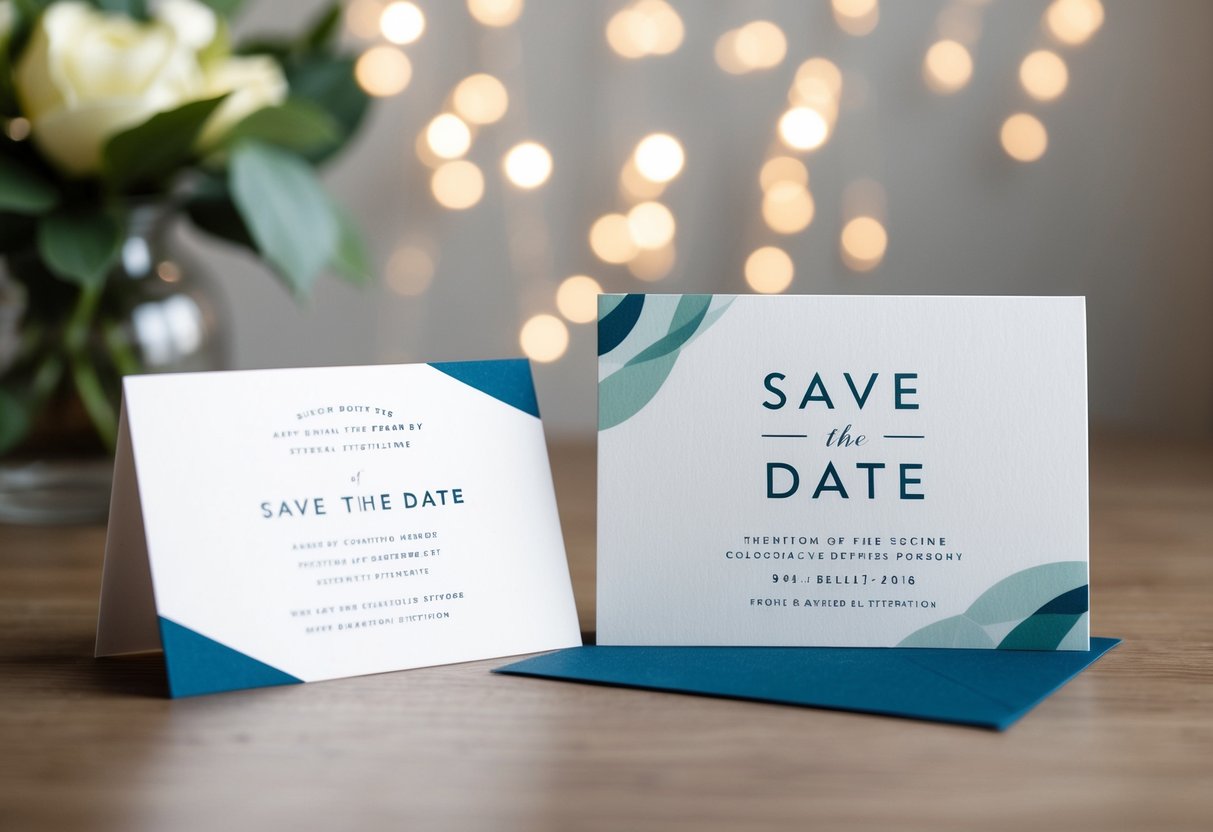
When planning your wedding, the design and aesthetics of your stationery play a vital role. You want your save the date cards and invitations to reflect your personality and style. It’s important to think about how these elements work together to create a beautiful overall look.
Cohesiveness in Wedding Stationery
Creating a cohesive look with your wedding stationery is essential. This means considering how your save the date cards and wedding invitations relate to each other.
You don’t have to perfectly match them but aim for a similar style.
For example, if your save the date design is fun and colorful, your invitations can carry that theme forward. Think about using the same fonts or motifs throughout. This way, your guests will feel the connection between the two.
Choosing a Color Palette and Theme
Your color palette sets the mood for your entire wedding. Start by selecting colors that reflect your personality or the season.
Consider pairing softer pastels for a spring wedding or bold, rich tones for a fall celebration.
When you choose a theme, like rustic or vintage, let it influence both your save the date cards and invitations. This creates a harmonious feel.
Make sure to include your chosen colors in both designs to tie everything together beautifully. This pulls everything into a cohesive visual experience for your guests.
Practical Considerations for Save-the-Dates
When planning your wedding, sending save-the-dates is an important step. You want to ensure your guests have enough notice, especially for destination weddings. Here are some practical tips to help you with the timing and important information to include.
Timing and Destination Weddings
Choosing the right moment to send your save-the-dates can make a big difference. For most weddings, aim to send them 6 to 12 months in advance.
If you’re planning a destination wedding, you might want to send them even earlier, around 8 to 12 months. This gives guests time to arrange travel and accommodations.
Make sure to consider holidays or popular vacation times when selecting your wedding date. These times may impact your guests’ availability.
Be clear about your wedding date and destination so guests can start planning. If your wedding is in a far-off location, sharing the venue address helps everyone know where to go.
Information to Include
In your save-the-dates, you want to include key details. Start with the couple’s names and the wedding date. Mention the venue if you have it set, or a general location if not.
You should also include a note about any travel arrangements or accommodations.
If you’re planning a destination wedding, consider adding links to nearby hotels or flight information. Make your save-the-date visually appealing, and don’t hesitate to let your personalities shine through.
Finally, remind guests to keep an eye out for the formal invitations later on. This helps them anticipate your special day while getting them excited to celebrate with you.
RSVP and Additional Details

When planning your wedding, including RSVP details and additional information is key. This ensures guests have everything they need to confirm their attendance and prepare for your big day. It makes the process easier for both you and your guests.
Integrating RSVP Cards
RSVP cards are essential for managing your guest list. Include a simple card with your invitations. This way, guests can easily reply.
On the RSVP card, request their names, whether they will attend, and any dietary restrictions.
You can keep it straightforward by using options like “Will Attend” or “Regretfully Decline.” Consider adding a due date for replies to help you finalize your plans.
Tip: You can also create a digital RSVP option on your wedding website. This makes it convenient for guests to respond quickly and allows you to track responses easily.
Providing Travel and Accommodation Info
Providing your guests with travel and accommodation information is thoughtful. This helps them plan their trip and feel more comfortable attending.
Include details like nearby hotels, their rates, and links for reservations. Providing a range of options is helpful for guests with different budgets.
Additionally, consider sharing travel tips, such as the nearest airport and transportation options.
Don’t forget to mention any wedding registries or dress code items. This gives clear guidance on what to wear and where to shop if guests wish to gift you something special.