
Do the Groom’s Parents Pay for Flowers? Traditional Roles
Traditionally, the groom’s parents pay for some personal wedding flowers and the rehearsal dinner flowers, while the bride’s family covers larger ceremony and reception arrangements. Today, the couple and their families can assign floral expenses in any way that fits their budget and family plans.

The old wedding etiquette can feel confusing because flower costs cross several parts of the day. A bridal bouquet, boutonnieres, corsages, ceremony flowers, and reception centerpieces may fall under different traditional roles.
Many couples also pay for the full wedding themselves or use a shared family contribution. Before you ask anyone to cover a specific item, create a clear floral estimate and discuss what each person feels comfortable giving.
If you want help setting priorities, explore this guide to how to make a realistic wedding budget before booking your florist.
The Traditional Answer: Personal Flowers and the Rehearsal Dinner
Traditionally, the groom’s parents cover certain personal flowers and flowers used for the rehearsal dinner because these costs connect with the groom’s family and its hosted event.

Which Personal Flowers Were Traditionally Covered?
The traditional list includes personal flowers worn or carried by close members of the wedding party:
- The bride’s bouquet or bridal bouquet
- The groom’s boutonniere
- Boutonnieres for the best man, groomsmen, and ushers
- Corsages for mothers and grandmothers
- Small family bouquets or floral accessories
Customs vary by region and family. In some traditions, the groom’s parents pay for the bride’s bouquet, while the bride’s family pays for bridesmaids’ bouquets and larger ceremony décor.
Fathers and grandfathers might receive boutonnieres, and officiants may receive a boutonniere or corsage based on the couple’s plan. Personal flowers can appear on one florist invoice even when families divide payment.
Ask the florist to separate the estimate by item so you know which flowers belong to each contribution.
Why Rehearsal Dinner Flowers Usually Follow the Host
The groom’s parents traditionally host the rehearsal dinner, so they also cover its food, venue, décor, and rehearsal dinner flowers. Those flowers might include small table arrangements, a welcome display, or greenery around the food service.
The host should set a décor budget before choosing a design. A relaxed backyard meal may need only bud vases, while a formal restaurant dinner may call for larger floral arrangements.
If both families help host, divide the cost according to the agreed contribution.
What Other Floral Costs Traditionally Belong to the Wedding Host?
The host of each wedding event traditionally pays for its decorative flowers. In the classic arrangement, the bride’s family handles most ceremony flowers and wedding reception flowers, while the host of an engagement party pays for flowers at that event.
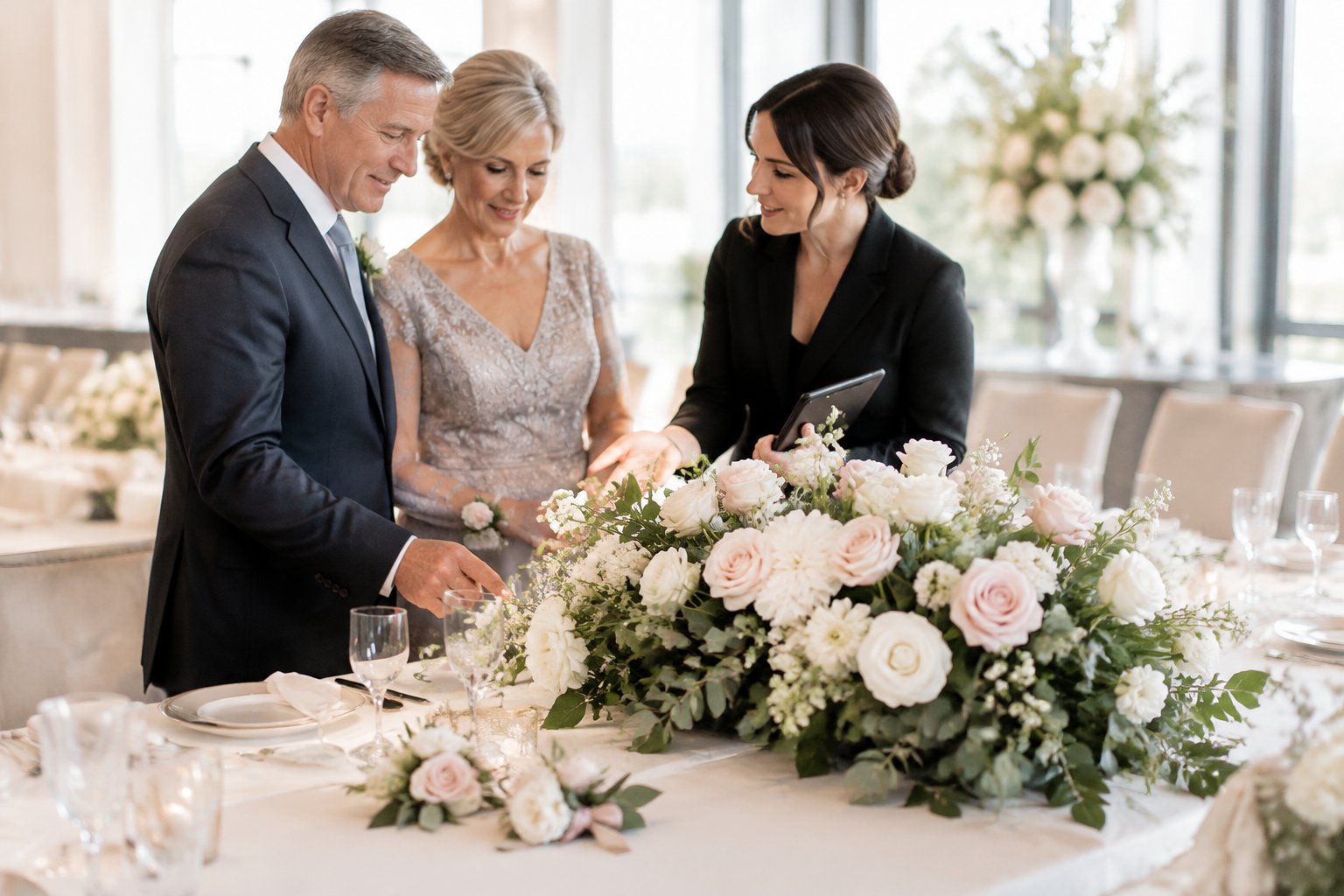
Ceremony Flowers and Larger Décor
Ceremony flowers and larger floral arrangements have traditionally belonged to the bride’s family because that side hosted much of the wedding celebration. This category may include:
- Altar, arch, or chuppah flowers
- Aisle markers and floral petals
- Welcome-table arrangements
- Bridesmaids’ bouquets
- Flower girl petals or bouquets
- Floral hair pieces
The division has never been identical in every family. Some traditions assign the bride’s bouquet to the groom’s family while placing the rest of the ceremony décor with the bride’s family.
Use the custom as a starting point, then assign each item in writing.
Reception Centerpieces and Wedding Cake Flowers
Reception flowers have traditionally been part of the main wedding-host budget. This includes table centerpieces, sweetheart-table flowers, bar arrangements, place-card displays, and wedding cake flowers.
Your wedding theme affects both the design and the cost. A room filled with tall arrangements requires more flowers, vessels, labor, and setup than a design using small bud vases.
Cake flowers may be purchased through the florist or coordinated with the baker, so confirm who handles delivery and placement.
Engagement Party Flowers
The person or family hosting the engagement party pays for its flowers under traditional wedding etiquette. Small centerpieces or a few arrangements near the entrance can create a finished look without using a large share of the wedding flower budget.
If several people co-host, agree on a dollar amount or split the invoice before the event. The same host-based approach works for other prewedding gatherings.
How Modern Couples Split the Flower Bill
Modern couples often combine personal funds with family contributions and assign floral expenses according to comfort, control, and the type of support offered.

When the Couple Pays for All Wedding Flowers
You and your partner may choose to pay for every flower order. This approach keeps the wedding budget in one place and lets you make design decisions without dividing the florist’s invoice among relatives.
Add personal flowers, ceremony flowers, reception arrangements, delivery, setup, breakdown, rentals, taxes, and service fees to your estimate. A single payer also makes it easier to approve substitutions when certain flowers become unavailable.
Using a Fixed Family Contribution
A family may offer a set amount, such as $2,000, instead of taking responsibility for a specific floral category. You can apply that money to the full invoice or use it for a named area such as the rehearsal dinner.
Put the amount, payment timing, and any restrictions in writing. A fixed contribution gives you room to move money between bouquets and centerpieces as quotes change.
Matching Contributions to Financial Comfort
Each family can contribute what fits its finances. One side might cover rehearsal dinner flowers, while the other contributes toward the ceremony arch.
Your families can also make unequal contributions without assigning greater decision-making power to the person who gives more. Talk about guest-list expectations and design preferences before accepting money.
A contribution is easier to manage when everyone knows whether it is a gift, a shared expense, or payment for a specific item.
How to Set a Realistic Wedding Flower Budget
A realistic wedding flower budget starts with an itemized estimate that covers flowers, design labor, delivery, setup, rentals, and breakdown.

What Should Be Included in the Floral Estimate?
Ask your wedding florist to list every floral expense separately. Your estimate should account for:
- Bridal and wedding-party bouquets
- Boutonnieres and corsages
- Ceremony flowers and aisle décor
- Reception centerpieces
- Cake, bar, welcome-table, and sweetheart-table flowers
- Containers, arches, stands, candles, and other rentals
- Delivery, setup, strike, and cleanup
- Taxes, service charges, and payment deadlines
Prices change with guest count, table count, season, flower type, design size, and venue access. Ask whether the quote includes moving ceremony arrangements to the reception.
How to Prioritize Flowers Without Losing Your Vision
Choose the areas that appear most in your photos and shape the guest experience. A bridal bouquet, ceremony focal point, and reception head table may deserve more of your budget than small arrangements placed throughout the venue.
Share your wedding theme, inspiration images, color palette, and preferred flowers with your florist. Then identify flexible details, such as exact flower varieties or the size of aisle arrangements, so your design can adjust without losing its character.
For more planning help, review guidance on how much you should spend on your wedding flowers.
How a Wedding Florist Can Help Control Costs
A wedding florist can suggest seasonal flowers, affordable filler blooms, greenery, and design changes that preserve your preferred color and shape. Tell the florist your maximum floral budget before the proposal is prepared.
You can also reduce floral expenses by reusing ceremony arrangements at the reception, choosing lower centerpieces, limiting the number of decorated areas, and selecting rental structures that work with smaller installations.
Confirm who will move each arrangement and when that work will happen.
How to Discuss Flower Contributions Without Family Tension
Discuss flower contributions before you sign a florist contract, and use a written budget so every family member knows the agreed amount and responsibility.
Questions to Ask Before Booking a Florist
Ask each contributor:
- Are you offering a fixed amount or paying for a specific item?
- Which events or floral arrangements do you want to cover?
- When will the money be available?
- Will your contribution include taxes, delivery, setup, rentals, and gratuities?
- Do you expect input on the wedding theme, guest list, or florist?
- What happens if the final quote exceeds the planned amount?
Keep related expenses in the same conversation. Traditional groom-side discussions may include officiant fees, the marriage license, wedding rings, the engagement ring, the honeymoon, reception alcohol, and catering.
How to Confirm Agreements and Avoid Assumptions
Have the groom speak with his parents if that relationship makes the conversation more comfortable. You and your partner should agree on the request first, then present the same information to both families.
Send a short written summary after the conversation. Include the contribution amount, covered items, payment deadline, and person responsible for approving changes.
A wedding planner can help present the information, while an officiant should receive clear payment instructions for the officiant fee.
Other Traditional Groom-Side Expenses to Discuss
Traditional groom-side expenses may include the rehearsal dinner, officiant fee, marriage license, groom’s attire, groomsmen’s gifts, transportation, and honeymoon support. Family customs differ, and no parent has an automatic obligation to pay.
If the groom’s parents cannot contribute, adjust the wedding budget without assigning blame. You and your partner can cover the expense, reduce the floral plan, ask another host to help, or move that cost into a shared family contribution.
Keep the final florist contract in the names of the people who have agreed to pay.