
Do Wedding Cars Need a Private Hire Licence? UK Rules
If you are asking do wedding cars need a private hire licence?, the answer in England and Wales is often no for a vehicle with up to eight passenger seats used exclusively for wedding or funeral journeys. The exemption is narrow, though.
Proms, airport transfers, parties, and other paid journeys can bring private hire licensing into play.
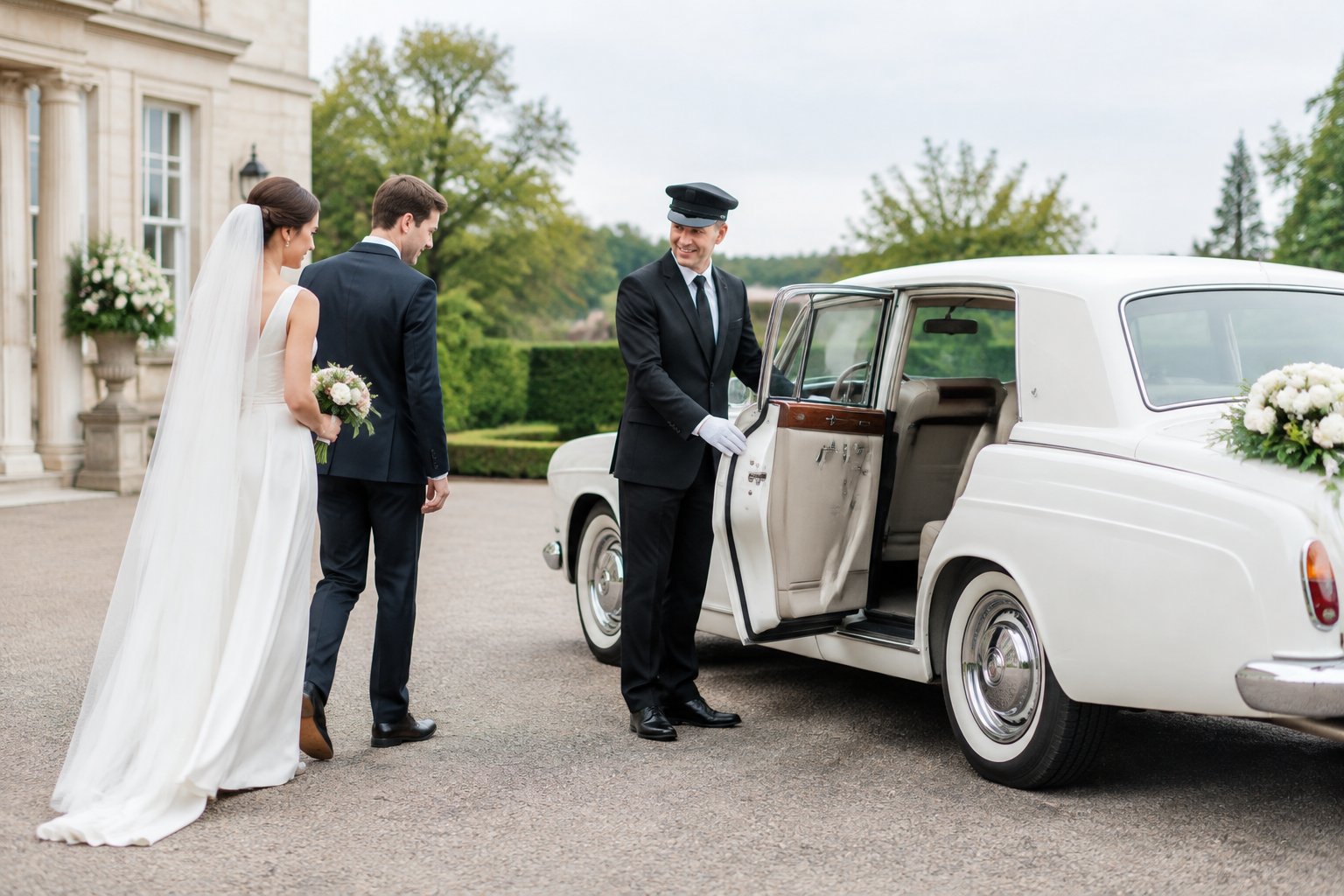
Passenger capacity, location, the type of booking, and whether a driver is supplied all affect the rules. Scotland and Northern Ireland also use different licensing systems, so check the requirements in the area where your business operates before accepting bookings.
If you are choosing transport for your celebration, you can also compare what car to use for a wedding while checking that the supplier has suitable insurance and paperwork.
When Is a Wedding Journey Exempt From Licensing?
A wedding or funeral journey in England and Wales can be exempt from private hire licensing when the vehicle has up to eight passenger seats and is used for that qualifying occasion. The exemption does not cover every journey connected with a wedding business.
The booking details, vehicle size, and service offered all help determine whether the exemption applies. Keep a written description of the journey and ask the local authority when the purpose is unclear.
What the Wedding and Funeral Exemption Usually Covers
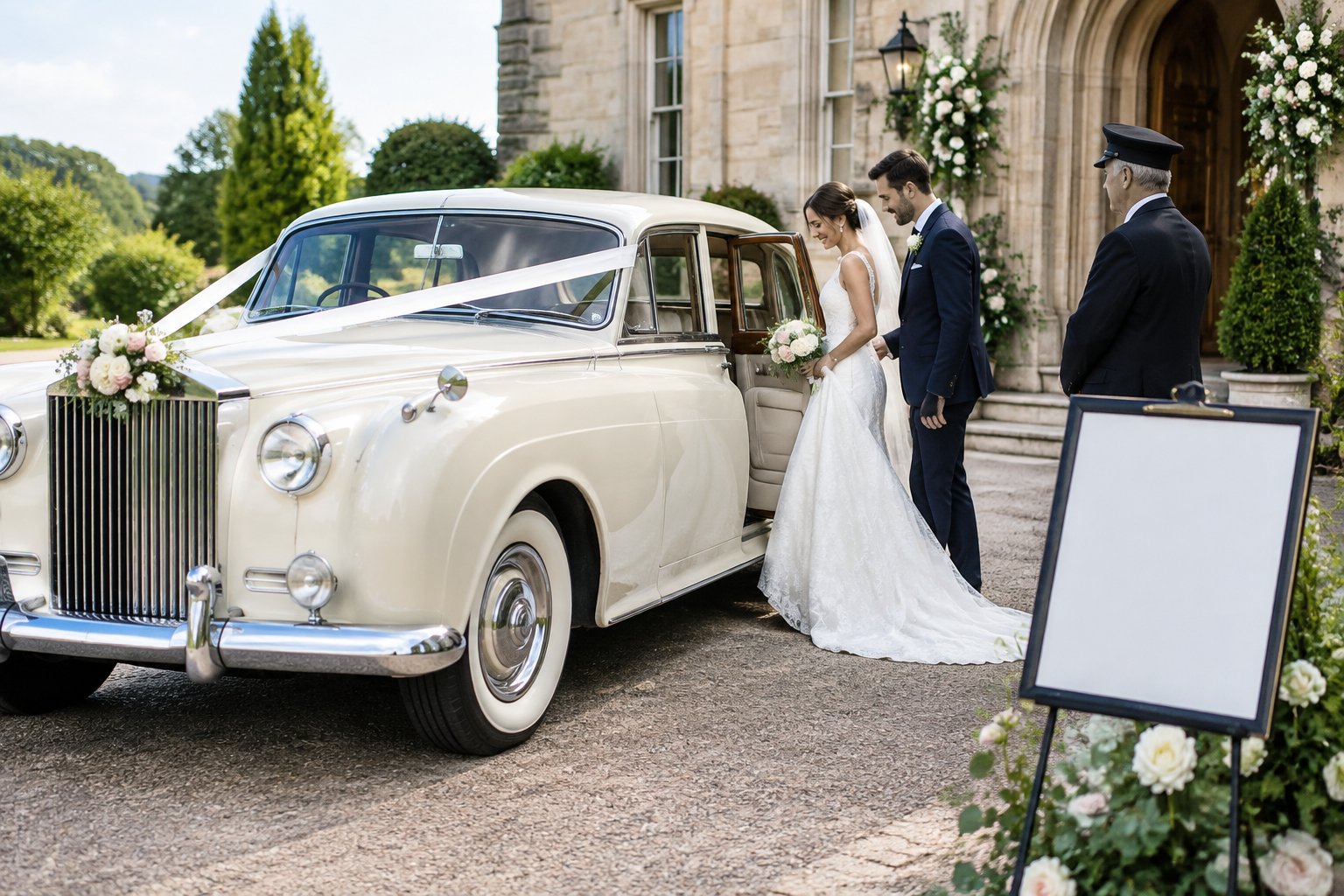
The exemption applies to vehicles with up to eight passenger seats used exclusively in connection with a wedding ceremony or funeral. It can cover transport for the couple, close family, or other people travelling as part of the ceremony.
In England and Wales, the framework comes from the Local Government (Miscellaneous Provisions) Act 1976. London has separate rules under the Private Hire Vehicles (London) Act 1998, alongside Transport for London licensing arrangements.
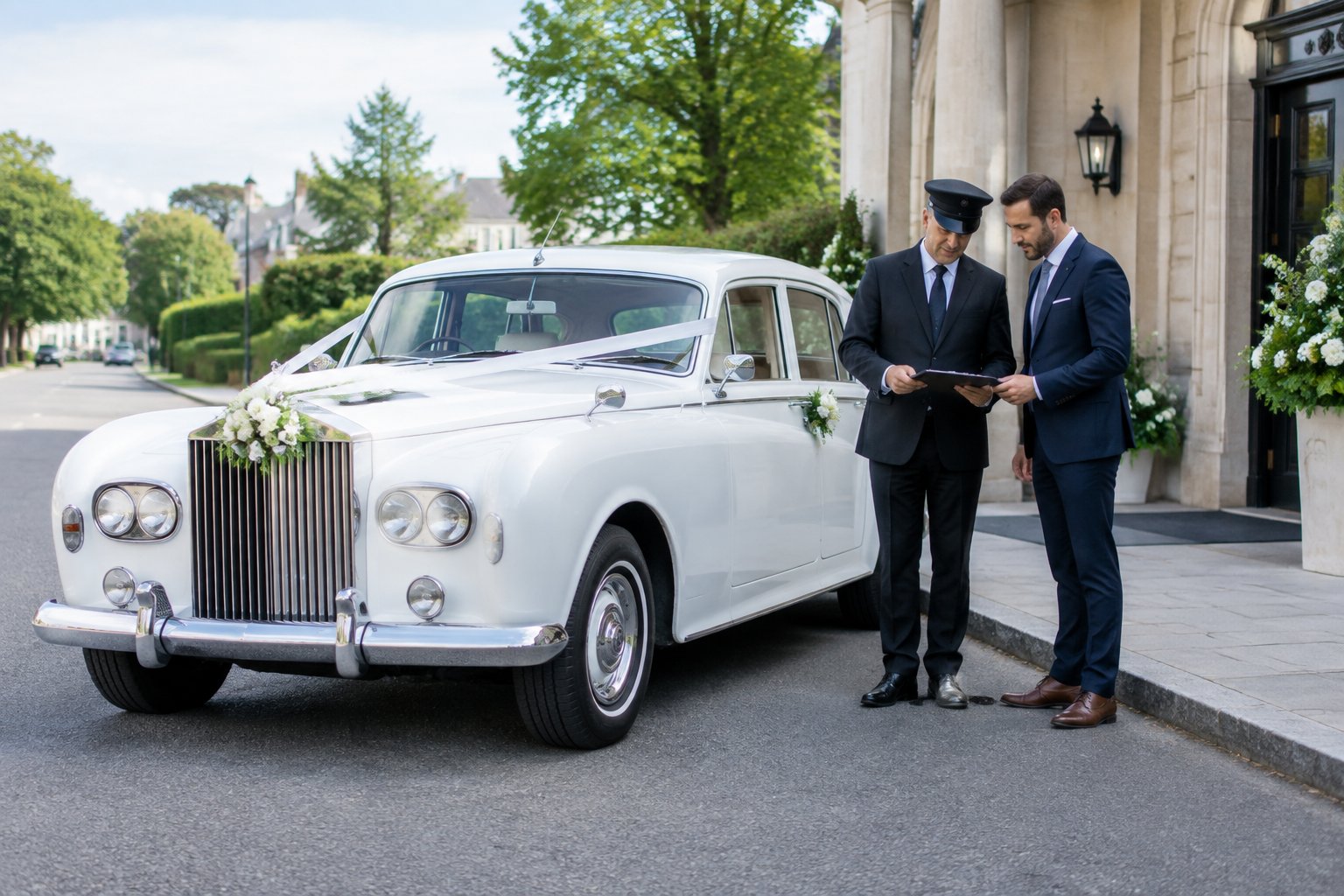
A classic car carrying the couple from a home to the ceremony, and then to a reception, fits the type of journey the exemption is intended to cover. The vehicle still needs suitable insurance, roadworthiness checks, and a lawful driver.
When a Booking May Fall Outside the Exemption
A booking can fall outside the exemption when passenger transport becomes a separate commercial service. Examples include a general chauffeur booking, a sightseeing trip, or a journey booked without a clear connection to a wedding ceremony or funeral.
The exemption also does not remove the rules for vehicles with nine or more passenger seats. A stretch limousine or other larger vehicle may require a public service vehicle operator licence.
Local authorities can assess the facts of a booking, including the wording of the contract, the route, the payment, and the service advertised. Describe the booking accurately and avoid presenting an exempt wedding service as a general private hire operation.
Why Proms, Airport Transfers, and Separate Events Need Extra Care
Proms, airport transfers, hen and stag events, corporate trips, and party transport sit outside the wedding and funeral exemption. A vehicle with up to eight passenger seats used for these services may need private hire vehicle licensing, including operator, vehicle, and driver approvals under local rules.
A business that advertises wedding cars for other events should ask its licensing authority whether each service requires a licence. Supplying the driver and vehicle as separate contracts does not avoid the licensing rules when they work together as one passenger service.
Passenger Seats: When Do PSV Rules Apply?
A vehicle constructed or adapted to carry nine or more passengers for hire or reward falls into the public service vehicle category, which brings PSV operator licensing and additional vehicle standards. Vehicles with eight or fewer passenger seats follow the private hire framework when their journey requires licensing.
Count the seats available for passengers, excluding the driver’s seat. Check the vehicle’s registration documents and any alterations, especially where a limousine has been stretched or converted.
How Passenger Seats Are Counted
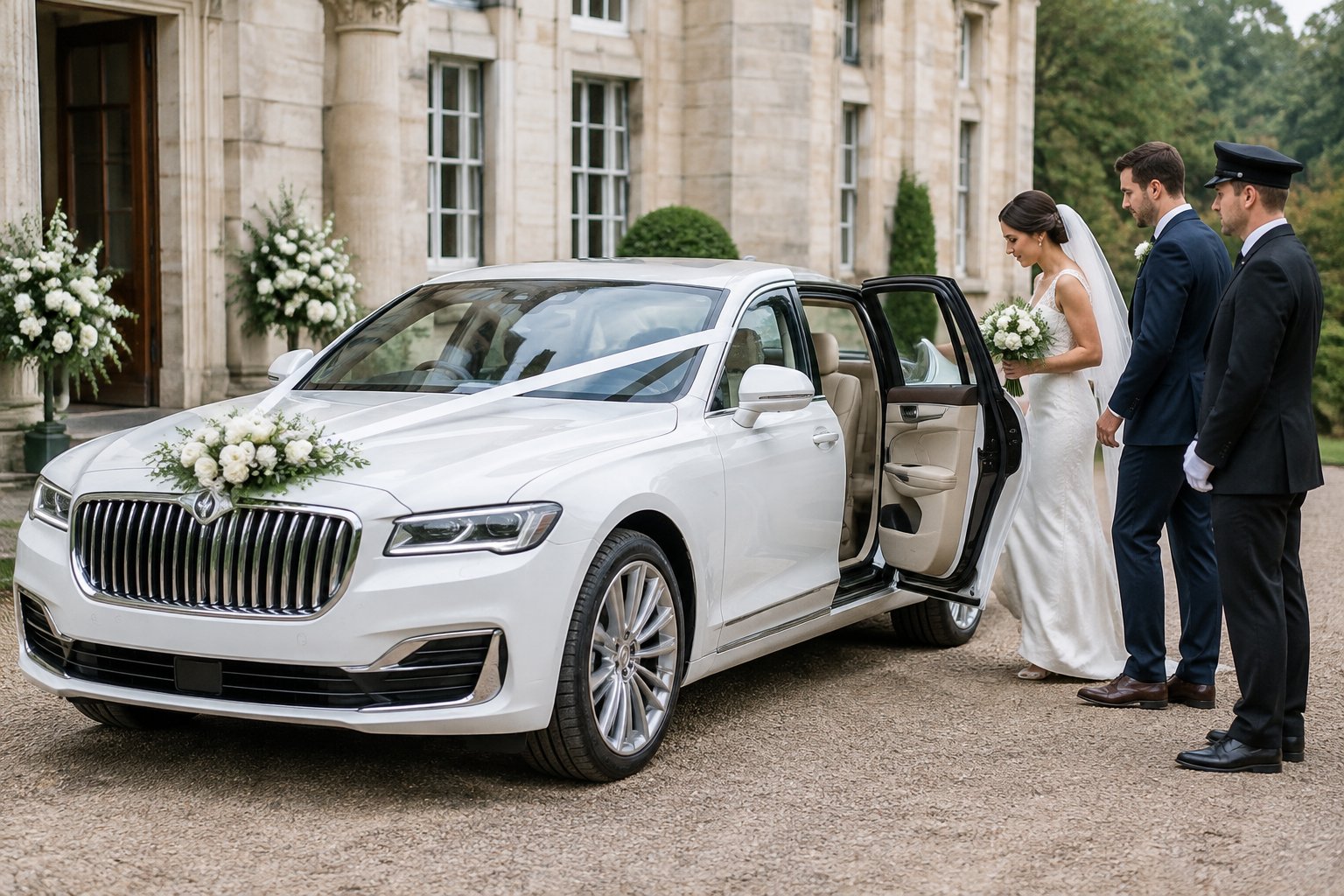
Passenger seats include every designated seat behind the driver. A bench seat counts according to the approved seating capacity, not the number of people you expect to carry on a particular journey.
A vehicle rated for nine passengers remains within the larger PSV category even if only two guests travel on a booking. Removing seats temporarily does not necessarily change the vehicle’s legal classification.
Check the manufacturer’s specification, approval records, and registration details before advertising the vehicle’s capacity.
Rules for Vehicles With Up to Eight Passenger Seats
A vehicle with up to eight passenger seats can be a private hire vehicle when it is supplied with a driver for paid passenger transport. Outside an eligible wedding or funeral journey, local licensing rules may require a PHV licence, an operator licence, and a licensed driver.
Small limousines fall within this group. GOV.UK guidance states that a small limousine with up to eight passenger seats needs a private hire vehicle operator licence when it is hired with a driver, subject to the wedding and funeral exemption.
What Changes for Nine or More Passenger Seats
A vehicle with nine or more passenger seats used for hire or reward needs a PSV operator licence. The operator applies through the traffic commissioner system, and the vehicle must meet the relevant PSV requirements.
Driver entitlement also needs attention. Depending on the vehicle and the driving work, you may need the appropriate passenger vehicle driving entitlement and professional qualification requirements.
The wedding exemption for smaller vehicles does not turn a 9-plus-seat vehicle into an exempt private car. Treat the vehicle as a separate compliance category from the start.
Special Requirements for Stretched Limousines
A stretched limousine needs careful checks because its conversion affects both seating capacity and approval status. Stretched limousines must have Individual Vehicle Approval for registration and licensing.
For vehicles built before 29 July 2011, a Certificate of Initial Fitness may be accepted.
Keep approval documents, inspection records, maintenance information, and insurance schedules together. A vehicle that looks suitable for a wedding can still be unlawful to operate if its conversion or seating has not been approved.
Rules in England, Wales, Scotland, and Northern Ireland
England, Wales, Scotland, and Northern Ireland use different licensing laws, so you must check the local authority or transport body responsible for the area where you operate. A wedding exemption that applies in one nation may not remove vehicle or driver licensing in another.
The key differences involve the local licensing authority, London’s separate PHV system, Scotland’s exclusive-hire rule, and Northern Ireland’s taxi licensing structure.
Licensing Outside London
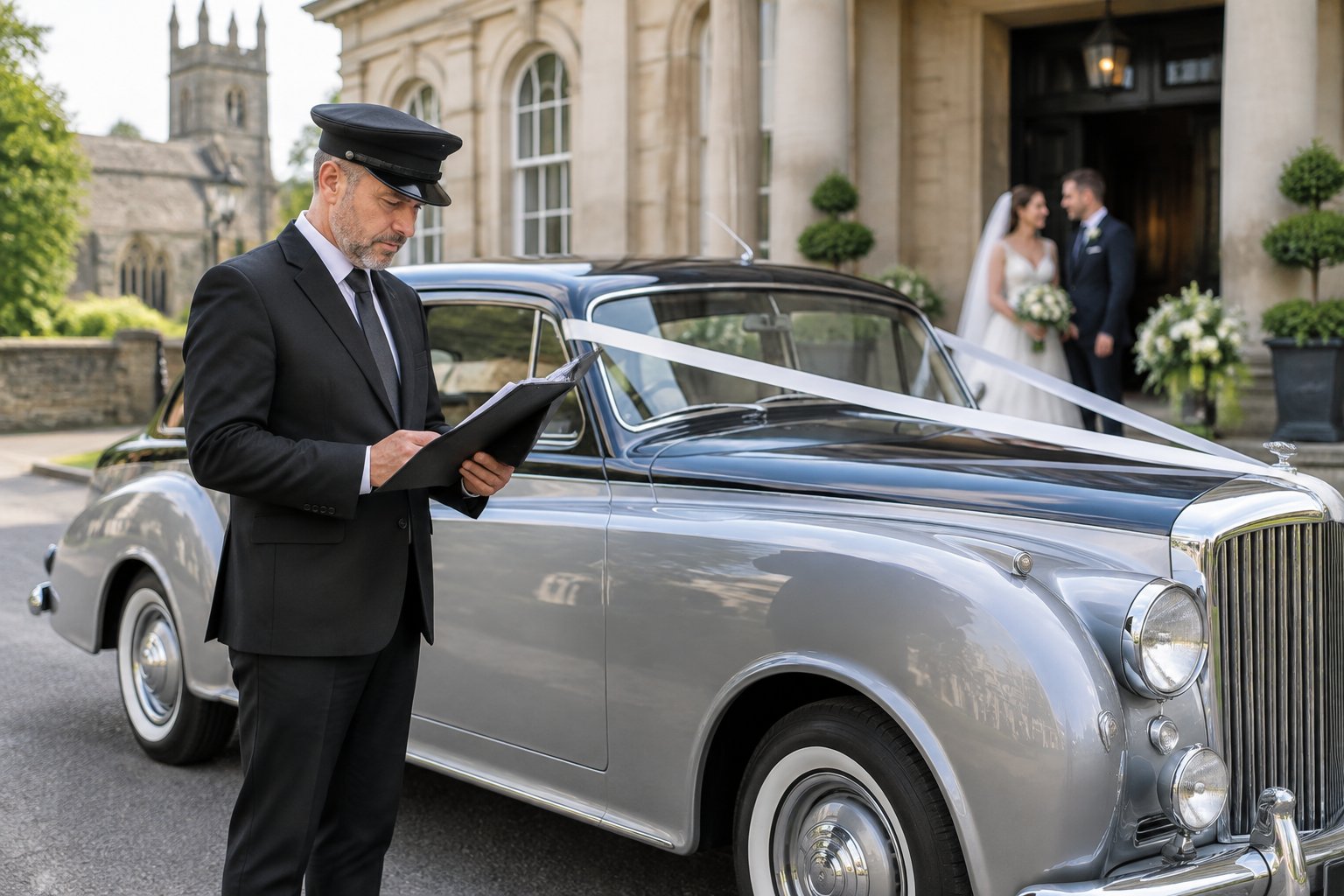
In England and Wales, local authorities license private hire vehicles, operators, and drivers under the relevant legislation. The Local Government (Miscellaneous Provisions) Act 1976 provides the main framework in many areas, although local Acts and council policies can add conditions.
Wales follows the same broad PHV structure, with licensing handled through the relevant local authority. Ask the council where the operator is licensed about cross-border work, vehicle conditions, and bookings collected from another area.
A wedding exemption concerns the qualifying journey. It does not provide a general licence for other private hire work.
Private Hire Rules in London
London uses the Private Hire Vehicles (London) Act 1998, with Transport for London responsible for PHV licensing. A vehicle with up to eight passenger seats that is available for hire with a driver generally requires a PHV licence.
TfL considers the full commercial arrangement when deciding whether a vehicle is available for hire. Packaging transport with another service does not automatically remove the licensing requirement.
Check TfL requirements before taking a London booking, especially if your business operates from outside the capital.
Scotland’s 24-Hour Exclusive-Hire Exemption
Scotland has an exemption for a vehicle hired for an exclusive period of at least 24 hours. The journey must meet the conditions set under the Civic Government (Scotland) Act 1982 and related local licensing rules.
A short wedding transfer may not meet the 24-hour condition. Your local authority can confirm whether your contract, vehicle, and booking structure qualify.
Scottish councils also set requirements for PHV licences, driver approvals, and vehicle standards. Keep the written hire period and itinerary available if you rely on the exemption.
Northern Ireland Taxi and Operator Requirements
Northern Ireland uses its own taxi licensing system. Wedding transport can require a taxi driver’s licence, a vehicle licence, and operator approval, even when the journey relates to a wedding.
The category of taxi, the vehicle, the driver, and the service offered all affect the requirements. Check with the Department for Infrastructure or the relevant licensing office before advertising the service.
Do not assume an England or Wales wedding exemption applies in Northern Ireland. Confirm the position for each vehicle and driver.
Insurance, Roadworthiness, and Driver Responsibilities
A wedding car business needs insurance and safety arrangements that match paid passenger transport, even when a licensing exemption applies. Licensing status does not replace the need to protect passengers, the vehicle, the driver, and the business.
Keep evidence of cover, servicing, inspections, and driver checks ready for your insurer, licensing authority, and customers.
Why Standard Car Insurance Is Not Enough
Personal motor insurance does not normally cover wedding car hire or carrying passengers for payment. Using a private policy for commercial bookings can leave you without cover after an accident.
Tell the insurer how the vehicle is used, whether you supply a chauffeur, how many passengers it carries, and whether it is used for other events. Written confirmation helps prevent disputes about the policy.
What Wedding Car Insurance Should Cover
Wedding car insurance should cover commercial use for the services you advertise. Ask about passenger liability, damage to the vehicle, replacement transport, breakdown assistance, and cover for named or employed drivers.
Public liability insurance can protect the business when a customer suffers injury or property damage connected with the service. A venue may also ask to see proof of cover before allowing a supplier on site.
If you use subcontracted drivers or vehicles, check that the policy covers those arrangements and that each contractor has appropriate insurance.
MOT, Safety Checks, and Presentation Standards
The vehicle must meet its MOT and roadworthiness requirements for its age and class. A wedding operator should also complete checks before each booking, including tyres, lights, seat belts, brakes, fluids, doors, and emergency equipment.
Keep maintenance records and report defects before the vehicle carries passengers. Classic cars may need extra attention because older components, limited safety equipment, or specialist parts affect reliability.
Clean upholstery, secure decorations, clear windows, and safe entry steps support a professional service. Decorations must not block lights, registration plates, doors, or the driver’s view.
When Driver and Vehicle Licences Are Needed
A driver and vehicle licence may be required when the booking falls outside the wedding or funeral exemption, when the vehicle has nine or more passenger seats, or when local rules impose additional conditions.
A private hire operation can involve separate approvals for the operator, vehicle, and driver. A PSV operation involves its own operator licence and vehicle requirements, with driver entitlement assessed separately.
Keep copies of licences, insurance documents, inspection records, and booking details in one compliance file. Renew each document before its expiry date.
Operating a Wedding Car Business Safely
You should confirm the licensing position before advertising or accepting any booking, then keep your contracts, tax records, vehicle files, and safety checks aligned with the service you provide. This approach helps you spot when a booking has moved beyond a wedding-only exemption.
Clear records also make it easier to answer customer questions and respond to a council, insurer, or tax enquiry.
How to Check the Correct Licence Before Taking Bookings
Start with the vehicle’s passenger capacity, the country or local authority involved, the purpose of the journey, and whether a driver is supplied. Record the answers for every service you plan to offer.
Ask the local authority licensing team for written guidance when a booking involves a prom, airport, corporate event, party, or mixed itinerary. For larger vehicles, contact the traffic commissioner about PSV operator licensing.
Review your adverts as well. Describing a car as available for general chauffeur hire can create a wider licensing issue than offering a narrowly defined wedding service.
Keeping Contracts and Itineraries Clear
Your contract should name the customer, vehicle, driver arrangement, booking purpose, collection points, destination, hire period, price, cancellation terms, and passenger limit.
Use wording that matches the service delivered. A wedding ceremony transfer, reception journey, and return trip should be listed clearly, with any extra stops agreed in writing.
Record who accepted the booking and when. If another operator or driver is involved, identify that party and check the relevant licence and insurance documents.
VAT and Record-Keeping Basics
Check whether your business needs VAT registration based on its taxable turnover and keep sales records for every booking. Retain invoices, receipts, mileage details, fuel costs, repair bills, insurance payments, and subcontractor records.
Separate wedding journeys from other event work in your booking system. This gives you a clear view of which services rely on an exemption and which may require licensing.
Keep records for the period required by HM Revenue & Customs and follow your accountant’s advice on VAT treatment, allowable expenses, and business structure.
When to Ask Your Local Authority or Specialist Adviser
Contact your local authority before launching a new service, adding a stretch limousine, accepting regular airport work, or operating across national or council boundaries.
Ask a transport solicitor or specialist adviser when the law is unclear, the booking combines several services, or the business faces an enforcement concern. Give them the contract, advertising wording, vehicle details, seating plan, and insurance schedule.
A written answer from the relevant authority gives you a practical record to keep with the vehicle and operator documents.